In the era of digital transformation, businesses are constantly seeking innovative approaches to stay ahead in a rapidly evolving marketplace. One of the most pivotal advancements in this landscape is the advent of multimodal Artificial Intelligence (AI). This technology, which encompasses the ability to process and interpret multiple types of data such as text, images, and audio, is reshaping how businesses interact with their customers and streamline operations.
The Evolution of Multimodal AI in Business
Historically, AI applications in business were predominantly unimodal, focusing on specific tasks like text analysis or image recognition. However, the complexity of human interactions and the richness of data available today necessitate a more holistic approach. Enter multimodal AI, which integrates various AI disciplines such as natural language processing, computer vision, and speech recognition. This integration allows for a more nuanced understanding of data, mirroring human-like comprehension.
Current Deployments and Case Studies
Today, multimodal AI finds its application across various sectors. In retail, for instance, it’s used for personalized shopping experiences, combining customer preferences expressed in text with visual cues from browsing patterns. In healthcare, it aids in diagnosis by correlating textual patient records with medical imagery. In customer service, chatbots equipped with multimodal capabilities can understand and respond to queries more effectively, whether they’re conveyed through text, voice, or even video.
For instance, a leading e-commerce company implemented a chatbot that not only interprets customer queries in text but also understands product images sent by customers, offering a more interactive and efficient support experience.
Technological Considerations
The integration of multimodal AI into digital transformation strategies involves several key technological considerations. Firstly, data integration is crucial. Businesses must have a strategy for aggregating and harmonizing data from diverse sources. Next, there’s the need for advanced machine learning models capable of processing and interpreting this heterogeneous data. Finally, the infrastructure – robust, scalable, and secure – is vital to support these advanced applications.
Strategic Implications
Strategically, integrating multimodal AI requires a clear vision aligned with business objectives. It’s not just about adopting technology; it’s about transforming processes and culture to leverage this technology effectively. Companies need to consider how multimodal AI can enhance customer experiences, improve operational efficiency, and create new business models. Moreover, there’s a significant focus on ethical considerations, ensuring that AI applications are fair, transparent, and respect user privacy.
Pros and Cons
Pros:
Enhanced User Experience: Multimodal AI offers a more natural and intuitive user interaction, closely resembling human communication.
Richer Data Insights: It provides a deeper understanding of data by analyzing it from multiple dimensions.
Operational Efficiency: Automates complex tasks that would otherwise require human intervention.
Cons:
Complexity in Implementation: Integrating various data types and AI models can be technologically challenging.
Data Privacy Concerns: Handling multiple data modalities raises concerns around data security and user privacy.
Resource Intensive: Requires significant investment in technology and expertise.
The Future Trajectory
Looking ahead, the role of multimodal AI in digital transformation is poised to grow exponentially. With advancements in AI models and increasing data availability, businesses will find new and innovative ways to integrate this technology. We can expect a surge in context-aware AI applications that can seamlessly interpret and respond to human inputs, irrespective of the mode of communication. Furthermore, as edge computing advances, the deployment of multimodal AI in real-time, low-latency applications will become more feasible.
Conclusion
Incorporating multimodal AI into digital transformation strategies offers businesses a competitive edge, enabling more sophisticated, efficient, and personalized user experiences. While challenges exist, the potential benefits make it a crucial consideration for businesses aiming to thrive in the digital age. As technology evolves, multimodal AI will undoubtedly play a central role in shaping the future of business innovation.
In an era where artificial intelligence (AI) is rapidly reshaping the business landscape, the divide between leaders and followers is increasingly defined by their approach to this transformative technology. Those who embrace AI are setting the pace, while those who overlook its significance risk falling irretrievably behind. This blog post examines the critical importance of understanding and integrating AI into business strategies, offering a historical perspective and a stark warning for the future.
Leaders vs. Followers
Identifying a leader versus a follower in the AI space hinges on several key indicators. Leaders in AI exhibit a proactive approach to integrating AI into their core business strategies, consistently investing in and adopting emerging AI technologies ahead of the curve. They often have dedicated AI teams or partnerships with leading AI research institutions, showcasing a commitment to innovation and continual learning. These entities frequently pioneer AI applications in their field, demonstrating tangible results such as enhanced customer experiences, operational efficiencies, or breakthrough products. In contrast, followers tend to adopt AI reactively, often as a response to market pressure or competitor moves. Their AI initiatives may lack strategic depth or integration, often functioning as isolated projects rather than a cohesive part of the business strategy. Such organizations may show hesitancy in committing resources to AI development, resulting in a slower pace of adoption and a reliance on standard, rather than cutting-edge, AI applications.
The Unfolding AI Revolution: A Five-Year Retrospective
2018-2019: The Dawn of AI Adoption
In the late 2010s, AI transitioned from a niche technological pursuit to a mainstream business imperative. Pioneering organizations began leveraging AI for enhanced customer experiences, predictive analytics, and operational efficiency. For instance, retail giants employed AI for personalized shopping experiences, while finance firms used it for fraud detection and risk assessment. Those who recognized this shift early on invested in AI competencies, gaining a significant competitive advantage.
2020-2021: AI in the Pandemic Era
The COVID-19 pandemic accelerated digital transformation, making AI not just advantageous but essential. Companies utilizing AI adapted swiftly to remote work, online customer interaction, and supply chain disruptions. AI tools enabled predictive modeling for crisis management and demand forecasting, crucial for navigating the uncertain times. Businesses ignoring these AI-driven solutions found themselves struggling to adapt to the new normal.
2022-2023: AI Maturity and Integration
By now, AI had become integral to business operations. The focus shifted from adoption to integration and scaling. AI started to drive strategic decision-making, exemplified by its use in market analysis, strategic planning, and innovation. Companies like Tesla advanced AI in autonomous vehicles, not just as a feature but as a core business strategy. This period marked a clear delineation between AI-driven leaders and traditional businesses lagging behind.
The Consequences of Ignoring AI
Ignoring AI’s impact has placed many businesses at a severe disadvantage. Companies that failed to adopt AI in customer service faced declining customer satisfaction and loyalty. In manufacturing, the absence of AI-driven predictive maintenance led to higher operational costs and inefficiencies. The healthcare sector saw a disparity between AI-enabled personalized treatment plans and traditional one-size-fits-all approaches.
The Future: A Warning
As we move forward, the gap between AI adopters and non-adopters is poised to widen further. AI is not just a technological tool but a foundational element of business strategy. It is driving the fourth industrial revolution, reshaping industries, and redefining customer expectations.
Organizations that fail to keep pace with AI’s advancements risk becoming obsolete. They will not only lose their competitive edge but may also become liabilities in the broader economic landscape. AI’s role in sustainability, ethical governance, and economic inclusivity means that ignoring it could lead to businesses being sidelined as socially and environmentally irresponsible.
Conclusion: A Call to Action
The message is clear: AI is not a passing trend but a critical driver of business success and leadership. The opportunities to leverage AI have been evident over the past five years, and the trajectory for the future is even more compelling. Businesses and leaders must shed their blinders and proactively integrate AI into their strategic planning, operational processes, and customer engagement models.
The choice is stark – evolve with AI and lead or ignore it and become a follower, eventually irrelevant in the rapidly advancing digital world. The future belongs to those who embrace AI, not as a technological novelty but as an existential strategy in the digital era.
In the ever-evolving landscape of artificial intelligence and digital transformation, one of the most compelling applications lies in the intersection of AI, virtual reality (VR), and senior healthcare. As our population ages, cognitive decline becomes an increasingly prevalent challenge. The integration of AI and VR into senior lifestyles and therapies presents a pioneering approach to mitigating the impacts of this decline. This blog post delves into how these technologies are shaping the future of senior care, the challenges they face, and the vision for a more technologically integrated healthcare system.
AI as a Companion and Guide in Cognitive Decline
The journey begins with the role of AI as a cognitive companion. For seniors experiencing cognitive decline, AI can step in as an assistive voice, not to replace human interaction, but to supplement it. AI-powered tools can offer reminders for medication, help in scheduling daily tasks, and even provide conversational companionship. This application of AI is critical in maintaining the independence of seniors, offering them a sense of control and normalcy in their daily lives.
The Emergence of Virtual Reality in Senior Therapies
Virtual reality takes this a step further. VR can transport seniors to different worlds, breaking the monotony of their environment, which is especially beneficial for those confined to care homes. More than just a tool for escapism, VR has therapeutic potential. It can be used for memory exercises, cognitive therapy, and even physical rehabilitation. By simulating real-world scenarios, VR aids in the retention and even improvement of cognitive and motor skills.
The Integration of AI and VR
The integration of AI and VR in senior care is where the true potential lies. AI can tailor VR experiences to the individual’s needs, learning from their interactions and adapting accordingly. This personalized approach ensures that the therapy or activity is not just engaging but also beneficial to the individual’s specific condition.
Case Studies and Applications
Consider a VR program designed for memory recall, integrated with AI that tracks progress and adjusts the difficulty level or the nature of the exercises. Or imagine AI-powered VR environments that help in physical rehabilitation, providing real-time feedback and encouragement, and adapting the program based on the individual’s progress.
Vision for the Future
Looking ahead, the vision for the future of this technology in senior care is transformative. We foresee a world where AI and VR are not just tools for therapy but integral elements of daily life for seniors. These technologies could enable virtual social interactions, connecting seniors with their loved ones in immersive ways, or even facilitate virtual travel experiences for those who can no longer travel physically.
Challenges and Considerations
This vision, however, is not without its challenges. The foremost concern is accessibility. Ensuring that these technologies are affordable and accessible to all seniors, regardless of their socioeconomic status, is crucial. There’s also the challenge of designing interfaces and experiences that are senior-friendly, considering the varying degrees of technological literacy among the elderly.
Privacy and security are other critical issues. As AI and VR technologies collect and analyze personal data to function effectively, safeguarding this data against misuse is paramount.
Conclusion: A Future Embracing AI and VR for Healthier Aging
As we continue to explore the intersection of AI, VR, and senior healthcare, the potential for these technologies to enhance the quality of life for our aging population is immense. By embracing these digital transformations, we can offer our seniors not just a way to manage their cognitive decline but also opportunities to enrich their lives in their golden years. The future of senior care is not just about prolonging life but enhancing the quality of that life.
Stay tuned to this blog for more insights into the fascinating world of AI and digital advances in healthcare. Discover how technology is not just shaping our present but paving the way for a healthier, more connected future.
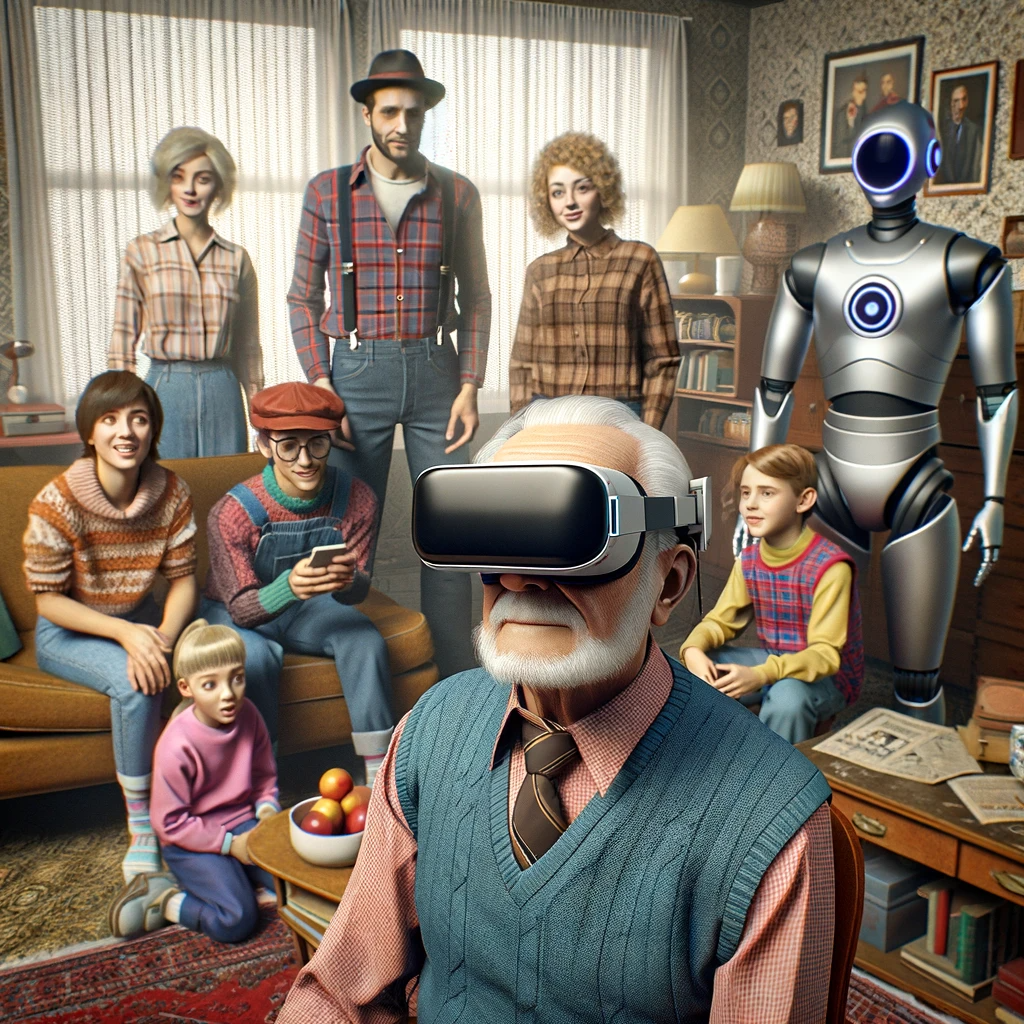
In our previous exploration of the intersection between artificial intelligence (AI) and human experience, we delved into the potential of AI as a tool for augmenting human capabilities, particularly in scenarios of cognitive decline. In this continuation, we venture deeper into this fascinating confluence of technology and humanity, examining the role of AI in mirroring human personality and essence for those undergoing cognitive challenges, such as dementia.
The Concept: AI as Continuers of Human Legacy
Imagine a world where individuals facing the onset of cognitive decline, overwhelming stress can train AI systems to become their voice and preserve their personality. This concept is not about replacing humans with AI but creating a symbiotic relationship where AI assists in bridging the communication gap caused by conditions like dementia, or those simply overwhelmed by the pace of technology and their family’s adoption of it.
Envisioning a Personalized Future
Expanding the Horizon: The Personal Impact of AI Legacy
In the realm of AI as continuers of human legacy, we’re not just talking about technology; we’re envisioning a future where personal stories, memories, and even the quirks that make us uniquely ‘us’ can be preserved. This concept transcends mere data preservation; it’s about capturing the essence of a person’s identity, allowing it to continue interacting with loved ones even as their cognitive abilities decline.
Real-life Scenario: Imagine your grandmother, who has always been the storyteller of your family, is now facing the challenges of Alzheimer’s disease. Through AI, her stories, the way she tells them, her laughter, and her wisdom can continue to be a part of family gatherings, enabling future generations to experience her presence and learn from her life experiences.
The Essence of Legacy: More Than Just Memories
AI legacy systems would be tailored to capture and reflect individual personalities, creating a digital echo of the person. This isn’t about creating a digital clone but about preserving the nuances that define a person’s character – their beliefs, their sense of humor, and even their moral perspectives.
Consideration for Families: Families would need to contemplate what aspects of their loved ones they wish to preserve. Is it the advice a father always gave, the songs a mother sang, or the philosophical musings of a grandparent? These considerations make the technology deeply personal and potentially profound in maintaining family heritage.
Bridging Generations: AI as a Link to the Past
Such AI systems could serve as bridges between generations, connecting children and grandchildren to ancestors they may have never met. It’s a way of keeping family stories, traditions, and wisdom alive, creating a tangible link to the past.
Family Dynamics Insight: In a digital age where family histories are often lost or diluted, this technology could reinforce familial bonds and heritage, providing a rich, interactive experience of ancestry and legacy.
Emotional Continuity in a Digital Form
The emotional impact of this technology on families could be significant. It offers comfort and continuity, especially for those who find it hard to cope with the loss of cognitive functions in their loved ones. This continuity is not just about recalling memories but about preserving the emotional essence of relationships.
Personal Reflection: As we consider integrating AI into our family legacies, we’re invited to reflect on what truly defines us and our loved ones. What are the values, stories, and characteristics we wish to see live on through the generations?
A Thoughtful Approach to AI Legacy
As we delve deeper into the potential of AI as continuers of human legacy, we’re challenged to think about the profound implications this technology could have on our personal lives and familial relationships. It’s a journey that requires careful thought, ethical considerations, and a deep understanding of the emotional intricacies of human relationships. The prospect of AI serving as a custodian of our personal and family legacies opens up new dimensions in how we perceive memory, identity, and continuity across generations.
Case Study Insight: Consider John, an artist and loving grandfather diagnosed with early-stage dementia. Before his cognitive abilities decline significantly, he engages with an AI system, sharing his life stories, values, artistic views, and even his sense of humor. This AI, tailored to John’s persona, serves as a communication intermediary with his family, especially his grandchildren, maintaining the essence of his personality even as his own ability to communicate wanes.
The Technology Behind Personality-Capturing AI
The core of this concept lies in advanced machine learning algorithms capable of processing and mimicking human speech, behavior, and preferences. The AI would need to be trained extensively on individual-specific data, including voice recordings, written communications, and even visual expressions. This training would enable the AI to respond in ways that are characteristic of the individual, maintaining their unique identity.
Expert Insight: As a strategic management consultant specializing in AI, I can affirm that developing such systems would require a blend of natural language processing, emotional intelligence algorithms, and possibly even generative adversarial networks (GANs) to simulate human-like responses.
Ethical and Emotional Considerations
This innovative use of AI raises significant ethical questions. How do we ensure the AI’s responses are authentic to the individual’s true self? What are the privacy implications of storing and processing such personal data? The emotional impact on family members interacting with an AI that embodies a loved one’s personality also needs careful consideration.
Professional Perspective: In customer experience management, understanding the emotional journey is crucial. Similarly, in this context, it’s vital to ensure that the AI provides comfort and a sense of connection rather than uncanny or unsettling experiences.
Vision for the Future
Looking ahead, we see a landscape where AI companions become common for individuals with cognitive challenges. These AI systems could offer not just communication assistance but also support in daily tasks, reminders for medication, and even monitoring health parameters.
Future Trend Analysis: With advancements in AI, we could witness AI systems becoming more proactive, perhaps even identifying early signs of cognitive decline and triggering medical interventions. This could revolutionize elderly care, providing a layer of support and companionship, mitigating the effects of conditions like dementia.
Challenges and Roadblocks
Despite the potential, there are formidable challenges. The accuracy and ethical creation of these AI systems are paramount. There’s also the challenge of public acceptance and the need for robust regulatory frameworks to govern the use and development of such sensitive AI applications.
Strategic Implications: As businesses and technologists in this field, we must navigate these challenges with a balance of innovation and ethical responsibility. Strategic partnerships between AI developers, healthcare providers, and ethical boards will be essential.
Conclusion
In conclusion, the journey of integrating AI into the lives of individuals with cognitive decline is fraught with complexities yet brimming with potential. As we advance in our understanding and development of AI, we must tread this path with empathy, responsibility, and a vision for a future where technology serves humanity in its most vulnerable moments.
Stay tuned for more insights and discussions on AI and its role in advancing mental and physical health. Follow this blog for future posts where we unravel the myriad ways AI continues to reshape our world, always with a human-centric approach.
Today we wrap-up our discussions about the domains of Quantum. While we have just touched on these continually emerging topics, we hope that each conversation left you with an urge to explore more in depth and seek additional knowledge in the space.
In the dynamic landscape of technological innovation, these three domains have continually emerged as frontiers of groundbreaking development: Quantum Computing, Physics, and Mechanics. Each field, distinct in its principles and applications, is now converging to revolutionize how we understand and interact with the world. This week’s posts have explored these domains individually, but now let’s synthesize these insights to envision a future shaped by their synergy.
An Executive Summary – Quantum Computing, Physics, and Mechanics: Unraveling the Threads
Quantum Computing is an area that leverages the principles of quantum mechanics to process information. Unlike classical computing, which uses bits as the smallest unit of data, quantum computing uses quantum bits or qubits. This allows quantum computers to handle complex calculations at unprecedented speeds.
Physics, especially Quantum Physics, explores the nature and behavior of matter and energy at the quantum level. It provides the theoretical foundation for understanding how particles and forces interact, forming the basis of quantum computing.
Mechanics, traditionally, deals with the motion of bodies under the action of forces. Quantum Mechanics, a subset of physics, extends these principles to the atomic and subatomic levels, influencing how we develop technologies that interact with the quantum realm.
The Quantum-Mechanical Engineering Space: A Nexus of Innovation
The intersection of quantum computing, physics, and mechanics opens a new field, often referred to as Quantum-Mechanical Engineering. This domain explores the application of quantum principles in designing and developing mechanical systems.
Use Cases in Public and Private Sectors
Material Science: Organizations are leveraging quantum computing to simulate and design new materials with specific properties, leading to innovations in everything from superconductors to pharmaceuticals.
Optimization Problems: Quantum computers excel at solving complex optimization problems, benefiting logistics companies in route planning or financial institutions in portfolio management.
Cybersecurity: Quantum encryption techniques, rooted in quantum mechanics, offer unprecedented levels of data security, crucial for both government agencies and private corporations.
Drug Discovery: The pharmaceutical industry is exploring quantum computing to model molecular interactions, speeding up the drug discovery process and reducing costs.
Benefits and Disadvantages
Benefits:
Speed: Quantum computing can process complex calculations much faster than traditional computers.
Precision: Quantum mechanics allows for more precise measurements and predictions at microscopic levels.
Innovation: This convergence is leading to new technologies and solutions across various industries.
Disadvantages:
Technical Complexity: Quantum technologies are complex and require specialized knowledge, limiting their accessibility.
Scalability: Building scalable quantum systems poses significant technological challenges.
Security Concerns: Quantum computing could potentially break current encryption methods, leading to new cybersecurity challenges.
Practical Applications in Business
Quantum teachings are gradually finding their way into everyday business challenges. For example, automotive companies are using quantum simulations to develop more efficient batteries. Financial institutions are exploring quantum algorithms for risk analysis and fraud detection. In the realm of artificial intelligence, quantum computing is set to enhance machine learning capabilities significantly.
Proactive Organizations
As we heard, organizations like IBM, Google, and various startups are investing heavily in quantum computing research. Governments around the world are also funding quantum technology initiatives, recognizing its strategic importance.
Looking Ahead: The Quantum Future
Vision for the Future
The future shaped by quantum computing, physics, and mechanics is one of immense potential. We envision a world where quantum technologies revolutionize fields from energy to medicine, bringing about efficiencies and solutions previously deemed impossible. Quantum computers will solve complex global challenges like climate change modeling and large-scale logistical problems with unprecedented precision and speed.
Anticipated Challenges
However, this promising future is not without its challenges. The foremost is the technical complexity and resource intensity required to develop quantum technologies. Maintaining quantum coherence in computers over extended periods, for instance, is a significant hurdle. Additionally, as quantum technologies advance, there will be a growing need for a workforce skilled in these specialized areas, posing an educational and training challenge.
Bridging Quantum Computing and Mechanical Engineering
In the realm of mechanical engineering, quantum technologies offer transformative potential. One can foresee quantum sensors enhancing precision in manufacturing processes or quantum simulations leading to the development of new, more efficient materials. However, integrating quantum solutions into traditional mechanical engineering fields will require a deep understanding of both quantum principles and practical engineering constraints.
Quantum Innovations in Business: A Dual-Edged Sword
As quantum technologies permeate the business world, they bring both opportunities and risks. On one hand, they offer competitive advantages through enhanced data processing capabilities and innovation in product design and material science. On the other hand, they disrupt existing business models and create new competitive landscapes, where companies slow to adapt may find themselves at a significant disadvantage.
The Road Ahead for Organizations
Progressive organizations are already exploring quantum technologies. Tech giants and startups alike are racing to develop the first truly scalable quantum computer. Meanwhile, businesses in sectors like automotive, aerospace, and pharmaceuticals are partnering with quantum experts to explore applications ranging from material design to complex system modeling.
Conclusion
The convergence of Quantum Computing, Physics, and Mechanics is not just a scientific curiosity but a beacon for future technological advancements. As we stand on the brink of this quantum era, the possibilities are as vast as the challenges. For businesses and individuals alike, understanding and leveraging this convergence will be key to staying ahead in a rapidly evolving digital landscape.
So, as we conclude this week’s exploration into quantum computing, physics, and mechanics, it’s clear that we are on the cusp of a new era in technology and business innovation. The convergence of these fields promises to unlock new capabilities and opportunities across industries. For those interested in staying at the forefront of this quantum revolution, follow this blog. Together, we’ll navigate the complexities and possibilities of the quantum realm, uncovering insights and strategies to harness its potential for business and technological advancement.
Yesterday, we introduced the topics of quantum computing and materials and today we will welcome quantum physics into the conversation and dive another level deeper. By discussing all three within the mechanical engineering space, we hope to provide a view into how all three are being leveraged by this discipline and what that future may look like.
In an era where technological advancements are not just innovations but revolutions, the fields of quantum computing, quantum physics, and quantum materials are emerging as pivotal game-changers. This blog post delves into these complex yet fascinating domains, focusing particularly on their intersection with mechanical engineering and their multifaceted applications in both public and private sectors.
Foundations of Quantum Computing and Quantum Physics
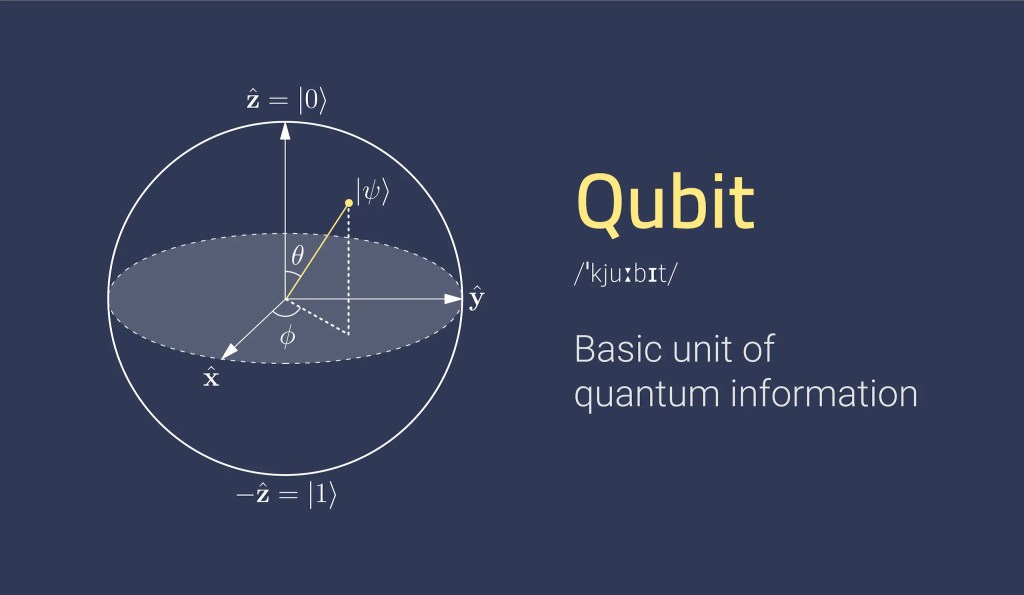
Quantum computing and quantum physics are intrinsically linked, with the former being a practical application of the principles of the latter. Quantum physics, the study of the behavior of matter and energy at the smallest scales, lays the groundwork for quantum computing. Unlike classical computing, which relies on bits (0s and 1s), quantum computing uses quantum bits or qubits. These qubits can exist in multiple states simultaneously, thanks to the principles of superposition and entanglement, which are cornerstones of quantum mechanics.
Quantum Materials: The New Frontier
Quantum materials are substances that exhibit exotic properties governed by the principles of quantum mechanics. These materials, such as topological insulators, superconductors, and graphene, show immense promise in revolutionizing various fields, including mechanical engineering.
Quantum Materials in Mechanical Engineering: Use Cases
Public Sector Applications
Energy Storage and Conversion: Quantum materials like graphene are being explored for their potential in improving the efficiency of solar cells and batteries. Public institutions are investing in research to leverage these materials for sustainable and efficient energy solutions.
Transportation: Superconducting materials, a subset of quantum materials, could revolutionize public transportation. Their application in magnetic levitation (maglev) trains exemplifies how they can reduce friction and energy consumption, leading to faster and more efficient transportation.
Private Sector Applications
Electronics Industry: The miniaturization and enhanced performance of electronic components, crucial in today’s digital world, are achievable through quantum materials. Private companies are exploring materials like topological insulators for developing next-generation semiconductors.
Aerospace and Defense: Quantum materials are critical in developing advanced materials for aerospace, where weight, strength, and thermal properties are paramount. Private aerospace firms are researching quantum materials for applications in spacecraft and aviation technology.
Advantages and Challenges
Advantages
Enhanced Performance: Quantum materials offer superior properties, like high conductivity and unique magnetic characteristics, which can lead to breakthroughs in various technologies.
Innovation in Various Fields: From energy to healthcare, the application of quantum materials paves the way for innovations across multiple sectors.
Challenges
High Cost and Complexity: The synthesis and manipulation of quantum materials are often expensive and complex, making them currently less accessible for widespread use.
Lack of Understanding: The nascent stage of quantum material research implies a limited understanding, which poses challenges in their practical application.
Quantum Materials: Real-World Business Applications
Quantum materials are not just theoretical constructs but have practical implications in addressing day-to-day business challenges. Companies like IBM and Google are investing in quantum computing, eyeing its potential to solve complex computational problems. In the energy sector, quantum materials are seen as the key to developing more efficient renewable energy systems. Meanwhile, in healthcare, their application in drug discovery and medical imaging represents a frontier of innovation.
Organizations Leading the Charge
Several organizations are proactively addressing the challenges and opportunities presented by quantum materials. Institutes like the Stewart Blusson Quantum Materials Institute (QMI) and companies such as QuantumScape and Rigetti Computing are at the forefront of this endeavor. Their focus ranges from fundamental research to the development of practical applications.
Conclusion
Quantum computing, physics, and materials represent a convergence of science and engineering that holds the promise of transformative changes across industries. As we continue to explore these realms, the potential for innovation in mechanical engineering and beyond is boundless. Stay tuned to this blog for more insights into the world of quantum materials, where the future of technology is being written today.
Engage with our ongoing exploration of quantum materials by following our posts. Discover the impact of these advanced materials in reshaping industries and driving technological progress. Don’t miss out on the journey to the forefront of innovation – follow us for the latest updates and in-depth analyses.
Quantum computing represents a paradigm shift in our computational capabilities, offering unprecedented processing power and efficiency. Central to this leap is the development and utilization of quantum materials, which are fundamental to the architecture of quantum computers. In this blog post, we will explore how quantum materials are revolutionizing the engineering space, examining their applications across federal, public, and private business spheres. We will delve into the benefits and challenges of these technologies, providing real-world examples of their impact and the proactive measures organizations are taking to harness their potential.
Deeper Analysis of Quantum Materials in the Context of Quantum Computing
Quantum materials represent a groundbreaking frontier in the world of quantum computing. To set the tone for our blog post, it’s essential to delve deeper into what these materials are, their unique properties, and how they are pivotal in the advancement of quantum technology.
Understanding Quantum Materials
Quantum materials are substances whose physical and electronic properties are not just defined by their atomic composition but also by their quantum mechanical characteristics. These include phenomena like quantum entanglement, superposition, and tunneling. Examples of quantum materials include superconductors, topological insulators, and quantum dots, each offering unique properties essential for quantum computing.
Superconductors
Superconductors are materials that exhibit zero electrical resistance and the expulsion of magnetic fields at low temperatures. In quantum computing, they are used to create superconducting qubits. These qubits operate by sustaining a current in a loop of superconducting material, with the direction of the current representing the qubit’s state. This property is crucial for maintaining coherence in quantum computations.
Topological Insulators
Topological insulators are materials that act as insulators internally but support conducting states on their surface. They are robust against impurities, which makes them suitable for stable qubit operation. The stability of surface states in topological insulators is protected by quantum mechanical symmetries, making them highly desirable for error-resistant quantum computing.
Quantum Dots
Quantum dots are tiny semiconductor particles that exhibit quantum mechanical properties. They can be used to create qubit systems where the quantum dot’s state, such as electron position or spin, encodes quantum information. Quantum dots can be precisely controlled and manipulated, making them suitable for scalable quantum computing platforms.
The Role in Quantum Computing
Quantum materials are not just passive elements but active participants in the quantum computing process. Their unique properties allow for the creation and manipulation of qubits, which are the fundamental units of quantum information in a quantum computer.
Enabling Quantum Superposition and Entanglement
Quantum materials facilitate superposition (where a qubit can be in multiple states simultaneously) and entanglement (a strong correlation between qubits even when separated by large distances). These are the key features that give quantum computers their superior processing power over classical computers.
Addressing Decoherence
One of the biggest challenges in quantum computing is decoherence, where qubits lose their quantum properties due to interactions with their environment. Quantum materials, especially those with topological properties, are being explored for their potential to create more stable qubits that are less prone to decoherence.
Applications and Implications
The application of quantum materials extends beyond the realms of theoretical physics into practical, real-world scenarios:
Secure Communication: Quantum materials can aid in the development of quantum key distribution systems, providing an unbreakable encryption method for secure communication.
Advanced Sensors: The sensitivity of quantum materials to external stimuli makes them suitable for creating highly precise sensors, applicable in fields ranging from navigation to medical diagnostics.
Material Science: Quantum computing can simulate material behaviors at the quantum level, paving the way for the discovery of new materials with tailored properties for various industrial applications.
The Road Ahead
The exploration and development of quantum materials are pivotal in overcoming the current limitations of quantum computing. As research progresses, we expect to see more stable, scalable, and efficient quantum computers, leading to unprecedented advancements in various sectors. The journey of quantum materials from lab to real-world application is not just a scientific endeavor but a transformational shift in how we approach complex problems in computing and beyond.
By understanding the depth and potential of quantum materials, we set a solid foundation for our discussion on their impact on engineering and technology. This deeper analysis not only informs but also inspires our readers to appreciate the intricate interplay between quantum physics and practical computing applications.
Quantum Materials: The Building Blocks of Quantum Computing
Quantum materials are substances with distinct properties that enable quantum states, such as superposition and entanglement, fundamental to quantum computing. These materials, like topological insulators and superconductors, provide the necessary environment for qubits – the quantum equivalent of classical bits – to function.
Federal Perspective
In the federal domain, agencies like the U.S. Department of Energy (DOE) and the National Institute of Standards and Technology (NIST) are investing heavily in research and development of quantum materials. Their focus is not only on advancing quantum computing but also on understanding the underlying quantum phenomena for broader applications, such as secure communication networks and advanced sensing technologies.
Public and Private Business Perspective
In the business arena, quantum materials are gaining traction in industries ranging from finance to pharmaceuticals. Companies are exploring quantum computing to solve complex problems that are currently intractable for classical computers, such as optimizing supply chains, developing new materials, and speeding up drug discovery processes.
Advantages of Quantum Materials in Engineering
Enhanced Computational Power
The most significant advantage is the exponential increase in computational power. Quantum materials enable qubits to perform multiple calculations simultaneously, a feat impossible for traditional bits. This capability is crucial for solving complex optimization problems in engineering and data analysis.
Improved Efficiency and Precision
Quantum materials contribute to more efficient and precise computational processes. Their unique properties allow for faster processing speeds and greater accuracy in simulations, essential for industries like aerospace and automotive, where precision is paramount.
Innovative Applications
Quantum materials pave the way for novel applications in various sectors. For instance, in materials science, they facilitate the design of new materials with desired properties, while in cybersecurity, they offer pathways to virtually unbreakable encryption methods.
Challenges and Disadvantages
Technical Complexity
The manipulation and maintenance of quantum states in materials are incredibly complex. It requires extremely low temperatures and sophisticated technology, posing significant challenges for practical implementation.
Scalability and Stability
Building scalable and stable quantum systems using these materials is still a major hurdle. The delicate nature of quantum states makes them susceptible to external disturbances, leading to errors in computations.
High Costs
The development and deployment of quantum materials and related technologies involve substantial financial investment, making it currently inaccessible for many small and medium-sized enterprises.
Real-World Applications and Proactive Organizations
Financial Sector
JPMorgan Chase, for instance, is exploring quantum computing for risk analysis and portfolio optimization. Quantum materials could revolutionize how financial models and complex economic scenarios are processed.
Pharmaceutical Industry
In pharmaceuticals, companies like Pfizer are investigating quantum computing for drug discovery. Quantum materials could drastically reduce the time and cost of developing new treatments.
Automotive Industry
Automakers like BMW are leveraging quantum computing for material research and supply chain optimization, potentially transforming production efficiency and product quality.
Proactive Steps by Organizations
Organizations like IBM and Google are at the forefront, investing in research and infrastructure to harness quantum materials for computing. Universities and research institutions worldwide are also collaborating with industries to develop practical applications and overcome technical challenges.
Conclusion
The intersection of quantum computing and quantum materials is ushering in a new era in engineering and technology. While challenges like technical complexity, scalability, and cost remain, the potential benefits in computational power, efficiency, and innovative applications are immense. As research and development continue, we are likely to witness transformative impacts across various sectors, from finance to pharmaceuticals.
As we continue to explore the depths of quantum materials and their applications, stay tuned for future posts delving deeper into this fascinating field. Follow our blog to stay updated on the latest developments and insights into how quantum computing is reshaping our world.
This blog post is tailored for an audience with a keen interest in technology trends and business processes. The information provided aims to be both informative and thought-provoking, inviting readers to explore the evolving landscape of quantum computing and materials. For more insights on the cutting edge of technology and business, follow our blog and join the conversation.
Quantum computing represents a monumental shift in our approach to data processing and problem-solving. Central to this shift is the phenomenon of quantum entanglement, a feature of quantum mechanics where particles become interconnected, with the state of one affecting the other, regardless of the distance separating them. This blog post delves into the role of quantum entanglement in the engineering space, exploring its implications and applications across federal, public, and private business sectors.
Quantum Entanglement: The Engineering Perspective
Quantum entanglement is more than a theoretical curiosity; it’s a pivotal aspect of quantum computing that offers revolutionary potential in engineering. Entangled particles, behaving as a unified system, enable new forms of data transmission and processing that traditional binary computing cannot achieve.
Federal Sector Applications
In the federal space, quantum entanglement is primarily viewed through the lens of security and communication. Agencies like the Department of Defense and the National Security Agency are exploring quantum networks for secure communication. Entanglement ensures that any attempt to intercept or measure the quantum state of the transmitted data would be instantly detectable, offering an unprecedented level of security.
Public and Private Business Utilization
In the private sector, industries are eyeing quantum entanglement for its potential to solve complex optimization problems, which are prevalent in logistics, finance, and resource management. Companies like IBM and Google are investing heavily in quantum computing to harness these capabilities. In the realm of artificial intelligence and machine learning, quantum entanglement could enable faster and more efficient algorithms, significantly impacting data analysis and predictive modeling.
Benefits of Quantum Entanglement in Business
Enhanced Security: Quantum entanglement can create unbreakable encryption methods, crucial for secure data transmission.
Optimization: Solving complex optimization problems in seconds, which would take classical computers years, can revolutionize industries from logistics to finance.
Speed and Efficiency: Quantum computers can process vast amounts of data at speeds unattainable by classical computers, offering immense benefits in big data analytics.
Disadvantages and Challenges
Despite its potential, quantum entanglement in engineering is not without its challenges:
Technological Maturity: Quantum computing is still in its nascent stages, with practical, scalable applications yet to be fully realized.
Cost: The development and maintenance of quantum computers are exceedingly expensive, making it currently inaccessible for many smaller businesses.
Complexity and Expertise: The field requires specialized knowledge, limiting its immediate adoption and integration into existing technology infrastructures.
Real-World Examples
Secure Communication: Governments are experimenting with quantum-secured communication networks, like the Chinese Micius satellite, which uses quantum entanglement for hack-proof communications.
Financial Modeling: JPMorgan Chase, in collaboration with IBM, is exploring quantum computing for risk analysis and portfolio optimization.
Drug Discovery: Pharmaceutical companies are leveraging quantum computing for molecular modeling in drug development, significantly reducing the time and cost involved.
Proactive Organizations
Organizations like the Quantum Economic Development Consortium (QED-C) and the National Quantum Initiative in the United States are fostering collaborations and investments to advance quantum technologies. These entities are not only driving research but also addressing workforce development in this high-tech field.
Conclusion
Quantum entanglement represents a frontier in engineering with transformative potential across various sectors. Its ability to process information in ways unattainable by classical computers opens new horizons in secure communication, optimization, and data analysis. While challenges remain in terms of technological maturity, complexity, and cost, the ongoing investments and research indicate a future where quantum entanglement will be integral to solving some of our most complex business challenges.
For more insights and updates on quantum entanglement and its evolving role in the engineering and business landscape, follow this blog. Stay tuned for future posts where we’ll continue exploring the cutting-edge of quantum technology and its practical applications in various industries.
This blog post is tailored for readers with a keen interest in technology and business processes, providing a professional and informed perspective on the advancements and challenges of quantum entanglement in the engineering field.
Today we wrap-up our week long coverage discussing the advances and usage of Virtual Reality (VR). We hope that you found this pivot from our typical AI and CX/CRM posts a refreshing and insightful journey. Rest assured, we will continue to explore different technological topics in depth over the course of the year, and if there is something that you really want to hear about – Please drop us a comment.
In the ever-evolving landscape of technology, Virtual Reality (VR) has emerged as a revolutionary tool, extending its capabilities far beyond entertainment and into the realm of security threat identification. This blog post delves into how VR is transforming the way federal, local, and personal security threats are identified and addressed, providing both opportunities and challenges in this critical area.
The Rise of VR in Security
Federal Perspective: Enhancing National Security
At the federal level, VR is being increasingly employed for complex simulations and training scenarios. Agencies like the Department of Defense and Homeland Security are utilizing VR for immersive training, enabling personnel to experience realistic, high-risk situations in a controlled environment. This approach not only improves readiness but also aids in identifying potential security threats in simulated scenarios, reducing the risk of real-world oversights.
Example: The Federal Bureau of Investigation (FBI) uses VR simulations for hostage rescue and anti-terrorism training, allowing agents to virtually navigate through various scenarios, enhancing their decision-making skills in real-life situations.
Local Law Enforcement: Advanced Training and Situational Awareness
Local law enforcement agencies are also harnessing VR for advanced training purposes. By simulating real-world environments and scenarios, officers can train for a variety of situations, including crowd control, de-escalation tactics, and rapid response to active threats.
Example: Police departments in major cities are adopting VR-based training systems that recreate urban environments, helping officers practice their responses to scenarios like armed robberies or public disturbances.
Personal Security: Empowering Individuals
On a personal level, VR technology is being used to educate individuals about security threats and self-defense. VR applications can simulate dangerous situations, teaching users how to respond effectively to threats like home invasions or street attacks.
Example: Self-defense VR applications allow users to practice responding to personal threats in a virtual space, providing a safe environment to learn and develop crucial survival skills.
Benefits of VR in Security Threat Identification
Realistic Training Scenarios: VR provides a hyper-realistic environment where trainees can experience and react to various threats without the risks associated with real-life situations.
Cost-Effectiveness: VR eliminates the need for physical training facilities and resources, reducing costs associated with security training.
Adaptability and Customization: VR scenarios can be quickly modified to address specific threats or training needs, making it an adaptable tool for security training.
Enhanced Data Analytics: VR systems can track and analyze user performance, providing valuable insights for improving threat identification and response strategies.
Challenges and Disadvantages
Technology Limitations: The effectiveness of VR is contingent on the quality of hardware and software, which can be expensive and require regular updates.
Training vs. Reality Gap: Despite its realism, VR cannot fully replicate the unpredictability and emotional intensity of real-life threat situations.
Accessibility and Inclusivity: Ensuring that VR training is accessible and inclusive for all users, regardless of their physical abilities, remains a challenge.
Data Privacy Concerns: The use of VR in security training involves the collection and analysis of personal data, raising concerns about privacy and data security.
Future Perspectives and Potential Applications
The future of VR in security threat identification is promising, with potential applications expanding into areas like cyber threat simulations, border control training, and disaster response planning. As VR technology advances, its integration into security frameworks will likely become more sophisticated and widespread.
Agencies Leading the Charge
Several agencies and organizations are at the forefront of integrating VR into security training and threat identification. These include:
Virtual Reality is redefining the landscape of security threat identification, offering innovative solutions to train and prepare for a variety of threats. While it presents certain challenges, the benefits of VR in enhancing the effectiveness and efficiency of security training are undeniable. As technology continues to evolve, we can anticipate more advanced and impactful uses of VR in safeguarding our communities and nations.
Stay tuned to our blog for more insights into the fascinating world of virtual reality and its myriad applications. Follow us for the latest updates and in-depth analyses of how emerging technologies are shaping our future.
This blog post aims to provide a comprehensive overview of the role of VR in security threat identification, touching on its benefits, challenges, and future potential. For further information or specific inquiries, please feel free to reach out or comment below.
Keywords: Virtual Reality, Security Threat Identification, VR Training, Federal Security, Local Law Enforcement, Personal Safety, Technology in Security
In the ever-evolving landscape of technology, Virtual Reality (VR) has emerged as a groundbreaking tool, revolutionizing not just entertainment but also reshaping the core practices of various engineering disciplines. From mechanical to chemical, and aerospace, VR technology is not only enhancing the way engineers visualize and interact with their work but is also reshaping the broader horizons of these fields. This blog post delves into how VR is advancing the benefits of engineering, exploring its applications, benefits, and potential drawbacks.
Unleashing Innovation Across Engineering Domains
Mechanical Engineering: A New Design Perspective
In mechanical engineering, VR is revolutionizing design and prototyping processes. Engineers are now able to immerse themselves in a virtual environment where they can interact with 3D models of machines, components, and systems. This immersive experience allows for a deeper understanding of how different parts interact and function together. For instance, automotive engineers are using VR to design and test new vehicle models, enabling them to examine intricacies that would be challenging to visualize on a traditional computer screen.
Chemical Engineering: Safety and Process Optimization
VR’s impact in chemical engineering is notably significant in the areas of safety training and process optimization. Chemical plants can be complex and hazardous environments. VR enables engineers and technicians to simulate and interact with virtual models of chemical processes and plants. This approach not only enhances the understanding of complex chemical reactions and processes but also provides a safe environment for training purposes, reducing the risk of accidents in real-world scenarios.
Aerospace Engineering: The Final Frontier
The aerospace sector is perhaps where VR’s potential shines the brightest. Aerospace engineers are utilizing VR for designing, testing, and simulating aircraft and spacecraft. This technology offers a unique advantage in visualizing aerodynamic flows, structural designs, and even simulating the extreme conditions of space. The ability to test and modify designs in a virtual environment accelerates the development process and reduces costs, which is crucial in an industry where physical prototyping can be exceptionally expensive.
Advantages of VR in Engineering
Enhanced Visualization: VR provides engineers with a 3D, immersive view of their designs, allowing for a deeper understanding and interaction with complex structures.
Cost-Effectiveness: Virtual prototyping reduces the need for physical models, leading to significant cost savings, especially in fields like aerospace where prototypes are expensive.
Accelerated Development Cycles: VR enables rapid iterations and modifications, allowing engineers to test and refine designs quickly.
Improved Safety: In high-risk fields like chemical engineering, VR provides a safe training environment that mimics real-life scenarios without the associated risks.
Remote Collaboration: VR facilitates collaboration among engineers across different locations, fostering a more integrated approach to project development.
Challenges and Considerations
Despite its numerous benefits, VR in engineering is not without its challenges:
High Initial Investment: The cost of setting up advanced VR systems can be substantial, particularly for small firms or educational institutions.
Technical Limitations: VR technology, while advanced, still has limitations in terms of resolution, field of view, and user experience, which can impact its effectiveness.
Skill Gap: There is a learning curve associated with using VR technology, requiring specialized training for engineers and designers.
Dependency on Virtual Models: Over-reliance on virtual models may lead to overlooking practical aspects that only emerge in physical environments.
Real-World Examples: VR in Action
Automotive Industry: Companies like Ford and BMW are using VR to design, test, and refine new vehicle models, significantly reducing development time and costs.
Chemical Plant Training: BASF and other chemical giants are utilizing VR for training employees, enhancing safety, and understanding complex chemical processes.
Space Exploration: NASA and SpaceX are leveraging VR for spacecraft design and astronaut training, preparing for missions in a way that was previously impossible.
Conclusion: The Future is Virtually Here
Virtual Reality is not just a technological trend; it’s a transformative tool that is reshaping the landscape of engineering. Its ability to enhance visualization, improve safety, and accelerate development is unparalleled. While challenges such as cost and technical limitations exist, the benefits and potential of VR in engineering are too significant to ignore.
As we continue to explore the vast capabilities of VR in engineering, we invite you to stay connected with our future posts. Delve deeper into the world of VR with us, where we’ll uncover more innovative applications and advancements in this exciting field. Follow us to stay at the forefront of technological evolution and be part of the journey that’s shaping the future of engineering.








 De Lio Tech Trends