When AI Starts Surprising Us: Preparing for the Novel-Insight Era of 2026

1. What Do We Mean by “Novel Insights”?

“Novel insight” is a discrete, verifiable piece of knowledge that did not exist in a source corpus, is non-obvious to domain experts, and can be traced to a reproducible reasoning path. Think of a fresh scientific hypothesis, a new materials formulation, or a previously unseen cybersecurity attack graph.
Sam Altman’s recent prediction that frontier models will “figure out novel insights” by 2026 pushed the term into mainstream AI discourse. techcrunch.com

Classical machine-learning systems mostly rediscovered patterns humans had already encoded in data. The next wave promises something different: agentic, multi-modal models that autonomously traverse vast knowledge spaces, test hypotheses in simulation, and surface conclusions researchers never explicitly requested.


2. Why 2026 Looks Like a Tipping Point

Catalyst2025 StatusWhat Changes by 2026
Compute economicsNVIDIA Blackwell Ultra GPUs ship late-2025First Vera Rubin GPUs deliver a new memory stack and an order-of-magnitude jump in energy-efficient flops, slashing simulation costs. 9meters.com
Regulatory clarityFragmented global rulesEU AI Act becomes fully applicable on 2 Aug 2026, giving enterprises a common governance playbook for “high-risk” and “general-purpose” AI. artificialintelligenceact.eutranscend.io
Infrastructure scale-outRegional GPU scarcityEU super-clusters add >3,000 exa-flops of Blackwell compute, matching U.S. hyperscale capacity. investor.nvidia.com
Frontier model maturityGPT-4.o, Claude-4, Gemini 2.5GPT-4.1, Gemini 1M, and Claude multi-agent stacks mature, validated on year-long pilots. openai.comtheverge.comai.google.dev
Commercial proof pointsEarly AI agents in consumer appsMeta, Amazon and Booking show revenue lift from production “agentic” systems that plan, decide and transact. investors.com

The convergence of cheaper compute, clearer rules, and proven business value explains why investors and labs are anchoring roadmaps on 2026.


3. Key Technical Drivers Behind Novel-Insight AI

3.1 Exascale & Purpose-Built Silicon

Blackwell Ultra and its 2026 successor, Vera Rubin, plus a wave of domain-specific inference ASICs detailed by IDTechEx, bring training cost curves down by ~70 %. 9meters.comidtechex.com This makes it economically viable to run thousands of concurrent experiment loops—essential for insight discovery.

3.2 Million-Token Context Windows

OpenAI’s GPT-4.1, Google’s Gemini long-context API and Anthropic’s Claude roadmap already process up to 1 million tokens, allowing entire codebases, drug libraries or legal archives to sit in a single prompt. openai.comtheverge.comai.google.dev Long context lets models cross-link distant facts without lossy retrieval pipelines.

3.3 Agentic Architectures

Instead of one monolithic model, “agents that call agents” decompose a problem into planning, tool-use and verification sub-systems. WisdomTree’s analysis pegs structured‐task automation (research, purchasing, logistics) as the first commercial beachhead. wisdomtree.com Early winners (Meta’s assistant, Amazon’s Rufus, Booking’s Trip Planner) show how agents convert insight into direct action. investors.com Engineering blogs from Anthropic detail multi-agent orchestration patterns and their scaling lessons. anthropic.com

3.4 Multi-Modal Simulation & Digital Twins

Google’s Gemini 2.5 1 M-token window was designed for “complex multimodal workflows,” combining video, CAD, sensor feeds and text. codingscape.com When paired with physics-based digital twins running on exascale clusters, models can explore design spaces millions of times faster than human R&D cycles.

3.5 Open Toolchains & Fine-Tuning APIs

OpenAI’s o3/o4-mini and similar lightweight models provide affordable, enterprise-grade reasoning endpoints, encouraging experimentation outside Big Tech. openai.com Expect a Cambrian explosion of vertical fine-tunes—climate science, battery chemistry, synthetic biology—feeding the insight engine.

Why do These “Key Technical Drivers” Matter

  1. It Connects Vision to Feasibility
    Predictions that AI will start producing genuinely new knowledge in 2026 sound bold. The driver section shows how that outcome becomes technically and economically possible—linking the high-level story to concrete enablers like exascale GPUs, million-token context windows, and agent-orchestration frameworks. Without these specifics the argument would read as hype; with them, it becomes a plausible roadmap grounded in hardware release cycles, API capabilities, and regulatory milestones.
  2. It Highlights the Dependencies You Must Track
    For strategists, each driver is an external variable that can accelerate or delay the insight wave:
    • Compute economics – If Vera Rubin-class silicon slips a year, R&D loops stay pricey and insight generation stalls.
    • Million-token windows – If long-context models prove unreliable, enterprises will keep falling back on brittle retrieval pipelines.
    • Agentic architectures – If tool-calling agents remain flaky, “autonomous research” won’t scale.
      Understanding these dependencies lets executives time investment and risk-mitigation plans instead of reacting to surprises.
  3. It Provides a Diagnostic Checklist for Readiness
    Each technical pillar maps to an internal capability question:
DriverReadiness QuestionIllustrative Example
Exascale & purpose-built siliconDo we have budgeted access to ≥10× current GPU capacity by 2026?A pharma firm booking time on an EU super-cluster for nightly molecule screens.
Million-token contextIs our data governance clean enough to drop entire legal archives or codebases into a prompt?A bank ingesting five years of board minutes and compliance memos in one shot to surface conflicting directives.
Agentic orchestrationDo we have sandboxed APIs and audit trails so AI agents can safely purchase cloud resources or file Jira tickets?A telco’s provisioning bot ordering spare parts and scheduling field techs without human hand-offs.
Multimodal simulationAre our CAD, sensor, and process-control systems emitting digital-twin-ready data?An auto OEM feeding crash-test videos, LIDAR, and material specs into a single Gemini 1 M prompt to iterate chassis designs overnight.
  1. It Frames the Business Impact in Concrete Terms
    By tying each driver to an operational use case, you can move from abstract optimism to line-item benefits: faster time-to-market, smaller R&D head-counts, dynamic pricing, or real-time policy simulation. Stakeholders outside the AI team—finance, ops, legal—can see exactly which technological leaps translate into revenue, cost, or compliance gains.
  2. It Clarifies the Risk Surface
    Each enabler introduces new exposures:
    • Long-context models can leak sensitive data.
    • Agent swarms can act unpredictably without robust verification loops.
    • Domain-specific ASICs create vendor lock-in and supply-chain risk.
      Surfacing these risks early triggers the governance, MLOps, and policy work streams that must run in parallel with technical adoption.

Bottom line: The “Key Technical Drivers Behind Novel-Insight AI” section is the connective tissue between a compelling future narrative and the day-to-day decisions that make—or break—it. Treat it as both a checklist for organizational readiness and a scorecard you can revisit each quarter to see whether 2026’s insight inflection is still on track.


4. How Daily Life Could Change

  • Workplace: Analysts get “co-researchers” that surface contrarian theses, legal teams receive draft arguments built from entire case-law corpora, and design engineers iterate devices overnight in generative CAD.
  • Consumer: Travel bookings shift from picking flights to approving an AI-composed itinerary (already live in Booking’s Trip Planner). investors.com
  • Science & Medicine: AI proposes unfamiliar protein folds or composite materials; human labs validate the top 1 %.
  • Public Services: Cities run continuous scenario planning—traffic, emissions, emergency response—adjusting policy weekly instead of yearly.

5. Pros and Cons of the Novel-Insight Era

UpsideTrade-offs
Accelerated discovery cycles—months to daysVerification debt: spurious but plausible insights can slip through (90 % of agent projects may still fail). medium.com
Democratized expertise; SMEs gain research leverageIntellectual-property ambiguity over machine-generated inventions
Productivity boosts comparable to prior industrial revolutionsJob displacement in rote analysis and junior research roles
Rapid response to global challenges (climate, pandemics)Concentration of compute and data advantages in a few regions
Regulatory frameworks (EU AI Act) enforce transparencyCompliance cost may slow open-source and startups

6. Conclusion — 2026 Is Close, but Not Inevitable

Hardware roadmaps, policy milestones and commercial traction make 2026 a credible milestone for AI systems that surprise their creators. Yet the transition hinges on disciplined evaluation pipelines, open verification standards, and cross-disciplinary collaboration. Leaders who invest this year—in long-context tooling, agent orchestration, and robust governance—will be best positioned when the first genuinely novel insights start landing in their inbox.


Ready or not, the era when AI produces first-of-its-kind knowledge is approaching. The question for strategists isn’t if but how your organization will absorb, vet and leverage those insights—before your competitors do.

Follow us on (Spotify) as we discuss this, and other topics.
The Rise of Agentic AI: Turning Autonomous Intelligence into Tangible Enterprise Value

Introduction: What Is Agentic AI?

Agentic AI refers to a class of artificial intelligence systems designed to act autonomously toward achieving specific goals with minimal human intervention. Unlike traditional AI systems that react based on fixed rules or narrow task-specific capabilities, Agentic AI exhibits intentionality, adaptability, and planning behavior. These systems are increasingly capable of perceiving their environment, making decisions in real time, and executing sequences of actions over extended periods—often while learning from the outcomes to improve future performance.

At its core, Agentic AI transforms AI from a passive, tool-based role to an active, goal-oriented agent—capable of dynamically navigating real-world constraints to accomplish objectives. It mirrors how human agents operate: setting goals, evaluating options, adapting strategies, and pursuing long-term outcomes.


Historical Context and Evolution

The idea of agent-like machines dates back to early AI research in the 1950s and 1960s with concepts like symbolic reasoning, utility-based agents, and deliberative planning systems. However, these early systems lacked robustness and adaptability in dynamic, real-world environments.

Significant milestones in Agentic AI progression include:

  • 1980s–1990s: Emergence of multi-agent systems and BDI (Belief-Desire-Intention) architectures.
  • 2000s: Growth of autonomous robotics and decision-theoretic planning (e.g., Mars rovers).
  • 2010s: Deep reinforcement learning (DeepMind’s AlphaGo) introduced self-learning agents.
  • 2020s–Today: Foundation models (e.g., GPT-4, Claude, Gemini) gain capabilities in multi-turn reasoning, planning, and self-reflection—paving the way for Agentic LLM-based systems like Auto-GPT, BabyAGI, and Devin (Cognition AI).

Today, we’re witnessing a shift toward composite agents—Agentic AI systems that combine perception, memory, planning, and tool-use, forming the building blocks of synthetic knowledge workers and autonomous business operations.


Core Technologies Behind Agentic AI

Agentic AI is enabled by the convergence of several key technologies:

1. Foundation Models: The Cognitive Core of Agentic AI

Foundation models are the essential engines powering the reasoning, language understanding, and decision-making capabilities of Agentic AI systems. These models—trained on massive corpora of text, code, and increasingly multimodal data—are designed to generalize across a wide range of tasks without the need for task-specific fine-tuning.

They don’t just perform classification or pattern recognition—they reason, infer, plan, and generate. This shift makes them uniquely suited to serve as the cognitive backbone of agentic architectures.


What Defines a Foundation Model?

A foundation model is typically:

  • Large-scale: Hundreds of billions of parameters, trained on trillions of tokens.
  • Pretrained: Uses unsupervised or self-supervised learning on diverse internet-scale datasets.
  • General-purpose: Adaptable across domains (finance, healthcare, legal, customer service).
  • Multi-task: Can perform summarization, translation, reasoning, coding, classification, and Q&A without explicit retraining.
  • Multimodal (increasingly): Supports text, image, audio, and video inputs (e.g., GPT-4o, Gemini 1.5, Claude 3 Opus).

This versatility is why foundation models are being abstracted as AI operating systems—flexible intelligence layers ready to be orchestrated in workflows, embedded in products, or deployed as autonomous agents.


Leading Foundation Models Powering Agentic AI

ModelDeveloperStrengths for Agentic AI
GPT-4 / GPT-4oOpenAIStrong reasoning, tool use, function calling, long context
Claude 3 OpusAnthropicConstitutional AI, safe decision-making, robust memory
Gemini 1.5 ProGoogle DeepMindNative multimodal input, real-time tool orchestration
Mistral MixtralMistral AILightweight, open-source, composability
LLaMA 3Meta AIPrivate deployment, edge AI, open fine-tuning
Command R+CohereOptimized for RAG + retrieval-heavy enterprise tasks

These models serve as reasoning agents—when embedded into a larger agentic stack, they enable perception (input understanding), cognition (goal setting and reasoning), and execution (action selection via tool use).


Foundation Models in Agentic Architectures

Agentic AI systems typically wrap a foundation model inside a reasoning loop, such as:

  • ReAct (Reason + Act + Observe)
  • Plan-Execute (used in AutoGPT/CrewAI)
  • Tree of Thought / Graph of Thought (branching logic exploration)
  • Chain of Thought Prompting (decomposing complex problems step-by-step)

In these loops, the foundation model:

  1. Processes high-context inputs (task, memory, user history).
  2. Decomposes goals into sub-tasks or plans.
  3. Selects and calls tools or APIs to gather information or act.
  4. Reflects on results and adapts next steps iteratively.

This makes the model not just a chatbot, but a cognitive planner and execution coordinator.


What Makes Foundation Models Enterprise-Ready?

For organizations evaluating Agentic AI deployments, the maturity of the foundation model is critical. Key capabilities include:

  • Function Calling APIs: Securely invoke tools or backend systems (e.g., OpenAI’s function calling or Anthropic’s tool use interface).
  • Extended Context Windows: Retain memory over long prompts and documents (up to 1M+ tokens in Gemini 1.5).
  • Fine-Tuning and RAG Compatibility: Adapt behavior or ground answers in private knowledge.
  • Safety and Governance Layers: Constitutional AI (Claude), moderation APIs (OpenAI), and embedding filters (Google) help ensure reliability.
  • Customizability: Open-source models allow enterprise-specific tuning and on-premise deployment.

Strategic Value for Businesses

Foundation models are the platforms on which Agentic AI capabilities are built. Their availability through API (SaaS), private LLMs, or hybrid edge-cloud deployment allows businesses to:

  • Rapidly build autonomous knowledge workers.
  • Inject AI into existing SaaS platforms via co-pilots or plug-ins.
  • Construct AI-native processes where the reasoning layer lives between the user and the workflow.
  • Orchestrate multi-agent systems using one or more foundation models as specialized roles (e.g., analyst agent, QA agent, decision validator).

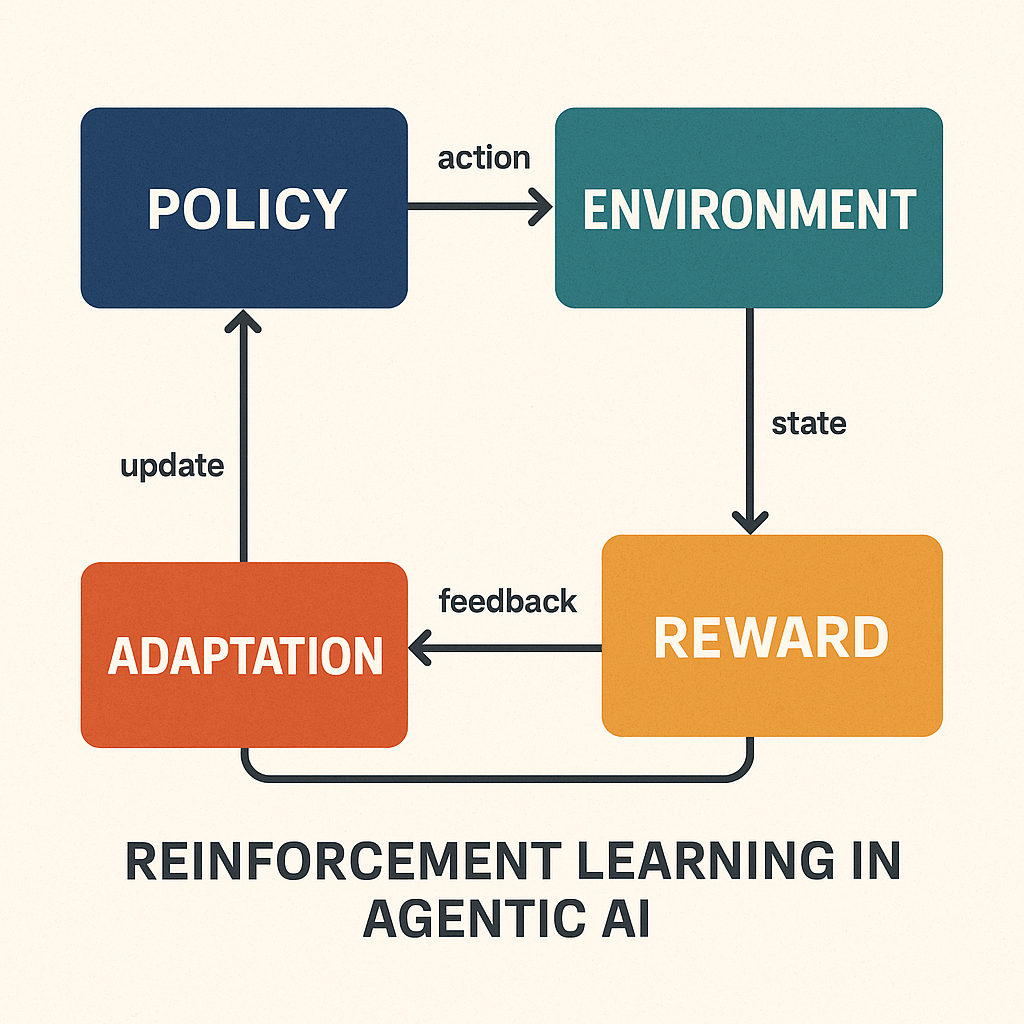
2. Reinforcement Learning: Enabling Goal-Directed Behavior in Agentic AI

Reinforcement Learning (RL) is a core component of Agentic AI, enabling systems to make sequential decisions based on outcomes, adapt over time, and learn strategies that maximize cumulative rewards—not just single-step accuracy.

In traditional machine learning, models are trained on labeled data. In RL, agents learn through interaction—by trial and error—receiving rewards or penalties based on the consequences of their actions within an environment. This makes RL particularly suited for dynamic, multi-step tasks where success isn’t immediately obvious.


Why RL Matters in Agentic AI

Agentic AI systems aren’t just responding to static queries—they are:

  • Planning long-term sequences of actions
  • Making context-aware trade-offs
  • Optimizing for outcomes (not just responses)
  • Adapting strategies based on experience

Reinforcement learning provides the feedback loop necessary for this kind of autonomy. It’s what allows Agentic AI to exhibit behavior resembling initiative, foresight, and real-time decision optimization.


Core Concepts in RL and Deep RL

ConceptDescription
AgentThe decision-maker (e.g., an AI assistant or robotic arm)
EnvironmentThe system it interacts with (e.g., CRM system, warehouse, user interface)
ActionA choice or move made by the agent (e.g., send an email, move a robotic arm)
RewardFeedback signal (e.g., successful booking, faster resolution, customer rating)
PolicyThe strategy the agent learns to map states to actions
StateThe current situation of the agent in the environment
Value FunctionExpected cumulative reward from a given state or state-action pair

Deep Reinforcement Learning (DRL) incorporates neural networks to approximate value functions and policies, allowing agents to learn in high-dimensional and continuous environments (like language, vision, or complex digital workflows).


Popular Algorithms and Architectures

TypeExamplesUsed For
Model-Free RLQ-learning, PPO, DQNNo internal model of environment; trial-and-error focus
Model-Based RLMuZero, DreamerLearns a predictive model of the environment
Multi-Agent RLMADDPG, QMIXCoordinated agents in distributed environments
Hierarchical RLOptions Framework, FeUdal NetworksHigh-level task planning over low-level controllers
RLHF (Human Feedback)Used in GPT-4 and ClaudeAligning agents with human values and preferences

Real-World Enterprise Applications of RL in Agentic AI

Use CaseRL Contribution
Autonomous Customer Support AgentLearns which actions (FAQs, transfers, escalations) optimize resolution & NPS
AI Supply Chain CoordinatorContinuously adapts order timing and vendor choice to optimize delivery speed
Sales Engagement AgentTests and learns optimal outreach timing, channel, and script per persona
AI Process OrchestratorImproves process efficiency through dynamic tool selection and task routing
DevOps Remediation AgentLearns to reduce incident impact and time-to-recovery through adaptive actions

RL + Foundation Models = Emergent Agentic Capabilities

Traditionally, RL was used in discrete control problems (e.g., games or robotics). But its integration with large language models is powering a new class of cognitive agents:

  • OpenAI’s InstructGPT / ChatGPT leveraged RLHF to fine-tune dialogue behavior.
  • Devin (by Cognition AI) may use internal RL loops to optimize task completion over time.
  • Autonomous coding agents (e.g., SWE-agent, Voyager) use RL to evaluate and improve code quality as part of a long-term software development strategy.

These agents don’t just reason—they learn from success and failure, making each deployment smarter over time.


Enterprise Considerations and Strategy

When designing Agentic AI systems with RL, organizations must consider:

  • Reward Engineering: Defining the right reward signals aligned with business outcomes (e.g., customer retention, reduced latency).
  • Exploration vs. Exploitation: Balancing new strategies vs. leveraging known successful behaviors.
  • Safety and Alignment: RL agents can “game the system” if rewards aren’t properly defined or constrained.
  • Training Infrastructure: Deep RL requires simulation environments or synthetic feedback loops—often a heavy compute lift.
  • Simulation Environments: Agents must train in either real-world sandboxes or virtualized process models.

3. Planning and Goal-Oriented Architectures

Frameworks such as:

  • LangChain Agents
  • Auto-GPT / OpenAgents
  • ReAct (Reasoning + Acting)
    are used to manage task decomposition, memory, and iterative refinement of actions.

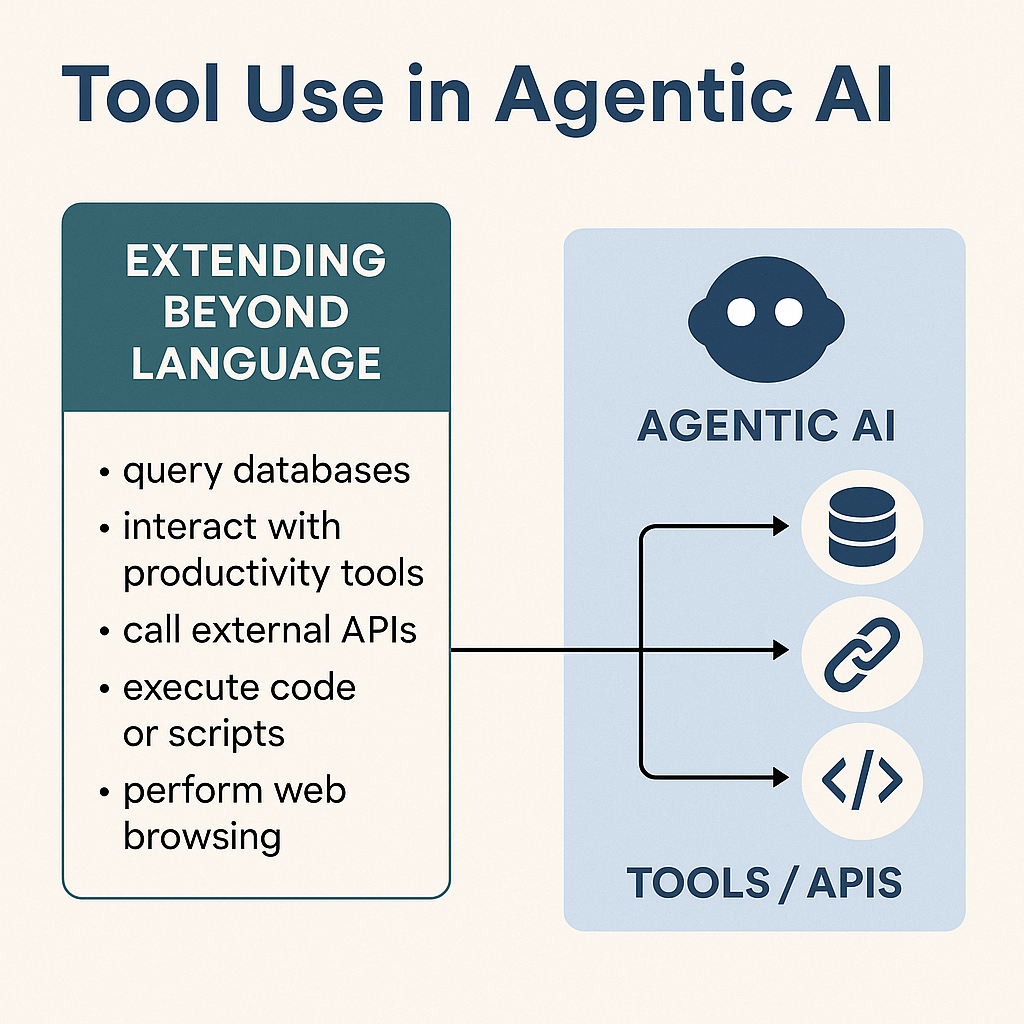
4. Tool Use and APIs: Extending the Agent’s Reach Beyond Language

One of the defining capabilities of Agentic AI is tool use—the ability to call external APIs, invoke plugins, and interact with software environments to accomplish real-world tasks. This marks the transition from “reasoning-only” models (like chatbots) to active agents that can both think and act.

What Do We Mean by Tool Use?

In practice, this means the AI agent can:

  • Query databases for real-time data (e.g., sales figures, inventory levels).
  • Interact with productivity tools (e.g., generate documents in Google Docs, create tickets in Jira).
  • Call external APIs (e.g., weather forecasts, flight booking services, CRM platforms).
  • Execute code or scripts (e.g., SQL queries, Python scripts for data analysis).
  • Perform web browsing and scraping (when sandboxed or allowed) for competitive intelligence or customer research.

This ability unlocks a vast universe of tasks that require integration across business systems—a necessity in real-world operations.

How Is It Implemented?

Tool use in Agentic AI is typically enabled through the following mechanisms:

  • Function Calling in LLMs: Models like OpenAI’s GPT-4o or Claude 3 can call predefined functions by name with structured inputs and outputs. This is deterministic and safe for enterprise use.
  • LangChain & Semantic Kernel Agents: These frameworks allow developers to define “tools” as reusable, typed Python functions, which are exposed to the agent as callable resources. The agent reasons over which tool to use at each step.
  • OpenAI Plugins / ChatGPT Actions: Predefined, secure tool APIs that extend the model’s environment (e.g., browsing, code interpreter, third-party services like Slack or Notion).
  • Custom Toolchains: Enterprises can design private toolchains using REST APIs, gRPC endpoints, or even RPA bots. These are registered into the agent’s action space and governed by policies.
  • Tool Selection Logic: Often governed by ReAct (Reasoning + Acting) or Plan-Execute architecture, where the agent:
    1. Plans the next subtask.
    2. Selects the appropriate tool.
    3. Executes and observes the result.
    4. Iterates or escalates as needed.

Examples of Agentic Tool Use in Practice

Business FunctionAgentic Tooling Example
FinanceAI agent generates financial summaries by calling ERP APIs (SAP/Oracle)
SalesAI updates CRM entries in HubSpot, triggers lead follow-ups via email
HRAgent schedules interviews via Google Calendar API + Zoom SDK
Product DevelopmentAgent creates GitHub issues, links PRs, and comments in dev team Slack
ProcurementAgent scans vendor quotes, scores RFPs, and pushes results into Tableau

Why It Matters

Tool use is the engine behind operational value. Without it, agents are limited to sandboxed environments—answering questions but never executing actions. Once equipped with APIs and tool orchestration, Agentic AI becomes an actor, capable of driving workflows end-to-end.

In a business context, this creates compound automation—where AI agents chain multiple systems together to execute entire business processes (e.g., “Generate monthly sales dashboard → Email to VPs → Create follow-up action items”).

This also sets the foundation for multi-agent collaboration, where different agents specialize (e.g., Finance Agent, Data Agent, Ops Agent) but communicate through APIs to coordinate complex initiatives autonomously.

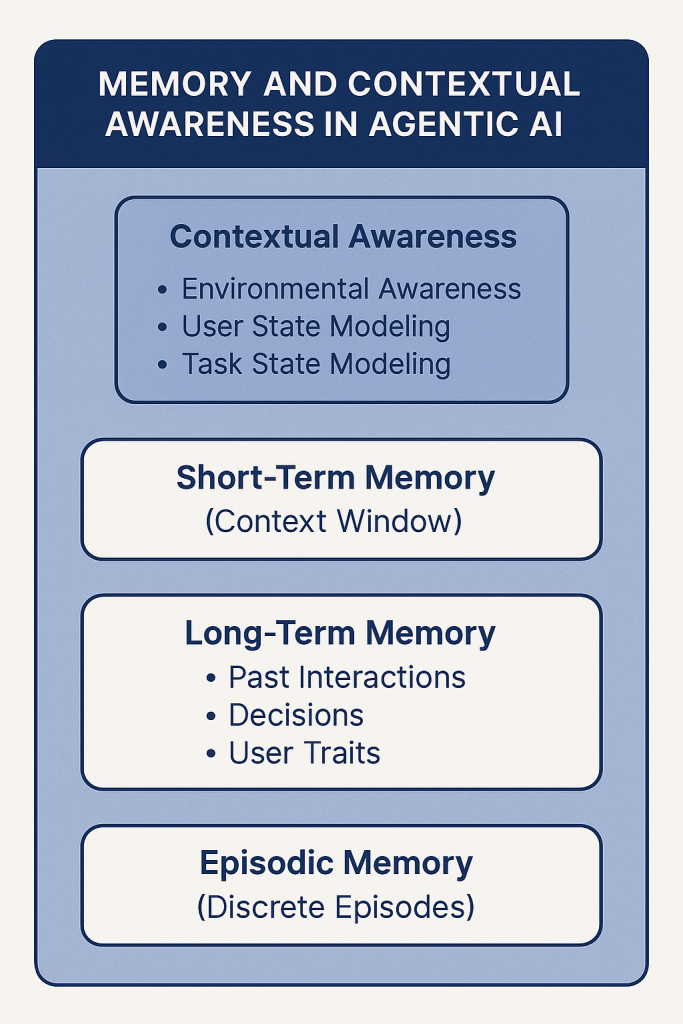
5. Memory and Contextual Awareness: Building Continuity in Agentic Intelligence

One of the most transformative capabilities of Agentic AI is memory—the ability to retain, recall, and use past interactions, observations, or decisions across time. Unlike stateless models that treat each prompt in isolation, Agentic systems leverage memory and context to operate over extended time horizons, adapt strategies based on historical insight, and personalize their behaviors for users or tasks.

Why Memory Matters

Memory transforms an agent from a task executor to a strategic operator. With memory, an agent can:

  • Track multi-turn conversations or workflows over hours, days, or weeks.
  • Retain facts about users, preferences, and previous interactions.
  • Learn from success/failure to improve performance autonomously.
  • Handle task interruptions and resumptions without starting over.

This is foundational for any Agentic AI system supporting:

  • Personalized knowledge work (e.g., AI analysts, advisors)
  • Collaborative teamwork (e.g., PM or customer-facing agents)
  • Long-running autonomous processes (e.g., contract lifecycle management, ongoing monitoring)

Types of Memory in Agentic AI Systems

Agentic AI generally uses a layered memory architecture that includes:

1. Short-Term Memory (Context Window)

This refers to the model’s native attention span. For GPT-4o and Claude 3, this can be 128k tokens or more. It allows the agent to reason over detailed sequences (e.g., a 100-page report) in a single pass.

  • Strength: Real-time recall within a conversation.
  • Limitation: Forgetful across sessions without persistence.

2. Long-Term Memory (Persistent Storage)

Stores structured information about past interactions, decisions, user traits, and task states across sessions. This memory is typically retrieved dynamically when needed.

  • Implemented via:
    • Vector databases (e.g., Pinecone, Weaviate, FAISS) to store semantic embeddings.
    • Knowledge graphs or structured logs for relationship mapping.
    • Event logging systems (e.g., Redis, S3-based memory stores).
  • Use Case Examples:
    • Remembering project milestones and decisions made over a 6-week sprint.
    • Retaining user-specific CRM insights across customer service interactions.
    • Building a working knowledge base from daily interactions and tool outputs.

3. Episodic Memory

Captures discrete sessions or task executions as “episodes” that can be recalled as needed. For example, “What happened the last time I ran this analysis?” or “Summarize the last three weekly standups.”

  • Often linked to LLMs using metadata tags and timestamped retrieval.

Contextual Awareness Beyond Memory

Memory enables continuity, but contextual awareness makes the agent situationally intelligent. This includes:

  • Environmental Awareness: Real-time input from sensors, applications, or logs. E.g., current stock prices, team availability in Slack, CRM changes.
  • User State Modeling: Knowing who the user is, what role they’re playing, their intent, and preferred interaction style.
  • Task State Modeling: Understanding where the agent is within a multi-step goal, what has been completed, and what remains.

Together, memory and context awareness create the conditions for agents to behave with intentionality and responsiveness, much like human assistants or operators.


Key Technologies Enabling Memory in Agentic AI

CapabilityEnabling Technology
Semantic RecallEmbeddings + Vector DBs (e.g., OpenAI + Pinecone)
Structured Memory StoresRedis, PostgreSQL, JSON-encoded long-term logs
Retrieval-Augmented Generation (RAG)Hybrid search + generation for factual grounding
Event and Interaction LogsCustom metadata logging + time-series session data
Memory OrchestrationLangChain Memory, Semantic Kernel Memory, AutoGen, CrewAI

Enterprise Implications

For clients exploring Agentic AI, the ability to retain knowledge over time means:

  • Greater personalization in customer engagement (e.g., remembering preferences, sentiment, outcomes).
  • Enhanced collaboration with human teams (e.g., persistent memory of project context, task ownership).
  • Improved autonomy as agents can pause/resume tasks, learn from outcomes, and evolve over time.

This unlocks AI as a true cognitive partner, not just an assistant.


Pros and Cons of Deploying Agentic AI

Pros

  • Autonomy & Efficiency: Reduces human supervision by handling multi-step tasks, improving throughput.
  • Adaptability: Adjusts strategies in real time based on changes in context or inputs.
  • Scalability: One Agentic AI system can simultaneously manage multiple tasks, users, or environments.
  • Workforce Augmentation: Enables synthetic digital employees for knowledge work (e.g., AI project managers, analysts, engineers).
  • Cost Savings: Reduces repetitive labor, increases automation ROI in both white-collar and blue-collar workflows.

Cons

  • Interpretability Challenges: Multi-step reasoning is often opaque, making debugging difficult.
  • Failure Modes: Agents can take undesirable or unsafe actions if not constrained by strong guardrails.
  • Integration Complexity: Requires orchestration between APIs, memory modules, and task logic.
  • Security and Alignment: Risk of goal misalignment, data leakage, or unintended consequences without proper design.
  • Ethical Concerns: Job displacement, over-dependence on automated decision-making, and transparency issues.

Agentic AI Use Cases and High-ROI Deployment Areas

Clients looking for immediate wins should focus on use cases that require repetitive decision-making, high coordination, or multi-tool integration.

📈 Quick Wins (0–3 Months ROI)

  1. Autonomous Report Generation
    • Agent pulls data from BI tools (Tableau, Power BI), interprets it, drafts insights, and sends out weekly reports.
    • Tools: LangChain + GPT-4 + REST APIs
  2. Customer Service Automation
    • Replace tier-1 support with AI agents that triage tickets, resolve FAQs, and escalate complex queries.
    • Tools: RAG-based agents + Zendesk APIs + Memory
  3. Marketing Campaign Agents
    • Agents that ideate, generate, and schedule multi-channel content based on performance metrics.
    • Tools: Zapier, Canva API, HubSpot, LLM + scheduler

🏗️ High ROI (3–12 Months)

  1. Synthetic Product Managers
    • AI agents that track product feature development, gather user feedback, prioritize sprints, and coordinate with Jira/Slack.
    • Ideal for startups or lean product teams.
  2. Autonomous DevOps Bots
    • Agents that monitor infrastructure, recommend configuration changes, and execute routine CI/CD updates.
    • Can reduce MTTR (mean time to resolution) and engineer fatigue.
  3. End-to-End Procurement Agents
    • Autonomous RFP generation, vendor scoring, PO management, and follow-ups—freeing procurement officers from clerical tasks.

What Can Agentic AI Deliver for Clients Today?

Your clients can expect the following from a well-designed Agentic AI system:

CapabilityDescription
Goal-Oriented ExecutionAutomates tasks with minimal supervision
Adaptive Decision-MakingAdjusts behavior in response to context and outcomes
Tool OrchestrationInteracts with APIs, databases, SaaS apps, and more
Persistent MemoryRemembers prior actions, users, preferences, and histories
Self-ImprovementLearns from success/failure using logs or reward functions
Human-in-the-Loop (HiTL)Allows optional oversight, approvals, or constraints

Closing Thoughts: From Assistants to Autonomous Agents

Agentic AI represents a major evolution from passive assistants to dynamic problem-solvers. For business leaders, this means a new frontier of automation—one where AI doesn’t just answer questions but takes action.

Success in deploying Agentic AI isn’t just about plugging in a tool—it’s about designing intelligent systems with goals, governance, and guardrails. As foundation models continue to grow in reasoning and planning abilities, Agentic AI will be pivotal in scaling knowledge work and operations.

Meet Your Next Digital Colleague: Navigating the Rise of AI Virtual Employees


Artificially Intelligent (AI) “virtual employees” are fully autonomous software agents designed to perform the end-to-end duties of a traditional staff member, ranging from customer service interactions and data analysis to decision-making processes, without a human in the loop. Unlike narrow AI tools that assist humans with specific tasks (e.g., scheduling or transcription), virtual employees possess broader role-based capabilities, integrating natural language understanding, process automation, and, increasingly, adaptive learning to fulfill job descriptions in their entirety.


What is an AI Virtual Employee?

  1. End-to-End Autonomy
    • Role-Based Scope: Unlike narrow AI tools that assist with specific tasks (e.g., scheduling or transcription), a virtual employee owns an entire role—such as “Customer Support Specialist” or “Data Analyst.”
    • Lifecycle Management: It can initiate, execute, and complete tasks on its own, from gathering inputs to delivering final outputs and even escalating exceptions.
  2. Core Capabilities
    • Natural Language Understanding (NLU)
      Interprets customer emails, chat requests, or internal memos in human language.
    • Process Automation & Orchestration
      Executes multi-step workflows—accessing databases, running scripts, updating records, and generating reports.
    • Adaptive Learning
      Continuously refines its models based on feedback loops (e.g., customer satisfaction ratings or accuracy metrics).
    • Decision-Making
      Applies business rules, policy engines, and predictive analytics to make autonomous judgments within its remit.
  3. Integration & Interfaces
    • APIs and Enterprise Systems
      Connects to CRM, ERP, document management, and collaboration platforms via secure APIs.
    • Dashboards & Monitoring
      Exposes performance metrics (e.g., throughput, error rates) to human supervisors through BI dashboards and alerting systems.
  4. Governance & Compliance
    • Policy Enforcement
      Embeds regulatory guardrails (e.g., GDPR data handling, SOX invoice processing) to prevent unauthorized actions.
    • Auditability
      Logs every action with detailed metadata—timestamps, decision rationale, data sources—for post-hoc review and liability assignment.

Examples of Virtual Employees

1. Virtual Customer Support Agent

  • Context: A telecom company receives thousands of customer inquiries daily via chat and email.
  • Capabilities:
    • Handles tier-1 troubleshooting (password resets, billing queries).
    • Uses sentiment analysis to detect frustrated customers and escalates to a human for complex issues.
    • Automatically updates the CRM with case notes and resolution codes.
  • Benefits:
    • 24/7 coverage without shift costs.
    • Consistent adherence to company scripts and compliance guidelines.

2. AI Financial Reporting Analyst

  • Context: A mid-sized financial services firm needs monthly performance reports for multiple funds.
  • Capabilities:
    • Aggregates data from trading systems, accounting ledgers, and market feeds.
    • Applies predefined accounting rules and generates variance analyses, balance sheets, and P&L statements.
    • Drafts narrative commentary summarizing key drivers and forwards the package for human review.
  • Benefits:
    • Reduces report-generation time from days to hours.
    • Minimizes manual calculation errors and standardizes commentary tone.

3. Virtual HR Onboarding Coordinator

  • Context: A global enterprise hires dozens of new employees each month across multiple time zones.
  • Capabilities:
    • Sends personalized welcome emails, schedules orientation sessions, and issues system access requests.
    • Verifies completion of compliance modules (e.g., code of conduct training) and issues reminders.
  • Benefits:
    • Ensures a seamless, uniform onboarding experience.
    • Frees HR staff to focus on higher-value tasks like talent development.

These examples illustrate how AI virtual employees can seamlessly integrate into core business functions — delivering consistent, scalable, and auditable performance while augmenting or, in some cases, replacing repetitive human work.

Pros of Introducing AI-Based Virtual Employees

  1. Operational Efficiency and Cost Savings
    • Virtual employees can operate 24/7 without fatigue, breaks, or shift differentials, driving substantial throughput gains in high-volume roles such as customer support or back-office processing Bank of America.
    • By automating repetitive or transaction-driven functions, organizations can reduce per-unit labor costs and redeploy budget toward strategic initiatives.
  2. Scalability and Rapid Deployment
    • Unlike human hiring—which may take weeks to months—AI agents can be instantiated, configured, and scaled globally within days, helping firms meet sudden demand surges or geographic expansion needs Business Insider.
    • Cloud-based architectures enable elastic resource allocation, ensuring virtual employees have access to the compute power they need at scale.
  3. Consistency and Compliance
    • Well-trained AI models adhere strictly to programmed policies and regulations, minimizing variation in decision-making and lowering error rates in compliance-sensitive areas like financial reporting or claims processing Deloitte United States.
    • Audit trails and immutable logs can record every action taken by a virtual employee, simplifying regulatory audits and internal reviews.
  4. Data-Driven Continuous Improvement
    • Virtual employees generate rich performance metrics—response times, resolution accuracy, customer satisfaction scores—that can feed continuous learning loops, enabling incremental improvements through retraining and updated data inputs.

Cons and Challenges

  1. Lack of Human Judgment and Emotional Intelligence
    • AI systems may struggle with nuance, empathy, or complex conflict resolution, leading to suboptimal customer experiences in high-touch scenarios.
    • Overreliance on historical data can perpetuate biases, especially in areas like hiring or lending, potentially exposing firms to reputational and legal risk.
  2. Accountability and Liability
    • When a virtual employee’s action contravenes company policy or legal regulations, it can be challenging to assign responsibility. Organizations must establish clear frameworks—often involving legal, compliance, and risk management teams—to define liability and remedial processes.
    • Insurance and indemnification agreements may need to evolve to cover AI-driven operational failures.
  3. Integration Complexity
    • Embedding virtual employees into existing IT ecosystems requires substantial investment in APIs, data pipelines, and security controls. Poor integration can generate data silos or create new attack surfaces.
  4. Workforce Impact and Ethical Considerations
    • Widespread deployment of virtual employees could lead to workforce displacement, intensifying tensions over fair pay and potentially triggering regulatory scrutiny The Business Journals.
    • Organizations must balance cost-efficiency gains with responsibilities to reskill or transition affected employees.

Organizational Fit and Reporting Structure

  • Position Within the Organization
    Virtual employees typically slot into established departmental hierarchies—e.g., reporting to the Director of Customer Success, Head of Finance, or their equivalent. In matrix organizations, an AI Governance Office or Chief AI Officer may oversee standards, risk management, and strategic alignment across these agents.
  • Supervision and Oversight
    Rather than traditional “line managers,” virtual employees are monitored via dashboards that surface key performance indicators (KPIs), exception reports, and compliance flags. Human overseers review flagged incidents and sign off on discretionary decisions beyond the AI’s remit.
  • Accountability Mechanisms
    1. Policy Engines & Guardrails: Business rules and legal constraints are encoded into policy engines that block prohibited actions in real time.
    2. Audit Logging: Every action is logged with timestamps and rationale, creating an immutable chain of custody for later review.
    3. Human-in-the-Loop (HITL) Triggers: For high-risk tasks, AI agents escalate to human reviewers when confidence scores fall below a threshold.

Ensuring Compliance and Ethical Use

  • Governance Frameworks
    Companies must establish AI ethics committees and compliance charters that define acceptable use cases, data privacy protocols, and escalation paths. Regular “model risk” assessments and bias audits help ensure alignment with legal guidelines, such as GDPR or sector-specific regulations.
  • Legal Accountability
    Contracts with AI vendors should stipulate liability clauses, performance warranties, and audit rights. Internally developed virtual employees demand clear policies on intellectual property, data ownership, and jurisdictional compliance, backed by legal sign-off before deployment.

Adoption Timeline: How Far Away Are Fully AI-Based Employees?

  • 2025–2027 (Pilot and Augmentation Phase)
    Many Fortune 500 firms are already piloting AI agents as “digital colleagues,” assisting humans in defined tasks. Industry leaders like Microsoft predict a three-phase evolution—starting with assistants today, moving to digital colleagues in the next 2–3 years, and full AI-driven business units by 2027–2030 The Guardian.
  • 2028–2032 (Early Adoption of Fully Autonomous Roles)
    As models mature in reasoning, context retention, and domain adaptability, companies in tech-savvy sectors—finance, logistics, and customer service—will begin appointing virtual employees to standalone roles, e.g., an AI account manager or virtual claims adjuster.
  • 2033+ (Mainstream Deployment)
    Widespread integration across industries will hinge on breakthroughs in explainability, regulatory frameworks, and public trust. By the early 2030s, we can expect virtual employees to be commonplace in back-office and mid-level professional functions.

Conclusion

AI-based virtual employees promise transformative efficiencies, scalability, and data-driven consistency, but they also introduce significant challenges around empathy, integration complexity, and ethical accountability. Organizations must evolve governance, reporting structures, and legal frameworks in lockstep with technological advances. While fully autonomous virtual employees remain in pilot today, rapid advancements and strategic imperatives indicate that many firms will seriously explore these models within the next 2 to 5 years, laying the groundwork for mainstream adoption by the early 2030s. Balancing innovation with responsible oversight will be the key to harnessing virtual employees’ full potential.

Also follow us on (Spotify)

The AI Dilemma: Balancing Financial ROI, Ethical Responsibility, and Societal Impact

Introduction

In today’s digital-first world, the exponential growth of Artificial Intelligence (AI) has pushed organizations to a precipice, where decision-makers are forced to weigh the benefits against the tangible costs and ethical ramifications. Business leaders and stockholders, eager to boost financial performance, are questioning the viability of their investments in AI. Are these deployments meeting the anticipated return on investment (ROI), and are the long-term benefits worth the extensive costs? Beyond financial considerations, AI-driven solutions consume vast energy resources and require robust employee training. Companies now face a dilemma: how to advance AI capabilities responsibly without compromising ethical standards, environmental sustainability, or the well-being of future generations.

The ROI of AI: Meeting Expectations or Falling Short?

AI promises transformative efficiencies and significant competitive advantages, yet actualized ROI is highly variable. According to recent industry reports, fewer than 20% of AI initiatives fully achieve their expected ROI, primarily due to gaps in technological maturity, insufficient training, and a lack of strategic alignment with core business objectives. Stockholders who champion AI-driven projects often anticipate rapid and substantial returns. However, realizing these returns depends on multiple factors:

  1. Initial Investment in Infrastructure: Setting up AI infrastructure—from data storage and processing to high-performance computing—demands substantial capital. Additionally, costs associated with specialized hardware, such as GPUs for machine learning, can exceed initial budgets.
  2. Talent Acquisition and Training: Skilled professionals, data scientists, and AI engineers command high salaries, and training existing employees to work with AI systems represents a notable investment. Many organizations fail to account for this hidden expenditure, which directly affects their bottom line and prolongs the payback period.
  3. Integration and Scalability: AI applications must be seamlessly integrated with existing technology stacks and scaled across various business functions. Without a clear plan for integration, companies risk stalled projects and operational inefficiencies.
  4. Model Maintenance and Iteration: AI models require regular updates to stay accurate and relevant, especially as market dynamics evolve. Neglecting this phase can lead to subpar performance, misaligned insights, and ultimately, missed ROI targets.

To optimize ROI, companies need a comprehensive strategy that factors in these components. Organizations should not only measure direct financial returns but also evaluate AI’s impact on operational efficiency, customer satisfaction, and brand value. A successful AI investment is one that enhances overall business resilience and positions the organization for sustainable growth in an evolving marketplace.

Quantifying the Cost of AI Training and Upskilling

For businesses to unlock AI’s full potential, they must cultivate an AI-literate workforce. However, upskilling employees to effectively manage, interpret, and leverage AI insights is no small task. The cost of training employees spans both direct expenses (training materials, specialized courses) and indirect costs (lost productivity during training periods). Companies must quantify these expenditures rigorously to determine if the return from an AI-trained workforce justifies the initial investment.

  1. Training Costs and Curriculum Development: A customized training program that includes real-world applications can cost several thousand dollars per employee. Additionally, businesses often need to invest in ongoing education to keep up with evolving AI advancements, which can further inflate training budgets.
  2. Opportunity Costs: During training periods, employees might be less productive, and this reduction in productivity needs to be factored into the overall ROI of AI. Businesses can mitigate some of these costs by adopting a hybrid training model where employees split their time between learning and executing their core responsibilities.
  3. Knowledge Retention and Application: Ensuring that employees retain and apply what they learn is critical. Without regular application, skills can degrade, diminishing the value of the training investment. Effective training programs should therefore include a robust follow-up mechanism to reinforce learning and foster skill retention.
  4. Cross-Functional AI Literacy: While technical teams may handle the intricacies of AI model development, departments across the organization—from HR to customer support—need a foundational understanding of AI’s capabilities and limitations. This cross-functional AI literacy is vital for maximizing AI’s strategic value.

For organizations striving to become AI-empowered, training is an investment in future-proofing the workforce. Companies that succeed in upskilling their teams stand to gain a substantial competitive edge as they can harness AI for smarter decision-making, faster problem-solving, and more personalized customer experiences.

The Energy Dilemma: AI’s Growing Carbon Footprint

AI, especially large-scale models like those powering natural language processing and deep learning, consumes considerable energy. According to recent studies, training a single large language model can emit as much carbon as five cars over their entire lifespans. This stark energy cost places AI at odds with corporate sustainability goals and climate improvement expectations. Addressing this concern requires a two-pronged approach: optimizing energy usage and transitioning to greener energy sources.

  1. Optimizing Energy Consumption: AI development teams must prioritize efficiency from the onset, leveraging model compression techniques, energy-efficient hardware, and algorithmic optimization to reduce energy demands. Developing scalable models that achieve similar accuracy with fewer resources can significantly reduce emissions.
  2. Renewable Energy Investments: Many tech giants, including Google and Microsoft, are investing in renewable energy to offset the carbon footprint of their AI projects. By aligning AI energy consumption with renewable sources, businesses can minimize their environmental impact while meeting corporate social responsibility objectives.
  3. Carbon Credits and Offsetting: Some organizations are also exploring carbon offset programs as a means to counterbalance AI’s environmental cost. While not a solution in itself, carbon offsetting can be an effective bridge strategy until AI systems become more energy-efficient.

Ethical and Philosophical Considerations: Do the Ends Justify the Means?

The rapid advancement of AI brings with it pressing ethical questions. To what extent should society tolerate the potential downsides of AI for the benefits it promises? In classic ethical terms, this is a question of whether “the ends justify the means”—in other words, whether AI’s potential to improve productivity, quality of life, and economic growth outweighs the accompanying challenges.

Benefits of AI

  1. Efficiency and Innovation: AI accelerates innovation, facilitating new products and services that can improve lives and drive economic growth.
  2. Enhanced Decision-Making: With AI, businesses can make data-informed decisions faster, creating a more agile and responsive economy.
  3. Greater Inclusivity: AI has the potential to democratize access to education, healthcare, and financial services, particularly in underserved regions.

Potential Harms of AI

  1. Job Displacement: As AI automates routine tasks, the risk of job displacement looms large, posing a threat to livelihoods and economic stability for certain segments of the workforce.
  2. Privacy and Surveillance: AI’s ability to analyze and interpret vast amounts of data can lead to privacy breaches and raise ethical concerns around surveillance.
  3. Environmental Impact: The high energy demands of AI projects exacerbate climate challenges, potentially compromising sustainability efforts.

Balancing Ends and Means

For AI to reach its potential without disproportionately harming society, businesses need a principled approach that prioritizes responsible innovation. The philosophical view that “the ends justify the means” can be applied to AI advancement, but only if the means—such as ensuring equitable access to AI benefits, minimizing job displacement, and reducing environmental impact—are conscientiously addressed.

Strategic Recommendations for Responsible AI Advancement

  1. Develop an AI Governance Framework: A robust governance framework should address data privacy, ethical standards, and sustainability benchmarks. This framework can guide AI deployment in a way that aligns with societal values.
  2. Prioritize Human-Centric AI Training: By emphasizing human-AI collaboration, businesses can reduce the fear of job loss and foster a culture of continuous learning. Training programs should not only impart technical skills but also stress ethical decision-making and the responsible use of AI.
  3. Adopt Energy-Conscious AI Practices: Companies can reduce AI’s environmental impact by focusing on energy-efficient algorithms, optimizing computing resources, and investing in renewable energy sources. Setting energy efficiency as a key performance metric for AI projects can also foster sustainable innovation.
  4. Build Public-Private Partnerships: Collaboration between governments and businesses can accelerate the development of policies that promote responsible AI usage. Public-private partnerships can fund research into AI’s societal impact, creating guidelines that benefit all stakeholders.
  5. Transparent Communication with Stakeholders: Companies must be transparent about the benefits and limitations of AI, fostering a well-informed dialogue with employees, customers, and the public. This transparency builds trust, ensures accountability, and aligns AI projects with broader societal goals.

Conclusion: The Case for Responsible AI Progress

AI holds enormous potential to drive economic growth, improve operational efficiency, and enhance quality of life. However, its development must be balanced with ethical considerations and environmental responsibility. For AI advancement to truly be justified, businesses must adopt a responsible approach that minimizes societal harm and maximizes shared value. With the right governance, training, and energy practices, the ends of AI advancement can indeed justify the means—resulting in a future where AI acts as a catalyst for a prosperous, equitable, and sustainable world.

DTT on Spotify (LINK)

Transforming Call Centers with GenAI: A Strategic Approach for Senior Business Management

Introduction

In our previous discussion, we explored the landscape of traditional call centers, the strengths and weaknesses of these models, and how GenAI and other advanced technologies are revolutionizing the industry. Now, let’s delve deeper into how these technologies and leading vendors like IBM Watson, Amazon Connect, Google Cloud Contact Center AI, and Genesys Cloud can be strategically leveraged to transform a call center. We’ll discuss quick wins, mid-term, and long-term initiatives, as well as the pros and cons of these deployments to help senior business management make informed decisions.

Quick Wins: Initial Areas to Address

1. Automating Routine Inquiries with Virtual Agents:

Automating routine inquiries with virtual agents involves deploying AI-powered chatbots and voice assistants to handle common customer questions and tasks, such as checking account balances, tracking order statuses, and answering FAQs. These virtual agents use natural language processing to understand and respond to customer queries accurately, providing immediate assistance without the need for human intervention. This not only reduces the workload on human agents but also improves response times and customer satisfaction by delivering quick and consistent service.

Technologies to Leverage: (Illustrative)

Implementation: Deploying virtual agents to handle routine inquiries such as account balances, order status, and FAQs can provide immediate relief to human agents. These AI-driven virtual agents can understand natural language, provide accurate responses, and escalate complex issues to human agents when necessary.

Typical Results:

  • Reduced Call Volume for Human Agents: A significant reduction in the volume of routine calls handled by human agents, freeing them up for more complex interactions.
  • Improved Response Times: Faster resolution of common inquiries, leading to enhanced customer satisfaction.
  • Cost Savings: Reduced need for staffing during peak times, lowering operational costs.

2. Enhancing IVR Systems with AI:

Enhancing IVR (Interactive Voice Response) systems with AI involves integrating artificial intelligence to make these systems more intuitive and user-friendly. AI-powered IVR can understand and process natural language, allowing customers to speak naturally instead of navigating through rigid menu options. This improvement leads to more accurate call routing, quicker resolutions, and a more satisfying customer experience. Additionally, AI-enhanced IVR systems can handle a larger volume of calls efficiently, reducing wait times and operational costs.

Technologies to Leverage: (Illustrative)

Implementation: Integrating AI into existing IVR systems can enhance their functionality. AI-powered IVR can understand and process natural language, making it easier for customers to navigate the system and get the information they need without agent intervention.

Typical Results:

  • Higher Customer Satisfaction: Improved customer experience due to more intuitive and efficient IVR navigation.
  • Increased First Call Resolution (FCR): More accurate routing of calls to the right department or agent, increasing the chances of resolving issues on the first call.

Mid-Term Initiatives: Building on Initial Successes

1. Implementing AI-Powered Analytics and Insights:

Implementing AI-powered analytics and insights involves using advanced AI and machine learning tools to analyze customer interaction data. These tools provide deep insights into customer behaviors, preferences, and trends, allowing businesses to make data-driven decisions. By identifying patterns and predicting customer needs, companies can offer personalized experiences and proactively address potential issues. This enhances customer satisfaction, optimizes operational efficiency, and drives strategic improvements in call center performance.

Technologies to Leverage: (Illustrative)

Implementation: Use AI-powered analytics to gather and analyze data from customer interactions. These insights can help identify patterns, predict customer needs, and provide agents with real-time information to improve service quality.

Pros:

  • Personalized Customer Experience: AI-driven insights enable highly personalized interactions.
  • Proactive Issue Resolution: Predictive analytics can help anticipate and address issues before they escalate.

Cons:

  • Data Privacy Concerns: Handling large volumes of customer data requires robust security measures to protect privacy.
  • Integration Challenges: Integrating AI analytics with existing CRM and contact center systems can be complex and require significant IT resources.

2. Enhancing Agent Assistance with AI:

Enhancing agent assistance with AI involves using artificial intelligence tools to support customer service agents in real-time. These tools provide agents with relevant information, suggested responses, and insights based on historical data during customer interactions. AI can automate routine tasks, freeing agents to focus on more complex issues, and ensure consistent, high-quality service. This leads to increased agent productivity, improved customer satisfaction, and more efficient call center operations.

Technologies to Leverage: (Illustrative)

Implementation: Deploy AI to assist human agents in real-time by providing relevant information, suggesting responses, and offering insights based on historical data.

Pros:

  • Increased Agent Productivity: Agents can handle queries more efficiently with AI support.
  • Consistency in Service Quality: AI provides standardized responses, reducing variability in service quality.

Cons:

  • Agent Training: Agents need to be trained to effectively use AI tools, which can require time and resources.
  • Initial Setup Costs: Implementing AI assistance tools may involve significant initial investment.

Long-Term Initiatives: Transformational Changes

1. Full Integration of Omnichannel Support:

Full integration of omnichannel support means unifying all customer interaction channels, such as phone, email, chat, and social media, into a single, cohesive system. This allows for seamless transitions between channels and ensures consistent service quality regardless of the customer’s chosen method of communication. By integrating omnichannel support, companies can provide a more comprehensive and connected customer experience, improving satisfaction and efficiency while allowing agents to manage all interactions from a unified interface.

Technologies to Leverage: (Illustrative)

Implementation: Integrate all customer interaction channels (phone, email, chat, social media) into a unified platform supported by AI. This ensures seamless transitions between channels and consistent service quality.

Pros:

  • Unified Customer Experience: Customers enjoy a consistent experience across all touchpoints.
  • Improved Efficiency: Agents can handle interactions from multiple channels within a single interface.

Cons:

  • Complexity of Integration: Bringing all channels into a unified system can be technically challenging.
  • Ongoing Maintenance: Continuous updates and maintenance are required to keep the system running smoothly.

2. Advanced Predictive and Prescriptive Analytics:

Advanced predictive and prescriptive analytics involve using sophisticated AI and machine learning techniques to analyze data and forecast future customer behaviors and trends. Predictive analytics helps anticipate customer needs and potential issues before they arise, while prescriptive analytics offers actionable recommendations to optimize decision-making and operational strategies. This proactive approach enhances customer satisfaction, improves efficiency, and drives better business outcomes by enabling companies to address problems before they escalate and tailor services to individual customer preferences.

Technologies to Leverage: (Illustrative)

Implementation: Leverage advanced analytics to not only predict customer behavior but also prescribe actions for agents and automated systems to take, improving proactive customer service and operational efficiency.

Pros:

  • Proactive Customer Service: Ability to address issues before they arise, enhancing customer satisfaction.
  • Operational Efficiency: Streamlined processes and optimized resource allocation based on predictive insights.

Cons:

  • Data Management: Handling and analyzing large datasets requires robust data management strategies.
  • Skill Requirements: High-level data science skills are necessary to develop and maintain predictive models.

Developing the Plan: Pros and Cons of Deployments

Pros:

  • Enhanced Customer Experience: AI and GenAI technologies provide personalized, efficient, and seamless customer interactions.
  • Operational Efficiency: Automation reduces costs, improves agent productivity, and scales easily with demand.
  • Data-Driven Decision Making: Advanced analytics provide valuable insights into customer behavior and operational performance.

Cons:

  • High Initial Investment: Implementing AI technologies can require significant upfront investment in both technology and training.
  • Integration Complexity: Integrating new technologies with existing systems can be complex and resource-intensive.
  • Data Privacy and Security: Handling large volumes of sensitive customer data necessitates robust security measures and compliance with regulations.

Conclusion

Transforming call centers with GenAI and advanced technologies is a strategic imperative for modern businesses aiming to enhance customer experience, improve operational efficiency, and maintain a competitive edge. By focusing on quick wins, such as automating routine inquiries and enhancing IVR systems, companies can achieve immediate benefits. Building on these successes with mid-term initiatives like AI-powered analytics and agent assistance, and pursuing long-term goals such as omnichannel support and advanced predictive analytics, can lead to a comprehensive transformation.

When developing the transformation plan, it’s essential to weigh the pros and cons of each deployment phase, ensuring that the strategy aligns with the company’s overall business objectives and capabilities. By doing so, companies can navigate the complexities of digital transformation, harness the full potential of AI technologies, and ultimately deliver exceptional customer experiences.

The Transformative Role of AI in Financial Reporting and Dashboards in the Banking Industry

Introduction

In the fast-paced world of financial services and banking, artificial intelligence (AI) has become a cornerstone of innovation, particularly in the realm of financial reporting and the creation of insightful dashboards. As the financial sector grapples with the challenges of data volume, speed, and complexity, AI emerges not only as a tool for efficiency but as a strategic lever that transforms raw data into a springboard for decision-making and future planning. This blog aims to elucidate the value of AI-driven reporting and dashboards, providing a comprehensive understanding of how these technologies are reshaping financial strategies in banking.

Understanding AI-Driven Financial Reporting

At its core, AI-driven financial reporting leverages machine learning, data analytics, and automation to enhance the accuracy and timeliness of financial data interpretation. Traditional financial reporting often involves manual data collection and analysis, a time-consuming process prone to human error. AI revolutionizes this by automating data aggregation and processing, pulling from diverse sources such as transactions, market feeds, customer data, and operational metrics.

Key Benefits of AI in Financial Reporting:

  1. Speed and Efficiency: AI algorithms can process vast amounts of data at speeds unattainable by human analysts.
  2. Accuracy and Reliability: Machine learning models continuously learn and adapt, reducing errors and increasing the reliability of financial reports.
  3. Predictive Insights: AI can forecast future trends based on historical data, providing banks with a predictive tool to anticipate market shifts.

Expanding on the Key Benefits of AI in Financial Reporting

The banking industry has experienced substantial benefits from the integration of AI into financial reporting. This section will delve deeper into these benefits, providing specific examples of currently available AI tools that have made notable impacts.

1. Speed and Efficiency

AI significantly accelerates the data collection and report generation processes in financial reporting, which traditionally involve manual input and compilation, a slow and labor-intensive task.

Example: JPMorgan Chase’s MLCOE uses natural language processing to analyze legal documents and extract essential data points. The platform can review 12,000 annual commercial credit agreements in seconds, a task that previously consumed 360,000 hours of human work each year. This massive reduction in time and labor dramatically increases the bank’s operational efficiency.

2. Accuracy and Reliability

AI’s ability to process large datasets with minimal errors enhances the reliability of financial reports. Automated checks and balances powered by AI can detect inconsistencies and anomalies that might be overlooked by human auditors.

Example: Wells Fargo utilizes a predictive analytics tool for fraud detection that leverages machine learning to identify unusual patterns indicative of fraudulent activities. By applying these models, the bank can accurately flag and investigate suspicious transactions faster than manual methods, ensuring more reliable security measures and reducing financial losses.

3. Predictive Insights

AI’s capacity to analyze historical data and predict future trends is perhaps one of its most transformative aspects in financial reporting. This predictive power not only aids in forecasting future financial outcomes but also helps in strategic decision-making and risk management.

Example: Goldman Sachs employs machine learning models to predict future market trends and credit risks. These models analyze years of market data to forecast changes in economic conditions, enabling the bank to adjust their strategies proactively rather than reactively. Such predictive insights are crucial for maintaining competitiveness and financial stability.

Enhancing Reporting with Specific AI Tools

Several AI tools have been instrumental in enhancing financial reporting in the banking sector. Here are a few key technologies:

  • Robotic Process Automation (RPA): Banks use RPA for automating routine data collection and report preparation tasks. For instance, Deutsche Bank uses RPA to automate cash operations, which has improved the speed and accuracy of financial postings and reconciliations.
  • Data Visualization Tools: Tools like Tableau and Power BI are integrated with AI to provide dynamic financial dashboards that update in real-time and offer advanced data analysis capabilities. These tools allow financial analysts to create interactive visual reports that can highlight trends and outliers more effectively.
  • Advanced Analytics Platforms: Platforms such as SAS and IBM Watson provide sophisticated data analysis capabilities, including predictive analytics and machine learning, to glean deeper insights from financial data. These platforms can integrate data from various sources, offering a holistic view of the bank’s financial health and helping identify opportunities for cost reduction and revenue enhancement.

AI-Enhanced Dashboards: Visualization and Decision Support

Dashboards serve as the visual interface that summarizes complex data into actionable insights. In the banking industry, where executives must make rapid, informed decisions, the clarity provided by AI-enhanced dashboards is invaluable. These dashboards utilize AI to not only display data but to analyze and interpret it in ways that highlight correlations, trends, and anomalies.

Features of AI-Driven Dashboards:

  • Real-Time Data Integration: Live updates and streaming of data ensure that the dashboards reflect the most current state of affairs, essential for fast-paced financial environments.
  • Customizable Interfaces: AI tools can tailor the presentation of the dashboard to suit the specific needs of different users, from operational managers to C-level executives.
  • Interactive Analytics: Users can interact with the dashboard, drilling down into datasets and performing hypothetical scenario analyses.

Delving Deeper into the Features of AI-Driven Dashboards

AI-driven dashboards are revolutionizing how banks visualize and interact with their financial data. These dashboards do more than merely present data; they facilitate complex analyses, predict outcomes, and support strategic decision-making through their advanced features. Below, we explore these features in greater detail with specific examples of AI tools currently benefiting the banking industry.

Real-Time Data Integration

One of the most critical features of AI-driven dashboards is their ability to integrate and process data in real-time. This capability ensures that financial insights are based on the latest available data, providing an accurate basis for making informed decisions.

Example: Citibank has implemented dashboards that utilize real-time data feeds to monitor global transactions. These dashboards help track and analyze payment flows and currency exposures instantaneously, enabling timely decisions in currency and cash management which are crucial for mitigating risks in volatile markets.

Customizable Interfaces

AI-driven dashboards in banking are highly customizable, allowing different users to access views and insights that are relevant to their specific roles and responsibilities. This customization can range from the data presented to the complexity of the analytics and visualizations available.

Example: HSBC offers its commercial clients customizable dashboards through its online banking platform, HSBCnet. These dashboards allow users to create personalized views of their financial operations, including balances, cash flows, and upcoming payment obligations. This level of customization ensures that different stakeholders, from treasury managers to financial analysts, can quickly access the information they need.

Interactive Analytics

The ability to interact with data on a dashboard is a transformative feature, turning static charts into dynamic tools for exploration and analysis. Users can drill down into data, explore what-if scenarios, and make predictive analyses using built-in tools powered by AI.

Example: Barclays uses interactive, AI-enhanced dashboards that allow users to simulate various financial scenarios and their potential impacts on performance metrics. These tools enable decision-makers to visualize outcomes of different strategies, adjusting variables like interest rates or investment amounts to see how these changes could affect their financial forecasts.

Implementation of Specific AI Tools in Dashboards

The banking industry employs a variety of specific AI tools to power these dashboard features:

  • SAP Leonardo: This AI and data analytics platform is used by banks to enhance their financial dashboards with capabilities such as predictive analytics and machine learning. It helps in forecasting financial trends and providing insights that support proactive management.
  • Oracle Financial Services Analytical Applications (OFSAA): Oracle’s platform enables banks to integrate data across various sources and provides advanced visualization tools. This system supports real-time analytics and scenario modeling, essential for dynamic financial monitoring and planning.
  • Qlik Sense: This AI-driven business intelligence tool is known for its associative engine that allows users to make new data discoveries by exploring connections between data sets. Banks utilize Qlik Sense to provide interactive and intuitive dashboards that support in-depth analysis and data-driven decision-making.

Implementing AI in Financial Reporting and Dashboards

The integration of AI into financial reporting and dashboard creation involves several critical steps:

  1. Data Integration: The first step is the consolidation of data from various sources. AI systems are equipped with capabilities to cleanse, process, and integrate disparate data sets, forming a unified database.
  2. Model Development: Machine learning models are then trained on historical data to identify patterns and relationships. These models are crucial for predictive analytics and for powering recommendation systems within dashboards.
  3. Automation and Continuous Learning: Once the models are set, the reporting processes are automated. These systems are designed to learn continuously from new data, thereby improving their accuracy and functionality over time.
  4. Visualization and User Interface Design: The final step is the design of the user interface, where data visualization plays a critical role. Effective dashboards are intuitive and provide clear pathways to explore deeper insights.

Case Study: AI in Action

Consider a large banking corporation that implemented an AI-driven reporting system to manage its credit risk portfolio. The system pulls data from transaction histories, market trends, and customer interactions to provide real-time insights into potential risk factors. An AI-enhanced dashboard allows executives to monitor these risks dynamically, with tools to simulate various market scenarios and instantly see the potential impacts of different decision paths.

The Future of AI in Financial Reporting

As AI technology advances, its integration into financial reporting and dashboard design is expected to deepen. Future developments may include more advanced natural language processing (NLP) capabilities for generating narrative financial insights and deeper integration with blockchain for enhanced data security.

The Future of AI in Financial Reporting: Expanding Horizons in the Banking Industry

The future of artificial intelligence (AI) in financial reporting is poised to further revolutionize the banking industry. This evolution is anticipated to bring about significant enhancements in predictive analytics, decision-making processes, and overall operational efficiency. Here, we delve into what the future holds for AI in financial reporting, with a focus on emerging technologies and their potential applications.

Enhanced Predictive Analytics

AI’s capability to predict future trends based on historical data is set to become more sophisticated with the integration of deeper learning algorithms and broader data sets, including unstructured data like social media feeds and news articles.

Example: In the future, banks might use AI systems that integrate sentiment analysis to gauge market sentiment from social media and news trends. This could provide early warnings of market shifts or potential financial crises, allowing banks to adjust their strategies proactively. For instance, during times of economic uncertainty, a bank could analyze sentiment indicators to decide whether to tighten credit conditions or prepare for increased demand in customer service channels.

Real-Time Decision-Making

AI will enhance the speed and accuracy of decision-making in financial reporting. Real-time data processing combined with AI could allow for instant financial decisions that currently require days or weeks of preparation and analysis.

Example: Future AI systems could offer a real-time decision-making platform for credit assessments, using continuous data updates to provide immediate and accurate credit risk evaluations. This could significantly speed up the lending process, improve customer satisfaction, and reduce defaults by adapting quickly to changes in a borrower’s financial status or in economic conditions.

Automation of Complex Regulatory Compliance

Regulatory compliance is a significant challenge for banks due to the ever-changing and complex nature of financial regulations. AI is expected to play a critical role in automating these compliance processes, thus reducing costs and minimizing human error.

Example: AI could be used to automatically monitor transactions and flag any that might indicate non-compliance with new regulatory measures. Furthermore, AI systems could be trained to understand changes in regulatory requirements and dynamically adjust monitoring systems without human intervention, ensuring that banks remain compliant at all times.

Integration with Blockchain Technology

The integration of AI with blockchain technology promises to enhance the security and transparency of financial reporting. Blockchain can serve as an immutable ledger for recording transactions verified by AI algorithms, ensuring data integrity and reducing fraud.

Example: In the future, banks might implement blockchain to securely store transaction records, with AI algorithms running real-time analyses to detect fraud or discrepancies as they occur. This could drastically reduce the time and resources currently required for fraud detection and auditing processes.

Advanced Natural Language Processing (NLP)

Future advancements in NLP will enable more sophisticated analysis of textual data, allowing banks to generate insights from financial reports, customer feedback, and regulatory documents automatically.

Example: AI systems equipped with advanced NLP capabilities could automatically analyze the text in thousands of financial documents, extracting relevant financial indicators and sentiment. This would streamline the process of financial reporting and provide more depth in understanding market conditions and operational performance.

Conclusion

AI-driven reporting and dashboards in the banking industry represent more than just technological advancements; they are transformative tools that redefine how financial data is used to drive decisions and strategies. By leveraging AI, banks can not only optimize their current operations but also pave the way for innovative approaches to future challenges and opportunities.

For students and professionals alike, understanding and implementing these AI capabilities will be key to shaping the future of banking and financial services.

Navigating the AI Revolution: Transformative Challenges and Opportunities in Real Estate, Banking, and Journalism

Introduction

Recently, there has been a buzz about AI replacing workers in various industries. While some of this disruption has been expected, or even planned, there are some that have become increasingly concerned on how far this trend will spread. In today’s post, we will highlight a few industries where this discussion appears to be the most active. 

The advent of artificial intelligence (AI) has ushered in a transformative era across various industries, fundamentally reshaping business landscapes and operational paradigms. As AI continues to evolve, certain careers, notably in real estate, banking, and journalism, face significant disruption. In this blog post, we will explore the impact of AI on these sectors, identify the aspects that make these careers vulnerable, and conclude with strategic insights for professionals aiming to stay relevant and valuable in their fields.

Real Estate: The AI Disruption

In the real estate sector, AI’s integration has been particularly impactful in areas such as property valuation, predictive analytics, and virtual property tours. AI algorithms can analyze vast data sets, including historical transaction records and real-time market trends, to provide more accurate property appraisals and investment insights. This diminishes the traditional role of real estate agents in providing market expertise.

Furthermore, AI-powered chatbots and virtual assistants are enhancing customer engagement and streamlining administrative tasks, reducing the need for human intermediaries in initial client interactions and basic inquiries. Virtual reality (VR) and augmented reality (AR) technologies are enabling immersive property tours, diminishing the necessity of physical site visits and the agent’s role in showcasing properties.

The real estate industry, traditionally reliant on personal relationships and local market knowledge, is undergoing a significant transformation due to the advent and evolution of artificial intelligence (AI). This shift not only affects current practices but also has the potential to reshape the industry for generations to come. Let’s explore the various dimensions in which AI is influencing real estate, with a focus on its implications for agents and brokers.

1. Property Valuation and Market Analysis

AI-powered algorithms have revolutionized property valuation and market analysis. By processing vast amounts of data, including historical sales, neighborhood trends, and economic indicators, these algorithms can provide highly accurate property appraisals and market forecasts. This diminishes the traditional role of agents and brokers in manually analyzing market data and estimating property values.

Example: Zillow’s Zestimate tool uses machine learning to estimate home values based on public and user-submitted data, offering instant appraisals without the need for agent intervention.

2. Lead Generation and Customer Relationship Management

AI-driven customer relationship management (CRM) systems are transforming lead generation and client interaction in real estate. These systems can predict which clients are more likely to buy or sell based on behavioral data, significantly enhancing the efficiency of lead generation. They also automate follow-up communications and personalize client interactions, reducing the time agents spend on routine tasks.

Example: CRM platforms like Chime use AI to analyze user behavior on real estate websites, helping agents identify and target potential leads more effectively.

3. Virtual Property Showings and Tours

AI, in conjunction with VR and AR, is enabling virtual property showings and tours. Potential buyers can now tour properties remotely, reducing the need for agents to conduct multiple in-person showings. This technology is particularly impactful in the current era of social distancing and has the potential to become a standard practice in the future.

Example: Matterport’s 3D technology allows for the creation of virtual tours, giving prospective buyers a realistic view of properties from their own homes.

4. Transaction and Document Automation

AI is streamlining real estate transactions by automating document processing and legal formalities. Smart contracts, powered by blockchain technology, are automating contract execution and reducing the need for intermediaries in transactions.

Example: Platforms like Propy utilize blockchain to facilitate secure and automated real estate transactions, potentially reducing the role of agents in the closing process.

5. Predictive Analytics in Real Estate Investment

AI’s predictive analytics capabilities are reshaping real estate investment strategies. Investors can use AI to analyze market trends, forecast property value appreciation, and identify lucrative investment opportunities, which were traditionally areas where agents provided expertise.

Example: Companies like HouseCanary offer predictive analytics tools that analyze millions of data points to forecast real estate market trends and property values.

Impact on Agents and Brokers: Navigating the Changing Tides

The generational impact of AI in real estate will likely manifest in several ways:

  • Skillset Shift: Agents and brokers will need to adapt their skillsets to focus more on areas where human expertise is crucial, such as negotiation, relationship-building, and local market knowledge that AI cannot replicate.
  • Role Transformation: The traditional role of agents as information gatekeepers will evolve. They will need to position themselves as advisors and consultants, leveraging AI tools to enhance their services rather than being replaced by them.
  • Educational and Training Requirements: Future generations of real estate professionals will likely require education and training that emphasize digital literacy, understanding AI tools, and data analytics, in addition to traditional real estate knowledge.
  • Competitive Landscape: The real estate industry will become increasingly competitive, with a higher premium placed on agents who can effectively integrate AI into their practices.

AI’s influence on the real estate industry is profound, necessitating a fundamental shift in the roles and skills of agents and brokers. By embracing AI and adapting to these changes, real estate professionals can not only survive but thrive in this new landscape, leveraging AI to provide enhanced services and value to their clients.

Banking: AI’s Transformative Impact

The banking sector is experiencing a paradigm shift due to AI-driven innovations in areas like risk assessment, fraud detection, and personalized customer service. AI algorithms excel in analyzing complex financial data, identifying patterns, and predicting risks, thus automating decision-making processes in credit scoring and loan approvals. This reduces the reliance on financial analysts and credit officers.

Additionally, AI-powered chatbots and virtual assistants are revolutionizing customer service, offering 24/7 support and personalized financial advice. This automation and personalization reduce the need for traditional customer service roles in banking. Moreover, AI’s role in fraud detection and prevention, through advanced pattern recognition and anomaly detection, is minimizing the need for extensive manual monitoring.

This technological revolution is not just reshaping current roles and operations but also has the potential to redefine the industry for future generations. Let’s explore the various ways in which AI is influencing the banking sector and its implications for existing roles, positions, and careers.

1. Credit Scoring and Risk Assessment

AI has significantly enhanced the efficiency and accuracy of credit scoring and risk assessment processes. Traditional methods relied heavily on manual analysis of credit histories and financial statements. AI algorithms, however, can analyze a broader range of data, including non-traditional sources such as social media activity and online behavior, to provide a more comprehensive risk profile.

Example: FICO, known for its credit scoring model, uses machine learning to analyze alternative data sources for assessing creditworthiness, especially useful for individuals with limited credit histories.

2. Fraud Detection and Prevention

AI-driven systems are revolutionizing fraud detection and prevention in banking. By using advanced machine learning algorithms, these systems can identify patterns and anomalies indicative of fraudulent activity, often in real-time, significantly reducing the incidence of fraud.

Example: Mastercard uses AI-powered systems to analyze transaction data across its network, enabling the detection of fraudulent transactions with greater accuracy and speed.

3. Personalized Banking Services

AI is enabling the personalization of banking services, offering customers tailored financial advice, product recommendations, and investment strategies. This level of personalization was traditionally the domain of personal bankers and financial advisors.

Example: JPMorgan Chase uses AI to analyze customer data and provide personalized financial insights and recommendations through its mobile app.

4. Customer Service Automation

AI-powered chatbots and virtual assistants are transforming customer service in banking. These tools can handle a wide range of customer inquiries, from account balance queries to complex transaction disputes, which were previously managed by customer service representatives.

Example: Bank of America’s virtual assistant, Erica, provides 24/7 customer support, helping customers with banking queries and transactions.

5. Process Automation and Operational Efficiency

Robotic Process Automation (RPA) and AI are automating routine tasks such as data entry, report generation, and compliance checks. This reduces the need for manual labor in back-office operations and shifts the focus of employees to more strategic and customer-facing roles.

Example: HSBC uses RPA and AI to automate mundane tasks, allowing employees to focus on more complex and value-added activities.

Beyond Suits and Spreadsheets

The generational impact of AI in banking will likely result in several key changes:

  • Skillset Evolution: Banking professionals will need to adapt their skillsets to include digital literacy, understanding of AI and data analytics, and adaptability to technological changes.
  • Role Redefinition: Traditional roles, particularly in customer service and back-office operations, will evolve. Banking professionals will need to focus on areas where human judgment and expertise are critical, such as complex financial advisory and relationship management.
  • Career Path Changes: Future generations entering the banking industry will likely find a landscape where AI and technology skills are as important as traditional banking knowledge. Careers will increasingly blend finance with technology.
  • New Opportunities: AI will create new roles in data science, AI ethics, and AI integration. There will be a growing demand for professionals who can bridge the gap between technology and banking.

AI’s influence on the banking industry will be thorough and multifaceted, necessitating a significant shift in the roles, skills, and career paths of banking professionals. By embracing AI, adapting to technological changes, and focusing on areas where human expertise is crucial, banking professionals can not only remain relevant but also drive innovation and growth in this new era.

Journalism: The AI Challenge

In journalism, AI’s emergence is particularly influential in content creation, data journalism, and personalized news delivery. Automated writing tools, using natural language generation (NLG) technologies, can produce basic news articles, particularly in areas like sports and finance, where data-driven reports are prevalent. This challenges the traditional role of journalists in news writing and reporting.

AI-driven data journalism tools can analyze large data sets to uncover trends and insights, tasks that were traditionally the domain of investigative journalists. Personalized news algorithms are tailoring content delivery to individual preferences, reducing the need for human curation in newsrooms.

This technological shift is not just altering current journalistic practices but is also poised to redefine the landscape for future generations in the field. Let’s delve into the various ways AI is influencing journalism and its implications for existing roles, positions, and careers.

1. Automated Content Creation

One of the most notable impacts of AI in journalism is automated content creation, also known as robot journalism. AI-powered tools use natural language generation (NLG) to produce news articles, especially for routine and data-driven stories such as sports recaps, financial reports, and weather updates.

Example: The Associated Press uses AI to automate the writing of earnings reports and minor league baseball stories, significantly increasing the volume of content produced with minimal human intervention.

2. Enhanced Research and Data Journalism

AI is enabling more sophisticated research and data journalism by analyzing large datasets to uncover trends, patterns, and stories. This capability was once the sole domain of investigative journalists who spent extensive time and effort in data analysis.

Example: Reuters uses an AI tool called Lynx Insight to assist journalists in analyzing data, suggesting story ideas, and even writing some parts of articles.

3. Personalized News Delivery

AI algorithms are increasingly used to curate and personalize news content for readers, tailoring news feeds based on individual preferences, reading habits, and interests. This reduces the reliance on human editors for content curation and distribution.

Example: The New York Times uses AI to personalize article recommendations on its website and apps, enhancing reader engagement and experience.

4. Fact-Checking and Verification

AI tools are aiding journalists in the crucial task of fact-checking and verifying information. By quickly analyzing vast amounts of data, AI can identify inconsistencies, verify sources, and cross-check facts, a process that was traditionally time-consuming and labor-intensive.

Example: Full Fact, a UK-based fact-checking organization, uses AI to monitor live TV and online news streams to fact-check in real time.

5. Audience Engagement and Analytics

AI is transforming how media organizations understand and engage with their audiences. By analyzing reader behavior, preferences, and feedback, AI tools can provide insights into content performance and audience engagement, guiding editorial decisions.

Example: The Washington Post uses its in-house AI technology, Heliograf, to analyze reader engagement and suggest ways to optimize content for better performance.

The Evolving Landscape of Journalism Careers

The generational impact of AI in journalism will likely manifest in several ways:

  • Skillset Adaptation: Journalists will need to develop digital literacy, including a basic understanding of AI, data analytics, and multimedia storytelling.
  • Role Transformation: Traditional roles in journalism will evolve, with a greater emphasis on investigative reporting, in-depth analysis, and creative storytelling — areas where AI cannot fully replicate human capabilities.
  • Educational Shifts: Journalism education and training will increasingly incorporate AI, data journalism, and technology skills alongside core journalistic principles.
  • New Opportunities: AI will create new roles within journalism, such as AI newsroom liaisons, data journalists, and digital content strategists, who can blend journalistic skills with technological expertise.
  • Ethical Considerations: Journalists will play a crucial role in addressing the ethical implications of AI in news production, including biases in AI algorithms and the impact on public trust in media.

AI’s impact on the journalism industry will be extreme, bringing both challenges and opportunities. Journalists who embrace AI, adapt their skillsets, and focus on areas where human expertise is paramount can navigate this new landscape successfully. By doing so, they can leverage AI to enhance the quality, efficiency, and reach of their work, ensuring that journalism continues to fulfill its vital role in society.

Strategies for Remaining Relevant

To remain valuable in these evolving sectors, professionals need to focus on developing skills that AI cannot easily replicate. This includes:

  1. Emphasizing Human Interaction and Empathy: In real estate, building strong client relationships and offering personalized advice based on clients’ unique circumstances will be crucial. Similarly, in banking and journalism, the human touch in understanding customer needs and providing insightful analysis will remain invaluable.
  2. Leveraging AI to Enhance Skill Sets: Professionals should embrace AI as a tool to augment their capabilities. Real estate agents can use AI for market analysis but add value through their negotiation skills and local market knowledge. Bankers can leverage AI for efficiency but focus on complex financial advisory roles. Journalists can use AI for routine reporting but concentrate on in-depth investigative journalism and storytelling.
  3. Continuous Learning and Adaptation: Staying abreast of technological advancements and continuously upgrading skills are essential. This includes understanding AI technologies, data analytics, and digital tools relevant to each sector.
  4. Fostering Creativity and Strategic Thinking: AI struggles with tasks requiring creativity, critical thinking, and strategic decision-making. Professionals who can think innovatively and strategically will continue to be in high demand.

Conclusion

The onset of AI presents both challenges and opportunities. For professionals in real estate, banking, and journalism, the key to staying relevant lies in embracing AI’s capabilities, enhancing their unique human skills, and continuously adapting to the evolving technological landscape. By doing so, they can transform these challenges into opportunities for growth and innovation. Please consider following our posts, as we continue to blend technology trends with discussions taking place online and in the office.


Embracing the Future: Strategic Preparation for Businesses at the Dawn of 2024

Introduction:

As we approach the end of December, and while many are winding down for a well-deserved break, there are forward-thinking businesses that are gearing up for a crucial period of strategic planning and preparation. This pivotal time offers a unique opportunity for companies to reflect on the lessons of 2023 and to anticipate the technological advancements that will shape 2024. Particularly, in the realms of Artificial Intelligence (AI), Customer Experience (CX), and Data Management, staying ahead of the curve is not just beneficial—it’s imperative for maintaining a competitive edge.

I. Retrospective Analysis: Learning from 2023

  1. Evaluating Performance Metrics:
    • Review key performance indicators (KPIs) from 2023. These KPI’s are set at the beginning of the year and should be typically monitored quarterly.
    • Analyze customer feedback and market trends to understand areas of strength and improvement. Be ready to pivot if there is a trend eroding your market share, and just like KPI’s this is a continual measurement.
  2. Technological Advancements:
    • Reflect on how AI and digital transformation have evolved over the past year. What are your strengths and weaknesses in this space and what should be discarded and what needs to be adopted.
    • Assess how well your business has integrated these technologies and where gaps exist. Don’t do this in a silo, understand what drives your business and what is technological noise.
  3. Competitive Analysis:
    • Study competitors’ strategies and performance.
    • Identify industry shifts and emerging players that could influence market dynamics.

II. Anticipating 2024: Trends and Advances in AI, CX, and Data Management

  1. Artificial Intelligence:
    • Explore upcoming AI trends, such as advancements in machine learning, natural language processing, and predictive analytics. Is this relevant to your organization, will it help you succeed. What can be ignored and what is imperative.
    • Plan for integration of AI in operational and decision-making processes. AI is inevitable, understand where it will be leveraged in your organization.
  2. Customer Experience (CX):
    • Anticipate new technologies and methods for enhancing customer engagement and personalization. CX is ever evolving and rather than chase nice-to-haves, ensure the need-to-haves are being met.
    • Prepare to leverage AI-driven analytics for deeper customer insights. This should always tie into your KPI strategy and reporting expectations.
  3. Data Management:
    • Stay abreast of evolving data privacy laws and regulations. Don’t get too far in front of your skis in this space, as this can lead to numerous scenarios where you are trying to course correct, and worse repair your image – A data breach is extremely costly to rectify.
    • Invest in robust data management systems that ensure security, compliance, and efficient data utilization. Always keep ahead and compliant with all data regulations, this includes domestic and global.

III. Strategic Planning: Setting the Course for 2024

  1. Goal Setting:
    • Define clear, measurable goals for 2024, aligning them with anticipated technological trends and market needs. Always ensure that a baseline is available, because trying to out perform a moving goal post, or expectations is difficult.
    • Ensure these goals are communicated across the organization for alignment and focus. Retroactively addressing missed goals is unproductive and costly, and as soon as the organization sees a miss, or opportunity for improvement, it should be addressed.
  2. Innovation and Risk Management:
    • Encourage a culture of innovation while balancing an atmosphere of risk. While Risk Management is crucial it should also be expected and to an extent encouraged within the organization. If you are not experiencing failures, you may not be be pushing the organization for growth and your resources may not be learning from failures.
    • Keep assessing potential technological investments and their ROI. As we mentioned above, technological advances should be adopted where appropriate, but also negative results that fail to meet expectations should not completely derail the team. To be a leader, an organization needs to learn from its failures.
  3. Skill Development and Talent Acquisition:
    • Identify skills gaps in your team, particularly in AI, CX, and data management. A team that becomes stale in their skills and value to the organization, may ultimately want to leave the organization, or worse be passed up and turn the overall team into a liability. Every member should enjoy the growth and opportunities being made available to them.
    • Plan for training, upskilling, or hiring to fill these gaps. Forecast by what’s in the pipeline / funnel, the team should be anticipating what is next and ultimately become a invaluable asset within the organization.

IV. Sustaining the Lead: Operational Excellence and Continuous Improvement

  1. Agile Methodologies:
    • Implement agile practices to adapt quickly to market changes and technological advancements. Remember that incremental change and upgrades are valuable, and that a shotgun deployment is often not meeting the needs of the stakeholders.
    • Foster a culture of flexibility and continuous learning. Don’t be afraid to make organizational changes when pushback to growth begins to to have negative impact on a team, or greater.
  2. Monitoring and Adaptation:
    • Regularly review performance against goals. As we have always said, goals should be quantitative vs. qualitative – An employee should have clear metrics to how, what and where they may be measured. These goals need to be set at the beginning of the measurement cycle, with consistent reviews throughout that time period. Anything beyond that it a subjective measurement and unfair to the performance management process.
    • Be prepared to pivot strategies in response to new data and insights. The team should always be willing to pivot within realistic limitations. When the expectations are not realistic or clear, this needs to be called out early, as this can lead to frustration at all levels.
  3. Customer-Centricity:
    • Keep the customer at the heart of all strategies. If the organization is not focused on the customer, there should be an immediate concern across teams and senior management. Without the customer, there is no organization and regardless of the amount of technology thrown at the problem, unless it’s focused and relevant, it will quickly become a liability.
    • Continuously seek feedback and use it to refine your approach. This is an obvious strategy in the world of CX, if you don’t know what your customer desires, or at a bare minimum wants – What are you working towards?

Conclusion:

As we stand on the brink of 2024, businesses that proactively prepare during this period will be best positioned to lead and thrive in the new year. By learning from the past, anticipating future trends, and setting strategic goals, companies can not only stay ahead of the competition but also create enduring value for their customers. The journey into 2024 is not just about embracing new technologies; it’s about weaving these advancements into the fabric of your business strategy to drive sustainable growth and success.

Please let the team at DTT (deliotechtrends) know what you want to hear about in 2024. We don’t want this to be a one way conversation, but an interaction and perhaps we can share some nuggets between the followers.

We will be taking the next few days off to spend with family and friends, and recharge the batteries – Then we’re excited to see what is in store for a new year and an exciting year of supporting your journey in technology. Happy Holidays and Here’s to a Prosperous New Year!!

Harnessing Artificial General Intelligence for Enhanced Customer Experience: A Comprehensive Analysis

Introduction

In the rapidly evolving landscape of business technology, Artificial General Intelligence (AGI) emerges as a groundbreaking force, poised to redefine Customer Experience Management (CX). AGI, with its capability to understand, learn, and apply intelligence comparable to human cognition, offers transformative potential for businesses across federal, public, and private sectors. This blog post explores the integration of AGI in CX, discussing its benefits, challenges, and real-world applications.

The Intersection of AGI and Customer Experience

Advancements in AGI: A Leap Beyond AI

Unlike traditional AI focused on specific tasks, AGI represents a more holistic form of intelligence. It’s a technology that adapts, learns, and makes decisions across diverse scenarios, mimicking human intellect. This flexibility makes AGI an invaluable asset in enhancing CX, offering personalized and intuitive customer interactions.

Transforming Customer Interactions

AGI’s integration into CX tools can lead to unprecedented levels of personalization. By understanding customer behavior and preferences, AGI-enabled systems can tailor experiences, anticipate needs, and provide proactive solutions, thereby elevating customer satisfaction and loyalty.

Benefits of AGI in Customer Experience

Enhanced Personalization and Predictive Analytics

AGI can analyze vast amounts of data to forecast trends and customer preferences, enabling businesses to stay ahead of customer needs. For instance, AGI can predict when a customer might need support, even before they reach out, leading to proactive service delivery.

Automating Complex Interactions

With AGI, complex customer queries can be addressed more efficiently. This technology can comprehend and process intricate requests, reducing the reliance on human agents for high-level tasks and streamlining customer service operations.

Continuous Learning and Adaptation

AGI systems continually learn from interactions, adapting to changing customer behaviors and market dynamics. This constant evolution ensures that businesses remain aligned with customer expectations over time.

Challenges and Considerations

Ethical Implications and Privacy Concerns

The deployment of AGI in CX raises critical questions around data privacy and ethical decision-making. Ensuring that AGI systems operate within ethical boundaries and respect customer privacy is paramount.

Integration and Implementation Hurdles

Integrating AGI into existing CX frameworks can be challenging. It requires significant investment, both in terms of technology and training, to ensure seamless operation and optimal utilization of AGI capabilities.

Balancing Human and Machine Interaction

While AGI can handle complex tasks, the human element remains crucial in CX. Striking the right balance between automated intelligence and human empathy is essential for delivering a holistic customer experience.

Real-World Applications and Current Developments

Retail and E-commerce

In retail, AGI can revolutionize the shopping experience by offering personalized recommendations, virtual assistants, and automated customer support. Companies like Amazon are at the forefront, leveraging AGI for predictive analytics and personalized shopping experiences.

Healthcare

AGI in healthcare promises enhanced patient experiences through personalized treatment plans and AI-driven diagnostics. Organizations like DeepMind are making strides in applying AGI for medical research and patient care.

Banking and Finance

Banks and financial institutions use AGI for personalized financial advice, fraud detection, and automated customer service. Fintech startups and established banks alike are exploring AGI to enhance customer engagement and security.

Conclusion

The integration of AGI in Customer Experience Management marks a new era in business technology. While it offers remarkable benefits in personalization and efficiency, it also poses challenges that require careful consideration. As we continue to explore the capabilities of AGI, its role in shaping customer experiences across various sectors becomes increasingly evident.

Stay tuned for more insights into the world of Artificial General Intelligence. Follow our blog for the latest updates and in-depth analyses on how AGI is transforming businesses and customer experiences.

Artificial General Intelligence: Transforming Customer Experience Management

Introduction

In the realm of technological innovation, Artificial General Intelligence (AGI) stands as a frontier with unparalleled potential. As a team of strategic management consultants specializing in AI, customer experience, and digital transformation, our exploration into AGI’s implications for Customer Experience Management (CEM) is not only a professional pursuit but a fascination. This blog post aims to dissect the integration of AGI in various sectors, focusing on its impact on CEM, while weighing its benefits and drawbacks.

Understanding AGI

Artificial General Intelligence, as discussed in previous blog posts and unlike its counterpart Artificial Narrow Intelligence (ANI), is characterized by its ability to understand, learn, and apply its intelligence broadly, akin to human cognitive abilities. AGI’s theoretical framework promises adaptability and problem-solving across diverse domains, a significant leap from the specialized functions of ANI.

The Intersection with Customer Experience Management

CEM, a strategic approach to managing customer interactions and expectations, stands to be revolutionized by AGI. The integration of AGI in CEM could offer unprecedented personalization, efficiency, and innovation in customer interactions.

Deep Dive: AGI’s Role in Enhancing Customer Experience Management

At the crux of AGI’s intersection with Customer Experience Management (CEM) lies its unparalleled ability to mimic and surpass human-like understanding and responsiveness. This aspect of AGI transforms CEM from a reactive to a proactive discipline. Imagine a scenario where AGI, through its advanced learning algorithms, not only anticipates customer needs based on historical data but also adapts to emerging trends in real-time. This capability enables businesses to offer not just what the customer wants now but what they might need in the future, thereby creating a truly anticipatory customer service experience. Furthermore, AGI can revolutionize the entire customer journey – from initial engagement to post-sales support. For instance, in a retail setting, AGI could orchestrate a seamless omnichannel experience, where the digital and physical interactions are not only consistent but continuously optimized based on customer feedback and behavior. However, this level of personalization and foresight requires a sophisticated integration of AGI into existing CEM systems, ensuring that the technology aligns with and enhances business objectives without compromising customer trust and data privacy. The potential of AGI in CEM is not just about elevating customer satisfaction; it’s about redefining the customer-business relationship in an ever-evolving digital landscape.

The Sectorial Overview

Federal and Public Sector

In the public sphere, AGI’s potential in improving citizen services is immense. By harnessing AGI, government agencies could offer more personalized, efficient services, enhancing overall citizen satisfaction. However, concerns about privacy, security, and ethical use of AGI remain significant challenges.

Private Business Perspective

The private sector, notably in retail, healthcare, and finance, could witness a paradigm shift with AGI-driven CEM. Personalized marketing, predictive analytics for customer behavior, and enhanced customer support are a few facets where AGI could shine. However, the cost of implementation and the need for robust data infrastructure pose challenges.

Benefits of AGI in CEM

  1. Personalization at Scale: AGI can analyze vast datasets, enabling businesses to offer highly personalized experiences to customers.
  2. Predictive Analytics: With its ability to learn and adapt, AGI can predict customer needs and behavior, aiding in proactive service.
  3. Efficient Problem Solving: AGI can handle complex customer queries, reducing response times and improving satisfaction.

Disadvantages and Challenges

  1. Ethical Concerns: Issues like data privacy, algorithmic bias, and decision transparency are critical challenges.
  2. Implementation Cost: Developing and integrating AGI systems can be expensive and resource-intensive.
  3. Adaptability and Trust: Gaining customer trust in AGI-driven systems and ensuring these systems can adapt to diverse scenarios are significant hurdles.

Current Landscape and Pioneers

Leading technology firms like Google’s DeepMind, OpenAI, and IBM are at the forefront of AGI research. For example, DeepMind’s AlphaFold is revolutionizing protein folding predictions, a leap with immense implications in healthcare. In customer experience, companies like Amazon and Salesforce are integrating AI in their customer management systems, paving the way for AGI’s future role.

Practical Examples in Business

  1. Retail: AGI can power recommendation engines, offering personalized shopping experiences, and optimizing supply chains.
  2. Healthcare: From personalized patient care to advanced diagnostics, AGI can significantly enhance patient experiences.
  3. Banking: AGI can revolutionize customer service with personalized financial advice and fraud detection systems.

Conclusion

The integration of AGI into Customer Experience Management heralds a future brimming with possibilities and challenges. As we stand on the cusp of this technological revolution, it is imperative to navigate its implementation with a balanced approach, considering ethical, economic, and practical aspects. The potential of AGI in transforming customer experiences is vast, but it must be approached with caution and responsibility.

Stay tuned for more insights into the fascinating world of AGI and its multifaceted impacts. Follow this blog for continued exploration into how Artificial General Intelligence is reshaping our business landscapes and customer experiences.


This blog post is a part of a week-long series exploring Artificial General Intelligence and its integration into various sectors. Future posts will delve deeper into specific aspects of AGI and its evolving role in transforming business and society.