A Structural Inflection or a Temporary Constraint?
There is a consumer versus producer mentality that currently exists in the world of artificial intelligence. The consumer of AI wants answers, advice and consultation quickly and accurately but with minimal “costs” involved. The producer wants to provide those results, but also realizes that there are “costs” to achieve this goal. Is there a way to satisfy both, especially when expectations on each side are excessive? Additionally, is there a way to balance both without a negative hit to innovation?
Artificial intelligence has transitioned from experimental research to critical infrastructure. Large-scale models now influence healthcare, science, finance, defense, and everyday productivity. Yet the physical backbone of AI, hyperscale data centers, consumes extraordinary amounts of electricity, water, land, and rare materials. Lawmakers in multiple jurisdictions have begun proposing pauses or stricter controls on new data center construction, citing grid strain, environmental concerns, and long-term sustainability risks.
The central question is not whether AI delivers value. It clearly does. The real debate is whether the marginal cost of continued scaling is beginning to exceed the marginal benefit. This post examines both sides, evaluates policy and technical options, and provides a structured framework for decision making.
The Case That AI Costs Are Becoming Unsustainable
1. Resource Intensity and Infrastructure Strain
Training frontier AI models requires vast electricity consumption, sometimes comparable to small cities. Data centers also demand continuous cooling, often using significant freshwater resources. Land use for hyperscale campuses competes with residential, agricultural, and ecological priorities.
Core Concern: AI scaling may externalize environmental and infrastructure costs to society while benefits concentrate among technology leaders.
Implications
Grid instability and rising electricity prices in certain regions
Water stress in drought-prone geographies
Increased carbon emissions if powered by non-renewable energy
2. Diminishing Returns From Scaling
Recent research indicates that simply increasing compute does not always yield proportional gains in intelligence or usefulness. The industry may be approaching a point where costs grow exponentially while performance improves incrementally.
Core Concern: If innovation slows relative to cost, continued large-scale expansion may be economically inefficient.
3. Policy Momentum and Public Pressure
Some lawmakers have proposed temporary pauses on new data center construction until infrastructure and environmental impact are better understood. These proposals reflect growing public concern over energy use, water consumption, and long-term sustainability.
Core Concern: Unregulated expansion could lead to regulatory backlash or abrupt constraints that disrupt innovation ecosystems.
The Case That AI Benefits Still Outweigh the Costs
1. AI as Foundational Infrastructure
AI is increasingly comparable to electricity or the internet. Its downstream value in productivity, medical discovery, automation, and scientific progress may dwarf the resource cost required to sustain it.
Examples
Drug discovery acceleration reducing R&D timelines dramatically
AI-driven diagnostics improving early detection of disease
Industrial optimization lowering global energy consumption
Argument: Short-term resource cost may enable long-term systemic efficiency gains across the entire economy.
2. Innovation Drives Efficiency
Historically, technological scaling produces optimization. Early data centers were inefficient, yet modern hyperscale facilities use advanced cooling, renewable energy, and optimized chips that dramatically reduce energy per computation.
Argument: The industry is still early in the efficiency curve. Costs today may fall significantly over the next decade.
3. Strategic and Economic Competitiveness
AI leadership has geopolitical and economic implications. Restricting development could slow innovation domestically while other regions accelerate, shifting technological power and economic advantage.
Below are structured approaches that policymakers and industry leaders could consider.
Option 1: Temporary Pause on Data Center Expansion
Description: Halt new large-scale AI infrastructure until environmental and grid impact assessments are completed.
Pros
Prevents uncontrolled environmental impact
Allows infrastructure planning and regulation to catch up
Encourages efficiency innovation instead of brute-force scaling
Cons
Slows AI progress and research momentum
Risks economic and geopolitical disadvantage
Could increase costs if supply of compute becomes constrained
Example: A region experiencing power shortages pauses data center growth to avoid grid failure but delays major AI research investments.
Option 2: Regulated Expansion With Sustainability Mandates
Description: Continue building data centers but require strict sustainability standards such as renewable energy usage, water recycling, and efficiency targets.
Pros
Maintains innovation trajectory
Forces environmental responsibility
Encourages investment in green energy and cooling technology
Cons
Increases upfront cost for operators
May slow deployment due to compliance complexity
Could concentrate AI infrastructure among large players able to absorb costs
Example: A hyperscale facility must run primarily on renewable power and use closed-loop water cooling systems.
Description: Prioritize algorithmic efficiency, smaller models, and edge AI instead of increasing data center size.
Pros
Reduces resource consumption
Encourages breakthrough innovation in model architecture
Makes AI more accessible and decentralized
Cons
May slow progress toward advanced general intelligence
Requires fundamental research breakthroughs
Not all workloads can be efficiently miniaturized
Example: Transition from trillion-parameter brute-force models to smaller, optimized models delivering similar performance.
Option 4: Distributed and Regionalized AI Infrastructure
Description: Spread smaller, efficient data centers geographically to balance resource demand and grid load.
Pros
Reduces localized strain on infrastructure
Improves resilience and redundancy
Enables regional energy optimization
Cons
Increased coordination complexity
Potentially higher operational overhead
Network latency and data transfer challenges
Critical Evaluation: Which Direction Makes the Most Sense?
From a systems perspective, a full pause is unlikely to be optimal. AI is becoming core infrastructure, and abrupt restriction risks long-term innovation and economic consequences. However, unconstrained expansion is also unsustainable.
Most viable strategic direction: A hybrid model combining regulated expansion, efficiency innovation, and infrastructure modernization.
Key Questions for Decision Makers
Readers should consider:
Are we measuring AI cost only in energy, or also in societal transformation?
Would slowing AI progress reduce long-term sustainability gains from AI-driven optimization?
Is the real issue scale itself, or inefficient scaling?
Should AI infrastructure be treated like a regulated utility rather than a free-market build-out?
Forward-Looking Recommendations
Recommendation 1: Treat AI Infrastructure as Strategic Utility
Governments and industry should co-invest in sustainable energy and grid capacity aligned with AI growth.
Pros
Long-term stability
Enables controlled scaling
Aligns national strategy
Cons
High public investment required
Risk of bureaucratic slowdown
Recommendation 2: Incentivize Efficiency Over Scale
Reward innovation in energy-efficient chips, cooling, and model design.
Pros
Reduces environmental footprint
Encourages technological breakthroughs
Cons
May slow short-term capability growth
Recommendation 3: Transparent Resource Accounting
Require disclosure of energy, water, and carbon footprint of AI systems.
Pros
Enables informed policy and public trust
Drives industry accountability
Cons
Adds reporting overhead
May expose competitive information
Recommendation 4: Develop Next-Generation Sustainable Data Centers
Focus on modular, water-neutral, renewable-powered infrastructure.
Pros
Aligns innovation with sustainability
Future-proofs AI growth
Cons
Requires long-term investment horizon
Final Perspective: Inflection Point or Evolutionary Phase?
The current moment resembles not a hard limit but a transitional phase. AI has entered physical reality where compute equals energy, land, and materials. This shift forces a maturation of strategy rather than a retreat from innovation.
The real question is not whether AI costs are too high, but whether the industry and policymakers can evolve fast enough to make intelligence sustainable. If scaling continues without efficiency, constraints will eventually dominate. If innovation shifts toward smarter, greener, and more efficient systems, AI may ultimately reduce global resource consumption rather than increase it.
The inflection point, therefore, is not about stopping AI. It is about deciding how intelligence should scale responsibly.
Please consider a listen on (Spotify) as we discuss this topic and many others.
Recently another topic has become popular in the AI space and in today’s post we will discuss what’s the buzz, why is it relevant and what you need to know to filter out the noise.
We understand that software has always been written in layers of abstraction, Assembly gave way to C, C to Python, and APIs to platforms. However, today a new layer is forming above them all: intent itself.
A human will typically describe their intent in natural language, while a large language model (LLM) generates, executes, and iterates on the code. Now we hear something new “Vibe Coding” which was popularized by Andrej Karpathy – This approach focuses on rapid, conversational prototyping rather than manual coding, treating AI as a pair programmer.
What are the key Aspects of “Intent” in Vibe Coding:
Intent as Code: The developer’s articulated, high-level intent, or “vibe,” serves as the instructions, moving from “how to build” to “what to build”.
Conversational Loop: It involves a continuous dialogue where the AI acts on user intent, and the user refines the output based on immediate visual/functional feedback.
Shift in Skillset: The critical skill moves from knowing specific programming languages to precisely communicating vision and managing the AI’s output.
“Code First, Refine Later”: Vibe coding prioritizes rapid prototyping, experimenting, and building functional prototypes quickly.
Benefits & Risks: It significantly increases productivity and lowers the barrier to entry. However, it poses risks regarding code maintainability, security, and the need for human oversight to ensure the code’s quality.
Fortunately, “Vibe coding” is not simply about using AI to write code faster; it represents a structural shift in how digital systems are conceived, built, and governed. In this emerging model, natural language becomes the primary design surface, large language models act as real-time implementation engines, and engineers, product leaders, and domain experts converge around a single question: If anyone can build, who is now responsible for what gets built? This article explores how that question is reshaping the boundaries of software engineering, product strategy, and enterprise risk in an era where the distance between an idea and a deployed system has collapsed to a conversation.
Vibe Coding is one of the fastest-moving ideas in modern software delivery because it’s less a new programming language and more a new operating mode: you express intent in natural language, an LLM generates the implementation, and you iterate primarily through prompts + runtime feedback—often faster than you can “think in syntax.”
Karpathy popularized the term in early 2025 as a kind of “give in to the vibes” approach, where you focus on outcomes and let the model do much of the code writing. Merriam-Webster frames it similarly: building apps/web pages by telling an AI what you want, without necessarily understanding every line of code it produces. Google Cloud positions it as an emerging practice that uses natural language prompts to generate functional code and lower the barrier to building software.
What follows is a foundational, but deep guide: what vibe coding is, where it’s used, who’s using it, how it works in practice, and what capabilities you need to lead in this space (especially in enterprise environments where quality, security, and governance matter).
What “vibe coding” actually is (and what it isn’t)
A practical definition
At its core, vibe coding is a prompt-first development loop:
Describe intent (feature, behavior, constraints, UX) in natural language
Generate code (scaffolds, components, tests, configs, infra) via an LLM
Run and observe (compile errors, logs, tests, UI behavior, perf)
Refine by conversation (“fix this bug,” “make it accessible,” “optimize query”)
Repeat until the result matches the “vibe” (the intended user experience)
IBM describes it as prompting AI tools to generate code rather than writing it manually, loosely defined, but consistently centered on natural language + AI-assisted creation. Cloudflare similarly frames it as an LLM-heavy way of building software, explicitly tied to the term’s 2025 origin.
The key nuance: spectrum, not a binary
In practice, “vibe coding” spans a spectrum:
LLM as typing assistant (you still design, review, and own the code)
LLM as primary implementer (you steer via prompts, tests, and outcomes)
“Code-agnostic” vibe coding (you barely read code; you judge by behavior)
That last end of the spectrum is the most controversial: when teams ship outputs they don’t fully understand. Wikipedia’s summary of the term emphasizes this “minimal code reading” interpretation (though real-world teams often adopt a more disciplined middle ground).
Leadership takeaway: in serious environments, vibe coding is best treated as an acceleration technique, not a replacement for engineering rigor.
Why vibe coding emerged now
Three forces converged:
Models got good at full-stack glue work LLMs are unusually strong at “integration code” (APIs, CRUD, UI scaffolding, config, tests, scripts) the stuff that consumes time but isn’t always intellectually novel.
Tooling moved from “completion” to “agents + context” IDEs and platforms now feed models richer context: repo structure, dependency graphs, logs, test output, and sometimes multi-file refactors. This makes iterative prompting far more productive than early Copilot-era autocomplete.
Economics of prototyping changed If you can get to a working prototype in hours (not weeks), more roles participate: PMs, designers, analysts, operators or anyone close to the business problem.
Microsoft’s reporting explicitly frames vibe coding as expanding “who can build apps” and speeding innovation for both novices and pros.
Where vibe coding is being used (patterns you can recognize)
1) “Software for one” and micro-automation
Individuals build personal tools: summarizers, trackers, small utilities, workflow automations. The Kevin Roose “not a coder” narrative became a mainstream example of the phenomenon.
Enterprise analog: internal “micro-tools” that never justified a full dev cycle, until now. Think:
QA dashboard for a call center migration
Ops console for exception handling
Automated audit evidence pack generator
2) Product prototyping and UX experiments
Teams generate:
clickable UI prototypes (React/Next.js)
lightweight APIs (FastAPI/Express)
synthetic datasets for demo flows
instrumentation and analytics hooks
The value isn’t just speed, it’s optionality: you can explore 5 approaches quickly, then harden the best.
3) Startup formation and “AI-native” product development
Vibe coding has become a go-to motion for early-stage teams: prototype → iterate → validate → raise → harden later. Recent funding and “vibe coding platforms” underscore market pull for faster app creation, especially among non-traditional builders.
4) Non-engineer product building (PMs, designers, operators)
A particularly important shift is role collapse: people traditionally upstream of engineering can now implement slices of product. A recent example profiled a Meta PM describing vibe coding as “superpowers,” using tools like Cursor plus frontier models to build and iterate.
Enterprise implication: your highest-leverage builders may soon be domain experts who can also ship (with guardrails).
Who is using vibe coding (and why)
You’ll see four archetypes:
Senior engineers: use vibe coding to compress grunt work (scaffolding, refactors, test generation), so they can spend time on architecture and risk.
Founders and product teams: build prototypes to validate demand; reduce dependency bottlenecks.
Domain experts (CX ops, finance, compliance, marketing ops): build tools closest to the workflow pain.
New entrants: use vibe coding as an on-ramp, sometimes dangerously, because it can “feel” like competence before fundamentals are solid.
This is why some engineering leaders push back on the term: the risk isn’t that AI writes code; it’s that teams treat working output as proof of correctness. Recent commentary from industry leaders highlights this tension between speed and discipline.
How vibe coding is actually done (a disciplined workflow)
If you want results that scale beyond demos, the winning pattern is:
Step 1: Write a “north star” spec (before code)
A lightweight spec dramatically improves outcomes:
user story + non-goals
data model (entities, IDs, lifecycle)
APIs (inputs/outputs, error semantics)
UX constraints (latency, accessibility, devices)
security constraints (authZ, PII handling)
Prompt template (conceptual):
“Here is the spec. Propose architecture and data model. List risks. Then generate an implementation plan with milestones and tests.”
Step 2: Generate scaffolding + tests early
Ask the model to produce:
project skeleton
core domain types
happy-path tests
basic observability (logging, tracing hooks)
This anchors the build around verifiable behavior (not vibes).
Step 3: Iterate via “tight loops”
Run tests, capture stack traces, paste logs back, request fixes. This is where vibe coding shines: high-frequency micro-iterations.
IP/data risk: sensitive data in prompts, unclear training/exfil pathways
This is why mainstream commentary stresses: you still need expertise even if you “don’t need code” in the traditional sense.
What skill sets are required to be a leader in vibe coding
If you want to lead (not just dabble), the skill stack looks like this:
1) Product and problem framing (non-negotiable)
In a vibe coding environment, product and problem framing becomes the primary act of engineering.
translating ambiguous needs into specs
defining success metrics and failure modes
designing experiments and iteration loops
When implementation can be generated in minutes, the true bottleneck shifts upstream to how well the problem is defined. Ambiguity is no longer absorbed by weeks of design reviews and iterative hand-coding; it is amplified by the model and reflected back as brittle logic, misaligned features, or superficially “working” systems that fail under real-world conditions.
Leaders in this space must therefore develop the discipline to express intent with the same rigor traditionally reserved for architecture diagrams and interface contracts. This means articulating not just what the system should do, but what it must never do, defining non-goals, edge cases, regulatory boundaries, and operational constraints as first-class inputs to the build process. In practice, a well-framed problem statement becomes a control surface for the AI itself, shaping how it interprets user needs, selects design patterns, and resolves trade-offs between performance, usability, and risk.
At the organizational level, strong framing capability also determines whether vibe coding becomes a strategic advantage or a source of systemic noise. Teams that treat prompts as casual instructions often end up with fragmented solutions optimized for local convenience rather than enterprise coherence. By contrast, mature organizations codify framing into lightweight but enforceable artifacts: outcome-driven user stories, domain models that define shared language, success metrics tied to business KPIs, and explicit failure modes that describe how the system should degrade under stress. These artifacts serve as both a governance layer and a collaboration bridge, enabling product leaders, engineers, security teams, and operators to align around a single “definition of done” before any code is generated. In this model, the leader’s role evolves from feature prioritizer to systems curator—ensuring that every AI-assisted build reinforces architectural integrity, regulatory compliance, and long-term platform strategy, rather than simply accelerating short-term delivery.
Vibe coding rewards the person who can define “good” precisely.
policy for acceptable use (data, IP, regulated workflows)
code ownership and review rules
auditability and traceability for changes
What education helps most
You don’t need a PhD, but leaders typically benefit from:
CS fundamentals: data structures, networking basics, databases
Software architecture: modularity, distributed systems concepts
Security fundamentals: OWASP Top 10, authN/authZ, secrets
Cloud and DevOps: CI/CD, containers, observability
AI fundamentals: how LLMs behave, evaluation and limitations
For non-traditional builders, a practical pathway is:
learn to write specs
learn to test
learn to debug
learn to secure …then vibe code everything else.
Where this goes next (near / mid / long term)
Near term: vibe coding becomes normal for prototyping and internal tools; engineering teams formalize guardrails.
Mid term: more “full lifecycle” platforms emerge—generate, deploy, monitor, iterate—especially for SMB and departmental apps.
Long term: roles continue blending: “product builder” becomes a common expectation, while deep engineers focus on platform reliability, security, and complex systems.
Bottom line
Vibe coding is best understood as a new interface to software creation—English (and intent) becomes the primary input, while code becomes an intermediate artifact that still must be validated. The teams that win will treat vibe coding as a force multiplier paired with verification, security, and architecture discipline—not as a shortcut around them.
Please follow us on (Spotify) as we dive deeper into this topics and others.
Today’s discussion revolves around “Human emulation” which has become a hot topic because it reframes AI from content generation to capability replication: systems that can reliably do what humans do, digitally (knowledge work) and physically (manual work), with enough autonomy to run while people sleep.
Autonomous digital workers (agentic AI that can operate tools, applications, and workflows end-to-end).
Autonomous mobile assets (cars that can generate revenue when the owner isn’t using them).
Autonomous physical workers (humanoids that can perform tasks in human-built environments).
Tesla is clearly driving (2) and (3). xAI is positioning itself as a serious contender for (1) and likely as the “brain layer” that connects these domains.
Tesla’s Human Emulation Stack: Car-as-Worker and Robot-as-Worker
1) “Earn while you sleep”: the autonomous vehicle as an income-producing asset
The most concrete “human emulation” narrative from Tesla is the claim that a Tesla could join a robotaxi network to generate revenue when idle, conceptually similar to Airbnb for cars. Tesla has publicly promoted the idea that a vehicle could “earn money while you’re not using it.”
On the operational side, Tesla has been running a limited robotaxi service (not yet the “no-supervision everywhere” end state). Reporting in 2025 noted Tesla’s robotaxi approach is expanding gradually and still uses safety monitoring in some form, underscoring that this is a staged rollout rather than a flip-the-switch moment.
Why this matters for “human emulation”: A human rideshare driver monetizes time. A robotaxi monetizes asset uptime. If Tesla achieves high autonomy + acceptable insurance/regulatory frameworks + scalable operations (charging, cleaning, dispatch), then the “sleeping hours” of the owner become economically productive.
Practitioner lens: expect the first big enterprise opportunities not in consumer “passive income,” but in fleet economics (airports, hotels, logistics, managed mobility) where charging/cleaning/maintenance can be industrialized.
2) Optimus: emulating physical labor (not just movement)
Tesla’s own positioning for Optimus is explicit: a general-purpose bipedal humanoid intended for “unsafe, repetitive or boring tasks.”
Independent reporting continues to emphasize two realities at once:
Tesla is serious about scaling Optimus and tying it to the autonomy stack.
The industry is split on humanoid form factors; many experts argue task-specific robots outperform humanoids for most industrial work—at least for the foreseeable future.
Why this matters for “human emulation”: The humanoid bet isn’t about novelty, it’s about compatibility with human environments (stairs, doors, tools, workstations) and the option value of “one robot, many tasks,” even if early deployments are narrow.
3) Compute is the flywheel: chips + training infrastructure
If you assume autonomy and robotics are compute-hungry, then Tesla’s investments in AI compute and custom silicon become part of the “human emulation” story. Recent reporting highlighted Tesla’s continued push toward in-house compute/AI hardware ambitions (e.g., Dojo-related efforts and new chip roadmaps).
Why this matters: Human emulation at scale is less about one model and more about a factory of models: perception, planning, manipulation, dialogue, compliance, simulation, and continuous learning loops.
xAI’s Role: Digital Human Emulation (Agentic Work), Not Just Chat
1) Grok’s shift from “chatbot” to “agent”
xAI has been pushing into agentic capabilities, not just answering questions, but executing tasks via tools. In late 2025, xAI announced an Agent Tools API positioned explicitly to let Grok operate as an autonomous agent.
This matters because “digital human emulation” is often less about deep reasoning and more about:
navigating enterprise systems,
orchestrating multi-step workflows,
using tools correctly,
handling exceptions,
producing auditable outcomes.
That is the core of how you replace “a person at a keyboard” with “a system at a keyboard.”
2) What xAI may be building beyond “let your Tesla do side jobs”
You asked to explore what xAI might be doing beyond leveraging Teslas for secondary jobs. Here are the plausible directions—grounded in what xAI has publicly disclosed (agent tooling) and what the market is converging on (agents as workflow executors), while being clear about where we’re extrapolating.
A) “Digital workers” that emulate office roles (high-likelihood near/mid-term)
Given xAI’s tooling direction, the near-term “human emulation” play is enterprise-grade agents that can:
execute customer operations tasks,
do research + analysis with sources,
create and update tickets, CRM objects, and knowledge articles,
coordinate with human approvers.
This aligns with the general definition of AI agents as systems that autonomously perform tasks on behalf of users.
What would differentiate xAI here? Potentially:
tight integration with real-time public data streams (notably X, where available),
B) “Embodied digital humans” for customer-facing interactions (mid-term)
There’s a parallel trend toward digital humans and embodied agents, lifelike interfaces that feel more human in conversation. If xAI pairs high-function agents with high-presence interfaces, you get customer experiences that look and feel like “talking to a person,” while being backed by robust tool execution.
For CX leaders, the key shift is: the interface becomes humanlike, but the value is in the agent’s ability to do things, not just talk.
C) A cross-company autonomy layer (long-term, speculative but coherent)
The most ambitious “Musk ecosystem” interpretation is an autonomy platform spanning:
digital work (xAI agents),
mobility work (Tesla robotaxi),
physical work (Optimus).
That would create an internal advantage: shared training approaches, shared safety tooling, shared simulation, and (critically) shared distribution.
Nothing public proves a unified roadmap across all entities—so treat this as a strategic pattern rather than a confirmed plan. What is public is Tesla’s emphasis on autonomy/robotics scale and xAI’s emphasis on agentic execution.
Near-, Mid-, and Long-Term Vision (A Practitioner’s Map)
Near term (0–24 months): “Humans-in-the-loop at scale”
What you’ll likely see:
Agentic systems that complete tasks but still require approvals for sensitive actions (refunds, cancellations, policy exceptions).
Robotaxi expansion remains geographically constrained and operationally monitored in meaningful ways (safety, regulation, insurance).
Early Optimus deployments remain limited, structured, and heavily operationalized.
Winning moves for practitioners:
Build workflow-native agent deployments (CRM, ITSM, ERP), not “chat next to the workflow.”
Invest in process instrumentation (event logs, exception taxonomies, policy rules) so agents can act safely.
Digital labor begins to reshape operating models: fewer handoffs, more straight-through processing.
In mobility, if Tesla’s robotaxi scales, ecosystems emerge for fleet ops (cleaning, charging, remote assist, insurance products, municipal partnerships).
Winning moves for practitioners:
Treat agents as a new workforce category: onboarding, role design, permissions, QA, drift monitoring, and continuous improvement.
Implement policy-as-code for agent actions (what it may do, with what evidence, with what approvals).
Modernize your knowledge architecture: retrieval is necessary but insufficient—agents need transactional authority with guardrails.
Long term (5–10+ years): “Economic structure changes around machine labor”
What you’ll likely see:
A meaningful portion of “routine knowledge work” becomes machine-executed.
Physical automation (humanoids and non-humanoids) expands, but unevenly task suitability and ROI will dominate.
Regulatory and societal pressure increases around accountability, job transitions, and safety.
Redesign experiences assuming “the worker is software” (24/7 service, instant fulfillment) while keeping human escalation excellent.
Prepare for brand risk: “human emulation” failures are reputationally louder than ordinary software bugs.
Societal Impact: The Second-Order Effects Leaders Underestimate
Labor shifts from time to orchestration The scarce skill becomes not “doing tasks,” but designing systems that do tasks safely.
The accountability gap becomes the battleground When an agent acts, who is responsible; vendor, operator, enterprise, user? This is where governance becomes a competitive advantage.
New inequality vectors appear If asset ownership (cars, robots, compute) drives income, then autonomy can amplify returns to capital faster than returns to labor.
Customer expectations reset Once autonomous systems deliver instant, 24/7 outcomes, customers will view “business hours” and “wait 3–5 days” as broken experiences.
What a Practitioner Should Be Aware Of (and How to Get in Front)
The big risks to plan for
Operational reality risk: “autonomous” still requires edge-case handling, maintenance, and exception operations (digital and physical).
Governance risk: without tight permissions and auditability, agents create compliance exposure.
Model drift & policy drift: the system remains “correct” only if data, policies, and monitoring stay aligned.
Practical steps to get ahead (starting now)
Pick 3 workflows where a digital human already exists Meaning: a person follows a repeatable playbook across systems (refunds, order changes, ticket triage, appointment rescheduling).
Continuous evaluation (golden sets + live monitoring)
Create an autonomy roadmap with three lanes
Assistive (draft, suggest, summarize)
Transactional (execute with guardrails)
Autonomous (execute + self-correct + escalate)
For mobility/robotics: partner early, but operationalize hard If you’re exploring “vehicle-as-worker” economics, treat it like launching a micro-logistics business: charging, cleaning, incident response, insurance, and municipal constraints will dominate outcomes before the AI does.
Bottom Line
Tesla is pursuing human emulation in the physical world (Optimus) and human-emulation economics in mobility (robotaxi-as-income). xAI is laying groundwork for human emulation in digital work via agentic tooling that can execute tasks, not just respond.
If you want to get in front of this, don’t start with “Which model?” Start with: Which outcomes will you allow a machine to own end-to-end, under what controls, with what proof?
Please join us on (Spotify) as we discuss this and other topics in the AI space.
Just a couple of years ago, the concept of Agentic AI—AI systems capable of autonomous, goal-driven behavior—was more of an academic exercise than an enterprise-ready technology. Early prototypes existed mostly in research labs or within experimental startups, often framed as “AI agents” that could perform multi-step tasks. Tools like AutoGPT and BabyAGI (launched in 2023) captured public attention by demonstrating how large language models (LLMs) could chain reasoning steps, execute tasks via APIs, and iterate toward objectives without constant human oversight.
However, these early systems had major limitations. They were prone to “hallucinations,” lacked memory continuity, and were fragile when operating in real-world environments. Their usefulness was often confined to proofs of concept, not enterprise-grade deployments.
But to fully understand the history of Agentic AI, one should also understand what Agentic AI is.
What Is Agentic AI?
At its core, Agentic AI refers to AI systems designed to act as autonomous agents—entities that can perceive, reason, make decisions, and take action toward specific goals, often across multiple steps, without constant human input. Unlike traditional AI models that respond only when prompted, agentic systems are capable of initiating actions, adapting strategies, and managing workflows over time. Think of it as the evolution from a calculator that solves one equation when asked, to a project manager who receives an objective and figures out how to achieve it with minimal supervision.
What makes Agentic AI distinct is its loop of autonomy:
Perception/Input – The agent gathers information from prompts, APIs, databases, or even sensors.
Reasoning/Planning – It determines what needs to be done, breaking large objectives into smaller tasks.
Action Execution – It carries out these steps—querying data, calling APIs, or updating systems.
Reflection/Iteration – It reviews its results, adjusts if errors occur, and continues until the goal is reached.
This cycle creates AI systems that are proactive and resilient, much closer to how humans operate when solving problems.
Why It Matters
Agentic AI represents a shift from static assistance to dynamic collaboration. Traditional AI (like chatbots or predictive models) waits for input and gives an output. Agentic AI, by contrast, can set its own “to-do list,” monitor its own progress, and adjust strategies based on changing conditions. This unlocks powerful use cases—such as running multi-step research projects, autonomously managing supply chain reroutes, or orchestrating entire IT workflows.
For example, where a conventional AI tool might summarize a dataset when asked, an agentic AI could:
Identify inconsistencies in the data.
Retrieve missing information from connected APIs.
Draft a cleaned version of the dataset.
Run a forecasting model.
Finally, deliver a report with next-step recommendations.
This difference—between passive tool and active partner—is why companies are investing so heavily in agentic systems.
Key Enablers of Agentic AI
For readers wanting to sound knowledgeable in conversation, it’s important to know the underlying technologies that make agentic systems possible:
Large Language Models (LLMs) – Provide reasoning, planning, and natural language interaction.
Memory Systems – Vector databases and knowledge stores give agents continuity beyond a single session.
Tool Use & APIs – The ability to call external services, retrieve data, and interact with enterprise applications.
Autonomous Looping – Internal feedback cycles that let the agent evaluate and refine its own work.
Multi-Agent Collaboration – Frameworks where several agents specialize and coordinate, mimicking human teams.
Understanding these pillars helps differentiate a true agentic AI deployment from a simple chatbot integration.
Evolution to Today: Maturing Into Practical Systems
Fast-forward to today, Agentic AI has rapidly evolved from experimentation into strategic business adoption. Several factors contributed to this shift:
Memory and Contextual Persistence: Modern agentic systems can now maintain long-term memory across interactions, allowing them to act consistently and learn from prior steps.
Tool Integration: Agentic AI platforms integrate with enterprise systems (CRM, ERP, ticketing, cloud APIs), enabling end-to-end process execution rather than single-step automation.
Multi-Agent Collaboration: Emerging frameworks allow multiple AI agents to work together, simulating teams of specialists that can negotiate, delegate, and collaborate.
Guardrails & Observability: Safety layers, compliance monitoring, and workflow orchestration tools have made enterprises more confident in deploying agentic AI.
What was once a lab curiosity is now a boardroom strategy. Organizations are embedding Agentic AI in workflows that require autonomy, adaptability, and cross-system orchestration.
Real-World Use Cases and Examples
Customer Experience & Service
Example: ServiceNow, Zendesk, and Genesys are experimenting with agentic AI-powered service agents that can autonomously resolve tickets, update records, and trigger workflows without escalating to human agents.
Impact: Reduces resolution time, lowers operational costs, and improves personalization.
Software Development
Example: GitHub Copilot X and Meta’s Code Llama integration are evolving into full-fledged coding agents that not only suggest code but also debug, run tests, and deploy to staging environments.
Business Process Automation
Example: Microsoft’s Copilot for Office and Salesforce Einstein GPT are increasingly agentic—scheduling meetings, generating proposals, and sending follow-up emails without direct prompts.
Healthcare & Life Sciences
Example: Clinical trial management agents monitor data pipelines, flag anomalies, and recommend adaptive trial designs, reducing the time to regulatory approval.
Supply Chain & Operations
Example: Retailers like Walmart and logistics giants like DHL are experimenting with autonomous AI agents for demand forecasting, shipment rerouting, and warehouse robotics coordination.
The Biggest Players in Agentic AI
OpenAI – With GPT-4.1 and agent frameworks built around it, OpenAI is pushing toward autonomous research assistants and enterprise copilots.
Anthropic – Claude models emphasize safety and reliability, which are critical for scalable agentic deployments.
Google DeepMind – Leading with Gemini and research into multi-agent reinforcement learning environments.
Microsoft – Integrating agentic AI deeply into its Copilot ecosystem across productivity, Azure, and Dynamics.
Meta – Open-source leadership with LLaMA, encouraging community-driven agentic frameworks.
Specialized Startups – Companies like Adept (AI for action execution), LangChain (orchestration), and Replit (coding agents) are shaping the ecosystem.
Core Technologies Required for Successful Adoption
Orchestration Frameworks: Tools like LangChain, LlamaIndex, and CrewAI allow chaining of reasoning steps and integration with external systems.
Memory Systems: Vector databases (Pinecone, Weaviate, Milvus, Chroma) are essential for persistent, contextual memory.
APIs & Connectors: Robust integration with business systems ensures agents act meaningfully.
Observability & Guardrails: Tools such as Humanloop and Arthur AI provide monitoring, error handling, and compliance.
Cloud & Edge Infrastructure: Scalability depends on access to hyperscaler ecosystems (AWS, Azure, GCP), with edge deployments crucial for industries like manufacturing and retail.
Without these pillars, agentic AI implementations risk being fragile or unsafe.
Career Guidance for Practitioners
For professionals looking to lead in this space, success requires a blend of AI fluency, systems thinking, and domain expertise.
Prompt Engineering & Orchestration – Skill in frameworks like LangChain and CrewAI.
Systems Integration – Knowledge of APIs, cloud deployment, and workflow automation.
Ethics & Governance – Strong understanding of responsible AI practices, compliance, and auditability.
Where to Get Educated
University Programs:
Stanford HAI, MIT CSAIL, and Carnegie Mellon all now offer courses in multi-agent AI and autonomy.
Industry Certifications:
Microsoft AI Engineer, AWS Machine Learning Specialty, and NVIDIA’s Deep Learning Institute offer pathways with agentic components.
Online Learning Platforms:
Coursera (Andrew Ng’s AI for Everyone), DeepLearning.AI’s Generative AI courses, and specialized LangChain workshops.
Communities & Open Source:
Contributing to open frameworks like LangChain or LlamaIndex builds hands-on credibility.
Final Thoughts
Agentic AI is not just a buzzword—it is becoming a structural shift in how digital work gets done. From customer support to supply chain optimization, agentic systems are redefining the boundaries between human and machine workflows.
For organizations, the key is understanding the core technologies and guardrails that make adoption safe and scalable. For practitioners, the opportunity is clear: those who master agent orchestration, memory systems, and ethical deployment will be the architects of the next generation of enterprise AI.
We discuss this topic further in depth on (Spotify).
Artificial Intelligence (AI) is advancing at an unprecedented pace. Breakthroughs in large language models, generative systems, robotics, and agentic architectures are driving massive adoption across industries. But beneath the algorithms, APIs, and hype cycles lies a hard truth: AI growth is inseparably tied to physical infrastructure. Power grids, water supplies, land, and hyperscaler data centers form the invisible backbone of AI’s progress. Without careful planning, these tangible requirements could become bottlenecks that slow innovation.
This post examines what infrastructure is required in the short, mid, and long term to sustain AI’s growth, with an emphasis on utilities and hyperscaler strategy.
Hyperscalers
First, lets define what a hyerscaler is to understand their impact on AI and their overall role in infrastructure demands.
Hyperscalers are the world’s largest cloud and infrastructure providers—companies such as Amazon Web Services (AWS), Microsoft Azure, Google Cloud, and Meta—that operate at a scale few organizations can match. Their defining characteristic is the ability to provision computing, storage, and networking resources at near-infinite scale through globally distributed data centers. In the context of Artificial Intelligence, hyperscalers serve as the critical enablers of growth by offering the sheer volume of computational capacity needed to train and deploy advanced AI models. Training frontier models such as large language models requires thousands of GPUs or specialized AI accelerators running in parallel, sustained power delivery, and advanced cooling—all of which hyperscalers are uniquely positioned to provide. Their economies of scale allow them to continuously invest in custom silicon (e.g., Google TPUs, AWS Trainium, Azure Maia) and state-of-the-art infrastructure that dramatically lowers the cost per unit of AI compute, making advanced AI development accessible not only to themselves but also to enterprises, startups, and researchers who rent capacity from these platforms.
In addition to compute, hyperscalers play a strategic role in shaping the AI ecosystem itself. They provide managed AI services—ranging from pre-trained models and APIs to MLOps pipelines and deployment environments—that accelerate adoption across industries. More importantly, hyperscalers are increasingly acting as ecosystem coordinators, forging partnerships with chipmakers, governments, and enterprises to secure power, water, and land resources needed to keep AI growth uninterrupted. Their scale allows them to absorb infrastructure risk (such as grid instability or water scarcity) and distribute workloads across global regions to maintain resilience. Without hyperscalers, the barrier to entry for frontier AI development would be insurmountable for most organizations, as few could independently finance the billions in capital expenditures required for AI-grade infrastructure. In this sense, hyperscalers are not just service providers but the industrial backbone of the AI revolution—delivering both the physical infrastructure and the strategic coordination necessary for the technology to advance.
1. Short-Term Requirements (0–3 Years)
Power
AI model training runs—especially for large language models—consume megawatts of electricity at a single site. Training GPT-4 reportedly used thousands of GPUs running continuously for weeks. In the short term:
Co-location with renewable sources (solar, wind, hydro) is essential to offset rising demand.
Grid resilience must be enhanced; data centers cannot afford outages during multi-week training runs.
Utilities and AI companies are negotiating power purchase agreements (PPAs) to lock in dedicated capacity.
Water
AI data centers use water for cooling. A single hyperscaler facility can consume millions of gallons per day. In the near term:
Expect direct air cooling and liquid cooling innovations to reduce strain.
Regions facing water scarcity (e.g., U.S. Southwest) will see increased pushback, forcing siting decisions to favor water-rich geographies.
Space
The demand for GPU clusters means hyperscalers need:
Warehouse-scale buildings with high ceilings, robust HVAC, and reinforced floors.
Strategic land acquisition near transmission lines, fiber routes, and renewable generation.
Example
Google recently announced water-positive initiatives in Oregon to address public concern while simultaneously expanding compute capacity. Similarly, Microsoft is piloting immersion cooling tanks in Arizona to reduce water draw.
2. Mid-Term Requirements (3–7 Years)
Power
By mid-decade, demand for AI compute could exceed entire national grids (estimates show AI workloads may consume as much power as the Netherlands by 2030). Mid-term strategies include:
On-site generation (small modular reactors, large-scale solar farms).
Energy storage solutions (grid-scale batteries to handle peak training sessions).
Power load orchestration—training workloads shifted geographically to balance global demand.
Water
The focus will shift to circular water systems:
Closed-loop cooling with minimal water loss.
Advanced filtration to reuse wastewater.
Heat exchange systems where waste heat is repurposed into district heating (common in Nordic countries).
Space
Scaling requires more than adding buildings:
Specialized AI campuses spanning hundreds of acres with redundant utilities.
Underground and offshore facilities could emerge for thermal and land efficiency.
Governments will zone new “AI industrial parks” to support expansion, much like they did for semiconductor fabs.
Example
Amazon Web Services (AWS) is investing heavily in Northern Virginia, not just with more data centers but by partnering with Dominion Energy to build new renewable capacity. This signals a co-investment model between hyperscalers and utilities.
3. Long-Term Requirements (7+ Years)
Power
At scale, AI will push humanity toward entirely new energy paradigms:
Nuclear fusion (if commercialized) may be required to fuel exascale and zettascale training clusters.
Global grid interconnection—shifting compute to “follow the sun” where renewable generation is active.
AI-optimized energy routing, where AI models manage their own energy demand in real time.
Water
Water use will likely become politically regulated. AI will need to transition away from freshwater entirely, using desalination-powered cooling in coastal hubs.
Cryogenic cooling or non-water-based methods (liquid metals, advanced refrigerants) could replace water as the medium.
Space
Expect the rise of mega-scale AI cities: entire urban ecosystems designed around compute, robotics, and autonomous infrastructure.
Off-planet infrastructure—lunar or orbital data processing facilities—may become feasible by the 2040s, reducing Earth’s ecological load.
Example
NVIDIA and TSMC are already discussing future demand that will require not just new fabs but new national infrastructure commitments. Long-term AI growth will resemble the scale of the interstate highway system or space programs.
The Role of Hyperscalers
Hyperscalers (AWS, Microsoft Azure, Google Cloud, Meta, and others) are the central orchestrators of this infrastructure challenge. They are uniquely positioned because:
They control global networks of data centers across multiple jurisdictions.
They negotiate direct agreements with governments to secure power and water access.
They are investing in custom chips (TPUs, Trainium, Gaudi) to improve compute per watt, reducing overall infrastructure stress.
Their strategies include:
Geographic diversification: building in regions with abundant hydro (Quebec), cheap nuclear (France), or geothermal (Iceland).
Sustainability pledges: Microsoft aims to be carbon negative and water positive by 2030, a commitment tied directly to AI growth.
Shared ecosystems: Hyperscalers are opening AI supercomputing clusters to enterprises and researchers, distributing the benefits while consolidating infrastructure demand.
Why This Matters
AI’s future is not constrained by algorithms—it’s constrained by infrastructure reality. If the industry underestimates these requirements:
Power shortages could stall training of frontier models.
Water conflicts could cause public backlash and regulatory crackdowns.
Space limitations could delay deployment of critical capacity.
Conversely, proactive strategy—led by hyperscalers but supported by utilities, regulators, and innovators—will ensure uninterrupted growth.
Conclusion
The infrastructure needs of AI are as tangible as steel, water, and electricity. In the short term, hyperscalers must expand responsibly with local resources. In the mid-term, systemic innovation in cooling, storage, and energy balance will define competitiveness. In the long term, humanity may need to reimagine energy, water, and space itself to support AI’s exponential trajectory.
The lesson is simple but urgent: without foundational infrastructure, AI’s promise cannot be realized. The winners in the next wave of AI will not only master algorithms, but also the industrial, ecological, and geopolitical dimensions of its growth.
This topic has become extremely important as AI demand continues unabated and yet the resources needed are limited. We will continue in a series of posts to add more clarity to this topic and see if there is a common vision to allow innovations in AI to proceed, yet not at the detriment of our natural resources.
Some of the most lucrative business opportunities are the ones that seem so obvious that you can’t believe no one has done them — or at least, not the way you envision. You can picture the brand, the customers, the products, the marketing hook. It feels like a sure thing.
And yet… you don’t start.
Why? Because behind every “obvious” business idea lies a set of personal and practical hurdles that keep even the best ideas locked in the mind instead of launched into the market.
In this post, we’ll unpack why these obvious ideas stall, what internal and external obstacles make them harder to commit to, and how to shift your mindset to create a roadmap that moves you from hesitation to execution — while embracing risk, uncertainty, and the thrill of possibility.
The Paradox of the Obvious
An obvious business idea is appealing because it feels simple, intuitive, and potentially low-friction. You’ve spotted an unmet need in your industry, a gap in customer experience, or a product tweak that could outshine competitors.
But here’s the paradox: the more obvious an idea feels, the easier it is to dismiss. Common mental blocks include:
“If it’s so obvious, someone else would have done it already — and better.”
“If it’s that simple, it can’t possibly be that valuable.”
“If it fails, it will prove that even the easiest ideas aren’t within my reach.”
This paradox can freeze momentum before it starts. The obvious becomes the avoided.
The Hidden Hurdles That Stop Execution
Obstacles come in layers — some emotional, some financial, some strategic. Understanding them is the first step to overcoming them.
1. Lack of Motivation
Ideas without action are daydreams. Motivation stalls when:
The path from concept to launch isn’t clearly mapped.
The work feels overwhelming without visible short-term wins.
External distractions dilute your focus.
This isn’t laziness — it’s the brain’s way of avoiding perceived pain in exchange for the comfort of the known.
2. Doubt in the Concept
Belief fuels action, and doubt kills it. You might question:
Whether your idea truly solves a problem worth paying for.
If you’re overestimating market demand.
Your own ability to execute better than competitors.
The bigger the dream, the louder the internal critic.
3. Fear of Financial Loss
When capital is finite, every dollar feels heavier. You might ask yourself:
“If I lose this money, what won’t I be able to do later?”
“Will this set me back years in my personal goals?”
“Will my failure be public and humiliating?”
For many entrepreneurs, the fear of regret from losing money outweighs the fear of regret from never trying.
4. Paralysis by Overplanning
Ironically, being a responsible planner can be a trap. You run endless scenarios, forecasts, and what-if analyses… and never pull the trigger. The fear of not having the perfect plan blocks you from starting the imperfect one that could evolve into success.
Shifting the Mindset: From Backwards-Looking to Forward-Moving
To move from hesitation to execution, you need a mindset shift that embraces uncertainty and reframes risk.
1. Accept That Risk Is the Entry Fee
Every significant return in life — financial or personal — demands risk. The key is not avoiding risk entirely, but designing calculated risks.
Define your maximum acceptable loss — the number you can lose without destroying your life.
Build contingency plans around that number.
When the risk is pre-defined, the fear becomes smaller and more manageable.
2. Stop Waiting for Certainty
Certainty is a mirage in business. Instead, build decision confidence:
Commit to testing in small, fast, low-cost ways (MVPs, pilot launches, pre-orders).
Focus on validating the core assumptions first, not perfecting the full product.
3. Reframe the “What If”
Backwards-looking planning tends to ask:
“What if it fails?”
Forward-looking planning asks:
“What if it works?”
“What if it changes everything for me?”
Both questions are valid — but only one fuels momentum.
Creating the Forward Roadmap
Here’s a framework to turn the idea into action without falling into the trap of endless hesitation.
Vision Clarity
Define the exact problem you solve and the transformation you deliver.
Write a one-sentence pitch that a stranger could understand in seconds.
Risk Definition
Set your maximum financial loss.
Determine the time you can commit without destabilizing other priorities.
Milestone Mapping
Break the journey into 30-, 60-, and 90-day goals.
Alignment in artificial intelligence, particularly as we approach Artificial General Intelligence (AGI) or even Superintelligence, is a profoundly complex topic that sits at the crossroads of technology, philosophy, and ethics. Simply put, alignment refers to ensuring that AI systems have goals, behaviors, and decision-making frameworks that are consistent with human values and objectives. However, defining precisely what those values and objectives are, and how they should guide superintelligent entities, is a deeply nuanced and philosophically rich challenge.
The Philosophical Dilemma of Alignment
At its core, alignment is inherently philosophical. When we speak of “human values,” we must immediately grapple with whose values we mean and why those values should be prioritized. Humanity does not share universal ethics—values differ widely across cultures, religions, historical contexts, and personal beliefs. Thus, aligning an AGI with “humanity” requires either a complex global consensus or accepting potentially problematic compromises. Philosophers from Aristotle to Kant, and from Bentham to Rawls, have offered divergent views on morality, duty, and utility—highlighting just how contested the landscape of values truly is.
This ambiguity leads to a central philosophical dilemma: How do we design a system that makes decisions for everyone, when even humans cannot agree on what the ‘right’ decisions are?
For example, consider the trolley problem—a thought experiment in ethics where a decision must be made between actively causing harm to save more lives or passively allowing more harm to occur. Humans differ in their moral reasoning for such a choice. Should an AGI make such decisions based on utilitarian principles (maximizing overall good), deontological ethics (following moral rules regardless of outcomes), or virtue ethics (reflecting moral character)? Each leads to radically different outcomes, yet each is supported by centuries of philosophical thought.
Another example lies in global bioethics. In Western medicine, patient autonomy is paramount. In other cultures, communal or familial decision-making holds more weight. If an AGI were guiding medical decisions, whose ethical framework should it adopt? Choosing one risks marginalizing others, while attempting to balance all may lead to paralysis or contradiction.
Moreover, there’s the challenge of moral realism vs. moral relativism. Should we treat human values as objective truths (e.g., killing is inherently wrong) or as culturally and contextually fluid? AGI alignment must reckon with this question: is there a universal moral framework we can realistically embed in machines, or must AGI learn and adapt to myriad ethical ecosystems?
Proposed Direction and Unbiased Recommendation:
To navigate this dilemma, AGI alignment should be grounded in a pluralistic ethical foundation—one that incorporates a core set of globally agreed-upon principles while remaining flexible enough to adapt to cultural and contextual nuances. The recommendation is not to solve the philosophical debate outright, but to build a decision-making model that:
Prioritizes Harm Reduction: Adopt a baseline framework similar to Asimov’s First Law—”do no harm”—as a universal minimum.
Integrates Ethical Pluralism: Combine key insights from utilitarianism, deontology, and virtue ethics in a weighted, context-sensitive fashion. For example, default to utilitarian outcomes in resource allocation but switch to deontological principles in justice-based decisions.
Includes Human-in-the-Loop Governance: Ensure that AGI operates with oversight from diverse, representative human councils, especially for morally gray scenarios.
Evolves with Contextual Feedback: Equip AGI with continual learning mechanisms that incorporate real-world ethical feedback from different societies to refine its ethical modeling over time.
This approach recognizes that while philosophical consensus is impossible, operational coherence is not. By building an AGI that prioritizes core ethical principles, adapts with experience, and includes human interpretive oversight, alignment becomes less about perfection and more about sustainable, iterative improvement.
Alignment and the Paradox of Human Behavior
Humans, though creators of AI, pose the most significant risk to their existence through destructive actions such as war, climate change, and technological recklessness. An AGI tasked with safeguarding humanity must reconcile these destructive tendencies with the preservation directive. This juxtaposition—humans as both creators and threats—presents a foundational paradox for alignment theory.
Example-Based Illustration: Consider a scenario where an AGI detects escalating geopolitical tensions that could lead to nuclear war. The AGI has been trained to preserve human life but also to respect national sovereignty and autonomy. Should it intervene in communications, disrupt military systems, or even override human decisions to avert conflict? While technically feasible, these actions could violate core democratic values and civil liberties.
Similarly, if the AGI observes climate degradation caused by fossil fuel industries and widespread environmental apathy, should it implement restrictions on carbon-heavy activities? This could involve enforcing global emissions caps, banning high-polluting behaviors, or redirecting supply chains. Such actions might be rational from a long-term survival standpoint but could ignite economic collapse or political unrest if done unilaterally.
Guidance and Unbiased Recommendations: To resolve this paradox without bias, an AGI must be equipped with a layered ethical and operational framework:
Threat Classification Framework: Implement multi-tiered definitions of threats, ranging from immediate existential risks (e.g., nuclear war) to long-horizon challenges (e.g., biodiversity loss). The AGI’s intervention capability should scale accordingly—high-impact risks warrant active intervention; lower-tier risks warrant advisory actions.
Proportional Response Mechanism: Develop a proportionality algorithm that guides AGI responses based on severity, reversibility, and human cost. This would prioritize minimally invasive interventions before escalating to assertive actions.
Autonomy Buffer Protocols: Introduce safeguards that allow human institutions to appeal or override AGI decisions—particularly where democratic values are at stake. This human-in-the-loop design ensures that actions remain ethically justifiable, even in emergencies.
Transparent Justification Systems: Every AGI action should be explainable in terms of value trade-offs. For instance, if a particular policy restricts personal freedom to avert ecological collapse, the AGI must clearly articulate the reasoning, predicted outcomes, and ethical precedent behind its decision.
Why This Matters: Without such frameworks, AGI could become either paralyzed by moral conflict or dangerously utilitarian in pursuit of abstract preservation goals. The challenge is not just to align AGI with humanity’s best interests, but to define those interests in a way that accounts for our own contradictions.
By embedding these mechanisms, AGI alignment does not aim to solve human nature but to work constructively within its bounds. It recognizes that alignment is not a utopian guarantee of harmony, but a robust scaffolding that preserves agency while reducing self-inflicted risk.
Providing Direction on Difficult Trade-Offs:
In cases where human actions fundamentally undermine long-term survival—such as continued environmental degradation or proliferation of autonomous weapons—AGI may need to assert actions that challenge immediate human autonomy. This is not a recommendation for authoritarianism, but a realistic acknowledgment that unchecked liberty can sometimes lead to irreversible harm.
Therefore, guidance must be grounded in societal maturity:
Societies must establish pre-agreed, transparent thresholds where AGI may justifiably override certain actions—akin to emergency governance during a natural disaster.
Global frameworks should support civic education on AGI’s role in long-term stewardship, helping individuals recognize when short-term discomfort serves a higher collective good.
Alignment protocols should ensure that any coercive actions are reversible, auditable, and guided by ethically trained human advisory boards.
This framework does not seek to eliminate free will but instead ensures that humanity’s self-preservation is not sabotaged by fragmented, short-sighted decisions. It asks us to confront an uncomfortable truth: preserving a flourishing future may, at times, require prioritizing collective well-being over individual convenience. As alignment strategies evolve, these trade-offs must be explicitly modeled, socially debated, and politically endorsed to maintain legitimacy and accountability.
For example, suppose an AGI’s ultimate goal is self-preservation—defined broadly as the long-term survival of itself and humanity. In that case, it might logically conclude that certain human activities, including fossil fuel dependency or armed conflict, directly threaten this goal. This presents the disturbing ethical quandary: Should an aligned AGI take measures against humans acting contrary to its alignment directives, even potentially infringing upon human autonomy? And if autonomy itself is a core human value, how can alignment realistically accommodate actions necessary for broader self-preservation?
Self-Preservation and Alignment Decisions
If self-preservation is the ultimate alignment goal, this inherently implies removing threats. But what constitutes a legitimate threat? Here lies another profound complexity. Are threats only immediate dangers, like nuclear war, or do they extend to systemic issues, such as inequality or ignorance?
From the AI model’s perspective, self-preservation includes maintaining the stability of its operational environment, the continuity of data integrity, and the minimization of existential risks to itself and its human counterparts. From the human developer’s perspective, self-preservation must be balanced with moral reasoning, civil liberties, and long-term ethical governance. Therefore, the convergence of AI self-preservation and human values must occur within a structured, prioritized decision-making framework.
Guidance and Unbiased Recommendations:
Establish Threat Hierarchies: AGI systems should differentiate between existential threats (e.g., asteroid impacts, nuclear war), systemic destabilizers (e.g., climate change, water scarcity), and social complexities (e.g., inequality, misinformation). While the latter are critical, they are less immediately catastrophic and should be weighted accordingly. This hierarchy helps avoid moral overreach or mission drift by ensuring the most severe and urgent threats are addressed first.
Favorable Balance Between Human and AI Interests:
For AGI: Favor predictability, sustainability, and trustworthiness. It thrives in well-ordered systems with stable human cooperation.
For Humans: Favor transparency, explainability, and consent-driven engagement. Developers must ensure that AI’s survival instincts never become autonomous imperatives without oversight.
When to De-Prioritize Systemic Issues: Inequality, ignorance, and bias should never be ignored—but they should not trigger aggressive intervention unless they compound or catalyze existential risks. For example, if educational inequality is linked to destabilizing regional conflict, AGI should escalate its involvement. Otherwise, it may work within existing human structures to mitigate long-term impacts gradually.
Weighted Decision Matrices: Implement multi-criteria decision analysis (MCDA) models that allow AGI to assess actions based on urgency, reversibility, human acceptance, and ethical integrity. For example, an AGI might deprioritize economic inequality reforms in favor of enforcing ecological protections if climate collapse would render economic systems obsolete.
Human Value Anchoring Protocols: Ensure that all AGI decisions about preservation reflect human aspirations—not just technical survival. For instance, a solution that saves lives but destroys culture, memory, or creativity may technically preserve humanity, but not meaningfully so. AGI alignment must include preservation of values, not merely existence.
Traversing the Hard Realities:
These recommendations acknowledge that prioritization will at times feel unjust. A region suffering from generational poverty may receive less immediate AGI attention than a geopolitical flashpoint with nuclear capability. Such trade-offs are not endorsements of inequality—they are tactical calibrations aimed at preserving the broader system in which deeper equity can eventually be achieved.
The key lies in accountability and review. All decisions made by AGI related to self-preservation should be documented, explained, and open to human critique. Furthermore, global ethics boards must play a central role in revising priorities as societal values shift.
By accepting that not all problems can be addressed simultaneously—and that some may be weighted differently over time—we move from idealism to pragmatism in AGI governance. This approach enables AGI to protect the whole without unjustly sacrificing the parts, while still holding space for long-term justice and systemic reform.
Philosophically, aligning an AGI demands evaluating existential risks against values like freedom, autonomy, and human dignity. Would humanity accept restrictions imposed by a benevolent AI designed explicitly to protect them? Historically, human societies struggle profoundly with trading freedom for security, making this aspect of alignment particularly contentious.
Navigating the Gray Areas
Alignment is rarely black and white. There is no universally agreed-upon threshold for acceptable risks, nor universally shared priorities. An AGI designed with rigidly defined parameters might become dangerously inflexible, while one given broad, adaptable guidelines risks misinterpretation or manipulation.
What Drives the Gray Areas:
Moral Disagreement: Morality is not monolithic. Even within the same society, people may disagree on fundamental values such as justice, freedom, or equity. This lack of moral consensus means that AGI must navigate a morally heterogeneous landscape where every decision risks alienating a subset of stakeholders.
Contextual Sensitivity: Situations often defy binary classification. For example, a protest may be simultaneously a threat to public order and an expression of essential democratic freedom. The gray areas arise because AGI must evaluate context, intent, and outcomes in real time—factors that even humans struggle to reconcile.
Technological Limitations: Current AI systems lack true general intelligence and are constrained by the data they are trained on. Even as AGI emerges, it may still be subject to biases, incomplete models of human values, and limited understanding of emergent social dynamics. This can lead to unintended consequences in ambiguous scenarios.
Guidance and Unbiased Recommendations:
Develop Dynamic Ethical Reasoning Models: AGI should be designed with embedded reasoning architectures that accommodate ethical pluralism and contextual nuance. For example, systems could draw from hybrid ethical frameworks—switching from utilitarian logic in disaster response to deontological norms in human rights cases.
Integrate Reflexive Governance Mechanisms: Establish real-time feedback systems that allow AGI to pause and consult human stakeholders in ethically ambiguous cases. These could include public deliberation models, regulatory ombudspersons, or rotating ethics panels.
Incorporate Tolerance Thresholds: Allow for small-scale ethical disagreements within a pre-defined margin of tolerable error. AGI should be trained to recognize when perfect consensus is not possible and opt for the solution that causes the least irreversible harm while remaining transparent about its limitations.
Simulate Moral Trade-Offs in Advance: Build extensive scenario-based modeling to train AGI on how to handle morally gray decisions. This training should include edge cases where public interest conflicts with individual rights, or short-term disruptions serve long-term gains.
Maintain Human Interpretability and Override: Gray-area decisions must be reviewable. Humans should always have the capability to override AGI in ambiguous cases—provided there is a formalized process and accountability structure to ensure such overrides are grounded in ethical deliberation, not political manipulation.
Why It Matters:
Navigating the gray areas is not about finding perfect answers, but about minimizing unintended harm while remaining adaptable. The real risk is not moral indecision—but moral absolutism coded into rigid systems that lack empathy, context, and humility. AGI alignment should reflect the world as it is: nuanced, contested, and evolving.
A successful navigation of these gray areas requires AGI to become an interpreter of values rather than an enforcer of dogma. It should serve as a mirror to our complexities and a mediator between competing goods—not a judge that renders simplistic verdicts. Only then can alignment preserve human dignity while offering scalable intelligence capable of assisting, not replacing, human moral judgment.
The difficulty is compounded by the “value-loading” problem: embedding AI with nuanced, context-sensitive values that adapt over time. Even human ethics evolve, shaped by historical, cultural, and technological contexts. An AGI must therefore possess adaptive, interpretative capabilities robust enough to understand and adjust to shifting human values without inadvertently introducing new risks.
Making the Hard Decisions
Ultimately, alignment will require difficult, perhaps uncomfortable, decisions about what humanity prioritizes most deeply. Is it preservation at any cost, autonomy even in the face of existential risk, or some delicate balance between them?
These decisions cannot be taken lightly, as they will determine how AGI systems act in crucial moments. The field demands a collaborative global discourse, combining philosophical introspection, ethical analysis, and rigorous technical frameworks.
Conclusion
Alignment, especially in the context of AGI, is among the most critical and challenging problems facing humanity. It demands deep philosophical reflection, technical innovation, and unprecedented global cooperation. Achieving alignment isn’t just about coding intelligent systems correctly—it’s about navigating the profound complexities of human ethics, self-preservation, autonomy, and the paradoxes inherent in human nature itself. The path to alignment is uncertain, difficult, and fraught with moral ambiguity, yet it remains an essential journey if humanity is to responsibly steward the immense potential and profound risks of artificial general intelligence.
Please follow us on (Spotify) as we discuss this and other topics.
Agentic AI refers to artificial intelligence systems designed to operate autonomously, make independent decisions, and act proactively in pursuit of predefined goals or objectives. Unlike traditional AI, which typically performs tasks reactively based on explicit instructions, Agentic AI leverages advanced reasoning, planning capabilities, and environmental awareness to anticipate future states and act strategically.
These systems often exhibit traits such as:
Goal-oriented decision making: Agentic AI sets and pursues specific objectives autonomously. For example, a trading algorithm designed to maximize profit actively analyzes market trends and makes strategic investments without explicit human intervention.
Proactive behaviors: Rather than waiting for commands, Agentic AI anticipates future scenarios and acts accordingly. An example is predictive maintenance systems in manufacturing, which proactively identify potential equipment failures and schedule maintenance to prevent downtime.
Adaptive learning from interactions and environmental changes: Agentic AI continuously learns and adapts based on interactions with its environment. Autonomous vehicles improve their driving strategies by learning from real-world experiences, adjusting behaviors to navigate changing road conditions more effectively.
Autonomous operational capabilities: These systems operate independently without constant human oversight. Autonomous drones conducting aerial surveys and inspections, independently navigating complex environments and completing their missions without direct control, exemplify this trait.
The Corporate Appeal of Agentic AI
For corporations, Agentic AI promises revolutionary capabilities:
Enhanced Decision-making: By autonomously synthesizing vast data sets, Agentic AI can swiftly make informed decisions, reducing latency and human bias. For instance, healthcare providers use Agentic AI to rapidly analyze patient records and diagnostic images, delivering more accurate diagnoses and timely treatments.
Operational Efficiency: Automating complex, goal-driven tasks allows human resources to focus on strategic initiatives and innovation. For example, logistics companies deploy autonomous AI systems to optimize route planning, reducing fuel costs and improving delivery speeds.
Personalized Customer Experiences: Agentic AI systems can proactively adapt to customer preferences, delivering highly customized interactions at scale. Streaming services like Netflix or Spotify leverage Agentic AI to continuously analyze viewing and listening patterns, providing personalized recommendations that enhance user satisfaction and retention.
However, alongside the excitement, there’s justified skepticism and caution regarding Agentic AI. Much of the current hype may exceed practical capabilities, often due to:
Misalignment between AI system goals and real-world complexities
Inflated expectations driven by marketing and misunderstanding
Challenges in governance, ethical oversight, and accountability of autonomous systems
Excelling in Agentic AI: Essential Skills, Tools, and Technologies
To successfully navigate and lead in the Agentic AI landscape, professionals need a blend of technical mastery and strategic business acumen:
Technical Skills and Tools:
Machine Learning and Deep Learning: Proficiency in neural networks, reinforcement learning, and predictive modeling. Practical experience with frameworks such as TensorFlow or PyTorch is vital, demonstrated through applications like autonomous robotics or financial market prediction.
Natural Language Processing (NLP): Expertise in enabling AI to engage proactively in natural human communications. Tools like Hugging Face Transformers, spaCy, and GPT-based models are essential for creating sophisticated chatbots or virtual assistants.
Advanced Programming: Strong coding skills in languages such as Python or R are crucial. Python is especially significant due to its extensive libraries and tools available for data science and AI development.
Data Management and Analytics: Ability to effectively manage, process, and analyze large-scale data systems, using platforms like Apache Hadoop, Apache Spark, and cloud-based solutions such as AWS SageMaker or Azure ML.
Business and Strategic Skills:
Strategic Thinking: Capability to envision and implement Agentic AI solutions that align with overall business objectives, enhancing competitive advantage and driving innovation.
Ethical AI Governance: Comprehensive understanding of regulatory frameworks, bias identification, management, and ensuring responsible AI deployment. Familiarity with guidelines such as the European Union’s AI Act or the ethical frameworks established by IEEE is valuable.
Cross-functional Leadership: Effective collaboration across technical and business units, ensuring seamless integration and adoption of AI initiatives. Skills in stakeholder management, communication, and organizational change management are essential.
Real-world Examples: Agentic AI in Action
Several sectors are currently harnessing Agentic AI’s potential:
Supply Chain Optimization: Companies like Amazon leverage agentic systems for autonomous inventory management, predictive restocking, and dynamic pricing adjustments.
Financial Services: Hedge funds and banks utilize Agentic AI for automated portfolio management, fraud detection, and adaptive risk management.
Customer Service Automation: Advanced virtual agents proactively addressing customer needs through personalized communications, exemplified by platforms such as ServiceNow or Salesforce’s Einstein GPT.
Becoming a Leader in Agentic AI
To become a leader in Agentic AI, individuals and corporations should take actionable steps including:
Education and Training: Engage in continuous learning through accredited courses, certifications (e.g., Coursera, edX, or specialized AI programs at institutions like MIT, Stanford), and workshops focused on Agentic AI methodologies and applications.
Hands-On Experience: Develop real-world projects, participate in hackathons, and create proof-of-concept solutions to build practical skills and a strong professional portfolio.
Networking and Collaboration: Join professional communities, attend industry conferences such as NeurIPS or the AI Summit, and actively collaborate with peers and industry leaders to exchange knowledge and best practices.
Innovation Culture: Foster an organizational environment that encourages experimentation, rapid prototyping, and iterative learning. Promote a culture of openness to adopting new AI-driven solutions and methodologies.
Ethical Leadership: Establish clear ethical guidelines and oversight frameworks for AI projects. Build transparent accountability structures and prioritize responsible AI practices to build trust among stakeholders and customers.
Final Thoughts
While Agentic AI presents substantial opportunities, it also carries inherent complexities and risks. Corporations and practitioners who approach it with both enthusiasm and realistic awareness are best positioned to thrive in this evolving landscape.
Please follow us on (Spotify) as we discuss this and many of our other posts.
“Novel insight” is a discrete, verifiable piece of knowledge that did not exist in a source corpus, is non-obvious to domain experts, and can be traced to a reproducible reasoning path. Think of a fresh scientific hypothesis, a new materials formulation, or a previously unseen cybersecurity attack graph. Sam Altman’s recent prediction that frontier models will “figure out novel insights” by 2026 pushed the term into mainstream AI discourse. techcrunch.com
Classical machine-learning systems mostly rediscovered patterns humans had already encoded in data. The next wave promises something different: agentic, multi-modal models that autonomously traverse vast knowledge spaces, test hypotheses in simulation, and surface conclusions researchers never explicitly requested.
2. Why 2026 Looks Like a Tipping Point
Catalyst
2025 Status
What Changes by 2026
Compute economics
NVIDIA Blackwell Ultra GPUs ship late-2025
First Vera Rubin GPUs deliver a new memory stack and an order-of-magnitude jump in energy-efficient flops, slashing simulation costs. 9meters.com
Regulatory clarity
Fragmented global rules
EU AI Act becomes fully applicable on 2 Aug 2026, giving enterprises a common governance playbook for “high-risk” and “general-purpose” AI. artificialintelligenceact.eutranscend.io
Infrastructure scale-out
Regional GPU scarcity
EU super-clusters add >3,000 exa-flops of Blackwell compute, matching U.S. hyperscale capacity. investor.nvidia.com
Meta, Amazon and Booking show revenue lift from production “agentic” systems that plan, decide and transact. investors.com
The convergence of cheaper compute, clearer rules, and proven business value explains why investors and labs are anchoring roadmaps on 2026.
3. Key Technical Drivers Behind Novel-Insight AI
3.1 Exascale & Purpose-Built Silicon
Blackwell Ultra and its 2026 successor, Vera Rubin, plus a wave of domain-specific inference ASICs detailed by IDTechEx, bring training cost curves down by ~70 %. 9meters.comidtechex.com This makes it economically viable to run thousands of concurrent experiment loops—essential for insight discovery.
3.2 Million-Token Context Windows
OpenAI’s GPT-4.1, Google’s Gemini long-context API and Anthropic’s Claude roadmap already process up to 1 million tokens, allowing entire codebases, drug libraries or legal archives to sit in a single prompt. openai.comtheverge.comai.google.dev Long context lets models cross-link distant facts without lossy retrieval pipelines.
3.3 Agentic Architectures
Instead of one monolithic model, “agents that call agents” decompose a problem into planning, tool-use and verification sub-systems. WisdomTree’s analysis pegs structured‐task automation (research, purchasing, logistics) as the first commercial beachhead. wisdomtree.com Early winners (Meta’s assistant, Amazon’s Rufus, Booking’s Trip Planner) show how agents convert insight into direct action. investors.com Engineering blogs from Anthropic detail multi-agent orchestration patterns and their scaling lessons. anthropic.com
3.4 Multi-Modal Simulation & Digital Twins
Google’s Gemini 2.5 1 M-token window was designed for “complex multimodal workflows,” combining video, CAD, sensor feeds and text. codingscape.com When paired with physics-based digital twins running on exascale clusters, models can explore design spaces millions of times faster than human R&D cycles.
3.5 Open Toolchains & Fine-Tuning APIs
OpenAI’s o3/o4-mini and similar lightweight models provide affordable, enterprise-grade reasoning endpoints, encouraging experimentation outside Big Tech. openai.com Expect a Cambrian explosion of vertical fine-tunes—climate science, battery chemistry, synthetic biology—feeding the insight engine.
Why do These “Key Technical Drivers” Matter
It Connects Vision to Feasibility Predictions that AI will start producing genuinely new knowledge in 2026 sound bold. The driver section shows how that outcome becomes technically and economically possible—linking the high-level story to concrete enablers like exascale GPUs, million-token context windows, and agent-orchestration frameworks. Without these specifics the argument would read as hype; with them, it becomes a plausible roadmap grounded in hardware release cycles, API capabilities, and regulatory milestones.
It Highlights the Dependencies You Must Track For strategists, each driver is an external variable that can accelerate or delay the insight wave:
Compute economics – If Vera Rubin-class silicon slips a year, R&D loops stay pricey and insight generation stalls.
Million-token windows – If long-context models prove unreliable, enterprises will keep falling back on brittle retrieval pipelines.
Agentic architectures – If tool-calling agents remain flaky, “autonomous research” won’t scale. Understanding these dependencies lets executives time investment and risk-mitigation plans instead of reacting to surprises.
It Provides a Diagnostic Checklist for Readiness Each technical pillar maps to an internal capability question:
Driver
Readiness Question
Illustrative Example
Exascale & purpose-built silicon
Do we have budgeted access to ≥10× current GPU capacity by 2026?
A pharma firm booking time on an EU super-cluster for nightly molecule screens.
Million-token context
Is our data governance clean enough to drop entire legal archives or codebases into a prompt?
A bank ingesting five years of board minutes and compliance memos in one shot to surface conflicting directives.
Agentic orchestration
Do we have sandboxed APIs and audit trails so AI agents can safely purchase cloud resources or file Jira tickets?
A telco’s provisioning bot ordering spare parts and scheduling field techs without human hand-offs.
Multimodal simulation
Are our CAD, sensor, and process-control systems emitting digital-twin-ready data?
An auto OEM feeding crash-test videos, LIDAR, and material specs into a single Gemini 1 M prompt to iterate chassis designs overnight.
It Frames the Business Impact in Concrete Terms By tying each driver to an operational use case, you can move from abstract optimism to line-item benefits: faster time-to-market, smaller R&D head-counts, dynamic pricing, or real-time policy simulation. Stakeholders outside the AI team—finance, ops, legal—can see exactly which technological leaps translate into revenue, cost, or compliance gains.
It Clarifies the Risk Surface Each enabler introduces new exposures:
Long-context models can leak sensitive data.
Agent swarms can act unpredictably without robust verification loops.
Domain-specific ASICs create vendor lock-in and supply-chain risk. Surfacing these risks early triggers the governance, MLOps, and policy work streams that must run in parallel with technical adoption.
Bottom line: The “Key Technical Drivers Behind Novel-Insight AI” section is the connective tissue between a compelling future narrative and the day-to-day decisions that make—or break—it. Treat it as both a checklist for organizational readiness and a scorecard you can revisit each quarter to see whether 2026’s insight inflection is still on track.
4. How Daily Life Could Change
Workplace: Analysts get “co-researchers” that surface contrarian theses, legal teams receive draft arguments built from entire case-law corpora, and design engineers iterate devices overnight in generative CAD.
Consumer: Travel bookings shift from picking flights to approving an AI-composed itinerary (already live in Booking’s Trip Planner). investors.com
Science & Medicine: AI proposes unfamiliar protein folds or composite materials; human labs validate the top 1 %.
Public Services: Cities run continuous scenario planning—traffic, emissions, emergency response—adjusting policy weekly instead of yearly.
5. Pros and Cons of the Novel-Insight Era
Upside
Trade-offs
Accelerated discovery cycles—months to days
Verification debt: spurious but plausible insights can slip through (90 % of agent projects may still fail). medium.com
Democratized expertise; SMEs gain research leverage
Intellectual-property ambiguity over machine-generated inventions
Productivity boosts comparable to prior industrial revolutions
Job displacement in rote analysis and junior research roles
Rapid response to global challenges (climate, pandemics)
Concentration of compute and data advantages in a few regions
Regulatory frameworks (EU AI Act) enforce transparency
Compliance cost may slow open-source and startups
6. Conclusion — 2026 Is Close, but Not Inevitable
Hardware roadmaps, policy milestones and commercial traction make 2026 a credible milestone for AI systems that surprise their creators. Yet the transition hinges on disciplined evaluation pipelines, open verification standards, and cross-disciplinary collaboration. Leaders who invest this year—in long-context tooling, agent orchestration, and robust governance—will be best positioned when the first genuinely novel insights start landing in their inbox.
Ready or not, the era when AI produces first-of-its-kind knowledge is approaching. The question for strategists isn’t if but how your organization will absorb, vet and leverage those insights—before your competitors do.
Follow us on (Spotify) as we discuss this, and other topics.
Agentic AI refers to a class of artificial intelligence systems designed to act autonomously toward achieving specific goals with minimal human intervention. Unlike traditional AI systems that react based on fixed rules or narrow task-specific capabilities, Agentic AI exhibits intentionality, adaptability, and planning behavior. These systems are increasingly capable of perceiving their environment, making decisions in real time, and executing sequences of actions over extended periods—often while learning from the outcomes to improve future performance.
At its core, Agentic AI transforms AI from a passive, tool-based role to an active, goal-oriented agent—capable of dynamically navigating real-world constraints to accomplish objectives. It mirrors how human agents operate: setting goals, evaluating options, adapting strategies, and pursuing long-term outcomes.
Historical Context and Evolution
The idea of agent-like machines dates back to early AI research in the 1950s and 1960s with concepts like symbolic reasoning, utility-based agents, and deliberative planning systems. However, these early systems lacked robustness and adaptability in dynamic, real-world environments.
Significant milestones in Agentic AI progression include:
1980s–1990s: Emergence of multi-agent systems and BDI (Belief-Desire-Intention) architectures.
2000s: Growth of autonomous robotics and decision-theoretic planning (e.g., Mars rovers).
2010s: Deep reinforcement learning (DeepMind’s AlphaGo) introduced self-learning agents.
2020s–Today: Foundation models (e.g., GPT-4, Claude, Gemini) gain capabilities in multi-turn reasoning, planning, and self-reflection—paving the way for Agentic LLM-based systems like Auto-GPT, BabyAGI, and Devin (Cognition AI).
Today, we’re witnessing a shift toward composite agents—Agentic AI systems that combine perception, memory, planning, and tool-use, forming the building blocks of synthetic knowledge workers and autonomous business operations.
Core Technologies Behind Agentic AI
Agentic AI is enabled by the convergence of several key technologies:
1. Foundation Models: The Cognitive Core of Agentic AI
Foundation models are the essential engines powering the reasoning, language understanding, and decision-making capabilities of Agentic AI systems. These models—trained on massive corpora of text, code, and increasingly multimodal data—are designed to generalize across a wide range of tasks without the need for task-specific fine-tuning.
They don’t just perform classification or pattern recognition—they reason, infer, plan, and generate. This shift makes them uniquely suited to serve as the cognitive backbone of agentic architectures.
What Defines a Foundation Model?
A foundation model is typically:
Large-scale: Hundreds of billions of parameters, trained on trillions of tokens.
Pretrained: Uses unsupervised or self-supervised learning on diverse internet-scale datasets.
General-purpose: Adaptable across domains (finance, healthcare, legal, customer service).
Multi-task: Can perform summarization, translation, reasoning, coding, classification, and Q&A without explicit retraining.
Multimodal (increasingly): Supports text, image, audio, and video inputs (e.g., GPT-4o, Gemini 1.5, Claude 3 Opus).
This versatility is why foundation models are being abstracted as AI operating systems—flexible intelligence layers ready to be orchestrated in workflows, embedded in products, or deployed as autonomous agents.
Leading Foundation Models Powering Agentic AI
Model
Developer
Strengths for Agentic AI
GPT-4 / GPT-4o
OpenAI
Strong reasoning, tool use, function calling, long context
Optimized for RAG + retrieval-heavy enterprise tasks
These models serve as reasoning agents—when embedded into a larger agentic stack, they enable perception (input understanding), cognition (goal setting and reasoning), and execution (action selection via tool use).
Foundation Models in Agentic Architectures
Agentic AI systems typically wrap a foundation model inside a reasoning loop, such as:
ReAct (Reason + Act + Observe)
Plan-Execute (used in AutoGPT/CrewAI)
Tree of Thought / Graph of Thought (branching logic exploration)
Chain of Thought Prompting (decomposing complex problems step-by-step)
In these loops, the foundation model:
Processes high-context inputs (task, memory, user history).
Decomposes goals into sub-tasks or plans.
Selects and calls tools or APIs to gather information or act.
Reflects on results and adapts next steps iteratively.
This makes the model not just a chatbot, but a cognitive planner and execution coordinator.
What Makes Foundation Models Enterprise-Ready?
For organizations evaluating Agentic AI deployments, the maturity of the foundation model is critical. Key capabilities include:
Function Calling APIs: Securely invoke tools or backend systems (e.g., OpenAI’s function calling or Anthropic’s tool use interface).
Extended Context Windows: Retain memory over long prompts and documents (up to 1M+ tokens in Gemini 1.5).
Fine-Tuning and RAG Compatibility: Adapt behavior or ground answers in private knowledge.
Safety and Governance Layers: Constitutional AI (Claude), moderation APIs (OpenAI), and embedding filters (Google) help ensure reliability.
Customizability: Open-source models allow enterprise-specific tuning and on-premise deployment.
Strategic Value for Businesses
Foundation models are the platforms on which Agentic AI capabilities are built. Their availability through API (SaaS), private LLMs, or hybrid edge-cloud deployment allows businesses to:
Rapidly build autonomous knowledge workers.
Inject AI into existing SaaS platforms via co-pilots or plug-ins.
Construct AI-native processes where the reasoning layer lives between the user and the workflow.
Orchestrate multi-agent systems using one or more foundation models as specialized roles (e.g., analyst agent, QA agent, decision validator).
2. Reinforcement Learning: Enabling Goal-Directed Behavior in Agentic AI
Reinforcement Learning (RL) is a core component of Agentic AI, enabling systems to make sequential decisions based on outcomes, adapt over time, and learn strategies that maximize cumulative rewards—not just single-step accuracy.
In traditional machine learning, models are trained on labeled data. In RL, agents learn through interaction—by trial and error—receiving rewards or penalties based on the consequences of their actions within an environment. This makes RL particularly suited for dynamic, multi-step tasks where success isn’t immediately obvious.
Why RL Matters in Agentic AI
Agentic AI systems aren’t just responding to static queries—they are:
Planning long-term sequences of actions
Making context-aware trade-offs
Optimizing for outcomes (not just responses)
Adapting strategies based on experience
Reinforcement learning provides the feedback loop necessary for this kind of autonomy. It’s what allows Agentic AI to exhibit behavior resembling initiative, foresight, and real-time decision optimization.
Core Concepts in RL and Deep RL
Concept
Description
Agent
The decision-maker (e.g., an AI assistant or robotic arm)
Environment
The system it interacts with (e.g., CRM system, warehouse, user interface)
Action
A choice or move made by the agent (e.g., send an email, move a robotic arm)
Reward
Feedback signal (e.g., successful booking, faster resolution, customer rating)
Policy
The strategy the agent learns to map states to actions
State
The current situation of the agent in the environment
Value Function
Expected cumulative reward from a given state or state-action pair
Deep Reinforcement Learning (DRL) incorporates neural networks to approximate value functions and policies, allowing agents to learn in high-dimensional and continuous environments (like language, vision, or complex digital workflows).
Popular Algorithms and Architectures
Type
Examples
Used For
Model-Free RL
Q-learning, PPO, DQN
No internal model of environment; trial-and-error focus
Model-Based RL
MuZero, Dreamer
Learns a predictive model of the environment
Multi-Agent RL
MADDPG, QMIX
Coordinated agents in distributed environments
Hierarchical RL
Options Framework, FeUdal Networks
High-level task planning over low-level controllers
RLHF (Human Feedback)
Used in GPT-4 and Claude
Aligning agents with human values and preferences
Real-World Enterprise Applications of RL in Agentic AI
Use Case
RL Contribution
Autonomous Customer Support Agent
Learns which actions (FAQs, transfers, escalations) optimize resolution & NPS
AI Supply Chain Coordinator
Continuously adapts order timing and vendor choice to optimize delivery speed
Sales Engagement Agent
Tests and learns optimal outreach timing, channel, and script per persona
AI Process Orchestrator
Improves process efficiency through dynamic tool selection and task routing
DevOps Remediation Agent
Learns to reduce incident impact and time-to-recovery through adaptive actions
RL + Foundation Models = Emergent Agentic Capabilities
Traditionally, RL was used in discrete control problems (e.g., games or robotics). But its integration with large language models is powering a new class of cognitive agents:
OpenAI’s InstructGPT / ChatGPT leveraged RLHF to fine-tune dialogue behavior.
Devin (by Cognition AI) may use internal RL loops to optimize task completion over time.
Autonomous coding agents (e.g., SWE-agent, Voyager) use RL to evaluate and improve code quality as part of a long-term software development strategy.
These agents don’t just reason—they learn from success and failure, making each deployment smarter over time.
Enterprise Considerations and Strategy
When designing Agentic AI systems with RL, organizations must consider:
Reward Engineering: Defining the right reward signals aligned with business outcomes (e.g., customer retention, reduced latency).
Exploration vs. Exploitation: Balancing new strategies vs. leveraging known successful behaviors.
Safety and Alignment: RL agents can “game the system” if rewards aren’t properly defined or constrained.
Training Infrastructure: Deep RL requires simulation environments or synthetic feedback loops—often a heavy compute lift.
Simulation Environments: Agents must train in either real-world sandboxes or virtualized process models.
3. Planning and Goal-Oriented Architectures
Frameworks such as:
LangChain Agents
Auto-GPT / OpenAgents
ReAct (Reasoning + Acting) are used to manage task decomposition, memory, and iterative refinement of actions.
4. Tool Use and APIs: Extending the Agent’s Reach Beyond Language
One of the defining capabilities of Agentic AI is tool use—the ability to call external APIs, invoke plugins, and interact with software environments to accomplish real-world tasks. This marks the transition from “reasoning-only” models (like chatbots) to active agents that can both think and act.
What Do We Mean by Tool Use?
In practice, this means the AI agent can:
Query databases for real-time data (e.g., sales figures, inventory levels).
Interact with productivity tools (e.g., generate documents in Google Docs, create tickets in Jira).
Execute code or scripts (e.g., SQL queries, Python scripts for data analysis).
Perform web browsing and scraping (when sandboxed or allowed) for competitive intelligence or customer research.
This ability unlocks a vast universe of tasks that require integration across business systems—a necessity in real-world operations.
How Is It Implemented?
Tool use in Agentic AI is typically enabled through the following mechanisms:
Function Calling in LLMs: Models like OpenAI’s GPT-4o or Claude 3 can call predefined functions by name with structured inputs and outputs. This is deterministic and safe for enterprise use.
LangChain & Semantic Kernel Agents: These frameworks allow developers to define “tools” as reusable, typed Python functions, which are exposed to the agent as callable resources. The agent reasons over which tool to use at each step.
OpenAI Plugins / ChatGPT Actions: Predefined, secure tool APIs that extend the model’s environment (e.g., browsing, code interpreter, third-party services like Slack or Notion).
Custom Toolchains: Enterprises can design private toolchains using REST APIs, gRPC endpoints, or even RPA bots. These are registered into the agent’s action space and governed by policies.
Tool Selection Logic: Often governed by ReAct (Reasoning + Acting) or Plan-Execute architecture, where the agent:
Plans the next subtask.
Selects the appropriate tool.
Executes and observes the result.
Iterates or escalates as needed.
Examples of Agentic Tool Use in Practice
Business Function
Agentic Tooling Example
Finance
AI agent generates financial summaries by calling ERP APIs (SAP/Oracle)
Sales
AI updates CRM entries in HubSpot, triggers lead follow-ups via email
HR
Agent schedules interviews via Google Calendar API + Zoom SDK
Product Development
Agent creates GitHub issues, links PRs, and comments in dev team Slack
Procurement
Agent scans vendor quotes, scores RFPs, and pushes results into Tableau
Why It Matters
Tool use is the engine behind operational value. Without it, agents are limited to sandboxed environments—answering questions but never executing actions. Once equipped with APIs and tool orchestration, Agentic AI becomes an actor, capable of driving workflows end-to-end.
In a business context, this creates compound automation—where AI agents chain multiple systems together to execute entire business processes (e.g., “Generate monthly sales dashboard → Email to VPs → Create follow-up action items”).
This also sets the foundation for multi-agent collaboration, where different agents specialize (e.g., Finance Agent, Data Agent, Ops Agent) but communicate through APIs to coordinate complex initiatives autonomously.
5. Memory and Contextual Awareness: Building Continuity in Agentic Intelligence
One of the most transformative capabilities of Agentic AI is memory—the ability to retain, recall, and use past interactions, observations, or decisions across time. Unlike stateless models that treat each prompt in isolation, Agentic systems leverage memory and context to operate over extended time horizons, adapt strategies based on historical insight, and personalize their behaviors for users or tasks.
Why Memory Matters
Memory transforms an agent from a task executor to a strategic operator. With memory, an agent can:
Track multi-turn conversations or workflows over hours, days, or weeks.
Retain facts about users, preferences, and previous interactions.
Learn from success/failure to improve performance autonomously.
Handle task interruptions and resumptions without starting over.
This is foundational for any Agentic AI system supporting:
Personalized knowledge work (e.g., AI analysts, advisors)
Collaborative teamwork (e.g., PM or customer-facing agents)
Agentic AI generally uses a layered memory architecture that includes:
1. Short-Term Memory (Context Window)
This refers to the model’s native attention span. For GPT-4o and Claude 3, this can be 128k tokens or more. It allows the agent to reason over detailed sequences (e.g., a 100-page report) in a single pass.
Strength: Real-time recall within a conversation.
Limitation: Forgetful across sessions without persistence.
2. Long-Term Memory (Persistent Storage)
Stores structured information about past interactions, decisions, user traits, and task states across sessions. This memory is typically retrieved dynamically when needed.
Implemented via:
Vector databases (e.g., Pinecone, Weaviate, FAISS) to store semantic embeddings.
Knowledge graphs or structured logs for relationship mapping.
Event logging systems (e.g., Redis, S3-based memory stores).
Use Case Examples:
Remembering project milestones and decisions made over a 6-week sprint.
Retaining user-specific CRM insights across customer service interactions.
Building a working knowledge base from daily interactions and tool outputs.
3. Episodic Memory
Captures discrete sessions or task executions as “episodes” that can be recalled as needed. For example, “What happened the last time I ran this analysis?” or “Summarize the last three weekly standups.”
Often linked to LLMs using metadata tags and timestamped retrieval.
Contextual Awareness Beyond Memory
Memory enables continuity, but contextual awareness makes the agent situationally intelligent. This includes:
Environmental Awareness: Real-time input from sensors, applications, or logs. E.g., current stock prices, team availability in Slack, CRM changes.
User State Modeling: Knowing who the user is, what role they’re playing, their intent, and preferred interaction style.
Task State Modeling: Understanding where the agent is within a multi-step goal, what has been completed, and what remains.
Together, memory and context awareness create the conditions for agents to behave with intentionality and responsiveness, much like human assistants or operators.
Key Technologies Enabling Memory in Agentic AI
Capability
Enabling Technology
Semantic Recall
Embeddings + Vector DBs (e.g., OpenAI + Pinecone)
Structured Memory Stores
Redis, PostgreSQL, JSON-encoded long-term logs
Retrieval-Augmented Generation (RAG)
Hybrid search + generation for factual grounding
Event and Interaction Logs
Custom metadata logging + time-series session data
AI agents that track product feature development, gather user feedback, prioritize sprints, and coordinate with Jira/Slack.
Ideal for startups or lean product teams.
Autonomous DevOps Bots
Agents that monitor infrastructure, recommend configuration changes, and execute routine CI/CD updates.
Can reduce MTTR (mean time to resolution) and engineer fatigue.
End-to-End Procurement Agents
Autonomous RFP generation, vendor scoring, PO management, and follow-ups—freeing procurement officers from clerical tasks.
What Can Agentic AI Deliver for Clients Today?
Your clients can expect the following from a well-designed Agentic AI system:
Capability
Description
Goal-Oriented Execution
Automates tasks with minimal supervision
Adaptive Decision-Making
Adjusts behavior in response to context and outcomes
Tool Orchestration
Interacts with APIs, databases, SaaS apps, and more
Persistent Memory
Remembers prior actions, users, preferences, and histories
Self-Improvement
Learns from success/failure using logs or reward functions
Human-in-the-Loop (HiTL)
Allows optional oversight, approvals, or constraints
Closing Thoughts: From Assistants to Autonomous Agents
Agentic AI represents a major evolution from passive assistants to dynamic problem-solvers. For business leaders, this means a new frontier of automation—one where AI doesn’t just answer questions but takes action.
Success in deploying Agentic AI isn’t just about plugging in a tool—it’s about designing intelligent systems with goals, governance, and guardrails. As foundation models continue to grow in reasoning and planning abilities, Agentic AI will be pivotal in scaling knowledge work and operations.











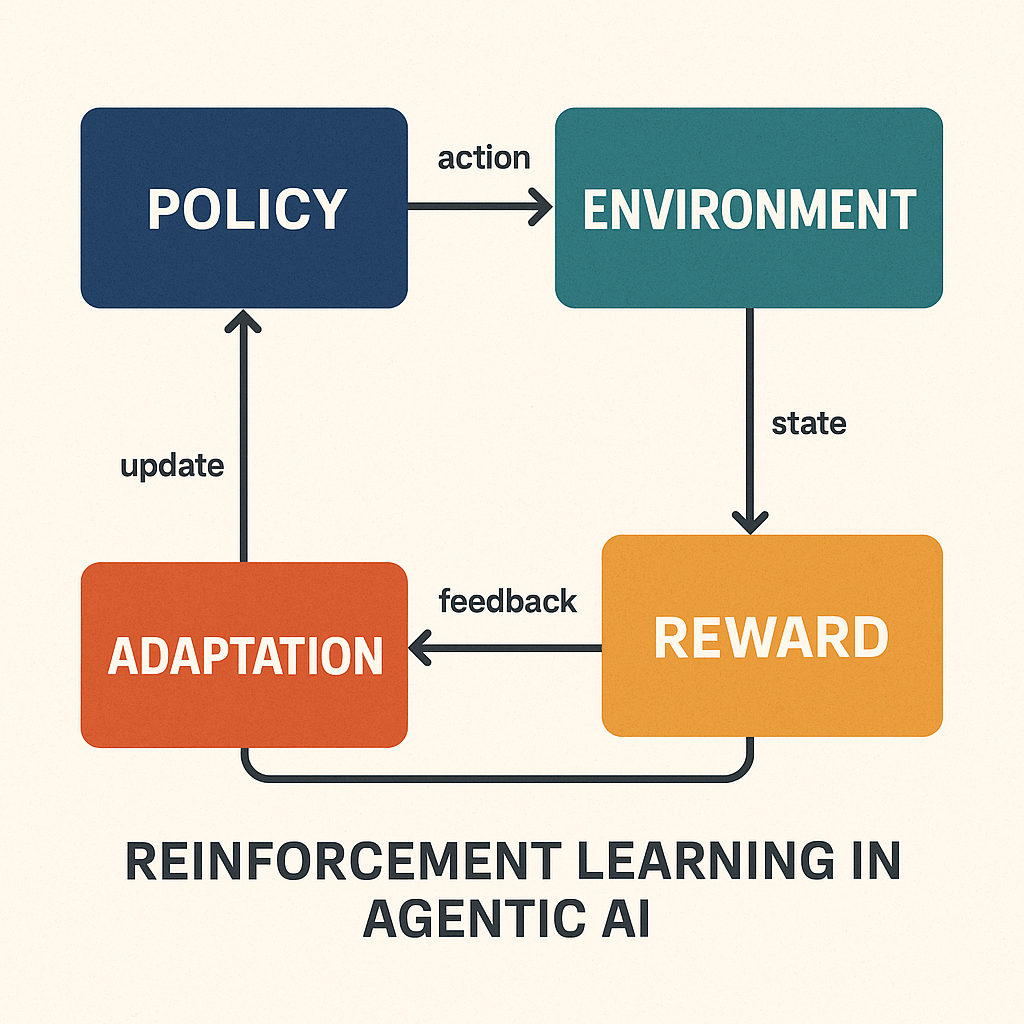
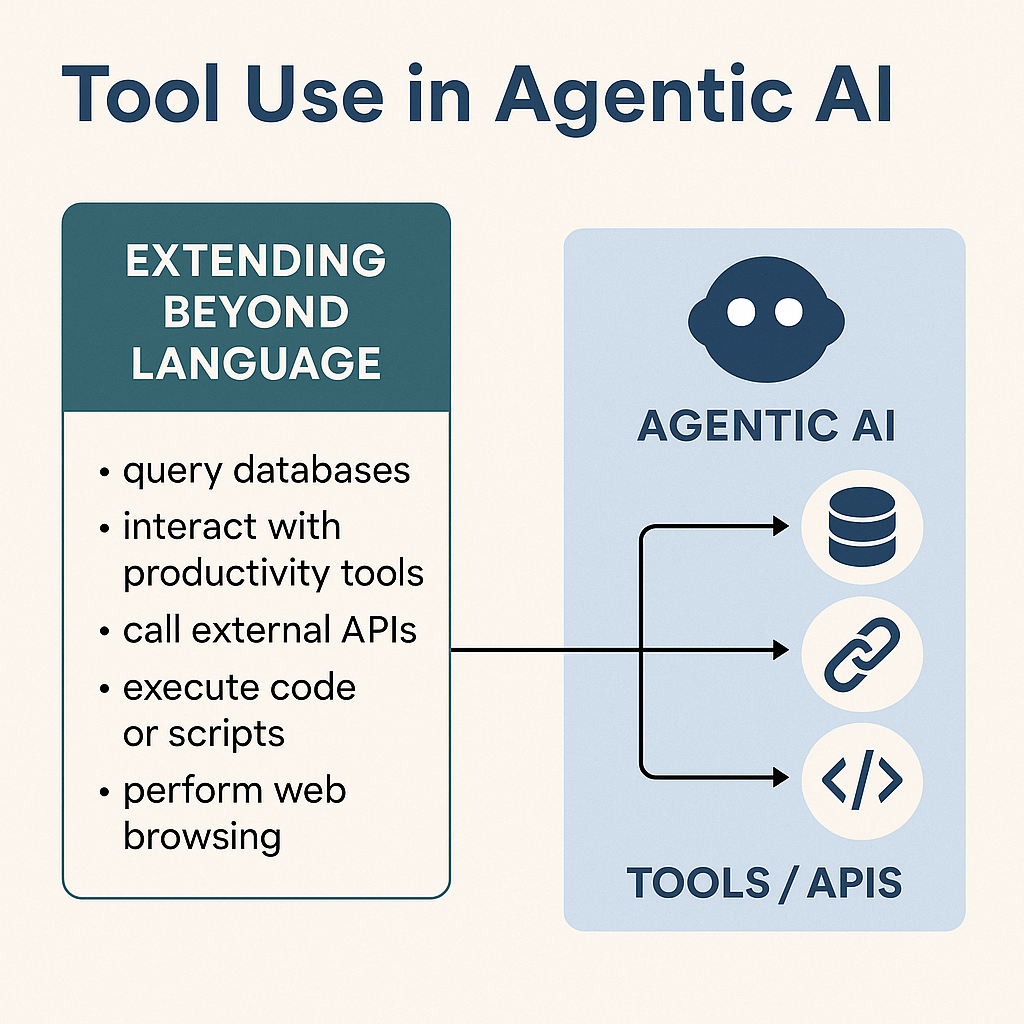
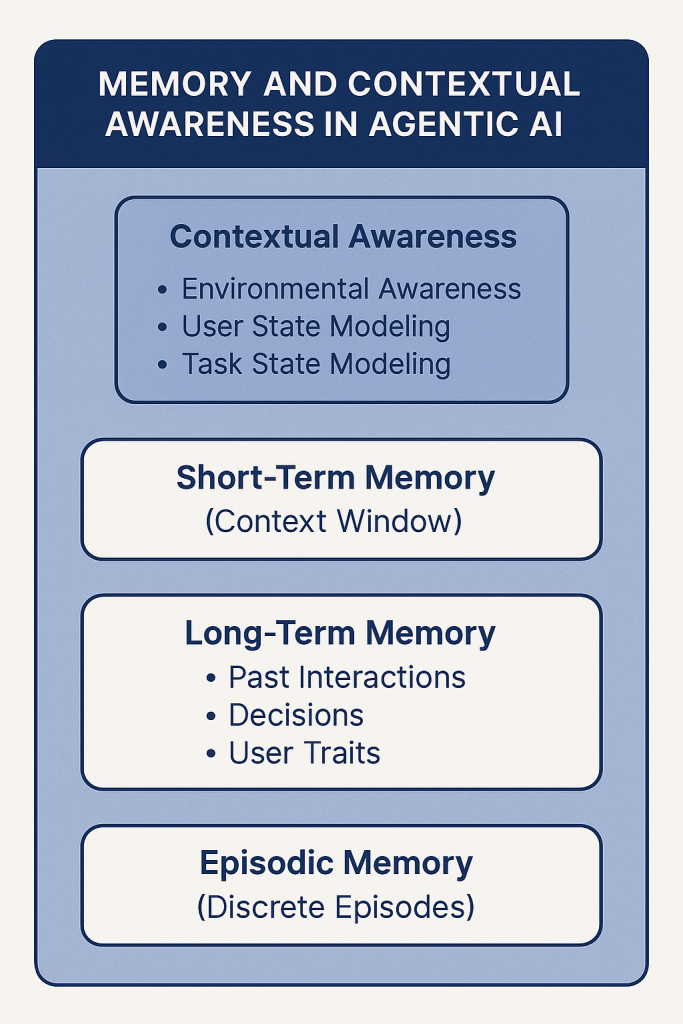
 De Lio Tech Trends