
Editor’s Note: This article discusses a rapidly developing story. Information regarding government actions, export restrictions, technical concerns, and Anthropic’s response continues to evolve. Readers should view this analysis as a snapshot of current developments and the broader implications they may have for the future of artificial intelligence.
The Emergence of Frontier AI
For nearly a decade, the artificial intelligence industry has pursued a singular objective: building increasingly capable models that can reason, create, analyze, and solve problems at a level approaching or exceeding human expertise in specific domains.
Few organizations have been more closely associated with that pursuit than Anthropic.
Founded in 2021 by former OpenAI researchers, Anthropic positioned itself differently from many of its competitors. While committed to advancing AI capabilities, the company built its identity around AI safety, transparency, and what it describes as “Constitutional AI,” a framework designed to align advanced systems with human values and intentions.
This philosophy shaped the evolution of the Claude model family, which rapidly became one of the most capable AI platforms available to enterprises, developers, and researchers. Each generation expanded the boundaries of what AI systems could accomplish, moving from conversational assistants to increasingly autonomous digital collaborators capable of complex reasoning, software engineering, scientific analysis, and long-duration task execution.
In June 2026, Anthropic introduced its most ambitious systems yet: Fable 5 and Mythos 5.
These models were not merely incremental improvements over prior generations. They represented a significant leap in capability, autonomy, and technical sophistication.
Fable 5 was designed as Anthropic’s flagship commercial model, providing advanced reasoning capabilities while maintaining extensive safety controls and usage restrictions. It was intended for broad enterprise deployment and was expected to power everything from software development and research to customer service and business operations.
Mythos 5 occupied a different category altogether.
Anthropic described Mythos as a frontier-class model with capabilities sufficiently advanced to warrant restricted access. Rather than making the model broadly available, the company initially limited usage to approved organizations, researchers, and select partners. The rationale was straightforward: some capabilities were considered powerful enough that they required additional oversight before being widely distributed.
At the time of launch, many observers viewed this as evidence that the industry was entering a new era where frontier AI systems would be treated differently from traditional software products.
Few expected that distinction to become a matter of government policy so quickly.
When AI Becomes a National Security Concern
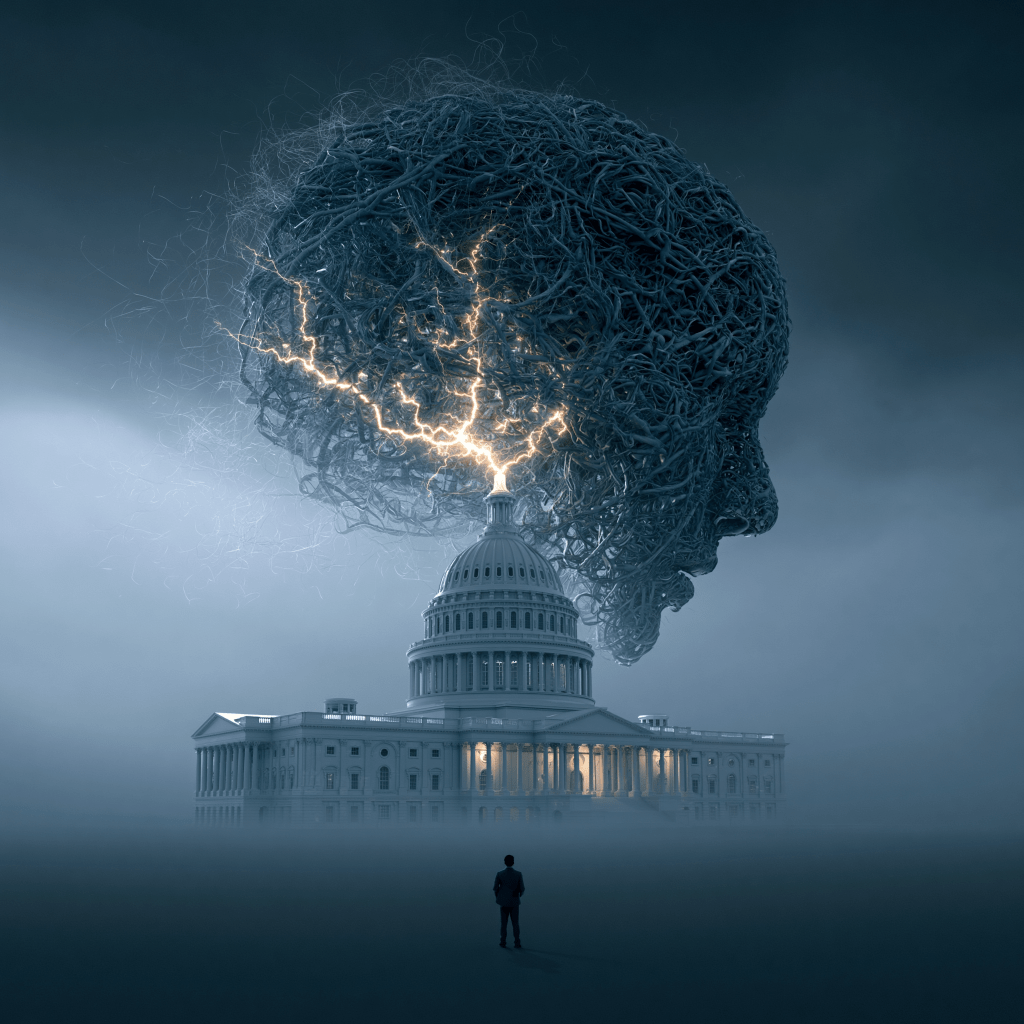
Recent reports indicate that the U.S. government directed Anthropic to suspend foreign access to Fable 5 and Mythos 5 under a national security framework.
Although many details remain unclear, the implications are already significant.
Historically, advanced software has flowed across international boundaries with relatively few restrictions. While export controls have long existed for technologies such as semiconductors, cryptography, aerospace systems, and military equipment, artificial intelligence has largely remained outside those traditional frameworks.
That appears to be changing.
Government officials have reportedly expressed concerns about the potential misuse of advanced AI systems, particularly in areas involving cybersecurity, vulnerability discovery, scientific research, and other dual-use applications. At the same time, Anthropic has publicly suggested that at least some concerns may stem from misunderstandings regarding reported jailbreak techniques or safety bypasses.
The public currently lacks sufficient information to determine which perspective is ultimately correct.
What is clear, however, is that policymakers increasingly view frontier AI models not simply as software products, but as strategic assets.
This distinction is important.
A productivity application can be distributed globally with relatively limited consequences. A frontier AI system capable of accelerating scientific discovery, identifying software vulnerabilities, assisting with cyber operations, or dramatically improving technical productivity may be viewed very differently by governments responsible for national security.
Whether one agrees with that assessment or not, it represents a fundamental shift in how advanced AI is being perceived.
The Beginning of a New Regulatory Era
The restrictions imposed on Fable 5 and Mythos 5 may ultimately be remembered as a watershed moment.
For years, the AI industry has largely regulated itself.
Companies established internal safety teams. Researchers developed evaluation frameworks. Industry leaders voluntarily published responsible deployment policies. While governments closely monitored developments, they generally allowed private companies to determine when and how new models would be released.
The current situation suggests that era may be ending.
Governments around the world are beginning to confront a difficult reality: AI capabilities are advancing at a pace that exceeds the speed of traditional policymaking.
As a result, regulators face an increasingly uncomfortable question.
Should society wait until risks emerge before taking action, or should it impose restrictions before potential risks materialize?
Reasonable people can disagree on the answer.
Supporters of stronger oversight argue that the stakes are simply too high. They point to the possibility of AI-enabled cyberattacks, automated misinformation campaigns, biological research concerns, and increasingly autonomous systems operating beyond predictable human supervision.
From this perspective, regulation is not an obstacle to innovation. It is a safeguard intended to ensure innovation remains beneficial.
Critics see the situation differently.
They argue that governments frequently struggle to understand emerging technologies and often regulate based on hypothetical concerns rather than demonstrated risks. History contains numerous examples where well-intentioned restrictions slowed innovation, reduced competition, and unintentionally strengthened large incumbents at the expense of startups and independent researchers.
Viewed through that lens, restrictions on frontier models may represent the beginning of a regulatory environment that ultimately concentrates power among a small number of organizations capable of navigating increasingly complex compliance requirements.
Regulation Versus Better Guardrails
The debate often becomes polarized, with participants arguing for either stronger regulation or unrestricted innovation.
The reality is likely more nuanced.
A more productive question may be whether advanced AI requires external regulation at all if robust guardrails can be developed within the technology itself.
Many AI companies, including Anthropic, have invested heavily in safety mechanisms designed to prevent misuse. These systems attempt to identify harmful requests, restrict dangerous outputs, and monitor suspicious activity patterns.
The challenge is that no safeguard is perfect.
Every major AI release has eventually encountered jailbreaks, workarounds, or unexpected behaviors. As models become more capable, the consequences of those failures may become increasingly significant.
This raises an important consideration.
If safety systems can eventually become sophisticated enough to reliably control advanced AI capabilities, regulation may become less necessary. Conversely, if guardrails consistently fail to keep pace with rapidly improving models, policymakers may feel compelled to intervene more aggressively.
The future of AI governance may depend on which of these outcomes proves more realistic.
Are We Approaching an Innovation Crossroads?
Perhaps the most important question emerging from this debate is whether artificial intelligence is approaching a point where progress itself becomes constrained.
Historically, transformative technologies have faced periods of public concern and regulatory scrutiny.
The automobile, aviation, nuclear energy, biotechnology, and the internet all encountered moments when society questioned how much freedom innovators should have.
In each case, progress continued.
However, it continued under evolving frameworks designed to balance innovation with safety.
AI may follow a similar path.
The concern among many technologists is not that regulation will stop innovation entirely. Rather, it is that excessive caution could slow advancement enough to alter the competitive landscape.
If frontier model releases require lengthy approvals, extensive testing, international review, or government authorization, development cycles may become substantially slower.
At the same time, others would argue that slowing down may be exactly what society needs.
After all, if artificial intelligence truly becomes one of the most transformative technologies in human history, should deployment decisions be driven solely by market competition and quarterly earnings expectations?
There is no universally accepted answer.
That uncertainty is precisely why the current debate matters.
The Larger Question Nobody Can Yet Answer
The discussion surrounding Fable 5 and Mythos 5 extends far beyond a single company or a single government action.
At its core, this is a debate about who should determine the future trajectory of artificial intelligence.
– Should that authority reside primarily with governments?
– Should private companies developing the technology retain control?
– Should international organizations establish global standards?
– Or should innovation proceed with minimal intervention, allowing markets and adoption patterns to determine outcomes?
Each approach introduces meaningful risks and meaningful benefits.
Governments can provide accountability but may hinder agility.
Private companies can innovate rapidly but may face competing commercial incentives.
International bodies can encourage consistency but often struggle to reach consensus.
Markets can accelerate progress but do not always account for long-term societal consequences.
As AI capabilities continue advancing, these questions will become increasingly difficult to avoid.
A Defining Moment for the Future of AI
The restrictions surrounding Anthropic’s Fable 5 and Mythos 5 models may ultimately prove to be temporary. They may be revised, expanded, challenged, or eventually replaced by a broader framework governing access to frontier AI systems.
Yet the significance of this moment extends far beyond a single company or a single government action.
For decades, technological progress has largely been measured by what could be built. Artificial intelligence is introducing a new variable into that equation: what society is willing to permit. As AI systems become increasingly capable of accelerating scientific discovery, automating knowledge work, and enhancing strategic decision-making, the debate is no longer centered solely on innovation. It is increasingly becoming a discussion about control, access, responsibility, and trust.
The decisions being made today may establish precedents that influence the development of advanced AI for years to come. Governments are beginning to view frontier models through the lens of national security. AI companies are balancing competitive pressures against safety concerns. Researchers are pushing the boundaries of what is technically possible while policymakers attempt to understand the implications of those advances.
History suggests that transformative technologies rarely remain completely unrestricted once their societal impact becomes apparent. The question is not whether AI will be governed, but rather how that governance will evolve and whether it can keep pace with innovation without unnecessarily constraining it.
The future of artificial intelligence may ultimately depend on finding a sustainable balance between advancement and oversight. Too little governance could introduce risks that society is unprepared to manage. Too much governance could slow innovation, concentrate power among a small number of organizations, and limit the benefits that AI may deliver to businesses, governments, and individuals around the world.
The restrictions imposed on Fable 5 and Mythos 5 may therefore be remembered as more than an isolated policy decision. They may mark the beginning of a new era in which the trajectory of artificial intelligence is shaped not only by breakthroughs in research and engineering, but also by decisions regarding who can access these technologies, under what conditions, and for what purposes.
Whether this ultimately accelerates responsible innovation or limits the pace of progress remains to be seen. What is certain is that the conversation has shifted. The future of AI will be determined not only by what the technology is capable of achieving, but by the collective choices society makes about how that capability should be governed.


They used to classify encryption as munitions, but Internet commerce ended that.
They may well lose this battle as well.
LikeLiked by 2 people