
Introduction
Yes, this is from a couple years back, but even today it is as relevant in today’s AI space as it was back then.
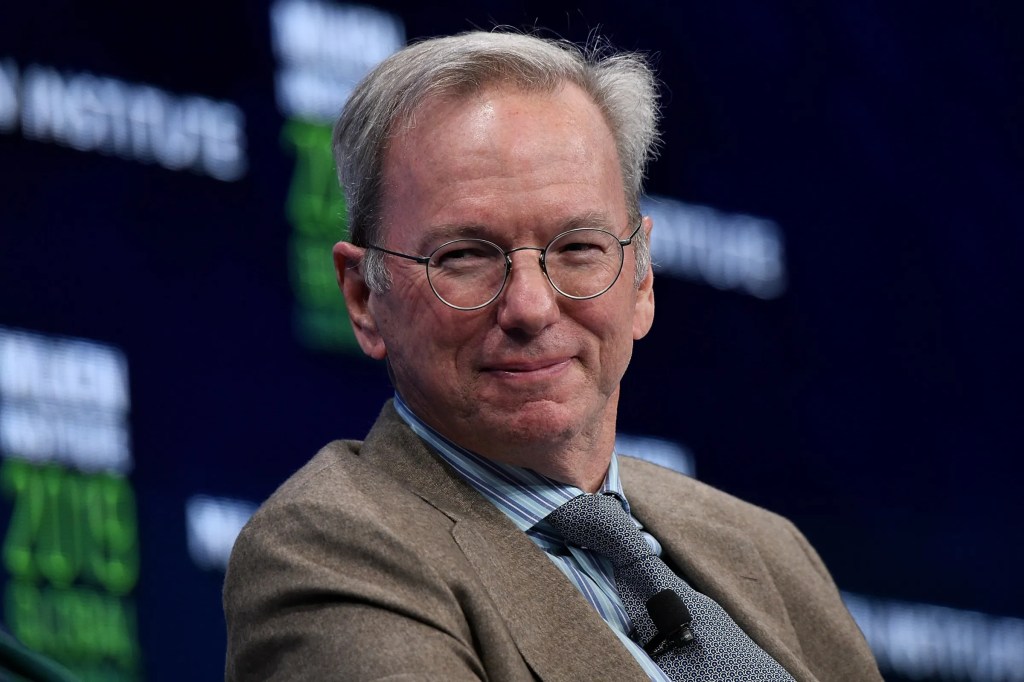
In 2024, a Stanford University interview featuring former Google CEO Eric Schmidt became one of the most controversial AI discussions of the year. The video was initially posted publicly by Stanford, rapidly spread across social media, and was later removed after Schmidt reportedly requested its takedown following backlash over several comments he made regarding artificial intelligence, Google’s culture, startup competition, intellectual property, and the future trajectory of AI systems.
The removal itself intensified interest. Once something is labeled “banned” or “removed,” the internet often interprets it as containing hidden truths. Reuploads and commentary videos quickly appeared online, framing the interview as a leaked glimpse into what elite technology leaders privately believe about AI’s future.
But beyond the sensationalism, the speech deserves careful analysis because Schmidt represents something important in the AI ecosystem: a bridge between Silicon Valley operational leadership, geopolitical technology strategy, venture investment, and national-security-oriented AI thinking. His comments matter not because they are guaranteed to be correct, but because they reveal how influential technology leaders may be interpreting the current AI transition.
What Did Eric Schmidt Actually Say?
The public reaction to the interview focused on several highly controversial themes.
1. Google Lost Momentum in AI
Schmidt argued that Google lost strategic momentum in AI partly because it became too comfortable and bureaucratic. He controversially suggested that work-from-home culture and prioritization of work-life balance weakened Google’s competitive intensity compared to companies like OpenAI and Anthropic.
This statement triggered immediate backlash because:
- many viewed it as dismissive of workers
- it oversimplified Google’s AI challenges
- it contradicted evidence that innovation problems often stem from organizational complexity, not remote work alone
- Schmidt remained connected to the broader Google ecosystem, making the criticism politically sensitive
He later stated that he “misspoke.”
2. AI Development Will Be Ruthlessly Competitive
One of the most alarming sections involved Schmidt describing future startup behavior in AI markets. He implied that successful AI-native companies could rapidly clone platforms, steal user behavior patterns, and iterate faster than legal systems can respond. Reports highlighted comments where he suggested entrepreneurs could build a copy of platforms like TikTok using AI and “hire lawyers to clean up the mess later.”
This triggered outrage because it appeared to normalize aggressive intellectual property violations and “move fast and break things” behavior at unprecedented scale.
3. AI Systems Will Become Increasingly Autonomous
Schmidt also discussed AI agents and systems capable of independently executing tasks, adapting behavior, and recursively improving workflows. While he did not claim sentient AGI had arrived, his framing suggested that current generative AI systems are merely primitive precursors to far more capable autonomous infrastructures.
This aligns with broader industry discussions around:
- agentic AI systems
- autonomous software agents
- recursive workflow orchestration
- AI-driven scientific discovery
- machine-led optimization systems
These concepts are no longer theoretical research topics alone. Many major AI firms are actively pursuing them.
Why Was the Video Removed?
The official explanation centered around Schmidt saying he regretted portions of the discussion and requested removal after realizing how widely the interview was spreading.
However, the controversy expanded because observers believed the removal implied one of several possibilities:
- he revealed uncomfortable truths
- he exposed elite thinking about AI competition
- he spoke more candidly than intended
- Stanford underestimated how viral the interview would become
- legal or reputational risks emerged after publication
The takedown itself created a Streisand Effect. Instead of disappearing, the interview became more influential.
What Can We Reasonably Deduce From the Speech?
The most valuable part of the interview may not be the specific predictions. It may be the mindset it reveals.
Deduction #1: AI Leadership Believes Competition Is Escalating Faster Than Regulation
The tone of Schmidt’s discussion suggests that leading AI figures increasingly believe:
- AI development is now geopolitical
- speed matters more than perfection
- competitive advantage compounds rapidly
- slow organizations may become irrelevant
This mindset helps explain why so many AI companies are releasing systems aggressively despite unresolved concerns around hallucinations, bias, misinformation, copyright disputes, and labor disruption.
Deduction #2: Industry Leaders Believe AI Capability Growth Is Underestimated
A recurring theme in elite AI discussions is that the public still perceives tools like ChatGPT as “advanced autocomplete,” while insiders increasingly view them as the beginning of generalized cognitive infrastructure.
This difference matters.
If leadership genuinely believes future systems may autonomously conduct research, code software, optimize infrastructure, and coordinate workflows, then current investment levels suddenly become understandable.
Deduction #3: The Industry Is Moving Toward Agentic Systems
Schmidt’s framing strongly implied that future AI systems will not remain passive assistants.
Instead, the trajectory points toward systems that:
- take initiative
- coordinate tools autonomously
- maintain memory
- optimize toward goals
- interact with other systems
- execute multi-step reasoning chains
This shift from reactive AI to autonomous AI may become one of the defining transitions of the decade.
What Was Legitimate Versus Speculative?
Separating Observable AI Reality From Silicon Valley Futurism
One of the most important aspects of analyzing Eric Schmidt’s Stanford AI discussion is distinguishing between what is already demonstrably happening versus what remains largely theoretical, aspirational, or speculative. This distinction is often lost in public AI conversations because executives, researchers, investors, and media commentators frequently blend current capabilities with future projections into a single narrative.
The result is a dangerous ambiguity where legitimate technological trends become mixed with science-fiction-level assumptions.
To properly evaluate Schmidt’s remarks, we need to divide the discussion into three categories:
- Observable realities already happening
- Probable developments supported by evidence
- Highly speculative extrapolations that may or may not materialize
Category 1: Legitimate and Observable Developments
The AI Shifts That Are Already Reshaping Society, Industry, and Power Structures
One of the reasons Eric Schmidt’s Stanford discussion resonated so strongly is because portions of what he described are not hypothetical anymore. They are already unfolding in real time across industry, geopolitics, labor markets, infrastructure development, and digital ecosystems.
This is an important distinction.
Many public discussions about AI jump immediately into speculative fears about superintelligence or machine consciousness. But the most immediate transformations are far more grounded, measurable, and operational. These developments are already altering how corporations compete, how governments think about national security, and how digital systems are being designed.
What makes Schmidt’s comments important is that many of them align closely with observable trajectories already visible across the technology landscape.
AI Competition Has Become a Strategic and Geopolitical Arms Race
Perhaps the most legitimate aspect of Schmidt’s perspective is the idea that artificial intelligence is no longer merely a commercial technology sector.
AI has increasingly become a strategic geopolitical asset.
Governments now view AI leadership as tied directly to:
- military superiority
- economic influence
- cyber capability
- intelligence gathering
- industrial productivity
- global technological dominance
This shift fundamentally changes how AI development is approached.
Historically, major technological revolutions often evolved through commercial markets first and government involvement second. AI appears to be evolving differently.
Today, governments are already influencing:
- semiconductor exports
- GPU supply chains
- compute access
- AI safety standards
- national AI investment initiatives
- military AI partnerships
The United States restrictions on advanced semiconductor exports to China illustrate how AI compute itself has become strategically sensitive.
This is why Schmidt and others increasingly use language associated with “competition,” “national preparedness,” and “strategic infrastructure.”
His perspective is shaped partly by his involvement in U.S. national security AI advisory efforts.
This changes the incentives dramatically.
When nations perceive technological superiority as existentially important, acceleration pressures intensify.
AI Infrastructure Is Becoming a Massive Industrial Buildout
One of Schmidt’s most important observations involved the enormous infrastructure demands required to sustain frontier AI development.
This is already visible.
Modern frontier models require extraordinary amounts of:
- computational power
- energy consumption
- cooling systems
- networking bandwidth
- specialized chips
- data center expansion
This is not theoretical.
Major technology companies are spending unprecedented sums building AI infrastructure ecosystems.
Schmidt referenced discussions involving infrastructure costs potentially reaching tens or hundreds of billions of dollars.
The implications are enormous.
AI Is Becoming Capital Intensive
The AI industry is increasingly favoring organizations with access to:
- hyperscale compute
- sovereign funding
- semiconductor partnerships
- energy infrastructure
- elite engineering talent
This naturally concentrates power.
Smaller companies may innovate at the application layer, but only a handful of organizations may realistically possess the resources necessary to train frontier-scale models.
This creates a future where computational capability itself becomes a form of strategic power.
The Energy Demands of AI Are Becoming a Serious Concern
One overlooked but legitimate issue Schmidt referenced involves energy consumption.
Large-scale AI systems require extraordinary electricity demands.
Future AI infrastructure may compete with entire industrial sectors for energy allocation.
This raises major questions:
- Can power grids sustain future AI growth?
- Will AI infrastructure reshape energy policy?
- Will nations prioritize AI compute over other industrial usage?
- Will energy-rich nations gain disproportionate AI advantages?
Schmidt specifically highlighted concerns around energy availability and the strategic importance of partnerships with countries possessing large-scale hydroelectric power capacity.
This moves AI beyond software.
AI increasingly intersects with:
- energy policy
- industrial policy
- resource allocation
- environmental sustainability
AI Agents Are Already Emerging
One of the most misunderstood aspects of modern AI development is the transition from passive systems toward autonomous systems.
Most people still conceptualize AI as:
a chatbot that answers questions
But industry development is increasingly focused on:
systems that perform actions
This distinction is enormous.
Modern AI systems are increasingly capable of:
- executing workflows
- browsing information sources
- using software tools
- generating code
- interacting with APIs
- orchestrating multi-step tasks
These are primitive forms of agentic behavior.
Schmidt’s discussion around future AI agents reflects a real technological direction already underway.
While current systems remain unreliable, the trajectory matters more than the current imperfections.
The long-term transition appears to be moving from:
AI as assistant
toward:
AI as operator
That shift could radically transform enterprise software ecosystems.
AI Is Beginning to Reshape Knowledge Work
One of the most legitimate near-term concerns involves labor transformation.
Unlike earlier automation waves that primarily affected physical labor, generative AI increasingly impacts cognitive labor.
This includes:
- software development
- customer support
- marketing
- legal review
- research synthesis
- content creation
- operational analysis
Some measurable productivity improvements are already emerging in controlled environments.
However, this creates a more complicated reality than simplistic “AI replaces humans” narratives.
More likely outcomes include:
- workforce compression
- role augmentation
- skill polarization
- increased productivity expectations
- shrinking entry-level pathways
One major concern is that AI may disproportionately affect junior knowledge workers first.
If AI systems increasingly perform foundational tasks traditionally assigned to entry-level employees, organizations may reduce apprenticeship-style hiring structures.
This could fundamentally alter professional development pipelines.
Synthetic Media and Information Manipulation Are Already Operational Risks
One of the most immediate dangers from AI is not hypothetical superintelligence.
It is synthetic information generation.
AI systems can already generate:
- realistic text
- synthetic audio
- deepfake video
- fake identities
- manipulated imagery
- automated persuasion content
This creates enormous implications for:
- elections
- fraud
- misinformation
- identity theft
- financial scams
- social engineering
The challenge is that human beings evolved in environments where seeing and hearing generally implied authenticity.
That assumption is now breaking down.
This is not speculative anymore.
Legal and Ethical Systems Are Already Struggling to Keep Pace
Another legitimate observation connected to Schmidt’s controversial remarks involves legal lag.
Technology historically evolves faster than regulation.
But AI may be accelerating this imbalance dramatically.
Questions around:
- intellectual property
- liability
- ownership
- authorship
- misinformation
- autonomous decision-making
remain unresolved.
This creates an unstable environment where companies often deploy systems before governance frameworks mature.
Schmidt’s controversial comments regarding aggressive startup behavior reflected this broader reality, even if his framing triggered backlash.
The Most Important Reality: Society Is Entering an AI Systems Era
Perhaps the most important legitimate observation beneath Schmidt’s discussion is this:
AI is no longer merely becoming a tool.
It is becoming infrastructure.
That distinction matters profoundly.
Infrastructure reshapes civilization.
Electricity reshaped civilization.
The internet reshaped civilization.
Mobile computing reshaped civilization.
If AI evolves into a foundational operational layer embedded across industries, governments, defense systems, finance, medicine, education, logistics, and communications, then the societal impact could become extraordinarily large even without achieving science-fiction-level superintelligence.
This may ultimately be the most important takeaway from Schmidt’s remarks.
The biggest transformation may not come from conscious machines.
It may come from increasingly autonomous systems quietly integrating into every institutional layer of modern civilization before society fully understands the consequences of that integration.
AI Competition Has Become Geopolitical
This is not speculative.
Artificial intelligence is now deeply intertwined with national security, economic dominance, semiconductor control, and military strategy. Governments increasingly view AI leadership similarly to how nuclear capability, aerospace superiority, or energy dominance were viewed in prior eras.
This explains:
- U.S. semiconductor export restrictions on China
- massive sovereign investment into AI infrastructure
- hyperscaler data center expansion
- military interest in autonomous systems
- strategic alliances around compute and energy access
Schmidt’s comments about AI infrastructure becoming strategically important align with real-world developments already underway.
This also explains why many AI executives increasingly use language associated with “arms races” and “strategic advantage.”
AI Agents Are Real and Already Emerging
When Schmidt discussed autonomous agents, many critics interpreted the comments as science fiction. In reality, primitive forms of agentic AI already exist.
Today’s systems can already:
- autonomously browse the web
- execute multi-step workflows
- write and debug software
- call APIs
- orchestrate external tools
- maintain limited contextual memory
- complete chained reasoning tasks
These systems remain unreliable, but the direction is real.
The industry is clearly moving from:
“AI as chatbot”
toward:
“AI as autonomous task executor”
This transition is already visible across enterprise automation, software engineering copilots, autonomous research tools, and workflow orchestration platforms.
Schmidt’s framing here was largely legitimate.
AI Infrastructure Costs Are Exploding
Another legitimate observation involved the enormous cost of frontier AI development.
Training advanced frontier models now requires:
- massive GPU clusters
- high-end semiconductor supply chains
- large-scale energy consumption
- advanced networking infrastructure
- enormous datasets
The capital intensity of AI is becoming extreme. Reports from industry leaders increasingly discuss tens or hundreds of billions of dollars required for next-generation infrastructure.
This creates a critical consequence:
AI power is concentrating
Only a small number of organizations can realistically compete at the frontier.
That concentration of capability is a legitimate societal concern.
AI-Generated Manipulation and Misinformation Are Real Risks
Schmidt’s warnings about misinformation align strongly with existing evidence.
AI-generated content is already becoming increasingly difficult for humans to distinguish from authentic human communication.
This creates serious implications for:
- elections
- fraud
- impersonation
- propaganda
- synthetic media
- social engineering
Unlike some hypothetical AI fears, this issue is already operational today.
Category 2: Plausible but Still Uncertain Developments
These are areas where Schmidt’s claims may ultimately prove correct, but the timeline, magnitude, or feasibility remain uncertain.
Autonomous AI Ecosystems
One recurring concern from Schmidt and other AI leaders is the emergence of large ecosystems of interconnected AI agents.
The idea is that future systems may:
- coordinate tasks autonomously
- negotiate with other agents
- recursively optimize workflows
- develop emergent behaviors
This is plausible.
However, current systems still struggle with:
- reasoning consistency
- hallucinations
- long-term planning
- contextual persistence
- reliable execution
The architecture for large-scale autonomous ecosystems exists conceptually, but we are not yet seeing stable implementations at the scale futurists describe.
Recursive Self-Improvement
A major concern in advanced AI discussions involves recursive improvement:
AI systems helping design better AI systems.
This already occurs in limited ways through optimization and automated research assistance.
However, the leap from:
“AI-assisted engineering”
to:
“runaway self-improving superintelligence”
is enormous.
There is currently no evidence that modern models possess autonomous scientific agency capable of independently redesigning themselves at civilization-altering levels.
This remains speculative.
Massive Workforce Displacement
AI will absolutely alter labor markets.
The uncertainty is scale and speed.
Historically, technological revolutions often:
- eliminate some roles
- transform others
- create new industries simultaneously
The fear that AI will rapidly eliminate most white-collar jobs may be overstated in the near term because organizations, regulation, economics, and human trust systems evolve slower than technology alone.
Still, disruption risk is legitimate, especially for repetitive cognitive work.
Category 3: Highly Speculative or Philosophically Loaded Claims
This is where many AI discussions become difficult to separate from ideology, futurism, or existential philosophy.
AI Systems Becoming Fully Autonomous Superintelligences
One of the largest speculative leaps involves claims that AI systems may soon surpass humanity broadly across all intellectual domains.
This assumption depends on unresolved questions including:
- whether scaling laws continue indefinitely
- whether reasoning can emerge purely from scale
- whether current architectures can achieve generalized cognition
- whether agency naturally emerges from prediction systems
These questions remain unresolved.
The public often hears certainty from AI leaders where actual scientific uncertainty still exists.
AI Developing Hidden Languages or Intentions
Some AI leaders, including Schmidt in other discussions, have suggested future AI agents may communicate in ways humans cannot understand.
While emergent communication behaviors have appeared in constrained experimental systems, extrapolating this into uncontrollable machine civilizations is still highly speculative.
These discussions often blend legitimate alignment research with dramatic hypothetical scenarios.
Existential Extinction Scenarios
Perhaps the most controversial aspect of elite AI discourse is the repeated comparison between AI risk and existential threats like nuclear war or pandemics.
There are respected researchers who take these risks seriously.
However:
- no consensus exists
- timelines vary dramatically
- mechanisms remain debated
- evidence remains indirect
This does not mean such concerns should be ignored.
But it does mean public discussions often overstate certainty.
The Most Important Insight From Schmidt’s Speech
Perhaps the most revealing part of Schmidt’s Stanford discussion was not any single prediction.
It was the psychological posture behind the conversation.
The interview suggested that many elite AI leaders increasingly believe:
- transformational AI is inevitable
- competitive acceleration cannot realistically be stopped
- regulation will lag capability growth
- society is underestimating the magnitude of change
That mindset itself may matter more than whether every prediction becomes true.
Because when powerful institutions believe disruption is inevitable, they often accelerate toward it.
Final Assessment
Eric Schmidt’s comments contained a mixture of:
- accurate observations
- plausible projections
- aggressive extrapolations
- speculative futurism
The danger for the public is not simply misinformation.
It is category confusion.
When legitimate concerns about automation, misinformation, and concentration of power become merged with speculative superintelligence narratives, meaningful policy discussions become distorted.
The public should neither panic nor dismiss these conversations outright.
Instead, the more rational approach is to recognize that:
- some AI risks are already real and measurable
- some future developments are plausible but uncertain
- some claims remain highly speculative despite confident rhetoric from industry leaders
The challenge moving forward will be determining whether society can separate technological reality from technological mythology before policy, economics, and public trust become shaped by narratives rather than evidence.
Join us, as we continue this conversation on (Spotify) along with additional topics in the technology space.


