
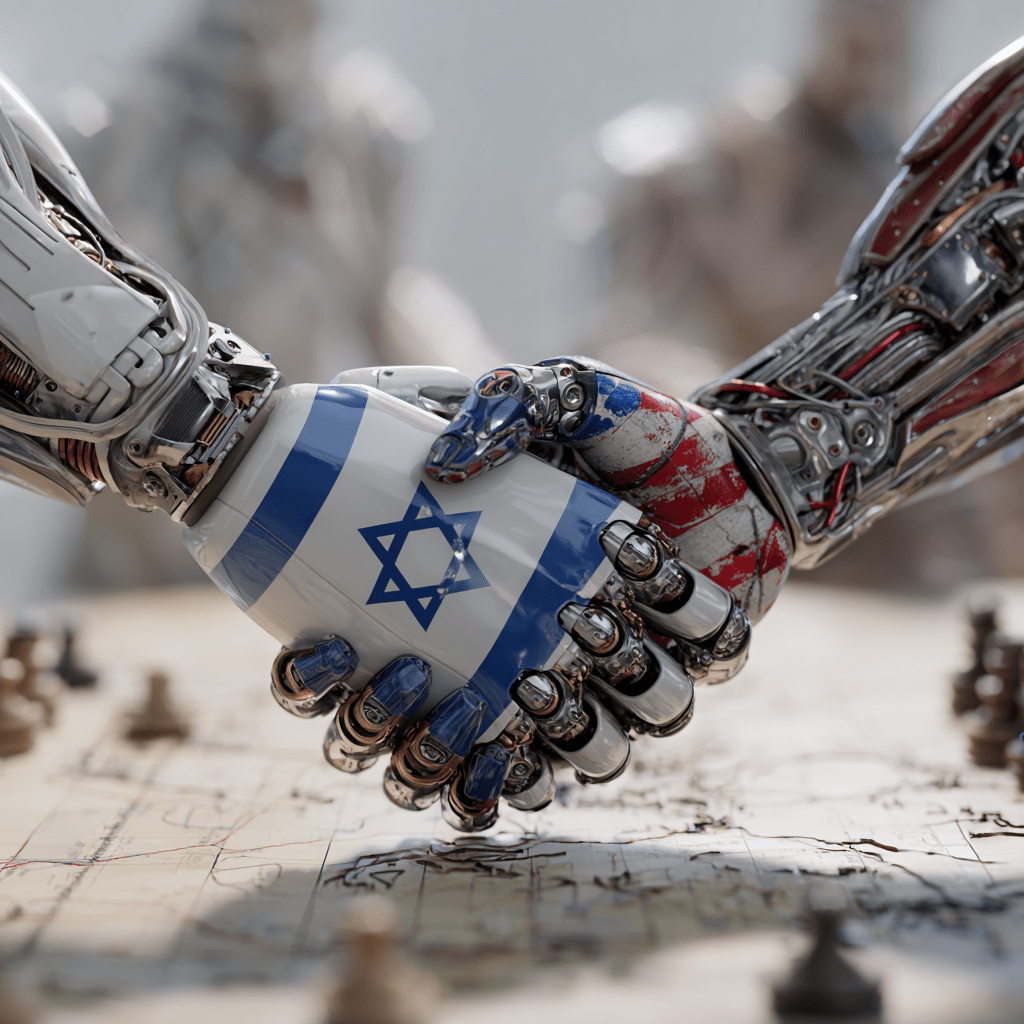
Mossad 101: Mandate, Structure, and Mythos
Created on December 13, 1949 at the urging of Reuven Shiloah, Israel’s founding Prime-Minister-level intelligence adviser, the Ha-Mossad le-Modiʿin ule-Tafkidim Meyuḥadim (“Institute for Intelligence and Special Operations”) was designed to knit together foreign intelligence collection, covert action, and counter-terrorism under a single civilian authority. From the outset Mossad reported directly to the prime minister—an unusual arrangement that preserved agility but limited formal oversight. en.wikipedia.org
From Pioneer Days to Global Reach (1950s-1970s)
- Operation Garibaldi (1960) – The audacious abduction of Nazi war criminal Adolf Eichmann from Buenos Aires showcased Mossad’s early tradecraft—weeks of low-tech surveillance, forged travel documents, and an El Al aircraft repurposed as an extraction platform. wwv.yadvashem.orgtime.com
- Six-Day War Intelligence (1967) – Signals intercepts and deep-cover assets provided the IDF with Arab order-of-battle details, shaping Israel’s pre-emptive strategy.
- Operation Wrath of God (1970-1988) – Following the Munich massacre, Mossad waged a decades-long campaign against Black September operatives—generating both praise for deterrence and criticism for collateral casualties and mistaken identity killings. spyscape.com
- Entebbe (1976) – Mossad dossiers on Ugandan airport layouts and hostage demographics underpinned the IDF’s storied rescue, fusing HUMINT and early satellite imagery. idf.il
Mossad & the CIA: Shadow Partners in a Complicated Alliance
1 | Foundations and First Big Win (1950s-1960s)
- Early information barter. In the 1950s Israel supplied raw HUMINT on Soviet weapons proliferation to Langley, while the CIA provided satellite imagery that helped Tel Aviv map Arab air defenses; no formal treaty was ever signed, keeping both sides deniable.
- Operation Diamond (1966). Mossad persuaded Iraqi pilot Munir Redfa to land his brand-new MiG-21 in Israel. Within days the aircraft was quietly flown to the Nevada Test Site, where the CIA and USAF ran “Project HAVE DOUGHNUT,” giving American pilots their first look at the MiG’s radar and flight envelope—knowledge later credited with saving lives over Vietnam. jewishvirtuallibrary.orgjewishpress.com
Take-away: The MiG caper set the template: Mossad delivers hard-to-get assets; the CIA supplies global logistics and test infrastructure.
2 | Cold-War Humanitarianism and Proxy Logistics (1970s-1980s)
| Operation | Year | Joint Objective | Controversy | Civil or Strategic Upshot |
|---|---|---|---|---|
| Operation Moses | 1984 | Air-lift ~8,000 Ethiopian Jews from Sudan to Israel | Exposure forced an early shutdown and left ~1,000 behind | First large-scale CIA-Mossad humanitarian mission; became a model for later disaster-relief air bridges en.wikipedia.orgmainejewishmuseum.org |
| Operation Cyclone (support to Afghan Mujahideen) | 1981-89 | Funnel Soviet-bloc arms and cash to anti-Soviet fighters | Later blowback: some recipients morphed into jihadist networks | Israeli-captured AK-47s and RPGs moved via CIA–ISI channels, giving Washington plausible deniability en.wikipedia.org |
| Operation Tipped Kettle | 1983-84 | Transfer PLO-captured weapons to Nicaraguan Contras | Precursor to Iran-Contra scandal | Highlighted how the two services could cooperate even when formal U.S. law forbade direct aid en.wikipedia.org |
3 | Trust Shaken: Espionage & Legal Landmines
- Jonathan Pollard Affair (1985). Pollard’s arrest for passing U.S. secrets to an Israeli technical bureau (run by former Mossad officers) triggered a decade-long freeze on some intel flows and forced the CIA to rewrite counter-intelligence protocols. nsarchive.gwu.edu
- Beirut Car-Bomb Allegations (1985). A House panel found no proof of CIA complicity in a blast that killed 80, yet suspicions of Mossad-linked subcontractors lingered, underscoring the reputational risk of joint covert action. cia.gov
4 | Counter-Proliferation Partnership (2000s-2010s)
| Program | Modus Operandi | Strategic Dividend | Points of Contention |
|---|---|---|---|
| Operation Orchard / Outside the Box (2007) | Mossad hacked a Syrian official’s laptop; U.S. analysts validated the reactor evidence, and Israeli jets destroyed the site. | Averted a potential regional nuclear arms race. | CIA initially missed the build-up and later debated legality of a preventive strike. politico.comarmscontrol.org |
| Stuxnet / Olympic Games (≈2008-10) | NSA coders, Mossad field engineers, and CIA operational planners built the first cyber-physical weapon, crippling Iranian centrifuges. | Delayed Tehran’s program without air-strikes. | Sparked debate over norms for state malware and opened Pandora’s box for copy-cat attacks. en.wikipedia.org |
5 | Counter-Terrorism and Targeted Killings
- Imad Mughniyah (Damascus, 2008). A joint CIA–Mossad cell planted and remotely detonated a precision car bomb, killing Hezbollah’s external-operations chief. U.S. lawyers stretched EO 12333’s assassination ban under a “self-defense” rationale; critics called it perfidy. washingtonpost.com
- Samir Kuntar (Damascus, 2015). Israel claimed sole credit, but open-source reporting hints at U.S. ISR support—another example of the “gray space” where cooperation thrives when Washington needs distance. haaretz.com
6 | Intelligence for Peace & Civil Stability
- Oslo-era Security Architecture. After 1993 the CIA trained Palestinian security cadres while Mossad fed real-time threat data, creating today’s layered checkpoint system in the West Bank—praised for reducing terror attacks yet criticized for human-rights costs. merip.org
- Jordan–Israel Treaty (1994). Joint CIA-Mossad SIGINT on cross-border smuggling reassured Amman that a peace deal would not jeopardize regime security, paving the way for the Wadi Araba signing. brookings.edu
- Operation Moses (again). Beyond the immediate rescue, the mission became a diplomatic trust-builder among Israel, Sudan, and the U.S., illustrating how clandestine logistics can serve overt humanitarian goals. en.wikipedia.org
7 | AI—The New Glue (2020s-Present)
Where the Cold War relied on barter (a captured jet for satellite photos), the modern relationship trades algorithms and data:
- Cross-Platform Face-Trace. A shared U.S.–Israeli model merges commercial, classified, and open-source video feeds to track high-value targets in real time.
- Graph-AI “Target Bank.” Mossad’s Habsora ontology engine now plugs into CIA’s Palantir-derived data fabric, shortening find-fix-finish cycles from weeks to hours.
- Predictive Logistics. Reinforcement-learning simulators, trained jointly in Nevada and the Negev, optimize exfiltration routes before a team even leaves the safe-house.
8 | Fault Lines to Watch
| Strategic Question | Why It Matters for Future Research |
|---|---|
| Oversight of autonomy. Will algorithmic kill-chain recommendations be subject to bipartisan review, or remain in the shadows of executive findings? | The IDF’s Habsora (“Gospel”) and Lavender systems show how algorithmic target-generation can compress week-long human analysis into minutes—yet critics note that approval sometimes shrinks to a 20-second rubber-stamp, with civilian-to-combatant casualty ratios widened to 15–20 : 1. The internal debate now gripping Unit 8200 (“Are humans still in the loop or merely on the loop?”) is precisely the scenario U.S. lawmakers flagged when they drafted the 2025 Political Declaration on Responsible Military AI. Comparative research can test whether guard-rails such as mandatory model-explainability, kill-switches, and audit trails genuinely reduce collateral harm, or simply shift liability when things go wrong. washingtonpost.com972mag.com2021-2025.state.gov |
| Friend-vs-Friend spying. Post-Pollard safeguards are better, but AI-enabled insider theft is cheaper than ever. | Jonathan Pollard proved that even close allies can exfiltrate secrets; the same dynamic now plays out in code and data. Large language models fine-tuned on classified corpora become irresistible theft targets, while GPU export-tiers (“AI Diffusion Rule”) mean Israel may court suppliers the U.S. has black-listed. Research is needed on zero-knowledge or trust-but-verify enclaves that let Mossad and CIA query shared models without handing over raw training data—closing the “insider algorithm” loophole exposed by the Pollard precedent. csis.org |
| Regional AI arms race. As IRGC cyber units and Hezbollah drone cells adopt similar ML pipelines, can joint U.S.–Israeli doctrine deter escalation without permanent shadow war? | Iran’s IRGC and Hezbollah drone cells have begun trialing off-the-shelf reinforcement-learning agents; Mossad’s response—remote-piloted micro-swarm interceptors—was previewed during the 2025 Tehran strike plan in which AI-scored targets were hit inside 90 seconds of identification. Escalation ladders can shorten to milliseconds once both sides trust autonomy; modelling those feedback loops requires joint red-team/blue-team testbeds that span cyber, EW, and kinetic domains. washingtonpost.comrusi.org |
| Algorithmic Bias & Collateral Harm. Hidden proxies in training data can push false-positive rates unacceptably high—especially against specific ethnic or behavioral profiles—making pre-deployment bias audits and causal testing a top research priority. | Investigations into Lavender show a 10 % false-positive rate and a design choice to strike militants at home “because it’s easier”—raising classic bias questions (male names, night-time cellphone patterns, etc.). Civil-society audits argue these systems quietly encode ethno-linguistic priors that no Western IRB would permit. Future work must probe whether techniques like counter-factual testing or causal inference can surface hidden proxies before the model hits the battlespace. 972mag.com972mag.com |
| Data Sovereignty & Privacy of U.S. Persons. With legislation now tying joint R&D funding to verifiable privacy safeguards, differential-privacy budgets, retention limits, and membership-inference tests must be defined and enforced to keep U.S.-person data out of foreign targeting loops. | The America–Israel AI Cooperation Act (H.R. 3303, 2025) explicitly conditions R&D funds on “verifiable technical safeguards preventing the ingestion of U.S.-person data.” Yet no public guidance defines what qualifies as sufficient differential-privacy noise budgets or retention periods. Filling that gap—through benchmark datasets, red-team “membership-inference” challenges, and shared compliance metrics—would turn legislative intent into enforceable practice. congress.gov |
| Governance of Co-Developed Models. Dual-use AI created under civilian grants can be fine-tuned into weapons unless provenance tracking, license clauses, and on-device policy checks restrict downstream retraining and deployment. | Joint projects ride civilian channels such as the BIRD Foundation, blurring military–commercial boundaries: a vision-model trained for drone navigation can just as easily steer autonomous loitering munitions. Cross-disciplinary research should map provenance chains (weights, data, fine-tunes) and explore license clauses or on-device policy engines that limit unintended reuse—especially after deployment partners fork or retrain the model outside original oversight. dhs.gov |
Why a Research Agenda Now?
- Normalization Window Is Narrow. The first operational generation of autonomous clandestine systems is already in the field; norms set in the next 3-5 years will hard-bake into doctrine for decades.
- Dual-Use Diffusion Is Accelerating. Consumer-grade GPUs and open-source models reduce the capital cost of nation-state capabilities, widening the actor set faster than export-control regimes can adapt.
- Precedent Shapes Law. Court challenges (ICC investigations into Gaza targeting, U.S. FISA debates on model training) will rely on today’s empirical studies to define “reasonable human judgment” tomorrow.
- Trust Infrastructure Is Lagging. Technologies such as verifiable compute, federated fine-tuning, and AI provenance watermarking exist—but lack battle-tested reference implementations compatible with Mossad-CIA speed requirements.
For scholars, technologists, and policy teams, each fault-line opens a vein of questions that bridge computer science, international law, and security studies. Quantitative audits, normative frameworks, and even tabletop simulations could all feed the evidence-base needed before the next joint operation moves one step closer to full autonomy.
The Mossad-CIA alliance oscillates between indispensable partnership and latent distrust. Its most controversial moments—from Pollard to Stuxnet—often coincide with breakthroughs that arguably averted wider wars or humanitarian disasters. Understanding this duality is essential for any future discussion on topics such as algorithmic oversight, counter-AI measures, or the ethics of autonomous lethal action—each of which deserves its own deep-dive post.
9 | Technological Pivot (1980s-2000s)
- Operation Opera (1981) – Pre-strike intelligence on Iraq’s Osirak reactor, including sabotage of French-Iraqi supply chains and clandestine monitoring of nuclear scientists, illustrated Mossad’s expanding SIGINT toolkit. en.wikipedia.org
- Jonathan Pollard Affair (1985) – The conviction of a U.S. Navy analyst spying for Lakam, an offshoot of Israeli intelligence, chilled cooperation with Washington for a decade.
- Stuxnet (≈2007-2010) – Widely attributed to a CIA-Mossad partnership, the worm exploited Siemens PLC zero-days to disrupt Iranian centrifuges, inaugurating cyber-kinetic warfare. spectrum.ieee.org
10 | High-Profile Actions in the Digital Age (2010s-2020s)
- Dubai Passport Scandal (2010) – The assassination of Hamas commander Mahmoud al-Mabhouh—executed with forged EU and Australian passports—prompted diplomatic expulsions and raised biometric-era questions about tradecraft. theguardian.comtheguardian.com
- Targeted Killings of Iranian Nuclear Scientists (2010-2020) – Remote-controlled weapons and AI-assisted surveillance culminated in the 2020 hit on Mohsen Fakhrizadeh using a satellite-linked, computerized machine gun. timesofisrael.com
- Tehran Nuclear Archive Raid (2018) – Agents extracted ½-ton of documents overnight, relying on meticulous route-planning, thermal-imaging drones, and rapid on-site digitization. ndtv.com
11 | Controversies—From Plausible to Outlandish
| Theme | Core Allegations | Strategic Rationale | Ongoing Debate |
|---|---|---|---|
| Extrajudicial killings | Iran, Lebanon, Europe | Deterrence vs. rule-of-law | Legality under int’l norms |
| Passport forgeries | Dubai 2010, New Zealand 2004 | Operational cover | Diplomatic fallout, trust erosion |
| Cyber disinformation | Deepfake campaigns in Iran-Hezbollah theater | Psychological ops | Attribution challenges |
| “False-flag” rumors | Global conspiracy theories (e.g., 9/11) | Largely unsubstantiated | Impact on public perception |
12 | AI Enters the Picture: 2015-Present
Investment Pipeline. Mossad launched Libertad Ventures in 2017 to fund early-stage startups in computer-vision, natural-language processing, and quantum-resistant cryptography; the fund offers equity-free grants in exchange for a non-exclusive operational license. libertad.gov.ilfinder.startupnationcentral.org
Flagship Capabilities (publicly reported or credibly leaked):
- Cross-border Face-Trace – integration with civilian camera grids and commercial datasets for real-time pattern-of-life analysis. theguardian.com
- Graph-AI “Target Bank” – an ontology engine (nick-named Habsora) that fuses HUMINT cables, social media, and telecom intercepts into kill-chain recommendations—reportedly used against Hezbollah and Hamas. arabcenterdc.orgtheguardian.com
- Predictive Logistics – reinforcement-learning models optimize exfiltration routes and safe-house provisioning in denied regions, as hinted during the June 2025 Iran strike plan that paired smuggled drones with AI-driven target scoring. timesofisrael.comeuronews.com
- Autonomous Counter-Drone Nets – collaborative work with Unit 8200 on adversarial-ML defense swarms; details remain classified but align with Israel’s broader AI-artillery initiatives. time.com
Why AI Matters Now
- Data Deluge: Modern SIGINT generates petabytes; machine learning sifts noise from signal in minutes, not months.
- Distributed Ops: Small teams leverage AI copilots to rehearse missions in synthetic environments before boots hit the ground.
- Cost of Error: While AI can reduce collateral damage through precision, algorithmic bias or spoofed inputs (deepfakes, poisoned data) may amplify risks.
13 | Looking Forward—Questions for the Next Deep Dive
- Governance: How will a traditionally secretive service build guard-rails around autonomous decision-making?
- HUMINT vs. Machine Insight: Does AI erode classical tradecraft or simply raise the bar for human agents?
- Regional AI Arms Race: What happens as adversaries—from Iran’s IRGC cyber units to Hezbollah’s drone cells—field their own ML pipelines?
- International Law: Could algorithmic targeting redefine the legal threshold for “imminent threat”?
Conclusion
From Eichmann’s capture with little more than false passports to algorithmically prioritized strike lists, Mossad’s arc mirrors the evolution of twentieth- and twenty-first-century intelligence tradecraft. Artificial intelligence is not replacing human spies; it is radicalizing their tempo, reach, and precision. Whether that shift enhances security or magnifies moral hazards will depend on oversight mechanisms that have yet to be stress-tested. For strategists and technologists alike, Mossad’s embrace of AI offers a live laboratory—one that raises profound questions for future blog explorations on ethics, counter-AI measures, and the geopolitical tech race.
You can also find the authors discussing this topic on (Spotify).
 De Lio Tech Trends