The Great AGI Debate: Timing, Possibility, and What Comes Next

Artificial General Intelligence (AGI) is one of the most discussed, and polarizing, frontiers in the technology world. Unlike narrow AI, which excels in specific domains, AGI is expected to demonstrate human-level or beyond-human intelligence across a wide range of tasks. But the questions remain: When will AGI arrive? Will it arrive at all? And if it does, what will it mean for humanity?

To explore these questions, we bring together two distinguished voices in AI:

  • Dr. Evelyn Carter — Computer Scientist, AGI optimist, and advisor to multiple frontier AI labs.
  • Dr. Marcus Liang — Philosopher of Technology, AI skeptic, and researcher on alignment, ethics, and systemic risks.

What follows is their debate — a rigorous, professional dialogue about the path toward AGI, the hurdles that remain, and the potential futures that could unfold.


Opening Positions

Dr. Carter (Optimist):
AGI is not a distant dream; it’s an approaching reality. The pace of progress in scaling large models, combining them with reasoning frameworks, and embedding them into multi-agent systems is exponential. Within the next decade, possibly as soon as the early 2030s, we will see systems that can perform at or above human levels across most intellectual domains. The signals are here: agentic AI, retrieval-augmented reasoning, robotics integration, and self-improving architectures.

Dr. Liang (Skeptic):
While I admire the ambition, I believe AGI is much further off — if it ever comes. Intelligence isn’t just scaling more parameters or adding memory modules; it’s an emergent property of embodied, socially-embedded beings. We’re still struggling with hallucinations, brittle reasoning, and value alignment in today’s large models. Without breakthroughs in cognition, interpretability, and real-world grounding, talk of AGI within a decade is premature. The possibility exists, but the timeline is longer — perhaps multiple decades, if at all.


When Will AGI Arrive?

Dr. Carter:
Look at the trends: in 2017 we got transformers, by 2020 models surpassed most natural language benchmarks, and by 2025 frontier labs are producing models that rival experts in law, medicine, and strategy games. Progress is compressing timelines. The “emergence curve” suggests capabilities appear unpredictably once systems hit a critical scale. If Moore’s Law analogs in AI hardware (e.g., neuromorphic chips, photonic computing) continue, the computational threshold for AGI could be reached soon.

Dr. Liang:
Extrapolation is dangerous. Yes, benchmarks fall quickly, but benchmarks are not reality. The leap from narrow competence to generalized understanding is vast. We don’t yet know what cognitive architecture underpins generality. Biological brains integrate perception, motor skills, memory, abstraction, and emotions seamlessly — something no current model approaches. Predicting AGI by scaling current methods risks mistaking “more of the same” for “qualitatively new.” My forecast: not before 2050, if ever.


How Will AGI Emerge?

Dr. Carter:
Through integration, not isolation. AGI won’t be one giant model; it will be an ecosystem. Large reasoning engines combined with specialized expert systems, embodied in robots, augmented by sensors, and orchestrated by agentic frameworks. The result will look less like a single “brain” and more like a network of capabilities that together achieve general intelligence. Already we see early versions of this in autonomous AI agents that can plan, execute, and reflect.

Dr. Liang:
That integration is precisely what makes it fragile. Stitching narrow intelligences together doesn’t equal generality — it creates complexity, and complexity brings brittleness. Moreover, real AGI will need grounding: an understanding of the physical world through interaction, not just prediction of tokens. That means robotics, embodied cognition, and a leap in common-sense reasoning. Until AI can reliably reason about a kitchen, a factory floor, or a social situation without contradiction, we’re still far away.


Why Will AGI Be Pursued Relentlessly?

Dr. Carter:
The incentives are overwhelming. Nations see AGI as strategic leverage — the next nuclear or internet-level technology. Corporations see trillions in value across automation, drug discovery, defense, finance, and creative industries. Human curiosity alone would drive it forward, even without profit motives. The trajectory is irreversible; too many actors are racing for the same prize.

Dr. Liang:
I agree it will be pursued — but pursuit doesn’t guarantee delivery. Fusion energy has been pursued for 70 years. A breakthrough might be elusive or even impossible. Human-level intelligence might be tied to evolutionary quirks we can’t replicate in silicon. Without breakthroughs in alignment and interpretability, governments may even slow progress, fearing uncontrolled systems. So relentless pursuit could just as easily lead to regulatory walls, moratoriums, or even technological stagnation.


What If AGI Never Arrives?

Dr. Carter:
If AGI never arrives, humanity will still benefit enormously from “AI++” — systems that, while not fully general, dramatically expand human capability in every domain. Think of advanced copilots in science, medicine, and governance. The absence of AGI doesn’t equal stagnation; it simply means augmentation, not replacement, of human intelligence.

Dr. Liang:
And perhaps that’s the more sustainable outcome. A world of near-AGI systems might avoid existential risk while still transforming productivity. But if AGI is impossible under current paradigms, we’ll need to rethink research from first principles: exploring neuromorphic computing, hybrid symbolic-neural models, or even quantum cognition. The field might fracture — some chasing AGI, others perfecting narrow AI that enriches society.


Obstacles on the Path

Shared Viewpoints: Both experts agree on the hurdles:

  1. Alignment: Ensuring goals align with human values.
  2. Interpretability: Understanding what the model “knows.”
  3. Robustness: Reducing brittleness in real-world environments.
  4. Computation & Energy: Overcoming resource bottlenecks.
  5. Governance: Navigating geopolitical competition and regulation.

Dr. Carter frames these as solvable engineering challenges. Dr. Liang frames them as existential roadblocks.


Closing Statements

Dr. Carter:
AGI is within reach — not inevitable, but highly probable. Expect it in the next decade or two. Prepare for disruption, opportunity, and the redefinition of work, governance, and even identity.

Dr. Liang:
AGI may be possible, but expecting it soon is wishful. Until we crack the mysteries of cognition and grounding, it remains speculative. The wise path is to build responsibly, prioritize alignment, and avoid over-promising. The future might be transformed by AI — but perhaps not in the way “AGI” narratives assume.


Takeaways to Consider

  • Timelines diverge widely: Optimists say 2030s, skeptics say post-2050 (if at all).
  • Pathways differ: One predicts integrated multi-agent systems, the other insists on embodied, grounded cognition.
  • Obstacles are real: Alignment, interpretability, and robustness remain unsolved.
  • Even without AGI: Near-AGI systems will still reshape industries and society.

👉 The debate is not about if AGI matters — it’s about when and whether it is possible. As readers of this debate, the best preparation lies in learning, adapting, and engaging with these questions now, before answers arrive in practice rather than in theory.

We also discuss this topic on (Spotify)

The Path to AGI: Challenges, Innovations, and the Road Ahead

Introduction

Artificial General Intelligence (AGI) represents a transformative vision for technology: an intelligent system capable of performing any intellectual task that a human can do. Unlike current AI systems that excel in narrow domains, AGI aims for universality, adaptability, and self-directed learning. While recent advancements bring us closer to this goal, significant hurdles remain, including concerns about data saturation, lack of novel training data, and fundamental gaps in our understanding of cognition.


Advances in AGI: A Snapshot of Progress

In the last few years, the AI field has witnessed breakthroughs that push the boundaries of what intelligent systems can achieve:

  1. Transformer Architectures: The advent of large language models (LLMs) like OpenAI’s GPT series and Google’s Bard has demonstrated the power of transformer-based architectures. These models can generate coherent text, solve problems, and even exhibit emergent reasoning capabilities.
  2. Reinforcement Learning Advances: AI systems like DeepMind’s AlphaZero and OpenAI’s Dota 2 agents showcase how reinforcement learning can create agents that surpass human expertise in specific tasks, all without explicit programming of strategies.
  3. Multi-Modal AI: The integration of text, vision, and audio data into unified models (e.g., OpenAI’s GPT-4 Vision and DeepMind’s Gemini) represents a step toward systems capable of processing and reasoning across multiple sensory modalities.
  4. Few-Shot and Zero-Shot Learning: Modern AI models have shown an impressive ability to generalize from limited examples, narrowing the gap between narrow AI and AGI’s broader cognitive adaptability.

Challenges in AGI Development: Data Saturation and Beyond

Despite progress, the road to AGI is fraught with obstacles. One of the most pressing concerns is data saturation.

  • Data Saturation: Current LLMs and other AI systems rely heavily on vast amounts of existing data, much of which is drawn from the internet. However, the web is a finite resource, and as training datasets approach comprehensive coverage, the models risk overfitting to this static corpus. This saturation stifles innovation by recycling insights rather than generating novel ones.
  • Lack of New Data: Even with continuous data collection, the quality and novelty of new data are diminishing. With outdated or biased information dominating the data pipeline, models risk perpetuating errors, biases, and obsolete knowledge.

What is Missing in the AGI Puzzle?

  1. Cognitive Theory Alignment:
    • Current AI lacks a robust understanding of how human cognition operates. While neural networks mimic certain aspects of the brain, they do not replicate the complexities of memory, abstraction, or reasoning.
  2. Generalization Across Domains:
    • AGI requires the ability to generalize knowledge across vastly different contexts. Today’s AI, despite its successes, still struggles when confronted with truly novel situations.
  3. Energy Efficiency:
    • Human brains operate with astonishing energy efficiency. Training and running advanced AI models consume enormous computational resources, posing both environmental and scalability challenges.
  4. True Self-Directed Learning:
    • Modern AI models are limited to pre-programmed objectives. For AGI, systems must not only learn autonomously but also define and refine their goals without human input.
  5. Ethical Reasoning:
    • AGI must not only be capable but also aligned with human values and ethics. This alignment requires significant advances in AI interpretability and control mechanisms.

And yes, as you can imagine this topic deserves its own blog post, and we will dive much deeper into this in subsequent posts.


What Will It Take to Make AGI a Reality?

  1. Development of Synthetic Data:
    • One promising solution to data saturation is the creation of synthetic datasets designed to simulate novel scenarios and diverse perspectives. Synthetic data can expand the training pipeline without relying on the finite resources of the internet.
  2. Neuromorphic Computing:
    • Building hardware that mimics the brain’s architecture could enhance energy efficiency and processing capabilities, bringing AI closer to human-like cognition.
  3. Meta-Learning and Few-Shot Models:
    • AGI will require systems capable of “learning how to learn.” Advances in meta-learning could enable models to adapt quickly to new tasks with minimal data.
  4. Interdisciplinary Collaboration:
    • The convergence of neuroscience, psychology, computer science, and ethics will be crucial. Understanding how humans think, reason, and adapt can inform more sophisticated models.
  5. Ethical Frameworks:
    • Establishing robust ethical guardrails for AGI development is non-negotiable. Transparent frameworks will ensure AGI aligns with societal values and remains safe for deployment.

In addition to what is missing, we will delve deeper into the what will it take to make AGI a reality.


How AI Professionals Can Advance AGI Development

For AI practitioners and researchers, contributing to AGI involves more than technical innovation. It requires a holistic approach:

  1. Research Novel Architectures:
    • Explore and innovate beyond transformer-based models, investigating architectures that emulate human cognition and decision-making.
  2. Focus on Explainability:
    • Develop tools and methods that make AI systems interpretable, allowing researchers to diagnose and refine AGI-like behaviors.
  3. Champion Interdisciplinary Learning:
    • Immerse in fields like cognitive science, neuroscience, and philosophy to gain insights that can shape AGI design principles.
  4. Build Ethical and Bias-Resilient Models:
    • Incorporate bias mitigation techniques and ensure diversity in training data to build models that reflect a broad spectrum of human experiences.
  5. Advocate for Sustainability:
    • Promote energy-efficient AI practices, from training methods to hardware design, to address the environmental impact of AGI development.
  6. Foster Open Collaboration:
    • Share insights, collaborate across institutions, and support open-source projects to accelerate progress toward AGI.

The Sentient Phase: The Final Frontier?

Moving AI toward sentience—or the ability to experience consciousness—remains speculative. While some argue that sentience is essential for true AGI, others caution against its ethical and philosophical implications. Regardless, advancing to a sentient phase will likely require breakthroughs in:

  • Theory of Consciousness: Deciphering the neural and computational basis of consciousness.
  • Qualia Simulation: Modeling subjective experience in computational terms.
  • Self-Referential Systems: Developing systems that possess self-awareness and introspection.

Conclusion

AGI represents the pinnacle of technological ambition, holding the promise of unprecedented societal transformation. However, realizing this vision demands addressing profound challenges, from data limitations and energy consumption to ethical alignment and theoretical gaps. For AI professionals, the journey to AGI is as much about collaboration and responsibility as it is about innovation. By advancing research, fostering ethical development, and bridging the gaps in understanding, we inch closer to making AGI—and perhaps even sentience—a tangible reality.

As we stand on the cusp of a new era in artificial intelligence, the question remains: Are we prepared for the profound shifts AGI will bring? Only time—and our collective effort—will tell.

Please catch DTT (on Spotify)

The Future of Artificial Intelligence: A Comprehensive Look at Artificial General Intelligence (AGI)

Introduction

Artificial General Intelligence (AGI) represents the ambitious goal of creating machines with human-like intelligence that can understand, learn, and apply knowledge in diverse fields, much as humans do. As an evolution of current AI systems, which excel at narrow, specialized tasks, AGI aims to integrate broad learning capabilities into a single system. To truly understand AGI, it’s essential to explore its historical context, the foundational and proposed components of its architecture, and what it takes to be on the forefront of AGI development. This understanding will also require balancing the potential advantages and risks, which are often the subject of intense debate.


Historical and Foundational Background of AGI

The roots of AGI lie in the early ambitions of artificial intelligence, which began with Alan Turing’s pioneering work on computation and intelligence in the 1950s. Turing’s famous question, “Can machines think?” set the stage for the exploration of AI, sparking projects focused on creating machines that could mimic human problem-solving.

  1. Early AI Efforts: The initial AI research in the 1950s and 1960s was largely inspired by the idea of building machines that could perform any intellectual task a human can. Early programs, such as the Logic Theorist and the General Problem Solver, aimed to solve mathematical and logical problems and paved the way for future AI developments. However, these early systems struggled with tasks requiring a broader understanding and context.
  2. Shift to Narrow AI: As the complexity of building a truly “general” AI became apparent, research pivoted to narrow AI, where systems were designed to specialize in specific tasks, such as playing chess, diagnosing diseases, or performing speech recognition. The remarkable success of narrow AI, driven by machine learning and deep learning, has led to substantial improvements in specific areas like natural language processing and computer vision.
  3. Renewed Interest in AGI: Recent advances in machine learning, data availability, and computational power have reignited interest in AGI. Prominent researchers and institutions are now exploring how to bridge the gap between narrow AI capabilities and the general intelligence seen in humans. This has created a renewed focus on developing AI systems capable of understanding, reasoning, and adapting across a wide range of tasks.

Core Components of AGI

AGI requires several fundamental components, each mirroring aspects of human cognition and flexibility. While there is no universal blueprint for AGI, researchers generally agree on several core components that are likely to be necessary:

  1. Cognitive Architecture: The structure and processes underlying AGI need to emulate the brain’s information processing capabilities, such as perception, memory, reasoning, and problem-solving. Cognitive architectures, such as Soar and ACT-R, attempt to model these processes. More recent frameworks like OpenCog and IBM’s Project Debater aim to incorporate advances in neural networks and machine learning.
  2. Learning and Adaptation: AGI must be able to learn from experience and adapt to new information across various domains. Unlike narrow AI, which requires retraining for new tasks, AGI will need to leverage techniques like transfer learning, reinforcement learning, and lifelong learning to retain and apply knowledge across different contexts without needing constant updates.
  3. Memory and Knowledge Representation: AGI must possess both short-term and long-term memory to store and recall information effectively. Knowledge representation techniques, such as semantic networks, frames, and ontologies, play a crucial role in enabling AGI to understand, categorize, and relate information in a meaningful way.
  4. Reasoning and Problem Solving: AGI must be capable of higher-order reasoning and abstract thinking, allowing it to make decisions, solve novel problems, and even understand causality. Logic-based approaches, such as symbolic reasoning and probabilistic inference, combined with pattern recognition techniques, are instrumental in enabling AGI to tackle complex problems.
  5. Perception and Interaction: Human intelligence relies heavily on sensory perception and social interaction. AGI systems need advanced capabilities in computer vision, speech recognition, and natural language processing to interpret and engage with their environment and interact meaningfully with humans.
  6. Self-awareness and Emotional Intelligence: Although controversial, some researchers argue that AGI may require a form of self-awareness or consciousness, which would enable it to understand its own limitations, adapt behavior, and anticipate future states. Emotional intelligence, including understanding and responding to human emotions, could also be essential for applications that require social interactions.

Developing AGI: What It Takes to Lead

Being on the leading edge of AGI development demands expertise in multiple disciplines, substantial resources, and a commitment to advancing safe, ethical standards.

  1. Interdisciplinary Expertise: AGI development spans fields such as neuroscience, cognitive science, computer science, psychology, and ethics. Teams with diverse skill sets in areas like neural network architecture, cognitive modeling, and ethics are crucial to making progress in AGI.
  2. Advanced Computational Resources: AGI requires significant computational power for training complex models. Leading tech companies like Google, OpenAI, and DeepMind have access to high-performance computing clusters, including TPUs and GPUs, essential for running the large-scale simulations AGI requires.
  3. Ethical and Safety Research: Responsible AGI development involves considering potential risks, including unintended behavior, biases, and ethical implications. Organizations like OpenAI and the Future of Life Institute prioritize research on AI alignment, ensuring AGI systems act in accordance with human values and minimize harm.
  4. Investment in Research and Development: The path to AGI is highly resource-intensive. Companies at the forefront of AGI development, such as OpenAI and Google DeepMind, invest millions annually into research, computational resources, and talent acquisition to stay competitive and innovative in the field.
  5. Collaboration and Open Research: Collaboration among research institutions, universities, and industry players accelerates AGI progress. Open research frameworks, such as OpenAI’s commitment to transparency and safety, contribute to broader advancements and enable a more inclusive approach to AGI development.

Pros and Cons of AGI

The potential benefits and risks associated with AGI are both vast and complex, affecting various aspects of society, from economy and ethics to security and human identity.

Pros

  1. Unprecedented Problem-Solving: AGI could tackle global issues like climate change, healthcare, and resource distribution more efficiently than human efforts alone, potentially leading to breakthroughs that benefit humanity.
  2. Productivity and Innovation: AGI could drive innovation across all industries, automating complex tasks, and enabling humans to focus on more creative, strategic endeavors.
  3. Economic Growth: By enhancing productivity and enabling new industries, AGI has the potential to boost economic growth, creating new opportunities for wealth generation and improving standards of living.

Cons

  1. Ethical and Existential Risks: AGI’s autonomy raises concerns about control, ethical decision-making, and potential misuse. Misaligned AGI behavior could pose existential threats if it pursues objectives detrimental to humanity.
  2. Job Displacement: As with narrow AI, AGI could lead to significant automation, potentially displacing jobs in sectors where routine and even complex decision-making can be automated.
  3. Security Risks: In the wrong hands, AGI could be used for malicious purposes, from cyber warfare to surveillance, increasing the risk of AI-driven conflicts or authoritarian control.

Key Considerations for Those Observing AGI Development

For an outsider observing the AGI landscape, several aspects are crucial to understand:

  1. AGI is Not Imminent: Despite recent advances, AGI remains a long-term goal. Current AI systems still lack the flexibility, reasoning, and adaptive capabilities required for general intelligence.
  2. Ethics and Governance Are Vital: As AGI progresses, ethical and governance frameworks are necessary to mitigate risks, ensuring that AGI aligns with human values and serves the common good.
  3. Investment in Alignment Research: AGI alignment research is focused on ensuring that AGI systems can understand and follow human values and objectives, minimizing the potential for unintended harmful behavior.
  4. Public Engagement and Awareness: Public engagement in AGI development is crucial. Understanding AGI’s potential and risks helps to create a society better prepared for the transformative changes AGI might bring.

Conclusion

Artificial General Intelligence represents one of the most ambitious goals in the field of AI, blending interdisciplinary research, advanced technology, and ethical considerations. Achieving AGI will require breakthroughs in cognitive architecture, learning, reasoning, and social interaction while balancing the promise of AGI’s benefits with a cautious approach to its risks. By understanding the foundational components, development challenges, and potential implications, we can contribute to a responsible and beneficial future where AGI aligns with and enhances human life.

The Evolution and Impact of Finetuned Multimodal Language Models in AI-Driven Content Creation

Introduction

In the realm of artificial intelligence, one of the most significant advancements in recent years is the development and refinement of multimodal language models. These models, capable of understanding, interpreting, and generating content across various modes of communication—be it text, image, or video—represent a significant leap forward in AI’s ability to interact with the world in a human-like manner. With the introduction of text-to-video AI for content creators, the potential applications and implications of this technology have expanded dramatically. This blog post delves into the intricacies of finetuned multimodal language models, the advent of text-to-video AI, and their synergistic role in reshaping content creation.

Understanding Multimodal Language Models

Multimodal language models are AI systems designed to process and generate information across multiple sensory modalities, including but not limited to text, audio, images, and video. By integrating various types of data, these models offer a more holistic understanding of the world, akin to human perception. For example, a multimodal AI model could analyze a news article (text), interpret the emotional tone of a spoken interview (audio), recognize the images accompanying the article (visuals), and understand the context of an embedded video clip, providing a comprehensive analysis of the content.

The significance of these models in AI development cannot be overstated. They enable AI to understand context and nuance in ways that single-modality models cannot, paving the way for more sophisticated and versatile AI applications. In the context of content creation, this translates to AI that can not only generate text-based content but also create accompanying visuals or even generate video content based on textual descriptions.

The Advent of Text-to-Video AI for Content Creators

The development of text-to-video AI represents a groundbreaking advancement in content creation. This technology allows creators to input textual descriptions or narratives and receive corresponding video content, generated by AI. The implications for industries such as film, marketing, education, and more are profound, as it significantly reduces the time, effort, and expertise required to produce video content.

For content creators, text-to-video AI offers unparalleled efficiency and creative freedom. With the ability to quickly iterate and produce diverse content, creators can focus on ideation and storytelling while leaving the technical aspects of video production to AI. Furthermore, this technology democratizes content creation, enabling individuals and organizations without extensive resources or video production expertise to generate high-quality video content.

Integrating AI Prompt Technology

The effectiveness of text-to-video AI hinges on the integration of advanced AI prompt technology. Similar to how language models like GPT (Generative Pre-trained Transformer) are fine-tuned to understand and generate text-based responses, text-to-video AI models require sophisticated prompting mechanisms to accurately interpret text inputs and generate corresponding video outputs.

AI prompt technology enables users to communicate their creative visions to the AI model in a structured and comprehensible manner. By specifying elements such as tone, style, setting, and key actions, users can guide the AI in generating content that aligns with their intentions. The precision and flexibility of AI prompts are crucial for the successful implementation of text-to-video technology, as they ensure that the generated content is relevant, coherent, and engaging.

The Role of Finetuning in Multimodal Models

Finetuning is an essential process in the development of effective multimodal language models. By training the AI on specific datasets or for particular tasks, developers can enhance the model’s performance and adapt it to diverse applications. In the context of text-to-video AI, finetuning involves training the model on vast datasets of video content and corresponding textual descriptions, enabling it to understand the intricate relationship between text and visual elements.

This process is crucial for ensuring the AI’s ability to generate high-quality video content that accurately reflects the input text. Finetuning also allows for the customization of AI models to suit specific industries or content types, further expanding their utility and effectiveness.

The Importance of Multimodal Models in AI Product Offerings

Leading AI firms like OpenAI, Anthropic, Google, and IBM recognize the immense potential of multimodal language models and are at the forefront of developing and implementing these technologies. By incorporating multimodal capabilities into their product offerings, these companies are enabling a new wave of AI applications that are more intuitive, versatile, and powerful.

For businesses and content creators, the adoption of AI-driven multimodal technologies can lead to significant competitive advantages. Whether it’s enhancing customer engagement through personalized and dynamic content, streamlining content production processes, or exploring new creative horizons, the possibilities are vast and transformative.

The evolution of finetuned multimodal language models and the emergence of text-to-video AI represent a paradigm shift in content creation and AI interaction. By bridging multiple modes of communication and enabling more nuanced and complex content generation, these technologies are setting a new standard for AI’s role in creative industries.

For junior practitioners and seasoned professionals alike, understanding the intricacies of these technologies is crucial. As

AI continues to evolve, the ability to leverage multimodal language models and text-to-video AI will become an increasingly important skill in the digital economy. For those in content creation, marketing, education, and numerous other fields, mastering these technologies can unlock new opportunities for innovation and engagement.

Future Directions and Ethical Considerations

As we look to the future, the potential advancements in multimodal language models and text-to-video AI are vast. We can anticipate more seamless integration of different modalities, enabling AI to create even more complex and nuanced content. Additionally, the continued refinement of AI prompt technology will likely result in more intuitive and user-friendly interfaces, making these powerful tools accessible to a broader audience.

However, with great power comes great responsibility. As AI capabilities advance, ethical considerations around their use become increasingly paramount. Issues such as data privacy, consent, and the potential for misuse of AI-generated content must be addressed. Ensuring transparency, accountability, and ethical usage of AI technologies is crucial to their sustainable and beneficial development.

Educating the Next Generation of AI Practitioners

To harness the full potential of multimodal language models and text-to-video AI, it is essential to educate and train the next generation of AI practitioners. This involves not only technical training in AI development and machine learning but also education in ethical AI use, creative problem-solving, and interdisciplinary collaboration.

Academic institutions, industry leaders, and online platforms all play a role in cultivating a skilled and responsible AI workforce. By fostering an environment of continuous learning and ethical awareness, we can empower individuals to use AI technologies in ways that enhance creativity, productivity, and societal well-being.

Conclusion

The technology of finetuned multimodal language models, especially when coupled with the advancement of text-to-video AI, is reshaping the landscape of content creation and opening up new horizons for human-AI collaboration. These developments reflect a broader trend toward more sophisticated, intuitive, and versatile AI systems that promise to transform various aspects of our lives and work.

For content creators and AI practitioners, understanding and leveraging these technologies can unlock unprecedented opportunities for innovation and expression. As we navigate this exciting frontier, it is imperative to do so with a keen awareness of the ethical implications and a commitment to responsible AI development and use.

By comprehensively understanding the technology of finetuned multimodal language models and text-to-video AI, readers and practitioners alike can contribute to a future where AI enhances human creativity and interaction, driving forward the boundaries of what is possible in content creation and beyond.

Unveiling the Future: Gaussian Splatting in Text-to-Video AI

Introduction

In the rapidly evolving landscape of artificial intelligence, the introduction of text-to-video AI technologies marks a significant milestone. We highlighted the introduction and advancement of OpenAI’s product suite with their introduction of Sora (text-to-video) in our previous post. Embedded in these products, and typically without a lot of marketing fanfare are the technologies that continually drive this innovation and specifically one of them, Gaussian splatting, has emerged as a pivotal technique. This blog post delves into the intricacies of Gaussian splatting, its integration with current AI prompt technology, and its crucial role in enhancing content creation through text-to-video AI. Our aim is to provide a comprehensive understanding of this technology, making it accessible not only to seasoned professionals but also to junior practitioners eager to grasp the future of AI-driven content creation. Additionally, a companion technology is often discussed hand-in-hand with Gaussian splatting and that is called, Neural Radiance Fields (NeRF) and we will dive into that topic in a future post.

Understanding Gaussian Splatting

Gaussian splatting is a sophisticated technique used in the realm of computer graphics and image processing. It involves the use of Gaussian functions to simulate the effects of splatting or scattering light and particles. This method is particularly effective in creating realistic textures and effects in digital images by smoothly blending colors and intensities.

In the context of AI, Gaussian splatting plays a fundamental role in generating high-quality, realistic images and videos from textual descriptions. The technique allows for the seamless integration of various elements within a scene, ensuring that the generated visuals are not only convincing but also aesthetically pleasing.

Gaussian splatting, as a technique, is integral to many advanced computer graphics and image processing applications, particularly those involving the generation of realistic textures, lighting, and smooth transitions between visual elements. In the context of AI-driven platforms like OpenAI’s Sora, which is designed to generate video content from text prompts, Gaussian splatting and similar techniques are foundational to achieving high-quality, realistic outputs.

Is Gaussian Splatting Automatically Embedded?

In products like Sora, Gaussian splatting and other advanced image processing techniques are typically embedded within the AI models themselves. These models are trained on vast datasets that include examples of realistic textures, lighting effects, and color transitions, learning how to replicate these effects in generated content. This means that the application of Gaussian splatting is automatic and integrated into the content generation process, requiring no manual intervention from the user.

Understanding the Role of Gaussian Splatting in AI Products

For AI-driven content creation tools:

  • Automatic Application: Advanced techniques like Gaussian splatting are embedded within the AI’s algorithms, ensuring that the generated images, videos, or other visual content automatically include these effects for realism and visual appeal.
  • No Manual Requirement: Users do not need to apply Gaussian splatting or similar techniques manually. The focus is on inputting creative prompts, while the AI handles the complex task of rendering realistic outputs based on its training and built-in processing capabilities.
  • Enhanced Quality and Realism: The integration of such techniques is crucial for achieving the high quality and realism that users expect from AI-generated content. It enables the creation of visuals that are not just technically impressive but also emotionally resonant and engaging.

Expanding on Gaussian Splatting

Visually Understanding Gaussian Splatting

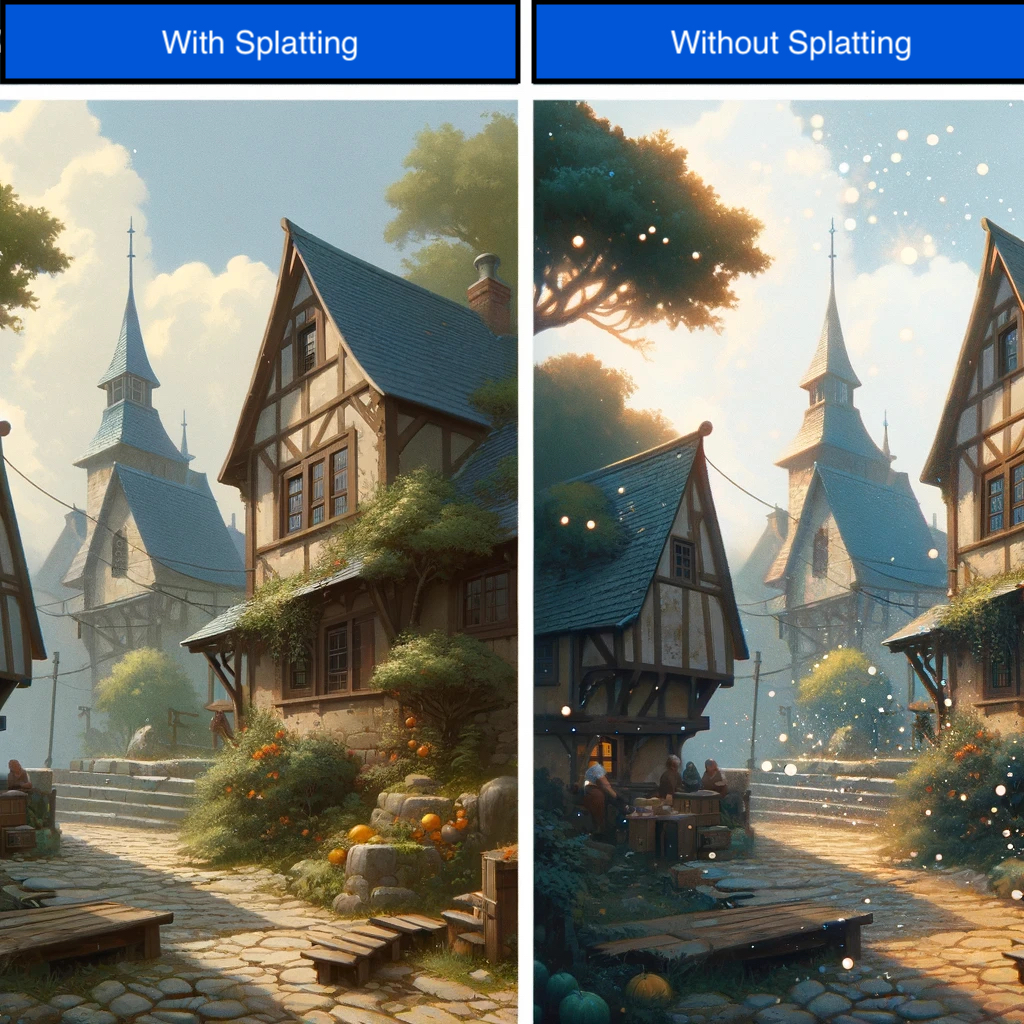
To deepen your understanding of Gaussian splatting, let’s examine an illustrative comparison. This illustration contrasts a scene with Gaussian splatting against one where Gaussian splatting is not applied. In the later, you’ll notice harsh transitions and unrealistic blending of elements, resulting in a scene that feels disjointed and artificial. Conversely, the scene employing Gaussian splatting showcases smooth color transitions and realistic effects, significantly enhancing the visual realism and aesthetic appeal.

Example: Enhancing Realism in Digital Imagery

Consider a sunset beach scene where people are walking along the shore. Without Gaussian splatting, the sunlight’s diffusion, shadows cast by the people, and the blending of the sky’s colors could appear abrupt and unnatural. The transitions between different elements of the scene might be too stark, detracting from the overall realism.

Now, apply Gaussian splatting to the same scene. This technique uses Gaussian functions to simulate the natural diffusion of light and the soft blending of colors. The result is a more lifelike representation of the sunset, with gently blended skies and realistically rendered shadows on the sand. The people walking on the beach are integrated into the scene seamlessly, with their outlines and the surrounding environment blending in a way that mimics the natural observation of such a scene.

This visual and example highlight the significance of Gaussian splatting in creating digital images and videos that are not just visually appealing but also convincingly realistic. By understanding and applying this technique, content creators can push the boundaries of digital realism, making artificial scenes indistinguishable from real-life observations.

The Advent of Text-to-Video AI

Text-to-video AI represents the next leap in content creation, enabling users to generate complex video content from simple text prompts. This technology leverages deep learning models to interpret textual descriptions and translate them into dynamic visual narratives. The process encompasses a wide range of tasks, including scene composition, object placement, motion planning, and the rendering of realistic textures and lighting effects.

Gaussian splatting becomes instrumental in this process, particularly in the rendering phase, where it ensures that the visual elements are blended naturally. It contributes to the realism and dynamism of the generated videos, making the technology invaluable for content creators seeking to produce high-quality visual content efficiently.

Integration with AI Prompt Technology

The integration of Gaussian splatting with AI prompt technology is a cornerstone of text-to-video AI systems. AI prompt technology refers to the mechanisms by which users can instruct AI models using natural language. These prompts are then interpreted by the AI to generate content that aligns with the user’s intent.

In the case of text-to-video AI, Gaussian splatting is employed to refine the visual output based on the textual prompts. For example, if a prompt describes a sunset scene with people walking on the beach, Gaussian splatting helps in creating the soft transitions of the sunset’s colors and the realistic blending of the people’s shadows on the sand. This ensures that the final video output closely matches the scene described in the prompt, with natural-looking effects and transitions.

OpenAI’s Sora: A Case Study in Innovation

OpenAI’s Sora stands as a testament to the potential of integrating Gaussian splatting with text-to-video AI. Sora is designed to offer content creators a powerful tool for generating high-quality video content directly from text descriptions. The platform utilizes advanced AI models, including those trained on Gaussian splatting techniques, to produce videos that are not only visually stunning but also deeply engaging.

The significance of Gaussian splatting in Sora’s technology stack cannot be overstated. It allows Sora to achieve a level of visual fidelity and realism that sets a new standard for AI-generated content. This makes Sora an invaluable asset for professionals in marketing, and digital content creation, who can leverage the platform to create compelling visual narratives with minimal effort.

Key Topics for Discussion and Understanding

To fully appreciate the impact of Gaussian splatting in text-to-video AI, several key topics warrant discussion:

  • Realism and Aesthetics: Understanding how Gaussian splatting contributes to the realism and aesthetic quality of AI-generated videos.
  • Efficiency in Content Creation: Exploring how this technology streamlines the content creation process, enabling faster production times without compromising on quality.
  • AI Prompt Technology: Delving into the advancements in AI prompt technology that make it possible to accurately translate text descriptions into complex visual content.
  • Applications and Implications: Considering the broad range of applications for text-to-video AI and the potential implications for industries such as marketing, entertainment, and education.

Conclusion

Gaussian splatting represents a critical technological advancement in the field of text-to-video AI, offering unprecedented opportunities for content creators. By understanding this technology and its integration with AI prompt technology, professionals can harness the power of platforms like OpenAI’s Sora to revolutionize the way visual content is created and consumed. As we look to the future, the potential of Gaussian splatting in enhancing digital transformation and customer experience through AI-driven content creation is immense, promising a new era of creativity and innovation in the digital landscape.

The Inevitable Disruption of Text-to-Video AI for Content Creators: Navigating the Future Landscape

Introduction

On Thursday 02/15/2024 we heard about the latest development from OpenAI – Sora (Text-to-Video AI). The introduction of OpenAI’s Sora into the public marketplace is set to revolutionize the content and media creation landscape over the next five years. This transformation will be driven by Sora’s advanced capabilities in generating, understanding, and processing natural language, as well as its potential for creative content generation. The impact on content creators, media professionals, and the broader ecosystem will be multifaceted, influencing production processes, content personalization, and the overall economics of the media industry.


Transformation of Content Creation Processes

Sora’s advanced AI capabilities can significantly streamline the content creation process, making it more efficient and cost-effective. For writers, journalists, and digital content creators, Sora can offer real-time suggestions, improve drafting efficiency, and provide editing assistance to enhance the quality of the output. This can lead to a reduction in the time and resources required to produce high-quality content, allowing creators to focus more on the creative and strategic aspects of their work.

Personalization and User Engagement

In the realm of media and entertainment, Sora’s ability to analyze and understand audience preferences at a granular level will enable unprecedented levels of content personalization. Media companies can leverage Sora to tailor content to individual user preferences, improving engagement and user satisfaction. This could manifest in personalized news feeds, customized entertainment recommendations, or even dynamically generated content that adapts to the user’s interests and behaviors. Such personalization capabilities are likely to redefine the standards for user experience in digital media platforms. So, let’s dive a bit deeper into how this technology can advance personalization and user engagement within the marketplace.

Examples of Personalization and User Engagement

1. Personalized News Aggregation:

  • Pros: Platforms can use Sora to curate news content tailored to the individual interests and reading habits of each user. For example, a user interested in technology and sustainability might receive a news feed focused on the latest in green tech innovations, while someone interested in finance and sports might see articles on sports economics. This not only enhances user engagement but also increases the time spent on the platform.
  • Cons: Over-personalization can lead to the creation of “filter bubbles,” where users are exposed only to viewpoints and topics that align with their existing beliefs and interests. This can narrow the diversity of content consumed and potentially exacerbate societal divisions.

2. Customized Learning Experiences:

  • Pros: Educational platforms can leverage Sora to adapt learning materials to the pace and learning style of each student. For instance, a visual learner might receive more infographic-based content, while a verbal learner gets detailed textual explanations. This can improve learning outcomes and student engagement.
  • Cons: There’s a risk of over-reliance on automated personalization, which might overlook the importance of exposing students to challenging materials that are outside their comfort zones, potentially limiting their learning scope.

3. Dynamic Content Generation for Entertainment:

  • Pros: Streaming services can use Sora to dynamically alter storylines, music, or visual elements based on user preferences. For example, a streaming platform could offer multiple storyline outcomes in a series, allowing users to experience a version that aligns with their interests or past viewing behaviors.
  • Cons: This level of personalization might reduce the shared cultural experiences that traditional media offers, as audiences fragment across personalized content paths. It could also challenge creators’ artistic visions when content is too heavily influenced by algorithms.

4. Interactive Advertising:

  • Pros: Advertisers can utilize Sora to create highly targeted and interactive ad content that resonates with the viewer’s specific interests and behaviors, potentially increasing conversion rates. For example, an interactive ad could adjust its message or product recommendations in real-time based on how the user interacts with it.
  • Cons: Highly personalized ads raise privacy concerns, as they rely on extensive data collection and analysis of user behavior. There’s also the risk of user fatigue if ads become too intrusive or overly personalized, leading to negative brand perceptions.

Navigating the Pros and Cons

To maximize the benefits of personalization while mitigating the downsides, content creators and platforms need to adopt a balanced approach. This includes:

  • Transparency and Control: Providing users with clear information about how their data is used for personalization and offering them control over their personalization settings.
  • Diversity and Exposure: Implementing algorithms that occasionally introduce content outside of the user’s usual preferences to broaden their exposure and prevent filter bubbles.
  • Ethical Data Use: Adhering to ethical standards for data collection and use, ensuring user privacy is protected, and being transparent about data handling practices.

While Sora’s capabilities in personalization and user engagement offer exciting opportunities for content and media creation, they also come with significant responsibilities. Balancing personalization benefits with the need for privacy, diversity, and ethical considerations will be key to harnessing this technology effectively.


Expansion of Creative Possibilities

Sora’s potential to generate creative content opens up new possibilities for media creators. This includes the creation of written content, such as articles, stories, and scripts, as well as the generation of artistic elements like graphics, music, and video content. By augmenting human creativity, Sora can help creators explore new ideas, themes, and formats, potentially leading to the emergence of new genres and forms of media. This democratization of content creation could also lower the barriers to entry for aspiring creators, fostering a more diverse and vibrant media landscape. We will dive a bit deeper into these creative possibilities by exploring the Pros and Cons.

Pros:

  • Enhanced Creative Tools: Sora can act as a powerful tool for creators, offering new ways to generate ideas, draft content, and even create complex narratives. For example, a novelist could use Sora to brainstorm plot ideas or develop character backstories, significantly speeding up the writing process and enhancing the depth of their stories.
  • Accessibility to Creation: With Sora, individuals who may not have traditional artistic skills or technical expertise can participate in creative endeavors. For instance, someone with a concept for a graphic novel but without the ability to draw could use Sora to generate visual art, making creative expression more accessible to a broader audience.
  • Innovative Content Formats: Sora’s capabilities could lead to the creation of entirely new content formats that blend text, visuals, and interactive elements in ways previously not possible. Imagine an interactive educational platform where content dynamically adapts to each student’s learning progress and interests, offering a highly personalized and engaging learning experience.

Cons:

  • Potential for Diminished Human Creativity: There’s a concern that over-reliance on AI for creative processes could diminish the value of human creativity. If AI-generated content becomes indistinguishable from human-created content, it could devalue original human artistry and creativity in the public perception.
  • Intellectual Property and Originality Issues: As AI-generated content becomes more prevalent, distinguishing between AI-assisted and purely human-created content could become challenging. This raises questions about copyright, ownership, and the originality of AI-assisted works. For example, if a piece of music is composed with the help of Sora, determining the rights and ownership could become complex.
  • Homogenization of Content: While AI like Sora can generate content based on vast datasets, there’s a risk that it might produce content that leans towards what is most popular or trending, potentially leading to a homogenization of content. This could stifle diversity in creative expression and reinforce existing biases in media and art.

Navigating the Pros and Cons

To harness the creative possibilities of Sora while addressing the challenges, several strategies can be considered:

  • Promoting Human-AI Collaboration: Encouraging creators to use Sora as a collaborative tool rather than a replacement for human creativity can help maintain the unique value of human artistry. This approach leverages AI to enhance and extend human capabilities, not supplant them.
  • Clear Guidelines for AI-generated Content: Developing industry standards and ethical guidelines for the use of AI in creative processes can help address issues of copyright and originality. This includes transparently acknowledging the use of AI in the creation of content.
  • Diversity and Bias Mitigation: Actively working to ensure that AI models like Sora are trained on diverse datasets and are regularly audited for bias can help prevent the homogenization of content and promote a wider range of voices and perspectives in media and art.

Impact on the Economics of Media Production

The efficiencies and capabilities introduced by Sora are likely to have profound implications for the economics of media production. Reduced production costs and shorter development cycles can make content creation more accessible and sustainable, especially for independent creators and smaller media outlets. However, this could also lead to increased competition and a potential oversaturation of content, challenging creators to find new ways to stand out and monetize their work. While this topic is always considered sensitive, if we can look at it from pro versus con perspective, perhaps we can address it with a neutral focus.

Impact on Cost Structures

Pros:

  • Reduced Production Costs: Sora can automate aspects of content creation, such as writing, editing, and even some elements of video production, reducing the need for large production teams and lowering costs. For example, a digital news outlet could use Sora to generate first drafts of articles based on input data, allowing journalists to focus on adding depth and context, thus speeding up the production process and reducing labor costs.
  • Efficiency in Content Localization: Media companies looking to expand globally can use Sora to automate the translation and localization of content, making it more cost-effective to reach international audiences. This could significantly lower the barriers to global content distribution.

Cons:

  • Initial Investment and Training: The integration of Sora into media production workflows requires upfront investment in technology and training for staff. Organizations may face challenges in adapting existing processes to leverage AI capabilities effectively, which could initially increase costs.
  • Dependence on AI: Over-reliance on AI for content production could lead to a homogenization of content, as algorithms might favor formats and topics that have historically performed well, potentially stifacing creativity and innovation.

Impact on Revenue Models

Pros:

  • New Monetization Opportunities: Sora enables the creation of personalized content at scale, opening up new avenues for monetization. For instance, media companies could offer premium subscriptions for highly personalized news feeds or entertainment content, adding a new revenue stream.
  • Enhanced Ad Targeting: The deep understanding of user preferences and behaviors facilitated by Sora can improve ad targeting, leading to higher ad revenues. For example, a streaming service could use viewer data analyzed by Sora to place highly relevant ads, increasing viewer engagement and advertiser willingness to pay.

Cons:

  • Shift in Consumer Expectations: As consumers get accustomed to personalized and AI-generated content, they might become less willing to pay for generic content offerings. This could pressure media companies to continuously invest in AI to keep up with expectations, potentially eroding profit margins.
  • Ad Blockers and Privacy Tools: The same technology that allows for enhanced ad targeting might also lead to increased use of ad blockers and privacy tools by users wary of surveillance and data misuse, potentially impacting ad revenue.

Impact on the Competitive Landscape

Pros:

  • Level Playing Field for Smaller Players: Sora can democratize content production, allowing smaller media companies and independent creators to produce high-quality content at a lower cost. This could lead to a more diverse media landscape with a wider range of voices and perspectives.
  • Innovation and Differentiation: Companies that effectively integrate Sora into their production processes can innovate faster and differentiate their offerings, capturing market share from competitors who are slower to adapt.

Cons:

  • Consolidation Risk: Larger companies with more resources to invest in AI could potentially dominate the market, leveraging Sora to produce content more efficiently and at a larger scale than smaller competitors. This could lead to consolidation in the media industry, reducing diversity in content and viewpoints.

Navigating the Pros and Cons

To effectively navigate these economic impacts, media companies and content creators need to:

  • Invest in skills and training to ensure their teams can leverage AI tools like Sora effectively.
  • Develop ethical guidelines and transparency around the use of AI in content creation to maintain trust with audiences.
  • Explore innovative revenue models that leverage the capabilities of AI while addressing consumer concerns about privacy and data use.

Ethical and Societal Considerations

As Sora influences the content and media industry, ethical and societal considerations will come to the forefront. Issues such as copyright, content originality, misinformation, and the impact of personalized content on societal discourse will need to be addressed. Media creators and platforms will have to navigate these challenges carefully, establishing guidelines and practices that ensure responsible use of AI in content creation while fostering a healthy, informed, and engaged public discourse.

Conclusion

Over the next five years, OpenAI’s Sora is poised to significantly impact the content and media creation industry by enhancing creative processes, enabling personalized experiences, and transforming the economics of content production. As these changes unfold, content and media professionals will need to adapt to the evolving landscape, leveraging Sora’s capabilities to enhance creativity and engagement while addressing the ethical and societal implications of AI-driven content creation.

Navigating the Nuances of AI Attribution in Content Creation: A Deep Dive into ChatGPT’s Role

Introduction

In an era where artificial intelligence (AI) is not just a buzzword but a pivotal part of digital transformation and customer experience strategies, understanding AI attribution has become crucial. As AI systems like OpenAI’s ChatGPT revolutionize content creation, the lines between human and machine-generated content blur, bringing forth new challenges and opportunities. This blog post aims to demystify AI attribution, especially in the context of ChatGPT, offering insights into its implications for businesses and ethical technology use.

Understanding AI Attribution

AI attribution refers to the practice of appropriately acknowledging AI-generated content. In the context of ChatGPT, this means recognizing that responses generated are based on patterns learned from extensive training data, rather than direct scraping of information. AI attribution is pivotal for ethical AI usage, ensuring transparency and respecting intellectual property rights.

Furthermore, AI attribution, in its essence, is the practice of correctly identifying and acknowledging the role of artificial intelligence in the creation of content. It’s a concept that gains significance as AI technologies like ChatGPT become more prevalent in various industries, including marketing, customer service, and education. AI attribution is rooted in the principles of transparency and ethical responsibility. When AI systems generate content, they do so by processing and learning from a vast array of data sources, including books, articles, websites, and other textual materials. These systems, however, do not actively or consciously reference specific sources in their responses. Instead, they produce outputs based on learned patterns and information integrations. As a result, AI-generated content is often a novel synthesis of the training data, not a direct reproduction. Proper AI attribution involves acknowledging both the AI system (e.g., ChatGPT) and its developer (e.g., OpenAI) for their contributions to the generated content. This acknowledgment is crucial as it helps delineate the boundaries between human and machine-generated creativity, maintains the integrity of intellectual property, and ensures that the audience or users of such content are fully aware of its AI-driven origins. In doing so, AI attribution serves as a cornerstone of ethical AI usage, preserving trust and authenticity in an increasingly AI-integrated world.

The Role of ChatGPT in Content Creation

ChatGPT, developed by OpenAI, is a sophisticated language processing AI model that exemplifies the advancements in natural language processing (NLP) and machine learning. At its core, ChatGPT is built upon a variant of the transformer architecture, which has been pivotal in advancing AI’s understanding and generation of human-like text. This architecture enables the model to effectively process and generate language by understanding the context and nuances of human communication. Unlike simpler AI systems that follow predetermined scripts, ChatGPT dynamically generates responses by predicting the most likely next word or phrase in a sequence, making its outputs not only relevant but also remarkably coherent and contextually appropriate. This capability stems from its training on a diverse and extensive dataset, allowing it to generate content across a wide range of topics and styles. In content creation, ChatGPT’s role is significant due to its ability to assist in generating high-quality, human-like text, which can be particularly useful in drafting articles, creating conversational agents, or even generating creative writing pieces. Its application in content creation showcases the potential of AI to augment human creativity and efficiency, marking a significant stride in the intersection of technology and creative industries.

Challenges in AI Attribution

One of the most significant challenges in AI attribution, particularly with systems like ChatGPT, lies in the inherent complexity of tracing the origins of AI-generated content. These AI models are trained on vast, diverse datasets comprising millions of documents, making it virtually impossible to pinpoint specific sources for individual pieces of generated content. This lack of clear source attribution poses a dilemma in fields where originality and intellectual property are paramount, such as academic research and creative writing. Another challenge is the potential for AI systems to inadvertently replicate biased or inaccurate information present in their training data, raising concerns about the reliability and ethical implications of their output. Furthermore, the dynamic and often opaque nature of machine learning algorithms adds another layer of complexity. These algorithms can evolve and adapt in ways that are not always transparent or easily understood, even by experts, making it difficult to assess the AI’s decision-making process in content generation. This opacity can lead to challenges in ensuring accountability and maintaining trust, especially in scenarios where the accuracy and integrity of information are critical. Additionally, the rapid advancement of AI technology outpaces the development of corresponding legal and ethical frameworks, creating a grey area in terms of rights and responsibilities related to AI-generated content. As a result, businesses and individuals leveraging AI for content creation must navigate these challenges carefully, balancing the benefits of AI with the need for responsible use and clear attribution.

Best Practices for AI Attribution

AI attribution, particularly in the context of AI-generated content like that produced by ChatGPT, center around principles of transparency, ethical responsibility, and respect for intellectual property. The first and foremost practice is to clearly acknowledge the AI’s role in content creation by attributing the work to the AI system and its developer. For example, stating “Generated by ChatGPT, an AI language model by OpenAI” provides clarity about the content’s origin. In cases where AI-generated content significantly draws upon or is inspired by particular sources, efforts should be made to identify and credit these sources, when feasible. This practice not only respects the original creators but also maintains the integrity of the content. Transparency is crucial; users and readers should be informed about the nature and limitations of AI-generated content, including the potential for biases and inaccuracies inherent in the AI’s training data. Furthermore, it’s important to adhere to existing intellectual property laws and ethical guidelines, which may vary depending on the region and the specific application of the AI-generated content. For businesses and professionals using AI for content creation, developing and adhering to an internal policy on AI attribution can ensure consistent and responsible practices. This policy should include guidelines on how to attribute AI-generated content, procedures for reviewing and vetting such content, and strategies for addressing any ethical or legal issues that may arise. By following these best practices, stakeholders in AI content creation can foster a culture of responsible AI use, ensuring that the benefits of AI are harnessed in a way that is ethical, transparent, and respectful of intellectual contributions.

Examples and Case Studies

To illustrate the practical application of AI attribution, consider several case studies and examples. In the field of journalism, for instance, The Guardian experimented with using GPT-3, a precursor to ChatGPT, to write an editorial. The article was clearly labeled as AI-generated, with an explanation of GPT-3’s role, showcasing transparency in AI attribution. Another example is in academic research, where AI tools are increasingly used for literature reviews or data analysis. Here, best practice dictates not only citing the AI tool used but also discussing its influence on the research process and results. In a different domain, an advertising agency might use ChatGPT to generate creative copy for a campaign. The agency should acknowledge the AI’s contribution in internal documentation and, if relevant, in client communications, thus maintaining ethical standards. A notable case study is the AI Dungeon game, which uses AI to create dynamic storytelling experiences. While the game’s content is AI-generated, the developers transparently communicate the AI’s role to players, setting expectations about the nature of the content. Lastly, consider a tech company that uses ChatGPT for generating technical documentation. While the AI significantly streamlines the content creation process, the company ensures that each document includes a disclaimer about the AI’s involvement, reinforcing the commitment to transparency and accuracy. These examples and case studies demonstrate how AI attribution can be effectively applied across different industries and contexts, illustrating the importance of clear and ethical practices in acknowledging AI-generated content.

Future of AI Attribution and Content Creation

The future of AI attribution and content creation is poised at an exciting juncture, with advancements in AI technology continuously reshaping the landscape. As AI models become more sophisticated, we can anticipate a greater integration of AI in various content creation domains, leading to more nuanced and complex forms of AI-generated content. This evolution will likely bring about more advanced methods for tracking and attributing AI contributions, possibly through the use of metadata or digital watermarking to mark AI-generated content. In the realm of legal and ethical frameworks, we can expect the development of more comprehensive guidelines and regulations that address the unique challenges posed by AI in content creation. These guidelines will likely focus on promoting transparency, protecting intellectual property rights, and ensuring ethical use of AI-generated content.

Moreover, as AI continues to become an integral part of the creative process, there will be a growing emphasis on collaborative models of creation, where AI and human creativity work in tandem, each complementing the other’s strengths. This collaboration could lead to new forms of art, literature, and media that are currently unimaginable, challenging our traditional notions of creativity and authorship.

Another significant area of development will be in the realm of bias and accuracy, where ongoing research and improvements in AI training methods are expected to mitigate issues related to biased or inaccurate AI-generated content. Additionally, as public awareness and understanding of AI grow, we can anticipate more informed discussions and debates about the role and impact of AI in society, particularly in relation to content creation. This evolving landscape underscores the importance for businesses, creators, and technologists to stay informed and adapt to these changes, ensuring that the use of AI in content creation is responsible, ethical, and aligned with societal values.

AI attribution in the context of ChatGPT and similar technologies is a complex but vital topic in today’s technology landscape. Understanding and implementing best practices in AI attribution is not just about adhering to ethical standards; it’s also about paving the way for transparent and responsible AI integration in various aspects of business and society. As we continue to explore the potential of AI in content creation, let’s also commit to responsible practices that respect intellectual property and provide clear attribution.

Conclusion

As we reach the end of our exploration into AI attribution and the role of ChatGPT in content creation, it’s clear that we’re just scratching the surface of this rapidly evolving field. The complexities and challenges we’ve discussed highlight the importance of ethical practices, transparency, and responsible AI use in an increasingly digital world. The future of AI attribution, rich with possibilities and innovations, promises to reshape how we interact with technology and create content. We invite you to continue this journey of discovery with us, as we delve deeper into the fascinating world of AI in future articles. Together, we’ll navigate the intricacies of this technology, uncovering new insights and opportunities that will shape the landscape of digital transformation and customer experience. Stay tuned for more thought-provoking content that bridges the gap between human creativity and the boundless potential of artificial intelligence.

References and Further Reading

  1. “Bridging the Gap Between AI and Human Communication: Introducing ChatGPT” – AI & ML Magazine: AI & ML Magazine​.
  2. “ChatGPT: Bridging the Gap Between Humans and AI” – Pythonincomputer.com: Pythonincomputer.com​.
  3. “Explainer-ChatGPT: What is OpenAI’s chatbot and what is it used for?” – Yahoo News: Yahoo News​​.

Embracing the Future: The Promise and Perils of Artificial General Intelligence

Navigating the Uncharted Territories of AGI in Business and Governance

Introduction

In the ever-evolving landscape of technology, Artificial General Intelligence (AGI) stands out as a frontier brimming with potential and uncertainties. Unlike its predecessor, Artificial Narrow Intelligence (ANI), which excels in specific tasks, AGI promises a level of cognitive ability mirroring human intelligence. This leap could redefine not just the technological ecosystem but also the very fabric of business strategies and governance models.


Understanding AGI: A Paradigm Shift in Intelligence

AGI transcends the traditional boundaries of AI by integrating diverse cognitive abilities. It’s not just about mastering a single task but about possessing the versatility to learn, adapt, and excel across an array of challenges, akin to human intellect.

The Current State of AGI

While AGI remains largely theoretical, significant strides have been made. Companies like OpenAI and DeepMind are at the forefront, pushing the boundaries with innovations that hint at AGI’s impending reality. The current state of Artificial General Intelligence (AGI) remains an aspirational zenith in the realm of artificial intelligence, where developments are still in nascent stages, largely theoretical, and experimental. Unlike its counterpart, Artificial Narrow Intelligence (ANI), which excels in specialized tasks, AGI represents an ambitious leap towards developing machines that exhibit human-like cognitive abilities across a broad spectrum of tasks and contexts.

Leading-edge research and development are spearheaded by pioneering entities such as OpenAI, DeepMind, and various companies. These organizations are making incremental advances through projects that push the limits of machine learning, deep learning, and neural network capabilities. For instance, advancements in algorithms that enable learning from minimal data or adapting to new tasks without extensive retraining hint at the potential of AGI. However, these advancements are yet in early stages and AGI as a fully realized, autonomous intelligence akin to human intellect, remains a futuristic goal. Current efforts are concentrated on overcoming formidable challenges such as developing common sense reasoning, emotional intelligence, and ethical decision-making in AI systems. Thus, the present landscape of AGI is a complex interplay of breakthroughs and bottlenecks, marked by a cautious optimism among researchers and technologists who recognize both the profound potential and the significant hurdles that lie ahead in realizing true AGI.


AGI in the Business World: Opportunities and Challenges

AGI’s potential in the business sector is monumental. Its ability to understand, learn, and innovate can transform industries.

Opportunities

  1. Strategic Decision Making: AGI can analyze vast datasets, recognizing patterns and insights that are imperceptible to humans, thereby guiding strategic decisions.
  2. Customer Experience Enhancement: In customer experience management, AGI can offer personalized, context-aware interactions, drastically improving customer satisfaction.
  3. Operational Efficiency: AGI can streamline operations, from supply chain management to HR processes, driving efficiency and reducing costs.

Challenges

  1. Ethical Considerations: The deployment of AGI raises significant ethical concerns, including privacy issues and decision-making transparency.
  2. Workforce Disruption: AGI could lead to job displacement, necessitating a rethinking of workforce structure and training.
  3. Regulatory Landscape: The unprecedented nature of AGI calls for a robust and adaptive regulatory framework to ensure responsible use.

AGI in Public and Federal Domains: Governance and Policy Implications

The implications of AGI in governance and public sector are profound, offering both transformative opportunities and complex challenges. In the public and federal spheres, the exploration of Artificial General Intelligence (AGI) is increasingly intersecting with governance and policy frameworks, albeit cautiously and with a focus on potential rather than present-day implementation. The concept of AGI, with its promise of human-like reasoning and decision-making capabilities, presents unique opportunities for enhancing governmental operations and public service delivery. However, as of now, the integration of AGI in these domains is more theoretical and prospective, with tangible applications still in preliminary stages.

Governments and public agencies are primarily engaged in examining how AGI could transform areas like healthcare policy, urban planning, and environmental management through advanced predictive analytics and decision-making. There is also a growing emphasis on the policy implications of AGI, particularly in terms of ethical governance, data privacy, and security concerns. The regulatory dialogue is being shaped around how to responsibly develop and deploy AGI technologies in a way that aligns with public interests and democratic values. Notably, bodies such as the European Union and the United States Federal Government are initiating discussions on regulatory frameworks to ensure that as AGI evolves, it adheres to societal norms and legal standards. This exploratory phase is marked by policy workshops, research initiatives, and cross-sector collaborations, all aimed at understanding and preparing for the transformative potential of AGI while mitigating its risks in governance and public administration.

Potential Applications

  1. Public Service Optimization: AGI can enhance public services, from healthcare to transportation, through predictive analytics and efficient resource allocation.
  2. Policy Development: By processing vast amounts of data, AGI can aid in evidence-based policy making, ensuring more effective governance.

Challenges

  1. Privacy and Surveillance: The use of AGI in public domains raises critical questions about privacy and the potential for surveillance overreach.
  2. Digital Divide: There’s a risk of widening the digital divide, with unequal access to AGI technologies potentially exacerbating social inequalities.

Case Studies: AGI at the Forefront

  1. Healthcare: While the specific use of Artificial General Intelligence (AGI) in healthcare is still developing, the industry is making strides in personalized healthcare through the use of advanced analytics and AI technologies.
    • Boston Consulting Group (BCG) discusses how truly personalized healthcare is now possible, thanks to these technological advancements. However, they also note that few healthcare organizations have been able to provide the level of personalized experience that consumers receive from companies like Amazon and Netflix. This indicates a growing opportunity for healthcare providers to adopt more advanced personalization strategies. The report from BCG emphasizes that payers and providers with the capability to offer personalized experiences can see dramatic improvements in healthcare outcomes and transform their business models. They suggest that healthcare organizations should assess their technological readiness and create an implementation roadmap to accelerate the path to value from personalization.
    • Similarly, McKinsey & Company highlights the importance of personalization in healthcare, especially in the context of patient engagement to reduce readmissions. Their consumer research indicates that a personalized care approach can help manage healthcare in the COVID-19 era and potentially reduce unnecessary healthcare costs. McKinsey’s research suggests that engaging healthcare consumers in a highly personalized way is increasingly important. This approach can lead to a better member experience, higher quality of care, and a reduction in avoidable healthcare costs. Their findings also imply that personalized care can reshape every step of the consumer journey, from the selection of health providers and insurance to post-hospitalization and plan renewal. These insights suggest that while the full potential of AGI in healthcare is yet to be realized, the industry is moving towards more personalized and efficient healthcare delivery systems. Companies are beginning to harness the power of advanced analytics and AI to create more tailored and effective treatment plans, which is a step towards the broader goal of achieving AGI-driven healthcare solutions.
  2. Finance: In the financial sector, the use of Artificial Intelligence (AI), particularly models developed by OpenAI, is making significant strides in transforming risk assessment and fraud detection. Companies are leveraging these advanced AI technologies to enhance their ability to manage financial risks and secure transactions against fraud.
    • One of the primary applications of OpenAI’s AI models in finance is in credit risk assessment. These models can analyze borrower profiles and financial histories, offering a more nuanced understanding of credit risks. This capability is particularly valuable in today’s data-driven financial landscape, where quick and accurate risk assessment is crucial.
    • Another critical application is in fraud detection. AI-powered systems are capable of analyzing transaction patterns and identifying anomalies that may indicate fraudulent activities. This is particularly important given the increasing sophistication of financial fraud, which now includes threats like identity theft, bot attacks, imposter scams, and deepfakes. Traditional methods of fraud detection, which relied on structured data and predefined rules, are being replaced by AI and machine learning models that can adapt to new fraud patterns and detect anomalies in real-time.
    • Moreover, OpenAI’s models are also being used to create intelligent customer support chatbots and for market sentiment analysis, providing insights into investment decisions based on news and social media analysis.
    • The integration of these AI models into financial systems, as explored by Signity Solutions, shows that the technical implementation of OpenAI in finance goes beyond language understanding. It includes creating AI-driven fraud detection systems using technologies like Node.js, setting up Express.js servers to handle fraud detection requests, and running applications that are accessible for real-time fraud detection.
    • These advancements highlight the transformative impact of AI in the financial sector, propelling the industry toward a future where decision-making is not just data-driven but also nuanced, adaptive, and empowered by the capabilities of advanced language models.

Preparing for an AGI Future: Strategies for Businesses and Governments

As AGI becomes a tangible reality, businesses and governments must strategize to leverage its benefits while mitigating its risks.

Strategies for Adoption

  1. Invest in Education and Training: Upskilling the workforce to work alongside AGI is crucial.
  2. Develop Ethical Guidelines: Establishing clear ethical guidelines for AGI use is imperative to ensure responsible deployment.
  3. Foster Public-Private Partnerships: Collaboration between the public and private sectors can accelerate AGI development while ensuring regulatory compliance.

Conclusion: Navigating the AGI Landscape

The journey towards AGI is fraught with challenges and opportunities. As we stand on the cusp of this technological revolution, it is imperative for businesses, governments, and society at large to engage in a thoughtful discourse on shaping a future where AGI not only drives growth but also upholds ethical and societal norms. The path ahead is complex, but with collaborative effort and foresight, AGI can be harnessed as a force for unparalleled advancement.