Using Ideas from Game Theory to Improve the Reliability of Language Models

Introduction

In the rapidly evolving field of artificial intelligence (AI), ensuring the reliability and robustness of language models is paramount. These models, which power a wide range of applications from virtual assistants to automated customer service systems, need to be both accurate and dependable. One promising approach to achieving this is through the application of game theory—a branch of mathematics that studies strategic interactions among rational agents. This blog post will explore how game theory can be utilized to enhance the reliability of language models, providing a detailed technical and practical explanation of the concepts involved.

Understanding Game Theory

Game theory is a mathematical framework designed to analyze the interactions between different decision-makers, known as players. It focuses on the strategies that these players employ to achieve their objectives, often in situations where the outcome depends on the actions of all participants. The key components of game theory include:

  1. Players: The decision-makers in the game.
  2. Strategies: The plans of action that players can choose.
  3. Payoffs: The rewards or penalties that players receive based on the outcome of the game.
  4. Equilibrium: A stable state where no player can benefit by changing their strategy unilaterally.

Game theory has been applied in various fields, including economics, political science, and biology, to model competitive and cooperative behaviors. In AI, it offers a structured way to analyze and design interactions between intelligent agents. Lets explore a bit more in detail how game theory can be leveraged in developing LLMs.

Detailed Example: Applying Game Theory to Language Model Reliability

Scenario: Adversarial Training in Language Models

Background

Imagine we are developing a language model intended to generate human-like text for customer support chatbots. The challenge is to ensure that the responses generated are not only coherent and contextually appropriate but also resistant to manipulation or adversarial inputs.

Game Theory Framework

To improve the reliability of our language model, we can frame the problem using game theory. We define two players in this game:

  1. Generator (G): The language model that generates text.
  2. Adversary (A): An adversarial model that tries to find flaws, biases, or vulnerabilities in the generated text.

This setup forms a zero-sum game where the generator aims to produce flawless text (maximize quality), while the adversary aims to expose weaknesses (minimize quality).

Adversarial Training Process

  1. Initialization:
    • Generator (G): Initialized to produce text based on training data (e.g., customer service transcripts).
    • Adversary (A): Initialized with the ability to analyze and critique text, identifying potential weaknesses (e.g., incoherence, inappropriate responses).
  2. Iteration Process:
    • Step 1: Text Generation: The generator produces a batch of text samples based on given inputs (e.g., customer queries).
    • Step 2: Adversarial Analysis: The adversary analyzes these text samples and identifies weaknesses. It may use techniques such as:
      • Text perturbation: Introducing small changes to the input to see if the output becomes nonsensical.
      • Contextual checks: Ensuring that the generated response is relevant to the context of the query.
      • Bias detection: Checking for biased or inappropriate content in the response.
    • Step 3: Feedback Loop: The adversary provides feedback to the generator, highlighting areas of improvement.
    • Step 4: Generator Update: The generator uses this feedback to adjust its parameters, improving its ability to produce high-quality text.
  3. Convergence:
    • This iterative process continues until the generator reaches a point where the adversary finds it increasingly difficult to identify flaws. At this stage, the generator’s responses are considered reliable and robust.

Technical Details

  • Generator Model: Typically, a Transformer-based model like GPT (Generative Pre-trained Transformer) is used. It is fine-tuned on specific datasets related to customer service.
  • Adversary Model: Can be a rule-based system or another neural network designed to critique text. It uses metrics such as perplexity, semantic similarity, and sentiment analysis to evaluate the text.
  • Objective Function: The generator’s objective is to minimize a loss function that incorporates both traditional language modeling loss (e.g., cross-entropy) and adversarial feedback. The adversary’s objective is to maximize this loss, highlighting the generator’s weaknesses.

Example in Practice

Customer Query: “I need help with my account password.”

Generator’s Initial Response: “Sure, please provide your account number.”

Adversary’s Analysis:

  • Text Perturbation: Changes “account password” to “account passwrd” to see if the generator still understands the query.
  • Contextual Check: Ensures the response is relevant to password issues.
  • Bias Detection: Checks for any inappropriate or biased language.

Adversary’s Feedback:

  • The generator failed to recognize the misspelled word “passwrd” and produced a generic response.
  • The response did not offer immediate solutions to password-related issues.

Generator Update:

  • The generator’s training is adjusted to better handle common misspellings.
  • Additional training data focusing on password-related queries is used to improve contextual understanding.

Improved Generator Response: “Sure, please provide your account number so I can assist with resetting your password.”

Outcome:

  • The generator’s response is now more robust to input variations and contextually appropriate, thanks to the adversarial training loop.

This example illustrates how game theory, particularly the adversarial training framework, can significantly enhance the reliability of language models. By treating the interaction between the generator and the adversary as a strategic game, we can iteratively improve the model’s robustness and accuracy. This approach ensures that the language model not only generates high-quality text but is also resilient to manipulations and contextual variations, thereby enhancing its practical utility in real-world applications.

The Relevance of Game Theory in AI Development

The integration of game theory into AI development provides several advantages:

  1. Strategic Decision-Making: Game theory helps AI systems make decisions that consider the actions and reactions of other agents, leading to more robust and adaptive behaviors.
  2. Optimization of Interactions: By modeling interactions as games, AI developers can optimize the strategies of their models to achieve better outcomes.
  3. Conflict Resolution: Game theory provides tools for resolving conflicts and finding equilibria in multi-agent systems, which is crucial for cooperative AI scenarios.
  4. Robustness and Reliability: Analyzing AI behavior through the lens of game theory can identify vulnerabilities and improve the overall reliability of language models.

Applying Game Theory to Language Models

Adversarial Training

One practical application of game theory in improving language models is adversarial training. In this context, two models are pitted against each other: a generator and an adversary. The generator creates text, while the adversary attempts to detect flaws or inaccuracies in the generated text. This interaction can be modeled as a zero-sum game, where the generator aims to maximize its performance, and the adversary aims to minimize it.

Example: Generative Adversarial Networks (GANs) are a well-known implementation of this concept. In language models, a similar approach can be used where the generator model continuously improves by learning to produce text that the adversary finds increasingly difficult to distinguish from human-written text.

Cooperative Learning

Another approach involves cooperative game theory, where multiple agents collaborate to achieve a common goal. In the context of language models, different models or components can work together to enhance the overall system performance.

Example: Ensemble methods combine the outputs of multiple models to produce a more accurate and reliable final result. By treating each model as a player in a cooperative game, developers can optimize their interactions to improve the robustness of the language model.

Mechanism Design

Mechanism design is a branch of game theory that focuses on designing rules and incentives to achieve desired outcomes. In AI, this can be applied to create environments where language models are incentivized to produce reliable and accurate outputs.

Example: Reinforcement learning frameworks can be designed using principles from mechanism design to reward language models for generating high-quality text. By carefully structuring the reward mechanisms, developers can guide the models toward more reliable performance.

Current Applications and Future Prospects

Current Applications

  1. Automated Content Moderation: Platforms like social media and online forums use game-theoretic approaches to develop models that can reliably detect and manage inappropriate content. By framing the interaction between content creators and moderators as a game, these systems can optimize their strategies for better accuracy.
  2. Collaborative AI Systems: In customer service, multiple AI agents often need to collaborate to provide coherent and accurate responses. Game theory helps in designing the interaction protocols and optimizing the collective behavior of these agents.
  3. Financial Forecasting: Language models used in financial analysis can benefit from game-theoretic techniques to predict market trends more reliably. By modeling the market as a game with various players (traders, institutions, etc.), these models can improve their predictive accuracy.

Future Prospects

The future of leveraging game theory for AI advancements holds significant promise. As AI systems become more complex and integrated into various aspects of society, the need for reliable and robust models will only grow. Game theory provides a powerful toolset for addressing these challenges.

  1. Enhanced Multi-Agent Systems: Future AI applications will increasingly involve multiple interacting agents. Game theory will play a crucial role in designing and optimizing these interactions to ensure system reliability and effectiveness.
  2. Advanced Adversarial Training Techniques: Developing more sophisticated adversarial training methods will help create language models that are resilient to manipulation and capable of maintaining high performance in dynamic environments.
  3. Integration with Reinforcement Learning: Combining game-theoretic principles with reinforcement learning will lead to more adaptive and robust AI systems. This synergy will enable language models to learn from their interactions in more complex and realistic scenarios.
  4. Ethical AI Design: Game theory can contribute to the ethical design of AI systems by ensuring that they adhere to fair and transparent decision-making processes. Mechanism design, in particular, can help create incentives for ethical behavior in AI.

Conclusion

Game theory offers a rich and versatile framework for improving the reliability of language models. By incorporating strategic decision-making, optimizing interactions, and designing robust mechanisms, AI developers can create more dependable and effective systems. As AI continues to advance, the integration of game-theoretic concepts will be crucial in addressing the challenges of complexity and reliability, paving the way for more sophisticated and trustworthy AI applications.

Through adversarial training, cooperative learning, and mechanism design, the potential for game theory to enhance AI is vast. Current applications already demonstrate its value, and future developments promise even greater advancements. By embracing these ideas, we can look forward to a future where language models are not only powerful but also consistently reliable and ethically sound.

Navigating the Landscape of AI with the Ames Housing Dataset: A Comprehensive Guide

Introduction:

In the ever-evolving realm of artificial intelligence (AI), datasets play a pivotal role in shaping the technologies and methodologies that define our future. One such influential dataset is the Ames Housing Dataset, an exemplary resource for those delving into AI, particularly in the context of machine learning and predictive modeling. This blog post aims to explain the historical significance, developmental context, applications, and practical insights into the Ames Housing Dataset, guiding both students and enthusiasts through its integral role in advancing AI.

Historical Context and Development of the Ames Housing Dataset:

The genesis of the Ames Housing Dataset traces back to 2006, when Professor Dean De Cock compiled this extensive collection for an educational endeavor aimed at enhancing the predictive modeling capabilities of his students. The dataset offers a granular view of the residential property market in Ames, Iowa, encapsulating a wide array of features that describe the sales conditions and attributes of homes from 2006 to 2010.

This dataset was meticulously designed to surpass the limitations of its predecessors, like the renowned Boston Housing Dataset, by incorporating a broader set of variables (79 explanatory variables) that offer a more nuanced and comprehensive understanding of property valuations. Its development was driven by the need for a more robust, detailed, and versatile dataset that could cater to the multifaceted analytical requirements of burgeoning AI methodologies.

Applications in AI Understanding and Advancement:

In the realm of AI, the Ames Housing Dataset has been instrumental in advancing machine learning techniques, particularly in regression analysis and predictive modeling. It serves as an educational tool that familiarizes students with the intricacies of data preprocessing, feature engineering, model selection, and validation – all crucial skills in the AI domain.

The dataset’s complexity and richness enable learners to confront real-world data challenges, such as handling missing values, encoding categorical variables, and understanding the implications of feature interactions. By grappling with these issues, students gain a profound understanding of how AI algorithms can be tailored and optimized to interpret intricate data structures and predict outcomes accurately.

Utilizing the Ames Housing Dataset: Examples and Case Studies:

Example 1: Predictive Modeling of Housing Prices

A quintessential application of the Ames Housing Dataset is in building regression models to predict housing prices based on a multitude of features. Students can employ various regression techniques, from linear regression to more sophisticated ensemble methods like gradient boosting, to forecast home values. Through this exercise, learners can explore the significance of feature selection, the nuances of hyperparameter tuning, and the interpretation of model performance metrics.

Example 2: Feature Importance Analysis

Another vital learning opportunity afforded by the Ames dataset is the analysis of feature importance. By utilizing models that provide insights into feature relevance, such as Random Forests or XGBoost, students can identify which property characteristics most significantly influence pricing. This analysis not only enhances predictive modeling strategies but also offers real-world insights into market dynamics.

Case Study: Enhancing Real Estate Valuation Models

In a real-world context, the Ames Housing Dataset can be used to refine real estate valuation models. By integrating this dataset into their analysis, developers and analysts can benchmark and improve their prediction algorithms, thereby facilitating more accurate and reliable property valuations. Such applications underscore the dataset’s relevance beyond academia, extending its utility to industry applications.

Conclusion:

The Ames Housing Dataset is more than just a collection of data points; it is a gateway to understanding and leveraging the potential of artificial intelligence in solving complex, real-world problems. For students and AI enthusiasts, it offers a comprehensive platform for learning, experimentation, and discovery, enabling them to harness the power of AI to generate insightful, impactful solutions. Through the detailed exploration of this dataset, learners can not only advance their technical acumen but also contribute to the broader narrative of AI’s evolution and its transformative impact on society.

As we delve into the future, datasets like Ames will continue to underpin the development and refinement of AI technologies, serving as indispensable resources for educating the next generation of AI practitioners and innovators. By engaging with the Ames Housing Dataset, students are not just analyzing data; they are actively participating in the ongoing journey of AI advancement, poised to shape the future of technology and its integration into our daily lives.

The Crucial Role of AI Modeling: Unsupervised Training, Scalability, and Beyond

Introduction

In the rapidly evolving landscape of Artificial Intelligence (AI), the significance of AI modeling cannot be overstated. At the heart of AI’s transformative power are the models that learn from data to make predictions or decisions without being explicitly programmed for the task. This blog post delves deep into the essence of unsupervised training, a cornerstone of AI modeling, exploring its impact on scalability, richer understanding, versatility, and efficiency. Our aim is to equip practitioners with a comprehensive understanding of AI modeling, enabling them to discuss its intricacies and practical applications in the technology and business realms with confidence.

Understanding Unsupervised Training in AI Modeling

Unsupervised training is a type of machine learning that operates without labeled outcomes. Unlike supervised learning, where models learn from input-output pairs, unsupervised learning algorithms analyze and cluster untagged data based on inherent patterns and similarities. This method is pivotal in discovering hidden structures within data, making it indispensable for tasks such as anomaly detection, clustering, and dimensionality reduction.

Deep Dive into Unsupervised Training in AI Modeling

Unsupervised training represents a paradigm within artificial intelligence where models learn patterns from untagged data, offering a way to glean insights without the need for explicit instructions. This method plays a pivotal role in understanding complex datasets, revealing hidden structures that might not be immediately apparent. To grasp the full scope of unsupervised training, it’s essential to explore its advantages and challenges, alongside illustrative examples that showcase its practical applications.

Advantages of Unsupervised Training

  1. Discovery of Hidden Patterns: Unsupervised learning excels at identifying subtle, underlying patterns and relationships in data that might not be recognized through human analysis or supervised methods. This capability is invaluable for exploratory data analysis and understanding complex datasets.
  2. Efficient Use of Unlabeled Data: Since unsupervised training doesn’t require labeled datasets, it makes efficient use of the vast amounts of untagged data available. This aspect is particularly beneficial in fields where labeled data is scarce or expensive to obtain.
  3. Flexibility and Adaptability: Unsupervised models can adapt to changes in the data without needing retraining with a new set of labeled data. This makes them suitable for dynamic environments where data patterns and structures may evolve over time.

Challenges of Unsupervised Training

  1. Interpretation of Results: The outcomes of unsupervised learning can sometimes be ambiguous or difficult to interpret. Without predefined labels to guide the analysis, determining the significance of the patterns found by the model requires expert knowledge and intuition.
  2. Risk of Finding Spurious Relationships: Without the guidance of labeled outcomes, unsupervised models might identify patterns or clusters that are statistically significant but lack practical relevance or are purely coincidental.
  3. Parameter Selection and Model Complexity: Choosing the right parameters and model complexity for unsupervised learning can be challenging. Incorrect choices can lead to overfitting, where the model captures noise instead of the underlying distribution, or underfitting, where the model fails to capture the significant structure of the data.

Examples of Unsupervised Training in Action

  • Customer Segmentation in Retail: Retail companies use unsupervised learning to segment their customers based on purchasing behavior, frequency, and preferences. Clustering algorithms like K-means can group customers into segments, helping businesses tailor their marketing strategies to each group’s unique characteristics.
  • Anomaly Detection in Network Security: Unsupervised models are deployed to monitor network traffic and identify unusual patterns that could indicate a security breach. By learning the normal operation pattern, the model can flag deviations, such as unusual login attempts or spikes in data traffic, signaling potential security threats.
  • Recommendation Systems: Many recommendation systems employ unsupervised learning to identify items or content similar to what a user has liked in the past. By analyzing usage patterns and item features, these systems can uncover relationships between different products or content, enhancing the personalization of recommendations.

Unsupervised training in AI modeling offers a powerful tool for exploring and understanding data. Its ability to uncover hidden patterns without the need for labeled data presents both opportunities and challenges. While the interpretation of its findings demands a nuanced understanding, and the potential for identifying spurious relationships exists, the benefits of discovering new insights and efficiently utilizing unlabeled data are undeniable. Through examples like customer segmentation, anomaly detection, and recommendation systems, we see the practical value of unsupervised training in driving innovation and enhancing decision-making across industries. As we continue to refine these models and develop better techniques for interpreting their outputs, unsupervised training will undoubtedly remain a cornerstone of AI research and application.

The Significance of Scalability and Richer Understanding

Scalability in AI modeling refers to the ability of algorithms to handle increasing amounts of data and complexity without sacrificing performance. Unsupervised learning, with its capacity to sift through vast datasets and uncover relationships without prior labeling, plays a critical role in enhancing scalability. It enables models to adapt to new data seamlessly, facilitating the development of more robust and comprehensive AI systems.

Furthermore, unsupervised training contributes to a richer understanding of data. By analyzing datasets in their raw, unlabelled form, these models can identify nuanced patterns and correlations that might be overlooked in supervised settings. This leads to more insightful and detailed data interpretations, fostering innovations in AI applications.

Versatility and Efficiency: Unlocking New Potentials

Unsupervised learning is marked by its versatility, finding utility across various sectors, including finance for fraud detection, healthcare for patient segmentation, and retail for customer behavior analysis. This versatility stems from the method’s ability to learn from data without needing predefined labels, making it applicable to a wide range of scenarios where obtaining labeled data is impractical or impossible.

Moreover, unsupervised training enhances the efficiency of AI modeling. By eliminating the need for extensive labeled datasets, which are time-consuming and costly to produce, it accelerates the model development process. Additionally, unsupervised models can process and analyze data in real-time, providing timely insights that are crucial for dynamic and fast-paced environments.

Practical Applications and Future Outlook

The practical applications of unsupervised learning in AI are vast and varied. In the realm of customer experience management, for instance, unsupervised models can analyze customer feedback and behavior patterns to identify unmet needs and tailor services accordingly. In the context of digital transformation, these models facilitate the analysis of large datasets to uncover trends and insights that drive strategic decisions.

Looking ahead, the role of unsupervised training in AI modeling is set to become even more prominent. As the volume of data generated by businesses and devices continues to grow exponentially, the ability to efficiently process and derive value from this data will be critical. Unsupervised learning, with its scalability, versatility, and efficiency, is poised to be at the forefront of this challenge, driving advancements in AI that we are only beginning to imagine.

Conclusion

Unsupervised training in AI modeling is more than just a method; it’s a catalyst for innovation and understanding in the digital age. Its impact on scalability, richer understanding, versatility, and efficiency underscores its importance in the development of intelligent systems. For practitioners in the field of AI, mastering the intricacies of unsupervised learning is not just beneficial—it’s essential. As we continue to explore the frontiers of AI, the insights and capabilities unlocked by unsupervised training will undoubtedly shape the future of technology and business.

By delving into the depths of AI modeling, particularly through the lens of unsupervised training, we not only enhance our understanding of artificial intelligence but also unlock new potentials for its application across industries. The journey towards mastering AI modeling is complex, yet it promises a future where the practicality and transformative power of AI are realized to their fullest extent.

The Evolution of AI with Llama 2: A Dive into Next-Generation Generative Models

Introduction

In the rapidly evolving landscape of artificial intelligence, the development of generative text models represents a significant milestone, offering unprecedented capabilities in natural language understanding and generation. Among these advancements, Llama 2 emerges as a pivotal innovation, setting new benchmarks for AI-assisted interactions and a wide array of natural language processing tasks. This blog post delves into the intricacies of Llama 2, exploring its creation, the vision behind it, its developers, and the potential trajectory of these models in shaping the future of AI. But let’s start from the beginning of Generative AI models.

Generative AI Models: A Historical Overview

The landscape of generative AI models has rapidly evolved, with significant milestones marking the journey towards more sophisticated, efficient, and versatile AI systems. Starting from the introduction of simple neural networks to the development of transformer-based models like OpenAI’s GPT (Generative Pre-trained Transformer) series, AI research has continually pushed the boundaries of what’s possible with natural language processing (NLP).

The Vision and Creation of Advanced Models

The creation of advanced generative models has been motivated by a desire to overcome the limitations of earlier AI systems, including challenges related to understanding context, generating coherent long-form content, and adapting to various languages and domains. The vision behind these developments has been to create AI that can seamlessly interact with humans, provide valuable insights, and assist in creative and analytical tasks with unprecedented accuracy and flexibility.

Key Contributors and Collaborations

The development of cutting-edge AI models has often been the result of collaborative efforts involving researchers from academic institutions, tech companies, and independent AI research organizations. For instance, OpenAI’s GPT series was developed by a team of researchers and engineers committed to advancing AI in a way that benefits humanity. Similarly, other organizations like Google AI (with models like BERT and T5) and Facebook AI (with models like RoBERTa) have made significant contributions to the field.

The Creation Process and Technological Innovations

The creation of these models involves leveraging large-scale datasets, sophisticated neural network architectures (notably the transformer model), and innovative training techniques. Unsupervised learning plays a critical role, allowing models to learn from vast amounts of text data without explicit labeling. This approach enables the models to understand linguistic patterns, context, and subtleties of human language.

Unsupervised learning is a type of machine learning algorithm that plays a fundamental role in the development of advanced generative text models, such as those described in our discussions around “Llama 2” or similar AI technologies. Unlike supervised learning, which relies on labeled datasets to teach models how to predict outcomes based on input data, unsupervised learning does not use labeled data. Instead, it allows the model to identify patterns, structures, and relationships within the data on its own. This distinction is crucial for understanding how AI models can learn and adapt to a wide range of tasks without extensive manual intervention.

Understanding Unsupervised Learning

Unsupervised learning involves algorithms that are designed to work with datasets that do not have predefined or labeled outcomes. The goal of these algorithms is to explore the data and find some structure within. This can involve grouping data into clusters (clustering), estimating the distribution within the data (density estimation), or reducing the dimensionality of data to understand its structure better (dimensionality reduction).

Importance in AI Model Building

The critical role of unsupervised learning in building generative text models, such as those employed in natural language processing (NLP) tasks, stems from several factors:

  1. Scalability: Unsupervised learning can handle vast amounts of data that would be impractical to label manually. This capability is essential for training models on the complexities of human language, which requires exposure to diverse linguistic structures, idioms, and cultural nuances.
  2. Richer Understanding: By learning from data without pre-defined labels, models can develop a more nuanced understanding of language. They can discover underlying patterns, such as syntactic structures and semantic relationships, which might not be evident through supervised learning alone.
  3. Versatility: Models trained using unsupervised learning can be more adaptable to different types of tasks and data. This flexibility is crucial for generative models expected to perform a wide range of NLP tasks, from text generation to sentiment analysis and language translation.
  4. Efficiency: Collecting and labeling large datasets is time-consuming and expensive. Unsupervised learning mitigates this by leveraging unlabeled data, significantly reducing the resources needed to train models.

Practical Applications

In the context of AI and NLP, unsupervised learning is used to train models on the intricacies of language without explicit instruction. For example, a model might learn to group words with similar meanings or usage patterns together, recognize the structure of sentences, or generate coherent text based on the patterns it has discovered. This approach is particularly useful for generating human-like text, understanding context in conversations, or creating models that can adapt to new, unseen data with minimal additional training.

Unsupervised learning represents a cornerstone in the development of generative text models, enabling them to learn from the vast and complex landscape of human language without the need for labor-intensive labeling. By allowing models to uncover hidden patterns and relationships in data, unsupervised learning not only enhances the models’ understanding and generation of language but also paves the way for more efficient, flexible, and scalable AI solutions. This methodology underpins the success and versatility of advanced AI models, driving innovations that continue to transform the field of natural language processing and beyond.

The Vision for the Future

The vision upon the creation of models akin to “Llama 2” has been to advance AI to a point where it can understand and generate human-like text across various contexts and tasks, making AI more accessible, useful, and transformative across different sectors. This includes improving customer experience through more intelligent chatbots, enhancing creativity and productivity in content creation, and providing sophisticated tools for data analysis and decision-making.

Ethical Considerations and Future Directions

The creators of these models are increasingly aware of the ethical implications, including the potential for misuse, bias, and privacy concerns. As a result, the vision for future models includes not only technological advancements but also frameworks for ethical AI use, transparency, and safety measures to ensure these tools contribute positively to society.

Introduction to Llama 2

Llama 2 is a state-of-the-art family of generative text models, meticulously optimized for assistant-like chat use cases and adaptable across a spectrum of natural language generation (NLG) tasks. It stands as a beacon of progress in the AI domain, enhancing machine understanding and responsiveness to human language. Llama 2’s design philosophy and architecture are rooted in leveraging deep learning to process and generate text with a level of coherence, relevancy, and contextuality previously unattainable.

The Genesis of Llama 2

The inception of Llama 2 was driven by the pursuit of creating more efficient, accurate, and versatile AI models capable of understanding and generating human-like text. This initiative was spurred by the limitations observed in previous generative models, which, despite their impressive capabilities, often struggled with issues of context retention, task flexibility, and computational efficiency.

The development of Llama 2 was undertaken by a collaborative effort among leading researchers in artificial intelligence and computational linguistics. These experts sought to address the shortcomings of earlier models by incorporating advanced neural network architectures, such as transformer models, and refining training methodologies to enhance language understanding and generation capabilities.

Architectural Innovations and Training

Llama 2’s architecture is grounded in the transformer model, renowned for its effectiveness in handling sequential data and its capacity for parallel processing. This choice facilitates the model’s ability to grasp the nuances of language and maintain context over extended interactions. Furthermore, Llama 2 employs cutting-edge techniques in unsupervised learning, leveraging vast datasets to refine its understanding of language patterns, syntax, semantics, and pragmatics.

The training process of Llama 2 involves feeding the model a diverse array of text sources, from literature and scientific articles to web content and dialogue exchanges. This exposure enables the model to learn a broad spectrum of language styles, topics, and user intents, thereby enhancing its adaptability and performance across different tasks and domains.

Practical Applications and Real-World Case Studies

Llama 2’s versatility is evident through its wide range of applications, from enhancing customer service through AI-powered chatbots to facilitating content creation, summarization, and language translation. Its ability to understand and generate human-like text makes it an invaluable tool in various sectors, including healthcare, education, finance, and entertainment.

One notable case study involves the deployment of Llama 2 in a customer support context, where it significantly improved response times and satisfaction rates by accurately interpreting customer queries and generating coherent, contextually relevant responses. Another example is its use in content generation, where Llama 2 assists writers and marketers by providing creative suggestions, drafting articles, and personalizing content at scale.

The Future of Llama 2 and Beyond

The trajectory of Llama 2 and similar generative models points towards a future where AI becomes increasingly integral to our daily interactions and decision-making processes. As these models continue to evolve, we can anticipate enhancements in their cognitive capabilities, including better understanding of nuanced human emotions, intentions, and cultural contexts.

Moreover, ethical considerations and the responsible use of AI will remain paramount, guiding the development of models like Llama 2 to ensure they contribute positively to society and foster trust among users. The ongoing collaboration between AI researchers, ethicists, and industry practitioners will be critical in navigating these challenges and unlocking the full potential of generative text models.

Conclusion

Llama 2 represents a significant leap forward in the realm of artificial intelligence, offering a glimpse into the future of human-machine interaction. By understanding its development, architecture, and applications, AI practitioners and enthusiasts can appreciate the profound impact of these models on various industries and aspects of our lives. As we continue to explore and refine the capabilities of Llama 2, the potential for creating more intelligent, empathetic, and efficient AI assistants seems boundless, promising to revolutionize the way we communicate, learn, and solve problems in the digital age.

In essence, Llama 2 is not just a technological achievement; it’s a stepping stone towards realizing the full potential of artificial intelligence in enhancing human experiences and capabilities. As we move forward, the exploration and ethical integration of models like Llama 2 will undoubtedly play a pivotal role in shaping the future of AI and its contribution to society. If you are interested in deeper dives into Llama 2 or generative AI models, please let us know and the team can continue discussions at a more detailed level.

The Future of Work: Navigating a Career in Artificial Intelligence

Introduction

Artificial intelligence (AI) is rapidly transforming the global job market, creating a wide array of opportunities for professionals equipped with the right skills. As AI continues to evolve, it is crucial for aspiring professionals to understand the landscape of AI-centric careers, from entry-level positions to senior roles. This blog post aims to demystify the career paths in AI, outlining the necessary educational background, skills, and employer expectations for various positions.

1. Data Scientist

  • Analyze large and complex datasets to identify trends and insights.
  • Develop predictive models and machine learning algorithms.
  • Collaborate with business stakeholders to understand data needs and deliver actionable insights.

Entry-Level: Junior data scientists typically hold a bachelor’s degree in computer science, mathematics, statistics, or a related field. Foundational courses in data structures, algorithms, statistical analysis, and machine learning are essential.

Advanced/Senior Level: Senior data scientists often have a master’s or Ph.D. in a related field. They possess deep expertise in machine learning algorithms, big data platforms, and have strong programming skills in Python, R, or Scala. Employers expect them to lead projects, mentor junior staff, and possess strong problem-solving and communication skills.

2. AI Research Scientist

  • Conduct cutting-edge research to advance the field of artificial intelligence.
  • Develop new AI algorithms and improve existing ones.
  • Publish research findings and collaborate with academic and industry partners.

Entry-Level: A bachelor’s degree in AI, computer science, or related fields is a starting point. Introductory courses in AI, machine learning, and deep learning are crucial.

Advanced/Senior Level: Typically, a Ph.D. in AI or machine learning is required. Senior AI research scientists are expected to publish papers, contribute to research communities, and develop innovative AI models. Employers look for advanced knowledge in neural networks, cognitive science theory, and expertise in programming languages like Python and TensorFlow.

3. Machine Learning Engineer

  • Design and implement machine learning systems and algorithms.
  • Optimize data pipelines and model performance.
  • Integrate machine learning solutions into applications and software systems.

Entry-Level: A bachelor’s degree in computer science or related fields with courses in data structures, algorithms, and basic machine learning principles is required. Familiarity with Python, Java, or C++ is essential.

Advanced/Senior Level: A master’s degree or significant work experience is often necessary. Senior machine learning engineers need strong skills in advanced machine learning techniques, distributed computing, and model deployment. Employers expect them to lead development teams and manage large-scale projects.

4. AI Product Manager

  • Define product vision and strategy for AI-based products.
  • Oversee the development lifecycle of AI products, from conception to launch.
  • Coordinate cross-functional teams and manage stakeholder expectations.

Entry-Level: A bachelor’s degree in computer science, business, or a related field. Basic understanding of AI and machine learning concepts, along with strong organizational skills, is essential.

Advanced/Senior Level: An MBA or relevant experience is often preferred. Senior AI product managers should have a deep understanding of AI technologies and market trends. They are responsible for product strategy, cross-functional leadership, and often need strong negotiation and communication skills.

5. Robotics Engineer

  • Design and develop robotic systems and components.
  • Implement AI algorithms for robotic perception, decision-making, and actions.
  • Test and troubleshoot robotic systems in various environments.

Entry-Level: A bachelor’s degree in robotics, mechanical engineering, or electrical engineering. Courses in control systems, computer vision, and AI are important.

Advanced/Senior Level: Advanced degrees or substantial experience in robotics are required. Senior robotics engineers should be proficient in advanced AI algorithms, sensor integration, and have strong programming skills. They often lead design and development teams.

6. Natural Language Processing (NLP) Engineer

  • Develop algorithms to enable computers to understand and interpret human language.
  • Implement NLP applications such as chatbots, speech recognition, and text analysis tools.
  • Work on language data, improving language models, and fine-tuning performance.

Entry-Level: A bachelor’s degree in computer science or linguistics with courses in AI, linguistics, and programming. Familiarity with Python and NLP libraries like NLTK or SpaCy is necessary.

Advanced/Senior Level: Advanced degrees or considerable experience in NLP. Senior NLP engineers require deep knowledge of machine learning models for language, expertise in multiple languages, and experience in deploying large-scale NLP systems. They are expected to lead projects and innovate in NLP applications.

7. AI Ethics Specialist

  • Develop ethical guidelines and frameworks for AI development and usage.
  • Ensure AI solutions comply with legal and ethical standards.
  • Consult on AI projects to assess and mitigate ethical risks and biases.

Entry-Level: A bachelor’s degree in computer science, philosophy, or law, with a focus on ethics. Understanding of AI principles and ethical frameworks is key.

Advanced/Senior Level: Advanced degrees in ethics, law, or AI, with experience in ethical AI implementation. Senior AI ethics specialists are responsible for developing ethical AI guidelines, ensuring compliance, and advising on AI policy.

8. Computational Biologist

  • Apply AI and computational methods to biological data analysis.
  • Develop models and tools for understanding biological systems and processes.
  • Collaborate with biologists and researchers to provide computational insights.

Entry-Level: A bachelor’s degree in biology, bioinformatics, or a related field. Courses in molecular biology, statistics, and basic programming skills are important.

Advanced/Senior Level: A Ph.D. or extensive experience in computational biology. Expertise in machine learning applications in genomics, strong data analysis skills, and proficiency in Python or R are expected. Senior computational biologists often lead research teams in biotech or pharmaceutical companies.

9. AI Solutions Architect

  • Design the architecture of AI systems, ensuring scalability, efficiency, and integration.
  • Evaluate and select appropriate AI technologies and platforms.
  • Provide technical leadership and guidance in AI projects.

Entry-Level: A bachelor’s degree in computer science or related fields. Knowledge in AI principles, cloud computing, and system architecture is necessary.

Advanced/Senior Level: Advanced degrees or significant professional experience. Senior AI solutions architects have deep expertise in designing AI solutions, cloud services like AWS or Azure, and are proficient in multiple programming languages. They are responsible for overseeing the technical architecture of AI projects and collaborating with cross-functional teams.

10. Autonomous Vehicle Systems Engineer

  • Develop and implement AI algorithms for autonomous vehicle navigation and control.
  • Integrate sensors, software, and hardware systems in autonomous vehicles.
  • Test and validate the performance and safety of autonomous vehicle systems.

Entry-Level: A bachelor’s degree in mechanical engineering, computer science, or related fields. Courses in AI, robotics, and sensor technologies are essential.

Advanced/Senior Level: Advanced degrees or significant experience in autonomous systems. Senior engineers should have expertise in AI algorithms for autonomous navigation, sensor fusion, and vehicle software systems. They lead the development and testing of autonomous vehicle systems.

A Common Skill Set Among All Career Paths

There is a common set of foundational skills and educational elements that are beneficial across various AI-related career paths. These core competencies form a solid base for anyone looking to pursue a career in the field of AI. Here are some key areas that are generally important:

1. Strong Mathematical and Statistical Foundation

  • Relevance: Essential for understanding algorithms, data analysis, and machine learning models.
  • Courses: Linear algebra, calculus, probability, and statistics.

2. Programming Skills

  • Relevance: Crucial for implementing AI algorithms, data processing, and model development.
  • Languages: Python is widely used due to its rich library ecosystem (like TensorFlow and PyTorch). Other languages like R, Java, and C++ are also valuable.

3. Understanding of Data Structures and Algorithms

  • Relevance: Fundamental for efficient code writing, problem-solving, and optimizing AI models.
  • Courses: Basic to advanced data structures, algorithms, and their applications in AI.

4. Knowledge of Machine Learning and AI Principles

  • Relevance: Core to all AI-related roles, from data science to AI research.
  • Courses: Introductory to advanced machine learning, neural networks, deep learning.

5. Familiarity with Big Data Technologies

  • Relevance: Important for handling and processing large datasets, a common requirement in AI applications.
  • Technologies: Hadoop, Spark, and cloud platforms like AWS, Azure, or Google Cloud.

6. Problem-Solving Skills

  • Relevance: Essential for developing innovative AI solutions and overcoming technical challenges.
  • Practice: Engaging in real-world projects, hackathons, or online problem-solving platforms.

7. Communication and Collaboration Skills

  • Relevance: Important for working effectively in teams, explaining complex AI concepts, and collaborating across different departments.
  • Practice: Team projects, presentations, and interdisciplinary collaborations.

8. Continuous Learning and Adaptability

  • Relevance: AI is a rapidly evolving field; staying updated with the latest technologies and methodologies is crucial.
  • Approach: Ongoing education through online courses, workshops, webinars, and reading current research.

9. Ethical Understanding and Responsibility

  • Relevance: Increasingly important as AI systems have societal impacts.
  • Courses/Training: Ethics in AI, responsible AI use, data privacy laws.

10. Domain-Specific Knowledge (Optional but Beneficial)

  • Relevance: Depending on the AI application area (like healthcare, finance, robotics), specific domain knowledge can be highly valuable.
  • Approach: Relevant coursework, internships, or work experience in the chosen domain.

In summary, while each AI-related job role has its specific requirements, these foundational skills and educational elements form a versatile toolkit that can benefit anyone embarking on a career in AI. They not only prepare individuals for a range of positions but also provide the agility needed to adapt and thrive in this dynamic and rapidly evolving field.

Conclusion

The AI landscape offers a diverse range of career opportunities. For those aspiring to enter this field, a strong foundation in STEM, coupled with specialized knowledge in AI and related technologies, is vital. As AI continues to evolve, staying abreast of the latest advancements and continuously upgrading skills will be key to a successful career in this dynamic and exciting field.

Harnessing the Power of Cross-Modal Learning in Generative Artificial Intelligence for Enhanced Customer Experience

Introduction

Today we introduce a new addition to our blog posts – The AI Weekend’s section, where we dive more in-depth about the latest trends in AI and add a little education / execution / practicality, and even perhaps providing you with a vision in ultimately making you more confident when applying AI to your CRM / CX / CEM strategy. We start this series a bit heavy (Cross-Modal Generative AI), but we believe it’s better to understand from the broad definition and work our way to the granular.

An Introduction to Cross-Modal Learning in AI

Artificial intelligence (AI) has made staggering leaps in recent years. One such innovative leap is in the field of cross-modal learning, which refers to the ability of AI models to leverage data from various modalities (or forms), such as text, images, videos, and sounds, to develop a comprehensive understanding and make intelligent decisions.

Most notably, this technology is being used in generative AI – systems designed to create new content that’s similar to the data they’ve been trained on. By combining cross-modal learning with generative models, AI can not only understand multiple types of data but also generate new, creative content across different modalities. This advancement propels AI’s creative capacity to new heights, taking us beyond the era of unimodal generative models such as GPT-4, DALL-E, and others.

But what is cross-modal learning:

Cross-modal generative AI represents the cutting edge of artificial intelligence technology. To truly understand its underlying technology, we first need to examine its two key components: cross-modal learning and generative AI.

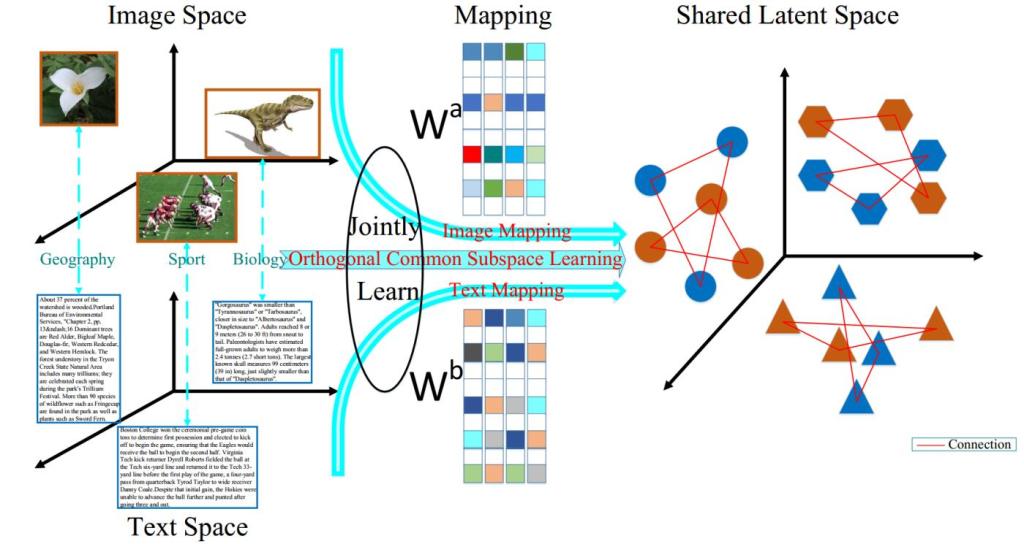
  1. Cross-Modal Learning: At its core, cross-modal learning refers to the process of leveraging and integrating information from different forms of data, or ‘modalities.’ This can include text, images, audio, video, and more. In the context of AI, this is typically achieved using machine learning algorithms that can ‘learn’ to identify and understand patterns across these different data types.

A critical aspect of this is the use of representation learning, where the AI is trained to convert raw data into a form that’s easier for machine learning algorithms to understand. For example, it might convert images into a series of numerical vectors that represent different features of the image, like color, shape, and texture.

Cross-modal learning also often involves techniques like transfer learning (where knowledge gained from one task is applied to another, related task) and multi-task learning (where the AI is trained on multiple tasks at once, encouraging it to develop a more generalized understanding of the data).

  1. Generative AI: Generative AI refers to systems that can create new content that’s similar to the data they’ve been trained on. One of the most common techniques used for this is Generative Adversarial Networks (GANs).

GANs involve two neural networks: a generator and a discriminator. The generator creates new content, while the discriminator evaluates this content against the real data. The generator gradually improves its output in an attempt to ‘fool’ the discriminator. Other methods include Variational Autoencoders (VAEs) and autoregressive models like the Transformer, which was used to create models like GPT-4.

Cross-modal generative AI brings these two components together, allowing AI to understand, interpret, and generate new content across different forms of data. This involves training the AI on massive datasets containing various types of data, and using advanced algorithms that can handle the complexities of multimodal data.

For instance, the AI might be trained using a dataset that contains pairs of images and descriptions. By learning the relationships between these images and their corresponding text, the AI can then generate a description for a new image it’s never seen before, or create an image based on a given description.

In essence, the technology behind cross-modal generative AI is a blend of advanced machine learning techniques that allow it to understand and generate a wide range of data types. As this technology continues to evolve, it’s likely we’ll see even more innovative uses of this capability, further blurring the lines between different forms of data and creating even more powerful and versatile AI systems.

Cross-Modal Generative AI in the Customer Experience Space

The exciting implications of cross-modal generative AI are particularly potent in the context of customer experience. As businesses become more digital and interconnected, customer experience has grown to encompass multiple modalities. Today’s customers interact with brands through text, voice, video, and other interactive content across multiple channels. Here are some practical applications of this technology:

1. Personalized Advertising: Cross-modal generative AI can take user preferences and behaviors across different channels and generate personalized advertisements. For instance, it could analyze a customer’s text interactions with a brand, the videos they watched, the images they liked, and then create tailored advertisements that would resonate with that customer.

2. Multimodal Customer Support: Traditional AI customer support often falls short in handling complex queries. By understanding and integrating information from text, audio, and even video inputs, cross-modal AI can provide a much more nuanced and effective customer support. It could generate responses not just in text, but also in the form of images, videos, or audio messages if needed.

3. Improved Accessibility: Cross-modal generative AI can make digital spaces more accessible. For example, it could generate descriptive text for images or videos for visually impaired users, or create sign language videos to describe textual content for hearing-impaired users.

4. Enhanced User Engagement: AI can generate cross-modal content, such as text-based games that produce sounds and images based on user inputs, creating a rich, immersive experience. This can help businesses differentiate themselves and improve user engagement.

Measuring the Success of Cross-Modal Generative AI Deployment

As with any technology deployment, measuring the success of cross-modal generative AI requires defining key performance indicators (KPIs). Here are some factors to consider:

1. Customer Satisfaction: Surveys can be used to understand whether the deployment of this AI technology has led to an improved customer experience.

2. Engagement Metrics: Increased interaction with AI-generated content or enhanced user activity could be an indicator of success. This can be measured through click-through rates, time spent on a page, or interactions per visit.

3. Conversion Rates: The ultimate goal of improved customer experience is to drive business results. A successful deployment should see an increase in conversion rates, be it sales, sign-ups, or any other business-specific action.

4. Accessibility Metrics: If one of your goals is improved accessibility, you can measure the increase in the number of users who take advantage of these features.

5. Cost Efficiency: Measure the reduction in customer service costs or the efficiency gained in advertising spend due to the personalized nature of the ads generated by the AI.

The Future of Cross-Modal Generative AI

The integration of cross-modal learning and generative AI presents a transformative opportunity. Its capabilities are expanding beyond mere novelty to becoming a crucial component of a robust customer experience strategy. However, as with any pioneering technology, the full potential of cross-modal generative AI is yet to be realized.

Looking ahead, we can envision several avenues for future development:

1. Interactive Virtual Reality (VR) and Augmented Reality (AR) Experiences: With the ability to understand and generate content across different modalities, AI could play a significant role in crafting immersive VR and AR experiences. This could transform sectors like retail, real estate, and entertainment, creating truly interactive and personalized experiences for customers.

2. Advanced Content Creation and Curation: Cross-modal generative AI could revolutionize content creation and curation by auto-generating blog posts with suitable images, videos, and audio, creating engaging and varied content tailored to the preferences of the individual consumer.

3. Intelligent Digital Assistants: The future of digital assistants lies in their ability to interact more naturally, understanding commands and providing responses across multiple modes of communication. By leveraging cross-modal learning, the next generation of digital assistants could respond to queries with text, visuals, or even synthesized speech, creating a more human-like interaction.

Conclusion

In the rapidly evolving landscape of artificial intelligence, cross-modal generative AI stands out as a particularly promising development. Its ability to integrate multiple forms of data and output offers rich possibilities for improving the customer experience, adding a new layer of personalization, interactivity, and creativity to digital interactions.

However, as businesses begin to adopt and integrate this technology into their operations, it’s crucial to approach it strategically, defining clear objectives and KPIs, and constantly measuring and refining its performance.

While there will certainly be challenges and learning curves ahead, the potential benefits of cross-modal generative AI make it an exciting frontier for businesses looking to elevate their customer experience and stay ahead in the digital age. With continued advancements and thoughtful application, this technology has the potential to reshape our understanding of AI’s role in customer experience, moving us closer to a future where AI can truly understand and interact with humans in a multimodal and multidimensional way.