Toward an “AI Manhattan Project”: Weighing the Pay-Offs and the Irreversible Costs

1. Introduction

Calls for a U.S. “Manhattan Project for AI” have grown louder as strategic rivalry with China intensifies. A November 2024 congressional report explicitly recommended a public-private initiative to reach artificial general intelligence (AGI) first reuters.com. Proponents argue that only a whole-of-nation program—federal funding, private-sector innovation, and academic talent—can deliver sustained technological supremacy.

Yet the scale required rivals the original Manhattan Project: tens of billions of dollars per year, gigawatt-scale energy additions, and unprecedented water withdrawals for data-center cooling. This post maps the likely structure of such a program, the concrete advantages it could unlock, and the “costs that cannot be recalled.” Throughout, examples and data points help the reader judge whether the prize outweighs the price.


2. Historical context & program architecture

Aspect1940s Manhattan ProjectHypothetical “AI Manhattan Project”
Primary goalWeaponize nuclear fissionAchieve safe, scalable AGI & strategic AI overmatch
LeadershipMilitary-led, secretCivil-mil-industry consortium; classified & open tracks rand.org
Annual spend (real $)≈ 0.4 % of GDPSimilar share today ≈ US $100 Bn / yr
Key bottlenecksUranium enrichment, physics know-howCompute infrastructure, advanced semiconductors, energy & water

The modern program would likely resemble Apollo more than Los Alamos: open innovation layers, standard-setting mandates, and multi-use technology spill-overs rand.org. Funding mechanisms already exist—the $280 Bn CHIPS & Science Act, tax credits for fabs, and the 2023 AI Executive Order that mobilises every federal agency to oversee “safe, secure, trustworthy AI” mckinsey.comey.com.


3. Strategic and economic advantages

AdvantageEvidence & Examples
National-security deterrenceRapid AI progress is explicitly tied to preserving U.S. power vis-à-vis China reuters.com. DoD applications—from real-time ISR fusion to autonomous cyber-defense—benefit most when research, compute and data are consolidated.
Economic growth & productivityGenerative AI is projected to add US $2–4 trn to global GDP annually by 2030, provided leading nations scale frontier models. Similar federal “moon-shot” programs (Apollo, Human Genome) generated 4-6× ROI in downstream industries.
Semiconductor resilienceThe CHIPS Act directs > $52 Bn to domestic fabs; a national AI mission would guarantee long-term demand, de-risking private investment in cutting-edge process nodes mckinsey.com.
Innovation spill-oversLiquid-cooling breakthroughs for H100 clusters already cut power by 30 % jetcool.com. Similar advances in photonic interconnects, error-corrected qubits and AI-designed drugs would radiate into civilian sectors.
Talent & workforceLarge, mission-driven programs historically accelerate STEM enrolment and ecosystem formation. The CHIPS Act alone funds new regional tech hubs and a bigger, more inclusive STEM pipeline mckinsey.com.
Standards & safety leadershipThe 2023 AI EO tasks NIST to publish red-team and assurance protocols; scaling that effort inside a mega-project could set global de-facto norms long before competing blocs do ey.com.

4. Irreversible (or hard-to-reclaim) costs

Cost dimensionData pointsWhy it can’t simply be “recalled”
Electric-power demandData-center electricity hit 415 TWh in 2024 (1.5 % of global supply) and is growing 12 % CAGR iea.org. Training GPT-4 alone is estimated at 52–62 GWh—40 × GPT-3 extremenetworks.com. Google’s AI surge drove a 27 % YoY jump in its electricity use and a 51 % rise in emissions since 2019 theguardian.com.Grid-scale capacity expansions (or new nuclear builds) take 5–15 years; once new load is locked in, it seldom reverses.
Water withdrawal & consumptionTraining GPT-3 in Microsoft’s U.S. data centers evaporated ≃ 700,000 L; global AI could withdraw 4.2–6.6 Bn m³ / yr by 2027 arxiv.org. In The Dalles, Oregon, a single Google campus used ≈ 25 % of the city’s water washingtonpost.com.Aquifer depletion and river-basin stress accumulate; water once evaporated cannot be re-introduced locally at scale.
Raw-material intensityEach leading-edge fab consumes thousands of tons of high-purity chemicals and rare-earth dopants annually. Mining and refining chains (gallium, germanium) have long lead times and geopolitical chokepoints.
Fiscal opportunity costAt 0.4 % GDP, a decade-long program diverts ≈ $1 Tn that could fund climate tech, housing, or healthcare. Congress already faces competing megaprojects (infrastructure, defense modernization).
Arms-race dynamicsFraming AI as a Manhattan-style sprint risks accelerating offensive-first development and secrecy, eroding global trust rand.org. Reciprocal escalation with China or others could normalize “flash-warfare” decision loops.
Social & labour disruptionGPT-scale automation threatens clerical, coding, and creative roles. Without parallel investment in reskilling, regional job shocks may outpace new job creation—costs that no later policy reversal fully offsets.
Concentration of power & privacy erosionCentralizing compute and data in a handful of vendors or agencies amplifies surveillance and monopoly risk; once massive personal-data corpora and refined weights exist, deleting or “un-training” them is practically impossible.

5. Decision framework: When is it “worth it”?

  1. Strategic clarity – Define end-states (e.g., secure dual-use models up to x FLOPS) rather than an open-ended race.
  2. Energy & water guardrails – Mandate concurrent build-out of zero-carbon power and water-positive cooling before compute scale-up.
  3. Transparency tiers – Classified path for defense models, open-science path for civilian R&D, both with independent safety evaluation.
  4. Global coordination toggle – Pre-commit to sharing safety breakthroughs and incident reports with allies to dampen arms-race spirals.
  5. Sunset clauses & milestones – Budget tranches tied to auditable progress; automatic program sunset or restructuring if milestones slip.

Let’s dive a bit deeper into this topic:

Deep-Dive: Decision Framework—Evidence Behind Each Gate

Below, each of the five “Is it worth it?” gates is unpacked with the data points, historical precedents and policy instruments that make the test actionable for U.S. policymakers and corporate partners.


1. Strategic Clarity—Define the Finish Line up-front

  • GAO’s lesson on large programs: Cost overruns shrink when agency leaders lock scope and freeze key performance parameters before Milestone B; NASA’s portfolio cut cumulative overruns from $7.6 bn (2023) to $4.4 bn (2024) after retiring two unfocused projects. gao.govgao.gov
  • DoD Acquisition playbook: Streamlined Milestone Decision Reviews correlate with faster fielding and 17 % lower average lifecycle cost. gao.gov
  • Apollo & Artemis analogues: Apollo consumed 0.8 % of GDP at its 1966 peak yet hit its single, crisp goal—“land a man on the Moon and return him safely”—within 7 years and ±25 % of the original budget (≈ $25 bn ≃ $205 bn 2025 $). ntrs.nasa.gov
  • Actionable test: The AI mission should publish a Program Baseline (scope, schedule, funding bands, exit criteria) in its authorizing legislation, reviewed annually by GAO. Projects lacking a decisive “why” or clear national-security/innovation deliverable fail the gate.

2. Energy & Water Guardrails—Scale Compute Only as Fast as Carbon-Free kWh and Water-Positive Cooling Scale

  • Electricity reality check: Data-centre demand hit 415 TWh in 2024 (1.5 % of global supply) and is on track to more than double to 945 TWh by 2030, driven largely by AI. iea.orgiea.org
  • Water footprint: Training GPT-3 evaporated ~700 000 L of freshwater; total AI water withdrawal could reach 4.2–6.6 bn m³ yr⁻¹ by 2027—roughly the annual use of Denmark. interestingengineering.comarxiv.org
  • Corporate precedents:
  • Actionable test: Each new federal compute cluster must show a signed power-purchase agreement (PPA) for additional zero-carbon generation and a net-positive watershed plan before procurement funds are released. If the local grid or aquifer cannot meet that test, capacity moves elsewhere—no waivers.

3. Transparency Tiers—Classified Where Necessary, Open Where Possible

  • NIST AI Risk Management Framework (RMF 1.0) provides a voluntary yet widely adopted blueprint for documenting hazards and red-team results; the 2023 Executive Order 14110 directs NIST to develop mandatory red-team guidelines for “dual-use foundation models.” nist.govnvlpubs.nist.govnist.gov
  • Trust-building precedent: OECD AI Principles (2019) and the Bletchley Declaration (2024) call for transparent disclosure of capabilities and safety test records—now referenced by over 50 countries. oecd.orggov.uk
  • Actionable test:
    • Tier I (Open Science): All weights ≤ 10 ¹⁵ FLOPS and benign-use evaluations go public within 180 days.
    • Tier II (Sensitive Dual-Use): Results shared with a cleared “AI Safety Board” drawn from academia, industry, and allies.
    • Tier III (Defense-critical): Classified, but summary risk metrics fed back to NIST for standards development.
      Projects refusing the tiered disclosure path are ineligible for federal compute credits.

4. Global Coordination Toggle—Use Partnerships to Defuse the Arms-Race Trap

  • Multilateral hooks already exist: The U.S.–EU Trade & Technology Council, the Bletchley process, and OECD forums give legal venues for model-card sharing and joint incident reporting. gov.ukoecd.org
  • Pre-cedent in export controls: The 2022-25 U.S. chip-export rules show unilateral moves quickly trigger foreign retaliation; coordination lowers compliance cost and leakage risk.
  • Actionable test: The AI Manhattan Project auto-publishes safety-relevant findings and best-practice benchmarks to allies on a 90-day cadence. If another major power reciprocates, the “toggle” stays open; if not, the program defaults to tighter controls—but keeps a standing offer to reopen.

5. Sunset Clauses & Milestones—Automatic Course-Correct or Terminate

  • Defense Production Act model: Core authorities expire unless re-authorized—forcing Congress to assess performance roughly every five years. congress.gov
  • GAO’s cost-growth dashboard: Programmes without enforceable milestones average 27 % cost overrun; those with “stage-gate” funding limits come in at ~9 %. gao.gov
  • ARPA-E precedent: Initially sunset in 2013, reauthorized only after independent evidence of >4× private R&D leverage; proof-of-impact became the price of survival. congress.gov
  • Actionable test:
    • Five-year VELOCITY checkpoints tied to GAO-verified metrics (e.g., training cost/FLOP, energy per inference, validated defense capability, open-source spill-overs).
    • Failure to hit two successive milestones shutters the relevant work-stream and re-allocates any remaining compute budget.

Bottom Line

These evidence-backed gates convert the high-level aspiration—“build AI that secures U.S. prosperity without wrecking the planet or global stability”—into enforceable go/no-go tests. History shows that when programs front-load clarity, bake in resource limits, expose themselves to outside scrutiny, cooperate where possible and hard-stop when objectives slip, they deliver transformative technology and avoid the irretrievable costs that plagued earlier mega-projects.


6. Conclusion

A grand-challenge AI mission could secure U.S. leadership in the defining technology of the century, unlock enormous economic spill-overs, and set global norms for safety. But the environmental, fiscal and geopolitical stakes dwarf those of any digital project to date and resemble heavy-industry infrastructure more than software.

In short: pursue the ambition, but only with Apollo-scale openness, carbon-free kilowatts, and water-positive designs baked in from day one. Without those guardrails, the irreversible costs—depleted aquifers, locked-in emissions, and a destabilizing arms race—may outweigh even AGI-level gains.

We also discuss this topic in detail on Spotify (LINK)

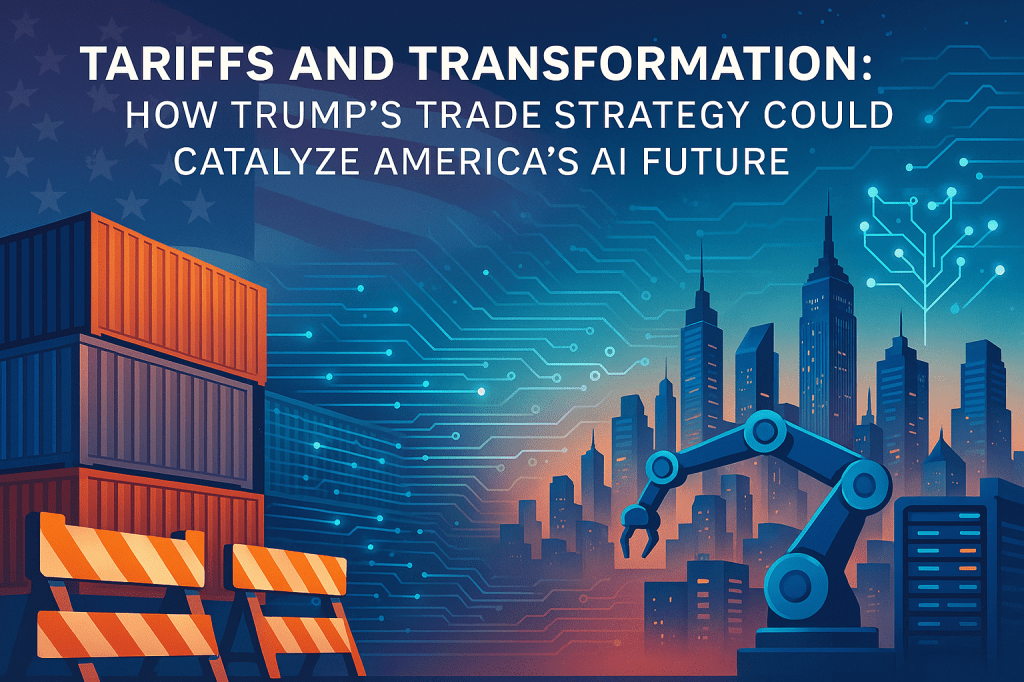
Tariffs and Transformation: How Trump’s Trade Strategy Could Catalyze America’s AI Future

When economic tensions flare, unexpected opportunities emerge. While President Donald Trump’s renewed push for worldwide tariffs has reignited debate over globalization and economic isolation, a contrarian view is quietly gaining traction: Could protectionist trade policies act as an accelerant for American innovation, particularly in Artificial Intelligence (AI)? As access to cheap foreign labor and outsourced manufacturing becomes constrained, the U.S. may be nudged — or forced — into a new industrial renaissance powered by automation, AI, and advanced digital infrastructure.

In this post, we’ll explore how an aggressive trade war scenario may inadvertently lay the foundation for rapid AI adoption, workforce transformation, and strategic repositioning of U.S. economic competitiveness — not in spite of tariffs, but because of them.


Short-Term Ripple Effects: Immediate Catalysts for AI Integration

1. Supply Chain Shock → Automation Investment

  • Tariffs on imported goods — particularly from manufacturing hubs like China — immediately raise the cost of parts, electronics, and finished products.
  • To combat increased costs, U.S. manufacturers may invest in robotic process automation (RPA), AI-driven predictive maintenance, and computer vision for quality control, reducing reliance on human labor and global inputs.

Example: An American electronics company previously sourcing sensors from Asia might now use AI to optimize domestic additive manufacturing (3D printing) operations, cutting turnaround time and offsetting tariff costs.

2. Labor Cost Rebalancing

  • With offshore labor becoming less cost-effective due to tariffs, the cost parity between human workers and AI solutions narrows.
  • Companies accelerate deployment of AI-powered customer support, logistics optimization, and AI-enhanced B2B services.

Example: SMBs adopt platforms like UiPath or Microsoft Power Automate to streamline finance and HR workflows, reducing the need for outsourced back-office functions in India or the Philippines.

3. Energy and Commodities Realignment

  • Tariffs on materials like rare earth metals or lithium may hamper hardware-dependent industries, incentivizing a pivot to software-first innovation.
  • U.S. firms may double down on software-defined infrastructure, AI-driven simulation, and synthetic data generation to reduce dependence on imported physical components.

Example: In response to tariffs on imported rare earth metals, U.S. energy firms may accelerate investment in AI-driven material discovery and recycling technologies to secure domestic alternatives and reduce dependency on foreign supply chains.


Mid to Long-Term Scenarios: Strategic AI Acceleration

1. Re-Industrialization Through AI-First Infrastructure

As tariffs insulate domestic industries:

  • Federal and state incentives (similar to the CHIPS Act) may emerge to promote AI innovation zones in Rust Belt regions.
  • Legacy factories get retrofit with digital twins, AI-powered supply chain orchestration, and IoT-based production analytics.
  • AI talent clusters emerge in places like Detroit, Pittsburgh, and Milwaukee, rejuvenating local economies.

Long-Term Outcome:
The U.S. begins to compete not on low-cost goods, but high-efficiency, AI-integrated advanced manufacturing.

2. Defense and National Security-Driven AI Growth

A tariff-fueled standoff with nations like China may escalate:

  • U.S. defense agencies double down on autonomous systems, cybersecurity AI, and quantum AI research.
  • Public-private partnerships with defense contractors and startups accelerate dual-use AI innovations (e.g., drones, AI threat detection, digital war gaming).

Long-Term Outcome:
AI becomes a core pillar of national resilience, similar to how the space race galvanized aerospace R&D.

3. Higher Education & Workforce Realignment

As industries shift to domestic AI-first operations:

  • Trade schools, community colleges, and universities modernize programs to teach AI integration, ML operations, low-code automation, and ethical AI use.
  • Federal workforce reskilling programs (akin to the GI Bill) are introduced to support mid-career transitions.

Example:
A 52-year-old logistics manager in Ohio completes a certificate in AI-driven supply chain tools and pivots into a role coordinating digital freight platforms.


Opportunities for New Workforce Entrants

🧠 AI-First Entrepreneurism

  • Tariffs reconfigure global pricing dynamics — creating white space opportunities for AI startups to solve new domestic pain points in manufacturing, agriculture, and logistics.
  • Young entrepreneurs can build lean AI-driven businesses targeting newly re-domesticated industries.

💼 Entry-Level Talent Floodgates Open

  • The surge in demand for AI system maintenance, prompt engineering, data labeling, and ML model tuning opens doors for tech-savvy but non-degreed workers.
  • Apprenticeship programs and AI bootcamps become more valuable than 4-year degrees for many roles.

Upskilling Pathways for Stable-Career Professionals

📈 Business Leaders and Analysts

  • Professionals in stable sectors (e.g., retail, finance, insurance) can future-proof by learning AI analytics, customer segmentation AI, and LMM-enhanced decision intelligence.
  • MBAs and strategists gain value by adding AI fluency and toolkits like Tableau+Einstein AI or Snowflake Cortex to their profiles.

🏭 Operations & Manufacturing Roles

  • Engineers and managers shift into AI-integrated plant operations, robotics orchestration, and digital twin strategy roles.
  • Experienced technicians transition into AI-powered maintenance via platforms like Avathon or Uptake.

Conclusion: A New Kind of American Resilience

While protectionism has long been painted as anti-innovation, we may be witnessing a rare inversion of that narrative. If U.S. businesses are pushed away from cheap global sourcing and back toward domestic self-reliance, AI may emerge as the only economically viable way to bridge the gap. This shift can usher in not only a smarter economy but a more inclusive one — if policymakers, educators, and enterprises act quickly.

By viewing tariffs not merely as a cost, but as a forcing function for digital transformation, the U.S. has a window to reindustrialize with intelligence — quite literally.

Please listen to us discuss this topic on Spotify

The AI Dilemma: Balancing Financial ROI, Ethical Responsibility, and Societal Impact

Introduction

In today’s digital-first world, the exponential growth of Artificial Intelligence (AI) has pushed organizations to a precipice, where decision-makers are forced to weigh the benefits against the tangible costs and ethical ramifications. Business leaders and stockholders, eager to boost financial performance, are questioning the viability of their investments in AI. Are these deployments meeting the anticipated return on investment (ROI), and are the long-term benefits worth the extensive costs? Beyond financial considerations, AI-driven solutions consume vast energy resources and require robust employee training. Companies now face a dilemma: how to advance AI capabilities responsibly without compromising ethical standards, environmental sustainability, or the well-being of future generations.

The ROI of AI: Meeting Expectations or Falling Short?

AI promises transformative efficiencies and significant competitive advantages, yet actualized ROI is highly variable. According to recent industry reports, fewer than 20% of AI initiatives fully achieve their expected ROI, primarily due to gaps in technological maturity, insufficient training, and a lack of strategic alignment with core business objectives. Stockholders who champion AI-driven projects often anticipate rapid and substantial returns. However, realizing these returns depends on multiple factors:

  1. Initial Investment in Infrastructure: Setting up AI infrastructure—from data storage and processing to high-performance computing—demands substantial capital. Additionally, costs associated with specialized hardware, such as GPUs for machine learning, can exceed initial budgets.
  2. Talent Acquisition and Training: Skilled professionals, data scientists, and AI engineers command high salaries, and training existing employees to work with AI systems represents a notable investment. Many organizations fail to account for this hidden expenditure, which directly affects their bottom line and prolongs the payback period.
  3. Integration and Scalability: AI applications must be seamlessly integrated with existing technology stacks and scaled across various business functions. Without a clear plan for integration, companies risk stalled projects and operational inefficiencies.
  4. Model Maintenance and Iteration: AI models require regular updates to stay accurate and relevant, especially as market dynamics evolve. Neglecting this phase can lead to subpar performance, misaligned insights, and ultimately, missed ROI targets.

To optimize ROI, companies need a comprehensive strategy that factors in these components. Organizations should not only measure direct financial returns but also evaluate AI’s impact on operational efficiency, customer satisfaction, and brand value. A successful AI investment is one that enhances overall business resilience and positions the organization for sustainable growth in an evolving marketplace.

Quantifying the Cost of AI Training and Upskilling

For businesses to unlock AI’s full potential, they must cultivate an AI-literate workforce. However, upskilling employees to effectively manage, interpret, and leverage AI insights is no small task. The cost of training employees spans both direct expenses (training materials, specialized courses) and indirect costs (lost productivity during training periods). Companies must quantify these expenditures rigorously to determine if the return from an AI-trained workforce justifies the initial investment.

  1. Training Costs and Curriculum Development: A customized training program that includes real-world applications can cost several thousand dollars per employee. Additionally, businesses often need to invest in ongoing education to keep up with evolving AI advancements, which can further inflate training budgets.
  2. Opportunity Costs: During training periods, employees might be less productive, and this reduction in productivity needs to be factored into the overall ROI of AI. Businesses can mitigate some of these costs by adopting a hybrid training model where employees split their time between learning and executing their core responsibilities.
  3. Knowledge Retention and Application: Ensuring that employees retain and apply what they learn is critical. Without regular application, skills can degrade, diminishing the value of the training investment. Effective training programs should therefore include a robust follow-up mechanism to reinforce learning and foster skill retention.
  4. Cross-Functional AI Literacy: While technical teams may handle the intricacies of AI model development, departments across the organization—from HR to customer support—need a foundational understanding of AI’s capabilities and limitations. This cross-functional AI literacy is vital for maximizing AI’s strategic value.

For organizations striving to become AI-empowered, training is an investment in future-proofing the workforce. Companies that succeed in upskilling their teams stand to gain a substantial competitive edge as they can harness AI for smarter decision-making, faster problem-solving, and more personalized customer experiences.

The Energy Dilemma: AI’s Growing Carbon Footprint

AI, especially large-scale models like those powering natural language processing and deep learning, consumes considerable energy. According to recent studies, training a single large language model can emit as much carbon as five cars over their entire lifespans. This stark energy cost places AI at odds with corporate sustainability goals and climate improvement expectations. Addressing this concern requires a two-pronged approach: optimizing energy usage and transitioning to greener energy sources.

  1. Optimizing Energy Consumption: AI development teams must prioritize efficiency from the onset, leveraging model compression techniques, energy-efficient hardware, and algorithmic optimization to reduce energy demands. Developing scalable models that achieve similar accuracy with fewer resources can significantly reduce emissions.
  2. Renewable Energy Investments: Many tech giants, including Google and Microsoft, are investing in renewable energy to offset the carbon footprint of their AI projects. By aligning AI energy consumption with renewable sources, businesses can minimize their environmental impact while meeting corporate social responsibility objectives.
  3. Carbon Credits and Offsetting: Some organizations are also exploring carbon offset programs as a means to counterbalance AI’s environmental cost. While not a solution in itself, carbon offsetting can be an effective bridge strategy until AI systems become more energy-efficient.

Ethical and Philosophical Considerations: Do the Ends Justify the Means?

The rapid advancement of AI brings with it pressing ethical questions. To what extent should society tolerate the potential downsides of AI for the benefits it promises? In classic ethical terms, this is a question of whether “the ends justify the means”—in other words, whether AI’s potential to improve productivity, quality of life, and economic growth outweighs the accompanying challenges.

Benefits of AI

  1. Efficiency and Innovation: AI accelerates innovation, facilitating new products and services that can improve lives and drive economic growth.
  2. Enhanced Decision-Making: With AI, businesses can make data-informed decisions faster, creating a more agile and responsive economy.
  3. Greater Inclusivity: AI has the potential to democratize access to education, healthcare, and financial services, particularly in underserved regions.

Potential Harms of AI

  1. Job Displacement: As AI automates routine tasks, the risk of job displacement looms large, posing a threat to livelihoods and economic stability for certain segments of the workforce.
  2. Privacy and Surveillance: AI’s ability to analyze and interpret vast amounts of data can lead to privacy breaches and raise ethical concerns around surveillance.
  3. Environmental Impact: The high energy demands of AI projects exacerbate climate challenges, potentially compromising sustainability efforts.

Balancing Ends and Means

For AI to reach its potential without disproportionately harming society, businesses need a principled approach that prioritizes responsible innovation. The philosophical view that “the ends justify the means” can be applied to AI advancement, but only if the means—such as ensuring equitable access to AI benefits, minimizing job displacement, and reducing environmental impact—are conscientiously addressed.

Strategic Recommendations for Responsible AI Advancement

  1. Develop an AI Governance Framework: A robust governance framework should address data privacy, ethical standards, and sustainability benchmarks. This framework can guide AI deployment in a way that aligns with societal values.
  2. Prioritize Human-Centric AI Training: By emphasizing human-AI collaboration, businesses can reduce the fear of job loss and foster a culture of continuous learning. Training programs should not only impart technical skills but also stress ethical decision-making and the responsible use of AI.
  3. Adopt Energy-Conscious AI Practices: Companies can reduce AI’s environmental impact by focusing on energy-efficient algorithms, optimizing computing resources, and investing in renewable energy sources. Setting energy efficiency as a key performance metric for AI projects can also foster sustainable innovation.
  4. Build Public-Private Partnerships: Collaboration between governments and businesses can accelerate the development of policies that promote responsible AI usage. Public-private partnerships can fund research into AI’s societal impact, creating guidelines that benefit all stakeholders.
  5. Transparent Communication with Stakeholders: Companies must be transparent about the benefits and limitations of AI, fostering a well-informed dialogue with employees, customers, and the public. This transparency builds trust, ensures accountability, and aligns AI projects with broader societal goals.

Conclusion: The Case for Responsible AI Progress

AI holds enormous potential to drive economic growth, improve operational efficiency, and enhance quality of life. However, its development must be balanced with ethical considerations and environmental responsibility. For AI advancement to truly be justified, businesses must adopt a responsible approach that minimizes societal harm and maximizes shared value. With the right governance, training, and energy practices, the ends of AI advancement can indeed justify the means—resulting in a future where AI acts as a catalyst for a prosperous, equitable, and sustainable world.

DTT on Spotify (LINK)

Leveraging GenAI in Call Center Transformation Programs

Welcome back readers – we’ve been on a brief hiatus, taking the last few weeks to retool, reboot, and re-energize. This pause allowed us to externally view the industry and technology advancements and prepare for the exciting developments on the horizon in Generative AI and Customer Experience. We’re now back and ready to dive into the next wave of innovations in these rapidly evolving fields. Stay tuned for fresh insights and cutting-edge analysis as we explore how these advancements will reshape the future of business and technology.

Introduction

In today’s fast-paced digital landscape, the call center industry is undergoing significant transformation, driven by advancements in artificial intelligence, particularly generative AI (GenAI). As businesses strive to enhance customer experiences and optimize operational efficiency, understanding the current administration of call centers, their strengths and weaknesses, and the leading solutions in the marketplace is crucial. This blog post delves into these aspects and provides insights into the future trajectory of call center technologies, the goals and KPIs for transformation, and what to look for in a call center transformation consultant.

Current Administration of Call Centers

Traditional Models:

Most call centers today operate on a traditional model that relies heavily on human agents to handle customer interactions. These centers are typically structured into tiers, with frontline agents handling basic inquiries and more complex issues escalated to higher-tier support. The key elements of traditional call centers include:

  1. Human Agents: The backbone of the operation, handling inbound and outbound calls, emails, and live chat.
  2. IVR Systems: Interactive Voice Response (IVR) systems to route calls based on customer inputs.
  3. CRM Systems: Customer Relationship Management (CRM) platforms to track customer interactions and histories.
  4. Performance Monitoring: Metrics such as Average Handling Time (AHT), First Call Resolution (FCR), and Customer Satisfaction (CSAT) are used to gauge performance.

Strengths:

  • Human Touch: Human agents provide empathy and nuanced understanding in complex situations.
  • Flexibility: Agents can adapt to unexpected scenarios and offer personalized solutions.
  • Detailed Insights: Direct interactions with customers provide deep insights into their needs and preferences.

Weaknesses:

  • High Operational Costs: Salaries, training, and infrastructure maintenance contribute to significant costs.
  • Scalability Issues: Scaling up operations quickly in response to spikes in demand is challenging.
  • Inconsistent Quality: Performance can vary significantly between agents, affecting customer experience.

Why Transforming Your Company Away from Traditional Call Center Models is Crucial

In the rapidly evolving landscape of customer service, traditional call center models are increasingly falling short of meeting the dynamic needs and expectations of modern consumers. Transforming away from these outdated models is not just a trend but a necessity for companies aiming to stay competitive and relevant. Here’s why:

1. Changing Customer Expectations

Demand for Instant Gratification: Today’s customers expect fast, efficient, and seamless service. Traditional call centers, often characterized by long wait times and cumbersome processes, fail to deliver the immediacy that customers now demand.

Omnichannel Experience: Modern consumers interact with brands through multiple channels, including social media, email, chat, and phone. Traditional call centers are typically not equipped to handle this omnichannel approach effectively, leading to fragmented and inconsistent customer experiences.

2. Operational Efficiency and Cost Reduction

High Operational Costs: Maintaining a traditional call center is expensive, with significant costs associated with staffing, training, infrastructure, and maintenance. AI-driven solutions can automate routine tasks, reducing the need for a large workforce and lowering operational costs.

Scalability: Traditional models struggle with scalability, particularly during peak times or unexpected surges in demand. AI and cloud-based solutions offer the flexibility to scale operations up or down quickly, ensuring consistent service levels without the need for significant capital investment.

3. Enhanced Customer Insights and Personalization

Data-Driven Insights: Advanced AI and analytics tools provide deeper insights into customer behaviors and preferences. This data can be used to tailor interactions and offer personalized solutions, something traditional call centers are not equipped to do at scale.

Predictive Analytics: By leveraging predictive analytics, companies can anticipate customer needs and proactively address issues before they escalate, enhancing customer satisfaction and loyalty.

4. Competitive Advantage

Staying Ahead of the Curve: Companies that adopt advanced AI and automation technologies gain a competitive edge by offering superior customer experiences and operational efficiencies. In contrast, those sticking to traditional models risk falling behind more agile and innovative competitors.

Innovation and Adaptability: Transforming call centers with modern technologies fosters a culture of innovation and adaptability within the organization, enabling it to respond more quickly to market changes and customer demands.

5. Improved Agent Productivity and Satisfaction

Empowering Agents: AI tools can assist human agents by providing real-time information, suggestions, and automating repetitive tasks, allowing them to focus on more complex and value-added interactions. This not only improves productivity but also enhances job satisfaction.

Reduced Turnover: High turnover rates are a common issue in traditional call centers due to the repetitive and stressful nature of the work. By transforming call centers, companies can create a more engaging and rewarding work environment, reducing turnover and associated recruitment and training costs.

6. Better Customer Outcomes

Higher Resolution Rates: AI and advanced analytics can significantly improve First Call Resolution (FCR) rates by providing agents with the tools and information needed to resolve issues promptly and effectively.

Consistent Quality of Service: Automation ensures a consistent quality of service across all customer interactions, reducing the variability associated with human performance and enhancing overall customer satisfaction.

Transforming away from traditional call center models is essential for companies aiming to meet modern customer expectations, achieve operational efficiency, and maintain a competitive edge. The integration of GenAI and other advanced technologies into call center operations not only addresses the limitations of traditional models but also opens up new possibilities for innovation, personalization, and improved customer outcomes. By embracing this transformation, companies can ensure they are well-positioned to thrive in the fast-paced and ever-evolving landscape of customer service.

Leading Solutions in the Marketplace

The call center industry is witnessing a surge in AI-driven solutions aimed at addressing the limitations of traditional models. Several vendors and platforms are leading the charge in integrating GenAI into call center operations:

1. IBM Watson:

IBM Watson offers AI-driven customer service solutions that include natural language processing (NLP) and machine learning to automate interactions, analyze customer sentiments, and provide agents with real-time assistance.

2. Amazon Connect:

Amazon Connect is a cloud-based contact center service that leverages AWS’s machine learning capabilities. It offers features such as speech recognition, sentiment analysis, and real-time analytics to enhance customer interactions and streamline operations.

3. Google Cloud Contact Center AI:

Google‘s solution integrates AI to assist agents and automate routine tasks. It includes virtual agents for handling simple inquiries and agent assist features to provide real-time support, improving efficiency and customer satisfaction.

4. Genesys Cloud:

Genesys Cloud uses AI to optimize routing, provide predictive engagement, and offer deep analytics. It integrates with various CRM systems and offers scalability and flexibility for businesses of all sizes.

Future Directions:

  • Increased Automation: Continued advancements in AI will lead to higher levels of automation in handling routine and complex queries.
  • Enhanced Personalization: AI-driven analytics will enable hyper-personalized customer interactions based on real-time data.
  • Integration with IoT: Call centers will increasingly integrate with IoT devices, providing proactive support and maintenance services.
  • Voice Biometrics: Enhanced security through voice biometrics for customer verification.

Goals, Objectives, and KPIs for Call Center Transformation

Goals and Objectives:

  1. Enhancing Customer Experience: Improve CSAT scores by providing faster, more accurate, and personalized responses.
  2. Increasing Operational Efficiency: Reduce AHT and operational costs through automation and AI-driven insights.
  3. Scalability: Develop a flexible infrastructure that can scale quickly to meet changing customer demands.
  4. Employee Empowerment: Equip agents with AI tools to improve their performance and job satisfaction.

Key Performance Indicators (KPIs):

  • Customer Satisfaction (CSAT): Measures customer happiness with the service provided.
  • First Call Resolution (FCR): Percentage of issues resolved on the first call, indicating efficiency and effectiveness.
  • Average Handling Time (AHT): Average duration of customer interactions, aiming to reduce it without compromising quality.
  • Net Promoter Score (NPS): Gauges customer loyalty and likelihood to recommend the service.
  • Agent Utilization Rate: Measures the percentage of time agents are actively engaged in handling customer interactions.

Selecting a Call Center Transformation Partner

Choosing the right partner is crucial for the successful implementation of a call center transformation program. Here are the key attributes to look for:

1. Background and Experience:

  • Industry Expertise: Look for firms with extensive experience in the call center industry, particularly in managing large-scale transformation projects.
  • Technical Knowledge: They should have a deep understanding of AI, machine learning, and the latest call center technologies.
  • Proven Track Record: Check for a history of successful projects and satisfied clients.

2. Skills and Insight:

  • Strategic Thinking: The partner should be able to align the transformation project with the company’s overall strategic goals.
  • Analytical Skills: Ability to analyze current operations, identify areas for improvement, and develop data-driven solutions.
  • Change Management: Expertise in managing change, including training staff, modifying processes, and ensuring smooth transitions.
  • Communication: Strong communication skills to effectively collaborate with stakeholders at all levels.

3. Implementation Capability:

  • Customization: The ability to tailor solutions to meet the specific needs and challenges of the organization.
  • Vendor Relationships: Established connections with leading technology vendors to ensure access to the latest tools and solutions.
  • Ongoing Support: Commitment to providing continuous support and monitoring post-implementation to ensure sustained success.

Conclusion

The integration of GenAI into call center operations represents a significant leap forward in transforming customer service and operational efficiency. As businesses navigate this transformation, understanding the current landscape, leveraging leading solutions, and setting clear goals and KPIs will be critical. Additionally, selecting a consultant with the right expertise, skills, and implementation capabilities will ensure a smooth and successful transition to a more advanced, AI-driven call center environment. By embracing these advancements, companies can not only meet but exceed customer expectations, driving long-term growth and success.

The Transformative Role of AI in Financial Reporting and Dashboards in the Banking Industry

Introduction

In the fast-paced world of financial services and banking, artificial intelligence (AI) has become a cornerstone of innovation, particularly in the realm of financial reporting and the creation of insightful dashboards. As the financial sector grapples with the challenges of data volume, speed, and complexity, AI emerges not only as a tool for efficiency but as a strategic lever that transforms raw data into a springboard for decision-making and future planning. This blog aims to elucidate the value of AI-driven reporting and dashboards, providing a comprehensive understanding of how these technologies are reshaping financial strategies in banking.

Understanding AI-Driven Financial Reporting

At its core, AI-driven financial reporting leverages machine learning, data analytics, and automation to enhance the accuracy and timeliness of financial data interpretation. Traditional financial reporting often involves manual data collection and analysis, a time-consuming process prone to human error. AI revolutionizes this by automating data aggregation and processing, pulling from diverse sources such as transactions, market feeds, customer data, and operational metrics.

Key Benefits of AI in Financial Reporting:

  1. Speed and Efficiency: AI algorithms can process vast amounts of data at speeds unattainable by human analysts.
  2. Accuracy and Reliability: Machine learning models continuously learn and adapt, reducing errors and increasing the reliability of financial reports.
  3. Predictive Insights: AI can forecast future trends based on historical data, providing banks with a predictive tool to anticipate market shifts.

Expanding on the Key Benefits of AI in Financial Reporting

The banking industry has experienced substantial benefits from the integration of AI into financial reporting. This section will delve deeper into these benefits, providing specific examples of currently available AI tools that have made notable impacts.

1. Speed and Efficiency

AI significantly accelerates the data collection and report generation processes in financial reporting, which traditionally involve manual input and compilation, a slow and labor-intensive task.

Example: JPMorgan Chase’s MLCOE uses natural language processing to analyze legal documents and extract essential data points. The platform can review 12,000 annual commercial credit agreements in seconds, a task that previously consumed 360,000 hours of human work each year. This massive reduction in time and labor dramatically increases the bank’s operational efficiency.

2. Accuracy and Reliability

AI’s ability to process large datasets with minimal errors enhances the reliability of financial reports. Automated checks and balances powered by AI can detect inconsistencies and anomalies that might be overlooked by human auditors.

Example: Wells Fargo utilizes a predictive analytics tool for fraud detection that leverages machine learning to identify unusual patterns indicative of fraudulent activities. By applying these models, the bank can accurately flag and investigate suspicious transactions faster than manual methods, ensuring more reliable security measures and reducing financial losses.

3. Predictive Insights

AI’s capacity to analyze historical data and predict future trends is perhaps one of its most transformative aspects in financial reporting. This predictive power not only aids in forecasting future financial outcomes but also helps in strategic decision-making and risk management.

Example: Goldman Sachs employs machine learning models to predict future market trends and credit risks. These models analyze years of market data to forecast changes in economic conditions, enabling the bank to adjust their strategies proactively rather than reactively. Such predictive insights are crucial for maintaining competitiveness and financial stability.

Enhancing Reporting with Specific AI Tools

Several AI tools have been instrumental in enhancing financial reporting in the banking sector. Here are a few key technologies:

  • Robotic Process Automation (RPA): Banks use RPA for automating routine data collection and report preparation tasks. For instance, Deutsche Bank uses RPA to automate cash operations, which has improved the speed and accuracy of financial postings and reconciliations.
  • Data Visualization Tools: Tools like Tableau and Power BI are integrated with AI to provide dynamic financial dashboards that update in real-time and offer advanced data analysis capabilities. These tools allow financial analysts to create interactive visual reports that can highlight trends and outliers more effectively.
  • Advanced Analytics Platforms: Platforms such as SAS and IBM Watson provide sophisticated data analysis capabilities, including predictive analytics and machine learning, to glean deeper insights from financial data. These platforms can integrate data from various sources, offering a holistic view of the bank’s financial health and helping identify opportunities for cost reduction and revenue enhancement.

AI-Enhanced Dashboards: Visualization and Decision Support

Dashboards serve as the visual interface that summarizes complex data into actionable insights. In the banking industry, where executives must make rapid, informed decisions, the clarity provided by AI-enhanced dashboards is invaluable. These dashboards utilize AI to not only display data but to analyze and interpret it in ways that highlight correlations, trends, and anomalies.

Features of AI-Driven Dashboards:

  • Real-Time Data Integration: Live updates and streaming of data ensure that the dashboards reflect the most current state of affairs, essential for fast-paced financial environments.
  • Customizable Interfaces: AI tools can tailor the presentation of the dashboard to suit the specific needs of different users, from operational managers to C-level executives.
  • Interactive Analytics: Users can interact with the dashboard, drilling down into datasets and performing hypothetical scenario analyses.

Delving Deeper into the Features of AI-Driven Dashboards

AI-driven dashboards are revolutionizing how banks visualize and interact with their financial data. These dashboards do more than merely present data; they facilitate complex analyses, predict outcomes, and support strategic decision-making through their advanced features. Below, we explore these features in greater detail with specific examples of AI tools currently benefiting the banking industry.

Real-Time Data Integration

One of the most critical features of AI-driven dashboards is their ability to integrate and process data in real-time. This capability ensures that financial insights are based on the latest available data, providing an accurate basis for making informed decisions.

Example: Citibank has implemented dashboards that utilize real-time data feeds to monitor global transactions. These dashboards help track and analyze payment flows and currency exposures instantaneously, enabling timely decisions in currency and cash management which are crucial for mitigating risks in volatile markets.

Customizable Interfaces

AI-driven dashboards in banking are highly customizable, allowing different users to access views and insights that are relevant to their specific roles and responsibilities. This customization can range from the data presented to the complexity of the analytics and visualizations available.

Example: HSBC offers its commercial clients customizable dashboards through its online banking platform, HSBCnet. These dashboards allow users to create personalized views of their financial operations, including balances, cash flows, and upcoming payment obligations. This level of customization ensures that different stakeholders, from treasury managers to financial analysts, can quickly access the information they need.

Interactive Analytics

The ability to interact with data on a dashboard is a transformative feature, turning static charts into dynamic tools for exploration and analysis. Users can drill down into data, explore what-if scenarios, and make predictive analyses using built-in tools powered by AI.

Example: Barclays uses interactive, AI-enhanced dashboards that allow users to simulate various financial scenarios and their potential impacts on performance metrics. These tools enable decision-makers to visualize outcomes of different strategies, adjusting variables like interest rates or investment amounts to see how these changes could affect their financial forecasts.

Implementation of Specific AI Tools in Dashboards

The banking industry employs a variety of specific AI tools to power these dashboard features:

  • SAP Leonardo: This AI and data analytics platform is used by banks to enhance their financial dashboards with capabilities such as predictive analytics and machine learning. It helps in forecasting financial trends and providing insights that support proactive management.
  • Oracle Financial Services Analytical Applications (OFSAA): Oracle’s platform enables banks to integrate data across various sources and provides advanced visualization tools. This system supports real-time analytics and scenario modeling, essential for dynamic financial monitoring and planning.
  • Qlik Sense: This AI-driven business intelligence tool is known for its associative engine that allows users to make new data discoveries by exploring connections between data sets. Banks utilize Qlik Sense to provide interactive and intuitive dashboards that support in-depth analysis and data-driven decision-making.

Implementing AI in Financial Reporting and Dashboards

The integration of AI into financial reporting and dashboard creation involves several critical steps:

  1. Data Integration: The first step is the consolidation of data from various sources. AI systems are equipped with capabilities to cleanse, process, and integrate disparate data sets, forming a unified database.
  2. Model Development: Machine learning models are then trained on historical data to identify patterns and relationships. These models are crucial for predictive analytics and for powering recommendation systems within dashboards.
  3. Automation and Continuous Learning: Once the models are set, the reporting processes are automated. These systems are designed to learn continuously from new data, thereby improving their accuracy and functionality over time.
  4. Visualization and User Interface Design: The final step is the design of the user interface, where data visualization plays a critical role. Effective dashboards are intuitive and provide clear pathways to explore deeper insights.

Case Study: AI in Action

Consider a large banking corporation that implemented an AI-driven reporting system to manage its credit risk portfolio. The system pulls data from transaction histories, market trends, and customer interactions to provide real-time insights into potential risk factors. An AI-enhanced dashboard allows executives to monitor these risks dynamically, with tools to simulate various market scenarios and instantly see the potential impacts of different decision paths.

The Future of AI in Financial Reporting

As AI technology advances, its integration into financial reporting and dashboard design is expected to deepen. Future developments may include more advanced natural language processing (NLP) capabilities for generating narrative financial insights and deeper integration with blockchain for enhanced data security.

The Future of AI in Financial Reporting: Expanding Horizons in the Banking Industry

The future of artificial intelligence (AI) in financial reporting is poised to further revolutionize the banking industry. This evolution is anticipated to bring about significant enhancements in predictive analytics, decision-making processes, and overall operational efficiency. Here, we delve into what the future holds for AI in financial reporting, with a focus on emerging technologies and their potential applications.

Enhanced Predictive Analytics

AI’s capability to predict future trends based on historical data is set to become more sophisticated with the integration of deeper learning algorithms and broader data sets, including unstructured data like social media feeds and news articles.

Example: In the future, banks might use AI systems that integrate sentiment analysis to gauge market sentiment from social media and news trends. This could provide early warnings of market shifts or potential financial crises, allowing banks to adjust their strategies proactively. For instance, during times of economic uncertainty, a bank could analyze sentiment indicators to decide whether to tighten credit conditions or prepare for increased demand in customer service channels.

Real-Time Decision-Making

AI will enhance the speed and accuracy of decision-making in financial reporting. Real-time data processing combined with AI could allow for instant financial decisions that currently require days or weeks of preparation and analysis.

Example: Future AI systems could offer a real-time decision-making platform for credit assessments, using continuous data updates to provide immediate and accurate credit risk evaluations. This could significantly speed up the lending process, improve customer satisfaction, and reduce defaults by adapting quickly to changes in a borrower’s financial status or in economic conditions.

Automation of Complex Regulatory Compliance

Regulatory compliance is a significant challenge for banks due to the ever-changing and complex nature of financial regulations. AI is expected to play a critical role in automating these compliance processes, thus reducing costs and minimizing human error.

Example: AI could be used to automatically monitor transactions and flag any that might indicate non-compliance with new regulatory measures. Furthermore, AI systems could be trained to understand changes in regulatory requirements and dynamically adjust monitoring systems without human intervention, ensuring that banks remain compliant at all times.

Integration with Blockchain Technology

The integration of AI with blockchain technology promises to enhance the security and transparency of financial reporting. Blockchain can serve as an immutable ledger for recording transactions verified by AI algorithms, ensuring data integrity and reducing fraud.

Example: In the future, banks might implement blockchain to securely store transaction records, with AI algorithms running real-time analyses to detect fraud or discrepancies as they occur. This could drastically reduce the time and resources currently required for fraud detection and auditing processes.

Advanced Natural Language Processing (NLP)

Future advancements in NLP will enable more sophisticated analysis of textual data, allowing banks to generate insights from financial reports, customer feedback, and regulatory documents automatically.

Example: AI systems equipped with advanced NLP capabilities could automatically analyze the text in thousands of financial documents, extracting relevant financial indicators and sentiment. This would streamline the process of financial reporting and provide more depth in understanding market conditions and operational performance.

Conclusion

AI-driven reporting and dashboards in the banking industry represent more than just technological advancements; they are transformative tools that redefine how financial data is used to drive decisions and strategies. By leveraging AI, banks can not only optimize their current operations but also pave the way for innovative approaches to future challenges and opportunities.

For students and professionals alike, understanding and implementing these AI capabilities will be key to shaping the future of banking and financial services.

Enhancing Prompt Engineering Skills for Solving Complex Business Problems

Introduction

In the rapidly evolving landscape of artificial intelligence and digital transformation, prompt engineering has emerged as a crucial skill, especially for professionals like strategic management consultants, or someone getting more hands-on in the AI space for research or development. Individuals deeply involved in customer experience, artificial intelligence, and digital transformation, understanding and effectively utilizing prompt engineering can significantly enhance their ability to solve complex business problems. This blog post aims to provide a comprehensive guide to developing prompt engineering skills, complete with hands-on practice and real-world case studies.

What is Prompt Engineering?

Prompt engineering is the art and science of crafting inputs (prompts) to AI systems, particularly language models, in a way that elicits the most useful and accurate outputs. It’s a skill that involves understanding the capabilities and limitations of AI models, and how to best communicate with them to achieve desired outcomes.

Importance in Business

In the context of strategic management consulting, prompt engineering can streamline processes, generate innovative solutions, and enhance customer experiences. By effectively communicating with AI models, consultants can extract valuable insights, automate routine tasks, and even predict market trends.

Prompt engineering is crucial in the business world as it bridges human expertise with the capabilities of artificial intelligence. This skill is essential across various sectors, enabling professionals to effectively utilize AI for in-depth data analysis, automation of routine tasks, innovation, and accurate market trend predictions. By crafting precise and effective prompts, businesses can glean more nuanced and relevant insights from AI systems. This leads to improved decision-making, optimized processes, and enhanced customer experiences. Overall, prompt engineering is a vital tool in leveraging AI to tackle complex business challenges, streamline operational efficiencies, and secure a competitive edge in the rapidly evolving digital landscape.

Getting Started: Basic Principles

  1. Clarity and Specificity: Your prompts should be clear and specific. Ambiguity can lead to unpredictable results.
  2. Understanding Model Capabilities: Familiarize yourself with the AI model’s strengths and limitations. This knowledge is critical for framing your prompts effectively.
  3. Iterative Approach: Prompt engineering often involves trial and error. Be prepared to refine your prompts based on the outputs you receive.

Hands-On Practice

  1. Exercise 1: Simple Query Formulation
    • Task: Generate a market analysis report for a specific industry.
    • Prompt: “Create a comprehensive market analysis report for the renewable energy sector in the United States, focusing on solar power trends, major players, and future projections.”
  2. Exercise 2: Complex Problem Solving
    • Task: Develop a strategy for digital transformation in a retail business.
    • Prompt: “Outline a step-by-step digital transformation strategy for a mid-sized retail business, focusing on integrating AI in customer experience, supply chain optimization, and online retailing.”
  3. Exercise 3: Predictive Analytics for Market Expansion
    • Task: Generate insights for potential market expansion in a new region.
    • Prompt: “Provide an analysis of the economic, demographic, and consumer behavior trends in Southeast Asia relevant to the consumer electronics industry. Include potential opportunities and risks for market expansion.”
  4. Exercise 4: Customer Sentiment Analysis
    • Task: Conduct a sentiment analysis of customer feedback on a new product.
    • Prompt: “Analyze customer reviews of the latest smartphone model released by our company. Summarize the overall sentiment, highlight key praises and concerns, and suggest areas for improvement based on customer feedback.”
  5. Exercise 5: Streamlining Business Processes
    • Task: Identify inefficiencies and propose improvements in a company’s operational processes.
    • Prompt: “Evaluate the current operational processes of XYZ Corporation, focusing on logistics and supply chain management. Identify bottlenecks and inefficiencies, and propose a streamlined process model that incorporates AI and digital tools to enhance efficiency and reduce costs.”

Real-World Case Studies

  1. Case Study 1: Enhancing Customer Experience
    • Problem: A telecom company wants to improve its customer service.
    • Solution: The consultant used prompt engineering to develop an AI-driven chatbot that provided personalized customer support, resulting in increased customer satisfaction and reduced response times.
  2. Case Study 2: Streamlining Operations
    • Problem: A manufacturing firm needed to optimize its supply chain.
    • Solution: Through prompt engineering, an AI model analyzed vast datasets to predict supply chain disruptions and suggest efficient logistics strategies, leading to cost savings and improved efficiency.

Advanced Tips

  1. Contextualization: Incorporate context into your prompts. Providing background information can lead to more accurate responses.
  2. Feedback Loops: Use the outputs from AI as feedback to refine your prompts continually.
  3. Collaboration with AI: View AI as a collaborative tool. Your expertise combined with AI’s capabilities can lead to innovative solutions.

Conclusion

Prompt engineering is not just a technical skill but a strategic tool in the hands of a knowledgeable consultant. By mastering this skill, you can unlock the full potential of AI in solving complex business problems, leading to transformative outcomes in customer experience and digital operations. As AI continues to advance, so too should your ability to communicate and collaborate with it.

Next Steps

  1. Practice Regularly: Continuously challenge yourself with new prompts and scenarios.
  2. Stay Updated: Keep abreast of the latest advancements in AI and how they can impact prompt engineering.
  3. Share Knowledge: Collaborate with peers and share your findings to enhance collective understanding.

Prompt engineering is a dynamic and evolving field, and its mastery can be a significant asset in your consultancy toolkit. By applying these principles and practices, you can drive innovation and efficiency, positioning yourself at the forefront of digital transformation.

Embracing the Future: Strategic Preparation for Businesses at the Dawn of 2024

Introduction:

As we approach the end of December, and while many are winding down for a well-deserved break, there are forward-thinking businesses that are gearing up for a crucial period of strategic planning and preparation. This pivotal time offers a unique opportunity for companies to reflect on the lessons of 2023 and to anticipate the technological advancements that will shape 2024. Particularly, in the realms of Artificial Intelligence (AI), Customer Experience (CX), and Data Management, staying ahead of the curve is not just beneficial—it’s imperative for maintaining a competitive edge.

I. Retrospective Analysis: Learning from 2023

  1. Evaluating Performance Metrics:
    • Review key performance indicators (KPIs) from 2023. These KPI’s are set at the beginning of the year and should be typically monitored quarterly.
    • Analyze customer feedback and market trends to understand areas of strength and improvement. Be ready to pivot if there is a trend eroding your market share, and just like KPI’s this is a continual measurement.
  2. Technological Advancements:
    • Reflect on how AI and digital transformation have evolved over the past year. What are your strengths and weaknesses in this space and what should be discarded and what needs to be adopted.
    • Assess how well your business has integrated these technologies and where gaps exist. Don’t do this in a silo, understand what drives your business and what is technological noise.
  3. Competitive Analysis:
    • Study competitors’ strategies and performance.
    • Identify industry shifts and emerging players that could influence market dynamics.

II. Anticipating 2024: Trends and Advances in AI, CX, and Data Management

  1. Artificial Intelligence:
    • Explore upcoming AI trends, such as advancements in machine learning, natural language processing, and predictive analytics. Is this relevant to your organization, will it help you succeed. What can be ignored and what is imperative.
    • Plan for integration of AI in operational and decision-making processes. AI is inevitable, understand where it will be leveraged in your organization.
  2. Customer Experience (CX):
    • Anticipate new technologies and methods for enhancing customer engagement and personalization. CX is ever evolving and rather than chase nice-to-haves, ensure the need-to-haves are being met.
    • Prepare to leverage AI-driven analytics for deeper customer insights. This should always tie into your KPI strategy and reporting expectations.
  3. Data Management:
    • Stay abreast of evolving data privacy laws and regulations. Don’t get too far in front of your skis in this space, as this can lead to numerous scenarios where you are trying to course correct, and worse repair your image – A data breach is extremely costly to rectify.
    • Invest in robust data management systems that ensure security, compliance, and efficient data utilization. Always keep ahead and compliant with all data regulations, this includes domestic and global.

III. Strategic Planning: Setting the Course for 2024

  1. Goal Setting:
    • Define clear, measurable goals for 2024, aligning them with anticipated technological trends and market needs. Always ensure that a baseline is available, because trying to out perform a moving goal post, or expectations is difficult.
    • Ensure these goals are communicated across the organization for alignment and focus. Retroactively addressing missed goals is unproductive and costly, and as soon as the organization sees a miss, or opportunity for improvement, it should be addressed.
  2. Innovation and Risk Management:
    • Encourage a culture of innovation while balancing an atmosphere of risk. While Risk Management is crucial it should also be expected and to an extent encouraged within the organization. If you are not experiencing failures, you may not be be pushing the organization for growth and your resources may not be learning from failures.
    • Keep assessing potential technological investments and their ROI. As we mentioned above, technological advances should be adopted where appropriate, but also negative results that fail to meet expectations should not completely derail the team. To be a leader, an organization needs to learn from its failures.
  3. Skill Development and Talent Acquisition:
    • Identify skills gaps in your team, particularly in AI, CX, and data management. A team that becomes stale in their skills and value to the organization, may ultimately want to leave the organization, or worse be passed up and turn the overall team into a liability. Every member should enjoy the growth and opportunities being made available to them.
    • Plan for training, upskilling, or hiring to fill these gaps. Forecast by what’s in the pipeline / funnel, the team should be anticipating what is next and ultimately become a invaluable asset within the organization.

IV. Sustaining the Lead: Operational Excellence and Continuous Improvement

  1. Agile Methodologies:
    • Implement agile practices to adapt quickly to market changes and technological advancements. Remember that incremental change and upgrades are valuable, and that a shotgun deployment is often not meeting the needs of the stakeholders.
    • Foster a culture of flexibility and continuous learning. Don’t be afraid to make organizational changes when pushback to growth begins to to have negative impact on a team, or greater.
  2. Monitoring and Adaptation:
    • Regularly review performance against goals. As we have always said, goals should be quantitative vs. qualitative – An employee should have clear metrics to how, what and where they may be measured. These goals need to be set at the beginning of the measurement cycle, with consistent reviews throughout that time period. Anything beyond that it a subjective measurement and unfair to the performance management process.
    • Be prepared to pivot strategies in response to new data and insights. The team should always be willing to pivot within realistic limitations. When the expectations are not realistic or clear, this needs to be called out early, as this can lead to frustration at all levels.
  3. Customer-Centricity:
    • Keep the customer at the heart of all strategies. If the organization is not focused on the customer, there should be an immediate concern across teams and senior management. Without the customer, there is no organization and regardless of the amount of technology thrown at the problem, unless it’s focused and relevant, it will quickly become a liability.
    • Continuously seek feedback and use it to refine your approach. This is an obvious strategy in the world of CX, if you don’t know what your customer desires, or at a bare minimum wants – What are you working towards?

Conclusion:

As we stand on the brink of 2024, businesses that proactively prepare during this period will be best positioned to lead and thrive in the new year. By learning from the past, anticipating future trends, and setting strategic goals, companies can not only stay ahead of the competition but also create enduring value for their customers. The journey into 2024 is not just about embracing new technologies; it’s about weaving these advancements into the fabric of your business strategy to drive sustainable growth and success.

Please let the team at DTT (deliotechtrends) know what you want to hear about in 2024. We don’t want this to be a one way conversation, but an interaction and perhaps we can share some nuggets between the followers.

We will be taking the next few days off to spend with family and friends, and recharge the batteries – Then we’re excited to see what is in store for a new year and an exciting year of supporting your journey in technology. Happy Holidays and Here’s to a Prosperous New Year!!