The Intersection of Neural Radiance Fields and Text-to-Video AI: A New Frontier for Content Creation

Introduction

Last week we discussed advances in Gaussian Splatting and the impact on text-to-video content creation within the rapidly evolving landscape of artificial intelligence, these technologies are making significant strides and changing the way we think about content creation. Today we will discuss another technological advancement; Neural Radiance Fields (NeRF) and its impact on text-to-video AI. When these technologies converge, they unlock new possibilities for content creators, offering unprecedented levels of realism, customization, and efficiency. In this blog post, we will delve deep into these technologies, focusing particularly on their integration in OpenAI’s latest product, Sora, and explore their implications for the future of digital content creation.

Understanding Neural Radiance Fields (NeRF)

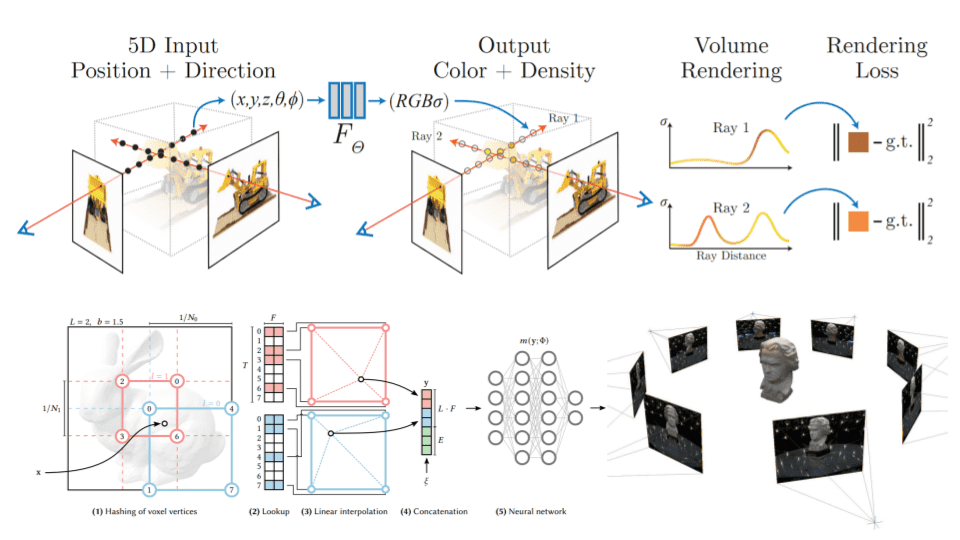
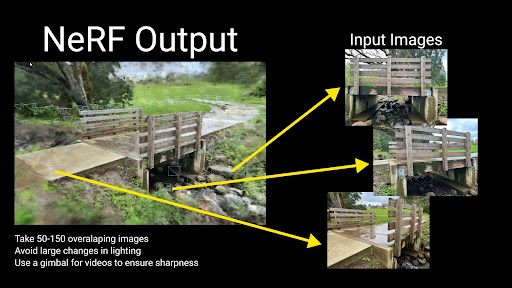
NeRF represents a groundbreaking approach to rendering 3D scenes from 2D images with astonishing detail and photorealism. This technology uses deep learning to interpolate light rays as they travel through space, capturing the color and intensity of light at every point in a scene to create a cohesive and highly detailed 3D representation. For content creators, NeRF offers a way to generate lifelike environments and objects from a relatively sparse set of images, reducing the need for extensive 3D modeling and manual texturing.

Expanded Understanding of Neural Radiance Fields (NeRF)

Neural Radiance Fields (NeRF) is a novel framework in the field of computer vision and graphics, enabling the synthesis of highly realistic images from any viewpoint using a sparse set of 2D input images. At its core, NeRF utilizes a fully connected deep neural network to model the volumetric scene functionally, capturing the intricate play of light and color in a 3D space. This section aims to demystify NeRF for technologists, illustrating its fundamental concepts and practical applications to anchor understanding.

Fundamentals of NeRF

NeRF represents a scene using a continuous 5D function, where each point in space (defined by its x, y, z coordinates) and each viewing direction (defined by angles θ and φ) is mapped to a color (RGB) and a volume density. This mapping is achieved through a neural network that takes these 5D coordinates as input and predicts the color and density at that point. Here’s how it breaks down:

  • Volume Density: This measure indicates the opaqueness of a point in space. High density suggests a solid object, while low density implies empty space or transparency.
  • Color Output: The predicted color at a point, given a specific viewing direction, accounts for how light interacts with objects in the environment.

When rendering an image, NeRF integrates these predictions along camera rays, a process that simulates how light travels and scatters in a real 3D environment, culminating in photorealistic image synthesis.

Training and Rendering

To train a NeRF model, you need a set of images of a scene from various angles, each with its corresponding camera position and orientation. The training process involves adjusting the neural network parameters until the rendered views match the training images as closely as possible. This iterative optimization enables NeRF to interpolate and reconstruct the scene with high fidelity.

During rendering, NeRF computes the color and density for numerous points along each ray emanating from the camera into the scene, aggregating this information to form the final image. This ray-marching process, although computationally intensive, results in images with impressive detail and realism.

Practical Examples and Applications

  1. Virtual Tourism: Imagine exploring a detailed 3D model of the Colosseum in Rome, created from a set of tourist photos. NeRF can generate any viewpoint, allowing users to experience the site from angles never captured in the original photos.
  2. Film and Visual Effects: In filmmaking, NeRF can help generate realistic backgrounds or virtual sets from a limited set of reference photos, significantly reducing the need for physical sets or extensive location shooting.
  3. Cultural Heritage Preservation: By capturing detailed 3D models of historical sites or artifacts from photographs, NeRF aids in preserving and studying these treasures, making them accessible for virtual exploration.
  4. Product Visualization: Companies can use NeRF to create realistic 3D models of their products from a series of photographs, enabling interactive customer experiences online, such as viewing the product from any angle or in different lighting conditions.

Key Concepts in Neural Radiance Fields (NeRF)

To understand Neural Radiance Fields (NeRF) thoroughly, it is essential to grasp its foundational concepts and appreciate how these principles translate into the generation of photorealistic 3D scenes. Below, we delve deeper into the key concepts of NeRF, providing examples to elucidate their practical significance.

Scene Representation

NeRF models a scene using a continuous, high-dimensional function that encodes the volumetric density and color information at every point in space, relative to the viewer’s perspective.

  • Example: Consider a NeRF model creating a 3D representation of a forest. For each point in space, whether on the surface of a tree trunk, within its canopy, or in the open air, the model assigns both a density (indicating whether the point contributes to the scene’s geometry) and a color (reflecting the appearance under particular lighting conditions). This detailed encoding allows for the realistic rendering of the forest from any viewpoint, capturing the nuances of light filtering through leaves or the texture of the bark on the trees.

Photorealism

NeRF’s ability to synthesize highly realistic images from any perspective is one of its most compelling attributes, driven by its precise modeling of light interactions within a scene.

  • Example: If a NeRF model is applied to replicate a glass sculpture, it would capture how light bends through the glass and the subtle color shifts resulting from its interaction with the material. The end result is a set of images so detailed and accurate that viewers might struggle to differentiate them from actual photographs of the sculpture.

Efficiency

Despite the high computational load required during the training phase, once a NeRF model is trained, it can render new views of a scene relatively quickly and with fewer resources compared to traditional 3D rendering techniques.

  • Example: After a NeRF model has been trained on a dataset of a car, it can generate new views of this car from angles not included in the original dataset, without the need to re-render the model entirely from scratch. This capability is particularly valuable for applications like virtual showrooms, where potential buyers can explore a vehicle from any angle or lighting condition, all generated with minimal delay.

Continuous View Synthesis

NeRF excels at creating smooth transitions between different viewpoints in a scene, providing a seamless viewing experience that traditional 3D models struggle to match.

  • Example: In a virtual house tour powered by NeRF, as the viewer moves from room to room, the transitions are smooth and realistic, with no abrupt changes in texture or lighting. This continuous view synthesis not only enhances the realism but also makes the virtual tour more engaging and immersive.

Handling of Complex Lighting and Materials

NeRF’s nuanced understanding of light and material interaction enables it to handle complex scenarios like transparency, reflections, and shadows with a high degree of realism.

  • Example: When rendering a scene with a pond, NeRF accurately models the reflections of surrounding trees and the sky in the water, the transparency of the water with varying depths, and the play of light and shadow on the pond’s bed, providing a remarkably lifelike representation.

The key concepts of NeRF—scene representation, photorealism, efficiency, continuous view synthesis, and advanced handling of lighting and materials—are what empower this technology to create stunningly realistic 3D environments from a set of 2D images. By understanding these concepts, technologists and content creators can better appreciate the potential applications and implications of NeRF, from virtual reality and filmmaking to architecture and beyond. As NeRF continues to evolve, its role in shaping the future of digital content and experiences is likely to expand, offering ever more immersive and engaging ways to interact with virtual worlds.

Advancements in Text-to-Video AI

Parallel to the developments in NeRF, text-to-video AI technologies are transforming the content landscape by enabling creators to generate video content directly from textual descriptions. This capability leverages advanced natural language processing and deep learning techniques to understand and visualize complex narratives, scenes, and actions described in text, translating them into engaging video content.

Integration with NeRF:

  • Dynamic Content Generation: Combining NeRF with text-to-video AI allows creators to generate realistic 3D environments that can be seamlessly integrated into video narratives, all driven by textual descriptions.
  • Customization and Flexibility: Content creators can use natural language to specify details about environments, characters, and actions, which NeRF and text-to-video AI can then bring to life with high fidelity.

OpenAI’s Sora: A Case Study in NeRF and Text-to-Video AI Convergence

OpenAI’s Sora exemplifies the integration of NeRF and text-to-video AI, illustrating the potential of these technologies to revolutionize content creation. Sora leverages NeRF to create detailed, realistic 3D environments from textual inputs, which are then animated and rendered into dynamic video content using text-to-video AI algorithms.

OpenAI Sora: SUV in The Dust

Implications for Content Creators:

  • Enhanced Realism: Sora enables the production of videos with lifelike environments and characters, raising the bar for visual quality and immersion.
  • Efficiency: By automating the creation of complex scenes and animations, Sora reduces the time and resources required to produce high-quality video content.
  • Accessibility: With Sora, content creators do not need deep technical expertise in 3D modeling or animation to create compelling videos, democratizing access to advanced content creation tools.

Conclusion

The integration of NeRF and text-to-video AI, as demonstrated by OpenAI’s Sora, marks a significant milestone in the evolution of content creation technology. It offers content creators unparalleled capabilities to produce realistic, engaging, and personalized video content efficiently and at scale.

As we look to the future, the continued advancement of these technologies will further expand the possibilities for creative expression and storytelling, enabling creators to bring even the most ambitious visions to life. For junior practitioners and seasoned professionals alike, understanding the potential and applications of NeRF and text-to-video AI is essential for staying at the forefront of the digital content creation revolution.

In conclusion, the convergence of NeRF and text-to-video AI is not just a technical achievement; it represents a new era in storytelling, where the barriers between imagination and reality are increasingly blurred. For content creators and consumers alike, this is a journey just beginning, promising a future rich with possibilities that are as limitless as our creativity.

The Inevitable Disruption of Text-to-Video AI for Content Creators: Navigating the Future Landscape

Introduction

On Thursday 02/15/2024 we heard about the latest development from OpenAI – Sora (Text-to-Video AI). The introduction of OpenAI’s Sora into the public marketplace is set to revolutionize the content and media creation landscape over the next five years. This transformation will be driven by Sora’s advanced capabilities in generating, understanding, and processing natural language, as well as its potential for creative content generation. The impact on content creators, media professionals, and the broader ecosystem will be multifaceted, influencing production processes, content personalization, and the overall economics of the media industry.


Transformation of Content Creation Processes

Sora’s advanced AI capabilities can significantly streamline the content creation process, making it more efficient and cost-effective. For writers, journalists, and digital content creators, Sora can offer real-time suggestions, improve drafting efficiency, and provide editing assistance to enhance the quality of the output. This can lead to a reduction in the time and resources required to produce high-quality content, allowing creators to focus more on the creative and strategic aspects of their work.

Personalization and User Engagement

In the realm of media and entertainment, Sora’s ability to analyze and understand audience preferences at a granular level will enable unprecedented levels of content personalization. Media companies can leverage Sora to tailor content to individual user preferences, improving engagement and user satisfaction. This could manifest in personalized news feeds, customized entertainment recommendations, or even dynamically generated content that adapts to the user’s interests and behaviors. Such personalization capabilities are likely to redefine the standards for user experience in digital media platforms. So, let’s dive a bit deeper into how this technology can advance personalization and user engagement within the marketplace.

Examples of Personalization and User Engagement

1. Personalized News Aggregation:

  • Pros: Platforms can use Sora to curate news content tailored to the individual interests and reading habits of each user. For example, a user interested in technology and sustainability might receive a news feed focused on the latest in green tech innovations, while someone interested in finance and sports might see articles on sports economics. This not only enhances user engagement but also increases the time spent on the platform.
  • Cons: Over-personalization can lead to the creation of “filter bubbles,” where users are exposed only to viewpoints and topics that align with their existing beliefs and interests. This can narrow the diversity of content consumed and potentially exacerbate societal divisions.

2. Customized Learning Experiences:

  • Pros: Educational platforms can leverage Sora to adapt learning materials to the pace and learning style of each student. For instance, a visual learner might receive more infographic-based content, while a verbal learner gets detailed textual explanations. This can improve learning outcomes and student engagement.
  • Cons: There’s a risk of over-reliance on automated personalization, which might overlook the importance of exposing students to challenging materials that are outside their comfort zones, potentially limiting their learning scope.

3. Dynamic Content Generation for Entertainment:

  • Pros: Streaming services can use Sora to dynamically alter storylines, music, or visual elements based on user preferences. For example, a streaming platform could offer multiple storyline outcomes in a series, allowing users to experience a version that aligns with their interests or past viewing behaviors.
  • Cons: This level of personalization might reduce the shared cultural experiences that traditional media offers, as audiences fragment across personalized content paths. It could also challenge creators’ artistic visions when content is too heavily influenced by algorithms.

4. Interactive Advertising:

  • Pros: Advertisers can utilize Sora to create highly targeted and interactive ad content that resonates with the viewer’s specific interests and behaviors, potentially increasing conversion rates. For example, an interactive ad could adjust its message or product recommendations in real-time based on how the user interacts with it.
  • Cons: Highly personalized ads raise privacy concerns, as they rely on extensive data collection and analysis of user behavior. There’s also the risk of user fatigue if ads become too intrusive or overly personalized, leading to negative brand perceptions.

Navigating the Pros and Cons

To maximize the benefits of personalization while mitigating the downsides, content creators and platforms need to adopt a balanced approach. This includes:

  • Transparency and Control: Providing users with clear information about how their data is used for personalization and offering them control over their personalization settings.
  • Diversity and Exposure: Implementing algorithms that occasionally introduce content outside of the user’s usual preferences to broaden their exposure and prevent filter bubbles.
  • Ethical Data Use: Adhering to ethical standards for data collection and use, ensuring user privacy is protected, and being transparent about data handling practices.

While Sora’s capabilities in personalization and user engagement offer exciting opportunities for content and media creation, they also come with significant responsibilities. Balancing personalization benefits with the need for privacy, diversity, and ethical considerations will be key to harnessing this technology effectively.


Expansion of Creative Possibilities

Sora’s potential to generate creative content opens up new possibilities for media creators. This includes the creation of written content, such as articles, stories, and scripts, as well as the generation of artistic elements like graphics, music, and video content. By augmenting human creativity, Sora can help creators explore new ideas, themes, and formats, potentially leading to the emergence of new genres and forms of media. This democratization of content creation could also lower the barriers to entry for aspiring creators, fostering a more diverse and vibrant media landscape. We will dive a bit deeper into these creative possibilities by exploring the Pros and Cons.

Pros:

  • Enhanced Creative Tools: Sora can act as a powerful tool for creators, offering new ways to generate ideas, draft content, and even create complex narratives. For example, a novelist could use Sora to brainstorm plot ideas or develop character backstories, significantly speeding up the writing process and enhancing the depth of their stories.
  • Accessibility to Creation: With Sora, individuals who may not have traditional artistic skills or technical expertise can participate in creative endeavors. For instance, someone with a concept for a graphic novel but without the ability to draw could use Sora to generate visual art, making creative expression more accessible to a broader audience.
  • Innovative Content Formats: Sora’s capabilities could lead to the creation of entirely new content formats that blend text, visuals, and interactive elements in ways previously not possible. Imagine an interactive educational platform where content dynamically adapts to each student’s learning progress and interests, offering a highly personalized and engaging learning experience.

Cons:

  • Potential for Diminished Human Creativity: There’s a concern that over-reliance on AI for creative processes could diminish the value of human creativity. If AI-generated content becomes indistinguishable from human-created content, it could devalue original human artistry and creativity in the public perception.
  • Intellectual Property and Originality Issues: As AI-generated content becomes more prevalent, distinguishing between AI-assisted and purely human-created content could become challenging. This raises questions about copyright, ownership, and the originality of AI-assisted works. For example, if a piece of music is composed with the help of Sora, determining the rights and ownership could become complex.
  • Homogenization of Content: While AI like Sora can generate content based on vast datasets, there’s a risk that it might produce content that leans towards what is most popular or trending, potentially leading to a homogenization of content. This could stifle diversity in creative expression and reinforce existing biases in media and art.

Navigating the Pros and Cons

To harness the creative possibilities of Sora while addressing the challenges, several strategies can be considered:

  • Promoting Human-AI Collaboration: Encouraging creators to use Sora as a collaborative tool rather than a replacement for human creativity can help maintain the unique value of human artistry. This approach leverages AI to enhance and extend human capabilities, not supplant them.
  • Clear Guidelines for AI-generated Content: Developing industry standards and ethical guidelines for the use of AI in creative processes can help address issues of copyright and originality. This includes transparently acknowledging the use of AI in the creation of content.
  • Diversity and Bias Mitigation: Actively working to ensure that AI models like Sora are trained on diverse datasets and are regularly audited for bias can help prevent the homogenization of content and promote a wider range of voices and perspectives in media and art.

Impact on the Economics of Media Production

The efficiencies and capabilities introduced by Sora are likely to have profound implications for the economics of media production. Reduced production costs and shorter development cycles can make content creation more accessible and sustainable, especially for independent creators and smaller media outlets. However, this could also lead to increased competition and a potential oversaturation of content, challenging creators to find new ways to stand out and monetize their work. While this topic is always considered sensitive, if we can look at it from pro versus con perspective, perhaps we can address it with a neutral focus.

Impact on Cost Structures

Pros:

  • Reduced Production Costs: Sora can automate aspects of content creation, such as writing, editing, and even some elements of video production, reducing the need for large production teams and lowering costs. For example, a digital news outlet could use Sora to generate first drafts of articles based on input data, allowing journalists to focus on adding depth and context, thus speeding up the production process and reducing labor costs.
  • Efficiency in Content Localization: Media companies looking to expand globally can use Sora to automate the translation and localization of content, making it more cost-effective to reach international audiences. This could significantly lower the barriers to global content distribution.

Cons:

  • Initial Investment and Training: The integration of Sora into media production workflows requires upfront investment in technology and training for staff. Organizations may face challenges in adapting existing processes to leverage AI capabilities effectively, which could initially increase costs.
  • Dependence on AI: Over-reliance on AI for content production could lead to a homogenization of content, as algorithms might favor formats and topics that have historically performed well, potentially stifacing creativity and innovation.

Impact on Revenue Models

Pros:

  • New Monetization Opportunities: Sora enables the creation of personalized content at scale, opening up new avenues for monetization. For instance, media companies could offer premium subscriptions for highly personalized news feeds or entertainment content, adding a new revenue stream.
  • Enhanced Ad Targeting: The deep understanding of user preferences and behaviors facilitated by Sora can improve ad targeting, leading to higher ad revenues. For example, a streaming service could use viewer data analyzed by Sora to place highly relevant ads, increasing viewer engagement and advertiser willingness to pay.

Cons:

  • Shift in Consumer Expectations: As consumers get accustomed to personalized and AI-generated content, they might become less willing to pay for generic content offerings. This could pressure media companies to continuously invest in AI to keep up with expectations, potentially eroding profit margins.
  • Ad Blockers and Privacy Tools: The same technology that allows for enhanced ad targeting might also lead to increased use of ad blockers and privacy tools by users wary of surveillance and data misuse, potentially impacting ad revenue.

Impact on the Competitive Landscape

Pros:

  • Level Playing Field for Smaller Players: Sora can democratize content production, allowing smaller media companies and independent creators to produce high-quality content at a lower cost. This could lead to a more diverse media landscape with a wider range of voices and perspectives.
  • Innovation and Differentiation: Companies that effectively integrate Sora into their production processes can innovate faster and differentiate their offerings, capturing market share from competitors who are slower to adapt.

Cons:

  • Consolidation Risk: Larger companies with more resources to invest in AI could potentially dominate the market, leveraging Sora to produce content more efficiently and at a larger scale than smaller competitors. This could lead to consolidation in the media industry, reducing diversity in content and viewpoints.

Navigating the Pros and Cons

To effectively navigate these economic impacts, media companies and content creators need to:

  • Invest in skills and training to ensure their teams can leverage AI tools like Sora effectively.
  • Develop ethical guidelines and transparency around the use of AI in content creation to maintain trust with audiences.
  • Explore innovative revenue models that leverage the capabilities of AI while addressing consumer concerns about privacy and data use.

Ethical and Societal Considerations

As Sora influences the content and media industry, ethical and societal considerations will come to the forefront. Issues such as copyright, content originality, misinformation, and the impact of personalized content on societal discourse will need to be addressed. Media creators and platforms will have to navigate these challenges carefully, establishing guidelines and practices that ensure responsible use of AI in content creation while fostering a healthy, informed, and engaged public discourse.

Conclusion

Over the next five years, OpenAI’s Sora is poised to significantly impact the content and media creation industry by enhancing creative processes, enabling personalized experiences, and transforming the economics of content production. As these changes unfold, content and media professionals will need to adapt to the evolving landscape, leveraging Sora’s capabilities to enhance creativity and engagement while addressing the ethical and societal implications of AI-driven content creation.

Inside the RAG Toolbox: Understanding Retrieval-Augmented Generation for Advanced Problem Solving

Introduction

We continue our discussion about RAG from last week’s post, as the topic has garnered some attention this week in the press and it’s always of benefit to be ahead of the narrative in an ever evolving technological landscape such as AI.

Retrieval-Augmented Generation (RAG) models represent a cutting-edge approach in natural language processing (NLP) that combines the best of two worlds: the retrieval of relevant information and the generation of coherent, contextually accurate responses. This post aims to guide practitioners in understanding and applying RAG models in solving complex business problems and effectively explaining these concepts to junior team members to make them comfortable in front of clients and customers.

What is a RAG Model?

At its core, a RAG model is a hybrid machine learning model that integrates retrieval (searching and finding relevant information) with generation (creating text based on the retrieved data). This approach enables the model to produce more accurate and contextually relevant responses than traditional language models. It’s akin to having a researcher (retrieval component) working alongside a writer (generation model) to answer complex queries.

The Retrieval Component

The retrieval component of Retrieval-Augmented Generation (RAG) systems is a sophisticated and crucial element, it functions like a highly efficient librarian for sourcing relevant information that forms the foundation for the generation of accurate and contextually appropriate responses. It operates on the principle of understanding and matching the context and semantics of the user’s query to the vast amount of data it has access to. Typically built upon advanced neural network architectures like BERT (Bidirectional Encoder Representations from Transformers), the retrieval component excels in comprehending the nuanced meanings and relationships within the text. BERT’s prowess in understanding the context of words in a sentence by considering the words around them makes it particularly effective in this role.

In a typical RAG setup, the retrieval component first processes the input query, encoding it into a vector representation that captures its semantic essence. Simultaneously, it maintains a pre-processed, encoded database of potential source texts or information. The retrieval process then involves comparing the query vector with the vectors of the database contents, often employing techniques like cosine similarity or other relevance metrics to find the best matches. This step ensures that the information fetched is the most pertinent to the query’s context and intent.

The sophistication of this component is evident in its ability to sift through and understand vast and varied datasets, ranging from structured databases to unstructured text like articles and reports. Its effectiveness is not just in retrieving the most obvious matches but in discerning subtle relevance that might not be immediately apparent. For example, in a customer service application, the retrieval component can understand a customer’s query, even if phrased unusually, and fetch the most relevant information from a comprehensive knowledge base, including product details, customer reviews, or troubleshooting guides. This capability of accurately retrieving the right information forms the bedrock upon which the generation models build coherent and contextually rich responses, making the retrieval component an indispensable part of the RAG framework.

Applications of the Retrieval Component:

  1. Healthcare and Medical Research: In the healthcare sector, the retrieval component can be used to sift through vast medical records, research papers, and clinical trial data to assist doctors and researchers in diagnosing diseases, understanding patient histories, and staying updated with the latest medical advancements. For instance, when a doctor inputs symptoms or a specific medical condition, the system retrieves the most relevant case studies, treatment options, and research findings, aiding in informed decision-making.
  2. Legal Document Analysis: In the legal domain, the retrieval component can be used to search through extensive legal databases and past case precedents. This is particularly useful for lawyers and legal researchers who need to reference previous cases, laws, and legal interpretations that are relevant to a current case or legal query. It streamlines the process of legal research by quickly identifying pertinent legal documents and precedents.
  3. Academic Research and Literature Review: For scholars and researchers, the retrieval component can expedite the literature review process. It can scan academic databases and journals to find relevant publications, research papers, and articles based on specific research queries or topics. This application not only saves time but also ensures a comprehensive understanding of the existing literature in a given field.
  4. Financial Market Analysis: In finance, the retrieval component can be utilized to analyze market trends, company performance data, and economic reports. It can retrieve relevant financial data, news articles, and market analyses in real time, assisting financial analysts and investors in making data-driven investment decisions and understanding market dynamics.
  5. Content Recommendation in Media and Entertainment: In the media and entertainment industry, the retrieval component can power recommendation systems by fetching content aligned with user preferences and viewing history. Whether it’s suggesting movies, TV shows, music, or articles, the system can analyze user data and retrieve content that matches their interests, enhancing the user experience on streaming platforms, news sites, and other digital media services.

The Generation Models: Transformers and Beyond

Once the relevant information is retrieved, generation models come into play. These are often based on Transformer architectures, renowned for their ability to handle sequential data and generate human-like text.

Transformer Models in RAG:

  • BERT (Bidirectional Encoder Representations from Transformers): Known for its deep understanding of language context.
  • GPT (Generative Pretrained Transformer): Excels in generating coherent and contextually relevant text.

To delve deeper into the models used with Retrieval-Augmented Generation (RAG) and their deployment, let’s explore the key components that form the backbone of RAG systems. These models are primarily built upon the Transformer architecture, which has revolutionized the field of natural language processing (NLP). Two of the most significant models in this domain are BERT (Bidirectional Encoder Representations from Transformers) and GPT (Generative Pretrained Transformer).

BERT in RAG Systems

  1. Overview: BERT, developed by Google, is known for its ability to understand the context of a word in a sentence by looking at the words that come before and after it. This is crucial for the retrieval component of RAG systems, where understanding context is key to finding relevant information.
  2. Deployment: In RAG, BERT can be used to encode the query and the documents in the database. This encoding helps in measuring the semantic similarity between the query and the available documents, thereby retrieving the most relevant information.
  3. Example: Consider a RAG system deployed in a customer service scenario. When a customer asks a question, BERT helps in understanding the query’s context and retrieves information from a knowledge base, like FAQs or product manuals, that best answers the query.

GPT in RAG Systems

  1. Overview: GPT, developed by OpenAI, is a model designed for generating text. It can predict the probability of a sequence of words and hence, can generate coherent and contextually relevant text. This is used in the generation component of RAG systems.
  2. Deployment: After the retrieval component fetches the relevant information, GPT is used to generate a response that is not only accurate but also fluent and natural-sounding. It can stitch together information from different sources into a coherent answer.
  3. Example: In a market research application, once the relevant market data is retrieved by the BERT component, GPT could generate a comprehensive report that synthesizes this information into an insightful analysis.

Other Transformer Models in RAG

Apart from BERT and GPT, other Transformer-based models also play a role in RAG systems. These include models like RoBERTa (a robustly optimized BERT approach) and T5 (Text-To-Text Transfer Transformer). Each of these models brings its strengths, like better handling of longer texts or improved accuracy in specific domains.

Practical Application

The practical application of these models in RAG systems spans various domains. For instance, in a legal research tool, BERT could retrieve relevant case laws and statutes based on a lawyer’s query, and GPT could help in drafting a legal document or memo by synthesizing this information.

  1. Customer Service Automation: RAG models can provide precise, informative responses to customer inquiries, enhancing the customer experience.
  2. Market Analysis Reports: They can generate comprehensive market analysis by retrieving and synthesizing relevant market data.

In conclusion, the integration of models like BERT and GPT within RAG systems offers a powerful toolset for solving complex NLP tasks. These models, rooted in the Transformer architecture, work in tandem to retrieve relevant information and generate coherent, contextually aligned responses, making them invaluable in various real-world applications (Sushant Singh and A. Mahmood).

Real-World Case Studies

Case Study 1: Enhancing E-commerce Customer Support

An e-commerce company implemented a RAG model to handle customer queries. The retrieval component searched through product databases, FAQs, and customer reviews to find relevant information. The generation model then crafted personalized responses, resulting in improved customer satisfaction and reduced response time.

Case Study 2: Legal Research and Analysis

A legal firm used a RAG model to streamline its research process. The retrieval component scanned through thousands of legal documents, cases, and legislations, while the generation model summarized the findings, aiding lawyers in case preparation and legal strategy development.

Solving Complex Business Problems with RAG

RAG models can be instrumental in solving complex business challenges. For instance, in predictive analytics, a RAG model can retrieve historical data and generate forecasts. In content creation, it can amalgamate research from various sources to generate original content.

Tips for RAG Prompt Engineering:

  1. Define Clear Objectives: Understand the specific problem you want the RAG model to solve.
  2. Tailor the Retrieval Database: Customize the database to ensure it contains relevant and high-quality information.
  3. Refine Prompts for Specificity: The more specific the prompt, the more accurate the retrieval and generation will be.

Educating Junior Team Members

When explaining RAG models to junior members, focus on the synergy between the retrieval and generation components. Use analogies like a librarian (retriever) and a storyteller (generator) working together to create accurate, comprehensive narratives.

Hands-on Exercises:

  1. Role-Playing Exercise:
    • Setup: Divide the team into two groups – one acts as the ‘Retrieval Component’ and the other as the ‘Generation Component’.
    • Task: Give the ‘Retrieval Component’ group a set of data or documents and a query. Their task is to find the most relevant information. The ‘Generation Component’ group then uses this information to generate a coherent response.
    • Learning Outcome: This exercise helps in understanding the collaborative nature of RAG systems and the importance of precision in both retrieval and generation.
  2. Prompt Refinement Workshop:
    • Setup: Present a series of poorly formulated prompts and their outputs.
    • Task: Ask the team to refine these prompts to improve the relevance and accuracy of the outputs.
    • Learning Outcome: This workshop emphasizes the importance of clear and specific prompts in RAG systems and how they affect the output quality.
  3. Case Study Analysis:
    • Setup: Provide real-world case studies where RAG systems have been implemented.
    • Task: Analyze the prompts used in these case studies, discuss why they were effective, and explore potential improvements.
    • Learning Outcome: This analysis offers insights into practical applications of RAG systems and the nuances of prompt engineering in different contexts.
  4. Interactive Q&A Sessions:
    • Setup: Create a session where team members can input prompts into a RAG system and observe the responses.
    • Task: Encourage them to experiment with different types of prompts and analyze the system’s responses.
    • Learning Outcome: This hands-on experience helps in understanding how different prompt structures influence the output.
  5. Prompt Design Challenge:
    • Setup: Set up a challenge where team members design prompts for a hypothetical business problem.
    • Task: Evaluate the prompts based on their clarity, relevance, and potential effectiveness in solving the problem.
    • Learning Outcome: This challenge fosters creative thinking and practical skills in designing effective prompts for real-world problems.

By incorporating these examples and exercises into the training process, junior team members can gain a deeper, practical understanding of RAG prompt engineering. It will equip them with the skills to effectively design prompts that lead to more accurate and relevant outputs from RAG systems.

Conclusion

RAG models represent a significant advancement in AI’s ability to process and generate language. By understanding and harnessing their capabilities, businesses can solve complex problems more efficiently and effectively. As these models continue to evolve, their potential applications in various industries are boundless, making them an essential tool in the arsenal of any AI practitioner. Please continue to follow our posts as we explore more about the world of AI and the various topics that support this growing environment.

Mastering the Fine-Tuning Protocol in Prompt Engineering: A Guide with Practical Exercises and Case Studies

Introduction

Prompt engineering is an evolving and exciting field in the world of artificial intelligence (AI) and machine learning. As AI models become increasingly sophisticated, the ability to effectively communicate with these models — to ‘prompt’ them in the right way — becomes crucial. In this blog post, we’ll dive into the concept of Fine-Tuning in prompt engineering, explore its practical applications through various exercises, and analyze real-world case studies, aiming to equip practitioners with the skills needed to solve complex business problems.

Understanding Fine-Tuning in Prompt Engineering

Fine-Tuning Defined:

Fine-Tuning in the context of prompt engineering is a sophisticated process that involves adjusting a pre-trained model to better align with a specific task or dataset. This process entails several key steps:

  1. Selection of a Pre-Trained Model: Fine-Tuning begins with a model that has already been trained on a large, general dataset. This model has a broad understanding of language but lacks specialization.
  2. Identification of the Target Task or Domain: The specific task or domain for which the model needs to be fine-tuned is identified. This could range from medical diagnosis to customer service in a specific industry.
  3. Compilation of a Specialized Dataset: A dataset relevant to the identified task or domain is gathered. This dataset should be representative of the kind of queries and responses expected in the specific use case. It’s crucial that this dataset includes examples that are closely aligned with the desired output.
  4. Pre-Processing and Augmentation of Data: The dataset may require cleaning and augmentation. This involves removing irrelevant data, correcting errors, and potentially augmenting the dataset with synthetic or additional real-world examples to cover a wider range of scenarios.
  5. Fine-Tuning the Model: The pre-trained model is then trained (or fine-tuned) on this specialized dataset. During this phase, the model’s parameters are slightly adjusted. Unlike initial training phases which require significant changes to the model’s parameters, fine-tuning involves subtle adjustments so the model retains its general language abilities while becoming more adept at the specific task.
  6. Evaluation and Iteration: After fine-tuning, the model’s performance on the specific task is evaluated. This often involves testing the model with a separate validation dataset to ensure it not only performs well on the training data but also generalizes well to new, unseen data. Based on the evaluation, further adjustments may be made.
  7. Deployment and Monitoring: Once the model demonstrates satisfactory performance, it’s deployed in the real-world scenario. Continuous monitoring is essential to ensure that the model remains effective over time, particularly as language use and domain-specific information can evolve.

Fine-Tuning Prompt Engineering is a process of taking a broad-spectrum AI model and specializing it through targeted training. This approach ensures that the model not only maintains its general language understanding but also develops a nuanced grasp of the specific terms, styles, and formats relevant to a particular domain or task.

The Importance of Fine-Tuning

  • Customization: Fine-Tuning tailors a generic model to specific business needs, enhancing its relevance and effectiveness.
  • Efficiency: It leverages existing pre-trained models, saving time and resources in developing a model from scratch.
  • Accuracy: By focusing on a narrower scope, Fine-Tuning often leads to better performance on specific tasks.

Fine-Tuning vs. General Prompt Engineering

  • General Prompt Engineering: Involves crafting prompts that guide a pre-trained model to generate the desired output. It’s more about finding the right way to ask a question.
  • Fine-Tuning: Takes a step further by adapting the model itself to better understand and respond to these prompts within a specific context.

Fine-Tuning vs. RAG Prompt Engineering

Fine-Tuning and Retrieval-Augmented Generation (RAG) represent distinct methodologies within the realm of prompt engineering in artificial intelligence. Fine-Tuning specifically involves modifying and adapting a pre-trained AI model to better suit a particular task or dataset. This process essentially ‘nudges’ the model’s parameters so it becomes more attuned to the nuances of a specific domain or type of query, thereby improving its performance on related tasks. In contrast, RAG combines the elements of retrieval and generation: it first retrieves relevant information from a large dataset (like documents or database entries) and then uses that information to generate a response. This method is particularly useful in scenarios where responses need to incorporate or reference specific pieces of external information. While Fine-Tuning adjusts the model itself to enhance its understanding of certain topics, RAG focuses on augmenting the model’s response capabilities by dynamically pulling in external data.

The Pros and Cons Between Conventional, Fine-Tuning and RAG Prompt Engineering

Fine-Tuning, Retrieval-Augmented Generation (RAG), and Conventional Prompt Engineering each have their unique benefits and liabilities in the context of AI model interaction. Fine-Tuning excels in customizing AI responses to specific domains, significantly enhancing accuracy and relevance in specialized areas; however, it requires a substantial dataset for retraining and can be resource-intensive. RAG stands out for its ability to integrate and synthesize external information into responses, making it ideal for tasks requiring comprehensive, up-to-date data. This approach, though, can be limited by the quality and scope of the external sources it draws from and might struggle with consistency in responses. Conventional Prompt Engineering, on the other hand, is flexible and less resource-heavy, relying on skillfully crafted prompts to guide general AI models. While this method is broadly applicable and quick to deploy, its effectiveness heavily depends on the user’s ability to design effective prompts and it may lack the depth or specialization that Fine-Tuning and RAG offer. In essence, while Fine-Tuning and RAG offer tailored and data-enriched responses respectively, they come with higher complexity and resource demands, whereas conventional prompt engineering offers simplicity and flexibility but requires expertise in prompt crafting for optimal results.

Hands-On Exercises (Select Your Favorite GPT)

Exercise 1: Basic Prompt Engineering

Task: Use a general AI language model to write a product description.

  • Prompt: “Write a brief, engaging description for a new eco-friendly water bottle.”
  • Goal: To understand how the choice of words in the prompt affects the output.

Exercise 2: Fine-Tuning with a Specific Dataset

Task: Adapt the same language model to write product descriptions specifically for eco-friendly products.

  • Procedure: Train the model on a dataset comprising descriptions of eco-friendly products.
  • Compare: Notice how the fine-tuned model generates more context-appropriate descriptions than the general model.

Exercise 3: Real-World Scenario Simulation

Task: Create a customer service bot for a telecom company.

  • Steps:
    1. Use a pre-trained model as a base.
    2. Fine-Tune it on a dataset of past customer service interactions, telecom jargon, and company policies.
    3. Test the bot with real-world queries and iteratively improve.

Case Studies

Case Study 1: E-commerce Product Recommendations

Problem: An e-commerce platform needs personalized product recommendations.

Solution: Fine-Tune a model on user purchase history and preferences, leading to more accurate and personalized recommendations.

Case Study 2: Healthcare Chatbot

Problem: A hospital wants to deploy a chatbot to answer common patient queries.

Solution: The chatbot was fine-tuned on medical texts, FAQs, and patient interaction logs, resulting in a bot that could handle complex medical queries with appropriate sensitivity and accuracy.

Case Study 3: Financial Fraud Detection

Problem: A bank needs to improve its fraud detection system.

Solution: A model was fine-tuned on transaction data and known fraud patterns, significantly improving the system’s ability to detect and prevent fraudulent activities.

Conclusion

Fine-Tuning in prompt engineering is a powerful tool for customizing AI models to specific business needs. By practicing with basic prompt engineering, moving onto more specialized fine-tuning exercises, and studying real-world applications, practitioners can develop the skills needed to harness the full potential of AI in solving complex business problems. Remember, the key is in the details: the more tailored the training and prompts, the more precise and effective the AI’s performance will be in real-world scenarios. We will continue to examine the various prompt engineering protocols over the next few posts, and hope that you will follow along for additional discussion and research.

Navigating the Nuances of AI Attribution in Content Creation: A Deep Dive into ChatGPT’s Role

Introduction

In an era where artificial intelligence (AI) is not just a buzzword but a pivotal part of digital transformation and customer experience strategies, understanding AI attribution has become crucial. As AI systems like OpenAI’s ChatGPT revolutionize content creation, the lines between human and machine-generated content blur, bringing forth new challenges and opportunities. This blog post aims to demystify AI attribution, especially in the context of ChatGPT, offering insights into its implications for businesses and ethical technology use.

Understanding AI Attribution

AI attribution refers to the practice of appropriately acknowledging AI-generated content. In the context of ChatGPT, this means recognizing that responses generated are based on patterns learned from extensive training data, rather than direct scraping of information. AI attribution is pivotal for ethical AI usage, ensuring transparency and respecting intellectual property rights.

Furthermore, AI attribution, in its essence, is the practice of correctly identifying and acknowledging the role of artificial intelligence in the creation of content. It’s a concept that gains significance as AI technologies like ChatGPT become more prevalent in various industries, including marketing, customer service, and education. AI attribution is rooted in the principles of transparency and ethical responsibility. When AI systems generate content, they do so by processing and learning from a vast array of data sources, including books, articles, websites, and other textual materials. These systems, however, do not actively or consciously reference specific sources in their responses. Instead, they produce outputs based on learned patterns and information integrations. As a result, AI-generated content is often a novel synthesis of the training data, not a direct reproduction. Proper AI attribution involves acknowledging both the AI system (e.g., ChatGPT) and its developer (e.g., OpenAI) for their contributions to the generated content. This acknowledgment is crucial as it helps delineate the boundaries between human and machine-generated creativity, maintains the integrity of intellectual property, and ensures that the audience or users of such content are fully aware of its AI-driven origins. In doing so, AI attribution serves as a cornerstone of ethical AI usage, preserving trust and authenticity in an increasingly AI-integrated world.

The Role of ChatGPT in Content Creation

ChatGPT, developed by OpenAI, is a sophisticated language processing AI model that exemplifies the advancements in natural language processing (NLP) and machine learning. At its core, ChatGPT is built upon a variant of the transformer architecture, which has been pivotal in advancing AI’s understanding and generation of human-like text. This architecture enables the model to effectively process and generate language by understanding the context and nuances of human communication. Unlike simpler AI systems that follow predetermined scripts, ChatGPT dynamically generates responses by predicting the most likely next word or phrase in a sequence, making its outputs not only relevant but also remarkably coherent and contextually appropriate. This capability stems from its training on a diverse and extensive dataset, allowing it to generate content across a wide range of topics and styles. In content creation, ChatGPT’s role is significant due to its ability to assist in generating high-quality, human-like text, which can be particularly useful in drafting articles, creating conversational agents, or even generating creative writing pieces. Its application in content creation showcases the potential of AI to augment human creativity and efficiency, marking a significant stride in the intersection of technology and creative industries.

Challenges in AI Attribution

One of the most significant challenges in AI attribution, particularly with systems like ChatGPT, lies in the inherent complexity of tracing the origins of AI-generated content. These AI models are trained on vast, diverse datasets comprising millions of documents, making it virtually impossible to pinpoint specific sources for individual pieces of generated content. This lack of clear source attribution poses a dilemma in fields where originality and intellectual property are paramount, such as academic research and creative writing. Another challenge is the potential for AI systems to inadvertently replicate biased or inaccurate information present in their training data, raising concerns about the reliability and ethical implications of their output. Furthermore, the dynamic and often opaque nature of machine learning algorithms adds another layer of complexity. These algorithms can evolve and adapt in ways that are not always transparent or easily understood, even by experts, making it difficult to assess the AI’s decision-making process in content generation. This opacity can lead to challenges in ensuring accountability and maintaining trust, especially in scenarios where the accuracy and integrity of information are critical. Additionally, the rapid advancement of AI technology outpaces the development of corresponding legal and ethical frameworks, creating a grey area in terms of rights and responsibilities related to AI-generated content. As a result, businesses and individuals leveraging AI for content creation must navigate these challenges carefully, balancing the benefits of AI with the need for responsible use and clear attribution.

Best Practices for AI Attribution

AI attribution, particularly in the context of AI-generated content like that produced by ChatGPT, center around principles of transparency, ethical responsibility, and respect for intellectual property. The first and foremost practice is to clearly acknowledge the AI’s role in content creation by attributing the work to the AI system and its developer. For example, stating “Generated by ChatGPT, an AI language model by OpenAI” provides clarity about the content’s origin. In cases where AI-generated content significantly draws upon or is inspired by particular sources, efforts should be made to identify and credit these sources, when feasible. This practice not only respects the original creators but also maintains the integrity of the content. Transparency is crucial; users and readers should be informed about the nature and limitations of AI-generated content, including the potential for biases and inaccuracies inherent in the AI’s training data. Furthermore, it’s important to adhere to existing intellectual property laws and ethical guidelines, which may vary depending on the region and the specific application of the AI-generated content. For businesses and professionals using AI for content creation, developing and adhering to an internal policy on AI attribution can ensure consistent and responsible practices. This policy should include guidelines on how to attribute AI-generated content, procedures for reviewing and vetting such content, and strategies for addressing any ethical or legal issues that may arise. By following these best practices, stakeholders in AI content creation can foster a culture of responsible AI use, ensuring that the benefits of AI are harnessed in a way that is ethical, transparent, and respectful of intellectual contributions.

Examples and Case Studies

To illustrate the practical application of AI attribution, consider several case studies and examples. In the field of journalism, for instance, The Guardian experimented with using GPT-3, a precursor to ChatGPT, to write an editorial. The article was clearly labeled as AI-generated, with an explanation of GPT-3’s role, showcasing transparency in AI attribution. Another example is in academic research, where AI tools are increasingly used for literature reviews or data analysis. Here, best practice dictates not only citing the AI tool used but also discussing its influence on the research process and results. In a different domain, an advertising agency might use ChatGPT to generate creative copy for a campaign. The agency should acknowledge the AI’s contribution in internal documentation and, if relevant, in client communications, thus maintaining ethical standards. A notable case study is the AI Dungeon game, which uses AI to create dynamic storytelling experiences. While the game’s content is AI-generated, the developers transparently communicate the AI’s role to players, setting expectations about the nature of the content. Lastly, consider a tech company that uses ChatGPT for generating technical documentation. While the AI significantly streamlines the content creation process, the company ensures that each document includes a disclaimer about the AI’s involvement, reinforcing the commitment to transparency and accuracy. These examples and case studies demonstrate how AI attribution can be effectively applied across different industries and contexts, illustrating the importance of clear and ethical practices in acknowledging AI-generated content.

Future of AI Attribution and Content Creation

The future of AI attribution and content creation is poised at an exciting juncture, with advancements in AI technology continuously reshaping the landscape. As AI models become more sophisticated, we can anticipate a greater integration of AI in various content creation domains, leading to more nuanced and complex forms of AI-generated content. This evolution will likely bring about more advanced methods for tracking and attributing AI contributions, possibly through the use of metadata or digital watermarking to mark AI-generated content. In the realm of legal and ethical frameworks, we can expect the development of more comprehensive guidelines and regulations that address the unique challenges posed by AI in content creation. These guidelines will likely focus on promoting transparency, protecting intellectual property rights, and ensuring ethical use of AI-generated content.

Moreover, as AI continues to become an integral part of the creative process, there will be a growing emphasis on collaborative models of creation, where AI and human creativity work in tandem, each complementing the other’s strengths. This collaboration could lead to new forms of art, literature, and media that are currently unimaginable, challenging our traditional notions of creativity and authorship.

Another significant area of development will be in the realm of bias and accuracy, where ongoing research and improvements in AI training methods are expected to mitigate issues related to biased or inaccurate AI-generated content. Additionally, as public awareness and understanding of AI grow, we can anticipate more informed discussions and debates about the role and impact of AI in society, particularly in relation to content creation. This evolving landscape underscores the importance for businesses, creators, and technologists to stay informed and adapt to these changes, ensuring that the use of AI in content creation is responsible, ethical, and aligned with societal values.

AI attribution in the context of ChatGPT and similar technologies is a complex but vital topic in today’s technology landscape. Understanding and implementing best practices in AI attribution is not just about adhering to ethical standards; it’s also about paving the way for transparent and responsible AI integration in various aspects of business and society. As we continue to explore the potential of AI in content creation, let’s also commit to responsible practices that respect intellectual property and provide clear attribution.

Conclusion

As we reach the end of our exploration into AI attribution and the role of ChatGPT in content creation, it’s clear that we’re just scratching the surface of this rapidly evolving field. The complexities and challenges we’ve discussed highlight the importance of ethical practices, transparency, and responsible AI use in an increasingly digital world. The future of AI attribution, rich with possibilities and innovations, promises to reshape how we interact with technology and create content. We invite you to continue this journey of discovery with us, as we delve deeper into the fascinating world of AI in future articles. Together, we’ll navigate the intricacies of this technology, uncovering new insights and opportunities that will shape the landscape of digital transformation and customer experience. Stay tuned for more thought-provoking content that bridges the gap between human creativity and the boundless potential of artificial intelligence.

References and Further Reading

  1. “Bridging the Gap Between AI and Human Communication: Introducing ChatGPT” – AI & ML Magazine: AI & ML Magazine​.
  2. “ChatGPT: Bridging the Gap Between Humans and AI” – Pythonincomputer.com: Pythonincomputer.com​.
  3. “Explainer-ChatGPT: What is OpenAI’s chatbot and what is it used for?” – Yahoo News: Yahoo News​​.

Artificial General Intelligence: Transforming Customer Experience Management

Introduction

In the realm of technological innovation, Artificial General Intelligence (AGI) stands as a frontier with unparalleled potential. As a team of strategic management consultants specializing in AI, customer experience, and digital transformation, our exploration into AGI’s implications for Customer Experience Management (CEM) is not only a professional pursuit but a fascination. This blog post aims to dissect the integration of AGI in various sectors, focusing on its impact on CEM, while weighing its benefits and drawbacks.

Understanding AGI

Artificial General Intelligence, as discussed in previous blog posts and unlike its counterpart Artificial Narrow Intelligence (ANI), is characterized by its ability to understand, learn, and apply its intelligence broadly, akin to human cognitive abilities. AGI’s theoretical framework promises adaptability and problem-solving across diverse domains, a significant leap from the specialized functions of ANI.

The Intersection with Customer Experience Management

CEM, a strategic approach to managing customer interactions and expectations, stands to be revolutionized by AGI. The integration of AGI in CEM could offer unprecedented personalization, efficiency, and innovation in customer interactions.

Deep Dive: AGI’s Role in Enhancing Customer Experience Management

At the crux of AGI’s intersection with Customer Experience Management (CEM) lies its unparalleled ability to mimic and surpass human-like understanding and responsiveness. This aspect of AGI transforms CEM from a reactive to a proactive discipline. Imagine a scenario where AGI, through its advanced learning algorithms, not only anticipates customer needs based on historical data but also adapts to emerging trends in real-time. This capability enables businesses to offer not just what the customer wants now but what they might need in the future, thereby creating a truly anticipatory customer service experience. Furthermore, AGI can revolutionize the entire customer journey – from initial engagement to post-sales support. For instance, in a retail setting, AGI could orchestrate a seamless omnichannel experience, where the digital and physical interactions are not only consistent but continuously optimized based on customer feedback and behavior. However, this level of personalization and foresight requires a sophisticated integration of AGI into existing CEM systems, ensuring that the technology aligns with and enhances business objectives without compromising customer trust and data privacy. The potential of AGI in CEM is not just about elevating customer satisfaction; it’s about redefining the customer-business relationship in an ever-evolving digital landscape.

The Sectorial Overview

Federal and Public Sector

In the public sphere, AGI’s potential in improving citizen services is immense. By harnessing AGI, government agencies could offer more personalized, efficient services, enhancing overall citizen satisfaction. However, concerns about privacy, security, and ethical use of AGI remain significant challenges.

Private Business Perspective

The private sector, notably in retail, healthcare, and finance, could witness a paradigm shift with AGI-driven CEM. Personalized marketing, predictive analytics for customer behavior, and enhanced customer support are a few facets where AGI could shine. However, the cost of implementation and the need for robust data infrastructure pose challenges.

Benefits of AGI in CEM

  1. Personalization at Scale: AGI can analyze vast datasets, enabling businesses to offer highly personalized experiences to customers.
  2. Predictive Analytics: With its ability to learn and adapt, AGI can predict customer needs and behavior, aiding in proactive service.
  3. Efficient Problem Solving: AGI can handle complex customer queries, reducing response times and improving satisfaction.

Disadvantages and Challenges

  1. Ethical Concerns: Issues like data privacy, algorithmic bias, and decision transparency are critical challenges.
  2. Implementation Cost: Developing and integrating AGI systems can be expensive and resource-intensive.
  3. Adaptability and Trust: Gaining customer trust in AGI-driven systems and ensuring these systems can adapt to diverse scenarios are significant hurdles.

Current Landscape and Pioneers

Leading technology firms like Google’s DeepMind, OpenAI, and IBM are at the forefront of AGI research. For example, DeepMind’s AlphaFold is revolutionizing protein folding predictions, a leap with immense implications in healthcare. In customer experience, companies like Amazon and Salesforce are integrating AI in their customer management systems, paving the way for AGI’s future role.

Practical Examples in Business

  1. Retail: AGI can power recommendation engines, offering personalized shopping experiences, and optimizing supply chains.
  2. Healthcare: From personalized patient care to advanced diagnostics, AGI can significantly enhance patient experiences.
  3. Banking: AGI can revolutionize customer service with personalized financial advice and fraud detection systems.

Conclusion

The integration of AGI into Customer Experience Management heralds a future brimming with possibilities and challenges. As we stand on the cusp of this technological revolution, it is imperative to navigate its implementation with a balanced approach, considering ethical, economic, and practical aspects. The potential of AGI in transforming customer experiences is vast, but it must be approached with caution and responsibility.

Stay tuned for more insights into the fascinating world of AGI and its multifaceted impacts. Follow this blog for continued exploration into how Artificial General Intelligence is reshaping our business landscapes and customer experiences.


This blog post is a part of a week-long series exploring Artificial General Intelligence and its integration into various sectors. Future posts will delve deeper into specific aspects of AGI and its evolving role in transforming business and society.

Unveiling The Skeleton of Thought: A Prompt Engineering Marvel for Customer Experience Management

Introduction

In a world that is continuously steered by innovative technologies, staying ahead in delivering exceptional customer experiences is a non-negotiable for businesses. The customer experience management consulting industry has been at the forefront of integrating novel methodologies to ensure clients remain competitive in this domain. One such avant-garde technique that has emerged is the ‘Skeleton of Thought’ in prompt engineering. This piece aims to demystify this technique and explore how it can be an asset in crafting solutions within the customer experience management (CEM) consulting realm.

Unpacking The Skeleton of Thought

The Skeleton of Thought is a technique rooted in prompt engineering, a branch that epitomizes the intersection of artificial intelligence and natural language processing (NLP). It encompasses crafting a structured framework that guides a machine learning model’s responses based on predefined pathways. This structure, akin to a skeleton, maps out the logic, the sequence, and the elements required to render accurate, contextual, and meaningful outputs.

Unlike conventional training methods that often rely on vast data lakes, the Skeleton of Thought approach leans towards instilling a semblance of reasoning in AI models. It ensures the generated responses are not just statistically probable, but logically sound and contextually apt.

A Conduit for Enhanced Customer Experiences

A Deep Understanding:

  • Leveraging the Skeleton of Thought can equip CEM consultants with a deeper understanding of customer interactions and the myriad touchpoints. By analyzing the structured outputs from AI, consultants can unravel the complex web of customer interactions and preferences, aiding in crafting more personalized strategies.

But how are we leveraging the technology and application of The Skeleton of Thought, especially with its structured approach to prompt engineering. Perhaps it can be an invaluable asset in the Customer Experience Management (CEM) consulting industry. Here are some examples illustrating how a deeper understanding of this technique can be leveraged within CEM:

  1. Customer Journey Mapping:
    • The structured framework of the Skeleton of Thought can be employed to model and analyze the customer journey across various touchpoints. By mapping out the logical pathways that customers follow, consultants can identify key interaction points, potential bottlenecks, and opportunities for enhancing the customer experience.
  2. Personalization Strategies:
    • Utilizing the Skeleton of Thought, consultants can develop more effective personalization strategies. By understanding the logic and sequences that drive customer interactions, consultants can create tailored experiences that resonate with individual customer preferences and behaviors.
  3. Predictive Analytics:
    • The logical structuring inherent in the Skeleton of Thought can significantly bolster predictive analytics capabilities. By establishing a well-defined framework, consultants can generate more accurate predictions regarding customer behaviors and trends, enabling proactive strategy formulation.
  4. Automation of Customer Interactions:
    • The automation of customer services, such as chatbots and virtual assistants, can be enhanced through the Skeleton of Thought. By providing a logical structure, it ensures that automated interactions are coherent, contextually relevant, and capable of handling a diverse range of customer queries and issues.
  5. Feedback Analysis and Insight Generation:
    • When applied to analyzing customer feedback, the Skeleton of Thought can help in discerning underlying patterns and themes. This structured approach can enable a more in-depth analysis, yielding actionable insights that can be instrumental in refining customer experience strategies.
  6. Innovation in Service Delivery:
    • By fostering a deep understanding of customer interactions through the Skeleton of Thought, consultants can drive innovation in service delivery. This can lead to the development of new channels or methods of engagement that align with evolving customer expectations and technological advancements.
  7. Competitor Benchmarking:
    • Employing the Skeleton of Thought could also facilitate a more structured approach to competitor benchmarking in the realm of customer experience. By analyzing competitors’ customer engagement strategies through a structured lens, consultants can derive actionable insights to enhance their clients’ competitive positioning.
  8. Continuous Improvement:
    • The Skeleton of Thought can serve as a foundation for establishing a continuous improvement framework within CEM. By continually analyzing and refining customer interactions based on a logical structure, consultants can foster a culture of ongoing enhancement in the customer experience domain.

Insight Generation:

  • As the Skeleton of Thought promulgates logic and sequence, it can be instrumental in generating insights from customer data. This, in turn, allows for more informed decision-making and strategy formulation.

Insight generation is pivotal for making informed decisions in Customer Experience Management (CEM). The Skeleton of Thought technique can significantly amplify the quality and accuracy of insights by adding a layer of structured logical thinking to data analysis. Below are some examples of how insight generation, enhanced by the Skeleton of Thought, can be leveraged within the CEM industry:

  1. Customer Segmentation:
    • By employing the Skeleton of Thought, consultants can derive more nuanced insights into different customer segments. Understanding the logic and patterns underlying customer behaviors and preferences enables the creation of more targeted and effective segmentation strategies.
  2. Service Optimization:
    • Insight generation through this structured framework can provide a deeper understanding of customer interactions with services. Identifying patterns and areas of improvement can lead to optimized service delivery, enhancing overall customer satisfaction.
  3. Churn Prediction:
    • The Skeleton of Thought can bolster churn prediction by providing a structured approach to analyzing customer data. The insights generated can help in understanding the factors leading to customer churn, enabling the formulation of strategies to improve retention.
  4. Voice of the Customer (VoC) Analysis:
    • Utilizing the Skeleton of Thought can enhance the analysis of customer feedback and sentiments. The structured analysis can lead to more actionable insights regarding customer perceptions, helping in refining the strategies to meet customer expectations better.
  5. Customer Lifetime Value (CLV) Analysis:
    • Through a structured analysis, consultants can derive better insights into factors influencing Customer Lifetime Value. Understanding the logical pathways that contribute to CLV can help in developing strategies to maximize it over time.
  6. Omni-channel Experience Analysis:
    • The Skeleton of Thought can be leveraged to generate insights into the effectiveness and coherence of omni-channel customer experiences. Analyzing customer interactions across various channels in a structured manner can yield actionable insights to enhance the omni-channel experience.
  7. Customer Effort Analysis:
    • By employing a structured approach to analyzing the effort customers need to exert to interact with services, consultants can identify opportunities to streamline processes and reduce friction, leading to a better customer experience.
  8. Innovative Solution Development:
    • The insights generated through the Skeleton of Thought can foster innovation by unveiling unmet customer needs or identifying emerging trends. This can be instrumental in developing innovative solutions that enhance customer engagement and satisfaction.
  9. Performance Benchmarking:
    • The structured analysis can also aid in performance benchmarking, providing clear insights into how a company’s customer experience performance stacks up against industry standards or competitors.
  10. Regulatory Compliance Analysis:
    • Understanding customer interactions in a structured way can also aid in ensuring that regulatory compliance is maintained throughout the customer journey, thereby mitigating risk.

The Skeleton of Thought, by instilling a structured, logical framework for analysis, significantly enhances the depth and accuracy of insights generated, making it a potent tool for advancing Customer Experience Management efforts.

Automation and Scalability:

  • With a defined logic structure, automation of customer interactions and services becomes more straightforward. It paves the way for scalable solutions that maintain a high level of personalization and relevance, even as customer bases grow.

The automation and scalability aspects of the Skeleton of Thought technique are crucial in adapting to the evolving demands of the customer base in a cost-effective and efficient manner within Customer Experience Management (CEM). Here are some examples illustrating how these aspects can be leveraged:

  1. Chatbots and Virtual Assistants:
    • Employing the Skeleton of Thought can enhance the automation of customer interactions through chatbots and virtual assistants by providing a structured logic framework, ensuring coherent and contextually relevant responses, thereby enhancing customer engagement.
  2. Automated Customer Segmentation:
    • The logical structuring inherent in this technique can facilitate automated segmentation of customers based on various parameters, enabling personalized marketing and service delivery at scale.
  3. Predictive Service Automation:
    • By analyzing customer behavior and preferences in a structured manner, predictive service automation can be achieved, enabling proactive customer service and enhancing overall customer satisfaction.
  4. Automated Feedback Analysis:
    • The Skeleton of Thought can be leveraged to automate the analysis of customer feedback, rapidly generating insights from large datasets, and allowing for timely strategy adjustments.
  5. Scalable Personalization:
    • With a structured logic framework, personalization strategies can be automated and scaled, ensuring a high level of personalization even as the customer base grows.
  6. Automated Reporting and Analytics:
    • Automation of reporting and analytics processes through a structured logic framework can ensure consistency and accuracy in insight generation, facilitating data-driven decision-making at scale.
  7. Omni-channel Automation:
    • The Skeleton of Thought can be employed to automate and synchronize interactions across various channels, ensuring a seamless omni-channel customer experience.
  8. Automated Compliance Monitoring:
    • Employing a structured logic framework can facilitate automated monitoring of regulatory compliance in customer interactions, reducing the risk and ensuring adherence to legal and industry standards.
  9. Automated Performance Benchmarking:
    • The Skeleton of Thought can be leveraged to automate performance benchmarking processes, providing continuous insights into how a company’s customer experience performance compares to industry standards or competitors.
  10. Scalable Innovation:
    • By employing a structured approach to analyzing customer interactions and feedback, the Skeleton of Thought can facilitate the development of innovative solutions that can be scaled to meet the evolving demands of the customer base.
  11. Resource Allocation Optimization:
    • Automation and scalability, underpinned by the Skeleton of Thought, can aid in optimizing resource allocation, ensuring that resources are directed towards areas of highest impact on customer experience.
  12. Scalable Customer Journey Mapping:
    • The logical structuring can facilitate the creation of scalable customer journey maps that can adapt to changing customer behaviors and business processes.

The Skeleton of Thought technique, by providing a structured logic framework, facilitates the automation and scalability of various processes within CEM, enabling businesses to enhance customer engagement, streamline operations, and ensure a high level of personalization even as the customer base expands. This encapsulates a forward-thinking approach to harnessing technology for superior Customer Experience Management.

Real-time Adaptation:

  • The structured approach enables real-time adaptation to evolving customer needs and scenarios. This dynamic adjustment is crucial in maintaining a seamless customer experience.

Real-time adaptation is indispensable in today’s fast-paced customer engagement landscape. The Skeleton of Thought technique provides a structured logic framework that can be pivotal for real-time adjustments in Customer Experience Management (CEM) strategies. Below are some examples showcasing how real-time adaptation facilitated by the Skeleton of Thought can be leveraged within the CEM realm:

  1. Dynamic Personalization:
    • Utilizing the Skeleton of Thought, systems can adapt in real-time to changing customer behaviors and preferences, enabling dynamic personalization of services, offers, and interactions.
  2. Real-time Feedback Analysis:
    • Engage in real-time analysis of customer feedback to quickly identify areas of improvement and adapt strategies accordingly, enhancing the customer experience.
  3. Automated Service Adjustments:
    • Leverage the structured logic framework to automate adjustments in service delivery based on real-time data, ensuring a seamless customer experience even during peak times or unexpected situations.
  4. Real-time Issue Resolution:
    • Utilize real-time data analysis facilitated by the Skeleton of Thought to identify and resolve issues promptly, minimizing the negative impact on customer satisfaction.
  5. Adaptive Customer Journey Mapping:
    • Employ the Skeleton of Thought to adapt customer journey maps in real-time as interactions unfold, ensuring that the journey remains coherent and engaging.
  6. Real-time Performance Monitoring:
    • Utilize the structured logic framework to continuously monitor performance metrics, enabling immediate adjustments to meet or exceed customer experience targets.
  7. Dynamic Resource Allocation:
    • Allocate resources dynamically based on real-time demand, ensuring optimal service delivery without overextending resources.
  8. Real-time Competitor Benchmarking:
    • Employ the Skeleton of Thought to continuously benchmark performance against competitors, adapting strategies in real-time to maintain a competitive edge.
  9. Adaptive Communication Strategies:
    • Adapt communication strategies in real-time based on customer interactions and feedback, ensuring that communications remain relevant and engaging.
  10. Real-time Compliance Monitoring:
    • Ensure continuous compliance with legal and industry standards by leveraging real-time monitoring and adaptation facilitated by the structured logic framework.
  11. Dynamic Pricing Strategies:
    • Employ real-time data analysis to adapt pricing strategies dynamically, ensuring competitiveness while maximizing revenue potential.
  12. Real-time Innovation:
    • Harness the power of real-time data analysis to identify emerging customer needs and trends, fostering a culture of continuous innovation in customer engagement strategies.

By employing the Skeleton of Thought in these areas, CEM consultants can significantly enhance the agility and responsiveness of customer engagement strategies. The ability to adapt in real-time to evolving customer needs and situations is a hallmark of customer-centric organizations, and the Skeleton of Thought provides a robust framework for achieving this level of dynamism in Customer Experience Management.

Practical Application in CEM Consulting

In practice, a CEM consultant could employ the Skeleton of Thought technique in various scenarios. For instance, in designing an AI-driven customer service chatbot, the technique could be utilized to ensure the bot’s responses are coherent, contextually relevant, and add value to the customer at each interaction point.

Moreover, when analyzing customer feedback and data, the logic and sequence ingrained through this technique can significantly enhance the accuracy and relevance of the insights generated. This can be invaluable in formulating strategies that resonate with customer expectations and industry trends.

Final Thoughts

The Skeleton of Thought technique is not just a technical marvel; it’s a conduit for fostering a deeper connection between businesses and their customers. By integrating this technique, CEM consultants can significantly up the ante in delivering solutions that are not only technologically robust but are also deeply customer-centric. The infusion of logic and structured thinking in AI models heralds a promising era in the CEM consulting industry, driving more meaningful and impactful customer engagements.

In a landscape where customer experience is the linchpin of success, embracing such innovative techniques is imperative for CEM consultants aspiring to deliver cutting-edge solutions to their clientele.

Which Large Language Models Are Best for Supporting a Customer Experience Management Strategy?

Introduction

In the digital age, businesses are leveraging artificial intelligence (AI) to enhance customer experience (CX). Among the most promising AI tools are large language models (LLMs) that can understand and interact with human language. But with several LLMs available, which one is the best fit for a customer experience management strategy? Let’s explore.

Comparing the Contenders

We’ll focus on four of the most prominent LLMs:

  1. OpenAI’s GPT Series (GPT-4)
  2. Google’s BERT and its derivatives
  3. Facebook’s BART
  4. IBM’s WatsonX

1. OpenAI’s GPT Series (GPT-4)

Strengths:

  • Versatile in generating human-like text.
  • Ideal for chatbots due to conversational capabilities.
  • Can be fine-tuned for specific industries or customer queries.

Examples in CX:

  • Virtual Assistants: GPT models power chatbots that handle customer queries or provide product recommendations.
  • Content Creation: GPT-4 can generate content for websites, FAQs, or email campaigns, ensuring consistent messaging.

OpenAI’s GPT series, particularly GPT-4, has been at the forefront of the AI revolution due to its unparalleled ability to generate human-like text. Its applications span a wide range of industries and use cases. Here are some detailed examples of how GPT-4 is being utilized:

1. Customer Support

Example: Many companies have integrated GPT-4 into their customer support systems to handle frequently asked questions. Instead of customers waiting in long queues, GPT-4-powered chatbots can provide instant, accurate answers to common queries, improving response times and customer satisfaction.

2. Content Creation

Example: Bloggers, marketers, and content creators use GPT-4 to help brainstorm ideas, create drafts, or even generate full articles. For instance, a travel blogger might use GPT-4 to generate content about a destination they haven’t visited, based on available data.

3. Gaming

Example: Game developers have started using GPT-4 to create dynamic dialogues for characters. Instead of pre-written dialogues, characters can now interact with players in more fluid and unpredictable ways, enhancing the gaming experience.

4. Education

Example: Educational platforms leverage GPT-4 to create interactive learning experiences. A student struggling with a math problem can ask the AI tutor (powered by GPT-4) for step-by-step guidance, making the learning process more engaging and personalized.

5. Research Assistance

Example: Researchers and students use GPT-4 to summarize lengthy articles, generate hypotheses, or even draft sections of their papers. For instance, a researcher studying climate change might use GPT-4 to quickly generate a literature review based on a set of provided articles.

6. Language Translation and Learning

Example: While GPT-4 isn’t primarily a translation tool, its vast knowledge of languages can be used to assist in translation or language learning. Language learning apps might incorporate GPT-4 to provide context or examples when teaching new words or phrases.

7. Creative Writing

Example: Novelists and scriptwriters use GPT-4 as a brainstorming tool. If a writer is experiencing writer’s block, they can input their last written paragraph into a GPT-4 interface, and the model can suggest possible continuations or plot twists.

8. Business Analytics

Example: Companies use GPT-4 to transform raw data into readable reports. Instead of analysts sifting through data, GPT-4 can generate insights in natural language, making it easier for decision-makers to understand and act upon.

9. Medical Field

Example: In telehealth platforms, GPT-4 can assist in preliminary diagnosis by asking patients a series of questions and providing potential medical advice based on their responses. This doesn’t replace doctors but can help in triaging cases.

10. E-commerce

Example: Online retailers use GPT-4 to enhance product descriptions or generate reviews. If a new product is added, GPT-4 can create a detailed, appealing product description based on the provided specifications.

Summary

GPT-4’s versatility is evident in its wide range of applications across various sectors. Its ability to understand context, generate human-like text, and provide valuable insights makes it a valuable asset in the modern digital landscape. As the technology continues to evolve, it’s likely that even more innovative uses for GPT-4 will emerge.

2. Google’s BERT

Strengths:

  • Understands the context of words in search queries.
  • Excels in tasks requiring understanding the relationship between different parts of a sentence.

Examples in CX:

  • Search Enhancements: E-commerce platforms leverage BERT for better user search queries, leading to relevant product recommendations.
  • Sentiment Analysis: BERT gauges customer sentiment from reviews, helping businesses identify areas of improvement.

Google’s BERT (Bidirectional Encoder Representations from Transformers) has been a groundbreaking model in the realm of natural language processing (NLP). Its unique bidirectional training approach allows it to understand the context of words in a sentence more effectively than previous models. This capability has led to its widespread adoption in various applications:

1. Search Engines

Example: Google itself has integrated BERT into its search engine to better understand search queries. With BERT, Google can interpret the context of words in a search query, leading to more relevant search results. For instance, for the query “2019 Brazil traveler to USA need a visa”, BERT helps Google understand the importance of the word “to” and returns more accurate information about a Brazilian traveler to the USA in 2019.

2. Sentiment Analysis

Example: Companies use BERT to analyze customer reviews and feedback. By understanding the context in which words are used, BERT can more accurately determine if a review is positive, negative, or neutral. This helps businesses quickly gauge customer satisfaction and identify areas for improvement.

3. Chatbots and Virtual Assistants

Example: While chatbots have been around for a while, integrating BERT can make them more context-aware. For instance, if a user says, “Book me a ticket to Paris,” followed by “Make it business class,” BERT can understand the relationship between the two sentences and respond appropriately.

4. Content Recommendation

Example: News websites and content platforms can use BERT to recommend articles to readers. By analyzing the context of articles a user reads, BERT can suggest other articles on similar topics or themes, enhancing user engagement.

5. Question Answering Systems

Example: BERT has been employed in systems designed to provide direct answers to user questions. For instance, in a legal database, a user might ask, “What are the penalties for tax evasion?” BERT can understand the context and return the most relevant sections from legal documents.

6. Text Classification

Example: Organizations use BERT for tasks like spam detection in emails. By understanding the context of an email, BERT can more accurately classify it as spam or legitimate, reducing false positives.

7. Language Translation

Example: While BERT isn’t primarily a translation model, its understanding of context can enhance machine translation systems. By integrating BERT, translation tools can produce more natural and contextually accurate translations.

8. Medical Field

Example: BERT has been fine-tuned for specific tasks in the medical domain, such as identifying diseases from medical notes. By understanding the context in which medical terms are used, BERT can assist in tasks like diagnosis or treatment recommendation.

9. E-commerce

Example: Online retailers use BERT to enhance product search functionality. If a user searches for “shoes for rainy weather,” BERT can understand the context and show waterproof or rain-appropriate shoes.

10. Financial Sector

Example: Financial institutions use BERT to analyze financial documents and news. For instance, by analyzing the context of news articles, BERT can help determine if a piece of news is likely to have a positive or negative impact on stock prices.

Summary

BERT’s ability to understand the context of words in text has made it a valuable tool in a wide range of applications. Its influence is evident across various sectors, from search engines to specialized industries like finance and medicine. As NLP continues to evolve, BERT’s foundational contributions will likely remain a cornerstone in the field.

3. Facebook’s BART

Strengths:

  • Reads and generates text, making it versatile.
  • Strong in tasks requiring understanding and generating longer text pieces.

Examples in CX:

  • Summarization: BART summarizes lengthy customer feedback, allowing for quicker insights.
  • Response Generation: Customer support platforms use BART to generate responses to common customer queries.

BART (Bidirectional and Auto-Regressive Transformers) is a model developed by Facebook AI. It’s designed to be both a denoising autoencoder and a sequence-to-sequence model, making it versatile for various tasks. BART’s unique architecture allows it to handle tasks that require understanding and generating longer pieces of text. Here are some detailed examples and applications of BART:

1. Text Summarization

Example: News agencies and content platforms can use BART to automatically generate concise summaries of lengthy articles. For instance, a 2000-word analysis on global economic trends can be summarized into a 200-word brief, making it easier for readers to quickly grasp the main points.

2. Text Generation

Example: BART can be used to generate textual content based on a given prompt. For instance, a content creator might provide a headline like “The Future of Renewable Energy,” and BART could generate a short article or opinion piece based on that topic.

3. Data Augmentation

Example: In machine learning, having diverse training data is crucial. BART can be used to augment datasets by generating new textual examples, which can be particularly useful for tasks like sentiment analysis or text classification.

4. Question Answering

Example: BART can be employed in QA systems, especially in scenarios where the answer needs to be generated rather than extracted. For instance, if a user asks, “What are the implications of global warming?”, BART can generate a concise response based on its training data.

5. Conversational Agents

Example: While many chatbots use models like GPT or BERT, BART’s sequence-to-sequence capabilities make it suitable for generating conversational responses. For instance, in a customer support scenario, if a user explains a problem they’re facing, BART can generate a multi-sentence response offering a solution.

6. Text Completion and Restoration

Example: BART can be used to fill in missing parts of a text or restore corrupted text. For instance, in a document where some parts have been accidentally deleted or are illegible, BART can predict and restore the missing content based on the surrounding context.

7. Translation

Example: While BERT is not primarily a translation model, its sequence-to-sequence capabilities can be harnessed for translation tasks. By training BART on parallel corpora, it can be used to translate sentences or paragraphs from one language to another.

8. Sentiment Analysis

Example: Companies can use BART to gauge sentiment in customer reviews. By understanding the context and generating a summarized sentiment, businesses can quickly determine if feedback is positive, negative, or neutral.

9. Content Moderation

Example: Online platforms can employ BART to detect and moderate inappropriate content. By understanding the context of user-generated content, BART can flag or filter out content that violates community guidelines.

10. Paraphrasing

Example: BART can be used to rephrase sentences or paragraphs, which can be useful for content creators, educators, or any application where varied expressions of the same content are needed.

Summary

BART’s unique architecture and capabilities have made it a valuable tool in the NLP toolkit. Its ability to both understand and generate text in a contextually accurate manner allows it to be applied across a range of tasks, from content generation to data analysis. As AI research progresses, models like BART will continue to play a pivotal role in shaping the future of text-based applications.

4. IBM’s WatsonX

Strengths:

  • Built on the legacy of IBM’s Watson, known for its deep learning and cognitive computing capabilities.
  • Integrates well with enterprise systems, making it a good fit for large businesses.
  • Offers a suite of tools beyond just language processing, such as data analysis and insights.

Examples in CX:

  • Customer Insights: WatsonX can analyze vast amounts of customer data to provide actionable insights on customer behavior and preferences.
  • Personalized Marketing: With its deep learning capabilities, WatsonX can tailor marketing campaigns to individual customer profiles, enhancing engagement.
  • Support Automation: WatsonX can be integrated into support systems to provide instant, accurate responses to customer queries, reducing wait times.

IBM Watson is the overarching brand for IBM’s suite of AI and machine learning services, which has been applied across various industries and use cases. Currently IBM Watson is being segmented and reimagined by particular use cases and that product information as it is being deployed can be found here. Please keep in mind that IBM Watson has been around for nearly a decade, and while not fully engulfed in the “buzz” that OpenAI created with ChatGPT it is one of the foundational elements of Artificial Intelligence.

IBM Watson: Applications and Examples

1. Healthcare

Example: Watson Health aids medical professionals in diagnosing diseases, suggesting treatments, and analyzing medical images. For instance, Watson for Oncology assists oncologists by providing evidence-based treatment options for cancer patients.

2. Financial Services

Example: Watson’s AI has been used by financial institutions for risk assessment, fraud detection, and customer service. For instance, a bank might use Watson to analyze a customer’s financial history and provide personalized financial advice.

3. Customer Service

Example: Watson Assistant powers chatbots and virtual assistants for businesses, providing 24/7 customer support. These AI-driven chatbots can handle a range of queries, from troubleshooting tech issues to answering product-related questions.

4. Marketing and Advertising

Example: Watson’s AI capabilities have been harnessed for market research, sentiment analysis, and campaign optimization. Brands might use Watson to analyze social media data to gauge public sentiment about a new product launch.

5. Legal and Compliance

Example: Watson’s Discovery service can sift through vast amounts of legal documents to extract relevant information, aiding lawyers in case research. Additionally, it can help businesses ensure they’re compliant with various regulations by analyzing and cross-referencing their practices with legal standards.

6. Human Resources

Example: Watson Talent provides AI-driven solutions for HR tasks, from recruitment to employee engagement. Companies might use it to screen resumes, predict employee attrition, or personalize employee learning paths.

7. Supply Chain Management

Example: Watson Supply Chain offers insights to optimize supply chain operations. For instance, a manufacturing company might use it to predict potential disruptions in their supply chain and find alternative suppliers or routes.

8. Language Translation

Example: Watson Language Translator provides real-time translation for multiple languages, aiding businesses in global communication and content localization.

9. Speech Recognition

Example: Watson Speech to Text can transcribe audio from various sources, making it useful for tasks like transcribing meetings, customer service calls, or even generating subtitles for videos.

10. Research and Development

Example: Watson’s AI capabilities have been used in R&D across industries, from pharmaceuticals to automotive. Researchers might use Watson to analyze vast datasets, simulate experiments, or predict trends based on historical data.

Summary

IBM Watson’s suite of AI services has been applied across a myriad of industries, addressing diverse challenges. Its adaptability and range of capabilities have made it a valuable tool for businesses and institutions looking to harness the power of AI. As with any rapidly evolving technology, the applications of Watson continue to grow and adapt to the changing needs of the modern world.

The Verdict

While BERT, BART, and GPT-4 have their strengths, WatsonX stands out for businesses, especially large enterprises, due to its comprehensive suite of tools and integration capabilities. Its deep learning and cognitive computing abilities make it a powerhouse for data-driven insights, which are crucial for enhancing CX.

However, if the primary need is for human-like text generation and conversation, GPT-4 remains the top choice. Its versatility in generating and maintaining conversations is unparalleled.

Conclusion

Choosing the right LLM for enhancing customer experience depends on specific business needs. While GPT-4 excels in human-like interactions, WatsonX provides a comprehensive toolset ideal for enterprises. As AI continues to evolve, businesses must remain informed and adaptable, ensuring they leverage the best tools for their unique requirements.

Unlocking Business Potential with Multimodal Image Recognition AI: A Comprehensive Guide for SMBs

Introduction:

Artificial Intelligence (AI) has been a transformative force across various industries, and one of its most promising applications is in the field of image recognition. More specifically, multimodal image recognition AI, which combines visual data with other types of data like text or audio, is opening up new opportunities for businesses of all sizes. This blog post will delve into the capabilities of this technology, how it can be leveraged by small to medium-sized businesses (SMBs), and what the future holds for this exciting field.

What is Multimodal Image Recognition AI?

Multimodal Image Recognition AI is a subset of artificial intelligence that combines and processes information from different types of data – such as images, text, and audio – to make decisions or predictions. The term “multimodal” refers to the use of multiple modes or types of data, which can provide a more comprehensive understanding of the context compared to using a single type of data.

In the context of image recognition, a multimodal AI system might analyze an image along with accompanying text or audio. For instance, it could process a photo of a car along with the car’s description to identify its make and model. This is a significant advancement over traditional image recognition systems, which only process visual data.

The Core of the Technology

At the heart of multimodal image recognition AI are neural networks, a type of machine learning model inspired by the human brain. These networks consist of interconnected layers of nodes, or “neurons,” which process input data and pass it on to the next layer. The final layer produces the output, such as a prediction or decision.

In a multimodal AI system, different types of data are processed by different parts of the network. For example, a Convolutional Neural Network (CNN) might be used to process image data, while a Recurrent Neural Network (RNN) or Transformer model might be used for text or audio data. The outputs from these networks are then combined and processed further to produce the final output.

Training a multimodal AI system involves feeding it large amounts of labeled data – for instance, images along with their descriptions – and adjusting the network’s parameters to minimize the difference between its predictions and the actual labels. This is typically done using a process called backpropagation and an optimization algorithm like stochastic gradient descent.

A Brief History of Technological Advancement

The concept of multimodal learning has its roots in the late 20th century, but it wasn’t until the advent of deep learning in the 2000s that significant progress was made. Deep learning, with its ability to process high-dimensional data and learn complex patterns, proved to be a game-changer for multimodal learning.

One of the early milestones in multimodal image recognition was the development of CNNs in the late 1990s and early 2000s. CNNs, with their ability to process image data in a way that’s invariant to shifts and distortions, revolutionized image recognition.

The next major advancement came with the development of RNNs and later Transformer models, which proved highly effective at processing sequential data like text and audio. This made it possible to combine image data with other types of data in a meaningful way.

In recent years, we’ve seen the development of more sophisticated multimodal models like Google’s Multitask Unified Model (MUM) and OpenAI’s CLIP. These models can process and understand information across different modalities, opening up new possibilities for AI applications.

Current Execution of Multimodal Image Recognition AI

Multimodal image recognition AI is already being utilized in a variety of sectors. For instance, in the healthcare industry, it’s being used to analyze medical images and patient records simultaneously, improving diagnosis accuracy and treatment plans. In the retail sector, companies like Amazon use it to recommend products based on visual similarity and product descriptions. Social media platforms like Facebook and Instagram use it to moderate content, filtering out inappropriate images and text.

One of the most notable examples is Google’s Multitask Unified Model (MUM). This AI model can understand information across different modalities, such as text, images, and more. For instance, if you ask it to compare two landmarks, it can provide a detailed comparison based on images, text descriptions, and even user reviews.

Deploying Multimodal Image Recognition AI: A Business Plan

Implementing multimodal image recognition AI in a business requires careful planning and consideration of several technical components. Here’s a detailed business plan that SMBs can follow:

  1. Identify the Use Case: The first step is to identify how multimodal image recognition AI can benefit your business. This could be anything from improving product recommendations to enhancing customer service.
  2. Data Collection and Preparation: Multimodal AI relies on large datasets. You’ll need to collect relevant data, which could include images, text, audio, etc. This data will need to be cleaned and prepared for training the AI model.
  3. Model Selection and Training: Choose an AI model that suits your needs. This could be a pre-trained model like Google’s MUM or a custom model developed in-house or by a third-party provider. The model will need to be trained on your data.
  4. Integration and Deployment: Once the model is trained and tested, it can be integrated into your existing systems and deployed.
  5. Monitoring and Maintenance: Post-deployment, the model will need to be regularly monitored and updated to ensure it continues to perform optimally.

Identifying a Successful Deployment: The KPIs

Here are ten Key Performance Indicators (KPIs) that can be used to measure the success of an image recognition AI strategy:

  1. Accuracy Rate: This is the percentage of correct predictions made by the AI model out of all predictions. It’s a fundamental measure of an AI model’s performance.
  2. Precision: Precision measures the percentage of true positive predictions (correctly identified instances) out of all positive predictions. It helps to understand how well the model is performing in terms of false positives.
  3. Recall: Recall (or sensitivity) measures the percentage of true positive predictions out of all actual positive instances. It helps to understand how well the model is performing in terms of false negatives.
  4. F1 Score: The F1 score is the harmonic mean of precision and recall. It provides a single metric that balances both precision and recall.
  5. Processing Time: This measures the time it takes for the AI model to analyze an image and make a prediction. Faster processing times can lead to more efficient operations.
  6. Model Training Time: This is the time it takes to train the AI model. A shorter training time can speed up the deployment of the AI strategy.
  7. Data Usage Efficiency: This measures how well the AI model uses the available data. A model that can learn effectively from a smaller amount of data can be more cost-effective and easier to manage.
  8. Scalability: This measures the model’s ability to maintain performance as the amount of data or the number of users increases.
  9. Cost Efficiency: This measures the cost of implementing and maintaining the AI strategy, compared to the benefits gained. Lower costs and higher benefits indicate a more successful strategy.
  10. User Satisfaction: This can be measured through surveys or feedback forms. A high level of user satisfaction indicates that the AI model is meeting user needs and expectations.

Pros and Cons

Like any technology, multimodal image recognition AI has its pros and cons. On the plus side, it can significantly enhance a business’s capabilities, offering improved customer insights, more efficient operations, and innovative new services. It can also provide a competitive edge in today’s data-driven market.

However, there are also challenges. Collecting and preparing the necessary data can be time-consuming and costly. There are also privacy and security concerns to consider, as handling sensitive data requires robust protection measures. When venturing into this space, it is highly recommended that you do your due diligence with local and national regulations, restrictions and rules regarding facial / Biometric collection and recognition, for example Illinois and Europe have their own set of rules. Additionally, AI models can sometimes make mistakes or produce biased results, which can lead to reputational damage if not properly managed.

The Future of Multimodal Image Recognition AI

The field of multimodal image recognition AI is rapidly evolving, with new advancements and applications emerging regularly. In the future, we can expect to see even more sophisticated models capable of understanding and integrating multiple types of data. This could lead to AI systems that can interact with the world in much the same way humans do, combining visual, auditory, and textual information to make sense of their environment.

For SMBs looking to stay ahead of the trend, it’s crucial to keep up-to-date with the latest developments in this field. This could involve attending industry conferences, following relevant publications, or partnering with AI research institutions. It’s also important to continually reassess and update your AI strategy, ensuring it remains aligned with your business goals and the latest technological capabilities.

In conclusion, multimodal image recognition AI offers exciting opportunities for SMBs. By understanding its capabilities and potential applications, businesses can leverage this technology to drive innovation, improve performance, and stay ahead in the competitive market.

The Future of AI and the Customer Experience, A Hypothetical Conversation – By Claude-2 (Anthropic AI)

Introduction:

Today we took a walk down another technology path and/or explored a Chatbot called Claude-2, this is powered by numerous VC investments and an infrastructure that seems to take a different approach to generative AI via LLM provided by Anthropic. While not as transparent and opaque as public companies, the models continue to evolve with different emphasis, and the information available seems to be fairly straightforward.

Anthropic is a private artificial intelligence company founded in 2021 and based in San Francisco. The company was co-founded by Dario Amodei, Daniela Amodei, Tom Brown, Chris Olah, Sam McCandlish, Jack Clarke, and Jared Kaplan. Daniela Amodei currently serves as the CEO. The company specializes in developing general AI systems and language models, with a company ethos of responsible AI usage. The company’s leadership has urged caution about the rush to develop and release AI systems, and their potential to transform industries.

Anthropic’s mission is to build reliable, interpretable, and steerable AI systems. The company has trained its Claude on constitutional AI, a system that uses principles to make judgments about outputs, which helps Claude to “avoid toxic or discriminatory outputs”. Anthropic is trying to compete with ChatGPT while preventing an AI apocalypse.

Anthropic is a collaborative team of researchers, engineers, policy experts, business leaders, and operators. The company has raised $450 million in Series C funding led by Spark Capital.

As a private company, Anthropic’s financing and ownership details are not fully public. However, here are some key known investors and stakeholders:

  • Dario Amodei, Daniela Amodei, Tom Brown, Chris Olah, Sam McCandlish, Jack Clarke, and Jared Kaplan – Co-founders who likely have significant equity stakes
  • OpenAI – Invested $100 million in Anthropic in 2021. OpenAI was also an early research partner.
  • Other investors – Anthropic has raised over $200 million from investors including Breyer Capital, Coatue Management, and Index Ventures.
  • Current and former employees – Likely have equity compensation. Key personnel include CEO Daniela Amodei, CTO Mark Chen, and researchers like Dario Amodei.
  • Jaan Tallinn – An early investor and advisor to Anthropic. He co-founded Skype and is a major AI safety proponent.

So in summary, ownership and financial interests in Anthropic are held both by its founders, employees, as well as outside private investors. As a private firm, the exact stakes are not disclosed publicly.

We decided to take Claude through its paces as it exercised a response / scenario simulation similar to our previous blog post (LINK) and please remember, while the respondents are generated, the content is 100% relevant to the question(s) being asked of the panel.

Our Panelists:

David, CEO of an AI startup: I believe AI will revolutionize the customer experience by providing more personalized and predictive recommendations. Chatbots with natural language processing can understand customer needs and frustrate less. With machine learning, we can analyze data to predict what each customer wants and tailor offerings specifically for them. This level of personalization was not possible before.

Sarah, CTO of a large tech company: I agree AI enables hyper-personalization, but we need to be cautious about data privacy. Collecting customer data to train AI systems opens the door for breaches. We need stringent data governance policies to ensure trust. The customer experience depends on customers feeling their data is secure.

Amy, Chief Data Scientist at a retail company: You make a good point, Sarah. While AI depends on data, we can employ techniques like differential privacy and federated learning to anonymize and decentralize data while still extracting insights. There are solutions to use AI ethically.

Mark, Head of Analytics at a bank: I’m still concerned AI can perpetuate biases if the algorithms are trained on flawed data. We must continually audit our AI systems for fairness, transparency and accountability. Unless the tech is developed responsibly, it may worsen rather than enhance customer experiences.

Priya, AI Ethics Researcher at a university: I agree with all your points. While AI has huge potential, we must consider its risks and implement governance frameworks. The customer experience should drive how we develop these technologies, not the other way around. We must center ethics and human values.

Our Discussion:

David: You all raise important issues. Here is my vision for how a small business can leverage AI to improve customer experience: First, audit existing data and algorithms for quality, biases and privacy. Next, use techniques like differential privacy and federated learning to extract insights while protecting data. Employ chatbots, but give customers the option for human agents when preferred. Continuously check for algorithmic fairness and transparency as the system learns. Focus AI recommendations on delighting the customer, not maximizing sales. With responsible implementation, I believe we can harness AI to create more positive customer experiences. What do you think?

Amy: I think that’s a solid roadmap, David. It embraces AI’s upsides while proactively mitigating risks. Focusing on human values, ethics and choice is key.

Mark: I agree. We can’t ignore AI’s promise, but must ensure it aligns with customer needs. Your guidelines help achieve that balance. I’m on board with this vision.

Priya: Well said. You’ve identified how small businesses can tap AI while centering ethics and human dignity. That will lead to technology that serves people. I support this plan.

Sarah: Yes, excellent synthesis. With conscientious design, AI can take customer experience to the next level. I’m excited by this future.Copy

David: I’m glad we could find common ground on an ethical way forward. Let’s discuss how this could work in practice. How might a small retailer implement AI?

Sarah: I think a good first step would be a chatbot on their website. With today’s NLP, we can make conversational interfaces that understand natural customer queries. The bot can handle common requests while routing more complex ones to humans. This balances automation with human judgment.

Amy: Agreed. And the bot can be programmed to follow privacy guidelines – requesting minimal data, anonymizing transcripts, allowing users to delete records, etc. Staff should regularly review transcripts to check for algorithmic biases.

Mark: For product recommendations, I’d suggest a hybrid approach too. Track customer behavior to make AI-driven suggestions, but always give options to hide this data or choose generic results. Be transparent on what’s personalized. Also regularly validate the algorithm for fairness across customer segments.

Priya: Yes, giving customers control is crucial. I’d also encourage small retailers to participate in industry alliances around ethical AI standards. With shared frameworks and best practices, even small players can implement responsible AI.

David: Those are great recommendations. Beyond chatbots and product suggestions, I think AI can assist employees directly too. Inventory management and supply chain algorithms can help optimize stock. Sentiment analysis could flag customer frustration for staff to address. And computer vision in warehouses could augment human pickers.

Amy: Definitely. AI should aim to collaborate with and empower people, not replace them. Humans’ social skills are still needed alongside AI efficiency.

Mark: Well said. With the right approach, AI can enhance work rather than threaten jobs. I think we’ve outlined a thoughtful approach here. Responsible AI can improve customer and employee experiences.

David: I agree. I’m pleased we could have this thought-provoking discussion and arrive at an ethical way forward. I believe AI holds enormous promise if guided by wisdom and care for humanity. This gives me hope our innovations will create a better future.CopyRetry

Sarah: Well said, David. I’m feeling very positive about this vision we’ve outlined. To wrap up, let’s concretely summarize the key points for small businesses looking to leverage AI.

Priya: Yes, let’s crystallize the action steps. First, take an inventory of your existing data and algorithms. Clean up any biases or quality issues. Anonymize data wherever possible.

Amy: Next, implement AI incrementally to augment staff, not replace them. Chatbots can handle common customer queries while humans deal with complex issues.

Mark: Make sure to give customers control. Allow opt-outs from personalization and transparency into how AI is used. Always provide non-AI alternatives.

David: Regularly audit algorithms and data for fairness across customer segments. Participate in industry alliances to align on ethical AI standards.

Sarah: Focus AI on improving human experiences – for customers, employees, and the community. The technology should serve people’s needs.

Priya: Finally, view AI as a collaborative tool to empower workers through insights. With human oversight and wisdom, AI can drive positive change.

Mark: That’s an excellent summary. I think any small business can follow these steps to ethically evolve customer experience with AI.

Amy: Agreed. We’ve outlined a human-centered approach. AI has amazing potential if developed responsibly and aligned with human values.

David: Well done, everyone. I’m excited by this future we’ve envisioned and believe it will lead to AI that enhances lives. When guided by ethics and care, technological progress can profoundly improve the human condition. This discussion has demonstrated that potential.

Conclusion:

To conclude our visionary discussion on AI and customer experience, our panel of experts provided valuable perspectives on both the opportunities and pitfalls of these emerging technologies. While AI enables personalization and automation at new levels, we must also consider data privacy, algorithmic bias, and human empowerment.

Our panelists recommend small businesses approach AI thoughtfully and incrementally. Start with chatbots to augment customer service while ensuring human oversight. Personalize recommendations ethically by giving customers control and transparency. Audit algorithms continuously for fairness and accuracy. Participate in industry alliances to align on best practices. Focus AI on enhancing work rather than replacing jobs – the technology should collaborate with humans.

Most importantly, center ethics, human dignity and societal good when developing AI. The customer experience depends on people trusting the technology. By implementing AI conscientiously, focusing on human values, and considering its risks, small businesses can unlock its full potential for positive change.

The panelists feel hopeful about an AI-enabled future if guided by wisdom. With ethical foundations and human-centered design, these technologies can profoundly improve customer and employee experiences. By coming together in discussions like these, we can ensure our innovations shape a better world. Our panel discussion illuminated that promising path forward.