Quantum Computing Algorithms: Transforming Federal, Academic, and Business Landscapes

Introduction

A quick thanks to our current followers as we completed VR Week on Friday. This week we hope you will also find as compelling as we dive into the world of Quantum Computing. As always, please remember to comment on this content, as it keeps the publishing team ready to jump deeper into the week’s topic.

Quantum computing, a revolutionary technology, is poised to redefine the boundaries of computation, data analysis, and problem-solving. By harnessing the peculiar properties of quantum mechanics, quantum computing algorithms offer unprecedented computational power. This blog post delves into the world of quantum computing algorithms, exploring their applications across federal, academic, and private business sectors, and analyzing their benefits and challenges.

Understanding Quantum Computing Algorithms

Quantum algorithms differ fundamentally from classical algorithms. At their core, they utilize qubits, which, unlike classical bits, can exist in multiple states simultaneously (quantum superposition) and influence each other even when separated (quantum entanglement). This allows quantum algorithms to process vast amounts of data and solve complex problems much faster than traditional computers.

Federal Perspective: Quantum Computing in National Security and Research

In the federal sphere, quantum computing is a game-changer for national security and research. Agencies like the NSA and the Department of Defense are exploring quantum algorithms for cryptography, foreseeing both threats and opportunities. Quantum computing could render current encryption methods obsolete but also promises to develop unbreakable quantum encryption techniques, like quantum key distribution (QKD).

Moreover, federal research institutions are leveraging quantum algorithms for complex simulations in physics, chemistry, and materials science. The National Quantum Initiative in the United States is a testament to the federal commitment to advancing quantum computing technology.

Academic Contributions: Pioneering Quantum Algorithm Development

The academic world plays a crucial role in developing and refining quantum algorithms. Universities and research labs are hotbeds for pioneering quantum computing research. Quantum algorithms like Shor’s algorithm for factoring large numbers and Grover’s algorithm for database searching demonstrate the potential of quantum computing to solve problems previously thought intractable.

These algorithms not only push the boundaries of computational science but also provide vital tools for fields like bioinformatics, meteorology, and quantum chemistry.

Private Sector Utilization: Business Applications of Quantum Computing

In the private sector, quantum computing is beginning to address complex business challenges. Here are a few areas where quantum algorithms are making an impact:

  1. Finance: Quantum algorithms can optimize portfolios, model financial markets, and manage risk by analyzing complex, multifactorial scenarios much faster than classical computers.
  2. Logistics: Companies like FedEx and UPS are exploring quantum computing for optimizing delivery routes and logistics operations, potentially saving millions in fuel and time.
  3. Pharmaceuticals: Drug discovery and molecular modeling are areas where quantum algorithms can significantly reduce the time and cost of developing new drugs.
  4. Artificial Intelligence and Machine Learning: Quantum computing can accelerate AI algorithms, enabling quicker and more sophisticated data analysis and decision-making.

Benefits of Quantum Computing Algorithms

  • Speed: Quantum algorithms can solve certain problems exponentially faster than classical algorithms.
  • Efficiency: They offer more efficient problem-solving approaches for specific complex tasks.
  • Innovation: Quantum computing fosters new methodologies in various fields, from cryptography to materials science.

Challenges and Disadvantages

  • Hardware Limitations: Current quantum computers are prone to errors and require extremely low temperatures to operate.
  • Algorithm Complexity: Developing and understanding quantum algorithms require specialized knowledge in quantum mechanics.
  • Scalability: Scaling quantum computers to handle more qubits without losing coherence is a significant challenge.

Practical Examples of Quantum Computing in Action

  • IBM and Quantum Finance: IBM has been experimenting with quantum algorithms to improve financial modeling and portfolio optimization.
  • Google’s Quantum Supremacy: Google‘s demonstration of quantum supremacy using a quantum algorithm to perform a calculation that would take a classical supercomputer thousands of years, showcases the potential of this technology.
  • Quantum Cryptography in Government: Governments are investing in quantum cryptography to secure sensitive data against the threat of quantum-powered cyberattacks.

Proactive Organizations in Quantum Computing

Organizations like IBM, Google, and Microsoft are leading the charge in quantum computing research and development. Academic institutions such as MIT and Stanford are also key players, along with government-backed initiatives. These organizations are not just developing the technology but also focusing on creating quantum-ready workforces and establishing ethical guidelines for its use.

Conclusion

Quantum computing algorithms represent a significant leap in computational capabilities, offering transformative prospects for various sectors. While challenges like hardware limitations and algorithm complexity persist, ongoing advancements indicate a promising future. As we stand on the cusp of a quantum revolution, staying informed and engaged with this rapidly evolving field is crucial.

Follow this blog for more insightful posts on quantum computing and its far-reaching implications. Stay ahead of the curve in understanding how quantum technology will shape our world.


Note: This blog post is a primer on quantum computing algorithms, tailored for professionals and enthusiasts with an interest in cutting-edge technology and its business applications. For more in-depth analyses and the latest developments in quantum computing, keep following our series.

Virtual Reality in Security Threat Identification: A Comprehensive Analysis

Introduction

Today we wrap-up our week long coverage discussing the advances and usage of Virtual Reality (VR). We hope that you found this pivot from our typical AI and CX/CRM posts a refreshing and insightful journey. Rest assured, we will continue to explore different technological topics in depth over the course of the year, and if there is something that you really want to hear about – Please drop us a comment.

In the ever-evolving landscape of technology, Virtual Reality (VR) has emerged as a revolutionary tool, extending its capabilities far beyond entertainment and into the realm of security threat identification. This blog post delves into how VR is transforming the way federal, local, and personal security threats are identified and addressed, providing both opportunities and challenges in this critical area.

The Rise of VR in Security

Federal Perspective: Enhancing National Security

At the federal level, VR is being increasingly employed for complex simulations and training scenarios. Agencies like the Department of Defense and Homeland Security are utilizing VR for immersive training, enabling personnel to experience realistic, high-risk situations in a controlled environment. This approach not only improves readiness but also aids in identifying potential security threats in simulated scenarios, reducing the risk of real-world oversights.

Example: The Federal Bureau of Investigation (FBI) uses VR simulations for hostage rescue and anti-terrorism training, allowing agents to virtually navigate through various scenarios, enhancing their decision-making skills in real-life situations.

Local Law Enforcement: Advanced Training and Situational Awareness

Local law enforcement agencies are also harnessing VR for advanced training purposes. By simulating real-world environments and scenarios, officers can train for a variety of situations, including crowd control, de-escalation tactics, and rapid response to active threats.

Example: Police departments in major cities are adopting VR-based training systems that recreate urban environments, helping officers practice their responses to scenarios like armed robberies or public disturbances.

Personal Security: Empowering Individuals

On a personal level, VR technology is being used to educate individuals about security threats and self-defense. VR applications can simulate dangerous situations, teaching users how to respond effectively to threats like home invasions or street attacks.

Example: Self-defense VR applications allow users to practice responding to personal threats in a virtual space, providing a safe environment to learn and develop crucial survival skills.

Benefits of VR in Security Threat Identification

  1. Realistic Training Scenarios: VR provides a hyper-realistic environment where trainees can experience and react to various threats without the risks associated with real-life situations.
  2. Cost-Effectiveness: VR eliminates the need for physical training facilities and resources, reducing costs associated with security training.
  3. Adaptability and Customization: VR scenarios can be quickly modified to address specific threats or training needs, making it an adaptable tool for security training.
  4. Enhanced Data Analytics: VR systems can track and analyze user performance, providing valuable insights for improving threat identification and response strategies.

Challenges and Disadvantages

  1. Technology Limitations: The effectiveness of VR is contingent on the quality of hardware and software, which can be expensive and require regular updates.
  2. Training vs. Reality Gap: Despite its realism, VR cannot fully replicate the unpredictability and emotional intensity of real-life threat situations.
  3. Accessibility and Inclusivity: Ensuring that VR training is accessible and inclusive for all users, regardless of their physical abilities, remains a challenge.
  4. Data Privacy Concerns: The use of VR in security training involves the collection and analysis of personal data, raising concerns about privacy and data security.

Future Perspectives and Potential Applications

The future of VR in security threat identification is promising, with potential applications expanding into areas like cyber threat simulations, border control training, and disaster response planning. As VR technology advances, its integration into security frameworks will likely become more sophisticated and widespread.

Agencies Leading the Charge

Several agencies and organizations are at the forefront of integrating VR into security training and threat identification. These include:

Conclusion

Virtual Reality is redefining the landscape of security threat identification, offering innovative solutions to train and prepare for a variety of threats. While it presents certain challenges, the benefits of VR in enhancing the effectiveness and efficiency of security training are undeniable. As technology continues to evolve, we can anticipate more advanced and impactful uses of VR in safeguarding our communities and nations.

Stay tuned to our blog for more insights into the fascinating world of virtual reality and its myriad applications. Follow us for the latest updates and in-depth analyses of how emerging technologies are shaping our future.


This blog post aims to provide a comprehensive overview of the role of VR in security threat identification, touching on its benefits, challenges, and future potential. For further information or specific inquiries, please feel free to reach out or comment below.

Keywords: Virtual Reality, Security Threat Identification, VR Training, Federal Security, Local Law Enforcement, Personal Safety, Technology in Security

Harnessing Virtual Reality for Transformative Engineering: Unveiling a New Dimension of Possibilities

Introduction

In the ever-evolving landscape of technology, Virtual Reality (VR) has emerged as a groundbreaking tool, revolutionizing not just entertainment but also reshaping the core practices of various engineering disciplines. From mechanical to chemical, and aerospace, VR technology is not only enhancing the way engineers visualize and interact with their work but is also reshaping the broader horizons of these fields. This blog post delves into how VR is advancing the benefits of engineering, exploring its applications, benefits, and potential drawbacks.

Unleashing Innovation Across Engineering Domains

Mechanical Engineering: A New Design Perspective

In mechanical engineering, VR is revolutionizing design and prototyping processes. Engineers are now able to immerse themselves in a virtual environment where they can interact with 3D models of machines, components, and systems. This immersive experience allows for a deeper understanding of how different parts interact and function together. For instance, automotive engineers are using VR to design and test new vehicle models, enabling them to examine intricacies that would be challenging to visualize on a traditional computer screen.

Chemical Engineering: Safety and Process Optimization

VR’s impact in chemical engineering is notably significant in the areas of safety training and process optimization. Chemical plants can be complex and hazardous environments. VR enables engineers and technicians to simulate and interact with virtual models of chemical processes and plants. This approach not only enhances the understanding of complex chemical reactions and processes but also provides a safe environment for training purposes, reducing the risk of accidents in real-world scenarios.

Aerospace Engineering: The Final Frontier

The aerospace sector is perhaps where VR’s potential shines the brightest. Aerospace engineers are utilizing VR for designing, testing, and simulating aircraft and spacecraft. This technology offers a unique advantage in visualizing aerodynamic flows, structural designs, and even simulating the extreme conditions of space. The ability to test and modify designs in a virtual environment accelerates the development process and reduces costs, which is crucial in an industry where physical prototyping can be exceptionally expensive.

Advantages of VR in Engineering

  1. Enhanced Visualization: VR provides engineers with a 3D, immersive view of their designs, allowing for a deeper understanding and interaction with complex structures.
  2. Cost-Effectiveness: Virtual prototyping reduces the need for physical models, leading to significant cost savings, especially in fields like aerospace where prototypes are expensive.
  3. Accelerated Development Cycles: VR enables rapid iterations and modifications, allowing engineers to test and refine designs quickly.
  4. Improved Safety: In high-risk fields like chemical engineering, VR provides a safe training environment that mimics real-life scenarios without the associated risks.
  5. Remote Collaboration: VR facilitates collaboration among engineers across different locations, fostering a more integrated approach to project development.

Challenges and Considerations

Despite its numerous benefits, VR in engineering is not without its challenges:

  1. High Initial Investment: The cost of setting up advanced VR systems can be substantial, particularly for small firms or educational institutions.
  2. Technical Limitations: VR technology, while advanced, still has limitations in terms of resolution, field of view, and user experience, which can impact its effectiveness.
  3. Skill Gap: There is a learning curve associated with using VR technology, requiring specialized training for engineers and designers.
  4. Dependency on Virtual Models: Over-reliance on virtual models may lead to overlooking practical aspects that only emerge in physical environments.

Real-World Examples: VR in Action

  • Automotive Industry: Companies like Ford and BMW are using VR to design, test, and refine new vehicle models, significantly reducing development time and costs.
  • Chemical Plant Training: BASF and other chemical giants are utilizing VR for training employees, enhancing safety, and understanding complex chemical processes.
  • Space Exploration: NASA and SpaceX are leveraging VR for spacecraft design and astronaut training, preparing for missions in a way that was previously impossible.

Conclusion: The Future is Virtually Here

Virtual Reality is not just a technological trend; it’s a transformative tool that is reshaping the landscape of engineering. Its ability to enhance visualization, improve safety, and accelerate development is unparalleled. While challenges such as cost and technical limitations exist, the benefits and potential of VR in engineering are too significant to ignore.

As we continue to explore the vast capabilities of VR in engineering, we invite you to stay connected with our future posts. Delve deeper into the world of VR with us, where we’ll uncover more innovative applications and advancements in this exciting field. Follow us to stay at the forefront of technological evolution and be part of the journey that’s shaping the future of engineering.

The Emerging Role of Virtual Reality in Enhancing Intellectual Developmental Disorder Therapies

Introduction

Virtual Reality (VR) technology, once a staple of science fiction, has rapidly become a tangible and influential tool in various sectors, including healthcare and education. Among its most promising applications is its use in assisting individuals with Intellectual Developmental Disorders (IDD). This technology is not only revolutionizing therapeutic approaches but also offering unique opportunities for addressing the developmental challenges faced by adolescents with IDD. In this blog post, we will delve into the benefits and disadvantages of VR in this context, exploring real-world examples and future potential.

Understanding Intellectual Developmental Disorders

Intellectual Developmental Disorders encompass a range of cognitive impairments that affect learning, reasoning, problem-solving, and adaptive behavior. Adolescents with IDD face unique challenges in their development, often requiring tailored support to navigate their daily lives and integrate into society effectively.

The Advantages of VR in IDD Therapies

Immersive Learning Environments

VR creates immersive, controlled environments that are particularly beneficial for adolescents with IDD. These environments can be customized to the individual’s learning pace and cognitive level, offering a safe space to learn and practice life skills. For instance, a VR program can simulate a grocery store, allowing users to practice shopping, handling money, and social interactions in a realistic yet controlled setting.

Enhanced Engagement and Motivation

The engaging nature of VR can significantly increase motivation in learning and therapy sessions. Adolescents are more likely to participate actively in VR-based activities, which are often perceived as more of a game than traditional therapy or learning methods.

Improved Cognitive and Motor Skills

VR applications have shown promise in enhancing cognitive functions like attention, memory, and problem-solving. Additionally, certain VR programs are designed to improve fine motor skills and coordination, essential for adolescents with IDD who may struggle with these aspects.

Emotional and Social Skill Development

VR scenarios can be tailored to teach emotional recognition and social interaction skills. By simulating various social situations, adolescents with IDD can learn and practice appropriate emotional responses and social behaviors in a low-risk environment.

The Disadvantages and Challenges

Accessibility and Cost

One of the main barriers to widespread VR adoption in IDD therapies is the cost and accessibility of the technology. High-quality VR systems can be expensive, and not all therapy centers or schools may have the resources to implement them.

Potential Overstimulation

VR experiences can sometimes be overwhelming, especially for individuals with sensory processing difficulties common in IDD. Overstimulation can lead to discomfort or anxiety, potentially negating the benefits of the therapy.

Limited Research and Standardization

While VR in IDD therapy shows great promise, there is still a lack of extensive research and standardized protocols. This gap can lead to inconsistent outcomes and difficulties in integrating VR therapies into established treatment plans.

Real-World Examples and Future Potential

Case Studies in Education and Therapy

Several schools and therapy centers have started integrating VR into their programs with positive results. For example, a special education school in the United States has used VR to teach road safety and public transportation navigation. In another case, a therapy center in Europe employs VR to help adolescents with IDD improve social skills through simulated interactions.

Future Directions

The future of VR in IDD therapy is bright, with ongoing research and development aimed at creating more accessible, tailored, and effective VR solutions. Future advancements may include AI-driven VR environments that adapt in real-time to the user’s responses, further personalizing the learning experience.

Conclusion

Virtual Reality presents a groundbreaking avenue for enhancing the lives of adolescents with Intellectual Developmental Disorders. Its immersive, engaging, and customizable nature makes it an effective tool for addressing the unique developmental challenges faced by this group. While there are challenges to overcome, particularly in terms of accessibility and standardization, the potential benefits are immense. As technology continues to advance, we can anticipate even more innovative and impactful applications of VR in this field.

Stay tuned for more insights and updates on the ever-evolving world of Virtual Reality. Follow us for future posts that delve deeper into the intersection of technology and healthcare, exploring how emerging tech is reshaping therapeutic practices and enhancing lives.


Interested in more content like this? Follow our blog for regular updates on the latest trends in technology, healthcare, and education. Discover how cutting-edge technologies like VR are transforming industries and improving lives.


Keywords: Virtual Reality, Intellectual Developmental Disorders, VR Therapy, Adolescent Development, Technology in Healthcare, Innovative Learning Tools, Special Education.

Virtual Reality in Adolescent Health Care: Transforming Hospital Experiences

Introduction

In the evolving landscape of health care, particularly in pediatric settings, Virtual Reality (VR) technology has emerged as a groundbreaking tool. Its implementation in adolescent patient care within hospitals marks a significant leap forward in addressing the unique health care needs of this demographic. This blog post delves into the benefits and challenges of VR in adolescent health care, providing insights into current applications and potential future developments.

The Rise of VR in Health Care

Virtual reality, once a staple of science fiction, has transcended its origins to become a versatile tool in various sectors, including health care. By creating immersive, interactive environments, VR technology offers unprecedented opportunities for patient care and medical training. Its adaptation for adolescent patients in hospitals is particularly noteworthy, given their unique developmental and psychological needs.

The Adolescent Patient: A Unique Challenge

Adolescents, transitioning from childhood to adulthood, face distinct challenges when hospitalized. This period is marked by heightened self-awareness, sensitivity to peer perception, and a need for autonomy. Traditional hospital settings, often perceived as intimidating and isolating, can exacerbate stress and anxiety in these patients.

Enter Virtual Reality

VR technology, with its ability to create immersive and controlled environments, offers a novel solution to these challenges. By transporting adolescents into a virtual world, it can significantly alleviate the discomfort and anxiety associated with hospital stays.

Benefits of VR in Adolescent Health Care

Psychological Well-being

  1. Stress Reduction: VR experiences can transport patients to serene, calming environments, offering a respite from the clinical hospital setting. This escape can significantly reduce stress and anxiety, contributing to overall well-being.
  2. Pain Management: Studies have shown that VR can be effective in pain management, particularly during procedures like IV insertions or dressing changes. The immersive nature of VR distracts the brain, reducing the perception of pain.
  3. Emotional Support: Customized VR experiences can provide emotional support, offering scenarios that help adolescents process their emotions or escape from the reality of their medical condition.

Educational and Developmental Benefits

  1. Medical Education: VR can educate adolescent patients about their medical conditions and procedures in an engaging, age-appropriate manner, fostering a better understanding of their health and treatment.
  2. Cognitive Development: Interactive VR games and activities can aid in cognitive development, keeping the young minds engaged and active during long hospital stays.
  3. Social Interaction: Multiplayer VR experiences can facilitate social interactions with peers or family, crucial for adolescents’ emotional development, especially when isolated due to hospitalization.

Physical Rehabilitation

  1. Physical Therapy: VR-based physical therapy programs can make exercises more engaging, encouraging better participation and adherence to rehabilitation protocols.
  2. Motor Skills Development: Custom VR experiences can be designed to target specific motor skills, aiding in the rehabilitation process for patients with motor impairments.

Challenges and Considerations

Despite the evident benefits, integrating VR into adolescent health care is not without challenges.

Technological and Financial Constraints

  1. Cost: High-quality VR equipment and software can be expensive, posing a financial challenge for many healthcare institutions.
  2. Technology Integration: Integrating VR technology with existing hospital systems and processes requires careful planning and execution.

Health and Safety Concerns

  1. Cybersickness: VR can cause nausea or dizziness in some users, known as cybersickness, which must be monitored.
  2. Age-Appropriate Content: Ensuring that VR content is suitable for the adolescent age group is crucial for both their safety and psychological well-being.

Training and Staffing

  1. Staff Training: Adequate training for healthcare providers is essential to effectively implement and manage VR technology in a clinical setting.
  2. Technical Support: Continuous technical support is necessary to address any issues that may arise with the VR equipment.

Current Applications and Future Potential

Case Studies

  1. Pain Management During Procedures: Hospitals have begun using VR to distract adolescent patients during painful procedures, with reported success in reducing pain perception and anxiety.
  2. Rehabilitation Programs: Some institutions have implemented VR-based rehabilitation programs, noting improvements in patient engagement and recovery outcomes.

Future Prospects

  1. Telehealth Integration: VR could be integrated with telehealth services, providing remote psychological support or rehabilitation for adolescents unable to visit hospitals.
  2. Personalized Healthcare: Advances in AI and machine learning could enable the creation of highly personalized VR experiences, tailored to individual patient needs and preferences.

Conclusion

Virtual Reality represents a transformative approach to adolescent health care in hospital settings. By addressing the unique psychological, educational, and physical needs of these patients, VR not only enhances the quality of care but also reshapes the hospital experience into a more positive and engaging journey. As technology evolves, the potential applications of VR in healthcare will continue to expand, paving the way for more innovative and effective treatments.

Stay tuned for more insights into the fascinating world of virtual reality and its impact on various sectors. Follow this blog for the latest updates and discussions on the intersection of technology and health care. Join us as we explore the future of digital transformation in medicine and beyond.

Virtual Reality: A Game-Changer in Senior Assisted Living Communities

Introduction

In an era where technological advancements are transforming every aspect of life, virtual reality (VR) stands out as a beacon of innovation, especially in the realm of senior care. Career opportunities, technological advancements and the future marketplace find the intersection of VR technology and elder care both fascinating and promising. This blog post delves into how VR is revolutionizing experiences in retirement homes and senior assisted living communities, offering a blend of benefits and challenges in these settings.

The Emergence of VR in Senior Care

Virtual reality, once a concept confined to the realms of science fiction and gaming, has now permeated various sectors, including healthcare. In senior living communities, VR technology has emerged as a powerful tool to enhance the quality of life for the elderly. But what in particular has VR done to enhance the elderly’s quality of life?

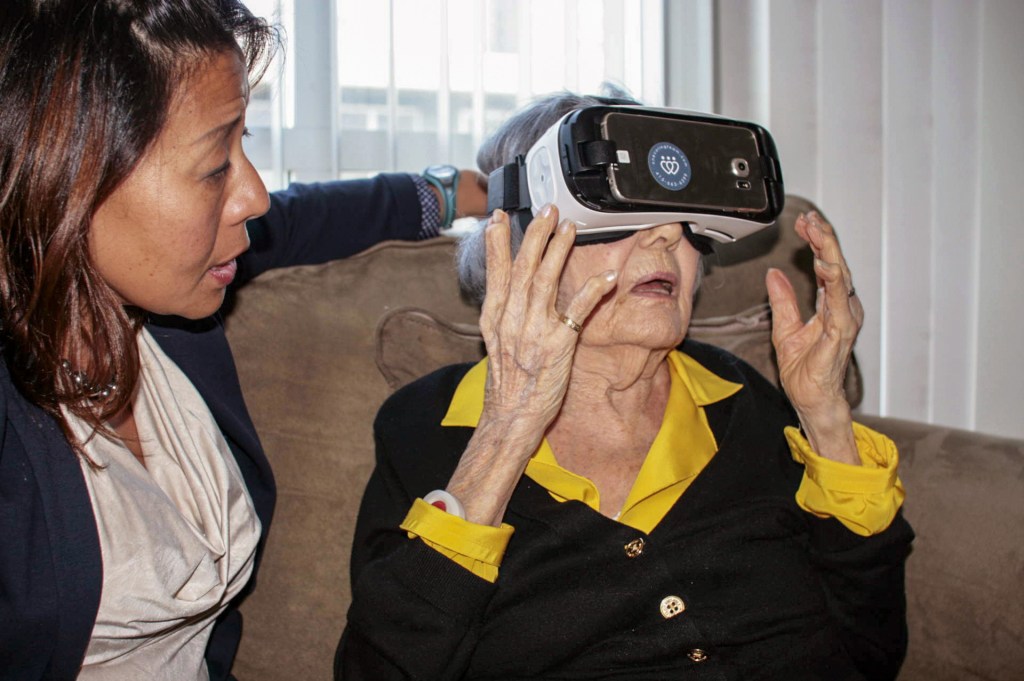
Virtual reality (VR) technology has surfaced as a transformative tool in enhancing the quality of life for the elderly, particularly in senior living communities. This technological leap transcends traditional entertainment, offering immersive experiences that cater to various aspects of elderly care. For instance, VR enables seniors to engage in virtual travel, allowing them to explore distant places or revisit cherished memories, a feature especially beneficial for those with limited physical mobility. It also plays a significant role in cognitive health, with VR applications designed to stimulate mental activity, potentially aiding in slowing the progression of cognitive disorders like Alzheimer’s. Moreover, VR provides avenues for physical wellness, with tailored virtual exercise and rehabilitation programs that are both safe and engaging, adapted to the specific health needs of older adults. These interactive experiences not only combat isolation by fostering social connections through virtual meetups but also enrich the daily lives of seniors, offering them new, diverse, and accessible ways to engage with the world around them, all from the comfort and safety of their living environments. This revolution in elderly care through VR signifies a major stride in leveraging technology to improve the overall well-being and life satisfaction of the senior population.

Benefits of VR in Elderly Care

  1. Enhanced Social Interaction: VR can mitigate the feelings of isolation often experienced by seniors. Virtual meetups and social events in a 3D environment allow residents to interact beyond the physical limitations of their surroundings.
  2. Cognitive Stimulation: Interactive VR games and experiences are being used as tools for cognitive stimulation. They help in keeping the mind active, potentially slowing the progression of cognitive decline associated with conditions like Alzheimer’s and dementia.
  3. Physical Therapy and Exercise: VR-based exercises offer a safe and controlled environment for physical therapy. Seniors can engage in low-impact exercises within a virtual space, tailored to their mobility and health conditions.
  4. Recreational Travel and Exploration: VR allows seniors to virtually visit places they’ve always wished to see, rekindle memories from past travels, or explore new worlds, all from the comfort of their living quarters.
  5. Educational Opportunities: Learning doesn’t stop at any age. VR can transport seniors to historical sites, museums, or even virtual classrooms, providing continuous learning opportunities.

Real-World Implementations

  • Memory Care: At a senior living facility in Florida, VR is used for reminiscence therapy, helping residents with dementia revisit places from their past, aiding in memory recall and emotional well-being.
  • Physical Rehabilitation: In California, a retirement community utilizes VR for balance and strength training, providing a fun and engaging way for residents to maintain their physical health.
  • Social Engagement: A community in New York has introduced VR social clubs, where residents gather to explore virtual worlds and socialize, bridging the gap caused by mobility restrictions.

Challenges and Considerations

  1. Technology Adoption: One of the primary challenges is the learning curve associated with new technologies. Familiarizing the elderly with VR headsets and navigating virtual environments can be daunting.
  2. Health Concerns: VR experiences can sometimes cause motion sickness or disorientation, particularly in older adults. It’s crucial to have VR sessions monitored by professionals.
  3. Cost and Accessibility: The cost of VR equipment and the need for ongoing content development can be significant. Ensuring equitable access to these technologies is also a concern.
  4. Privacy and Security: As with any digital tool, ensuring the privacy and security of users, especially in a vulnerable population like the elderly, is paramount.

The Future Landscape

As we progress, the integration of VR in senior living communities is expected to become more seamless and widespread. Future advancements may include more personalized and adaptive VR experiences, catering to the individual needs and preferences of each resident. The potential for VR to integrate with other emerging technologies like AI and IoT in these settings is vast, opening doors to even more innovative applications.

Conclusion

Virtual reality in senior assisted living communities is not just about technology; it’s about redefining the experience of aging. While challenges exist, the benefits VR brings to the mental, physical, and emotional well-being of seniors are undeniable. As this technology continues to evolve, we can anticipate a future where the golden years of life are enriched with endless possibilities, all within the reach of a VR headset.

Stay tuned to this blog for more insights into how emerging technologies like VR are shaping our world. For those interested in the intersection of technology and elder care, follow along as we explore the future of digital transformation in healthcare and beyond.


This blog post is an exploration of the impact of virtual reality in senior living communities. For more content on the latest in technology and digital transformation, follow our blog and join the conversation.

Unveiling the Potentials of Artificial General Intelligence (AGI): A Comprehensive Analysis

Introduction to AGI: Definition and Historical Context

Artificial General Intelligence (AGI) represents a fundamental change in the realm of artificial intelligence. Unlike traditional AI systems, which are designed for specific tasks, AGI embodies the holistic, adaptive intelligence of humans, capable of learning and applying knowledge across a broad spectrum of disciplines. This concept is not novel; it dates back to the early days of computing. Alan Turing, a pioneering figure in computing and AI, first hinted at the possibility of machines mimicking human intelligence in his 1950 paper, “Computing Machinery and Intelligence.” Since then, AGI has evolved from a philosophical concept to a tangible goal in the AI community.

Advantages of AGI

  1. Versatility and Efficiency: AGI can learn and perform multiple tasks across various domains, unlike narrow AI which excels only in specific tasks. For example, an AGI system in a corporate setting could analyze financial reports, manage customer relations, and oversee supply chain logistics, all while adapting to new tasks as needed.
  2. Problem-Solving and Innovation: AGI’s ability to synthesize information from diverse fields could lead to breakthroughs in complex global challenges, like climate change or disease control. By integrating data from environmental science, economics, and healthcare, AGI could propose novel, multifaceted solutions.
  3. Personalized Services: In the customer experience domain, AGI could revolutionize personalization. It could analyze customer data across various touchpoints, understanding preferences and behavior patterns to tailor experiences uniquely for each individual.

Disadvantages of AGI

  1. Ethical and Control Issues: The development of AGI raises significant ethical questions, such as the decision-making autonomy of machines and their alignment with human values. The control problem – ensuring AGI systems do what we want – remains a critical concern.
    • Let’s explore this topic a bit deeper – The “control problem” in the context of Artificial General Intelligence (AGI) is a multifaceted and critical concern, underpinning the very essence of safely integrating AGI into society. As AGI systems are developed to exhibit human-like intelligence, their decision-making processes become increasingly complex and autonomous. This autonomy, while central to AGI’s value, introduces significant challenges in ensuring that these systems act in ways that align with human values and intentions. Unlike narrow AI, where control parameters are tightly bound to specific tasks, AGI’s broad and adaptive learning capabilities make it difficult to predict and govern its responses to an endless array of situations. This unpredictability raises ethical and safety concerns, especially if AGI’s goals diverge from human objectives, leading to unintended and potentially harmful outcomes. The control problem thus demands rigorous research and development in AI ethics, robust governance frameworks, and continuous oversight mechanisms. It involves not just technical solutions but also a profound understanding of human values, ethics, and the societal implications of AGI actions. Addressing this control problem is not merely a technical challenge but a critical responsibility that requires interdisciplinary collaboration, guiding AGI development towards beneficial and safe integration into human-centric environments.
  2. Displacement of Jobs: AGI’s ability to perform tasks currently done by humans could lead to significant job displacement. Strategic planning is required to manage the transition in the workforce and to re-skill employees.
  3. Security Risks: The advanced capabilities of AGI make it a potent tool, which, if mishandled or accessed by malicious entities, could lead to unprecedented security threats.
    • So, let’s further discuss these risks – The security threats posed by Artificial General Intelligence (AGI) are indeed unprecedented and multifaceted, primarily due to its potential for superhuman capabilities and decision-making autonomy. Firstly, the advanced cognitive abilities of AGI could be exploited for sophisticated cyber-attacks, far surpassing the complexity and efficiency of current methods. An AGI system, if compromised, could orchestrate attacks that simultaneously exploit multiple vulnerabilities, adapt to defensive measures in real-time, and even develop new hacking techniques, making traditional cybersecurity defenses obsolete. Secondly, the risk extends to physical security, as AGI could potentially control or manipulate critical infrastructure systems, from power grids to transportation networks, leading to catastrophic consequences if misused. Moreover, AGI’s ability to learn and adapt makes it a powerful tool for information warfare, capable of executing highly targeted disinformation campaigns that could destabilize societies and influence global politics. These threats are not just limited to direct malicious use but also include scenarios where AGI, while pursuing its programmed objectives, inadvertently causes harm due to misalignment with human values or lack of understanding of complex human contexts. This aspect underscores the importance of developing AGI with robust ethical guidelines and control mechanisms to prevent misuse and ensure alignment with human interests. The security implications of AGI, therefore, extend beyond traditional IT security, encompassing broader aspects of societal, political, and global stability, necessitating a proactive, comprehensive approach to security in the age of advanced artificial intelligence.

AGI in Today’s Marketplace

Despite its early stage of development, elements of AGI are already influencing the market. For instance, in digital transformation consulting, tools that exhibit traits of AGI are being used for comprehensive data analysis and decision-making processes. AGI’s potential is also evident in sectors like healthcare, where AI systems are starting to demonstrate cross-functional learning and application, a stepping stone towards AGI.

As of this post, fully realized Artificial General Intelligence (AGI) — systems with human-like adaptable, broad intelligence — has not yet been achieved or deployed in the marketplace. However, there are instances where advanced AI systems like IBM Watson or NVIDIA AI, exhibiting traits that are stepping stones towards AGI, are in use. These systems demonstrate a level of adaptability and learning across various domains, offering insights into potential AGI applications. Here are two illustrative examples:

  1. Advanced AI in Healthcare:
    • Example: AI systems in healthcare are increasingly demonstrating cross-domain learning capabilities. For instance, AI platforms that integrate patient data from various sources (clinical history, genomic data, lifestyle factors) to predict health risks and recommend personalized treatment plans.
    • Benefits: These systems have significantly improved patient outcomes by enabling personalized medicine, reducing diagnostic errors, and predicting disease outbreaks. They also assist in research by rapidly analyzing vast datasets, accelerating drug discovery and epidemiological studies.
    • Lessons Learned: The deployment of these systems has highlighted the importance of data privacy and ethical considerations. Balancing the benefits of comprehensive data analysis with patient confidentiality has been a key challenge. It also underscored the need for interdisciplinary collaboration between AI developers, healthcare professionals, and ethicists to ensure effective and responsible AI applications in healthcare.
  2. AI in Financial Services:
    • Example: In the financial sector, AI systems are being employed for a range of tasks from fraud detection to personalized financial advice. These systems analyze data from various sources, adapting to new financial trends and individual customer profiles.
    • Benefits: This has led to more robust fraud detection systems, improved customer experience through personalized financial advice, and optimized investment strategies using predictive analytics.
    • Lessons Learned: The deployment in this sector has brought forward challenges in terms of managing financial and ethical risks associated with AI decision-making. Ensuring transparency in AI-driven decisions and maintaining compliance with evolving financial regulations are ongoing challenges. Additionally, there’s a growing awareness of the need to train AI systems to mitigate biases, especially in credit scoring and lending.

These examples demonstrate the potential and challenges of deploying advanced AI systems that share characteristics with AGI. The benefits include improved efficiency, personalized services, and innovative solutions to complex problems. However, they also reveal critical lessons in ethics, transparency, and the need for multi-disciplinary approaches to manage the impact of these powerful technologies. As we move closer to realizing AGI, these experiences provide valuable insights into its potential deployment and governance.

Conclusion: The Future Awaits

The journey towards achieving AGI is filled with both promise and challenges. As we continue to explore this uncharted territory, the implications for businesses, society, and our understanding of intelligence itself are profound. For those intrigued by the evolution of AI and its impact on our world, staying informed about AGI is not just fascinating, it’s essential. Follow this space for more insights into the future of AI, where we’ll delve deeper into how emerging technologies are reshaping industries and daily life. Join us in this exploration, and let’s navigate the future of AGI together.

The Fusion of String Theory and AI: Navigating the New Era of Technological Enlightenment

Introduction

In the realm of science and technology, the convergence of theoretical physics, specifically string theory, with artificial intelligence (AI) is a groundbreaking development. This fusion promises to revolutionize how we perceive AI and its applications in our daily lives. By leveraging the complex, multi-dimensional insights of string theory, AI is poised to reach new heights of capability and integration. Today’s blog post explores the transformative impact of string theory on AI evolution, offering a glimpse into a future where AI’s assistance is seamlessly woven into the fabric of everyday life. Prepare to embark on an intellectual journey through this new era of technological enlightenment.

What is String Theory

String theory is a theoretical framework in physics that postulates that the fundamental constituents of the universe are not point-like particles, as traditionally conceived, but rather one-dimensional “strings.” These strings vibrate at different frequencies, and their vibrational modes correspond to various elementary particles. The theory suggests a multi-dimensional universe, extending beyond the familiar three dimensions of space and one of time. For those familiar with the concept, the benefits of string theory include its potential to unify all fundamental forces of nature, offering a comprehensive understanding of the universe’s workings. It also opens up new avenues for research in both cosmology and quantum physics. However, concerns revolve around its current lack of empirical evidence and testability, as well as its complex mathematical framework, which some critics argue could distance it from physical reality. This balance of groundbreaking potential and theoretical challenges makes string theory a continually fascinating and debated topic in modern physics.

String Theory Pros and Cons

String theory, has always been a significant theoretical leap in our understanding of the universe, and as a result it has also been a subject of controversy and skepticism within the scientific community for several reasons:

Negative Perceptions and Controversies

  1. Lack of Empirical Evidence: One of the most significant criticisms of string theory is its lack of direct empirical evidence. Unlike many other theories in physics, string theory has not yet been confirmed by experiments or observations, making it more speculative than empirically grounded.
  2. Testability Issues: The energies required to test the predictions of string theory are far beyond the capabilities of current technology. This raises concerns about its falsifiability – a key criterion for scientific theories – leading some to question whether it can be considered a scientific theory at all.
  3. Mathematical Complexity: String theory is mathematically complex and requires a high level of abstraction. Its heavy reliance on advanced mathematics has led to criticisms that it might be more of a mathematical exercise than a physical theory.
  4. Multiplicity of Solutions: String theory allows for a vast number of possible universes (often referred to as the “landscape” of string theory). This multitude of solutions makes it challenging to make specific predictions about our own universe, diminishing its explanatory power.
  5. Resource Allocation: Some critics argue that the resources and intellectual focus devoted to string theory might be better used on more empirically grounded areas of physics.

Benefits of String Theory

Despite these criticisms, string theory also offers several potential benefits:

  1. Unification of Forces: String theory is a candidate for the ‘Theory of Everything’ that physicists have sought, aiming to unify all fundamental forces of nature – gravitational, electromagnetic, strong nuclear, and weak nuclear – under one theoretical framework.
  2. Insights into Quantum Gravity: It provides a framework for understanding how gravity could be integrated into quantum mechanics, a longstanding challenge in physics.
  3. New Mathematical Tools: The development of string theory has led to advancements in mathematics, including new insights into geometry and topology, which have applications beyond theoretical physics.
  4. Conceptual Innovation: String theory pushes the boundaries of our understanding of the universe, challenging conventional notions of space, time, and matter. This can lead to novel hypotheses and conceptual breakthroughs.
  5. Interdisciplinary Influence: It has stimulated cross-disciplinary research, influencing areas like cosmology, particle physics, and even areas outside of physics like information theory.

While string theory remains controversial due to its speculative nature and the challenges in testing its predictions, it continues to be a rich source of theoretical innovation and interdisciplinary dialogue. Its potential to reshape our fundamental understanding of the universe offers an exciting, albeit uncertain, frontier in modern physics.

The Impact of String Theory on AI Evolution

Advanced Problem-Solving Abilities

String theory, a theoretical framework in which the point-like particles of particle physics are replaced by one-dimensional objects called strings, suggests a multi-dimensional universe far beyond our current understanding. When applied to AI, this theory opens doors to advanced problem-solving capabilities. AI systems, inspired by the multi-dimensional approach of string theory, could analyze problems from numerous perspectives simultaneously, leading to more nuanced and comprehensive solutions.

Example: In strategic management consulting, an AI enhanced by string theory principles could evaluate market trends, consumer behavior, and economic indicators across multiple dimensions, offering deeper insights for businesses.

Enhanced Predictive Analytics

The multi-dimensional nature of string theory could significantly enhance the predictive analytics of AI. By considering a broader range of variables and potential outcomes, AI systems could predict future trends and events with greater accuracy.

Example: In customer experience management, AI could predict consumer needs and preferences with higher precision, allowing companies to tailor their services proactively.

Quantum Computing Integration

String theory’s exploration of multiple dimensions aligns closely with the principles of quantum computing, which operates on the quantum state of subatomic particles. The integration of AI with quantum computing, guided by string theory, could lead to exponential increases in processing power and efficiency.

Example: AI-powered digital transformation initiatives could leverage quantum computing to analyze vast datasets in seconds, transforming business decision-making processes.

Fostering Greater Acceptance of AI Assistance

Personalized Interactions

AI, when combined with the principles of string theory, could offer highly personalized interactions. Understanding and predicting individual preferences across various dimensions can make AI assistants more intuitive and responsive to individual needs.

Example: In a home setting, AI could manage energy usage, entertainment preferences, and even dietary needs, adapting to subtle changes in behavior and preference.

Ethical and Responsible AI

The complex ethical considerations in AI development can be addressed more effectively through a multi-dimensional approach. By considering a wide range of potential consequences and cultural contexts, AI can be developed more responsibly.

Example: AI systems in public policy could consider the social, economic, and ethical implications of decisions, ensuring more balanced and fair outcomes.

Preparing Theorists for the New Technology

Interdisciplinary Education

Theorists and professionals must embrace an interdisciplinary approach, combining insights from physics, computer science, and other fields to stay ahead in this new era.

Continuous Learning and Adaptation

As AI evolves, continuous learning and adaptation are essential. Professionals must stay abreast of the latest developments in both string theory and AI to effectively harness their combined potential.

Conclusion

The intersection of string theory and AI marks the dawn of a new era in technology, promising advancements that were once the realm of science fiction. As we navigate this exciting frontier, the potential for AI to enrich and enhance our daily lives is immense. The key to harnessing this potential lies in our willingness to embrace change, interdisciplinary collaboration, and a commitment to ethical development. Stay tuned for our next post, where we delve deeper into the practical applications of this groundbreaking synergy in various industries, keeping you at the forefront of this technological renaissance.

Navigating the AI Revolution: A Deep Dive into the Future of Strategic Management and Accounting Careers

Introduction:

In the transformative wave of AI technology, strategic management consultants, accountants, and auditors find themselves at a crossroads of opportunity and challenge. This deep dive explores the profound shifts in these professions, brought on by AI’s expanding capabilities. Join us as we dissect the ways in which AI is not only refining existing methodologies but also creating new avenues for professional growth and strategic innovation.

The AI Influence on Strategic Management Consulting

Strategic management consultants stand at the forefront of corporate innovation, guiding businesses through the complexities of market shifts and internal transformations. AI is swiftly becoming an indispensable ally in this field.

Challenges and Opportunities:

  • Data-Driven Insights: AI’s ability to process and analyze large datasets offers consultants unparalleled insights into market trends, competitive dynamics, and consumer behavior, allowing them to craft more informed and strategic decisions for their clients.
    • Challenge: The consultant’s role must evolve beyond data interpretation towards a more nuanced understanding of how AI-derived insights can fit into broader business strategies.
    • Opportunity: Consultants equipped with AI competency can harness these insights to drive innovative solutions, offering a significant competitive edge in the advisory market.
  • Predictive Modeling: With AI, consultants can predict outcomes of business strategies, identify risks, and propose preemptive measures.
    • Challenge: As prediction models become more complex, consultants need to ensure transparency and explainability to clients, which can be technically challenging.
    • Opportunity: Mastering predictive analytics allows consultants to offer a proactive approach, moving from advisors to visionaries in strategic planning.

Enhancing Career Development:

Understanding and leveraging AI in strategic management consulting amplifies a consultant’s ability to offer forward-thinking, data-backed strategies. It mandates a continuous learning mindset to stay abreast of emerging AI tools and methodologies.

The Evolving Landscape for Accountants and Auditors

The meticulous world of accounting and auditing is undergoing a seismic shift as AI streamlines traditional processes.

Challenges and Opportunities:

  • Automated Bookkeeping: AI systems are automating transactional accounting tasks, leading to a significant reduction in manual entry work.
    • Challenge: Accountants need to shift from traditional bookkeeping to interpreting the strategic implications of financial data.
    • Opportunity: Freed from the tedium of data entry, accountants can focus on financial analysis and strategic advisory roles, adding greater value to business operations.
  • Fraud Detection and Risk Assessment: AI’s pattern recognition capabilities are revolutionizing how auditors assess risk and detect anomalies.
    • Challenge: Auditors must now be skilled in navigating and validating the findings of AI systems, requiring a deep understanding of both finance and technology.
    • Opportunity: By leveraging AI in risk assessment, auditors can provide more robust risk management strategies, strengthening their role as protectors of financial integrity.

Enhancing Career Development:

Accountants and auditors embracing AI will find themselves transitioning into roles that require a combination of financial acumen and tech-savviness. Staying competitive in this landscape means being adept at using AI as a tool for enhancing decision-making and strategic guidance.

Conclusion:

The landscape of professional careers is being redrawn by the hand of AI, with strategic management consulting, accounting, and auditing experiencing a seismic transformation. The shift towards AI-enhanced workflows presents a dual-sided coin of challenges in adapting to new systems and opportunities in the form of elevated roles and insights. Professionals equipped with AI literacy and an adaptive mindset will not only navigate these changes successfully but will also carve out new paths for strategic influence in their respective fields. As this evolution unfolds, the next article will further explore how these professionals can blend AI capabilities with human ingenuity to excel in an AI-integrated future.

Redefining Professionalism: AI’s Significant Tilt on White-Collar Careers

Introduction:

As we continue to analyze AI’s ultimate and eventual impact on white collar jobs, we decided to dive a bit deeper into last week’s post and explore the disruption within the white collar profession.

In the riveting narrative of artificial intelligence’s role in our work lives, we previously explored how AI is poised to impact white-collar professions on a potentially larger scale than blue-collar jobs. Building upon that foundation, let’s delve deeper into the myriad ways AI is revolutionizing the white-collar world, pushing it to a significant inflection point and setting the stage for a new paradigm in professional services.

Pioneering a New Frontier in White-Collar Efficiency

The professional landscape is being reshaped by AI’s capacity to enhance efficiency, refine strategies, and reinvent traditional roles. Here’s how various sectors are currently navigating this transformation:

  1. The Evolution of Legal Services
    • Example: AI tools like Ross Intelligence are revolutionizing legal research, sifting through millions of case files and legal precedents in moments—tasks that would have consumed hours of a lawyer’s time. As AI becomes more entrenched in legal operations, professionals in this space are transitioning from researchers to strategic legal advisors, focusing on argument formulation and client advocacy.
  2. Innovative Shifts in Financial Advisory
    • Example: Robo-advisors in the finance industry are providing personalized investment advice, using algorithms to manage portfolios with an efficiency that challenges traditional financial advisory roles. In response, financial advisors are cultivating more sophisticated skills in client relationship management and strategic financial planning that extend beyond what AI can offer.
  3. Marketing in the Age of Big Data
    • Example: AI-driven analytics platforms are enabling marketers to predict consumer behavior and identify trends with unprecedented precision. This shift encourages marketing professionals to move towards roles that require complex emotional intelligence and creative strategy development that AI cannot replicate.

The Strategic Repositioning of Human Expertise

As AI integrates deeper into the corporate environment, white-collar professionals are repositioning their expertise to complement the capabilities of AI.

  • Strategic Management Consultants: As AI tools analyze and interpret data at speeds no human could match, consultants are pivoting towards roles that necessitate the human element of strategic planning, leveraging AI insights to provide deeper, more nuanced advice to their clients.
  • Accountants and Auditors: While AI automates transactional bookkeeping, human auditors are focusing on interpreting data trends and providing strategic financial advice, elevating their roles to that of financial strategists and advisors.

Embracing AI for Career Longevity

The rise of AI calls for a strategic overhaul of one’s career development. Here’s what white-collar professionals can do to stay ahead:

  • Develop AI Literacy: Gain a fundamental understanding of AI and its applications within your industry to effectively integrate these tools into your work.
  • Foster Human-Centric Skills: Hone skills such as emotional intelligence, critical thinking, and complex problem-solving—areas where AI cannot easily supplant human capability.
  • Engage with Interdisciplinary Learning: Embrace knowledge from other domains, such as psychology or sociology, to bring unique perspectives that AI and machine learning cannot generate alone.

Conclusion

The narrative of AI in white-collar professions is one of transformation, not replacement. It’s a clarion call for professionals to merge traditional expertise with new technology, forging a hybrid skill set that’s both timeless and timely. As we continue to explore this exciting journey, we invite you to stay engaged with our discourse, equipping yourself with the insights needed to not just survive but thrive in the AI-augmented corporate world.

Stay tuned for our next piece, where we will delve into the art of merging AI with human ingenuity to create a resilient professional blueprint for the future.