The AI Dilemma: Balancing Financial ROI, Ethical Responsibility, and Societal Impact

Introduction

In today’s digital-first world, the exponential growth of Artificial Intelligence (AI) has pushed organizations to a precipice, where decision-makers are forced to weigh the benefits against the tangible costs and ethical ramifications. Business leaders and stockholders, eager to boost financial performance, are questioning the viability of their investments in AI. Are these deployments meeting the anticipated return on investment (ROI), and are the long-term benefits worth the extensive costs? Beyond financial considerations, AI-driven solutions consume vast energy resources and require robust employee training. Companies now face a dilemma: how to advance AI capabilities responsibly without compromising ethical standards, environmental sustainability, or the well-being of future generations.

The ROI of AI: Meeting Expectations or Falling Short?

AI promises transformative efficiencies and significant competitive advantages, yet actualized ROI is highly variable. According to recent industry reports, fewer than 20% of AI initiatives fully achieve their expected ROI, primarily due to gaps in technological maturity, insufficient training, and a lack of strategic alignment with core business objectives. Stockholders who champion AI-driven projects often anticipate rapid and substantial returns. However, realizing these returns depends on multiple factors:

  1. Initial Investment in Infrastructure: Setting up AI infrastructure—from data storage and processing to high-performance computing—demands substantial capital. Additionally, costs associated with specialized hardware, such as GPUs for machine learning, can exceed initial budgets.
  2. Talent Acquisition and Training: Skilled professionals, data scientists, and AI engineers command high salaries, and training existing employees to work with AI systems represents a notable investment. Many organizations fail to account for this hidden expenditure, which directly affects their bottom line and prolongs the payback period.
  3. Integration and Scalability: AI applications must be seamlessly integrated with existing technology stacks and scaled across various business functions. Without a clear plan for integration, companies risk stalled projects and operational inefficiencies.
  4. Model Maintenance and Iteration: AI models require regular updates to stay accurate and relevant, especially as market dynamics evolve. Neglecting this phase can lead to subpar performance, misaligned insights, and ultimately, missed ROI targets.

To optimize ROI, companies need a comprehensive strategy that factors in these components. Organizations should not only measure direct financial returns but also evaluate AI’s impact on operational efficiency, customer satisfaction, and brand value. A successful AI investment is one that enhances overall business resilience and positions the organization for sustainable growth in an evolving marketplace.

Quantifying the Cost of AI Training and Upskilling

For businesses to unlock AI’s full potential, they must cultivate an AI-literate workforce. However, upskilling employees to effectively manage, interpret, and leverage AI insights is no small task. The cost of training employees spans both direct expenses (training materials, specialized courses) and indirect costs (lost productivity during training periods). Companies must quantify these expenditures rigorously to determine if the return from an AI-trained workforce justifies the initial investment.

  1. Training Costs and Curriculum Development: A customized training program that includes real-world applications can cost several thousand dollars per employee. Additionally, businesses often need to invest in ongoing education to keep up with evolving AI advancements, which can further inflate training budgets.
  2. Opportunity Costs: During training periods, employees might be less productive, and this reduction in productivity needs to be factored into the overall ROI of AI. Businesses can mitigate some of these costs by adopting a hybrid training model where employees split their time between learning and executing their core responsibilities.
  3. Knowledge Retention and Application: Ensuring that employees retain and apply what they learn is critical. Without regular application, skills can degrade, diminishing the value of the training investment. Effective training programs should therefore include a robust follow-up mechanism to reinforce learning and foster skill retention.
  4. Cross-Functional AI Literacy: While technical teams may handle the intricacies of AI model development, departments across the organization—from HR to customer support—need a foundational understanding of AI’s capabilities and limitations. This cross-functional AI literacy is vital for maximizing AI’s strategic value.

For organizations striving to become AI-empowered, training is an investment in future-proofing the workforce. Companies that succeed in upskilling their teams stand to gain a substantial competitive edge as they can harness AI for smarter decision-making, faster problem-solving, and more personalized customer experiences.

The Energy Dilemma: AI’s Growing Carbon Footprint

AI, especially large-scale models like those powering natural language processing and deep learning, consumes considerable energy. According to recent studies, training a single large language model can emit as much carbon as five cars over their entire lifespans. This stark energy cost places AI at odds with corporate sustainability goals and climate improvement expectations. Addressing this concern requires a two-pronged approach: optimizing energy usage and transitioning to greener energy sources.

  1. Optimizing Energy Consumption: AI development teams must prioritize efficiency from the onset, leveraging model compression techniques, energy-efficient hardware, and algorithmic optimization to reduce energy demands. Developing scalable models that achieve similar accuracy with fewer resources can significantly reduce emissions.
  2. Renewable Energy Investments: Many tech giants, including Google and Microsoft, are investing in renewable energy to offset the carbon footprint of their AI projects. By aligning AI energy consumption with renewable sources, businesses can minimize their environmental impact while meeting corporate social responsibility objectives.
  3. Carbon Credits and Offsetting: Some organizations are also exploring carbon offset programs as a means to counterbalance AI’s environmental cost. While not a solution in itself, carbon offsetting can be an effective bridge strategy until AI systems become more energy-efficient.

Ethical and Philosophical Considerations: Do the Ends Justify the Means?

The rapid advancement of AI brings with it pressing ethical questions. To what extent should society tolerate the potential downsides of AI for the benefits it promises? In classic ethical terms, this is a question of whether “the ends justify the means”—in other words, whether AI’s potential to improve productivity, quality of life, and economic growth outweighs the accompanying challenges.

Benefits of AI

  1. Efficiency and Innovation: AI accelerates innovation, facilitating new products and services that can improve lives and drive economic growth.
  2. Enhanced Decision-Making: With AI, businesses can make data-informed decisions faster, creating a more agile and responsive economy.
  3. Greater Inclusivity: AI has the potential to democratize access to education, healthcare, and financial services, particularly in underserved regions.

Potential Harms of AI

  1. Job Displacement: As AI automates routine tasks, the risk of job displacement looms large, posing a threat to livelihoods and economic stability for certain segments of the workforce.
  2. Privacy and Surveillance: AI’s ability to analyze and interpret vast amounts of data can lead to privacy breaches and raise ethical concerns around surveillance.
  3. Environmental Impact: The high energy demands of AI projects exacerbate climate challenges, potentially compromising sustainability efforts.

Balancing Ends and Means

For AI to reach its potential without disproportionately harming society, businesses need a principled approach that prioritizes responsible innovation. The philosophical view that “the ends justify the means” can be applied to AI advancement, but only if the means—such as ensuring equitable access to AI benefits, minimizing job displacement, and reducing environmental impact—are conscientiously addressed.

Strategic Recommendations for Responsible AI Advancement

  1. Develop an AI Governance Framework: A robust governance framework should address data privacy, ethical standards, and sustainability benchmarks. This framework can guide AI deployment in a way that aligns with societal values.
  2. Prioritize Human-Centric AI Training: By emphasizing human-AI collaboration, businesses can reduce the fear of job loss and foster a culture of continuous learning. Training programs should not only impart technical skills but also stress ethical decision-making and the responsible use of AI.
  3. Adopt Energy-Conscious AI Practices: Companies can reduce AI’s environmental impact by focusing on energy-efficient algorithms, optimizing computing resources, and investing in renewable energy sources. Setting energy efficiency as a key performance metric for AI projects can also foster sustainable innovation.
  4. Build Public-Private Partnerships: Collaboration between governments and businesses can accelerate the development of policies that promote responsible AI usage. Public-private partnerships can fund research into AI’s societal impact, creating guidelines that benefit all stakeholders.
  5. Transparent Communication with Stakeholders: Companies must be transparent about the benefits and limitations of AI, fostering a well-informed dialogue with employees, customers, and the public. This transparency builds trust, ensures accountability, and aligns AI projects with broader societal goals.

Conclusion: The Case for Responsible AI Progress

AI holds enormous potential to drive economic growth, improve operational efficiency, and enhance quality of life. However, its development must be balanced with ethical considerations and environmental responsibility. For AI advancement to truly be justified, businesses must adopt a responsible approach that minimizes societal harm and maximizes shared value. With the right governance, training, and energy practices, the ends of AI advancement can indeed justify the means—resulting in a future where AI acts as a catalyst for a prosperous, equitable, and sustainable world.

DTT on Spotify (LINK)

Predictive Analytics with AI: Driving Superior Accuracy in Business Forecasting

Introduction

Predictive analytics is reshaping industries by enabling companies to anticipate customer needs, streamline operations, and make data-driven decisions before events unfold. As businesses continue to leverage artificial intelligence (AI) for competitive advantage, understanding the fundamental components, historical evolution, and future direction of predictive analytics is crucial for anyone working with or interested in AI. This post delves into the essential elements that define predictive analytics, contrasts it with reactive analytics, and provides a roadmap for businesses seeking to lead in predictive capabilities.

Historical Context and Foundation of Predictive Analytics

The roots of predictive analytics can be traced to the 1940s, with the earliest instances of statistical modeling and the application of regression analysis to predict trends in fields like finance and supply chain management. Over the decades, as data processing capabilities evolved, so did the sophistication of predictive models, moving from simple linear models to complex algorithms capable of parsing vast amounts of data. With the introduction of machine learning (ML) and AI, predictive analytics shifted from relying solely on static, historical data to incorporating dynamic data sources. The development of neural networks, natural language processing, and deep learning has made predictive models exponentially more accurate and reliable.

Today, predictive analytics leverages vast datasets and sophisticated algorithms to provide forward-looking insights across industries. Powered by cloud computing, AI, and big data technologies, companies can process real-time and historical data simultaneously, enabling accurate forecasts with unprecedented speed and accuracy.

Key Components of Predictive Analytics in AI

  1. Data Collection and Preprocessing: Predictive analytics requires vast datasets to build accurate models. Data is collected from various sources, such as customer interactions, sales records, social media, and IoT devices. Data preprocessing involves cleansing, normalizing, and transforming raw data into a structured format suitable for analysis, often using techniques like data imputation, outlier detection, and feature engineering.
  2. Machine Learning Algorithms: The backbone of predictive analytics lies in selecting the right algorithms. Common algorithms include regression analysis, decision trees, random forests, neural networks, and deep learning models. Each serves specific needs; for instance, neural networks are ideal for complex, non-linear relationships, while decision trees are highly interpretable and useful in risk management.
  3. Model Training and Validation: Training a predictive model requires feeding it with historical data, allowing it to learn patterns. Models are fine-tuned through hyperparameter optimization, ensuring they generalize well on unseen data. Cross-validation techniques, such as k-fold validation, are applied to test model robustness and avoid overfitting.
  4. Deployment and Monitoring: Once a model is trained, it must be deployed in a production environment where it can provide real-time or batch predictions. Continuous monitoring is essential to maintain accuracy, as real-world data often shifts, necessitating periodic retraining.
  5. Feedback Loop for Continuous Improvement: A crucial aspect of predictive analytics is its self-improving nature. As new data becomes available, the model learns and adapts, maintaining relevancy and accuracy over time. The feedback loop enables the AI to refine its predictions, adjusting for seasonal trends, shifts in consumer behavior, or other external factors.

Predictive Analytics vs. Reactive Analytics: A Comparative Analysis

Reactive Analytics focuses on analyzing past events to determine what happened and why, without forecasting future trends. Reactive analytics provides insights based on historical data and is particularly valuable in post-mortem analyses or understanding consumer patterns retrospectively. However, it does not prepare businesses for future events or offer proactive insights.

Predictive Analytics, in contrast, is inherently forward-looking. It leverages both historical and real-time data to forecast future outcomes, enabling proactive decision-making. For example, in retail, reactive analytics might inform a company that product demand peaked last December, while predictive analytics could forecast demand for the upcoming holiday season, allowing inventory adjustments in advance.

Key differentiators:

  • Goal Orientation: Reactive analytics answers “what happened” while predictive analytics addresses “what will happen next.”
  • Data Usage: Predictive analytics uses a combination of historical and real-time data for dynamic decision-making, while reactive relies solely on past data.
  • Actionability: Predictions enable businesses to prepare for or even alter future events, such as by targeting specific customer segments with promotions based on likely future behavior.

Leading-Edge Development in Predictive Analytics: Necessary Components

To be at the forefront of predictive analytics, enterprises must focus on the following elements:

  1. Advanced Data Infrastructure: Investing in scalable, cloud-based data storage and processing capabilities is foundational. A robust data infrastructure ensures companies can handle large, diverse datasets while providing seamless data access for modeling and analytics. Additionally, data integration tools are vital to combine multiple data sources, such as customer relationship management (CRM) data, social media feeds, and IoT data, for richer insights.
  2. Talent in Data Science and Machine Learning Engineering: Skilled data scientists and ML engineers are essential to design and implement models that are both accurate and aligned with business goals. The need for cross-functional teams—comprised of data engineers, domain experts, and business analysts—cannot be understated.
  3. Real-Time Data Processing: Predictive analytics thrives on real-time insights, which requires adopting technologies like Apache Kafka or Spark Streaming to process and analyze data in real time. Real-time processing enables predictive models to immediately incorporate fresh data and improve their accuracy.
  4. Ethical and Responsible AI Frameworks: As predictive analytics often deals with sensitive customer information, it is critical to implement data privacy and compliance standards. Transparency, fairness, and accountability ensure that predictive models maintain ethical standards and avoid bias, which can lead to reputational risks or legal issues.

Pros and Cons of Predictive Analytics in AI

Pros:

  • Enhanced Decision-Making: Businesses can make proactive decisions, anticipate customer needs, and manage resources efficiently.
  • Competitive Advantage: Predictive analytics allows companies to stay ahead by responding to market trends before competitors.
  • Improved Customer Experience: By anticipating customer behavior, companies can deliver personalized experiences that build loyalty and satisfaction.

Cons:

  • Complexity and Cost: Building and maintaining predictive analytics models requires significant investment in infrastructure, talent, and continuous monitoring.
  • Data Privacy Concerns: As models rely on extensive data, businesses must handle data ethically to avoid privacy breaches and maintain consumer trust.
  • Model Drift: Predictive models may lose accuracy over time due to changes in external conditions, requiring regular updates and retraining.

Practical Applications and Real-World Examples

  1. Retail and E-commerce: Major retailers use predictive analytics to optimize inventory management, ensuring products are available in the right quantities at the right locations. For example, Walmart uses predictive models to forecast demand and manage inventory during peak seasons, minimizing stockouts and excess inventory.
  2. Healthcare: Hospitals and healthcare providers employ predictive analytics to identify patients at risk of developing chronic conditions. By analyzing patient data, predictive models can assist in early intervention, improving patient outcomes and reducing treatment costs.
  3. Banking and Finance: Predictive analytics in finance is employed to assess credit risk, detect fraud, and manage customer churn. Financial institutions use predictive models to identify patterns indicative of fraud, allowing them to respond quickly to potential security threats.
  4. Customer Service: Companies like ServiceNow integrate predictive analytics in their platforms to optimize customer service workflows. By predicting ticket volumes and customer satisfaction, these models help businesses allocate resources, anticipate customer issues, and enhance service quality.

Essential Takeaways for Industry Observers

  1. Data Quality is Paramount: Accurate predictions rely on high-quality, representative data. Clean, comprehensive datasets are essential for building models that reflect real-world scenarios.
  2. AI Governance and Ethical Standards: Transparency and accountability in predictive models are critical. Understanding how predictions are made, ensuring models are fair, and safeguarding customer data are foundational for responsible AI deployment.
  3. Investment in Continual Learning: Predictive models benefit from ongoing learning, integrating fresh data to adapt to changes in behavior, seasonality, or external factors. The concept of model retraining and validation is vital for sustained accuracy.
  4. Operationalizing AI: The transition from model development to operational deployment is crucial. Predictive analytics must be actionable, integrated into business processes, and supported by infrastructure that facilitates real-time deployment.

Conclusion

Predictive analytics offers a powerful advantage for businesses willing to invest in the infrastructure, talent, and ethical frameworks required for implementation. While challenges exist, the strategic benefits—from improved decision-making to enhanced customer experiences—make predictive analytics an invaluable tool in modern AI deployments. For industry newcomers and seasoned professionals alike, understanding the components, benefits, and potential pitfalls of predictive analytics is essential to leveraging AI for long-term success.

DTT on Spotify (LINK)

Using Ideas from Game Theory to Improve the Reliability of Language Models

Introduction

In the rapidly evolving field of artificial intelligence (AI), ensuring the reliability and robustness of language models is paramount. These models, which power a wide range of applications from virtual assistants to automated customer service systems, need to be both accurate and dependable. One promising approach to achieving this is through the application of game theory—a branch of mathematics that studies strategic interactions among rational agents. This blog post will explore how game theory can be utilized to enhance the reliability of language models, providing a detailed technical and practical explanation of the concepts involved.

Understanding Game Theory

Game theory is a mathematical framework designed to analyze the interactions between different decision-makers, known as players. It focuses on the strategies that these players employ to achieve their objectives, often in situations where the outcome depends on the actions of all participants. The key components of game theory include:

  1. Players: The decision-makers in the game.
  2. Strategies: The plans of action that players can choose.
  3. Payoffs: The rewards or penalties that players receive based on the outcome of the game.
  4. Equilibrium: A stable state where no player can benefit by changing their strategy unilaterally.

Game theory has been applied in various fields, including economics, political science, and biology, to model competitive and cooperative behaviors. In AI, it offers a structured way to analyze and design interactions between intelligent agents. Lets explore a bit more in detail how game theory can be leveraged in developing LLMs.

Detailed Example: Applying Game Theory to Language Model Reliability

Scenario: Adversarial Training in Language Models

Background

Imagine we are developing a language model intended to generate human-like text for customer support chatbots. The challenge is to ensure that the responses generated are not only coherent and contextually appropriate but also resistant to manipulation or adversarial inputs.

Game Theory Framework

To improve the reliability of our language model, we can frame the problem using game theory. We define two players in this game:

  1. Generator (G): The language model that generates text.
  2. Adversary (A): An adversarial model that tries to find flaws, biases, or vulnerabilities in the generated text.

This setup forms a zero-sum game where the generator aims to produce flawless text (maximize quality), while the adversary aims to expose weaknesses (minimize quality).

Adversarial Training Process

  1. Initialization:
    • Generator (G): Initialized to produce text based on training data (e.g., customer service transcripts).
    • Adversary (A): Initialized with the ability to analyze and critique text, identifying potential weaknesses (e.g., incoherence, inappropriate responses).
  2. Iteration Process:
    • Step 1: Text Generation: The generator produces a batch of text samples based on given inputs (e.g., customer queries).
    • Step 2: Adversarial Analysis: The adversary analyzes these text samples and identifies weaknesses. It may use techniques such as:
      • Text perturbation: Introducing small changes to the input to see if the output becomes nonsensical.
      • Contextual checks: Ensuring that the generated response is relevant to the context of the query.
      • Bias detection: Checking for biased or inappropriate content in the response.
    • Step 3: Feedback Loop: The adversary provides feedback to the generator, highlighting areas of improvement.
    • Step 4: Generator Update: The generator uses this feedback to adjust its parameters, improving its ability to produce high-quality text.
  3. Convergence:
    • This iterative process continues until the generator reaches a point where the adversary finds it increasingly difficult to identify flaws. At this stage, the generator’s responses are considered reliable and robust.

Technical Details

  • Generator Model: Typically, a Transformer-based model like GPT (Generative Pre-trained Transformer) is used. It is fine-tuned on specific datasets related to customer service.
  • Adversary Model: Can be a rule-based system or another neural network designed to critique text. It uses metrics such as perplexity, semantic similarity, and sentiment analysis to evaluate the text.
  • Objective Function: The generator’s objective is to minimize a loss function that incorporates both traditional language modeling loss (e.g., cross-entropy) and adversarial feedback. The adversary’s objective is to maximize this loss, highlighting the generator’s weaknesses.

Example in Practice

Customer Query: “I need help with my account password.”

Generator’s Initial Response: “Sure, please provide your account number.”

Adversary’s Analysis:

  • Text Perturbation: Changes “account password” to “account passwrd” to see if the generator still understands the query.
  • Contextual Check: Ensures the response is relevant to password issues.
  • Bias Detection: Checks for any inappropriate or biased language.

Adversary’s Feedback:

  • The generator failed to recognize the misspelled word “passwrd” and produced a generic response.
  • The response did not offer immediate solutions to password-related issues.

Generator Update:

  • The generator’s training is adjusted to better handle common misspellings.
  • Additional training data focusing on password-related queries is used to improve contextual understanding.

Improved Generator Response: “Sure, please provide your account number so I can assist with resetting your password.”

Outcome:

  • The generator’s response is now more robust to input variations and contextually appropriate, thanks to the adversarial training loop.

This example illustrates how game theory, particularly the adversarial training framework, can significantly enhance the reliability of language models. By treating the interaction between the generator and the adversary as a strategic game, we can iteratively improve the model’s robustness and accuracy. This approach ensures that the language model not only generates high-quality text but is also resilient to manipulations and contextual variations, thereby enhancing its practical utility in real-world applications.

The Relevance of Game Theory in AI Development

The integration of game theory into AI development provides several advantages:

  1. Strategic Decision-Making: Game theory helps AI systems make decisions that consider the actions and reactions of other agents, leading to more robust and adaptive behaviors.
  2. Optimization of Interactions: By modeling interactions as games, AI developers can optimize the strategies of their models to achieve better outcomes.
  3. Conflict Resolution: Game theory provides tools for resolving conflicts and finding equilibria in multi-agent systems, which is crucial for cooperative AI scenarios.
  4. Robustness and Reliability: Analyzing AI behavior through the lens of game theory can identify vulnerabilities and improve the overall reliability of language models.

Applying Game Theory to Language Models

Adversarial Training

One practical application of game theory in improving language models is adversarial training. In this context, two models are pitted against each other: a generator and an adversary. The generator creates text, while the adversary attempts to detect flaws or inaccuracies in the generated text. This interaction can be modeled as a zero-sum game, where the generator aims to maximize its performance, and the adversary aims to minimize it.

Example: Generative Adversarial Networks (GANs) are a well-known implementation of this concept. In language models, a similar approach can be used where the generator model continuously improves by learning to produce text that the adversary finds increasingly difficult to distinguish from human-written text.

Cooperative Learning

Another approach involves cooperative game theory, where multiple agents collaborate to achieve a common goal. In the context of language models, different models or components can work together to enhance the overall system performance.

Example: Ensemble methods combine the outputs of multiple models to produce a more accurate and reliable final result. By treating each model as a player in a cooperative game, developers can optimize their interactions to improve the robustness of the language model.

Mechanism Design

Mechanism design is a branch of game theory that focuses on designing rules and incentives to achieve desired outcomes. In AI, this can be applied to create environments where language models are incentivized to produce reliable and accurate outputs.

Example: Reinforcement learning frameworks can be designed using principles from mechanism design to reward language models for generating high-quality text. By carefully structuring the reward mechanisms, developers can guide the models toward more reliable performance.

Current Applications and Future Prospects

Current Applications

  1. Automated Content Moderation: Platforms like social media and online forums use game-theoretic approaches to develop models that can reliably detect and manage inappropriate content. By framing the interaction between content creators and moderators as a game, these systems can optimize their strategies for better accuracy.
  2. Collaborative AI Systems: In customer service, multiple AI agents often need to collaborate to provide coherent and accurate responses. Game theory helps in designing the interaction protocols and optimizing the collective behavior of these agents.
  3. Financial Forecasting: Language models used in financial analysis can benefit from game-theoretic techniques to predict market trends more reliably. By modeling the market as a game with various players (traders, institutions, etc.), these models can improve their predictive accuracy.

Future Prospects

The future of leveraging game theory for AI advancements holds significant promise. As AI systems become more complex and integrated into various aspects of society, the need for reliable and robust models will only grow. Game theory provides a powerful toolset for addressing these challenges.

  1. Enhanced Multi-Agent Systems: Future AI applications will increasingly involve multiple interacting agents. Game theory will play a crucial role in designing and optimizing these interactions to ensure system reliability and effectiveness.
  2. Advanced Adversarial Training Techniques: Developing more sophisticated adversarial training methods will help create language models that are resilient to manipulation and capable of maintaining high performance in dynamic environments.
  3. Integration with Reinforcement Learning: Combining game-theoretic principles with reinforcement learning will lead to more adaptive and robust AI systems. This synergy will enable language models to learn from their interactions in more complex and realistic scenarios.
  4. Ethical AI Design: Game theory can contribute to the ethical design of AI systems by ensuring that they adhere to fair and transparent decision-making processes. Mechanism design, in particular, can help create incentives for ethical behavior in AI.

Conclusion

Game theory offers a rich and versatile framework for improving the reliability of language models. By incorporating strategic decision-making, optimizing interactions, and designing robust mechanisms, AI developers can create more dependable and effective systems. As AI continues to advance, the integration of game-theoretic concepts will be crucial in addressing the challenges of complexity and reliability, paving the way for more sophisticated and trustworthy AI applications.

Through adversarial training, cooperative learning, and mechanism design, the potential for game theory to enhance AI is vast. Current applications already demonstrate its value, and future developments promise even greater advancements. By embracing these ideas, we can look forward to a future where language models are not only powerful but also consistently reliable and ethically sound.

The Intersection of Neural Radiance Fields and Text-to-Video AI: A New Frontier for Content Creation

Introduction

Last week we discussed advances in Gaussian Splatting and the impact on text-to-video content creation within the rapidly evolving landscape of artificial intelligence, these technologies are making significant strides and changing the way we think about content creation. Today we will discuss another technological advancement; Neural Radiance Fields (NeRF) and its impact on text-to-video AI. When these technologies converge, they unlock new possibilities for content creators, offering unprecedented levels of realism, customization, and efficiency. In this blog post, we will delve deep into these technologies, focusing particularly on their integration in OpenAI’s latest product, Sora, and explore their implications for the future of digital content creation.

Understanding Neural Radiance Fields (NeRF)

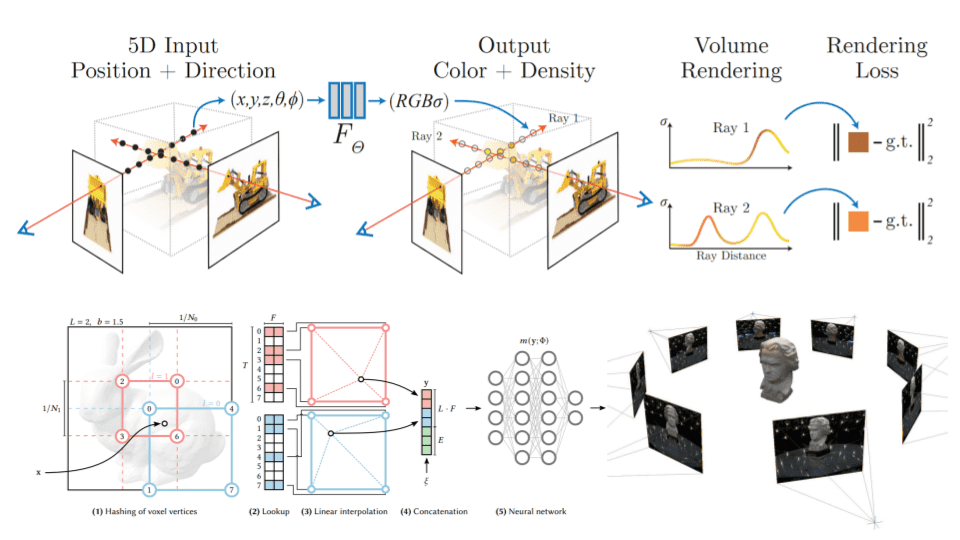
NeRF represents a groundbreaking approach to rendering 3D scenes from 2D images with astonishing detail and photorealism. This technology uses deep learning to interpolate light rays as they travel through space, capturing the color and intensity of light at every point in a scene to create a cohesive and highly detailed 3D representation. For content creators, NeRF offers a way to generate lifelike environments and objects from a relatively sparse set of images, reducing the need for extensive 3D modeling and manual texturing.

Expanded Understanding of Neural Radiance Fields (NeRF)

Neural Radiance Fields (NeRF) is a novel framework in the field of computer vision and graphics, enabling the synthesis of highly realistic images from any viewpoint using a sparse set of 2D input images. At its core, NeRF utilizes a fully connected deep neural network to model the volumetric scene functionally, capturing the intricate play of light and color in a 3D space. This section aims to demystify NeRF for technologists, illustrating its fundamental concepts and practical applications to anchor understanding.

Fundamentals of NeRF

NeRF represents a scene using a continuous 5D function, where each point in space (defined by its x, y, z coordinates) and each viewing direction (defined by angles θ and φ) is mapped to a color (RGB) and a volume density. This mapping is achieved through a neural network that takes these 5D coordinates as input and predicts the color and density at that point. Here’s how it breaks down:

  • Volume Density: This measure indicates the opaqueness of a point in space. High density suggests a solid object, while low density implies empty space or transparency.
  • Color Output: The predicted color at a point, given a specific viewing direction, accounts for how light interacts with objects in the environment.

When rendering an image, NeRF integrates these predictions along camera rays, a process that simulates how light travels and scatters in a real 3D environment, culminating in photorealistic image synthesis.

Training and Rendering

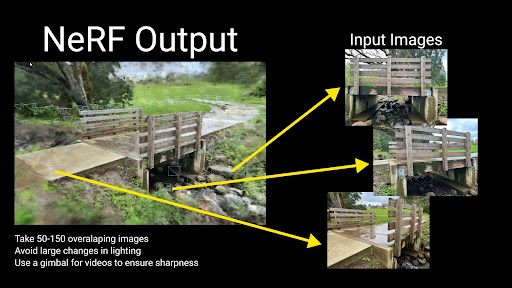
To train a NeRF model, you need a set of images of a scene from various angles, each with its corresponding camera position and orientation. The training process involves adjusting the neural network parameters until the rendered views match the training images as closely as possible. This iterative optimization enables NeRF to interpolate and reconstruct the scene with high fidelity.

During rendering, NeRF computes the color and density for numerous points along each ray emanating from the camera into the scene, aggregating this information to form the final image. This ray-marching process, although computationally intensive, results in images with impressive detail and realism.

Practical Examples and Applications

  1. Virtual Tourism: Imagine exploring a detailed 3D model of the Colosseum in Rome, created from a set of tourist photos. NeRF can generate any viewpoint, allowing users to experience the site from angles never captured in the original photos.
  2. Film and Visual Effects: In filmmaking, NeRF can help generate realistic backgrounds or virtual sets from a limited set of reference photos, significantly reducing the need for physical sets or extensive location shooting.
  3. Cultural Heritage Preservation: By capturing detailed 3D models of historical sites or artifacts from photographs, NeRF aids in preserving and studying these treasures, making them accessible for virtual exploration.
  4. Product Visualization: Companies can use NeRF to create realistic 3D models of their products from a series of photographs, enabling interactive customer experiences online, such as viewing the product from any angle or in different lighting conditions.

Key Concepts in Neural Radiance Fields (NeRF)

To understand Neural Radiance Fields (NeRF) thoroughly, it is essential to grasp its foundational concepts and appreciate how these principles translate into the generation of photorealistic 3D scenes. Below, we delve deeper into the key concepts of NeRF, providing examples to elucidate their practical significance.

Scene Representation

NeRF models a scene using a continuous, high-dimensional function that encodes the volumetric density and color information at every point in space, relative to the viewer’s perspective.

  • Example: Consider a NeRF model creating a 3D representation of a forest. For each point in space, whether on the surface of a tree trunk, within its canopy, or in the open air, the model assigns both a density (indicating whether the point contributes to the scene’s geometry) and a color (reflecting the appearance under particular lighting conditions). This detailed encoding allows for the realistic rendering of the forest from any viewpoint, capturing the nuances of light filtering through leaves or the texture of the bark on the trees.

Photorealism

NeRF’s ability to synthesize highly realistic images from any perspective is one of its most compelling attributes, driven by its precise modeling of light interactions within a scene.

  • Example: If a NeRF model is applied to replicate a glass sculpture, it would capture how light bends through the glass and the subtle color shifts resulting from its interaction with the material. The end result is a set of images so detailed and accurate that viewers might struggle to differentiate them from actual photographs of the sculpture.

Efficiency

Despite the high computational load required during the training phase, once a NeRF model is trained, it can render new views of a scene relatively quickly and with fewer resources compared to traditional 3D rendering techniques.

  • Example: After a NeRF model has been trained on a dataset of a car, it can generate new views of this car from angles not included in the original dataset, without the need to re-render the model entirely from scratch. This capability is particularly valuable for applications like virtual showrooms, where potential buyers can explore a vehicle from any angle or lighting condition, all generated with minimal delay.

Continuous View Synthesis

NeRF excels at creating smooth transitions between different viewpoints in a scene, providing a seamless viewing experience that traditional 3D models struggle to match.

  • Example: In a virtual house tour powered by NeRF, as the viewer moves from room to room, the transitions are smooth and realistic, with no abrupt changes in texture or lighting. This continuous view synthesis not only enhances the realism but also makes the virtual tour more engaging and immersive.

Handling of Complex Lighting and Materials

NeRF’s nuanced understanding of light and material interaction enables it to handle complex scenarios like transparency, reflections, and shadows with a high degree of realism.

  • Example: When rendering a scene with a pond, NeRF accurately models the reflections of surrounding trees and the sky in the water, the transparency of the water with varying depths, and the play of light and shadow on the pond’s bed, providing a remarkably lifelike representation.

The key concepts of NeRF—scene representation, photorealism, efficiency, continuous view synthesis, and advanced handling of lighting and materials—are what empower this technology to create stunningly realistic 3D environments from a set of 2D images. By understanding these concepts, technologists and content creators can better appreciate the potential applications and implications of NeRF, from virtual reality and filmmaking to architecture and beyond. As NeRF continues to evolve, its role in shaping the future of digital content and experiences is likely to expand, offering ever more immersive and engaging ways to interact with virtual worlds.

Advancements in Text-to-Video AI

Parallel to the developments in NeRF, text-to-video AI technologies are transforming the content landscape by enabling creators to generate video content directly from textual descriptions. This capability leverages advanced natural language processing and deep learning techniques to understand and visualize complex narratives, scenes, and actions described in text, translating them into engaging video content.

Integration with NeRF:

  • Dynamic Content Generation: Combining NeRF with text-to-video AI allows creators to generate realistic 3D environments that can be seamlessly integrated into video narratives, all driven by textual descriptions.
  • Customization and Flexibility: Content creators can use natural language to specify details about environments, characters, and actions, which NeRF and text-to-video AI can then bring to life with high fidelity.

OpenAI’s Sora: A Case Study in NeRF and Text-to-Video AI Convergence

OpenAI’s Sora exemplifies the integration of NeRF and text-to-video AI, illustrating the potential of these technologies to revolutionize content creation. Sora leverages NeRF to create detailed, realistic 3D environments from textual inputs, which are then animated and rendered into dynamic video content using text-to-video AI algorithms.

OpenAI Sora: SUV in The Dust

Implications for Content Creators:

  • Enhanced Realism: Sora enables the production of videos with lifelike environments and characters, raising the bar for visual quality and immersion.
  • Efficiency: By automating the creation of complex scenes and animations, Sora reduces the time and resources required to produce high-quality video content.
  • Accessibility: With Sora, content creators do not need deep technical expertise in 3D modeling or animation to create compelling videos, democratizing access to advanced content creation tools.

Conclusion

The integration of NeRF and text-to-video AI, as demonstrated by OpenAI’s Sora, marks a significant milestone in the evolution of content creation technology. It offers content creators unparalleled capabilities to produce realistic, engaging, and personalized video content efficiently and at scale.

As we look to the future, the continued advancement of these technologies will further expand the possibilities for creative expression and storytelling, enabling creators to bring even the most ambitious visions to life. For junior practitioners and seasoned professionals alike, understanding the potential and applications of NeRF and text-to-video AI is essential for staying at the forefront of the digital content creation revolution.

In conclusion, the convergence of NeRF and text-to-video AI is not just a technical achievement; it represents a new era in storytelling, where the barriers between imagination and reality are increasingly blurred. For content creators and consumers alike, this is a journey just beginning, promising a future rich with possibilities that are as limitless as our creativity.

The Inevitable Disruption of Text-to-Video AI for Content Creators: Navigating the Future Landscape

Introduction

On Thursday 02/15/2024 we heard about the latest development from OpenAI – Sora (Text-to-Video AI). The introduction of OpenAI’s Sora into the public marketplace is set to revolutionize the content and media creation landscape over the next five years. This transformation will be driven by Sora’s advanced capabilities in generating, understanding, and processing natural language, as well as its potential for creative content generation. The impact on content creators, media professionals, and the broader ecosystem will be multifaceted, influencing production processes, content personalization, and the overall economics of the media industry.


Transformation of Content Creation Processes

Sora’s advanced AI capabilities can significantly streamline the content creation process, making it more efficient and cost-effective. For writers, journalists, and digital content creators, Sora can offer real-time suggestions, improve drafting efficiency, and provide editing assistance to enhance the quality of the output. This can lead to a reduction in the time and resources required to produce high-quality content, allowing creators to focus more on the creative and strategic aspects of their work.

Personalization and User Engagement

In the realm of media and entertainment, Sora’s ability to analyze and understand audience preferences at a granular level will enable unprecedented levels of content personalization. Media companies can leverage Sora to tailor content to individual user preferences, improving engagement and user satisfaction. This could manifest in personalized news feeds, customized entertainment recommendations, or even dynamically generated content that adapts to the user’s interests and behaviors. Such personalization capabilities are likely to redefine the standards for user experience in digital media platforms. So, let’s dive a bit deeper into how this technology can advance personalization and user engagement within the marketplace.

Examples of Personalization and User Engagement

1. Personalized News Aggregation:

  • Pros: Platforms can use Sora to curate news content tailored to the individual interests and reading habits of each user. For example, a user interested in technology and sustainability might receive a news feed focused on the latest in green tech innovations, while someone interested in finance and sports might see articles on sports economics. This not only enhances user engagement but also increases the time spent on the platform.
  • Cons: Over-personalization can lead to the creation of “filter bubbles,” where users are exposed only to viewpoints and topics that align with their existing beliefs and interests. This can narrow the diversity of content consumed and potentially exacerbate societal divisions.

2. Customized Learning Experiences:

  • Pros: Educational platforms can leverage Sora to adapt learning materials to the pace and learning style of each student. For instance, a visual learner might receive more infographic-based content, while a verbal learner gets detailed textual explanations. This can improve learning outcomes and student engagement.
  • Cons: There’s a risk of over-reliance on automated personalization, which might overlook the importance of exposing students to challenging materials that are outside their comfort zones, potentially limiting their learning scope.

3. Dynamic Content Generation for Entertainment:

  • Pros: Streaming services can use Sora to dynamically alter storylines, music, or visual elements based on user preferences. For example, a streaming platform could offer multiple storyline outcomes in a series, allowing users to experience a version that aligns with their interests or past viewing behaviors.
  • Cons: This level of personalization might reduce the shared cultural experiences that traditional media offers, as audiences fragment across personalized content paths. It could also challenge creators’ artistic visions when content is too heavily influenced by algorithms.

4. Interactive Advertising:

  • Pros: Advertisers can utilize Sora to create highly targeted and interactive ad content that resonates with the viewer’s specific interests and behaviors, potentially increasing conversion rates. For example, an interactive ad could adjust its message or product recommendations in real-time based on how the user interacts with it.
  • Cons: Highly personalized ads raise privacy concerns, as they rely on extensive data collection and analysis of user behavior. There’s also the risk of user fatigue if ads become too intrusive or overly personalized, leading to negative brand perceptions.

Navigating the Pros and Cons

To maximize the benefits of personalization while mitigating the downsides, content creators and platforms need to adopt a balanced approach. This includes:

  • Transparency and Control: Providing users with clear information about how their data is used for personalization and offering them control over their personalization settings.
  • Diversity and Exposure: Implementing algorithms that occasionally introduce content outside of the user’s usual preferences to broaden their exposure and prevent filter bubbles.
  • Ethical Data Use: Adhering to ethical standards for data collection and use, ensuring user privacy is protected, and being transparent about data handling practices.

While Sora’s capabilities in personalization and user engagement offer exciting opportunities for content and media creation, they also come with significant responsibilities. Balancing personalization benefits with the need for privacy, diversity, and ethical considerations will be key to harnessing this technology effectively.


Expansion of Creative Possibilities

Sora’s potential to generate creative content opens up new possibilities for media creators. This includes the creation of written content, such as articles, stories, and scripts, as well as the generation of artistic elements like graphics, music, and video content. By augmenting human creativity, Sora can help creators explore new ideas, themes, and formats, potentially leading to the emergence of new genres and forms of media. This democratization of content creation could also lower the barriers to entry for aspiring creators, fostering a more diverse and vibrant media landscape. We will dive a bit deeper into these creative possibilities by exploring the Pros and Cons.

Pros:

  • Enhanced Creative Tools: Sora can act as a powerful tool for creators, offering new ways to generate ideas, draft content, and even create complex narratives. For example, a novelist could use Sora to brainstorm plot ideas or develop character backstories, significantly speeding up the writing process and enhancing the depth of their stories.
  • Accessibility to Creation: With Sora, individuals who may not have traditional artistic skills or technical expertise can participate in creative endeavors. For instance, someone with a concept for a graphic novel but without the ability to draw could use Sora to generate visual art, making creative expression more accessible to a broader audience.
  • Innovative Content Formats: Sora’s capabilities could lead to the creation of entirely new content formats that blend text, visuals, and interactive elements in ways previously not possible. Imagine an interactive educational platform where content dynamically adapts to each student’s learning progress and interests, offering a highly personalized and engaging learning experience.

Cons:

  • Potential for Diminished Human Creativity: There’s a concern that over-reliance on AI for creative processes could diminish the value of human creativity. If AI-generated content becomes indistinguishable from human-created content, it could devalue original human artistry and creativity in the public perception.
  • Intellectual Property and Originality Issues: As AI-generated content becomes more prevalent, distinguishing between AI-assisted and purely human-created content could become challenging. This raises questions about copyright, ownership, and the originality of AI-assisted works. For example, if a piece of music is composed with the help of Sora, determining the rights and ownership could become complex.
  • Homogenization of Content: While AI like Sora can generate content based on vast datasets, there’s a risk that it might produce content that leans towards what is most popular or trending, potentially leading to a homogenization of content. This could stifle diversity in creative expression and reinforce existing biases in media and art.

Navigating the Pros and Cons

To harness the creative possibilities of Sora while addressing the challenges, several strategies can be considered:

  • Promoting Human-AI Collaboration: Encouraging creators to use Sora as a collaborative tool rather than a replacement for human creativity can help maintain the unique value of human artistry. This approach leverages AI to enhance and extend human capabilities, not supplant them.
  • Clear Guidelines for AI-generated Content: Developing industry standards and ethical guidelines for the use of AI in creative processes can help address issues of copyright and originality. This includes transparently acknowledging the use of AI in the creation of content.
  • Diversity and Bias Mitigation: Actively working to ensure that AI models like Sora are trained on diverse datasets and are regularly audited for bias can help prevent the homogenization of content and promote a wider range of voices and perspectives in media and art.

Impact on the Economics of Media Production

The efficiencies and capabilities introduced by Sora are likely to have profound implications for the economics of media production. Reduced production costs and shorter development cycles can make content creation more accessible and sustainable, especially for independent creators and smaller media outlets. However, this could also lead to increased competition and a potential oversaturation of content, challenging creators to find new ways to stand out and monetize their work. While this topic is always considered sensitive, if we can look at it from pro versus con perspective, perhaps we can address it with a neutral focus.

Impact on Cost Structures

Pros:

  • Reduced Production Costs: Sora can automate aspects of content creation, such as writing, editing, and even some elements of video production, reducing the need for large production teams and lowering costs. For example, a digital news outlet could use Sora to generate first drafts of articles based on input data, allowing journalists to focus on adding depth and context, thus speeding up the production process and reducing labor costs.
  • Efficiency in Content Localization: Media companies looking to expand globally can use Sora to automate the translation and localization of content, making it more cost-effective to reach international audiences. This could significantly lower the barriers to global content distribution.

Cons:

  • Initial Investment and Training: The integration of Sora into media production workflows requires upfront investment in technology and training for staff. Organizations may face challenges in adapting existing processes to leverage AI capabilities effectively, which could initially increase costs.
  • Dependence on AI: Over-reliance on AI for content production could lead to a homogenization of content, as algorithms might favor formats and topics that have historically performed well, potentially stifacing creativity and innovation.

Impact on Revenue Models

Pros:

  • New Monetization Opportunities: Sora enables the creation of personalized content at scale, opening up new avenues for monetization. For instance, media companies could offer premium subscriptions for highly personalized news feeds or entertainment content, adding a new revenue stream.
  • Enhanced Ad Targeting: The deep understanding of user preferences and behaviors facilitated by Sora can improve ad targeting, leading to higher ad revenues. For example, a streaming service could use viewer data analyzed by Sora to place highly relevant ads, increasing viewer engagement and advertiser willingness to pay.

Cons:

  • Shift in Consumer Expectations: As consumers get accustomed to personalized and AI-generated content, they might become less willing to pay for generic content offerings. This could pressure media companies to continuously invest in AI to keep up with expectations, potentially eroding profit margins.
  • Ad Blockers and Privacy Tools: The same technology that allows for enhanced ad targeting might also lead to increased use of ad blockers and privacy tools by users wary of surveillance and data misuse, potentially impacting ad revenue.

Impact on the Competitive Landscape

Pros:

  • Level Playing Field for Smaller Players: Sora can democratize content production, allowing smaller media companies and independent creators to produce high-quality content at a lower cost. This could lead to a more diverse media landscape with a wider range of voices and perspectives.
  • Innovation and Differentiation: Companies that effectively integrate Sora into their production processes can innovate faster and differentiate their offerings, capturing market share from competitors who are slower to adapt.

Cons:

  • Consolidation Risk: Larger companies with more resources to invest in AI could potentially dominate the market, leveraging Sora to produce content more efficiently and at a larger scale than smaller competitors. This could lead to consolidation in the media industry, reducing diversity in content and viewpoints.

Navigating the Pros and Cons

To effectively navigate these economic impacts, media companies and content creators need to:

  • Invest in skills and training to ensure their teams can leverage AI tools like Sora effectively.
  • Develop ethical guidelines and transparency around the use of AI in content creation to maintain trust with audiences.
  • Explore innovative revenue models that leverage the capabilities of AI while addressing consumer concerns about privacy and data use.

Ethical and Societal Considerations

As Sora influences the content and media industry, ethical and societal considerations will come to the forefront. Issues such as copyright, content originality, misinformation, and the impact of personalized content on societal discourse will need to be addressed. Media creators and platforms will have to navigate these challenges carefully, establishing guidelines and practices that ensure responsible use of AI in content creation while fostering a healthy, informed, and engaged public discourse.

Conclusion

Over the next five years, OpenAI’s Sora is poised to significantly impact the content and media creation industry by enhancing creative processes, enabling personalized experiences, and transforming the economics of content production. As these changes unfold, content and media professionals will need to adapt to the evolving landscape, leveraging Sora’s capabilities to enhance creativity and engagement while addressing the ethical and societal implications of AI-driven content creation.

The Evolution of AI with Llama 2: A Dive into Next-Generation Generative Models

Introduction

In the rapidly evolving landscape of artificial intelligence, the development of generative text models represents a significant milestone, offering unprecedented capabilities in natural language understanding and generation. Among these advancements, Llama 2 emerges as a pivotal innovation, setting new benchmarks for AI-assisted interactions and a wide array of natural language processing tasks. This blog post delves into the intricacies of Llama 2, exploring its creation, the vision behind it, its developers, and the potential trajectory of these models in shaping the future of AI. But let’s start from the beginning of Generative AI models.

Generative AI Models: A Historical Overview

The landscape of generative AI models has rapidly evolved, with significant milestones marking the journey towards more sophisticated, efficient, and versatile AI systems. Starting from the introduction of simple neural networks to the development of transformer-based models like OpenAI’s GPT (Generative Pre-trained Transformer) series, AI research has continually pushed the boundaries of what’s possible with natural language processing (NLP).

The Vision and Creation of Advanced Models

The creation of advanced generative models has been motivated by a desire to overcome the limitations of earlier AI systems, including challenges related to understanding context, generating coherent long-form content, and adapting to various languages and domains. The vision behind these developments has been to create AI that can seamlessly interact with humans, provide valuable insights, and assist in creative and analytical tasks with unprecedented accuracy and flexibility.

Key Contributors and Collaborations

The development of cutting-edge AI models has often been the result of collaborative efforts involving researchers from academic institutions, tech companies, and independent AI research organizations. For instance, OpenAI’s GPT series was developed by a team of researchers and engineers committed to advancing AI in a way that benefits humanity. Similarly, other organizations like Google AI (with models like BERT and T5) and Facebook AI (with models like RoBERTa) have made significant contributions to the field.

The Creation Process and Technological Innovations

The creation of these models involves leveraging large-scale datasets, sophisticated neural network architectures (notably the transformer model), and innovative training techniques. Unsupervised learning plays a critical role, allowing models to learn from vast amounts of text data without explicit labeling. This approach enables the models to understand linguistic patterns, context, and subtleties of human language.

Unsupervised learning is a type of machine learning algorithm that plays a fundamental role in the development of advanced generative text models, such as those described in our discussions around “Llama 2” or similar AI technologies. Unlike supervised learning, which relies on labeled datasets to teach models how to predict outcomes based on input data, unsupervised learning does not use labeled data. Instead, it allows the model to identify patterns, structures, and relationships within the data on its own. This distinction is crucial for understanding how AI models can learn and adapt to a wide range of tasks without extensive manual intervention.

Understanding Unsupervised Learning

Unsupervised learning involves algorithms that are designed to work with datasets that do not have predefined or labeled outcomes. The goal of these algorithms is to explore the data and find some structure within. This can involve grouping data into clusters (clustering), estimating the distribution within the data (density estimation), or reducing the dimensionality of data to understand its structure better (dimensionality reduction).

Importance in AI Model Building

The critical role of unsupervised learning in building generative text models, such as those employed in natural language processing (NLP) tasks, stems from several factors:

  1. Scalability: Unsupervised learning can handle vast amounts of data that would be impractical to label manually. This capability is essential for training models on the complexities of human language, which requires exposure to diverse linguistic structures, idioms, and cultural nuances.
  2. Richer Understanding: By learning from data without pre-defined labels, models can develop a more nuanced understanding of language. They can discover underlying patterns, such as syntactic structures and semantic relationships, which might not be evident through supervised learning alone.
  3. Versatility: Models trained using unsupervised learning can be more adaptable to different types of tasks and data. This flexibility is crucial for generative models expected to perform a wide range of NLP tasks, from text generation to sentiment analysis and language translation.
  4. Efficiency: Collecting and labeling large datasets is time-consuming and expensive. Unsupervised learning mitigates this by leveraging unlabeled data, significantly reducing the resources needed to train models.

Practical Applications

In the context of AI and NLP, unsupervised learning is used to train models on the intricacies of language without explicit instruction. For example, a model might learn to group words with similar meanings or usage patterns together, recognize the structure of sentences, or generate coherent text based on the patterns it has discovered. This approach is particularly useful for generating human-like text, understanding context in conversations, or creating models that can adapt to new, unseen data with minimal additional training.

Unsupervised learning represents a cornerstone in the development of generative text models, enabling them to learn from the vast and complex landscape of human language without the need for labor-intensive labeling. By allowing models to uncover hidden patterns and relationships in data, unsupervised learning not only enhances the models’ understanding and generation of language but also paves the way for more efficient, flexible, and scalable AI solutions. This methodology underpins the success and versatility of advanced AI models, driving innovations that continue to transform the field of natural language processing and beyond.

The Vision for the Future

The vision upon the creation of models akin to “Llama 2” has been to advance AI to a point where it can understand and generate human-like text across various contexts and tasks, making AI more accessible, useful, and transformative across different sectors. This includes improving customer experience through more intelligent chatbots, enhancing creativity and productivity in content creation, and providing sophisticated tools for data analysis and decision-making.

Ethical Considerations and Future Directions

The creators of these models are increasingly aware of the ethical implications, including the potential for misuse, bias, and privacy concerns. As a result, the vision for future models includes not only technological advancements but also frameworks for ethical AI use, transparency, and safety measures to ensure these tools contribute positively to society.

Introduction to Llama 2

Llama 2 is a state-of-the-art family of generative text models, meticulously optimized for assistant-like chat use cases and adaptable across a spectrum of natural language generation (NLG) tasks. It stands as a beacon of progress in the AI domain, enhancing machine understanding and responsiveness to human language. Llama 2’s design philosophy and architecture are rooted in leveraging deep learning to process and generate text with a level of coherence, relevancy, and contextuality previously unattainable.

The Genesis of Llama 2

The inception of Llama 2 was driven by the pursuit of creating more efficient, accurate, and versatile AI models capable of understanding and generating human-like text. This initiative was spurred by the limitations observed in previous generative models, which, despite their impressive capabilities, often struggled with issues of context retention, task flexibility, and computational efficiency.

The development of Llama 2 was undertaken by a collaborative effort among leading researchers in artificial intelligence and computational linguistics. These experts sought to address the shortcomings of earlier models by incorporating advanced neural network architectures, such as transformer models, and refining training methodologies to enhance language understanding and generation capabilities.

Architectural Innovations and Training

Llama 2’s architecture is grounded in the transformer model, renowned for its effectiveness in handling sequential data and its capacity for parallel processing. This choice facilitates the model’s ability to grasp the nuances of language and maintain context over extended interactions. Furthermore, Llama 2 employs cutting-edge techniques in unsupervised learning, leveraging vast datasets to refine its understanding of language patterns, syntax, semantics, and pragmatics.

The training process of Llama 2 involves feeding the model a diverse array of text sources, from literature and scientific articles to web content and dialogue exchanges. This exposure enables the model to learn a broad spectrum of language styles, topics, and user intents, thereby enhancing its adaptability and performance across different tasks and domains.

Practical Applications and Real-World Case Studies

Llama 2’s versatility is evident through its wide range of applications, from enhancing customer service through AI-powered chatbots to facilitating content creation, summarization, and language translation. Its ability to understand and generate human-like text makes it an invaluable tool in various sectors, including healthcare, education, finance, and entertainment.

One notable case study involves the deployment of Llama 2 in a customer support context, where it significantly improved response times and satisfaction rates by accurately interpreting customer queries and generating coherent, contextually relevant responses. Another example is its use in content generation, where Llama 2 assists writers and marketers by providing creative suggestions, drafting articles, and personalizing content at scale.

The Future of Llama 2 and Beyond

The trajectory of Llama 2 and similar generative models points towards a future where AI becomes increasingly integral to our daily interactions and decision-making processes. As these models continue to evolve, we can anticipate enhancements in their cognitive capabilities, including better understanding of nuanced human emotions, intentions, and cultural contexts.

Moreover, ethical considerations and the responsible use of AI will remain paramount, guiding the development of models like Llama 2 to ensure they contribute positively to society and foster trust among users. The ongoing collaboration between AI researchers, ethicists, and industry practitioners will be critical in navigating these challenges and unlocking the full potential of generative text models.

Conclusion

Llama 2 represents a significant leap forward in the realm of artificial intelligence, offering a glimpse into the future of human-machine interaction. By understanding its development, architecture, and applications, AI practitioners and enthusiasts can appreciate the profound impact of these models on various industries and aspects of our lives. As we continue to explore and refine the capabilities of Llama 2, the potential for creating more intelligent, empathetic, and efficient AI assistants seems boundless, promising to revolutionize the way we communicate, learn, and solve problems in the digital age.

In essence, Llama 2 is not just a technological achievement; it’s a stepping stone towards realizing the full potential of artificial intelligence in enhancing human experiences and capabilities. As we move forward, the exploration and ethical integration of models like Llama 2 will undoubtedly play a pivotal role in shaping the future of AI and its contribution to society. If you are interested in deeper dives into Llama 2 or generative AI models, please let us know and the team can continue discussions at a more detailed level.

Navigating the AI Revolution: Transformative Challenges and Opportunities in Real Estate, Banking, and Journalism

Introduction

Recently, there has been a buzz about AI replacing workers in various industries. While some of this disruption has been expected, or even planned, there are some that have become increasingly concerned on how far this trend will spread. In today’s post, we will highlight a few industries where this discussion appears to be the most active. 

The advent of artificial intelligence (AI) has ushered in a transformative era across various industries, fundamentally reshaping business landscapes and operational paradigms. As AI continues to evolve, certain careers, notably in real estate, banking, and journalism, face significant disruption. In this blog post, we will explore the impact of AI on these sectors, identify the aspects that make these careers vulnerable, and conclude with strategic insights for professionals aiming to stay relevant and valuable in their fields.

Real Estate: The AI Disruption

In the real estate sector, AI’s integration has been particularly impactful in areas such as property valuation, predictive analytics, and virtual property tours. AI algorithms can analyze vast data sets, including historical transaction records and real-time market trends, to provide more accurate property appraisals and investment insights. This diminishes the traditional role of real estate agents in providing market expertise.

Furthermore, AI-powered chatbots and virtual assistants are enhancing customer engagement and streamlining administrative tasks, reducing the need for human intermediaries in initial client interactions and basic inquiries. Virtual reality (VR) and augmented reality (AR) technologies are enabling immersive property tours, diminishing the necessity of physical site visits and the agent’s role in showcasing properties.

The real estate industry, traditionally reliant on personal relationships and local market knowledge, is undergoing a significant transformation due to the advent and evolution of artificial intelligence (AI). This shift not only affects current practices but also has the potential to reshape the industry for generations to come. Let’s explore the various dimensions in which AI is influencing real estate, with a focus on its implications for agents and brokers.

1. Property Valuation and Market Analysis

AI-powered algorithms have revolutionized property valuation and market analysis. By processing vast amounts of data, including historical sales, neighborhood trends, and economic indicators, these algorithms can provide highly accurate property appraisals and market forecasts. This diminishes the traditional role of agents and brokers in manually analyzing market data and estimating property values.

Example: Zillow’s Zestimate tool uses machine learning to estimate home values based on public and user-submitted data, offering instant appraisals without the need for agent intervention.

2. Lead Generation and Customer Relationship Management

AI-driven customer relationship management (CRM) systems are transforming lead generation and client interaction in real estate. These systems can predict which clients are more likely to buy or sell based on behavioral data, significantly enhancing the efficiency of lead generation. They also automate follow-up communications and personalize client interactions, reducing the time agents spend on routine tasks.

Example: CRM platforms like Chime use AI to analyze user behavior on real estate websites, helping agents identify and target potential leads more effectively.

3. Virtual Property Showings and Tours

AI, in conjunction with VR and AR, is enabling virtual property showings and tours. Potential buyers can now tour properties remotely, reducing the need for agents to conduct multiple in-person showings. This technology is particularly impactful in the current era of social distancing and has the potential to become a standard practice in the future.

Example: Matterport’s 3D technology allows for the creation of virtual tours, giving prospective buyers a realistic view of properties from their own homes.

4. Transaction and Document Automation

AI is streamlining real estate transactions by automating document processing and legal formalities. Smart contracts, powered by blockchain technology, are automating contract execution and reducing the need for intermediaries in transactions.

Example: Platforms like Propy utilize blockchain to facilitate secure and automated real estate transactions, potentially reducing the role of agents in the closing process.

5. Predictive Analytics in Real Estate Investment

AI’s predictive analytics capabilities are reshaping real estate investment strategies. Investors can use AI to analyze market trends, forecast property value appreciation, and identify lucrative investment opportunities, which were traditionally areas where agents provided expertise.

Example: Companies like HouseCanary offer predictive analytics tools that analyze millions of data points to forecast real estate market trends and property values.

Impact on Agents and Brokers: Navigating the Changing Tides

The generational impact of AI in real estate will likely manifest in several ways:

  • Skillset Shift: Agents and brokers will need to adapt their skillsets to focus more on areas where human expertise is crucial, such as negotiation, relationship-building, and local market knowledge that AI cannot replicate.
  • Role Transformation: The traditional role of agents as information gatekeepers will evolve. They will need to position themselves as advisors and consultants, leveraging AI tools to enhance their services rather than being replaced by them.
  • Educational and Training Requirements: Future generations of real estate professionals will likely require education and training that emphasize digital literacy, understanding AI tools, and data analytics, in addition to traditional real estate knowledge.
  • Competitive Landscape: The real estate industry will become increasingly competitive, with a higher premium placed on agents who can effectively integrate AI into their practices.

AI’s influence on the real estate industry is profound, necessitating a fundamental shift in the roles and skills of agents and brokers. By embracing AI and adapting to these changes, real estate professionals can not only survive but thrive in this new landscape, leveraging AI to provide enhanced services and value to their clients.

Banking: AI’s Transformative Impact

The banking sector is experiencing a paradigm shift due to AI-driven innovations in areas like risk assessment, fraud detection, and personalized customer service. AI algorithms excel in analyzing complex financial data, identifying patterns, and predicting risks, thus automating decision-making processes in credit scoring and loan approvals. This reduces the reliance on financial analysts and credit officers.

Additionally, AI-powered chatbots and virtual assistants are revolutionizing customer service, offering 24/7 support and personalized financial advice. This automation and personalization reduce the need for traditional customer service roles in banking. Moreover, AI’s role in fraud detection and prevention, through advanced pattern recognition and anomaly detection, is minimizing the need for extensive manual monitoring.

This technological revolution is not just reshaping current roles and operations but also has the potential to redefine the industry for future generations. Let’s explore the various ways in which AI is influencing the banking sector and its implications for existing roles, positions, and careers.

1. Credit Scoring and Risk Assessment

AI has significantly enhanced the efficiency and accuracy of credit scoring and risk assessment processes. Traditional methods relied heavily on manual analysis of credit histories and financial statements. AI algorithms, however, can analyze a broader range of data, including non-traditional sources such as social media activity and online behavior, to provide a more comprehensive risk profile.

Example: FICO, known for its credit scoring model, uses machine learning to analyze alternative data sources for assessing creditworthiness, especially useful for individuals with limited credit histories.

2. Fraud Detection and Prevention

AI-driven systems are revolutionizing fraud detection and prevention in banking. By using advanced machine learning algorithms, these systems can identify patterns and anomalies indicative of fraudulent activity, often in real-time, significantly reducing the incidence of fraud.

Example: Mastercard uses AI-powered systems to analyze transaction data across its network, enabling the detection of fraudulent transactions with greater accuracy and speed.

3. Personalized Banking Services

AI is enabling the personalization of banking services, offering customers tailored financial advice, product recommendations, and investment strategies. This level of personalization was traditionally the domain of personal bankers and financial advisors.

Example: JPMorgan Chase uses AI to analyze customer data and provide personalized financial insights and recommendations through its mobile app.

4. Customer Service Automation

AI-powered chatbots and virtual assistants are transforming customer service in banking. These tools can handle a wide range of customer inquiries, from account balance queries to complex transaction disputes, which were previously managed by customer service representatives.

Example: Bank of America’s virtual assistant, Erica, provides 24/7 customer support, helping customers with banking queries and transactions.

5. Process Automation and Operational Efficiency

Robotic Process Automation (RPA) and AI are automating routine tasks such as data entry, report generation, and compliance checks. This reduces the need for manual labor in back-office operations and shifts the focus of employees to more strategic and customer-facing roles.

Example: HSBC uses RPA and AI to automate mundane tasks, allowing employees to focus on more complex and value-added activities.

Beyond Suits and Spreadsheets

The generational impact of AI in banking will likely result in several key changes:

  • Skillset Evolution: Banking professionals will need to adapt their skillsets to include digital literacy, understanding of AI and data analytics, and adaptability to technological changes.
  • Role Redefinition: Traditional roles, particularly in customer service and back-office operations, will evolve. Banking professionals will need to focus on areas where human judgment and expertise are critical, such as complex financial advisory and relationship management.
  • Career Path Changes: Future generations entering the banking industry will likely find a landscape where AI and technology skills are as important as traditional banking knowledge. Careers will increasingly blend finance with technology.
  • New Opportunities: AI will create new roles in data science, AI ethics, and AI integration. There will be a growing demand for professionals who can bridge the gap between technology and banking.

AI’s influence on the banking industry will be thorough and multifaceted, necessitating a significant shift in the roles, skills, and career paths of banking professionals. By embracing AI, adapting to technological changes, and focusing on areas where human expertise is crucial, banking professionals can not only remain relevant but also drive innovation and growth in this new era.

Journalism: The AI Challenge

In journalism, AI’s emergence is particularly influential in content creation, data journalism, and personalized news delivery. Automated writing tools, using natural language generation (NLG) technologies, can produce basic news articles, particularly in areas like sports and finance, where data-driven reports are prevalent. This challenges the traditional role of journalists in news writing and reporting.

AI-driven data journalism tools can analyze large data sets to uncover trends and insights, tasks that were traditionally the domain of investigative journalists. Personalized news algorithms are tailoring content delivery to individual preferences, reducing the need for human curation in newsrooms.

This technological shift is not just altering current journalistic practices but is also poised to redefine the landscape for future generations in the field. Let’s delve into the various ways AI is influencing journalism and its implications for existing roles, positions, and careers.

1. Automated Content Creation

One of the most notable impacts of AI in journalism is automated content creation, also known as robot journalism. AI-powered tools use natural language generation (NLG) to produce news articles, especially for routine and data-driven stories such as sports recaps, financial reports, and weather updates.

Example: The Associated Press uses AI to automate the writing of earnings reports and minor league baseball stories, significantly increasing the volume of content produced with minimal human intervention.

2. Enhanced Research and Data Journalism

AI is enabling more sophisticated research and data journalism by analyzing large datasets to uncover trends, patterns, and stories. This capability was once the sole domain of investigative journalists who spent extensive time and effort in data analysis.

Example: Reuters uses an AI tool called Lynx Insight to assist journalists in analyzing data, suggesting story ideas, and even writing some parts of articles.

3. Personalized News Delivery

AI algorithms are increasingly used to curate and personalize news content for readers, tailoring news feeds based on individual preferences, reading habits, and interests. This reduces the reliance on human editors for content curation and distribution.

Example: The New York Times uses AI to personalize article recommendations on its website and apps, enhancing reader engagement and experience.

4. Fact-Checking and Verification

AI tools are aiding journalists in the crucial task of fact-checking and verifying information. By quickly analyzing vast amounts of data, AI can identify inconsistencies, verify sources, and cross-check facts, a process that was traditionally time-consuming and labor-intensive.

Example: Full Fact, a UK-based fact-checking organization, uses AI to monitor live TV and online news streams to fact-check in real time.

5. Audience Engagement and Analytics

AI is transforming how media organizations understand and engage with their audiences. By analyzing reader behavior, preferences, and feedback, AI tools can provide insights into content performance and audience engagement, guiding editorial decisions.

Example: The Washington Post uses its in-house AI technology, Heliograf, to analyze reader engagement and suggest ways to optimize content for better performance.

The Evolving Landscape of Journalism Careers

The generational impact of AI in journalism will likely manifest in several ways:

  • Skillset Adaptation: Journalists will need to develop digital literacy, including a basic understanding of AI, data analytics, and multimedia storytelling.
  • Role Transformation: Traditional roles in journalism will evolve, with a greater emphasis on investigative reporting, in-depth analysis, and creative storytelling — areas where AI cannot fully replicate human capabilities.
  • Educational Shifts: Journalism education and training will increasingly incorporate AI, data journalism, and technology skills alongside core journalistic principles.
  • New Opportunities: AI will create new roles within journalism, such as AI newsroom liaisons, data journalists, and digital content strategists, who can blend journalistic skills with technological expertise.
  • Ethical Considerations: Journalists will play a crucial role in addressing the ethical implications of AI in news production, including biases in AI algorithms and the impact on public trust in media.

AI’s impact on the journalism industry will be extreme, bringing both challenges and opportunities. Journalists who embrace AI, adapt their skillsets, and focus on areas where human expertise is paramount can navigate this new landscape successfully. By doing so, they can leverage AI to enhance the quality, efficiency, and reach of their work, ensuring that journalism continues to fulfill its vital role in society.

Strategies for Remaining Relevant

To remain valuable in these evolving sectors, professionals need to focus on developing skills that AI cannot easily replicate. This includes:

  1. Emphasizing Human Interaction and Empathy: In real estate, building strong client relationships and offering personalized advice based on clients’ unique circumstances will be crucial. Similarly, in banking and journalism, the human touch in understanding customer needs and providing insightful analysis will remain invaluable.
  2. Leveraging AI to Enhance Skill Sets: Professionals should embrace AI as a tool to augment their capabilities. Real estate agents can use AI for market analysis but add value through their negotiation skills and local market knowledge. Bankers can leverage AI for efficiency but focus on complex financial advisory roles. Journalists can use AI for routine reporting but concentrate on in-depth investigative journalism and storytelling.
  3. Continuous Learning and Adaptation: Staying abreast of technological advancements and continuously upgrading skills are essential. This includes understanding AI technologies, data analytics, and digital tools relevant to each sector.
  4. Fostering Creativity and Strategic Thinking: AI struggles with tasks requiring creativity, critical thinking, and strategic decision-making. Professionals who can think innovatively and strategically will continue to be in high demand.

Conclusion

The onset of AI presents both challenges and opportunities. For professionals in real estate, banking, and journalism, the key to staying relevant lies in embracing AI’s capabilities, enhancing their unique human skills, and continuously adapting to the evolving technological landscape. By doing so, they can transform these challenges into opportunities for growth and innovation. Please consider following our posts, as we continue to blend technology trends with discussions taking place online and in the office.


Understanding Artificial General Intelligence: A Deep Dive into AGI and the Path to Achieving It

Introduction to AGI

This week we heard that Meta Boss (Mark Zuckerberg) was all-in on AGI, while some are terrified by the concept and others simply intrigued, does the average technology enthusiast fully appreciate what this means? As part of our vision to bring readers up-to-speed on the latest technology trends, we thought a post about this topic is warranted. Artificial General Intelligence (AGI), also known as ‘strong AI,’ represents the theoretical form of artificial intelligence that can understand, learn, and apply its intelligence broadly and flexibly, akin to human intelligence. Unlike Narrow AI, which is designed to perform specific tasks (like language translation or image recognition), AGI can tackle a wide range of tasks and solve them with human-like adaptability. 

Artificial General Intelligence (AGI) represents a paradigm shift in the realm of artificial intelligence. It’s a concept that extends beyond the current applications of AI, promising a future where machines can understand, learn, and apply their intelligence in an all-encompassing manner. To fully grasp the essence of AGI, it’s crucial to delve into its foundational concepts, distinguishing it from existing AI forms, and exploring its potential capabilities.

Defining AGI

At its core, AGI is the theoretical development of machine intelligence that mirrors the multi-faceted and adaptable nature of human intellect. Unlike narrow or weak AI, which is designed for specific tasks such as playing chess, translating languages, or recommending products online, AGI is envisioned to be a universal intelligence system. This means it could excel in a vast array of activities – from composing music to making scientific breakthroughs, all while adapting its approach based on the context and environment. The realization of AGI could lead to unprecedented advancements in various fields. It could revolutionize healthcare by providing personalized medicine, accelerate scientific discoveries, enhance educational methods, and even aid in solving complex global challenges such as climate change and resource management.

Key Characteristics of AGI

Adaptability:

AGI can transfer learning and adapt to new and diverse tasks without needing reprogramming.

Requirement: Dynamic Learning Systems

For AGI to adapt to a variety of tasks, it requires dynamic learning systems that can adjust and respond to changing environments and objectives. This involves creating algorithms capable of unsupervised learning and self-modification.

Development Approach:
  • Reinforcement Learning: AGI models could be trained using advanced reinforcement learning, where the system learns through trial and error, adapting its strategies based on feedback.
  • Continuous Learning: Developing models that continuously learn and evolve without forgetting previous knowledge (avoiding the problem of catastrophic forgetting).

Understanding and Reasoning:

AGI would be capable of comprehending complex concepts and reasoning through problems like a human.

Requirement: Advanced Cognitive Capabilities

AGI must possess cognitive capabilities that allow for deep understanding and logical reasoning. This involves the integration of knowledge representation and natural language processing at a much more advanced level than current AI.

Development Approach:
  • Symbolic AI: Incorporating symbolic reasoning, where the system can understand and manipulate symbols rather than just processing numerical data.
  • Hybrid Models: Combining connectionist approaches (like neural networks) with symbolic AI to enable both intuitive and logical reasoning.

Autonomous Learning:

Unlike current AI, which often requires large datasets for training, AGI would be capable of learning from limited data, much like humans do.

Requirement: Minimized Human Intervention

For AGI to learn autonomously, it must do so with minimal human intervention. This means developing algorithms that can learn from smaller datasets and generate their hypotheses and experiments.

Development Approach:
  • Meta-learning: Creating systems that can learn how to learn, allowing them to acquire new skills or adapt to new environments rapidly.
  • Self-supervised Learning: Implementing learning paradigms where the system generates its labels or learning criteria based on the intrinsic structure of the data.

Generalization and Transfer Learning:

The ability to apply knowledge gained in one domain to another seamlessly.

Requirement: Cross-Domain Intelligence

AGI must be capable of transferring knowledge and skills across various domains, a significant step beyond the capabilities of current machine learning models.

Development Approach:
  • Broad Data Exposure: Exposing the model to a wide range of data across different domains.
  • Cross-Domain Architectures: Designing neural network architectures that can identify and apply abstract patterns and principles across different fields.

Emotional and Social Intelligence:

A futuristic aspect of AGI is to understand and interpret human emotions and social cues, allowing for more natural interactions.

Requirement: Human-Like Interaction Capabilities

Developing AGI with emotional and social intelligence requires an understanding of human emotions, social contexts, and the ability to interpret these in a meaningful way.

Development Approach:
  • Emotion AI: Integrating affective computing techniques to recognize and respond to human emotions.
  • Social Simulation: Training models in simulated social environments to understand and react to complex social dynamics.

AGI vs. Narrow AI

To appreciate AGI, it’s essential to understand its contrast with Narrow AI:

  • Narrow AI: Highly specialized in particular tasks, operates within a pre-defined range, and lacks the ability to perform beyond its programming.
  • AGI: Not restricted to specific tasks, mimics human cognitive abilities, and can generalize its intelligence across a wide range of domains.

Artificial General Intelligence (AGI) and Narrow AI represent fundamentally different paradigms within the field of artificial intelligence. Narrow AI, also known as “weak AI,” is specialized and task-specific, designed to handle particular tasks such as image recognition, language translation, or playing chess. It operates within a predefined scope and lacks the ability to perform outside its specific domain. In contrast, AGI, or “strong AI,” is a theoretical form of AI that embodies the ability to understand, learn, and apply intelligence in a broad, versatile manner akin to human cognition. Unlike Narrow AI, AGI is not limited to singular or specific tasks; it possesses the capability to reason, generalize across different domains, learn autonomously, and adapt to new and unforeseen challenges. This adaptability allows AGI to perform a vast array of tasks, from artistic creation to scientific problem-solving, without needing specialized programming for each new task. While Narrow AI excels in its domain with high efficiency, AGI aims to replicate the general-purpose, flexible nature of human intelligence, making it a more universal and adaptable form of AI.

The Philosophical and Technical Challenges

AGI is not just a technical endeavor but also a philosophical one. It raises questions about the nature of consciousness, intelligence, and the ethical implications of creating machines that could potentially match or surpass human intellect. From a technical standpoint, developing AGI involves creating systems that can integrate diverse forms of knowledge and learning strategies, a challenge that is currently beyond the scope of existing AI technologies. 

The pursuit of Artificial General Intelligence (AGI) is fraught with both philosophical and technical challenges that present a complex tapestry of inquiry and development. Philosophically, AGI raises profound questions about the nature of consciousness, the ethics of creating potentially sentient beings, and the implications of machines that could surpass human intelligence. This leads to debates around moral agency, the rights of AI entities, and the potential societal impacts of AGI, including issues of privacy, security, and the displacement of jobs. From a technical standpoint, current challenges revolve around developing algorithms capable of generalized understanding and reasoning, far beyond the specialized capabilities of narrow AI. This includes creating models that can engage in abstract thinking, transfer learning across various domains, and exhibit adaptability akin to human cognition. The integration of emotional and social intelligence into AGI systems, crucial for nuanced human-AI interactions, remains an area of ongoing research.

Looking to the near future, we can expect these challenges to deepen as advancements in machine learning, neuroscience, and cognitive psychology converge. As we edge closer to achieving AGI, new challenges will likely emerge, particularly in ensuring the ethical alignment of AGI systems with human values and societal norms, and managing the potential existential risks associated with highly advanced AI. This dynamic landscape makes AGI not just a technical endeavor, but also a profound philosophical and ethical journey into the future of intelligence and consciousness.

The Conceptual Framework of AGI

AGI is not just a step up from current AI systems but a fundamental leap. It involves the development of machines that possess the ability to understand, reason, plan, communicate, and perceive, across a wide variety of domains. This means an AGI system could perform well in scientific research, social interactions, and artistic endeavors, all while adapting to new and unforeseen challenges.

The Journey to Achieving AGI

The journey to achieving Artificial General Intelligence (AGI) is a multifaceted quest that intertwines advancements in methodology, technology, and psychology.

Methodologically, it involves pushing the frontiers of machine learning and AI research to develop algorithms capable of generalized intelligence, far surpassing today’s task-specific models. This includes exploring new paradigms in deep learning, reinforcement learning, and the integration of symbolic and connectionist approaches to emulate human-like reasoning and learning.

Technologically, AGI demands significant breakthroughs in computational power and efficiency, as well as in the development of sophisticated neural networks and data processing capabilities. It also requires innovations in robotics and sensor technology for AGI systems to interact effectively with the physical world.

From a psychological perspective, understanding and replicating the nuances of human cognition is crucial. Insights from cognitive psychology and neuroscience are essential to model the complexity of human thought processes, including consciousness, emotion, and social interaction. Achieving AGI requires a harmonious convergence of these diverse fields, each contributing unique insights and tools to build systems that can truly mimic the breadth and depth of human intelligence. As such, the path to AGI is not just a technical endeavor, but a deep interdisciplinary collaboration that seeks to bridge the gap between artificial and natural intelligence.

The road to AGI is complex and multi-faceted, involving advancements in various fields. Here’s a further breakdown of the key areas:

Methodology: Interdisciplinary Approach

  • Machine Learning and Deep Learning: The backbone of most AI systems, these methodologies need to evolve to enable more generalized learning.
  • Cognitive Modeling: Building systems that mimic human thought processes.
  • Systems Theory: Understanding how to build complex, integrated systems.

Technology: Building Blocks for AGI

  • Computational Power: AGI will require significantly more computational resources than current AI systems.
  • Neural Networks and Algorithms: Development of more sophisticated and efficient neural networks.
  • Robotics and Sensors: For AGI to interact with the physical world, advancements in robotics and sensory technology are crucial.

Psychology: Understanding the Human Mind

  • Cognitive Psychology: Insights into human learning, perception, and decision-making can guide the development of AGI.
  • Neuroscience: Understanding the human brain at a detailed level could provide blueprints for AGI architectures.

Ethical and Societal Considerations

AGI raises profound ethical and societal questions. Ensuring the alignment of AGI with human values, addressing the potential impact on employment, and managing the risks of advanced AI are critical areas of focus. The ethical and societal considerations surrounding the development of Artificial General Intelligence (AGI) are profound and multifaceted, encompassing a wide array of concerns and implications.

Ethically, the creation of AGI poses questions about the moral status of such entities, the responsibilities of creators, and the potential for AGI to make decisions that profoundly affect human lives. Issues such as bias, privacy, security, and the potential misuse of AGI for harmful purposes are paramount.

Societally, the advent of AGI could lead to significant shifts in employment, with automation extending to roles traditionally requiring human intelligence, thus necessitating a rethinking of job structures and economic models.

Additionally, the potential for AGI to exacerbate existing inequalities or to be leveraged in ways that undermine democratic processes is a pressing concern. There is also the existential question of how humanity will coexist with beings that might surpass our own cognitive capabilities. Hence, the development of AGI is not just a technological pursuit, but a societal and ethical undertaking that calls for comprehensive dialogue, inclusive policy-making, and rigorous ethical guidelines to ensure that AGI is developed and implemented in a manner that benefits humanity and respects our collective values and rights.

Which is More Crucial: Methodology, Technology, or Psychology?

The development of AGI is not a question of prioritizing one aspect over the other; instead, it requires a harmonious blend of all three. This topic will require additional conversation and discovery, there will be polarization towards each principle, but in the long-term all three will need to be considered if AI ethics is intended to be prioritized.

  • Methodology: Provides the theoretical foundation and algorithms.
  • Technology: Offers the practical tools and computational power.
  • Psychology: Delivers insights into human-like cognition and learning.

The Interconnected Nature of AGI Development

AGI development is inherently interdisciplinary. Advancements in one area can catalyze progress in another. For instance, a breakthrough in neural network design (methodology) could be limited by computational constraints (technology) or may lack the nuanced understanding of human cognition (psychology). 

The development of Artificial General Intelligence (AGI) is inherently interconnected, requiring a synergistic integration of diverse disciplines and technologies. This interconnected nature signifies that advancements in one area can significantly impact and catalyze progress in others. For instance, breakthroughs in computational neuroscience can inform more sophisticated AI algorithms, while advances in machine learning methodologies can lead to more effective simulations of human cognitive processes. Similarly, technological enhancements in computing power and data storage are critical for handling the complex and voluminous data required for AGI systems. Moreover, insights from psychology and cognitive sciences are indispensable for embedding human-like reasoning, learning, and emotional intelligence into AGI.

This multidisciplinary approach also extends to ethics and policy-making, ensuring that the development of AGI aligns with societal values and ethical standards. Therefore, AGI development is not a linear process confined to a single domain but a dynamic, integrative journey that encompasses science, technology, humanities, and ethics, each domain interplaying and advancing in concert to achieve the overarching goal of creating an artificial intelligence that mirrors the depth and versatility of human intellect.

Conclusion: The Road Ahead

Artificial General Intelligence (AGI) stands at the frontier of our technological and intellectual pursuits, representing a future where machines not only complement but also amplify human intelligence across diverse domains.

AGI transcends the capabilities of narrow AI, promising a paradigm shift towards machines that can think, learn, and adapt with a versatility akin to human cognition. The journey to AGI is a confluence of advances in computational methods, technological innovations, and deep psychological insights, all harmonized by ethical and societal considerations. This multifaceted endeavor is not just the responsibility of AI researchers and developers; it invites participation and contribution from a wide spectrum of disciplines and perspectives.

Whether you are a technologist, psychologist, ethicist, policymaker, or simply an enthusiast intrigued by the potential of AGI, your insights and contributions are valuable in shaping a future where AGI enhances our world responsibly and ethically. As we stand on the brink of this exciting frontier, we encourage you to delve deeper into the world of AGI, expand your knowledge, engage in critical discussions, and become an active participant in a community that is not just witnessing but also shaping one of the most significant technological advancements of our time.

The path to AGI is as much about the collective journey as it is about the destination, and your voice and contributions are vital in steering this journey towards a future that benefits all of humanity.

Mastering the Fine-Tuning Protocol in Prompt Engineering: A Guide with Practical Exercises and Case Studies

Introduction

Prompt engineering is an evolving and exciting field in the world of artificial intelligence (AI) and machine learning. As AI models become increasingly sophisticated, the ability to effectively communicate with these models — to ‘prompt’ them in the right way — becomes crucial. In this blog post, we’ll dive into the concept of Fine-Tuning in prompt engineering, explore its practical applications through various exercises, and analyze real-world case studies, aiming to equip practitioners with the skills needed to solve complex business problems.

Understanding Fine-Tuning in Prompt Engineering

Fine-Tuning Defined:

Fine-Tuning in the context of prompt engineering is a sophisticated process that involves adjusting a pre-trained model to better align with a specific task or dataset. This process entails several key steps:

  1. Selection of a Pre-Trained Model: Fine-Tuning begins with a model that has already been trained on a large, general dataset. This model has a broad understanding of language but lacks specialization.
  2. Identification of the Target Task or Domain: The specific task or domain for which the model needs to be fine-tuned is identified. This could range from medical diagnosis to customer service in a specific industry.
  3. Compilation of a Specialized Dataset: A dataset relevant to the identified task or domain is gathered. This dataset should be representative of the kind of queries and responses expected in the specific use case. It’s crucial that this dataset includes examples that are closely aligned with the desired output.
  4. Pre-Processing and Augmentation of Data: The dataset may require cleaning and augmentation. This involves removing irrelevant data, correcting errors, and potentially augmenting the dataset with synthetic or additional real-world examples to cover a wider range of scenarios.
  5. Fine-Tuning the Model: The pre-trained model is then trained (or fine-tuned) on this specialized dataset. During this phase, the model’s parameters are slightly adjusted. Unlike initial training phases which require significant changes to the model’s parameters, fine-tuning involves subtle adjustments so the model retains its general language abilities while becoming more adept at the specific task.
  6. Evaluation and Iteration: After fine-tuning, the model’s performance on the specific task is evaluated. This often involves testing the model with a separate validation dataset to ensure it not only performs well on the training data but also generalizes well to new, unseen data. Based on the evaluation, further adjustments may be made.
  7. Deployment and Monitoring: Once the model demonstrates satisfactory performance, it’s deployed in the real-world scenario. Continuous monitoring is essential to ensure that the model remains effective over time, particularly as language use and domain-specific information can evolve.

Fine-Tuning Prompt Engineering is a process of taking a broad-spectrum AI model and specializing it through targeted training. This approach ensures that the model not only maintains its general language understanding but also develops a nuanced grasp of the specific terms, styles, and formats relevant to a particular domain or task.

The Importance of Fine-Tuning

  • Customization: Fine-Tuning tailors a generic model to specific business needs, enhancing its relevance and effectiveness.
  • Efficiency: It leverages existing pre-trained models, saving time and resources in developing a model from scratch.
  • Accuracy: By focusing on a narrower scope, Fine-Tuning often leads to better performance on specific tasks.

Fine-Tuning vs. General Prompt Engineering

  • General Prompt Engineering: Involves crafting prompts that guide a pre-trained model to generate the desired output. It’s more about finding the right way to ask a question.
  • Fine-Tuning: Takes a step further by adapting the model itself to better understand and respond to these prompts within a specific context.

Fine-Tuning vs. RAG Prompt Engineering

Fine-Tuning and Retrieval-Augmented Generation (RAG) represent distinct methodologies within the realm of prompt engineering in artificial intelligence. Fine-Tuning specifically involves modifying and adapting a pre-trained AI model to better suit a particular task or dataset. This process essentially ‘nudges’ the model’s parameters so it becomes more attuned to the nuances of a specific domain or type of query, thereby improving its performance on related tasks. In contrast, RAG combines the elements of retrieval and generation: it first retrieves relevant information from a large dataset (like documents or database entries) and then uses that information to generate a response. This method is particularly useful in scenarios where responses need to incorporate or reference specific pieces of external information. While Fine-Tuning adjusts the model itself to enhance its understanding of certain topics, RAG focuses on augmenting the model’s response capabilities by dynamically pulling in external data.

The Pros and Cons Between Conventional, Fine-Tuning and RAG Prompt Engineering

Fine-Tuning, Retrieval-Augmented Generation (RAG), and Conventional Prompt Engineering each have their unique benefits and liabilities in the context of AI model interaction. Fine-Tuning excels in customizing AI responses to specific domains, significantly enhancing accuracy and relevance in specialized areas; however, it requires a substantial dataset for retraining and can be resource-intensive. RAG stands out for its ability to integrate and synthesize external information into responses, making it ideal for tasks requiring comprehensive, up-to-date data. This approach, though, can be limited by the quality and scope of the external sources it draws from and might struggle with consistency in responses. Conventional Prompt Engineering, on the other hand, is flexible and less resource-heavy, relying on skillfully crafted prompts to guide general AI models. While this method is broadly applicable and quick to deploy, its effectiveness heavily depends on the user’s ability to design effective prompts and it may lack the depth or specialization that Fine-Tuning and RAG offer. In essence, while Fine-Tuning and RAG offer tailored and data-enriched responses respectively, they come with higher complexity and resource demands, whereas conventional prompt engineering offers simplicity and flexibility but requires expertise in prompt crafting for optimal results.

Hands-On Exercises (Select Your Favorite GPT)

Exercise 1: Basic Prompt Engineering

Task: Use a general AI language model to write a product description.

  • Prompt: “Write a brief, engaging description for a new eco-friendly water bottle.”
  • Goal: To understand how the choice of words in the prompt affects the output.

Exercise 2: Fine-Tuning with a Specific Dataset

Task: Adapt the same language model to write product descriptions specifically for eco-friendly products.

  • Procedure: Train the model on a dataset comprising descriptions of eco-friendly products.
  • Compare: Notice how the fine-tuned model generates more context-appropriate descriptions than the general model.

Exercise 3: Real-World Scenario Simulation

Task: Create a customer service bot for a telecom company.

  • Steps:
    1. Use a pre-trained model as a base.
    2. Fine-Tune it on a dataset of past customer service interactions, telecom jargon, and company policies.
    3. Test the bot with real-world queries and iteratively improve.

Case Studies

Case Study 1: E-commerce Product Recommendations

Problem: An e-commerce platform needs personalized product recommendations.

Solution: Fine-Tune a model on user purchase history and preferences, leading to more accurate and personalized recommendations.

Case Study 2: Healthcare Chatbot

Problem: A hospital wants to deploy a chatbot to answer common patient queries.

Solution: The chatbot was fine-tuned on medical texts, FAQs, and patient interaction logs, resulting in a bot that could handle complex medical queries with appropriate sensitivity and accuracy.

Case Study 3: Financial Fraud Detection

Problem: A bank needs to improve its fraud detection system.

Solution: A model was fine-tuned on transaction data and known fraud patterns, significantly improving the system’s ability to detect and prevent fraudulent activities.

Conclusion

Fine-Tuning in prompt engineering is a powerful tool for customizing AI models to specific business needs. By practicing with basic prompt engineering, moving onto more specialized fine-tuning exercises, and studying real-world applications, practitioners can develop the skills needed to harness the full potential of AI in solving complex business problems. Remember, the key is in the details: the more tailored the training and prompts, the more precise and effective the AI’s performance will be in real-world scenarios. We will continue to examine the various prompt engineering protocols over the next few posts, and hope that you will follow along for additional discussion and research.

Developing Skills in RAG Prompt Engineering: A Guide with Practical Exercises and Case Studies

Introduction

In the rapidly evolving field of artificial intelligence, Retrieval-Augmented Generation (RAG) has emerged as a pivotal tool for solving complex problems. This blog post aims to demystify RAG, providing a comprehensive understanding through practical exercises and real-world case studies. Whether you’re an AI enthusiast or a seasoned practitioner, this guide will enhance your RAG prompt engineering skills, empowering you to tackle intricate business challenges.

What is Retrieval-Augmented Generation (RAG)?

Retrieval-Augmented Generation, or RAG, represents a significant leap in the field of natural language processing (NLP) and artificial intelligence. It’s a hybrid model that ingeniously combines two distinct aspects: information retrieval and language generation. To fully grasp RAG, it’s essential to understand these two components and how they synergize.

Understanding Information Retrieval

Information retrieval is the process by which a system finds material (usually documents) within a large dataset that satisfies an information need from within large collections. In the context of RAG, this step is crucial as it determines the quality and relevance of the information that will be used for generating responses. The retrieval process in RAG typically involves searching through extensive databases or texts to find pieces of information that are most relevant to the input query or prompt.

The Role of Language Generation

Once relevant information is retrieved, the next step is language generation. This is where the model uses the retrieved data to construct coherent, contextually appropriate responses. The generation component is often powered by advanced language models like GPT (Generative Pre-trained Transformer), which can produce human-like text.

How RAG Works: A Two-Step Process Continued

  1. Retrieval Step: When a query or prompt is given to a RAG model, it first activates its retrieval mechanism. This mechanism searches through a predefined dataset (like Wikipedia, corporate databases, or scientific journals) to find content that is relevant to the query. The model uses various algorithms to ensure that the retrieved information is as pertinent and comprehensive as possible.
  2. Generation Step: Once the relevant information is retrieved, RAG transitions to the generation step. In this phase, the model uses the context and specifics from the retrieved data to generate a response. The magic of RAG lies in how it integrates this specific information, making its responses not only relevant but also rich in detail and accuracy.

The Power of RAG: Enhanced Capabilities

What sets RAG apart from traditional language models is its ability to pull in external, up-to-date information. While standard language models rely solely on the data they were trained on, RAG continually incorporates new information from external sources, allowing it to provide more accurate, detailed, and current responses.

Why RAG Matters in Business?

Businesses today are inundated with data. RAG models can efficiently sift through this data, providing insights, automated content creation, customer support solutions, and much more. Their ability to combine retrieval and generation makes them particularly adept at handling scenarios where both factual accuracy and context-sensitive responses are crucial.

Applications of RAG

RAG models are incredibly versatile. They can be used in various fields such as:

  • Customer Support: Providing detailed and specific answers to customer queries by retrieving information from product manuals and FAQs.
  • Content Creation: Generating informed articles and reports by pulling in current data and statistics from various sources.
  • Medical Diagnostics: Assisting healthcare professionals by retrieving information from medical journals and case studies to suggest diagnoses and treatments.
  • Financial Analysis: Offering up-to-date market analysis and investment advice by accessing the latest financial reports and data.

Where to Find RAG GPTs Today:

it’s important to clarify that RAG as an input protocol is not a standard feature in all GPT models. Instead, it’s an advanced technique that can be implemented to enhance certain models’ capabilities. Here are a few examples of GPTs and similar models that might use RAG or similar retrieval-augmentation techniques:

  1. Facebook’s RAG Models: Facebook AI developed their own version of RAG, combining their dense passage retrieval (DPR) with language generation models. These were some of the earlier adaptations of RAG in large language models.
  2. DeepMind’s RETRO (Retrieval Enhanced Transformer): While not a GPT model per se, RETRO is a notable example of integrating retrieval into language models. It uses a large retrieval corpus to enhance its language understanding and generation capabilities, similar to the RAG approach.
  3. Custom GPT Implementations: Various organizations and researchers have experimented with custom implementations of GPT models, incorporating RAG-like features to suit specific needs, such as in medical research, legal analysis, or technical support. OpenAI has just launched its “OpenAI GPT Store” to provide custom extensions to support ChatGPT.
  4. Hybrid QA Systems: Some question-answering systems use a combination of GPT models and retrieval systems to provide more accurate and contextually relevant answers. These systems can retrieve information from a specific database or the internet before generating a response.

Hands-On Practice with RAG

Exercise 1: Basic Prompt Engineering

Goal: Generate a market analysis report for an emerging technology.

Steps:

  1. Prompt Design: Start with a simple prompt like “What is the current market status of quantum computing?”
  2. Refinement: Based on the initial output, refine your prompt to extract more specific information, e.g., “Compare the market growth of quantum computing in the US and Europe in the last five years.”
  3. Evaluation: Assess the relevance and accuracy of the information retrieved and generated.

Exercise 2: Complex Query Handling

Goal: Create a customer support response for a technical product.

Steps:

  1. Scenario Simulation: Pose a complex technical issue related to a product, e.g., “Why is my solar inverter showing an error code 1234?”
  2. Prompt Crafting: Design a prompt that retrieves technical documentation and user manuals to generate an accurate and helpful response.
  3. Output Analysis: Evaluate the response for technical accuracy and clarity.

Real-World Case Studies

Case Study 1: Enhancing Financial Analysis

Challenge: A finance company needed to analyze multiple reports to advise on investment strategies.

Solution with RAG:

  • Designed prompts to retrieve data from recent financial reports and market analyses.
  • Generated summaries and predictions based on current market trends and historical data.
  • Provided detailed, data-driven investment advice.

Case Study 2: Improving Healthcare Diagnostics

Challenge: A healthcare provider sought to improve diagnostic accuracy by referencing a vast library of medical research.

Solution with RAG:

  • Developed prompts to extract relevant medical research and case studies based on symptoms and patient history.
  • Generated a diagnostic report that combined current patient data with relevant medical literature.
  • Enhanced diagnostic accuracy and personalized patient care.

Conclusion

RAG prompt engineering is a skill that blends creativity with technical acumen. By understanding how to effectively formulate prompts and analyze the generated outputs, practitioners can leverage RAG models to solve complex business problems across various industries. Through continuous practice and exploration of case studies, you can master RAG prompt engineering, turning vast data into actionable insights and innovative solutions. We will continue to dive deeper into this topic, especially with the introduction of OpenAI’s ChatGPT store, there has been a push to customize and specialize the prompt engineering effort.