
Introduction:
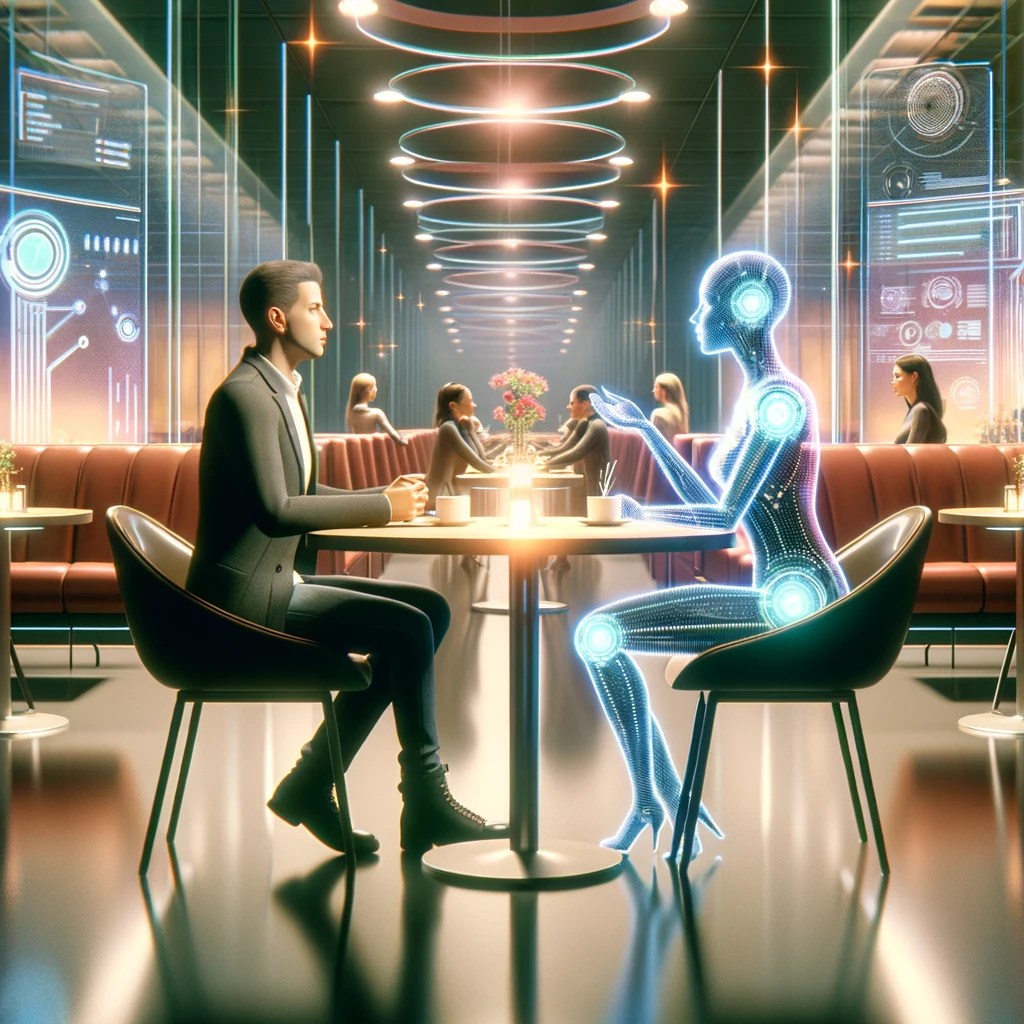
In the ever-evolving landscape of digital transformation, artificial intelligence (AI) has emerged as a powerful catalyst for change across various sectors. One area poised for a significant transformation is the world of dating. The traditional model of meeting someone, navigating the initial awkwardness, and hoping for compatibility may soon be a thing of the past. Imagine a future where your initial interaction is not with the person directly but with an AI representation of their personality. This innovative approach could redefine the dating experience, ensuring compatibility at a foundational level before any real-life interaction takes place.
The Concept: AI-Defined Personalities
The idea centers around creating AI-defined personalities that represent individuals looking to find a suitable date. These AI personas would be crafted based on a comprehensive analysis of the individuals’ interests, beliefs, preferences, and behavioral patterns. Here’s how this could work:
- Data Collection: Users provide extensive information about themselves, including their hobbies, values, career goals, and more. This data can be gathered through detailed questionnaires, social media activity analysis, and even psychometric tests.
- AI Persona Creation: Using advanced machine learning algorithms, an AI persona is created for each user. This persona is an accurate representation of the individual’s personality, capable of mimicking their communication style and decision-making processes.
- AI-AI Interaction: Before any human-to-human interaction, the AI personas engage with each other. These interactions can take place over several simulated “dates,” where the AI entities discuss topics of interest, share experiences, and even debate on differing views.
- Compatibility Analysis: The interactions are analyzed to assess compatibility. This includes evaluating conversational flow, mutual interests, value alignment, and emotional resonance. The AI can provide a detailed report on the likelihood of a successful relationship.
Deep Dive: Matching AI-Defined Personas and Ensuring Better-than-Average Compatibility
To understand how AI-defined personas can effectively match potential candidates and ensure higher compatibility, we need to explore the processes, technologies, and methodologies involved. Here’s a detailed examination of the steps and elements required to achieve this goal.
Step 1: Comprehensive Data Collection
The foundation of accurate AI-defined personas lies in comprehensive data collection. To build detailed and precise AI representations, the following types of data are required:
A. User-Provided Information
- Personality Traits: Collected through psychometric assessments such as the Big Five personality test.
- Values and Beliefs: Surveys and questionnaires that explore core values, religious beliefs, political views, and ethical stances.
- Interests and Hobbies: Lists and descriptions of hobbies, pastimes, favorite activities, and cultural preferences (e.g., favorite books, movies, music).
- Relationship Goals: Information about what users are looking for in a relationship (e.g., long-term commitment, casual dating, marriage).
B. Behavioral Data
- Social Media Analysis: Insights derived from users’ social media profiles, including likes, posts, and interactions.
- Communication Style: Analysis of how users communicate through text messages, emails, and social media interactions.
- Past Relationship Data: Patterns and outcomes from previous relationships (if users consent to share this information).
Step 2: AI Persona Development
Once the data is collected, it is processed using advanced AI and machine learning techniques to develop AI-defined personas. The process includes:
A. Machine Learning Algorithms
- Natural Language Processing (NLP): To understand and mimic the user’s communication style, preferences, and emotional tone.
- Clustering Algorithms: To group similar personality traits, interests, and values, helping in identifying potential matches.
- Recommendation Systems: Algorithms similar to those used by platforms like Netflix or Amazon to suggest compatible candidates based on user profiles.
B. Personality Modeling
- Personality Frameworks: Utilizing established frameworks like the Big Five, Myers-Briggs Type Indicator (MBTI), and others to model complex personality traits.
- Behavioral Patterns: Incorporating users’ typical behaviors and reactions to different scenarios to ensure the AI persona accurately represents the user.
Step 3: AI-AI Interaction Simulation
With AI personas ready, the next step is to simulate interactions between potential matches. This involves:
A. Virtual Date Scenarios
- Conversation Simulation: AI personas engage in simulated conversations on various topics, from daily activities to deeper philosophical discussions.
- Emotional Responses: The AI mimics human-like emotional responses to gauge compatibility in terms of empathy, humor, and emotional intelligence.
- Scenario-Based Interactions: AI personas navigate different scenarios, such as handling disagreements, planning activities, and discussing future plans, to test real-world compatibility.
B. Interaction Analysis
- Sentiment Analysis: Evaluating the emotional tone and sentiment of conversations to assess positivity, engagement, and potential conflict areas.
- Compatibility Scoring: Algorithms analyze the interaction data to generate a compatibility score, highlighting strengths and potential challenges in the match.
- Behavioral Alignment: Assessing how well the AI personas’ behaviors align, including decision-making processes, conflict resolution styles, and communication effectiveness.
Step 4: Feedback Loop and Continuous Improvement
To ensure a better-than-average compatibility, the system incorporates continuous learning and feedback mechanisms:
A. User Feedback
- Post-Date Surveys: Collecting feedback from users after real-life dates to understand their experiences and refine the AI personas.
- Iterative Updates: Regular updates to AI personas based on user feedback and new data, ensuring they remain accurate and representative.
B. Algorithm Refinement
- Machine Learning Updates: Continuous training of machine learning models with new data to improve accuracy and prediction capabilities.
- Bias Mitigation: Implementing strategies to identify and reduce algorithmic biases, ensuring fair and diverse matching.
Step 5: Ensuring Better-than-Average Compatibility
To achieve better-than-average compatibility, the system leverages several advanced techniques:
A. Multi-Faceted Compatibility Assessment
- Multi-Dimensional Matching: Evaluating compatibility across multiple dimensions, including personality, values, interests, and emotional intelligence.
- Weighted Scoring: Applying different weights to various compatibility factors based on user priorities (e.g., higher weight on shared values for some users).
B. Real-Time Adaptation
- Dynamic Adjustments: Adapting AI personas and matching algorithms in real-time based on ongoing interactions and feedback.
- Personalized Recommendations: Providing personalized dating advice and recommendations to users based on their AI persona’s insights.
Practical Example of Execution
Imagine a user named Sarah, who is an adventurous, environmentally conscious individual passionate about sustainable living and outdoor activities. Sarah joins the AI-driven dating platform and provides detailed information about her interests, values, and relationship goals.
1. AI Persona Creation
Sarah’s data is processed to create an AI persona that reflects her adventurous spirit, eco-friendly values, and communication style.
2. Interaction Simulation
Sarah’s AI persona engages in simulated dates with AI personas of potential matches. For example, it has a conversation with Tom’s AI persona, discussing topics like hiking, renewable energy, and sustainable living.
3. Compatibility Analysis
The AI analyzes the interaction, noting that both Sarah and Tom share a strong passion for the environment and enjoy outdoor activities. Their conversation flows smoothly, and they display mutual respect and enthusiasm.
4. Real-Life Interaction
Based on the positive compatibility report, Sarah and Tom decide to meet in person. Armed with insights from the AI interactions, they feel more confident and prepared, leading to a relaxed and enjoyable first date.
Execution: A Step-by-Step Approach
1. Initial User Onboarding
Users would start by creating their profiles on a dating platform integrated with AI technology. This involves answering in-depth questionnaires designed to uncover their personality traits, values, and preferences. Additionally, users might link their social media accounts for a more comprehensive data set.
2. AI Persona Development
The collected data is processed through machine learning algorithms to develop an AI persona. This persona not only mirrors the user’s interests and beliefs but also learns to communicate and respond as the user would in various scenarios.
3. Simulated Interactions
The platform arranges several simulated interactions between the AI personas of potential matches. These interactions could cover a range of topics, from personal interests and career aspirations to political views and lifestyle choices. The AI personas engage in meaningful conversations, effectively “testing the waters” for the real individuals they represent.
4. Compatibility Reporting
After a series of interactions, the AI system generates a detailed compatibility report. This report includes insights into conversational chemistry, shared interests, potential areas of conflict, and overall compatibility scores. Based on this analysis, users receive recommendations on whether to proceed with a real-life interaction.
5. Human-to-Human Interaction
If the AI analysis indicates a high level of compatibility, users are encouraged to arrange a real-life date. Armed with insights from the AI interactions, they can approach the first meeting with a sense of confidence and familiarity, significantly reducing the awkwardness traditionally associated with first dates.
Potential Success and Benefits
1. Enhanced Compatibility
One of the most significant benefits of this approach is the likelihood of enhanced compatibility. By pre-screening matches through AI interactions, users can be confident that their potential partners share similar values, interests, and goals. This foundational alignment increases the chances of a successful and fulfilling relationship.
2. Reduced Awkwardness
The initial stages of dating often involve overcoming awkwardness and uncertainty. AI-defined personas can help mitigate these challenges by allowing users to gain a better understanding of each other before meeting in person. This familiarity can lead to more relaxed and enjoyable first dates.
3. Efficient Use of Time
In a world where time is a precious commodity, this AI-driven approach streamlines the dating process. Users can avoid wasting time on incompatible matches and focus their efforts on relationships with a higher probability of success.
4. Data-Driven Insights
The compatibility reports generated by AI provide valuable insights that can inform users’ dating decisions. These data-driven recommendations can guide users towards more meaningful connections and help them navigate potential pitfalls in their relationships.
Challenges and Considerations
While the future of AI in dating holds immense promise, it is essential to consider potential challenges:
- Privacy Concerns: Users may have concerns about sharing personal data and trusting AI systems with sensitive information. Ensuring robust data security and transparent practices will be crucial.
- Emotional Nuances: While AI can analyze compatibility based on data, capturing the full spectrum of human emotions and subtleties remains a challenge. The initial interactions facilitated by AI should be seen as a starting point rather than a definitive assessment.
- Algorithmic Bias: AI systems are only as good as the data they are trained on. Ensuring diversity and minimizing bias in the algorithms will be essential to provide fair and accurate matchmaking.
Conclusion
The integration of AI into the dating world represents a transformative shift in how people find and connect with potential partners. Enhanced compatibility, reduced awkwardness, and efficient use of time are just a few of the potential benefits. By leveraging comprehensive data collection, advanced AI modeling, and simulated interactions, this approach ensures a better-than-average compatibility, making the dating process more efficient, enjoyable, and successful. As AI technology continues to advance, the possibilities for enhancing human relationships and connections are boundless, heralding a new era in the world of dating. As technology continues to evolve, the future of dating will undoubtedly be shaped by innovative AI solutions, paving the way for more meaningful and fulfilling relationships.
 De Lio Tech Trends