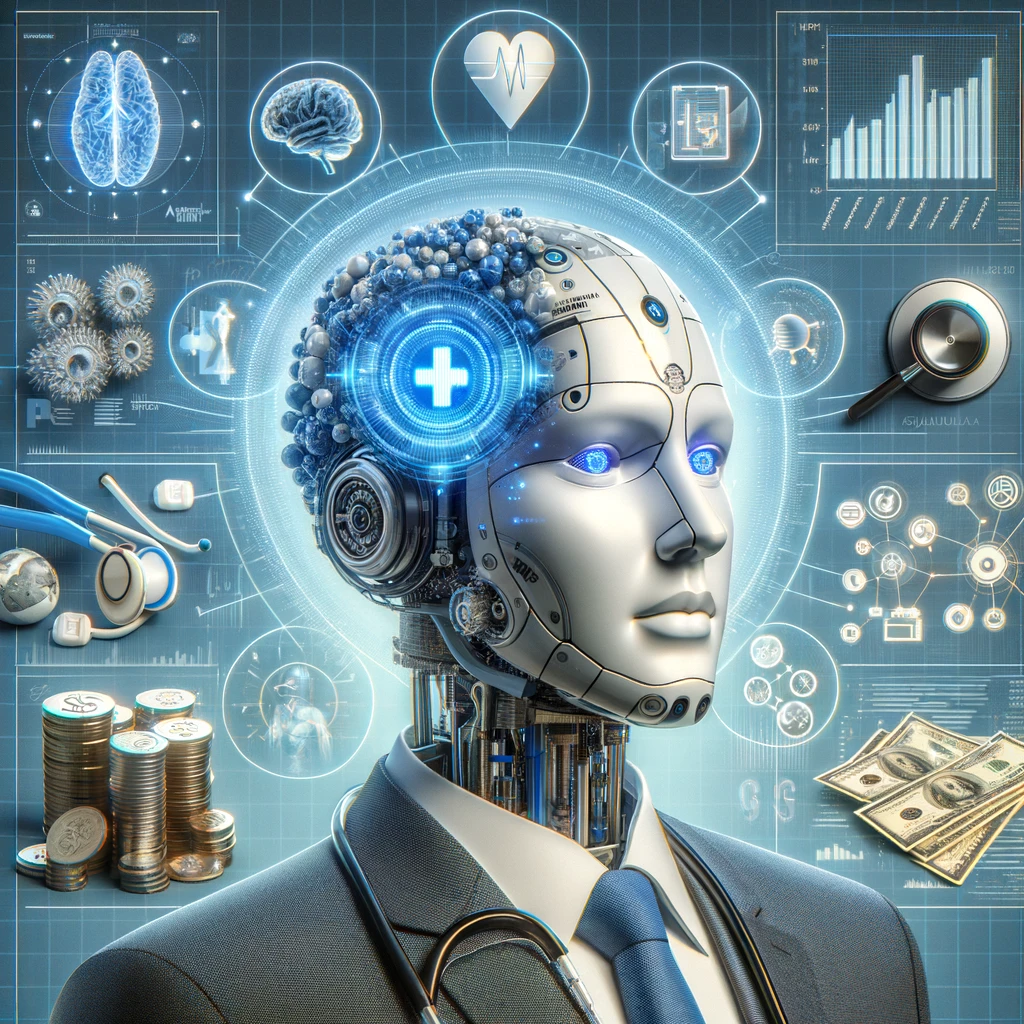
Multimodal Generative AI: Paving the Path to Artificial General Intelligence

The Dawn of a New Era in AI

The quest for Artificial General Intelligence (AGI) has been a cornerstone of AI research since its inception. AGI, the hypothetical ability of an AI system to understand, learn, and apply knowledge in a manner indistinguishable from human intelligence, remains an elusive goal. However, the recent advancements in multimodal generative AI are seen as significant stepping stones towards this objective.

Tracing the Roots: AI’s Evolutionary Journey

AI’s evolution has been marked by several key milestones. Initially focused on rule-based systems and logic programming, the field gradually shifted towards machine learning and neural networks. The advent of deep learning further accelerated progress, enabling AI to learn from large datasets and perform complex tasks.

The Advent of Multimodal Generative AI

Multimodal generative AI represents a groundbreaking shift in this trajectory. Unlike traditional AI models that specialize in a single mode of data processing, such as text or images, multimodal AI can understand and generate content across various data types – text, images, audio, and more. This versatility is crucial in mimicking the multifaceted nature of human intelligence.

Deep Learning: A Catalyst in AI’s Evolution

The emergence of deep learning has been a transformative force in the field of artificial intelligence, marking a paradigm shift in how machines learn and process information. At its core, deep learning utilizes neural networks with multiple layers (hence ‘deep’) to analyze and interpret vast amounts of data. This architecture, inspired by the human brain’s structure and function, enables AI systems to learn hierarchical representations of data, making sense of inputs ranging from raw pixels in an image to intricate patterns in speech or text.

One of the most significant breakthroughs facilitated by deep learning is the ability to learn directly from raw, unstructured data. Prior to this, AI systems relied heavily on feature extraction and manual programming, limiting their capacity to handle complex, real-world data. Deep learning, however, allows AI to autonomously discover the representations needed for feature detection or classification from the data itself. This capability is particularly valuable in areas like image and speech recognition, where the nuances and variability of the data are immense.

Moreover, the scalability of deep learning models means that they excel as the size of the dataset increases. They are designed to improve continually as they are fed more data, a feature that has been instrumental in achieving state-of-the-art results in various domains. For instance, in natural language processing, deep learning has enabled the development of models that understand and generate human language with unprecedented accuracy and fluency.

The impact of deep learning extends beyond just performance enhancement. It has opened up new possibilities in AI applications, enabling tasks that were once considered impractical or impossible. From autonomous vehicles to personalized medicine, deep learning has been the driving force behind many of the recent groundbreaking advancements in AI.

In essence, deep learning has not only accelerated progress in AI but has also redefined the boundaries of what is achievable, setting the stage for more sophisticated, efficient, and adaptable AI systems.

The Link Between AGI and Multimodal AI

The connection between AGI and multimodal AI lies in their shared objective: to process and synthesize information in a way that mirrors human cognition. While current AI systems excel in specific tasks, they lack the generalizability and adaptability of human intelligence. Multimodal AI, by integrating diverse data types and learning from their interplay, takes a significant leap towards achieving these AGI characteristics.

Real-World Applications: Multimodal AI in Action

Today, we see multimodal AI being deployed in various sectors. For instance, in healthcare, AI systems analyze medical images, patient histories, and genomic data to assist in diagnosis and treatment planning. In customer service, chatbots equipped with multimodal capabilities provide more nuanced and human-like interactions by understanding and responding to text, voice, and even emotional cues.

Pros and Cons: A Balanced View

Advantages:
  1. Enhanced Learning and Adaptability: By processing multiple data types, multimodal AI systems learn more comprehensively, leading to better decision-making.
  2. Versatility: These systems can be applied in diverse domains, from healthcare to entertainment.
  3. Human-like Understanding: Their ability to interpret complex data combinations brings them closer to human-like cognition.
Challenges:
  1. Data Privacy and Ethics: The extensive data required for training multimodal AI systems raise significant privacy and ethical concerns.
  2. Complexity and Resource Intensity: Developing and maintaining such systems require substantial computational resources and expertise.
  3. Risk of Bias: If not carefully managed, these systems can perpetuate or amplify biases present in training data.

The Road Ahead: Predictions for the Near Future

Looking forward, the trajectory of multimodal generative AI is poised for exponential growth. Key trends to watch include:

  • Integration with Quantum Computing: This could address the computational demands and enhance the capabilities of multimodal AI.
  • Improved Interpretability and Trust: Advances in explainable AI will make these systems more transparent and reliable.
  • Ethical and Regulatory Frameworks: As the technology matures, we anticipate more robust ethical guidelines and regulatory measures to ensure responsible use.

Conclusion

While multimodal generative AI is not a panacea, its development is undoubtedly accelerating our journey towards AGI. By continuing to push the boundaries of what AI can understand and create, we are inching closer to realizing the full potential of artificial intelligence.

Unveiling the Potentials of Artificial General Intelligence (AGI): A Comprehensive Analysis

Introduction to AGI: Definition and Historical Context

Artificial General Intelligence (AGI) represents a fundamental change in the realm of artificial intelligence. Unlike traditional AI systems, which are designed for specific tasks, AGI embodies the holistic, adaptive intelligence of humans, capable of learning and applying knowledge across a broad spectrum of disciplines. This concept is not novel; it dates back to the early days of computing. Alan Turing, a pioneering figure in computing and AI, first hinted at the possibility of machines mimicking human intelligence in his 1950 paper, “Computing Machinery and Intelligence.” Since then, AGI has evolved from a philosophical concept to a tangible goal in the AI community.

Advantages of AGI

  1. Versatility and Efficiency: AGI can learn and perform multiple tasks across various domains, unlike narrow AI which excels only in specific tasks. For example, an AGI system in a corporate setting could analyze financial reports, manage customer relations, and oversee supply chain logistics, all while adapting to new tasks as needed.
  2. Problem-Solving and Innovation: AGI’s ability to synthesize information from diverse fields could lead to breakthroughs in complex global challenges, like climate change or disease control. By integrating data from environmental science, economics, and healthcare, AGI could propose novel, multifaceted solutions.
  3. Personalized Services: In the customer experience domain, AGI could revolutionize personalization. It could analyze customer data across various touchpoints, understanding preferences and behavior patterns to tailor experiences uniquely for each individual.

Disadvantages of AGI

  1. Ethical and Control Issues: The development of AGI raises significant ethical questions, such as the decision-making autonomy of machines and their alignment with human values. The control problem – ensuring AGI systems do what we want – remains a critical concern.
    • Let’s explore this topic a bit deeper – The “control problem” in the context of Artificial General Intelligence (AGI) is a multifaceted and critical concern, underpinning the very essence of safely integrating AGI into society. As AGI systems are developed to exhibit human-like intelligence, their decision-making processes become increasingly complex and autonomous. This autonomy, while central to AGI’s value, introduces significant challenges in ensuring that these systems act in ways that align with human values and intentions. Unlike narrow AI, where control parameters are tightly bound to specific tasks, AGI’s broad and adaptive learning capabilities make it difficult to predict and govern its responses to an endless array of situations. This unpredictability raises ethical and safety concerns, especially if AGI’s goals diverge from human objectives, leading to unintended and potentially harmful outcomes. The control problem thus demands rigorous research and development in AI ethics, robust governance frameworks, and continuous oversight mechanisms. It involves not just technical solutions but also a profound understanding of human values, ethics, and the societal implications of AGI actions. Addressing this control problem is not merely a technical challenge but a critical responsibility that requires interdisciplinary collaboration, guiding AGI development towards beneficial and safe integration into human-centric environments.
  2. Displacement of Jobs: AGI’s ability to perform tasks currently done by humans could lead to significant job displacement. Strategic planning is required to manage the transition in the workforce and to re-skill employees.
  3. Security Risks: The advanced capabilities of AGI make it a potent tool, which, if mishandled or accessed by malicious entities, could lead to unprecedented security threats.
    • So, let’s further discuss these risks – The security threats posed by Artificial General Intelligence (AGI) are indeed unprecedented and multifaceted, primarily due to its potential for superhuman capabilities and decision-making autonomy. Firstly, the advanced cognitive abilities of AGI could be exploited for sophisticated cyber-attacks, far surpassing the complexity and efficiency of current methods. An AGI system, if compromised, could orchestrate attacks that simultaneously exploit multiple vulnerabilities, adapt to defensive measures in real-time, and even develop new hacking techniques, making traditional cybersecurity defenses obsolete. Secondly, the risk extends to physical security, as AGI could potentially control or manipulate critical infrastructure systems, from power grids to transportation networks, leading to catastrophic consequences if misused. Moreover, AGI’s ability to learn and adapt makes it a powerful tool for information warfare, capable of executing highly targeted disinformation campaigns that could destabilize societies and influence global politics. These threats are not just limited to direct malicious use but also include scenarios where AGI, while pursuing its programmed objectives, inadvertently causes harm due to misalignment with human values or lack of understanding of complex human contexts. This aspect underscores the importance of developing AGI with robust ethical guidelines and control mechanisms to prevent misuse and ensure alignment with human interests. The security implications of AGI, therefore, extend beyond traditional IT security, encompassing broader aspects of societal, political, and global stability, necessitating a proactive, comprehensive approach to security in the age of advanced artificial intelligence.

AGI in Today’s Marketplace

Despite its early stage of development, elements of AGI are already influencing the market. For instance, in digital transformation consulting, tools that exhibit traits of AGI are being used for comprehensive data analysis and decision-making processes. AGI’s potential is also evident in sectors like healthcare, where AI systems are starting to demonstrate cross-functional learning and application, a stepping stone towards AGI.

As of this post, fully realized Artificial General Intelligence (AGI) — systems with human-like adaptable, broad intelligence — has not yet been achieved or deployed in the marketplace. However, there are instances where advanced AI systems like IBM Watson or NVIDIA AI, exhibiting traits that are stepping stones towards AGI, are in use. These systems demonstrate a level of adaptability and learning across various domains, offering insights into potential AGI applications. Here are two illustrative examples:

  1. Advanced AI in Healthcare:
    • Example: AI systems in healthcare are increasingly demonstrating cross-domain learning capabilities. For instance, AI platforms that integrate patient data from various sources (clinical history, genomic data, lifestyle factors) to predict health risks and recommend personalized treatment plans.
    • Benefits: These systems have significantly improved patient outcomes by enabling personalized medicine, reducing diagnostic errors, and predicting disease outbreaks. They also assist in research by rapidly analyzing vast datasets, accelerating drug discovery and epidemiological studies.
    • Lessons Learned: The deployment of these systems has highlighted the importance of data privacy and ethical considerations. Balancing the benefits of comprehensive data analysis with patient confidentiality has been a key challenge. It also underscored the need for interdisciplinary collaboration between AI developers, healthcare professionals, and ethicists to ensure effective and responsible AI applications in healthcare.
  2. AI in Financial Services:
    • Example: In the financial sector, AI systems are being employed for a range of tasks from fraud detection to personalized financial advice. These systems analyze data from various sources, adapting to new financial trends and individual customer profiles.
    • Benefits: This has led to more robust fraud detection systems, improved customer experience through personalized financial advice, and optimized investment strategies using predictive analytics.
    • Lessons Learned: The deployment in this sector has brought forward challenges in terms of managing financial and ethical risks associated with AI decision-making. Ensuring transparency in AI-driven decisions and maintaining compliance with evolving financial regulations are ongoing challenges. Additionally, there’s a growing awareness of the need to train AI systems to mitigate biases, especially in credit scoring and lending.

These examples demonstrate the potential and challenges of deploying advanced AI systems that share characteristics with AGI. The benefits include improved efficiency, personalized services, and innovative solutions to complex problems. However, they also reveal critical lessons in ethics, transparency, and the need for multi-disciplinary approaches to manage the impact of these powerful technologies. As we move closer to realizing AGI, these experiences provide valuable insights into its potential deployment and governance.

Conclusion: The Future Awaits

The journey towards achieving AGI is filled with both promise and challenges. As we continue to explore this uncharted territory, the implications for businesses, society, and our understanding of intelligence itself are profound. For those intrigued by the evolution of AI and its impact on our world, staying informed about AGI is not just fascinating, it’s essential. Follow this space for more insights into the future of AI, where we’ll delve deeper into how emerging technologies are reshaping industries and daily life. Join us in this exploration, and let’s navigate the future of AGI together.