
Introduction
In today’s rapidly evolving digital landscape, customer engagement has transcended traditional boundaries. The rise of Multimodal Artificial Intelligence (AI) marks a significant leap, offering an unparalleled blend of interaction capabilities that extend far beyond what was previously possible. This long-form blog post delves deep into how multimodal AI is reshaping customer experience, illustrating this transformation with real-world examples and exploring the technology’s trajectory.
The Evolution of Customer Engagement and AI
Historically, customer engagement was limited by the technology of the time. Early in the digital era, interactions were predominantly text-based, progressing through telephone and email communications to more sophisticated internet chat services. However, the advent of AI brought a paradigm shift. Initial AI efforts focused on enhancing single-mode interactions – like text (chatbots) or voice (voice assistants). Yet, these single-mode systems, despite their advancements, often lacked the depth and contextual understanding required for complex interactions.
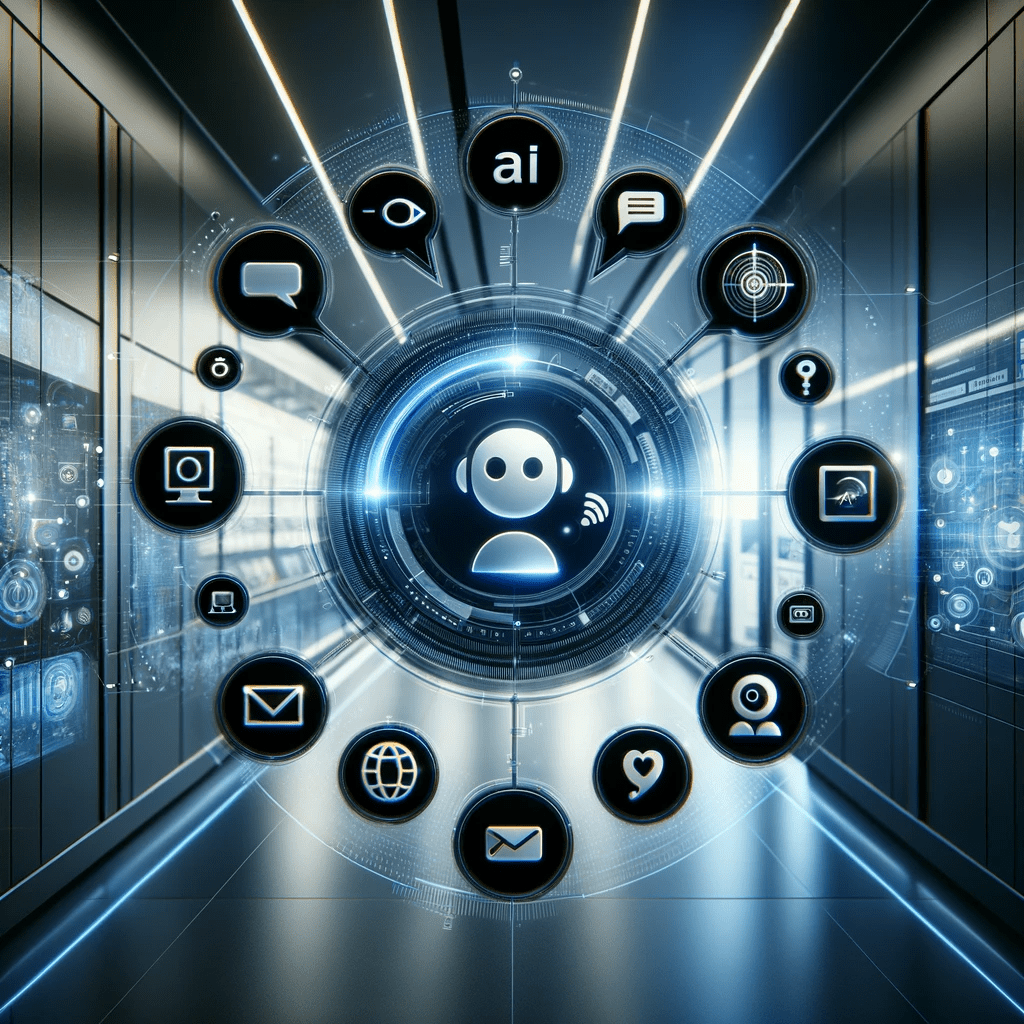
Multimodal AI emerged as a solution, combining multiple modes of communication – text, voice, visual cues, and even sentiment analysis – to create a more holistic and human-like interaction. It not only understands inputs from various sources but also responds in the most appropriate format, be it a spoken word, a text message, or even a visual display.
Multimodal AI refers to artificial intelligence systems that can understand, interpret, and interact with multiple forms of human communication simultaneously, such as text, speech, images, and videos. Unlike traditional AI models that typically specialize in one mode of interaction (like text-only chatbots), multimodal AI integrates various types of data inputs and outputs. This integration allows for a more comprehensive and contextually aware understanding, akin to human-like communication.
Expectations for Multimodal AI:
- Enhanced User Experience: By combining different modes of interaction, multimodal AI can provide a more natural and intuitive user experience, making technology more accessible and user-friendly.
- Improved Accuracy and Efficiency: Multimodal AI can analyze data from multiple sources, leading to more accurate interpretations and responses. This is particularly valuable in complex scenarios where context is key.
- Greater Personalization: It can tailor interactions based on the user’s preferences and behavior across different modes, offering a higher degree of personalization in services and responses.
- Broader Applications: The versatility of multimodal AI allows its application in diverse fields such as healthcare, customer service, education, and entertainment, providing innovative solutions and enhancing overall efficiency.
The overarching expectation is that multimodal AI will lead to more sophisticated, efficient, and human-like interactions between humans and machines, thereby transforming various aspects of business and everyday life.
Real-World Examples of Multimodal AI in Action
Leading companies across industries are adopting multimodal AI to enhance customer engagement:
- Retail: In retail, companies like Amazon and Alibaba are utilizing multimodal AI for personalized shopping experiences. Their systems analyze customer voice queries, text searches, and even past purchase history to recommend products in a highly personalized manner.
- Healthcare: In healthcare, multimodal AI is revolutionizing patient interactions. For instance, AI-powered kiosks in hospitals use voice, text, and touch interactions to efficiently guide patients through their hospital visits, reducing wait times and improving patient experience.
- Banking: Banks like JP Morgan Chase are implementing multimodal AI for customer service, combining voice recognition and natural language processing to understand and solve customer queries more efficiently.
Pros and Cons of Multimodal AI in Customer Engagement
Pros:
- Enhanced Personalization: Multimodal AI offers a level of personalization that is unmatched, leading to improved customer satisfaction and loyalty.
- Efficiency and Accessibility: It streamlines interactions, making them more efficient and accessible to a diverse customer base, including those with disabilities.
- Rich Data Insights: The integration of multiple modes provides rich data, enabling businesses to understand their customers better and make informed decisions.
Cons:
- Complexity and Cost: Implementing multimodal AI can be complex and costly, requiring substantial investment in technology and expertise.
- Privacy Concerns: The extensive data collection involved raises significant privacy concerns, necessitating robust data protection measures.
- Risk of Overdependence: There’s a risk of becoming overly dependent on technology, potentially leading to a loss of human touch in customer service.
The Future of Multimodal AI in Customer Engagement
Looking ahead, the future of multimodal AI in customer engagement is poised for exponential growth and innovation. We anticipate advancements in natural language understanding and emotional AI, enabling even more nuanced and empathetic interactions. The integration of augmented reality (AR) and virtual reality (VR) will further enhance the customer experience, offering immersive and interactive engagement.
Moreover, as 5G technology becomes widespread, we can expect faster and more seamless multimodal interactions. The convergence of AI with other emerging technologies like blockchain for secure data management and IoT for enhanced connectivity will open new frontiers in customer engagement.
Conclusion
Multimodal AI represents a significant leap forward in customer engagement, offering personalized, efficient, and dynamic interactions. While challenges such as complexity, cost, and privacy concerns persist, the benefits are substantial, making it a crucial element in the digital transformation strategies of businesses. As we move forward, multimodal AI will continue to evolve, playing an increasingly central role in shaping the future of customer experience.
This exploration of multimodal AI underscores its transformative impact on customer engagement, blending historical context with current applications and a vision for the future. It serves as a comprehensive guide for those looking to understand and harness this revolutionary technology in the ever-evolving landscape of customer experience and business innovation.

 De Lio Tech Trends