
Introduction
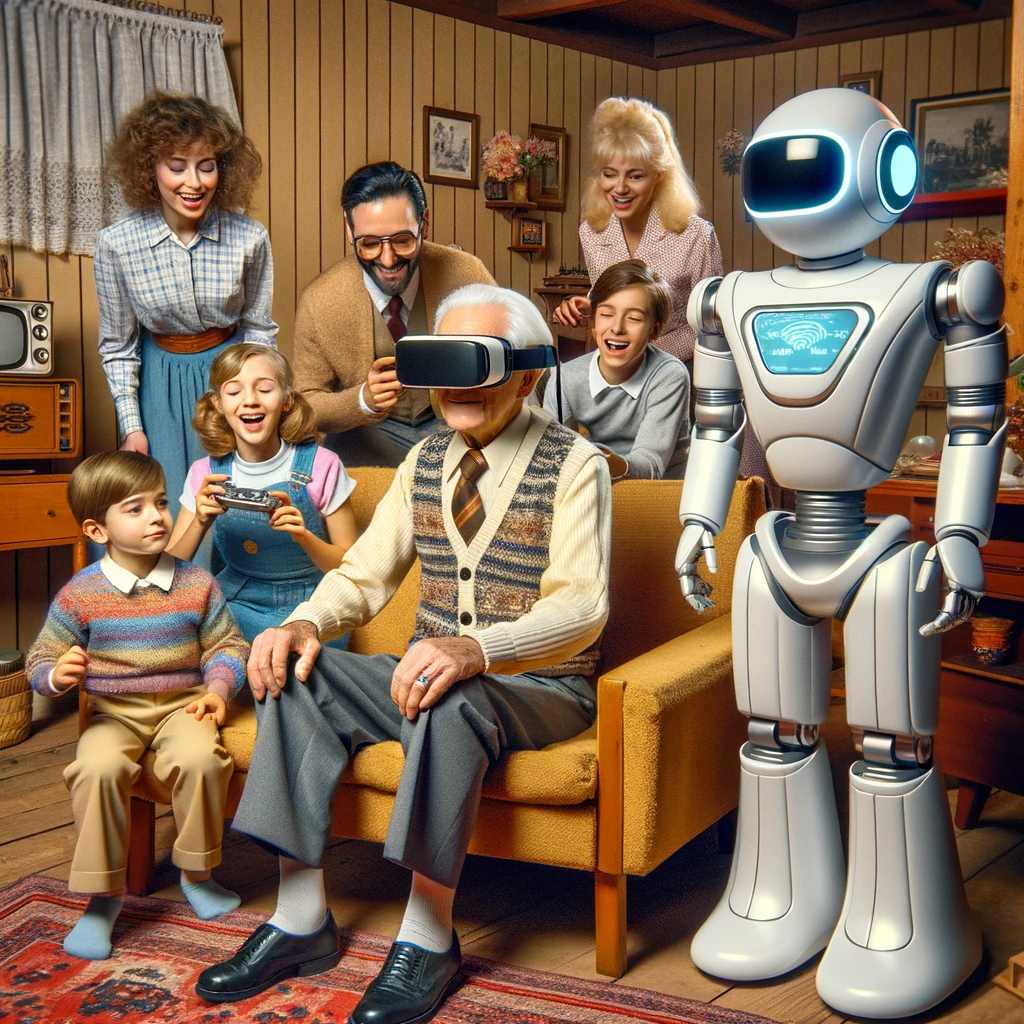
As we wrap-up this week’s continuing exploration of artificial intelligence’s role in enhancing senior lifestyles, our blog posts had delved into the confluence of AI and Virtual Reality (VR) in the realm of therapy and assistance for the elderly, particularly those facing cognitive decline. This intersection of technology not only paints a visionary future for senior care but also presents its unique set of challenges.
The Synergy of AI and VR in Senior Care
The integration of AI and VR in senior care is an evolving landscape that promises to revolutionize how we approach age-related cognitive decline and therapy. AI, with its ability to process and analyze vast amounts of data, can offer personalized care plans, while VR provides immersive experiences that can aid in cognitive therapy and emotional well-being. So, lets talk about AI for the moment and its advantages.
AI as a Personalized Care Assistant
As we discussed in previous posts, seniors experiencing cognitive decline, AI can function as a personalized assistant, adapting to their changing needs. AI systems can monitor health metrics, remind patients of medication schedules, and even detect early signs of deteriorating health conditions. This proactive approach ensures a tailored and responsive care regimen.
AI as a Personalized Care Assistant: A Deep Dive
Definition and Fundamentals
At its core, when we talk about AI as a Personalized Care Assistant, we are referring to the use of advanced artificial intelligence systems to provide tailored support and assistance to individuals, particularly in the context of healthcare and senior care. These AI systems are designed to adapt to the unique needs and preferences of each person, offering a level of customization that goes beyond traditional care models.
AI assistants in this realm are more than just passive tools; they are proactive agents capable of learning and evolving with their users. They harness the power of machine learning, natural language processing, and predictive analytics to understand and anticipate the needs of seniors. This includes monitoring health indicators, managing medication schedules, providing companionship, and even aiding in decision-making processes related to healthcare.
In-Depth Functionality and Impact
The sophistication of an AI Personalized Care Assistant lies in its ability to integrate various data points – from medical records and sensor data to user interactions and preferences. For example, AI can analyze speech patterns to detect signs of emotional distress or cognitive decline, allowing for early intervention. It can track physical activity through wearable devices to suggest personalized exercise routines or alert caregivers to potential health issues.
Moreover, AI assistants can interact with users in a conversational manner, making them more approachable and user-friendly, especially for seniors who might be less tech-savvy. These interactions can range from daily check-ins and health-related queries to providing companionship through meaningful conversations, helping to combat feelings of loneliness and isolation.
In the realm of medication management, AI assistants can not only remind seniors to take their medications but also monitor adherence and report any irregularities to healthcare providers. This level of oversight ensures that seniors are maintaining their health regimens effectively, reducing the risk of medication errors.
Another critical aspect of AI as a Personalized Care Assistant is its role in emergency situations. AI systems can be programmed to recognize signs of a medical emergency, such as a fall or a sudden health deterioration, and promptly alert emergency services and caregivers. This immediate response can be lifesaving, particularly for seniors living alone.
In summary, AI as a Personalized Care Assistant represents a transformative approach to senior care. By providing tailored, responsive, and interactive support, AI can significantly enhance the quality of life for seniors, ensuring they receive the care and attention they need while maintaining their independence and dignity. As technology continues to advance, the potential of AI in this field is boundless, promising a future where personalized care is not just a luxury but a standard for all.
VR for Cognitive and Emotional Therapy
VR technology opens a new frontier in cognitive and emotional therapy. Through immersive environments, seniors can engage in memory exercises, spatial recognition tasks, and scenarios that stimulate cognitive functions. VR also offers therapeutic experiences, such as revisiting familiar places or engaging in calming environments, providing emotional comfort and mental stimulation.
VR for Cognitive and Emotional Therapy: An In-Depth Exploration
Defining the Concept
Virtual Reality (VR) for Cognitive and Emotional Therapy represents a groundbreaking application of immersive technology in the field of mental health and cognitive rehabilitation. This approach involves using VR to create simulated environments that are tailored to therapeutic goals, providing a unique medium through which individuals, particularly seniors, can engage in exercises designed to boost cognitive function and emotional well-being.
Unlike traditional therapeutic methods, VR therapy offers a deeply immersive experience that can be controlled and manipulated to suit specific therapeutic needs. The immersive nature of VR allows users to engage in a controlled, interactive environment that can replicate real-life scenarios or create abstract, therapeutic landscapes. This level of immersion is particularly beneficial in cognitive and emotional therapy, as it facilitates a higher level of engagement and focus from the participant, enhancing the therapeutic process.
Detailed Functionality and Impact
In cognitive therapy, VR is used to design exercises that target memory, attention, problem-solving, and spatial awareness. For seniors, especially those facing cognitive decline due to conditions like Alzheimer’s or dementia, these exercises can be pivotal in slowing the progression of cognitive impairments. VR scenarios can range from simple memory games to complex simulations that require navigation, decision-making, and multitasking, all of which contribute to cognitive stimulation and rehabilitation.
The emotional therapy aspect of VR focuses on creating environments that promote relaxation, mindfulness, and emotional resilience. For example, a VR program can transport a senior to a serene beach, a quiet forest, or even a nostalgic scene from their past, providing a sense of calm and emotional comfort. This can be particularly effective in dealing with anxiety, depression, and stress, which are common among seniors.
Furthermore, VR therapy offers an excellent platform for exposure therapy, a technique used to help individuals confront and overcome fears and phobias in a safe, controlled environment. For seniors, this can mean gently facing scenarios that cause anxiety or discomfort, allowing them to build confidence and coping mechanisms under guided supervision.
The interactive nature of VR also allows for real-time adaptation of therapy sessions based on the user’s responses. For instance, if a senior shows signs of distress or discomfort, the VR environment can be immediately adjusted to reduce difficulty or change the scenario, ensuring a personalized therapy experience that aligns with the individual’s emotional and cognitive thresholds.
In conclusion, VR for Cognitive and Emotional Therapy offers a modern, innovative approach to senior care. By providing immersive, customizable environments, VR enables a level of engagement and personalization in therapy that traditional methods cannot match. As VR technology continues to evolve, its potential in enhancing cognitive abilities and emotional health, particularly among seniors, becomes increasingly significant, marking a new era in therapeutic care.
The Future Vision: AI and VR in Harmony
Envisioning the future of senior care, we see a harmonious integration of AI and VR technologies. This synergy will offer an enriched, interactive experience for seniors, helping them maintain cognitive functions and emotional well-being. Imagine a world where an AI assistant not only schedules and reminds seniors about their daily activities but also customizes VR experiences to enhance their quality of life.
Personalized VR Experiences
In the future, VR experiences will be tailored to individual preferences and therapeutic needs. Seniors could relive cherished memories, engage in virtual social interactions, or participate in mentally stimulating games, all under the guidance of AI systems that adjust these experiences based on real-time feedback and health data.
Continuous Learning and Adaptation
AI systems will continually learn and adapt to the evolving needs of each individual. By analyzing behavioral patterns and health data, AI can adjust VR content and therapy programs to maximize their effectiveness, providing a dynamic and responsive care environment.
Challenges Ahead
While the integration of AI and VR in senior care is promising, it’s not without challenges.
Ethical Considerations
There are significant ethical considerations, particularly regarding autonomy and privacy. As AI systems gather and analyze personal data, ensuring the security and privacy of this information is paramount.
Technological Accessibility
Accessibility is another challenge. Ensuring these technologies are user-friendly and accessible to seniors, regardless of their technological proficiency, is crucial for widespread adoption.
Cost and Infrastructure
The cost of implementing AI and VR technologies in senior care facilities is a significant barrier. Moreover, the infrastructure needed to support these technologies must be robust and reliable.
Conclusion: A Call for Continued Innovation
The integration of AI and VR in senior care represents a bold step forward in addressing the challenges of aging, particularly cognitive decline. As we continue to innovate, we must remain mindful of the ethical, accessibility, and infrastructure challenges that lie ahead.
The future of AI and VR in senior lifestyles is not just about technology; it’s about enhancing the quality of life for our seniors, providing them with care that is both compassionate and cutting-edge. As we move forward, let’s embrace these challenges as opportunities for growth and innovation.
Stay tuned for future blog posts where we will delve deeper into the technological advances that promote mental and physical health in senior care. Follow us for more insights into how AI and VR are shaping the future of healthcare and enhancing the lives of our elderly population.
 De Lio Tech Trends