Deterministic Inference in AI: A Customer Experience (CX) Perspective

Introduction: Why Determinism Matters to Customer Experience

Customer Experience (CX) leaders increasingly rely on AI to shape how customers are served, advised, and supported. From virtual agents and recommendation engines to decision-support tools for frontline employees, AI is now embedded directly into the moments that define customer trust.

In this context, deterministic inference is not a technical curiosity, it is a CX enabler. It determines whether customers receive consistent answers, whether agents trust AI guidance, and whether organizations can scale personalized experiences without introducing confusion, risk, or inequity.

This article reframes deterministic inference through a CX lens. It begins with an intuitive explanation, then explores how determinism influences customer trust, operational consistency, and experience quality in AI-driven environments. By the end, you should be able to articulate why deterministic inference is central to modern CX strategy and how it shapes the future of AI-powered customer engagement.


Part 1: Deterministic Thinking in Everyday Customer Experiences

At a basic level, customers expect consistency.

If a customer:

  • Checks an order status online
  • Calls the contact center later
  • Chats with a virtual agent the next day

They expect the same answer each time.

This expectation maps directly to determinism.

A Simple CX Analogy

Consider a loyalty program:

  • Input: Customer ID + purchase history
  • Output: Loyalty tier and benefits

If the system classifies a customer as Gold on Monday and Silver on Tuesday—without any change in behavior—the experience immediately degrades. Trust erodes.

Customers may not know the word “deterministic,” but they feel its absence instantly.


Part 2: What Inference Means in CX-Oriented AI Systems

In CX, inference is the moment AI translates customer data into action.

Examples include:

  • Deciding which response a chatbot gives
  • Recommending next-best actions to an agent
  • Determining eligibility for refunds or credits
  • Personalizing offers or messaging

Inference is where customer data becomes customer experience.


Part 3: Deterministic Inference Defined for CX

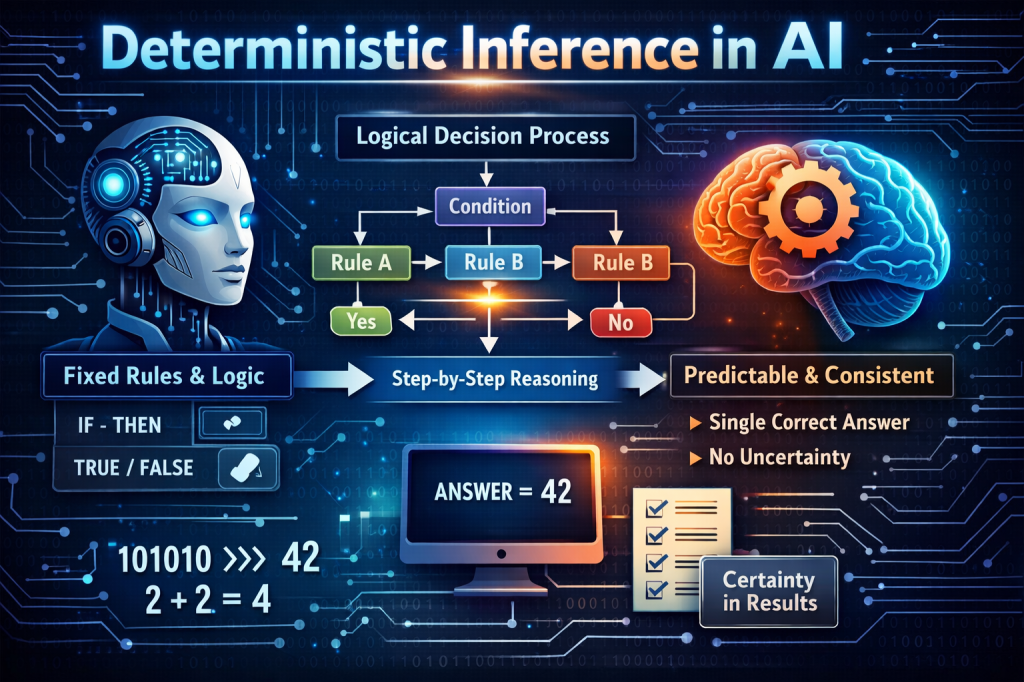
From a CX perspective, deterministic inference means:

Given the same customer context, business rules, and AI model state, the system produces the same customer-facing outcome every time.

This does not mean experiences are static. It means they are predictably adaptive.

Why This Is Non-Trivial in Modern CX AI

Many CX AI systems introduce variability by design:

  • Generative chat responses – Replies produced by an artificial intelligence (AI) system that uses machine learning to create original, human-like text in real-time, rather than relying on predefined scripts or rules. These responses are generated based on patterns the AI has learned from being trained on vast amounts of existing data, such as books, web pages, and conversation examples.
  • Probabilistic intent classification – a machine learning method used in natural language processing (NLP) to identify the purpose behind a user’s input (such as a chat message or voice command) by assigning a probability distribution across a predefined set of potential goals, rather than simply selecting a single, most likely intent.
  • Dynamic personalization models – Refer to systems that automatically tailor digital content and user experiences in real time based on an individual’s unique preferences, past behaviors, and current context. This approach contrasts with static personalization, which relies on predefined rules and broad customer segments.
  • Agentic workflows – An AI-driven process where autonomous “agents” independently perform multi-step tasks, make decisions, and adapt to changing conditions to achieve a goal, requiring minimal human oversight. Unlike traditional automation that follows strict rules, agentic workflows use AI’s reasoning, planning, and tool-use abilities to handle complex, dynamic situations, making them more flexible and efficient for tasks like data analysis, customer support, or IT management.

Without guardrails, two customers with identical profiles may receive different experiences—or the same customer may receive different answers across channels.


Part 4: Deterministic vs. Probabilistic CX Experiences

Probabilistic CX (Common in Generative AI)

Probabilistic inference can produce varied but plausible responses.

Example:

Customer asks: “What fees apply to my account?”

Possible outcomes:

  • Response A mentions two fees
  • Response B mentions three fees
  • Response C phrases exclusions differently

All may be linguistically correct, but CX consistency suffers.

Deterministic CX

With deterministic inference:

  • Fee logic is fixed
  • Eligibility rules are stable
  • Response content is governed

The customer receives the same answer regardless of channel, agent, or time.


Part 5: Why Deterministic Inference Is Now a CX Imperative

1. Omnichannel Consistency

A customer-centric strategy that creates a seamless, integrated, and consistent brand experience across all customer touchpoints, whether online (website, app, social media, email) or offline (physical store), allowing customers to move between channels effortlessly with a unified journey. It breaks down silos between channels, using customer data to deliver personalized, real-time interactions that build loyalty and drive conversions, unlike multichannel, which often keeps channels separate.

Customers move fluidly across a marketing centered ecosystem: (Consisting typically of)

  • Web
  • Mobile
  • Chat
  • Voice
  • Human agents

Deterministic inference ensures that AI behaves like a single brain, not a collection of loosely coordinated tools.

2. Trust and Perceived Fairness

Trust and perceived fairness are two of the most fragile and valuable assets in customer experience. AI systems, particularly those embedded in service, billing, eligibility, and recovery workflows, directly influence whether customers believe a company is acting competently, honestly, and equitably.

Deterministic inference plays a central role in reinforcing both.


Defining Trust and Fairness in a CX Context

Customer Trust can be defined as:

The customer’s belief that an organization will behave consistently, competently, and in the customer’s best interest across interactions.

Trust is cumulative. It is built through repeated confirmation that the organization “remembers,” “understands,” and “treats me the same way every time under the same conditions.”

Perceived Fairness refers to:

The customer’s belief that decisions are applied consistently, without arbitrariness, favoritism, or hidden bias.

Importantly, perceived fairness does not require that outcomes always favor the customer—only that outcomes are predictable, explainable, and consistently applied.


How Non-Determinism Erodes Trust

When AI-driven CX systems are non-deterministic, customers may experience:

  • Different answers to the same question on different days
  • Different outcomes depending on channel (chat vs. voice vs. agent)
  • Inconsistent eligibility decisions without explanation

From the customer’s perspective, this variability feels indistinguishable from:

  • Incompetence
  • Lack of coordination
  • Unfair treatment

Even if every response is technically “reasonable,” inconsistency signals unreliability.


How Deterministic Inference Reinforces Trust

Deterministic inference ensures that:

  • Identical customer contexts yield identical decisions
  • Policy interpretation does not drift between interactions
  • AI behavior is stable over time unless explicitly changed

This creates what customers experience as institutional memory and coherence.

Customers begin to trust that:

  • The system knows who they are
  • The rules are real (not improvised)
  • Outcomes are not arbitrary

Trust, in this sense, is not emotional—it is structural.


Determinism as the Foundation of Perceived Fairness

Fairness in CX is primarily about consistency of application.

Deterministic inference supports fairness by:

  • Applying the same logic to all customers with equivalent profiles
  • Eliminating accidental variance introduced by sampling or generative phrasing
  • Enabling clear articulation of “why” a decision occurred

When determinism is present, organizations can say:

“Anyone in your situation would have received the same outcome.”

That statement is nearly impossible to defend in a non-deterministic system.


Real-World CX Examples

Example 1: Billing Disputes

A customer disputes a late fee.

  • Non-deterministic system:
    • Chatbot waives the fee
    • Phone agent denies the waiver
    • Follow-up email escalates to a partial credit

The customer concludes the process is arbitrary and learns to “channel shop.”

  • Deterministic system:
    • Eligibility rules are fixed
    • All channels return the same decision
    • Explanation is consistent

Even if the fee is not waived, the experience feels fair.


Example 2: Service Recovery Offers

Two customers experience the same outage.

  • Non-deterministic AI generates different goodwill offers
  • One customer receives a credit, the other an apology only

Perceived inequity emerges immediately—often amplified on social media.

Deterministic inference ensures:

  • Outage classification is stable
  • Compensation logic is uniformly applied

Example 3: Financial or Insurance Eligibility

In lending, insurance, or claims environments:

  • Customers frequently recheck decisions
  • Outcomes are scrutinized closely

Deterministic inference enables:

  • Reproducible decisions during audits
  • Clear explanations to customers
  • Reduced escalation to human review

The result is not just compliance—it is credibility.


Trust, Fairness, and Escalation Dynamics

Inconsistent AI decisions increase:

  • Repeat contacts
  • Supervisor escalations
  • Customer complaints

Deterministic systems reduce these behaviors by removing perceived randomness.

When customers believe outcomes are consistent and rule-based, they are less likely to challenge them—even unfavorable ones.


Key CX Takeaway

Deterministic inference does not guarantee positive outcomes for every customer.

What it guarantees is something more important:

  • Consistency over time
  • Uniform application of rules
  • Explainability of decisions

These are the structural prerequisites for trust and perceived fairness in AI-driven customer experience.

3. Agent Confidence and Adoption

Frontline employees quickly disengage from AI systems that contradict themselves.

Deterministic inference:

  • Reinforces agent trust
  • Reduces second-guessing
  • Improves adherence to AI recommendations

Part 6: CX-Focused Examples of Deterministic Inference

Example 1: Contact Center Guidance

  • Input: Customer tenure, sentiment, issue type
  • Output: Recommended resolution path

If two agents receive different guidance for the same scenario, experience variance increases.

Example 2: Virtual Assistants

A customer asks the same question on chat and voice.

Deterministic inference ensures:

  • Identical policy interpretation
  • Consistent escalation thresholds

Example 3: Personalization Engines

Determinism ensures that personalization feels intentional – not random.

Customers should recognize patterns, not unpredictability.


Part 7: Deterministic Inference and Generative AI in CX

Generative AI has fundamentally changed how organizations design and deliver customer experiences. It enables natural language, empathy, summarization, and personalization at scale. At the same time, it introduces variability that if left unmanaged can undermine consistency, trust, and operational control.

Deterministic inference is the mechanism that allows organizations to harness the strengths of generative AI without sacrificing CX reliability.


Defining the Roles: Determinism vs. Generation in CX

To understand how these work together, it is helpful to separate decision-making from expression.

Deterministic Inference (CX Context)

The process by which customer data, policy rules, and business logic are evaluated in a repeatable way to produce a fixed outcome or decision.

Examples include:

  • Eligibility decisions
  • Next-best-action selection
  • Escalation thresholds
  • Compensation logic

Generative AI (CX Context)

The process of transforming decisions or information into human-like language, tone, or format.

Examples include:

  • Writing a response to a customer
  • Summarizing a case for an agent
  • Rephrasing policy explanations empathetically

In mature CX architectures, generative AI should not decide what happens -only how it is communicated.


Why Unconstrained Generative AI Creates CX Risk

When generative models are allowed to perform inference implicitly, several CX risks emerge:

  • Policy drift: responses subtly change over time
  • Inconsistent commitments: different wording implies different entitlements
  • Hallucinated exceptions or promises
  • Channel-specific discrepancies

From the customer’s perspective, these failures manifest as:

  • “The chatbot told me something different.”
  • “Another agent said I was eligible.”
  • “Your email says one thing, but your app says another.”

None of these are technical errors—they are experience failures caused by nondeterminism.


How Deterministic Inference Stabilizes Generative CX

Deterministic inference creates a stable backbone that generative AI can safely operate on.

It ensures that:

  • Business decisions are made once, not reinterpreted
  • All channels reference the same outcome
  • Changes occur only when rules or models are intentionally updated

Generative AI then becomes a presentation layer, not a decision-maker.

This separation mirrors proven software principles: logic first, interface second.


Canonical CX Architecture Pattern

A common and effective pattern in production CX systems is:

  1. Deterministic Decision Layer
    • Evaluates customer context
    • Applies rules, models, and thresholds
    • Produces explicit outputs (e.g., “eligible = true”)
  2. Generative Language Layer
    • Translates decisions into natural language
    • Adjusts tone, empathy, and verbosity
    • Adapts phrasing by channel

This pattern allows organizations to scale generative CX safely.


Real-World CX Examples

Example 1: Policy Explanations in Contact Centers

  • Deterministic inference determines:
    • Whether a fee can be waived
    • The maximum allowable credit
  • Generative AI determines:
    • How the explanation is phrased
    • The level of empathy
    • Channel-appropriate tone

The outcome remains fixed; the expression varies.


Example 2: Virtual Agent Responses

A customer asks: “Can I cancel without penalty?”

  • Deterministic layer evaluates:
    • Contract terms
    • Timing
    • Customer tenure
  • Generative layer constructs:
    • A clear, empathetic explanation
    • Optional next steps

This prevents the model from improvising policy interpretation.


Example 3: Agent Assist and Case Summaries

In agent-assist tools:

  • Deterministic inference selects next-best-action
  • Generative AI summarizes context and rationale

Agents see consistent guidance while benefiting from flexible language.


Example 4: Service Recovery Messaging

After an outage:

  • Deterministic logic assigns compensation tiers
  • Generative AI personalizes apology messages

Customers receive equitable treatment with human-sounding communication.


Determinism, Generative AI, and Compliance

In regulated industries, this separation is critical.

Deterministic inference enables:

  • Auditability of decisions
  • Reproducibility during disputes
  • Clear separation of logic and language

Generative AI, when constrained, does not threaten compliance—it enhances clarity.


Part 8: Determinism in Agentic CX Systems

As customer experience platforms evolve, AI systems are no longer limited to answering questions or generating text. Increasingly, they are becoming agentic – capable of planning, deciding, acting, and iterating across multiple steps to resolve customer needs.

Agentic CX systems represent a step change in automation power. They also introduce a step change in risk.

Deterministic inference is what allows agentic CX systems to operate safely, predictably, and at scale.


Defining Agentic AI in a CX Context

Agentic AI (CX Context) refers to AI systems that can:

  • Decompose a customer goal into steps
  • Decide which actions to take
  • Invoke tools or workflows
  • Observe outcomes and adjust behavior

Examples include:

  • An AI agent that resolves a billing issue end-to-end
  • A virtual assistant that coordinates between systems (CRM, billing, logistics)
  • An autonomous service agent that proactively reaches out to customers

In CX, agentic systems are effectively digital employees operating customer journeys.


Why Agentic CX Amplifies the Need for Determinism

Unlike single-response AI, agentic systems:

  • Make multiple decisions per interaction
  • Influence downstream systems
  • Accumulate effects over time

Without determinism, small variations compound into large experience divergence.

This leads to:

  • Different resolution paths for identical customers
  • Inconsistent journey lengths
  • Unpredictable escalation behavior
  • Inability to reproduce or debug failures

In CX terms, the journey itself becomes unstable.


Deterministic Inference as Journey Control

Deterministic inference acts as a control system for agentic CX.

It ensures that:

  • Identical customer states produce identical action plans
  • Tool selection follows stable rules
  • State transitions are predictable

Rather than improvising journeys, agentic systems execute governed playbooks.

This transforms agentic AI from a creative actor into a reliable operator.


Determinism vs. Emergent Behavior in CX

Emergent behavior is often celebrated in AI research. In CX, it is usually a liability.

Customers do not want:

  • Creative interpretations of policy
  • Novel escalation strategies
  • Personalized but inconsistent journeys

Determinism constrains emergence to expression, not action.


Canonical Agentic CX Architecture

Mature agentic CX systems typically separate concerns:

  1. Deterministic Orchestration Layer
    • Defines allowable actions
    • Enforces sequencing rules
    • Governs state transitions
  2. Probabilistic Reasoning Layer
    • Interprets intent
    • Handles ambiguity
  3. Generative Interaction Layer
    • Communicates with customers
    • Explains actions

Determinism anchors the system; intelligence operates within bounds.


Real-World CX Examples

Example 1: End-to-End Billing Resolution Agent

An agentic system resolves billing disputes autonomously.

  • Deterministic logic controls:
    • Eligibility checks
    • Maximum credits
    • Required verification steps
  • Agentic behavior sequences actions:
    • Retrieve invoice
    • Apply adjustment
    • Notify customer

Two identical disputes follow the same path, regardless of timing or channel.


Example 2: Proactive Service Outreach

An AI agent monitors service degradation and proactively contacts customers.

Deterministic inference ensures:

  • Outreach thresholds are consistent
  • Priority ordering is fair
  • Messaging triggers are stable

Without determinism, customers perceive favoritism or randomness.


Example 3: Escalation Management

An agentic CX system decides when to escalate to a human.

Deterministic rules govern:

  • Sentiment thresholds
  • Time-in-journey limits
  • Regulatory triggers

This prevents over-escalation, under-escalation, and agent mistrust.


Debugging, Auditability, and Learning

Agentic systems without determinism are nearly impossible to debug.

Deterministic inference enables:

  • Replay of customer journeys
  • Root-cause analysis
  • Safe iteration on rules and models

This is essential for continuous CX improvement.


Part 9: Strategic CX Implications

Deterministic inference is not merely a technical implementation detail – it is a strategic enabler that determines whether AI strengthens or destabilizes a customer experience operating model.

At scale, CX strategy is less about individual interactions and more about repeatable experience outcomes. Determinism is what allows AI-driven CX to move from experimentation to institutional capability.


Defining Strategic CX Implications

From a CX leadership perspective, a strategic implication is not about what the AI can do, but:

  • How reliably it can do it
  • How safely it can scale
  • How well it aligns with brand, policy, and regulation

Deterministic inference directly influences these dimensions.


1. Scalable Personalization Without Fragmentation

Scalable personalization means:

Delivering tailored experiences to millions of customers without introducing inconsistency, inequity, or operational chaos.

Without determinism:

  • Personalization feels random
  • Customers struggle to understand why they received a specific treatment
  • Frontline teams cannot explain or defend outcomes

With deterministic inference:

  • Personalization logic is explicit and repeatable
  • Customers with similar profiles experience similar journeys
  • Variations are intentional, not accidental

Real-world example:
A telecom provider personalizes retention offers.

  • Deterministic logic assigns offer tiers based on tenure, usage, and churn risk
  • Generative AI personalizes messaging tone and framing

Customers perceive personalization as thoughtful—not arbitrary.


2. Governable Automation and Risk Management

Governable automation refers to:

The ability to control, audit, and modify automated CX behavior without halting operations.

Deterministic inference enables:

  • Clear ownership of decision logic
  • Predictable effects of policy changes
  • Safe rollout and rollback of AI capabilities

Without determinism, automation becomes opaque and risky.

Real-world example:
An insurance provider automates claims triage.

  • Deterministic inference governs eligibility and routing
  • Changes to rules can be simulated before deployment

This reduces regulatory exposure while improving cycle time.


3. Experience Quality Assurance at Scale

Traditional CX quality assurance relies on sampling human interactions.

AI-driven CX requires:

System-level assurance that experiences conform to defined standards.

Deterministic inference allows organizations to:

  • Test AI behavior before release
  • Detect drift when logic changes
  • Guarantee experience consistency across channels

Real-world example:
A bank tests AI responses to fee disputes across all channels.

  • Deterministic logic ensures identical outcomes in chat, voice, and branch support
  • QA focuses on tone and clarity, not decision variance

4. Regulatory Defensibility and Audit Readiness

In regulated industries, CX decisions are often legally material.

Deterministic inference enables:

  • Reproduction of past decisions
  • Clear explanation of why an outcome occurred
  • Evidence that policies are applied uniformly

Real-world example:
A lender responds to a customer complaint about loan denial.

  • Deterministic inference allows the exact decision path to be replayed
  • The institution demonstrates fairness and compliance

This shifts AI from liability to asset.


5. Organizational Alignment and Operating Model Stability

CX failures are often organizational, not technical.

Deterministic inference supports:

  • Alignment between policy, legal, CX, and operations
  • Clear translation of business intent into system behavior
  • Reduced reliance on tribal knowledge

Real-world example:
A global retailer standardizes return policies across regions.

  • Deterministic logic encodes policy variations explicitly
  • Generative AI localizes communication

The experience remains consistent even as organizations scale.


6. Economic Predictability and ROI Measurement

From a strategic standpoint, leaders must justify AI investments.

Deterministic inference enables:

  • Predictable cost-to-serve
  • Stable deflection and containment metrics
  • Reliable attribution of outcomes to decisions

Without determinism, ROI analysis becomes speculative.

Real-world example:
A contact center deploys AI-assisted resolution.

  • Deterministic guidance ensures consistent handling time reductions
  • Leadership can confidently scale investment

Part 10: The Future of Deterministic Inference in CX

Key trends include:

  1. Experience Governance by Design – A proactive approach that embeds compliance, ethics, risk management, and operational rules directly into the creation of systems, products, or services from the very start, making them inherently aligned with desired outcomes, rather than adding them as an afterthought. It shifts governance from being a restrictive layer to a foundational enabler, ensuring that systems are built to be effective, trustworthy, and sustainable, guiding user behavior and decision-making intuitively.
  2. Hybrid Experience Architectures – A strategic framework that combines and integrates different computing, physical, or organizational elements to create a unified, flexible, and optimized user experience. The specific definition varies by context, but it fundamentally involves leveraging the strengths of disparate systems through seamless integration and orchestration.
  3. Audit-Ready Customer Journeys
    Every AI-driven interaction reproducible and explainable.
  4. Trust as a Differentiator – A brand’s proven reliability, integrity, and commitment to its promises become the primary reason customers choose it over competitors, especially when products are similar, leading to higher prices, reduced friction, and increased loyalty by building confidence and reducing perceived risk. It’s the belief that a company will act in the customer’s best interest, providing a competitive advantage difficult to replicate.

Conclusion: Determinism as the Backbone of Trusted CX

Deterministic inference is foundational to trustworthy, scalable, AI-driven customer experience. It ensures that intelligence does not come at the cost of consistency—and that automation enhances, rather than undermines, customer trust.

As AI becomes inseparable from CX, determinism will increasingly define which organizations deliver coherent, defensible, and differentiated experiences and which struggle with fragmentation and erosion of trust.

Please join us on (Spotify) as we discuss this and other AI / CX topics.

Leveraging Multimodal Image Recognition AI in Small to Medium Size Businesses

Introduction:

Multimodal image recognition artificial intelligence (AI) is a cutting-edge technology that combines the analysis of both visual and non-visual data. By integrating information from various sources, it provides a more comprehensive understanding of the content. This technology is not only revolutionizing large industries but also opening doors for small to medium-sized businesses (SMBs) to enhance customer adoption, engagement, and retention. Let’s explore how.

Where Multimodal Image Recognition AI is Being Executed

1. Healthcare

  • Diagnosis and Treatment: Multimodal image recognition is used to combine data from X-rays, MRIs, and patient history to provide more accurate diagnoses and personalized treatment plans.

2. Retail

  • Personalized Shopping Experience: By analyzing customer behavior and preferences through visual data, retailers can offer personalized recommendations and virtual try-on experiences.

3. Automotive Industry

  • Autonomous Driving: Multimodal AI integrates data from cameras, radars, and sensors to enable self-driving cars to navigate complex environments.

4. Agriculture

  • Crop Monitoring and Management: Farmers use this technology to analyze visual and environmental data to detect diseases, pests, and optimize irrigation.

Business Plan for Deploying Multimodal Image Recognition AI

Necessary Technical Components

  1. Data Collection Tools: Cameras, sensors, and other devices to gather visual and non-visual data.
  2. Data Processing and Storage: Robust servers and cloud infrastructure to handle and store large datasets.
  3. AI Models and Algorithms: Pre-trained or custom models to analyze and interpret the data.
  4. Integration with Existing Systems: APIs and middleware to integrate the AI system with existing business applications.

Pros and Cons of Deploying this Technology

Pros

  • Enhanced Customer Experience: Personalized recommendations and interactive experiences.
  • Improved Decision Making: More accurate insights and predictions.
  • Cost Efficiency: Automation of tasks can reduce labor costs.
  • Competitive Advantage: Early adoption can set a business apart from competitors.

Cons

  • High Initial Costs: Setting up the necessary infrastructure can be expensive.
  • Data Privacy Concerns: Handling sensitive customer data requires strict compliance with regulations.
  • Technical Expertise Required: Implementation and maintenance require specialized skills.

Where is this Technology Headed?

Future Trends

  1. Integration with Other Technologies: Combining with voice recognition, AR/VR, and IoT for more immersive experiences.
  2. Real-time Analysis: Faster processing for real-time decision-making.
  3. Democratization of AI Tools: More accessible tools and platforms for SMBs.

AI Tools for SMBs

Small to Medium-sized Businesses (SMBs) looking to leverage multimodal image recognition AI can explore a variety of tools and platforms that are designed to be user-friendly and cost-effective. Here’s a list of some specific AI tools that can be particularly useful:

1. Google Cloud AutoML

  • Features: Offers pre-trained models and allows customization for specific needs. Great for image, text, and natural language processing.
  • Suitable for: Businesses looking for a scalable solution with integration into other Google services.

2. Amazon Rekognition

  • Features: Provides deep learning-based image and video analysis. Can detect objects, people, text, and more.
  • Suitable for: Retail, marketing, and security applications.

3. IBM Watson Visual Recognition

  • Features: Offers visual recognition with a focus on various industries. Provides pre-built models and allows fine-tuning.
  • Suitable for: Businesses in healthcare, finance, or those needing industry-specific solutions.

4. Microsoft Azure Computer Vision

  • Features: Analyzes visual content in different ways, including image categorization, face recognition, and OCR (Optical Character Recognition).
  • Suitable for: General-purpose image analysis and integration with other Microsoft products.

5. Clarifai

  • Features: Offers a wide range of pre-trained models for different visual recognition tasks. Easy to use and customize.
  • Suitable for: SMBs looking for a straightforward and flexible solution.

6. Deep Cognition

  • Features: Provides a platform that allows drag-and-drop deep learning model creation, making it accessible for those without coding skills.
  • Suitable for: Businesses looking to experiment with custom models without heavy technical expertise.

7. Zebra Medical Vision

  • Features: Specializes in reading medical imaging, and can be a great tool for healthcare SMBs.
  • Suitable for: Medical practices and healthcare-related businesses.

8. Teachable Machine by Google

  • Features: A web-based tool that allows you to create simple models for image recognition without any coding.
  • Suitable for: Educational purposes or very small businesses looking to experiment with AI.

What about Video Recognition Technology:

Video analysis can be used for various applications, such as object detection, activity recognition, facial recognition, and more. Here’s how some of the tools handle video content:

1. Google Cloud AutoML Video Intelligence

  • Video Features: Can classify video shots, recognize objects, and track them throughout the video. It can also transcribe and recognize spoken content.

2. Amazon Rekognition Video

  • Video Features: Offers real-time video analysis, detecting objects, faces, text, and even suspicious activities. It can also analyze stored videos.

3. IBM Watson Media Analytics

  • Video Features: Provides video analytics for content categorization, emotion analysis, and visual recognition within videos.

4. Microsoft Azure Video Analyzer

  • Video Features: Part of Azure’s Cognitive Services, this tool can analyze visual and audio content, offering insights like motion detection, face recognition, and speech transcription.

5. Clarifai Video Recognition

  • Video Features: Clarifai offers video recognition models that can detect and track objects, activities, and more throughout a video sequence.

Applications for SMBs

  • Customer Engagement: Analyzing customer behavior in-store through video feeds.

Analyzing customer behavior in-store through video feeds is an emerging practice that leverages AI and computer vision technologies to gain insights into how customers interact with products, navigate the store, and respond to promotions. This information can be invaluable for retailers in optimizing store layout, improving marketing strategies, and enhancing the overall customer experience. Here’s how it works:

1. Data Collection

  • Video Cameras: Strategically placed cameras capture video feeds of customer movements and interactions within the store.
  • Sensors: Additional sensors may be used to gather data on customer touchpoints, dwell time, and other interactions.

2. Data Processing and Analysis

  • Object Detection: AI algorithms identify and track individual customers, recognizing key features without identifying specific individuals to maintain privacy.
  • Path Tracking: Algorithms analyze the paths customers take through the store, identifying common routes and areas where customers spend more or less time.
  • Emotion Recognition: Some advanced systems may analyze facial expressions to gauge customer reactions to products or displays.
  • Interaction Analysis: Understanding how customers interact with products, such as which items they pick up, can provide insights into preferences and buying intent.

3. Insights and Applications

  • Store Layout Optimization: By understanding how customers navigate the store, retailers can design more intuitive layouts and place high-demand products in accessible locations.
  • Personalized Marketing: Insights into customer behavior can inform targeted marketing strategies, both in-store (e.g., dynamic signage) and in online follow-up (e.g., personalized emails).
  • Inventory Management: Analyzing which products are frequently examined but not purchased can lead to adjustments in pricing, positioning, or inventory levels.
  • Customer Service Enhancement: Identifying areas where customers seem confused or need assistance can guide staffing decisions and customer service initiatives.

Considerations and Challenges

  • Privacy Concerns: It’s crucial to handle video data with care, ensuring compliance with privacy regulations and clearly communicating practices to customers.
  • Technology Investment: Implementing this technology requires investment in cameras, software, and potentially expert consultation.
  • Data Integration: Integrating insights with existing customer relationship management (CRM) or point-of-sale (POS) systems may require technical expertise.

Analyzing customer behavior in-store through video feeds offers a powerful way for retailers to understand and respond to customer needs and preferences. By leveraging AI and computer vision technologies, small to medium-sized businesses can gain insights that were previously available only to large corporations with significant research budgets. As with any technology adoption, careful planning, clear communication with customers, and attention to legal and ethical considerations will be key to successful implementation.

  • Security and Surveillance: Detecting unauthorized activities or safety compliance.

Detecting unauthorized activities or safety compliance through video analysis is a critical application of AI and computer vision technologies, particularly in the fields of security and workplace safety. Here’s how this technology can be leveraged:

2. Safety Compliance Monitoring

a. Data Collection

  • Video Cameras: Cameras are placed in areas where safety compliance is critical, such as manufacturing floors, construction sites, etc.

b. Data Processing and Analysis

  • Personal Protective Equipment (PPE) Detection: Algorithms can detect whether employees are wearing required safety gear such as helmets, goggles, etc.
  • Unsafe Behavior Detection: Activities such as lifting heavy objects without proper support can be flagged.
  • Environmental Monitoring: Sensors can be integrated to detect environmental factors like excessive heat, smoke, or toxic gases.

c. Applications

  • Real-time Alerts: Immediate notifications can be sent to supervisors if non-compliance is detected, allowing for quick intervention.
  • Compliance Reporting: Automated reports can support compliance with occupational safety regulations.

d. Considerations

  • Employee Consent and Communication: Clear communication with employees about monitoring practices is essential.
  • Integration with Safety Protocols: The system must be integrated with existing safety practices and not seen as a replacement for human judgment.

Detecting unauthorized activities and monitoring safety compliance through video analysis offers a proactive approach to security and workplace safety. By leveraging AI algorithms, organizations can respond more quickly to potential threats and ensure adherence to safety protocols. However, successful implementation requires careful consideration of ethical, legal, and practical factors. Collaboration with legal experts, clear communication with stakeholders, and ongoing monitoring and adjustment of the system will be key to realizing the benefits of this powerful technology.

  • Content Personalization: Analyzing user interaction with video content to provide personalized recommendations.
  • Quality Control: In manufacturing, video analysis can detect defects or inconsistencies in products.
  • Data Privacy: Video analysis, especially in public or customer-facing areas, must comply with privacy regulations.
  • Storage and Processing: Video files are large, and real-time analysis requires significant computing resources.
  • Integration: Depending on the use case, integrating video analysis into existing systems might require technical expertise.

Video content analysis through AI tools offers a rich set of possibilities for small to medium-sized businesses. Whether it’s enhancing customer experience, improving security, or optimizing operations, these tools provide accessible ways to leverage video data. As with any technology adoption, understanding the specific needs, compliance requirements, and available resources will guide the selection of the most suitable tool for your business.

Tools Minus The Coding:

Many AI tools and platforms are designed to be accessible to non-coders, providing user-friendly interfaces and pre-built models that can be used without extensive programming knowledge. Here’s a breakdown of some of the aforementioned tools and how they can be used without coding:

1. Google Cloud AutoML

  • No-Coding Features: Offers a graphical interface to train custom models using drag-and-drop functionality. Pre-built models can be used with simple API calls.

2. Amazon Rekognition

  • No-Coding Features: Can be used through the AWS Management Console, where you can analyze images and videos without writing code.

3. IBM Watson Visual Recognition

  • No-Coding Features: Provides a visual model builder that allows you to train and test models using a graphical interface.

4. Microsoft Azure Computer Vision

  • No-Coding Features: Azure’s Cognitive Services provide user-friendly interfaces and tutorials for non-programmers to get started with image analysis.

5. Clarifai

  • No-Coding Features: Offers an Explorer tool that allows you to test and use models through a web interface without coding.

6. Deep Cognition

  • No-Coding Features: Known for its drag-and-drop deep learning model creation, making it highly accessible for non-coders.

7. Teachable Machine by Google

  • No-Coding Features: Entirely web-based and designed for non-programmers, allowing you to create simple models through a graphical interface.

Considerations for Non-Coders

  • Pre-Built Models: Many platforms offer pre-built models that can be used for common tasks without customization.
  • Integration: While creating and training models may not require coding, integrating them into existing business systems might. Collaboration with technical team members or external consultants may be necessary.
  • Tutorials and Support: Many platforms offer tutorials, documentation, and community support specifically aimed at non-technical users.

The democratization of AI tools has made it possible for non-coders to leverage powerful image recognition technologies. While some limitations might exist, especially for highly customized solutions, small to medium-sized businesses can certainly take advantage of these platforms without extensive coding skills. Experimenting with free trials or engaging with customer support can help you find the right tool that aligns with your business needs and technical comfort level.

The choice of a specific tool depends on the unique needs, budget, and technical expertise of the business. Many of these platforms offer free trials or freemium models, allowing SMBs to experiment and find the best fit. Collaborating with AI consultants or hiring in-house experts can also be beneficial in navigating the selection and implementation process. By leveraging these tools, SMBs can tap into the power of multimodal image recognition AI to drive innovation and growth.

How to Stay Ahead of the Trend

  • Invest in Education and Training: Building in-house expertise or partnering with AI experts.
  • Monitor Industry Developments: Regularly follow industry news, conferences, and research.
  • Experiment and Innovate: Start with pilot projects and gradually expand as the technology matures.
  • Engage with the Community: Collaborate with other businesses, universities, and research institutions.

Conclusion

Multimodal image recognition AI is a transformative technology with vast potential for small to medium-sized businesses. By understanding its current applications, carefully planning its deployment, and staying abreast of future trends, SMBs can leverage this technology to enhance customer engagement and retention and gain a competitive edge in the market. The future is bright, and the tools are available; it’s up to forward-thinking businesses to seize the opportunity.

The Retention Revolution: A Strategic Approach to Customer Churn Prevention

Introduction:

Customer retention is a challenge every new business must grapple with. When your product or service is in its infancy, it’s normal to encounter hitches in product delivery, functionality, and service quality. Unfortunately, these early-stage growing pains can sometimes cause your customers to walk away. This doesn’t necessarily mean your business model is failing, but it does mean that there’s room for improvement, and fast.

If your digital marketing organization is noticing a spike in customer churn due to dissatisfaction, it’s time to initiate a three-pronged strategy: Listen, Innovate, and Engage.

1. Listen: Understand the Customer

By actively listening, you can grasp the issues at hand, devise a strategy to address them, and ultimately create an environment where customers feel valued and heard.

Here’s how you can enhance your listening capabilities:

1. Use Multiple Channels to Solicit Feedback

Listening effectively means casting a wide net. Utilize different channels to garner feedback. These channels could be surveys (both online and offline), social media platforms, customer service interactions, or even face-to-face conversations at trade shows, events, or in-store experiences.

2. Implement Open-Ended Questions

When soliciting feedback, include open-ended questions that enable customers to fully express their thoughts. While quantitative data provides key insights, qualitative data can reveal nuances and specific issues that may be missed otherwise.

3. Embrace Negative Feedback

Negative feedback can sometimes provide more value than positive feedback. It can highlight the weak spots in your product or service that you might not be aware of. Instead of fearing negative feedback, treat it as an opportunity to improve and innovate.

4. Make Listening a Part of Your Company Culture

Encourage every member of your team, not just those in customer service, to listen to customers and share their findings. This helps foster a customer-centric culture that prioritizes customer needs and experiences.

5. Analyze the Feedback

Collecting feedback isn’t enough. You need to analyze it to draw meaningful insights. Utilize analytical tools that can help you identify patterns, trends, and common issues. This analysis can guide your product development, marketing strategy, and overall business strategy.

6. Act on the Feedback

Lastly, show your customers that you value their feedback by acting on it. Make necessary changes and improvements, and let your customers know what you’ve done. This will show them that their voices matter and that you’re committed to providing them with a better experience.

By mastering the art of listening, you place your business in a better position to understand and meet your customers’ expectations. This increases customer satisfaction, fosters loyalty, and significantly improves customer retention. Remember, a business that listens to its customers is a business that thrives.

Understanding your customers’ concerns and expectations is the cornerstone of an effective customer retention strategy. Here’s how you can do this:

1.1. Conduct Exit Surveys

Implement exit surveys for all customers who decide to leave your platform. Ask them to share their reasons for leaving, their experiences with your product or service, and what changes they think could improve their experience. Use this feedback to identify common patterns or issues and address them systematically.

1.2. Monitor Customer Interactions

Pay close attention to your customer service interactions. Are there recurrent complaints or issues raised? Are certain problems taking longer to resolve than others? By staying on top of these interactions, you’ll gain a richer understanding of the challenges your customers are facing.

1.3. Use Social Listening Tools

Social listening tools can help you gauge what people are saying about your brand online, whether on social media, blogs, or forums. This unfiltered feedback is invaluable in shaping your product and marketing strategies.

2. Innovate: Improve Your Product and Service

Improving your product or service is a crucial part of a customer retention strategy. It directly addresses the issues that caused customer dissatisfaction in the first place, demonstrating that you value their feedback and are committed to providing the best possible experience. Here are some detailed strategies to achieve this:

1. Establish a Dedicated Improvement Team:

A cross-functional team comprising members from customer service, product development, sales, and marketing should work together to tackle customer concerns. This team can prioritize the issues to be addressed, brainstorm solutions, and implement improvements.

2. Prioritize the Pain Points:

While it’s essential to address all customer concerns, some may be more pressing than others. Use customer feedback and data analysis to identify and prioritize the most urgent issues.

3. Incorporate Feedback into Product Development:

Your product development process should be feedback-informed. Customers’ input provides real-world insights into how your product or service is being used and where it falls short. Incorporating these insights can lead to a more user-friendly product that meets your customers’ needs.

4. Enhance Customer Service:

Customer service is an extension of your product or service. Prompt, helpful, and empathetic customer service can make a world of difference in customer retention. Invest in training your customer service team, and ensure they have the tools and information necessary to assist customers effectively.

5. Consistent Quality Assurance:

Implement regular quality checks and updates for your product or service. Consistent quality assurance ensures that your customers are getting the best possible version of your product or service at all times.

6. Regular Product Updates:

Regular updates show that your product or service is improving and evolving. It assures customers that you’re actively working to enhance their experience. Just make sure to communicate these updates to your customers.

7. Implement a Robust Testing Process:

Before launching a product update or a new feature, ensure it goes through a rigorous testing process. This helps to identify any issues before they reach your customers, thus avoiding additional dissatisfaction.

8. Provide Clear and Comprehensive User Guides:

Many customer complaints stem from not knowing how to use a product or service effectively. By providing clear instructions, FAQs, and troubleshooting guides, you can proactively address potential points of confusion.

By continually improving your product or service based on customer feedback, you not only rectify the issues causing churn but also enhance your customers’ overall experience. This shows your customers that you’re committed to their satisfaction, which in turn fosters loyalty and boosts retention.

Once you have a clear understanding of the issues at hand, it’s time to address them. This can be achieved through a two-step process:

2.1. Implement Changes

This can range from making adjustments to your product or service to modifying your delivery process or improving customer service response times. Whatever the change, ensure it’s designed to directly address your customers’ concerns.

2.2. Communicate Improvements

After implementing changes, communicate them clearly to your customers. Show them you’ve listened and acted on their feedback. This can be done through email campaigns, blog posts, social media updates, or push notifications on your platform.

3. Engage: Foster Customer Loyalty

Engagement fosters a sense of community and loyalty, strengthens relationships, and makes customers feel valued and appreciated. Here’s a closer look at how you can cultivate customer engagement:

1. Personalize Communication

Tailored interactions can make your customers feel special and valued. This could be as simple as using their name in emails or as sophisticated as providing personalized recommendations based on their usage or purchase history.

2. Provide Value Beyond the Product or Service

Your relationship with your customers shouldn’t be solely transactional. Share useful content related to your product or service such as tips and tricks, how-to guides, industry news, and insights. This provides additional value to your customers and positions your brand as a trusted authority.

3. Create a Customer Community

Building a community platform like a forum, Facebook group, or dedicated community website encourages interaction between customers. They can share their experiences, ask questions, provide suggestions, and feel a sense of belonging to the brand.

4. Foster Two-Way Communication

Encourage your customers to voice their opinions and ideas. Be responsive to their comments, messages, and reviews. Show appreciation for their feedback, both positive and negative, as this makes customers feel heard and valued.

5. Launch a Loyalty Program

Loyalty programs encourage repeat purchases by offering exclusive benefits or rewards to loyal customers. This could be in the form of points, discounts, freebies, or early access to new products or features.

6. Host Events or Webinars

Hosting virtual or in-person events, webinars, or workshops can provide an opportunity for customers to learn more about your product, industry, or related topics. This creates engagement and provides customers with added value.

7. Celebrate Milestones

Celebrate milestones such as customer anniversaries or significant company achievements with your customers. This can be done through emails, social media posts, or special offers.

8. Excellent Customer Service

Responsive and empathetic customer service can significantly boost customer engagement. Ensure your customer service team is well-trained to provide prompt and effective solutions to customers’ issues.

Remember, engaging with your customers isn’t just about marketing your product or service—it’s about fostering a long-term relationship. By actively engaging your customers, you make them feel like part of your brand’s community, which encourages them to stay with you in the long run. This ultimately improves customer retention and adds to your brand’s reputation.

Engaging with your customers is not just about marketing your product or service. It’s about fostering a sense of community and brand loyalty. Here’s how you can do this:

3.1. Implement a Customer Loyalty Program

A well-crafted customer loyalty program can help improve customer retention. This could include exclusive discounts, early access to new features, or rewards for referring new customers.

3.2. Offer Exceptional Customer Service

Nothing fosters customer loyalty quite like exceptional customer service. Invest in training your customer service team to ensure they can resolve issues quickly and effectively. If resources allow, consider offering 24/7 customer service.

3.3. Regularly Engage with Customers

Regularly engage with your customers on social media and other communication channels. This can involve sharing updates, asking for feedback, or simply starting a conversation.

Conclusion:

Measuring the Impact

Knowing which strategies work and which ones need to be retired is critical to your retention efforts. There are various ways to measure the impact:

1. Customer Retention Rate

This is the primary indicator of the success of your retention strategies. To calculate this, you’ll need to determine the number of customers at the start and end of a period, and the number of new customers acquired during that period.

2. Net Promoter Score (NPS)

NPS surveys ask customers to rate their likelihood of recommending your product or service to others. A high NPS indicates satisfied customers who are more likely to stick around.

3. Customer Lifetime Value (CLV)

CLV measures the total revenue a business can reasonably expect from a single customer account. Increases in CLV indicate that customers are staying and spending more.

4. Churn Rate

Churn rate shows you the percentage of customers who leave your platform over a certain period. Lowering this rate should be one of your main goals.

5. Feedback Analysis

Lastly, qualitative feedback from customers (via surveys, social listening, etc.) can provide insights into how they perceive your retention efforts.

Each business is unique, so it’s crucial to monitor these metrics regularly and adjust your strategies accordingly. What works for one business may not work for another, and that’s okay. The key is to never stop listening, innovating, and engaging—because your customers are the heart of your business. By prioritizing their satisfaction and addressing their concerns head-on, you’ll not only retain your existing customers but also attract new ones, setting your business up for long-term success.

Data-Driven Strategies and Tools to Drive Customer Satisfaction Leveraging AI: A Guide for SMEs

Introduction

In the modern business landscape, the quest to retain customers is as critical as acquiring new ones. As a small to medium-sized enterprise (SME) vying for customer loyalty, harnessing the power of data and artificial intelligence (AI) can yield significant dividends. The key is to understand your customers and utilize data to offer personalized experiences and quality service.

AI and data-driven strategies provide insights into customer behaviors, patterns, and needs, allowing SMEs to implement proactive measures that foster customer satisfaction. However, knowing which channels to pay attention to and the kind of data to collect is crucial.

This blog post will delve into data-driven strategies, tools, and AI advancements for enhancing customer satisfaction. We will explore the various media channels that your digital marketing team should monitor, the organizational segments that should be keen on the voice of the customer (VoC), and how to identify early signs of dissatisfaction with your product or service.

Understanding the Voice of the Customer (VoC)

VoC is a term that describes your customers’ needs, wants, preferences, and expectations. It is a research method used to capture customers’ perceptions about their experiences with your company and products. The data derived from VoC programs is used to improve customer satisfaction, enhance the customer experience, and influence product development, strategies, and overall business decisions.

Latest Measurements for Understanding VoC

AI tools such as sentiment analysis, natural language processing (NLP), and machine learning algorithms are transforming how we understand and utilize VoC data.

  1. Sentiment Analysis: AI systems can examine customer comments, online reviews, and social media posts to determine their sentiments towards your product or service. Sentiment analysis tools score these interactions, providing an understanding of the customer’s emotional state and overall satisfaction.
  2. Natural Language Processing (NLP): AI-powered NLP tools can analyze text-based customer interactions, identify common themes, and detect patterns. These insights can be used to address common pain points, ultimately improving the customer experience.
  3. Predictive Analytics: AI can also predict future customer behavior based on historical data, helping companies anticipate customer needs and enhance their experience.

Understanding the Voice of the Customer (VoC) and integrating it into your customer retention strategies is crucial, particularly when it comes to retaining early adopters. Early adopters are often your most passionate customers, and they can provide a wealth of insights about your products or services.

Here’s how you can integrate VoC into your customer retention strategies:

1. Collect VoC Data: The first step is collecting VoC data, which includes feedback, reviews, complaints, and any other form of customer interaction. Use multiple channels such as surveys, social media, customer service interactions, emails, and more. AI-powered tools can help analyze this data, identify patterns, and gauge sentiment.

2. Understand Customer Expectations: By analyzing VoC data, you can understand what your early adopters expect from your product or service. This helps you to know what you are doing right and what needs improvement. It can also help you identify potential new features or services that your customers might value.

3. Address Pain Points: Once you’ve understood your customers’ pain points, address them proactively. If customers are facing a recurring issue with your product or service, rectifying it can significantly boost customer satisfaction and retention.

4. Personalize Customer Experience: Use VoC data to segment your customers and personalize their experiences. AI-powered tools can analyze customer behaviors and preferences, enabling you to deliver personalized marketing campaigns or recommendations.

5. Communicate Effectively: Use insights from VoC data to communicate effectively with your early adopters. If they’ve voiced concerns or complaints, respond promptly and empathetically. Let them know that their feedback is valued and that you’re taking action based on their insights.

6. Implement Changes Based on Feedback: The ultimate goal of collecting VoC data is to make informed decisions that improve your product or service. Demonstrate to your early adopters that their voices are heard by implementing changes based on their feedback.

7. Follow-up and Monitor Satisfaction: After you’ve made changes based on feedback, follow-up with your customers to understand if the changes have improved their experience. Continually monitor customer satisfaction using metrics like Net Promoter Score (NPS), Customer Satisfaction Score (CSAT), or Customer Effort Score (CES).

VoC data is essential to refining your customer retention strategies. It helps you understand what your early adopters value, enabling you to deliver experiences that meet their expectations. By integrating VoC into your customer retention strategies, you can build stronger relationships with your early adopters, improve their satisfaction, and increase their loyalty.

AI tools such as sentiment analysis, natural language processing (NLP), and machine learning algorithms are transforming how we understand and utilize VoC data.

Detecting Early Dissatisfaction

Detecting early dissatisfaction signs among customers is vital for preventing churn. AI tools can predict churn by identifying patterns in customer behavior that indicate dissatisfaction. For instance, a decrease in product usage, negative customer reviews, or an increase in customer support tickets can signal that a customer is not satisfied. Real-time analytics can provide immediate insights, enabling swift action to mitigate potential customer loss.

Naturally early adopter customers will be critical to your business, as they are often the most vocal advocates for your products or services and can provide valuable feedback. If your early adopters are temporarily dissatisfied due to product or service issues, here are some strategies you can consider:

  1. Prompt Communication: When a problem arises, reach out to customers proactively. Be transparent about the issues and let them know you’re aware of the situation and working on a solution. A quick and honest response can go a long way in maintaining trust.
  2. Apologize and Empathize: A sincere apology shows you understand their frustration and value their loyalty. Empathize with their experience and assure them you are taking steps to correct the issue.
  3. Offer Solutions: Wherever possible, offer immediate solutions or workarounds to the problem while you work on a permanent fix. This demonstrates a commitment to customer satisfaction, even during challenging times.
  4. Compensation: Consider offering compensation for the inconvenience caused. This could be a discount on a future purchase, free upgrade, additional services, or extending their subscription for free, depending on your business model.
  5. Consistent Updates: Keep your customers informed about the progress of the fixes. Regular updates let your customers know that you’re working on their issues and that their satisfaction is your priority.
  6. Customer Feedback: Encourage customers to share their concerns, opinions, or ideas on how you can improve. Customers often appreciate being listened to and considered as part of the solution.
  7. Loyalty Programs: Implementing a loyalty program can be a useful tool in retaining dissatisfied customers. Providing them with rewards for sticking around during tough times can enhance customer loyalty.
  8. Enhance Customer Service: A robust customer service team that can respond quickly and efficiently to customer complaints can make a huge difference. Customers appreciate when their issues are handled efficiently and respectfully.
  9. Post-issue Follow-up: Once the issue has been resolved, follow up with customers to ensure they are satisfied with the solution and that they aren’t facing any other problems. This helps to rebuild any lost trust and confirms that you care about their satisfaction in the long run.
  10. Learn and Improve: Use this as an opportunity to learn and improve. Understand why the issue occurred in the first place and take steps to prevent similar problems in the future. Show your customers that you’re using their feedback and this challenging experience to improve your products or services.

Remember, the key to retaining early adopters during challenging times is open communication, speedy resolution, and a customer-focused approach. Demonstrating that you value their loyalty and are committed to resolving their issues can help turn temporary dissatisfaction into long-term customer retention.

Leveraging Data-Driven Strategies with AI Tools

Now, let’s delve into various AI tools that can help SMEs create data-driven strategies.

  1. Chatbots: Chatbots can provide 24/7 customer service, respond to common queries, and even handle complex tasks. This not only enhances customer experience but also provides valuable data that can be used to improve products and services.
  2. Predictive Analytics: Predictive analytics tools leverage machine learning algorithms to predict future customer behavior. These tools can help identify potential churn risks, optimize marketing campaigns, and target customers effectively.
  3. Customer Segmentation: AI can analyze vast amounts of data to create detailed customer segments. This enables SMEs to deliver personalized marketing campaigns and products that meet the specific needs and preferences of each segment.

Choosing the Right Media Channels

Your digital marketing team should focus on the following media channels to get the most accurate and comprehensive customer feedback:

  1. Social Media Platforms: Social media is an invaluable tool for gathering customer feedback and gauging sentiment. Platforms like Facebook, Twitter, LinkedIn, and Instagram can provide insights into how customers perceive your brand and products.
  2. Review Sites: Websites such as Google Reviews, Yelp, and Trustpilot are often used by customers to share their experiences with a product or service. Regularly monitoring and responding to these reviews can help you identify potential issues and show customers that you value their feedback.
  3. Customer Surveys: Surveys can provide direct feedback from customers and offer a platform for them to voice their opinions. These can be conducted via email, on your website, or through dedicated survey platforms.

Organizational Focus on VoC

Every department in your organization should pay attention to VoC, as it influences all aspects of your business.

  • Product Development: The product development team can use VoC data to improve existing products and innovate new ones that meet customer needs.
  • Sales and Marketing: Sales and marketing teams can use VoC data to refine their strategies, create personalized campaigns, and communicate effectively with potential and existing customers.
  • Customer Service: Customer service teams can use VoC data to address customer pain points, improve their service delivery, and enhance the overall customer experience.

Evolving Metrics As Your Business Matures

As your organization grows and matures, your metrics should also evolve. Traditional metrics like Net Promoter Score (NPS), Customer Satisfaction Score (CSAT), and Customer Effort Score (CES) are still relevant but should be supplemented with other measurements.

  • Customer Health Score (CHS): This metric measures the overall health of your relationship with your customers. It considers various factors such as product usage, engagement levels, and feedback.
  • Customer Lifetime Value (CLTV): CLTV helps you understand the total revenue you can expect from a customer over the duration of their relationship with your company. This can guide your retention strategies and marketing budget.
  • Churn Rate: This measures the number of customers who stop doing business with you over a specific period. A high churn rate could indicate customer dissatisfaction.

Conclusion

In conclusion, leveraging data-driven strategies and AI tools can significantly enhance your ability to retain early adopter customers and drive customer satisfaction. By listening to the right media channels, paying attention to VoC across all aspects of your organization, and constantly adapting to new metrics, your SME can stay ahead of the curve in this ever-evolving digital landscape.

The Paradox of Over-Analysis: Defining KPIs in Digital Marketing

Introduction:

A seasoned data scientist with years of experience in the field, has typically seen a common pitfall that many digital marketing executives, particularly those with high expectations for return on investment (ROI), often fall into: over-analysis. In the pursuit of perfection, they tend to overcomplicate their Key Performance Indicators (KPIs), leading to confusion, inefficiency, and sometimes, paradoxically, a lower ROI. In this blog post, we’ll explore why over-analysis can be more harmful than helpful, the benefits of sticking to a handful of measurements, and provide actionable examples to guide your team’s strategy and vision.

The Over-Analysis Paradox

In the world of digital marketing, data is king. It informs our strategies, measures our success, and guides our future efforts. However, there’s a fine line between using data effectively and getting lost in it. Over-analysis occurs when we spend too much time dissecting every piece of data, often leading to ‘analysis paralysis’, a state of over-thinking a situation to the point that no action is taken, effectively paralyzing the outcome.

Over-analysis of KPIs can lead to several issues. First, it can cause us to lose sight of our primary objectives. If we’re too focused on the minutiae, we may miss the bigger picture. Second, it can lead to wasted time and resources. The time spent analyzing could be better used in implementing and refining strategies. Lastly, it can lead to confusion and miscommunication within the team. If everyone has a different understanding of what’s important, it’s hard to align efforts and work towards common goals.

The Power of Simplicity: Five to Seven KPIs

So, how can we avoid over-analysis and ensure our KPIs are serving us, rather than the other way around? The answer lies in simplicity. It’s often best to define five to seven measurements and stick with them. This approach has several advantages:

  1. Focus: By limiting the number of KPIs, we can concentrate on what truly matters to our business. This helps to align the team and keep everyone on the same page.

Here are some commonly used KPIs that are generally relevant to most digital marketing efforts:

  • Website Traffic: This is a basic but important KPI. It measures the number of people visiting your website. You can further break this down into new visitors vs. returning visitors, and analyze the sources of your traffic (organic search, paid ads, social media, etc.).
  • Conversion Rate: This is the percentage of visitors who complete a desired action on your site, such as making a purchase, filling out a form, or signing up for a newsletter. This KPI is crucial because it directly relates to generating leads and revenue.
  • Customer Acquisition Cost (CAC): This is the total cost of acquiring a new customer, including all marketing and sales expenses. It’s important to keep this number as low as possible to ensure a good ROI.
  • Customer Lifetime Value (CLTV): This is the total revenue you can expect from a single customer over the lifetime of their relationship with your business. Ideally, your CLTV should be significantly higher than your CAC.
  • Social Media Engagement: This measures how people are interacting with your brand on social media. It can include likes, shares, comments, and mentions. High engagement is a sign that your content resonates with your audience.
  • Email Open and Click-Through Rates: If email marketing is part of your strategy, these KPIs can help you understand how well your emails are performing. Open rate measures how many recipients open your emails, while click-through rate measures how many click on the links within them.
  • SEO Rankings: If you’re investing in search engine optimization, you’ll want to track how your website ranks for relevant keywords. Higher rankings can lead to more organic traffic.

Remember, the key is not to track all these KPIs blindly, but to choose those that align with your specific goals and provide actionable insights for your business.

  1. Efficiency: Fewer KPIs mean less time spent on data collection and analysis, freeing up resources for strategy implementation.

Defining KPIs can significantly expedite a company’s strategy implementation in several ways:

  • Clear Direction: When KPIs are well-defined and aligned with business goals, they provide a clear direction for the company. This clarity allows teams to focus their efforts on activities that directly contribute to these goals, thereby speeding up strategy implementation.
  • Improved Decision-Making: Efficiently defined KPIs provide a solid basis for decision-making. They offer quantifiable metrics that can be used to assess the effectiveness of strategies and tactics. This allows for quicker adjustments and improvements, accelerating the overall implementation process.
  • Resource Allocation: With clear KPIs, a company can better understand where to allocate resources for maximum impact. This means less time and resources are wasted on less productive activities, which can speed up the implementation of key strategies.
  • Team Alignment: When everyone in the organization understands the KPIs and why they’re important, it’s easier to get everyone moving in the same direction. This alignment can lead to more efficient collaboration and faster execution of strategies.
  • Motivation and Engagement: Well-defined KPIs also serve as a motivational tool. When employees can see the direct impact of their work on achieving key metrics, it can boost engagement and productivity, further speeding up strategy implementation.
  • Benchmarking and Progress Tracking: KPIs provide a way to measure progress towards goals over time. This allows for the quick identification of any issues or bottlenecks that may be slowing down strategy implementation, enabling the company to address them promptly.

Efficient KPI definition leads to clear direction, improved decision-making, optimal resource allocation, team alignment, increased motivation, and effective progress tracking—all of which contribute to speeding up a company’s strategy implementation.

  1. Clarity: With fewer metrics, it’s easier to understand the performance and make data-driven decisions.
  • Focus on What Matters: Clear KPIs help to identify what’s truly important for the success of the business. This allows the company to focus its resources and efforts on high-impact activities, thereby enhancing the effectiveness of its strategies.
  • Alignment Across the Organization: When KPIs are clearly defined, it’s easier for everyone in the organization to understand what they’re working towards. This alignment ensures that all departments and teams are working in harmony towards the same goals, which can significantly enhance the implementation of strategies.
  • Improved Decision-Making: Clear KPIs provide a solid basis for decision-making. They offer quantifiable metrics that can be used to assess the effectiveness of different strategies and tactics. This allows the company to make data-driven decisions, which are typically more effective and efficient.
  • Motivation and Engagement: When employees understand the KPIs and their importance, they’re more likely to be engaged and motivated. They can see how their work contributes to the overall goals of the company, which can boost productivity and enhance strategy implementation.
  • Measurement and Adjustment: Clearly defined KPIs provide a way to measure progress and success. They allow the company to track how well it’s doing in relation to its goals, and make necessary adjustments along the way. This ability to measure and adjust strategies based on clear KPIs can significantly enhance their implementation.
  • Transparency and Accountability: Clear KPIs create transparency around what’s expected and how performance will be measured. This can foster a culture of accountability, where everyone takes responsibility for achieving the KPIs. This culture can greatly enhance the implementation of strategies.

Clarity in defining KPIs can enhance a company’s strategy implementation by creating focus, alignment, improved decision-making, increased motivation, effective measurement and adjustment, and a culture of accountability.

Actionable Examples: A Strategy for Success

Let’s now turn to some actionable examples that can help your team define effective KPIs and avoid over-analysis.

  1. Align KPIs with Business Goals: Your KPIs should directly reflect your business objectives. For example, if your goal is to increase brand awareness, your KPIs might include website traffic, social media engagement, and brand mentions.
  2. Prioritize Quality Over Quantity: Instead of tracking every possible metric, focus on those that provide meaningful insights. For instance, tracking the number of website visitors is less valuable than tracking the conversion rate, which tells you how many visitors are turning into customers.
  3. Regularly Review and Refine: Your KPIs aren’t set in stone. As your business evolves, so should your KPIs. Regularly review them to ensure they’re still relevant and helpful.
  4. Communicate Clearly: Make sure everyone on your team understands what each KPI means and why it’s important. This will ensure everyone is working towards the same goals.

Conclusion:

While data analysis is a powerful tool in digital marketing, it’s important to avoid the trap of over-analysis. By keeping your KPIs simple, focused, and aligned with your business goals, you can use data effectively to drive your strategy and achieve a high ROI. Remember, the goal is not to measure everything, but to understand something.

Unlocking Business Potential with Multimodal Image Recognition AI: A Comprehensive Guide for SMBs

Introduction:

Artificial Intelligence (AI) has been a transformative force across various industries, and one of its most promising applications is in the field of image recognition. More specifically, multimodal image recognition AI, which combines visual data with other types of data like text or audio, is opening up new opportunities for businesses of all sizes. This blog post will delve into the capabilities of this technology, how it can be leveraged by small to medium-sized businesses (SMBs), and what the future holds for this exciting field.

What is Multimodal Image Recognition AI?

Multimodal Image Recognition AI is a subset of artificial intelligence that combines and processes information from different types of data – such as images, text, and audio – to make decisions or predictions. The term “multimodal” refers to the use of multiple modes or types of data, which can provide a more comprehensive understanding of the context compared to using a single type of data.

In the context of image recognition, a multimodal AI system might analyze an image along with accompanying text or audio. For instance, it could process a photo of a car along with the car’s description to identify its make and model. This is a significant advancement over traditional image recognition systems, which only process visual data.

The Core of the Technology

At the heart of multimodal image recognition AI are neural networks, a type of machine learning model inspired by the human brain. These networks consist of interconnected layers of nodes, or “neurons,” which process input data and pass it on to the next layer. The final layer produces the output, such as a prediction or decision.

In a multimodal AI system, different types of data are processed by different parts of the network. For example, a Convolutional Neural Network (CNN) might be used to process image data, while a Recurrent Neural Network (RNN) or Transformer model might be used for text or audio data. The outputs from these networks are then combined and processed further to produce the final output.

Training a multimodal AI system involves feeding it large amounts of labeled data – for instance, images along with their descriptions – and adjusting the network’s parameters to minimize the difference between its predictions and the actual labels. This is typically done using a process called backpropagation and an optimization algorithm like stochastic gradient descent.

A Brief History of Technological Advancement

The concept of multimodal learning has its roots in the late 20th century, but it wasn’t until the advent of deep learning in the 2000s that significant progress was made. Deep learning, with its ability to process high-dimensional data and learn complex patterns, proved to be a game-changer for multimodal learning.

One of the early milestones in multimodal image recognition was the development of CNNs in the late 1990s and early 2000s. CNNs, with their ability to process image data in a way that’s invariant to shifts and distortions, revolutionized image recognition.

The next major advancement came with the development of RNNs and later Transformer models, which proved highly effective at processing sequential data like text and audio. This made it possible to combine image data with other types of data in a meaningful way.

In recent years, we’ve seen the development of more sophisticated multimodal models like Google’s Multitask Unified Model (MUM) and OpenAI’s CLIP. These models can process and understand information across different modalities, opening up new possibilities for AI applications.

Current Execution of Multimodal Image Recognition AI

Multimodal image recognition AI is already being utilized in a variety of sectors. For instance, in the healthcare industry, it’s being used to analyze medical images and patient records simultaneously, improving diagnosis accuracy and treatment plans. In the retail sector, companies like Amazon use it to recommend products based on visual similarity and product descriptions. Social media platforms like Facebook and Instagram use it to moderate content, filtering out inappropriate images and text.

One of the most notable examples is Google’s Multitask Unified Model (MUM). This AI model can understand information across different modalities, such as text, images, and more. For instance, if you ask it to compare two landmarks, it can provide a detailed comparison based on images, text descriptions, and even user reviews.

Deploying Multimodal Image Recognition AI: A Business Plan

Implementing multimodal image recognition AI in a business requires careful planning and consideration of several technical components. Here’s a detailed business plan that SMBs can follow:

  1. Identify the Use Case: The first step is to identify how multimodal image recognition AI can benefit your business. This could be anything from improving product recommendations to enhancing customer service.
  2. Data Collection and Preparation: Multimodal AI relies on large datasets. You’ll need to collect relevant data, which could include images, text, audio, etc. This data will need to be cleaned and prepared for training the AI model.
  3. Model Selection and Training: Choose an AI model that suits your needs. This could be a pre-trained model like Google’s MUM or a custom model developed in-house or by a third-party provider. The model will need to be trained on your data.
  4. Integration and Deployment: Once the model is trained and tested, it can be integrated into your existing systems and deployed.
  5. Monitoring and Maintenance: Post-deployment, the model will need to be regularly monitored and updated to ensure it continues to perform optimally.

Identifying a Successful Deployment: The KPIs

Here are ten Key Performance Indicators (KPIs) that can be used to measure the success of an image recognition AI strategy:

  1. Accuracy Rate: This is the percentage of correct predictions made by the AI model out of all predictions. It’s a fundamental measure of an AI model’s performance.
  2. Precision: Precision measures the percentage of true positive predictions (correctly identified instances) out of all positive predictions. It helps to understand how well the model is performing in terms of false positives.
  3. Recall: Recall (or sensitivity) measures the percentage of true positive predictions out of all actual positive instances. It helps to understand how well the model is performing in terms of false negatives.
  4. F1 Score: The F1 score is the harmonic mean of precision and recall. It provides a single metric that balances both precision and recall.
  5. Processing Time: This measures the time it takes for the AI model to analyze an image and make a prediction. Faster processing times can lead to more efficient operations.
  6. Model Training Time: This is the time it takes to train the AI model. A shorter training time can speed up the deployment of the AI strategy.
  7. Data Usage Efficiency: This measures how well the AI model uses the available data. A model that can learn effectively from a smaller amount of data can be more cost-effective and easier to manage.
  8. Scalability: This measures the model’s ability to maintain performance as the amount of data or the number of users increases.
  9. Cost Efficiency: This measures the cost of implementing and maintaining the AI strategy, compared to the benefits gained. Lower costs and higher benefits indicate a more successful strategy.
  10. User Satisfaction: This can be measured through surveys or feedback forms. A high level of user satisfaction indicates that the AI model is meeting user needs and expectations.

Pros and Cons

Like any technology, multimodal image recognition AI has its pros and cons. On the plus side, it can significantly enhance a business’s capabilities, offering improved customer insights, more efficient operations, and innovative new services. It can also provide a competitive edge in today’s data-driven market.

However, there are also challenges. Collecting and preparing the necessary data can be time-consuming and costly. There are also privacy and security concerns to consider, as handling sensitive data requires robust protection measures. When venturing into this space, it is highly recommended that you do your due diligence with local and national regulations, restrictions and rules regarding facial / Biometric collection and recognition, for example Illinois and Europe have their own set of rules. Additionally, AI models can sometimes make mistakes or produce biased results, which can lead to reputational damage if not properly managed.

The Future of Multimodal Image Recognition AI

The field of multimodal image recognition AI is rapidly evolving, with new advancements and applications emerging regularly. In the future, we can expect to see even more sophisticated models capable of understanding and integrating multiple types of data. This could lead to AI systems that can interact with the world in much the same way humans do, combining visual, auditory, and textual information to make sense of their environment.

For SMBs looking to stay ahead of the trend, it’s crucial to keep up-to-date with the latest developments in this field. This could involve attending industry conferences, following relevant publications, or partnering with AI research institutions. It’s also important to continually reassess and update your AI strategy, ensuring it remains aligned with your business goals and the latest technological capabilities.

In conclusion, multimodal image recognition AI offers exciting opportunities for SMBs. By understanding its capabilities and potential applications, businesses can leverage this technology to drive innovation, improve performance, and stay ahead in the competitive market.

Unmasking Emotions: How Emotion Recognition AI is Transforming Digital Marketing

Introduction:

In yesterday’s post we discussed how emotion recognition AI can be leveraged in your customer experience management strategy. Today we decided to dive a bit deeper into this particular sector of AI and see if we can add clarity to the topic, as it can be controversial.

Artificial Intelligence (AI) has many applications and it has pervaded all areas of human endeavor, and the realm of marketing has not been exempt from this wave. Among its numerous applications, emotion recognition AI is emerging as a game-changing technology for marketers. This blog post delves into how emotion recognition AI works, its implications in digital marketing, and how small to medium businesses can harness this technology today. We will also discuss the implications of the intertwining of facial recognition, emotion recognition, and data privacy, drawing from real-world examples like Clearview AI.

Emotion Recognition AI: An Overview

Emotion recognition AI is a form of technology that allows machines to identify and interpret human emotions. It leverages machine learning and deep learning to analyze various forms of data, including facial expressions, speech patterns, body language, text sentiment, and physiological signals.

The process begins with data collection. Facial expression analysis, for instance, involves gathering visual data through cameras or other imaging devices. Speech emotion recognition requires audio data, usually collected via microphones.

Once the data is collected, it is processed using various algorithms. In facial expression analysis, facial landmarks (like corners of the mouth or the eyebrows) are identified, and changes in these landmarks are used to interpret emotions. In speech analysis, features such as pitch, intensity, and tempo are extracted and analyzed.

These processed data features are then fed into a machine learning model. This model has been trained on a vast amount of labeled data, learning to associate specific features with corresponding emotions. When presented with new data, it can make educated predictions about the person’s emotional state. But as we mentioned earlier, we need to dive into these techniques a bit further and hopefully this will add clarity on the data required and training techniques of the models.

The Intricacies of Data Collection and Model Training in Emotion Recognition AI

The data collection process in emotion recognition AI is an integral part that determines the accuracy and effectiveness of emotion predictions. The data collection can occur through multiple mediums depending on the type of emotion recognition being deployed – visual for facial expressions, audio for voice modulations, text for sentiment analysis, and biometrics for physiological responses.

Facial Expression Analysis

In facial expression analysis, a common method of emotion recognition, data is collected through cameras or imaging devices. For instance, if a business wants to gauge customer reactions to a new product in a store, they could set up cameras to capture customer facial expressions. Companies can also use webcams or smartphone cameras to collect this data in digital interactions, provided they have received user consent.

The data is primarily composed of facial landmarks – specific points on the face that correspond to different features, such as the mouth, eyebrows, and eyes. The movement and position of these points, for example, the furrowing of brows or the curving of lips, are used to determine the emotional state.

Speech Emotion Recognition

In speech emotion recognition, audio data is collected through microphones or during phone calls. For instance, a call center could use emotion recognition AI to monitor customer service interactions.

In this scenario, features such as pitch (highness or lowness of the voice), intensity (loudness), tempo (speed of speech), and even the pauses between words are extracted from the audio data. These features provide indicators of the speaker’s emotional state.

Textual Sentiment Analysis

For textual sentiment analysis, data can be collected from various sources such as social media posts, customer reviews, or email interactions. For example, a restaurant might want to gauge customer sentiment about a new menu item by analyzing online reviews. The words, phrases, and overall tone used in these reviews serve as data points for determining sentiment.

Physiological Signals

In some advanced use-cases, physiological signals such as heart rate, skin temperature, or galvanic skin response can be used to infer emotional states. Devices like smartwatches, fitness bands, or specialized wearable devices collect this data.

For instance, a health app might analyze changes in heart rate data during a workout to understand if users find the exercise routine exciting or stressful.

Model Training and Emotion Recognition

Once the data is collected and the relevant features extracted, it’s then labeled to correspond to various emotions. For facial expression analysis, the labels might include “happy,” “sad,” “angry,” “surprised,” and so on. For sentiment analysis, labels might be “positive,” “negative,” or “neutral.”

This labeled data is then used to train machine learning models. At a high level, training involves inputting the feature data into the model and allowing the model to make a prediction about the emotion. The model’s prediction is then compared with the actual label, and the model adjusts its internal parameters to reduce the difference between the prediction and the actual label.

Consider the example of the restaurant collecting data from customer reviews. If the model encounters a review saying, “The new dish was fantastic and made my day,” it might initially predict a neutral sentiment. However, the actual label for this review would be “positive.” The model would then adjust its parameters to increase the likelihood of predicting “positive” for similar reviews in the future.

This process is repeated for thousands, if not millions, of data points. Over time, the model learns to associate certain features with specific emotions accurately. The trained model can then be used to predict the emotional state of new, unlabeled data.

Different machine learning algorithms and architectures can be used for model training, including decision trees, support vector machines, and neural networks. Deep learning models, such as convolutional neural networks (CNNs) for image data and recurrent neural networks (RNNs) or transformers for text and audio data, have proven particularly effective due to their ability to learn complex patterns and dependencies in the data.

In conclusion, the collection of high-quality, representative data and the proper training of machine learning models are crucial steps in developing effective emotion recognition AI systems. These systems, while powerful, should always be employed with due consideration for user consent, data privacy, and ethical implications.

Emotion Recognition AI in Digital Marketing

The crux of successful marketing has always been understanding consumers. Emotion recognition AI can take this understanding to unprecedented depths, providing insights into how customers feel, not just what they say or do.

Personalization: Emotion recognition AI can help businesses personalize their marketing strategies. For instance, by understanding a user’s emotional state when they interact with a product or service, businesses can tailor their offerings or communication to match the user’s mood, thereby enhancing user experience and engagement.

Sentiment Analysis: Businesses can use emotion recognition AI to perform real-time sentiment analysis on social media or other platforms. This can provide valuable feedback on their products or services, enabling them to make necessary adjustments swiftly.

Ad Testing: Businesses can also use this technology to test their advertisements. By observing the emotional responses elicited by an ad, they can refine the content to evoke the desired emotions, increasing the ad’s effectiveness.

Leveraging Emotion Recognition AI for SMBs

Small to medium-size businesses (SMBs) can use emotion recognition AI to gain a competitive edge in several ways.

Customer Service: SMBs can use emotion recognition AI in their customer service to identify dissatisfied customers or escalate high-stress situations, thereby enhancing customer experience and loyalty.

Product Development: By analyzing customer reactions to various product features, SMBs can prioritize enhancements that resonate emotionally with their target audience, thereby improving their product-market fit.

Content Marketing: SMBs can use sentiment analysis to identify emotional trends in user-generated content or social media chatter about their brand, allowing them to respond appropriately and enhance their brand image.

Several tools and services can help SMBs harness emotion recognition AI. These range from emotion AI software like Affectiva and Realeyes, which offer emotion analytics for videos, to cloud-based AI services like Microsoft’s Azure Cognitive Services and Google’s Cloud AI, which provide a range of emotion AI capabilities.

Emotion Recognition AI and Data Privacy: A Delicate Balance

While emotion recognition AI has immense potential, its intertwining with facial recognition and data privacy raises several concerns.

Clearview AI provides a relevant example. This company uses facial recognition to scrape billions of images from social media and other online sources, enabling its users to match faces to these scraped images. While Clearview AI has been a powerful tool for law enforcement agencies, it has faced backlash for infringing on privacy rights.

Similarly, emotion recognition AI, which often involves analyzing sensitive data like facial expressions or voice tones, can raise significant privacy concerns. Without clear and stringent regulations, this technology risks being used unethically, potentially leading to unwarranted psychological manipulation or privacy infringement.

Therefore, businesses leveraging emotion recognition AI must adhere to strict ethical guidelines and regulations. They should ensure they obtain informed consent from individuals before collecting their data. They should also commit to transparency about how they use and secure this data.

The Pros and Cons of Emotion Recognition AI in Digital Marketing

Like any technology, emotion recognition AI has its pros and cons in digital marketing.

Pros

  1. Enhanced Consumer Insights: This technology provides deeper, more nuanced insights into consumers’ emotional states, enabling businesses to tailor their strategies more effectively.
  2. Improved User Experience: By personalizing user experiences based on their emotional states, businesses can increase customer engagement and loyalty.
  3. Real-time Feedback: Emotion recognition AI enables businesses to obtain real-time feedback on their products, services, or ads, allowing them to adjust their strategies swiftly.

Cons

  1. Privacy Concerns: Emotion recognition AI can raise significant privacy concerns, particularly if businesses collect and use emotional data without obtaining informed consent.
  2. Ethical Implications: There are concerns about potential misuse of the technology, such as psychological manipulation or discrimination based on emotional states.
  3. Accuracy: While emotion recognition technology has improved dramatically, it is not 100% accurate. Misinterpretations can lead to incorrect inferences or actions, which can harm the business-customer relationship.

Conclusion:

Emotion recognition AI is a powerful tool for digital marketers, offering unprecedented insights into consumer behavior. However, businesses must tread carefully, balancing the benefits of this technology with the need for privacy and ethical considerations. As the technology matures and as we learn to navigate these complexities, the possibilities for emotion recognition AI in digital marketing are indeed limitless.

Developing and Incorporating Customer Journey Personas with AI: Unlocking New Dimensions in CX for Small to Medium-sized Businesses

Introduction:

For a small or medium-sized business (SMB), a deep understanding of your customers can be the key differentiator in an increasingly competitive landscape. That understanding, however, needs to go beyond mere demographics; it should dive into customers’ behaviors, needs, motivations, and even their emotional journeys. One powerful tool for capturing this multifaceted customer profile is the development of customer journey personas, a representation of your customer archetypes. Now, with the emergence of artificial intelligence (AI) technology, businesses can capture, analyze, and utilize customer data at a scale and depth never possible before.

Creating and Leveraging AI-Enhanced Customer Journey Personas:

Customer journey personas are essentially archetypes of your customers, built upon comprehensive behavioral and psychological data. They reflect the various stages a customer may pass through when interacting with your business, from initial awareness to post-purchase experiences. These stages can be analyzed, categorized, and mapped to provide a nuanced understanding of your customers.

The introduction of AI into this process can facilitate the collection and analysis of large-scale, complex data and transform it into actionable insights. These insights can lead to the creation of dynamic and detailed customer journey personas that are consistently updated as new data comes in.

To build these personas, AI tools first collect data from various sources such as website browsing habits, social media interactions, purchase history, customer feedback, and more. Next, advanced machine learning algorithms analyze this data to identify patterns and trends, uncovering different customer segments and their unique journeys. The final step is the creation of detailed personas, which can provide a deep understanding of customers’ needs, preferences, and pain points at each stage of their journey.

Examples of AI-Enhanced Customer Journey Personas:

  1. The Discount Seeker: This persona is always looking for the best deals and discounts. They spend a lot of time comparing prices, and their purchase decision is primarily driven by cost-saving opportunities. An AI system can identify this persona through patterns such as frequent visits to the sales page, usage of discount codes, or a pattern of buying only discounted items.
  2. The Brand Loyalist: This customer is loyal to your brand and regularly purchases your products or services. They rarely compare prices and are less sensitive to cost changes. They are identifiable by patterns such as frequent purchases, positive reviews, and high engagement with the brand’s communication.
  3. The Conscious Consumer: This persona prioritizes ethical sourcing, sustainability, or other value-driven factors over cost when making a purchase. They can be identified by their browsing patterns (like visiting the ‘About Us’ or ‘Our Mission’ pages), engagement with sustainability-related content, or feedback comments reflecting these values.
  4. The Impulse Buyer: This persona tends to make spontaneous purchases and is highly influenced by visually appealing content or persuasive sales copy. They may be identified by patterns of quick purchases following the release of new products or during sales events.
  5. The Researcher: This customer spends a considerable amount of time researching before making a purchase. They read reviews, blogs, watch product videos, etc. They can be identified by their prolonged pre-purchase browsing and engagement with detailed product information.

Identifying the Most Valuable Personas:

Identifying the most valuable customer personas depends largely on your business objectives. Some businesses might find the Brand Loyalists to be the most valuable due to their repeat business and potential for referrals. Others might prefer the Conscious Consumers for their alignment with the company’s ethical values, leading to a strong brand connection and potential advocacy.

To determine the most valuable personas, businesses need to analyze each persona’s lifetime value (LTV), acquisition cost, retention rate, referral potential, and alignment with business objectives. AI can assist in this process by providing real-time data, predictive analytics, and trend forecasting.

Generating Positive ROI:

Once the personas are established and the most valuable ones identified, businesses can then tailor their customer experience (CX) strategies to cater to these personas. This personalization can result in improved customer satisfaction, increased loyalty, and ultimately, a positive return on investment (ROI).

AI plays a crucial role in implementing these strategies. For example, AI-powered chatbots can deliver personalized customer service round the clock. Recommendation engines can suggest products based on a customer’s browsing and purchase history. Predictive analytics can foresee customer needs and inform timely engagement strategies.

By improving the CX, businesses can increase customer retention, lower customer acquisition costs, and enhance the overall customer lifetime value. In essence, a positive ROI is achieved by using AI to understand customer personas better, personalizing the CX accordingly, and thus driving increased revenue and decreased costs.

Conclusion:

AI-enhanced customer journey personas can provide SMBs with invaluable insights into their customers. These dynamic, data-driven personas can facilitate tailored CX strategies that align with customer needs and preferences. As businesses increasingly strive to personalize their interactions, the application of AI in understanding and serving customers becomes not just an innovative strategy, but a core business necessity. Harnessing the power of AI can lead to improved customer relationships, increased brand loyalty, and a significant boost in ROI.

Monetization of AI Processing in the Current Technology Landscape

Introduction

In today’s tech-driven world, artificial intelligence (AI) has permeated almost every industry, streamlining processes, improving decision-making, and providing new services and products. While AI continues to evolve, the commercialization and monetization of AI processing are turning heads. This post will delve into how AI processing is being monetized, the concept of tokenization, and how decentralization could be the key to a more inclusive and diverse AI ecosystem.

Understanding the Monetization of AI Processing

To get started, it’s essential to understand what AI processing entails. It involves the use of computing resources to run algorithms and models that can perform tasks typically requiring human intelligence. These tasks include understanding natural language, recognizing patterns and images, and making predictions based on data.

Traditionally, companies that offered AI capabilities often did so via cloud-based platforms. However, as the technology matures, new avenues of monetization have emerged.

Tokenization: Pay-per-Use Models

One of these novel approaches is tokenization, which, in the context of AI processing, means paying for processing power using digital tokens. This model allows for more granular control over costs as you can pay for processing time per minute or even per second. This pay-per-use model is incredibly efficient for companies that may not have consistent processing needs.

Tokenization is facilitated through blockchain technology, which allows transactions to be securely and transparently recorded. Companies can buy tokens and then redeem them for processing time on AI platforms. This model is not only cost-effective but also fosters a marketplace for AI processing where companies can compete on price and performance.

Processors vs. Modelers: Where Lies the Opportunity?

Within the AI landscape, companies usually fall into one of two categories – processors or modelers. Processors provide the computing power necessary to run AI algorithms, while modelers develop the algorithms and models.

For processors, the opportunity lies in scaling and optimizing computing resources efficiently. As AI algorithms become more complex, there is a growing demand for high-performance computing. By providing these resources as a service, processors can attract a wide range of customers who don’t want to or can’t afford to invest in building their infrastructure.

On the other hand, modelers can focus on creating innovative algorithms that cater to niche markets or solve specific problems. By concentrating on specialization, they can build a competitive edge that is not easily replicable.

Decentralization: Breaking the Silos

One of the challenges of AI development has been the siloed nature of research and development. Companies often keep their data and models proprietary, which can stifle innovation and lead to biases within AI algorithms.

This is where decentralization can be a game-changer. By decentralizing AI development and processing, companies, individuals, and institutions can collaborate and contribute to a shared pool of knowledge. Large Language Models (LLM) and Natural Language Processing (NLP) models, for instance, can benefit from diverse datasets that are not bound by the constraints of a single organization.

Enhancing Diversity and Inclusion

Decentralization can lead to AI models that are more inclusive and representative of the global population. When development is centralized, the data used to train AI models often reflect the biases and limitations of that particular organization. By opening up the development process and allowing contributions from a diverse group of collaborators, the resulting AI models are more likely to be free of biases and better attuned to different cultures, languages, and perspectives.

The Vision for the Future

The vision for AI processing is one where decentralized networks of processors and modelers collaborate on a global scale. Blockchain technology can facilitate this through secure transactions and the tokenization of processing power. This approach is expected to reduce the barriers to entry for AI development, allowing smaller players and even individuals to participate actively in the ecosystem.

In such a network, innovation can thrive as AI models can be crowdsourced, bringing together the collective intelligence of experts from various domains. Here’s what this visionary landscape would entail:

Shared Learning and Continuous Improvement

In a decentralized AI network, models can be constantly updated and improved upon by contributors worldwide. This shared learning can facilitate more robust and high-performance AI algorithms. Open-source models that are backed by a community of contributors can evolve much faster than proprietary ones.

Enhanced Security and Privacy

Decentralization can also lead to improved security and privacy. With the use of blockchain technology, transactions and data exchanges are encrypted and verifiable. This ensures that data used for training AI models can be anonymized and that contributors can retain control over their data.

Cost Efficiency

For businesses and developers, decentralized AI processing can translate into cost savings. Instead of investing in expensive infrastructure, they can access processing power on-demand. Additionally, by contributing to and utilizing community-driven models, they can save on development costs and focus on innovation.

Empowering the Underrepresented

One of the most significant advantages of a decentralized approach to AI development is the empowerment of underrepresented communities. In many cases, the data used to train AI models is biased towards a specific demographic. Through decentralization, contributors from various backgrounds can ensure that the data and models are representative of a diverse population, resulting in fairer and more inclusive AI systems.

Scalability

Decentralized networks are highly scalable. With the advent of 5G and other high-speed communication technologies, it is possible to have a global network of AI processors and modelers working seamlessly together. This scalability can further fuel the AI revolution, bringing its benefits to every nook and corner of the world.

Wrapping It Up

The monetization of AI processing is poised to undergo a transformative change through tokenization and decentralization. By harnessing the power of blockchain for tokenized transactions and fostering a global, collaborative development ecosystem, the AI landscape can become more vibrant, inclusive, and innovative.

Companies and individuals that embrace this shift and contribute to the shared growth of AI will likely find themselves at the forefront of the AI revolution. This new paradigm holds the promise of not just advanced technologies, but also of a more equitable and just society where the benefits of AI are accessible to all.

Leveraging AI in Digital Marketing Strategy for SMEs

Introduction

Small to medium-sized enterprises (SMEs) need to constantly adapt and evolve in an ever-changing digital landscape. Artificial Intelligence (AI) has made a remarkable impact on various sectors, including digital marketing. This blog post explores how SMEs can leverage AI in their digital marketing strategy, deploy it effectively, measure results using Key Performance Indicators (KPIs), and make data-driven decisions to optimize their campaigns.

Introduction to AI in Digital Marketing

AI refers to the simulation of human intelligence in machines. In digital marketing, AI can analyze consumer behavior, data, and patterns to facilitate decision-making. From chatbots to data analytics, AI can streamline and optimize various aspects of a marketing campaign.

Deploying AI in Your Strategy

1. Personalized Content:

By analyzing user data, AI can help create personalized content for target audiences. For example, AI algorithms can suggest products or services based on a user’s browsing history.

2. Chatbots:

Deploy chatbots on your website or social media platforms. Chatbots can engage customers, provide instant responses, and gather data, which can be used for further optimization.

3. Predictive Analytics:

Use AI-driven predictive analytics to anticipate customer needs and preferences. This enables SMEs to develop products or services that are more likely to resonate with their target audience. But you may be asking how would you leverage predictive analytics to be proactive versus reactive and what would some of those steps be in that process:

  1. Objective Setting:
    • Define the specific goals such as reducing customer churn, enhancing product recommendations, or optimizing marketing strategies based on customer behavior predictions.
  2. Data Collection and Preparation:
    • Assemble data from diverse sources like CRM, social media, customer interactions, purchase history, and feedback.
    • Clean and preprocess the data by handling missing values, removing duplicates, and ensuring data consistency.
  3. Feature Engineering:
    • Identify relevant features that would contribute to predicting customer needs. For example, age, gender, purchase history, and customer queries might be relevant for product recommendation systems.
    • Transform features, like normalizing numerical variables, encoding categorical variables, and creating new features by combining existing ones.
  4. Model Selection:
  5. Model Training and Validation:
    • Divide the data into training, validation, and testing sets.
    • Train the chosen model(s) on the training set and validate them on the validation set. Optimize hyperparameters for best performance.
  6. Model Evaluation and Interpretability:
    • Use appropriate metrics like accuracy, precision, recall, F1-score, or RMSE to evaluate the model on the test set.
    • Employ techniques like SHAP (SHapley Additive exPlanations) for model interpretability, to understand feature contributions to predictions.
  7. Deployment:
    • Deploy the model in a production environment. Use cloud-based services like AWS, Azure, or Google Cloud for scalability.
    • Build an API around the model so that other applications can use its predictive capabilities.
  8. Integration with Business Processes:
    • Integrate the AI model with CRM or any other customer touchpoint applications.
    • For example, integrate the AI model into an e-commerce platform so that when a customer logs in, the AI predicts their preferences and the system can present personalized product recommendations.
  9. Real-time Analytics and Feedback Loop:
    • Implement real-time analytics to continuously monitor the model’s performance.
    • Set up a feedback loop where human experts can verify the model’s predictions and provide feedback to improve its accuracy.
  10. Continuous Improvement and Model Retraining:
    • Regularly evaluate the model against new data and update it to ensure it continues to meet business objectives.
    • Implement A/B testing to check if new models or features improve the predictive capabilities.

Example: Imagine an online bookstore deploying an AI model to recommend books. The data collected might include customer demographics, browsing history, purchase history, and reviews. The model could be a matrix factorization algorithm for collaborative filtering. The bookstore integrates the model with its website, so customers see book recommendations when they log in. The bookstore continuously monitors the performance of the recommendation engine and re-trains the model with new data to ensure that recommendations stay relevant. They also incorporate feedback from customers and add new features to the model to improve recommendations.

4. Email Marketing Strategy:

AI can optimize email campaigns through your personalized content strategy, identifying optimized send times, and recipient segmentation. By analyzing which emails have the highest open rates and CTRs, AI can help also optimize email subject lines and content. Let’s discuss a high-level deployment approach for adding AI features to the email campaign strategy.

To deploy AI for optimizing email campaigns through personalized content strategy, identifying optimized send times, and recipient segmentation, a structured and iterative approach is required. Here’s a high-level summary deployment plan:

  1. Data Collection and Integration: Start by collecting historical email campaign data, including open rates, click-through rates (CTRs), send times, subject lines, content, recipient information (e.g., location, preferences, and behavior), and response data. Integrate this data with your CRM, marketing automation tools, or other data sources.
  2. Data Preprocessing: Cleanse and preprocess the data to make it suitable for AI model training. Handle missing values, standardize data formats, encode categorical variables, and scale numerical features.
  3. Feature Engineering: Create relevant features that can capture the underlying patterns in your email campaigns. Features can include time of day, day of week, email length, subject line length, and sentiment scores.
  4. Recipient Segmentation:
    • a. Use unsupervised learning algorithms like k-means clustering to segment your recipients based on their behavior, preferences, demographics, etc.
    • b. Develop user personas for each segment to help in crafting personalized content.
  5. Optimizing Send Times:
    • a. Apply time series analysis or regression models to predict when recipients are more likely to open emails.
    • b. Evaluate different models (e.g., ARIMA, LSTM) to find the one that best captures the temporal dynamics of your audience’s email behavior.
  6. Optimizing Subject Lines and Content:
    • a. Use Natural Language Processing (NLP) techniques like sentiment analysis, keyword extraction, and word embeddings to analyze email subject lines and content.
    • b. Build an AI model (e.g., LSTM or Transformer-based models) that predicts open rates and CTRs based on subject lines and content.
    • c. Fine-tune the model using reinforcement learning to adjust email subject lines and content dynamically.
  7. Personalized Content Strategy:
    • a. Use recommendation systems (e.g., collaborative filtering or content-based filtering) to suggest personalized content for each recipient segment.
    • b. Develop a content matrix that maps content pieces to user segments and optimal send times.
  8. Model Training and Validation:
    • a. Split the data into training, validation, and test sets.
    • b. Train your models on the training set, and fine-tune them on the validation set.
    • c. Evaluate your models on the test set to measure their performance in predicting open rates and CTRs.
  9. Deployment and Monitoring:
    • a. Deploy the AI models in your email campaign management system.
    • b. Monitor the performance of the models in real-time and establish a feedback loop to retrain the models with new data.
  10. Iterative Optimization: Continuously iterate on your AI models to improve performance. Experiment with different algorithms, feature sets, and hyperparameters.

Examples:

  • Subject Line Optimization: Let’s say for a particular segment, emails with subject lines containing the word “Exclusive” tend to have high open rates. The AI can automatically craft subject lines including this word or its synonyms for this segment.
  • Send Time Optimization: If the AI model identifies that a particular segment has the highest open rates on Tuesdays between 10 am to 11 am, it can automatically schedule emails to be sent during this window.
  • Personalized Content: For a segment of recipients interested in travel, the recommendation system can suggest including travel deals and destination guides in the email content.

This AI deployment plan allows for the intelligent optimization of email campaigns by personalizing content, identifying optimized send times, and segmenting recipients, ultimately aiming to increase open rates and CTRs.

5. Ad Targeting:

Leverage AI to refine your ad targeting. AI algorithms can analyze various data points to ensure that your ads are displayed to a highly relevant audience. Here’s how AI could be integrated into different aspects of a campaign:

  1. Audience Segmentation: AI algorithms can analyze user data from multiple sources (such as browsing history, social media interactions, and purchase behavior) to create highly specific audience segments. For example, instead of just targeting women aged 18-35, AI can create segments like “women aged 25-30 who are interested in sustainable fashion and have purchased eco-friendly products in the past six months”.
  2. Personalized Content Creation: AI tools such as natural language processing (NLP) can analyze user profiles to generate personalized ad content. For instance, an AI might generate different ad copies or visuals for a shoe advertisement based on the user’s previous interactions, interests, or location.
  3. Predictive Analysis for Trend Forecasting: AI systems can analyze data from social media, news, and other sources to predict trends. For example, a fashion brand might use AI to identify an upcoming trend in streetwear, allowing them to adjust their ad content and targeting strategy ahead of the curve.
  4. Optimized Ad Placement and Bidding: Programmatic advertising platforms utilize AI algorithms to automate the buying and placement of ads in real-time. These algorithms can analyze vast amounts of data to determine when and where an ad should be placed for maximum ROI. For example, the AI might determine that a specific user is more likely to engage with an ad on a particular website at a certain time of day, and will bid accordingly.
  5. Dynamic Creative Optimization (DCO): AI can create multiple variations of an ad and test them in real-time to identify which version performs best with specific audiences. For example, a travel company might have different images and text for their ads based on whether the target audience is families, couples, or solo travelers.
  6. Sentiment Analysis and Social Listening: AI can monitor social media and other online platforms to gauge public sentiment toward a brand or product. For instance, if negative sentiment is detected, the AI system could trigger an alert and potentially adjust the ad strategy to mitigate the issue.
  7. Chatbots for Customer Engagement: AI-powered chatbots can be used in social media ads to engage users and guide them through a sales funnel without human intervention. For example, a user clicking on an ad might be greeted by a chatbot that can answer questions, provide recommendations, and facilitate a transaction.
  8. Retargeting Strategies: AI algorithms can track which users have interacted with an ad or visited a website and then serve them follow-up ads that are tailored to their behavior and interests. For example, a user who abandoned a shopping cart might be shown an ad featuring the items they left behind, perhaps with a special offer.
  9. Video and Image Recognition: AI algorithms can analyze videos and images to detect logos, objects, and scenes that are relevant for targeting. For example, a brand selling sports equipment can target users whose photos or videos feature activities like hiking, basketball, or gym workouts.
  10. Voice Search Optimization: As voice searches become more popular through devices like smartphones and smart speakers, AI can be used to optimize ads and content for voice search queries, helping advertisers to tap into this growing market.

In summary, AI can be used in an advertisement targeting strategy to make it more efficient, personalized, and responsive to consumer behavior and market trends. However, the time and investment in these activities must be measured against your expectations and obviously the budget, so let’s talk about the analysis you may want to undergo to see if your strategy is working.

Measuring Results with KPIs

To understand whether your AI-driven marketing strategy is effective, it is critical to measure its performance using KPIs. We’ve discussed the way to actually measure these Key Performance Indicators (KPIs) in previous posts, but as a refresher, here are some of the more frequently utilized:

1. Click-Through Rate (CTR):

CTR indicates the percentage of users who click on a link in your ad or email. A higher CTR usually signifies that your content is relevant and engaging.

2. Delivery Rate:

This is the percentage of emails successfully delivered to recipients’ inboxes. A lower delivery rate might indicate issues with your email list or content.

3. Clicks by Link:

This metric shows which specific links in your campaign are receiving the most clicks, helping you understand what content is most engaging.

4. Bounce Rate by Bounce Type:

The bounce rate is the percentage of visitors who leave your website after viewing only one page. By categorizing bounces (e.g. soft bounce, hard bounce), you can gain insights into potential issues with your site or content.

5. Unsubscribe Rate:

This metric indicates the percentage of recipients who opt out of your email list. A high unsubscribe rate might suggest that your content is not resonating with your audience.

6. Complaint Rate:

The complaint rate represents the percentage of recipients marking your emails as spam. High complaint rates can lead to deliverability issues.

7. Web Traffic and Conversions:

Track the number of visitors to your website and the actions they take. High traffic coupled with low conversions might indicate a disconnect between your marketing materials and what your site offers.

8. Campaign Performance:

Assess the overall performance of a campaign by looking at metrics like ROI, conversions, and customer acquisition costs.

Additional KPIs:

  • Social Media Engagement: Measures likes, shares, and comments on social media posts.
  • Customer Lifetime Value (CLV): Predicts the net profit attributed to the entire future relationship with a customer.
  • Return on Ad Spend (ROAS): Evaluates the effectiveness of an advertising campaign.

Identifying Success vs. Failure

Metrics indicating success include high click-through rates, high conversion rates, and low bounce rates. When your audience is actively engaging with your content and converting, it’s a good sign that your strategy is working.

On the other hand, metrics such as high unsubscribe rates, high complaint rates, and low delivery rates are indicative of a struggling strategy. A high bounce rate could signify that your website’s user experience is poor or the content is not relevant. So what should you do when the results are not what you expected?

A Course Correction When Failure is Identified

  1. Customer Segmentation and Personalization: Understand your customer base, and the breadth that it currently has, it is critical to segment customers based on various parameters such as location, age, income, usage patterns, and preferences. Personalize communication to each segment. For example, Salesforce Marketing Cloud has advanced segmentation and personalization capabilities, make sure you’re leveraging them.
  2. Multichannel Approach: Relying only on email and SMS might limit your reach. Explore other digital channels such as social media, online communities, content marketing, and online advertising. Be where your customers are.
  3. Customer Education: Is your product, or service relatively new? Invest in content that educates the customer about the benefits and use cases of your offering and how it differs from traditional options in the space.
  4. Engagement Metrics: Along with the KPIs previously mentioned, consider adding customer engagement scores, customer satisfaction (CSAT) scores, and Net Promoter Score (NPS) to gain insight into how your messaging and content are resonating with your target audience.
  5. Referral Programs: Implement a referral program. Encourage your existing customers to refer new customers in exchange for benefits like discounts or free services.
  6. Localized Marketing: Run hyper-localized campaigns in areas that are early adopters of similar new products and services are located. Work with local influencers and leverage localized content to create a buzz.
  7. Testing and Optimization: Regularly A/B test your campaigns. This includes not just testing subject lines but also content, call-to-action, sending times, etc. Make sure you’re analyzing the data and continuously optimizing your campaigns.
  8. Customer Feedback Loop: Implement a structured process to collect and analyze customer feedback. Use this feedback to continuously improve your messaging and offerings.
  9. Integrating Technologies: Many digital marketing products are powerful tools, and you should consider integrating them with other tools like Google Analytics for web traffic analysis, or a CRM for a more 360-degree view of the customer. The integration will help you with better automation and personalization.
  10. Value Proposition: Clearly articulate the unique value proposition of your product or service. How is it different and better than other alternatives? Why should customers care? Answering these questions compellingly can help in converting more leads.
  11. Retargeting Campaigns: Sometimes leads need multiple touchpoints before converting. Implement retargeting campaigns for leads that have shown interest but haven’t converted.
  12. Affiliate Partnerships: Explore partnerships with relevant affiliates to reach new customer segments.

Conclusion

For SMEs, leveraging AI in digital marketing is no longer an option but a necessity. The key is to implement AI in a way that is aligned with your business goals, and to continuously monitor performance through KPIs. Understanding what these metrics signify will allow you to make informed decisions and optimize your marketing strategy for better results.

By personalizing content, optimizing emails, refining target audiences, and improving user experiences through AI, SMEs can ensure a robust and dynamic digital marketing strategy that adapts to the needs of their audience. Keep a close eye on the KPIs, and don’t be afraid to make changes where necessary. In the fast-paced world of digital marketing, adaptability and data-driven decision-making are key.