
Democratization of Low-Code, No-Code AI: A Path to Accessible and Sustainable Innovation

Introduction

As we stand at the dawn of a new era of technological revolution, the importance of Artificial Intelligence (AI) in shaping businesses and societies is becoming increasingly clear. AI, once a concept confined to science fiction, is now a reality that drives a broad spectrum of industries from finance to healthcare, logistics to entertainment. However, one of the key challenges that businesses face today is the technical barrier of entry to AI, which has traditionally required a deep understanding of complex algorithms and coding languages.

The democratization of AI, through low-code and no-code platforms, seeks to solve this problem. These platforms provide an accessible way for non-technical users to build and deploy AI models, effectively breaking down the barriers to AI adoption. This development is not only important in the rollout of AI, but also holds the potential to transform businesses and democratize innovation.

The Importance of Low-Code, No-Code AI

The democratization of AI is important for several reasons. Firstly, it allows for a much broader use and understanding of AI. Traditionally, AI has been the domain of highly skilled data scientists and software engineers, but low-code and no-code platforms allow a wider range of people to use and understand these technologies. This can lead to more diverse and innovative uses of AI, as people from different backgrounds and with different perspectives apply the technology to solve problems in their own fields.

Secondly, it helps to address the talent gap in AI. There’s a significant shortage of skilled AI professionals in the market, and this gap is only predicted to grow as the demand for AI solutions increases. By making AI more accessible through low-code and no-code platforms, businesses can leverage the skills of their existing workforce and reduce their reliance on highly specialized talent.

Finally, the democratization of AI can help to improve transparency and accountability. With more people having access to and understanding of AI, there’s greater potential for scrutiny of AI systems and the decisions they make. This can help to prevent bias and other issues that can arise when AI is used in decision-making.

The Value of Democratizing AI

The democratization of AI through low-code and no-code platforms offers a number of valuable benefits. Let’s take a high-level view of these benefits.

Speed and Efficiency

One of the most significant advantages is the speed and efficiency of development. Low-code and no-code platforms provide a visual interface for building AI models, drastically reducing the time and effort required to develop and deploy AI solutions. This allows businesses to quickly respond to changing market conditions and customer needs, driving innovation and competitive advantage.

Cost-Effectiveness

Secondly, these platforms can significantly reduce costs. They enable businesses to utilize their existing workforce to develop AI solutions, reducing the need for expensive external consultants or highly skilled internal teams.

Flexibility and Adaptability

Finally, low-code and no-code platforms provide a high degree of flexibility and adaptability. They allow businesses to easily modify and update their AI models as their needs change, without having to rewrite complex code. This makes it easier for businesses to keep up with rapidly evolving market trends and customer expectations.

Choosing Between Low-Code and No-Code

When deciding between low-code and no-code AI platforms, businesses need to consider several factors. The choice will largely depend on the specific needs and resources of the business, as well as the complexity of the AI solutions they wish to develop.

Low-code platforms provide a greater degree of customization and complexity, allowing for more sophisticated AI models. They are particularly suitable for businesses that have some in-house coding skills and need to build complex, bespoke AI solutions. However, they still require a degree of technical knowledge and can be more time-consuming to use than no-code platforms.

On the other hand, no-code platforms are designed to be used by non-technical users, making them more accessible for businesses that lack coding skills. They allow users to build AI models using a visual, drag-and-drop interface, making the development process quicker and easier. However, they may not offer the same degree of customization as low-code platforms, and may not be suitable for developing highly complex AI models.

Ultimately, the choice between low-code and no-code will depend on a balance between the desired complexity of the AI solution and the resources available. Businesses with a strong in-house technical team may prefer to use low-code platforms to develop complex, tailored AI solutions. Conversely, businesses with limited technical resources may find no-code platforms a more accessible and cost-effective option.

Your Value Proposition

“Harness the speed, efficiency, and cost-effectiveness of these platforms to rapidly respond to changing market conditions and customer needs. With low-code and no-code AI, you can leverage the skills of your existing workforce, reduce your reliance on external consultants, and drive your business forward with AI-powered solutions.

Whether your business needs complex, bespoke AI models with low-code platforms or prefers the simplicity and user-friendliness of no-code platforms, we have the tools to guide your AI journey. Experience the benefits of democratized AI and stay ahead in a rapidly evolving business landscape.”

This value proposition emphasizes the benefits of low-code and no-code AI platforms, including accessibility, speed, efficiency, cost-effectiveness, and adaptability. It also underscores the ability of these platforms to cater to a range of business needs, from complex AI models to simpler, user-friendly solutions.

Examples of Platforms Currently Available

Here are five examples of low-code and no-code platforms: (These are examples of the technology currently available and not an endorsement)

  1. Outsystems: This platform allows business users and professional developers to build, test, and deploy software applications using visual designers and toolsets. It supports integration with external enterprise systems, databases, or custom apps via pre-built open-source connectors, popular cloud services, and APIs.
  2. Mendix: Mendix Studio is an IDE that lets you design your Web and mobile apps using a drag/drop feature. It offers both no-code and low-code tooling in one fully integrated platform, with a web-based visual app-modeling studio tailored to business domain experts and an extensive and powerful desktop-based visual app-modeling studio for professional developers.
  3. Microsoft Power Platform: This cloud-based platform allows business users to build user interfaces, business workflows, and data models and deploy them in Microsoft’s Azure cloud. The four offerings of Microsoft Power Platform are Power BI, Power Apps, Power Automate, and Power Virtual Agents.
  4. Appian: A cloud-based Low-code platform, Appian revolves around business process management (BPM), robotic process automation (RPA), case management, content management, and intelligent automation. It supports both Appian cloud and public cloud deployments (AWS, Google Cloud, and Azure).
  5. Salesforce Lightening: Part of the Salesforce platform, Salesforce Lightening allows the creation of apps and websites through the use of components, templates, and design systems. It’s especially useful for businesses that already use Salesforce for CRM or other business functions, as it seamlessly integrates with other Salesforce products​.

Conclusion

The democratization of AI through low-code and no-code platforms represents a significant shift in how businesses approach AI. By making AI more accessible and understandable, these platforms have the potential to unlock a new wave of innovation and growth.

However, businesses need to carefully consider their specific needs and resources when deciding between low-code and no-code platforms. Both have their strengths and can offer significant benefits, but the best choice will depend on the unique circumstances of each business.

As we move forward, the democratization of AI will continue to play a crucial role in the rollout of AI technologies. By breaking down barriers and making AI accessible to all, we can drive innovation, growth, and societal progress in the era of AI.


Value Proposition”Embrace the transformative power of AI with the accessibility of low-code and no-code platforms. By democratizing AI, we can empower your business to create innovative solutions tailored to your specific needs, without the need for specialized AI talent or extensive coding knowledge.

Managing and Eliminating Hallucinations in AI Language Models

Introduction

Artificial Intelligence has leapt forward in leaps and bounds, with Language Models (LMs) like GPT-4 making a significant impact. But as we continue to make strides in natural language processing (NLP), we must also address an issue that has come to light: hallucinations in AI language models.

In AI terms, “hallucination” refers to the phenomenon where the model generates outputs that are not grounded in the input it received or the knowledge it has been trained on. This can lead to outputs that are incorrect, misleading, or nonsensical. How do we manage and eliminate these hallucinations? Let’s delve into the methods and strategies that can be employed to tackle this issue.

Training the LLM to Avoid Hallucinations

Hallucinations in LMs often originate from the training phase. Here’s what we can do to reduce their likelihood during this stage:

  1. Quality of Training Data: The quality of the training data plays a pivotal role in shaping the behavior of the AI. Training an AI model on a diverse and high-quality dataset can mitigate the risk of hallucinations. The training data should represent a broad spectrum of correct and coherent language use. This way, the model will have a better chance of producing accurate and relevant outputs.
  2. Augmented Training: One approach that can help reduce hallucinations is to augment the training data with explicit examples of what not to do. This could involve crafting examples where the model is given an input and an incorrect output (a potential hallucination), and training the model to understand that this is not a desirable result.
  3. Fine-Tuning: Fine-tuning the model on a more specific and narrower dataset after initial training can also help. This process can help the model learn the nuances of a particular domain or subject, reducing the likelihood of producing outputs that are ungrounded in its input.

Identifying Hallucinations in AI Outputs

Despite our best efforts, hallucinations may still occur. Here’s how we can identify them:

  1. Gold Standard Comparison: This involves comparing the output of the model to a “gold standard” output, which is known to be correct. By measuring the divergence from the gold standard, we can estimate the likelihood of a hallucination.
  2. Out-of-Distribution Detection: This is a technique for identifying when the model’s input falls outside of the distribution of data it was trained on. If the input is out-of-distribution, the model is more likely to hallucinate, as it’s operating in unfamiliar territory.
  3. Confidence Scores: Modern LMs often output a confidence score alongside their predictions. If the confidence score is low, it could be an indicator that the model is unsure and may be hallucinating.

Managing Hallucinations in AI Outputs

Once hallucinations have been identified, here’s how we can manage them:

  1. Post-Hoc Corrections: One approach is to apply post-hoc corrections to the model’s output. This could involve using a separate model or algorithm to identify and correct potential hallucinations.
  2. Interactive Refinement: In this approach, the model’s output is refined through an interactive process, where a human provides feedback on the model’s outputs, and the model iteratively improves its output based on this feedback.
  3. Model Ensembling: Another approach is to use multiple models and take a consensus approach to generating outputs. If one model hallucinates but the others do not, the hallucination can be identified and discarded.

AI hallucinations are an intriguing and complex challenge. As we continue to push the boundaries of what’s possible with AI, it’s critical that we also continue to improve our methods for managing and eliminating hallucinations.

Recent Advancements

In the ever-evolving field of AI, new strategies and methodologies are continuously being developed to address hallucinations. One such recent advancement is a strategy proposed by OpenAI called “process supervision”​1​. This approach involves training AI models to reward themselves for each correct step of reasoning they take when arriving at an answer, as opposed to only rewarding the correct final conclusion. This method could potentially lead to better explainable AI, as it encourages models to follow a more human-like chain of thought. The primary motivation behind this research is to address hallucinations to make models more capable of solving challenging reasoning problems​1​.

The company released an accompanying dataset of 800,000 human labels used to train the model mentioned in the research paper, allowing further exploration and testing of the process supervision approach​1​.

However, while these developments are promising, it’s important to note that experts have expressed some skepticism. One concern is whether the mitigation of misinformation and incorrect results seen in laboratory conditions will hold up when the AI is deployed in the wild, where the variety and complexity of inputs are much greater​1​.

Moreover, some experts warn that what works in one setting, model, and context may not work in another due to the overall instability in how large language models function​1​. For instance, there is no evidence yet that process supervision would work for specific types of hallucinations, such as models making up citations and references​1​.

Despite these challenges, the work towards reducing hallucinations in AI models is ongoing, and the application of new strategies in real-world AI systems is being seriously considered​1​. As these strategies are applied and refined, we can expect to see continued progress in managing and eliminating hallucinations in AI.

Conclusion

In conclusion, managing and eliminating hallucinations in AI requires a multi-faceted approach that spans the lifecycle of the AI model, from the initial training phase to post-deployment. By improving the quality and diversity of training data, refining the training process, and applying innovative techniques for detecting and managing hallucinations, we can continue to improve the accuracy and reliability of AI language models. However, it’s important to maintain a healthy level of skepticism and scrutiny, as each new advancement needs to be thoroughly tested in real-world scenarios. AI hallucinations are a fascinating and complex challenge that will continue to engage researchers and developers in the years to come. With continued efforts and advancements, we can look forward to AI tools that are even more accurate and trustworthy.

Navigating Economic Recessions: The Role of AI and Customer Experience Management

Introduction

In the rapidly evolving business environment, leveraging the latest technology, especially AI and customer experience management (CEM), is often considered a primary component for achieving success. This is even more critical during economic recessions when businesses are faced with significant challenges. Understanding the implications of not employing these technologies during these periods is crucial in making informed strategic decisions.

The Losers: Ignoring Technology and Innovation

Companies that opt to ignore or underutilize technology such as AI and CEM during an economic recession are the likely losers in the long term. This is due to several reasons:

  1. Decreased Operational Efficiency: AI can streamline operations and automate routine tasks, thereby reducing costs and improving efficiency. Businesses that do not leverage this during a recession may face higher operational costs and reduced profitability.
  2. Inferior Customer Service: In the digital age, customers have come to expect personalized experiences, quick responses, and high-quality service. AI and CEM tools can help businesses deliver on these expectations. Without them, customer satisfaction may dwindle, leading to lost business.
  3. Inability to Make Data-Driven Decisions: AI has revolutionized the way businesses analyze data and make decisions. It can provide predictive insights that can guide a business during challenging times. Companies not leveraging AI may lack these insights, leading to less effective decision-making.

The Winners: Embracing Technology as a Strategic Advantage

On the other hand, businesses that embrace AI and CEM are likely to emerge as winners during and after an economic recession. Here’s why:

  1. Resilient Operations: By automating routine tasks and streamlining operations, businesses can reduce costs and maintain productivity even when resources are scarce.
  2. Enhanced Customer Loyalty: Superior customer service fosters loyalty, which is crucial during a recession. When businesses are fighting for every customer, having a loyal customer base can make a significant difference.
  3. Data-Driven Strategy: Businesses leveraging AI can make data-driven decisions that align with market trends and customer needs, allowing them to adapt to the changing economic landscape more effectively.

Balancing Technology Adoption and Business Strategy

However, it’s important to note that technology and business strategy are not in competition. Rather, they should be seen as complementary elements that, when integrated effectively, can help businesses navigate challenging economic conditions.

The most realistic approach to expanding your business during a recession involves a balanced strategy. Here are some steps to consider:

  1. Embrace AI and CEM: Invest in these technologies to improve operational efficiency, enhance customer experiences, and make data-driven decisions.
  2. Focus on Core Competencies: During a recession, it’s crucial to focus on what your business does best. Channel your resources towards areas where you can deliver the most value to your customers.
  3. Maintain Financial Discipline: Keep a close eye on cash flows and maintain a tight rein on expenditures. Be strategic about where you invest and cut costs.
  4. Pursue Strategic Partnerships: Forming partnerships can be a cost-effective way to expand your business and reach new customers.
  5. Innovate: Recessions often present opportunities for innovation. Look for ways to meet the evolving needs of your customers and differentiate your business from competitors.

Conclusion

While economic recessions pose significant challenges, they also present opportunities for businesses to innovate, adapt, and strengthen their market position. By leveraging AI and CEM and aligning these technologies with a sound business strategy, businesses can not only survive an economic downturn but also set the stage for future growth.

Ultimately, the winners and losers of a recession are determined not by the circumstances, but by how businesses respond to these circumstances. Ignoring the latest technology is akin to refusing a lifeline in troubled waters. In contrast, those who adapt and leverage these tools are likely to navigate the storm successfully and emerge stronger on the other side.

In the long run, the most sustainable approach is to see technology not as a competitor but as a strategic partner that supports and enhances your business processes. During an economic recession, this approach can provide the resilience, agility, and competitive advantage necessary to not only survive but thrive amidst uncertainty.

So, take the time to understand and adopt these emerging technologies, align them with your business strategy, and prepare your business to weather any economic storm. After all, the goal is not just to survive the recession but to emerge from it stronger, more resilient, and ready for growth.

Transformers and Latent Diffusion Models: Fueling the AI Revolution

Introduction

Artificial intelligence (AI) has been advancing at a rapid pace over the past few years, making strides in everything from natural language processing to computer vision. Two of the most influential architectures driving these advancements are transformer:

A transformer diffusion model is a deep learning model that uses transformers to learn the latent structure of a dataset. Transformers are distinguished by their use of self-attention, which differentially weights the significance of each part of the input data.
In image generation tasks, the prior is often either a text, an image, or a semantic map. A transformer is used to embed the text or image into a latent vector. The released Stable Diffusion model uses ClipText (A GPT-based model), while the paper used BERT.
Diffusion models have achieved amazing results in image generation over the past year. Almost all of these models use a convolutional U-Net as a backbone.

and latent diffusion models:

A latent diffusion model (LDM) is a type of machine learning model that can generate detailed images from text descriptions. LDMs use an auto-encoder to map between image space and latent space. The diffusion model works on the latent space, which makes it easier to train. LDMs enable high-quality image synthesis while avoiding excessive compute demands by training a diffusion model in a compressed lower-dimensional latent space.
Stable Diffusion is a latent diffusion model.

As we delve deeper into the world of AI, it’s crucial to understand these models and the critical roles they play in this exciting AI wave.

Understanding Transformers and Latent Diffusion Models

Transformers

The transformer model, introduced in a paper titled “Attention is All You Need” by Vaswani et al., in 2017, revolutionized the field of natural language processing (NLP). The model uses a mechanism known as “attention” to weight the influence of different words when generating an output. This allows the model to consider the context of each word in a sentence, enabling it to generate more nuanced and accurate translations, summaries, and other language tasks.

A key advantage of transformers over previous models, such as recurrent neural networks (RNNs), is their ability to handle “long-range dependencies.” In natural language, the meaning of a word can depend on words much earlier in the sentence. For instance, in the sentence “The cat, which we found last week, is very friendly,” the subject “cat” is far from the verb “is.” Transformers can handle these types of sentences more effectively than RNNs.

Latent Diffusion Models

In contrast to transformer models, which have largely revolutionized NLP, latent diffusion models are an exciting development in the world of generative models. Introduced by Sohl-Dickstein et al., in 2015, they are designed to model the distribution of data, allowing them to generate new, original content.

Latent diffusion models work by simulating a random process in which an initial point (representing a data point) undergoes a series of small random changes, or “diffusions,” gradually transforming into a different point. By learning to reverse this process, the model can start from a simple random point and gradually “diffuse” it into a new, original data point that looks like it could have come from the training data.

These models have seen impressive results in areas like image and audio generation. They’ve been used to create everything from realistic human faces to original music.

The Role of Transformer and Latent Diffusion Models in the Current AI Wave

Transformer and latent diffusion models are fueling the current AI wave in several ways.

Expanding AI Capabilities

Transformers, primarily through models like OpenAI’s GPT-3, have dramatically expanded the capabilities of AI in understanding and generating natural language. They have enabled the development of more sophisticated chatbots, more accurate translation systems, and tools that can generate human-like text, such as articles and stories.

Meanwhile, latent diffusion models have shown impressive results in generating realistic images, music, and other types of content. For instance, DALL-E, a variant of GPT-3 trained to generate images from textual descriptions, leverages a similar concept.

Democratizing AI

These models have also played a significant role in democratizing access to AI technology. Pre-trained models are widely available and can be fine-tuned for specific tasks with smaller amounts of data, making them accessible to small and medium-sized businesses that may not have the resources to train large models from scratch.

Deploying Transformers and Latent Diffusion Models in Small to Medium Size Businesses

For small to medium-sized businesses, deploying AI models might seem like a daunting task. However, with the current resources and tools, it’s more accessible than ever.

Leveraging Pre-trained Models

One of the most effective ways for businesses to leverage these models is by using pre-trained models (examples below). These are models that have already been trained on large datasets and can be fine-tuned for specific tasks. Both transformer and latent diffusion models can be fine-tuned this way. For instance, a company might use a pre-trained transformer model for tasks like customer service chatbots, sentiment analysis, or document summarization.

Pre-trained models are AI models that have been trained on a large dataset and are made available for others to use, either directly or as a starting point for further training. They’re a crucial resource in machine learning, as they can save significant time and computational resources, and they can often achieve better performance than models trained from scratch, particularly for those who may not have access to large-scale data. Here are some examples of pre-trained models in AI:

BERT (Bidirectional Encoder Representations from Transformers): This is a transformer-based machine learning technique for natural language processing tasks. BERT is designed to understand the context of each side of a word (left and right sides). It’s used for tasks like question answering and language inference.

GPT-3 (Generative Pre-trained Transformer 3): This is a state-of-the-art autoregressive language model that uses deep learning to produce human-like text. It’s the latest version of the GPT series by OpenAI.

RoBERTa (A Robustly Optimized BERT Pre-training Approach): This model is a variant of BERT that uses different training strategies and larger batch sizes to achieve even better performance.

ResNet (Residual Networks): This is a type of convolutional neural network (CNN) that’s widely used in computer vision tasks. ResNet models use “skip connections” to avoid problems with training deep networks.

Inception (e.g., Inception-v3): This is another type of CNN used for image recognition. Inception networks use a complex, multi-path architecture to allow for more efficient learning.

MobileNet: This is a type of CNN designed to be efficient enough for use on mobile devices. It uses depthwise separable convolutions to reduce computational requirements.

T5 (Text-to-Text Transfer Transformer): This model by Google treats every NLP problem as a text-to-text problem, allowing it to handle tasks like translation, summarization, and question answering with a single model.

StyleGAN and StyleGAN2: These are generative adversarial networks (GANs) developed by NVIDIA that are capable of generating high-quality, photorealistic images.

VGG (Visual Geometry Group): This is a type of CNN known for its simplicity and effectiveness in image classification tasks.

YOLO (You Only Look Once): This model is used for object detection in images. It’s known for being able to detect objects in images with a single pass through the network, making it very fast compared to other object detection methods.

These pre-trained models are commonly used as a starting point for training a model on a specific task. They have been trained on large, general datasets and have learned to extract useful features from the input data, which can often be applied to a wide range of tasks.

Utilizing Cloud Services

Various cloud services offer AI capabilities that utilize transformer and latent diffusion models. These services provide an easy-to-use interface and handle much of the complexity behind the scenes, enabling businesses without extensive AI expertise to benefit from these models.

How These Models Compare to Large Language Models

Large language models like GPT-3 are a type of transformer model. They’re trained on vast amounts of text data and have the ability to generate human-like text that is contextually relevant and sophisticated. In essence, these models are a testament to the power and potential of transformers.

Latent diffusion models, on the other hand, work in a fundamentally different way. They are generative models designed to create new, original data that resembles the training data. While large language models are primarily used for tasks involving text, latent diffusion models are often used for generating other types of data, such as images or music.

The Future of Transformer and Latent Diffusion Models

Looking towards the future, it’s clear that transformer and latent diffusion models will continue to play a significant role in AI.

Near-Term Vision

In the near term, we can expect to see continued improvements in these models’ performance, as well as their deployment in a wider range of applications. For instance, transformer models are already being used to improve search engine algorithms, and latent diffusion models could be used to generate personalized content for users.

Long-Term Vision

In the longer term, the possibilities are even more exciting. Transformer models could enable truly conversational AI, capable of understanding and responding to human language with a level of nuance and sophistication that rivals human conversation. Latent diffusion models, meanwhile, could enable the creation of entirely new types of media, from AI-generated music to virtual reality environments that can be generated on the fly.

Moreover, as AI becomes more integrated into our lives and businesses, it’s crucial that these models are developed and used responsibly, with careful consideration of their ethical implications.

Conclusion

Transformer and latent diffusion models are fueling the current wave of AI innovation, enabling new capabilities and democratizing access to AI technology. As we look to the future, these models promise to drive even more exciting advancements, transforming the way we interact with technology and the world around us. It’s an exciting time to be involved in the field of AI, and the potential of these models is just beginning to be tapped.

AI-Powered Customer Feedback: Transforming Engagement & Driving Continuous Improvement

Introduction:

Artificial intelligence (AI) has revolutionized the way businesses interact with customers, and the future of customer feedback is no exception. AI-enabled technologies are transforming the customer engagement experience, allowing companies to tap into real-time insights and drive continuous improvement. This blog post explores the best ways to leverage AI for customer engagement and provides a quick deployment strategy for optimal ROI.

  1. Understanding AI in Customer Feedback: AI-driven customer feedback platforms empower organizations to analyze large volumes of customer data, identify patterns, and gain actionable insights. Natural language processing (NLP) and machine learning algorithms help companies understand customer sentiments, preferences, and pain points, which are crucial for informed decision-making and continuous improvement.
  2. Benefits of AI in Customer Engagement:
  • Real-time insights: AI enables real-time data analysis, allowing companies to track customer sentiment and adjust engagement strategies promptly.
  • Personalized experiences: AI-driven platforms help companies deliver personalized and targeted marketing messages based on customer preferences.
  • Improved customer satisfaction: Continuous improvement driven by AI can lead to more satisfying customer experiences, increasing loyalty and retention.
  • Streamlined operations: AI-powered tools can automate repetitive tasks, enabling employees to focus on high-value activities and customer interactions.
  1. Best Practices for Leveraging AI in Customer Engagement:
  • Implement AI-driven feedback tools: Utilize chatbots, surveys, and social media listening tools to gather customer feedback in real-time.
  • Integrate with CRM systems: Combining AI platforms with customer relationship management (CRM) systems can help businesses make data-driven decisions and deliver personalized experiences.
  • Emphasize data security: Ensure robust data privacy and security measures to protect sensitive customer information.
  • Train and educate employees: Ensure employees understand how to utilize AI-driven tools effectively and use insights to improve customer engagement.
  1. Steps for Quick Deployment of AI-Powered Customer Feedback Strategy:
  • Assess current tools: Evaluate your existing customer engagement tools to determine their effectiveness and identify areas for improvement.
  • Choose an AI platform: Select a comprehensive AI-driven customer feedback platform that aligns with your business objectives and offers scalability.
  • Integrate with existing systems: Seamlessly integrate the AI platform with your CRM and other essential systems.
  • Test and refine: Run pilot tests to evaluate the effectiveness of the AI-powered feedback strategy, and refine it based on the results.
  • Train employees: Educate your team on how to use the AI platform and apply insights for continuous improvement.
  • Monitor and optimize: Continuously analyze customer feedback data, adjust your engagement strategies, and measure the ROI to ensure maximum effectiveness.

Conclusion:

AI is poised to become an integral part of customer engagement programs, providing real-time insights and opportunities for continuous improvement. By leveraging AI-driven customer feedback strategies, businesses can deliver personalized experiences, improve customer satisfaction, and ultimately achieve a higher return on investment. Follow the steps outlined above for a quick and effective deployment of this transformative technology.

Deep Learning Demystified: A Comprehensive Guide for Small and Medium-sized Businesses

Introduction

Deep learning, a subset of machine learning, has gained immense popularity in recent years. It mainly focuses on artificial neural networks (ANNs), particularly deep neural networks (DNNs), to enable computers to learn complex patterns from large datasets. This blog post will explore the fundamentals of neural networks, popular architectures, and strategies to help small and medium-sized businesses (SMBs) effectively leverage deep learning techniques. We will also discuss the pros and cons of deep learning and key performance indicators (KPIs) to measure success.

Understanding the Fundamentals

  1. Neural Networks: Artificial neural networks, inspired by the human brain, consist of interconnected nodes (neurons) organized in layers. The input layer receives the raw data, hidden layers process the data, and the output layer produces the final result. These networks learn by adjusting the weights of the connections between the neurons to minimize the error between the predicted and actual output.
  2. Backpropagation: This is the primary learning algorithm used in neural networks. It works by calculating the gradient of the loss function (difference between predicted and actual output) concerning each weight, and then adjusting the weights in the opposite direction of the gradient to minimize the loss.
  3. Activation Functions: These functions introduce non-linearity in neural networks, enabling them to learn complex relationships in the data. Common activation functions include the Sigmoid, Hyperbolic Tangent (tanh), and Rectified Linear Unit (ReLU).

Popular Architectures

  1. Convolutional Neural Networks (CNNs): CNNs are designed for image processing and computer vision tasks. They consist of convolutional layers that learn to recognize local features in images, pooling layers that reduce spatial dimensions, and fully connected layers for classification.
  2. Recurrent Neural Networks (RNNs): RNNs are suitable for sequence data, such as time series or natural language. They have connections between hidden layers in a loop, allowing them to maintain a hidden state that can capture information from previous time steps.
  3. Transformers: These networks have revolutionized natural language processing with their self-attention mechanism, which enables them to process sequences in parallel rather than sequentially, resulting in improved performance and efficiency.

Pros and Cons

Pros:

  • Deep learning can learn complex patterns and representations from large datasets.
  • It has achieved state-of-the-art results in various domains, such as computer vision, natural language processing, and speech recognition.

Cons:

  • Deep learning models require vast amounts of data and computational resources.
  • They can be prone to overfitting and may be difficult to interpret.

Measuring Success with KPIs

Key performance indicators help businesses gauge the effectiveness of their deep learning strategies. Some relevant KPIs for SMBs include:

  1. Model accuracy: Measures the percentage of correct predictions made by the model.
  2. Training and validation loss: Monitors the loss function during training and validation to prevent overfitting.
  3. Business-specific metrics: Quantify the impact of the model on business outcomes, such as sales, customer satisfaction, or operational efficiency.

Short and Medium-term Approaches for 2023

  1. Leverage pre-trained models: SMBs can benefit from using pre-trained models, which have already been trained on large datasets, to reduce training time and computational resources.
  2. Employ transfer learning: Fine-tune pre-trained models on smaller, domain-specific datasets to improve performance and tailor the model to the specific business problem.
  3. Collaborate with partners and vendors: Work with vendors and partners offering deep learning solutions to access expertise and resources that may not be available in-house.
  4. Invest in training and education: Encourage employees to learn about deep learning through online courses, workshops, and conferences to build upon the current skills and training languages required for AI.

The Psychological Foundations of Customer Experience Management: Understanding Human Needs and Motivations

Introduction

Customer experience management (CEM) is a critical aspect of any business. It focuses on understanding customers’ needs, preferences, and expectations to create a positive, lasting impression. To effectively manage customer experiences, it’s essential to delve into the psychological foundations of human needs and motivations. In this blog post, we will explore the pros and cons of leveraging psychological principles in CEM, discuss efficient deployment strategies, and highlight key performance indicators (KPIs) for small and medium-sized businesses.

Understanding Human Needs and Motivations

At the core of customer experience management is the understanding of human needs and motivations. To successfully design and deliver exceptional customer experiences, businesses must consider several psychological principles:

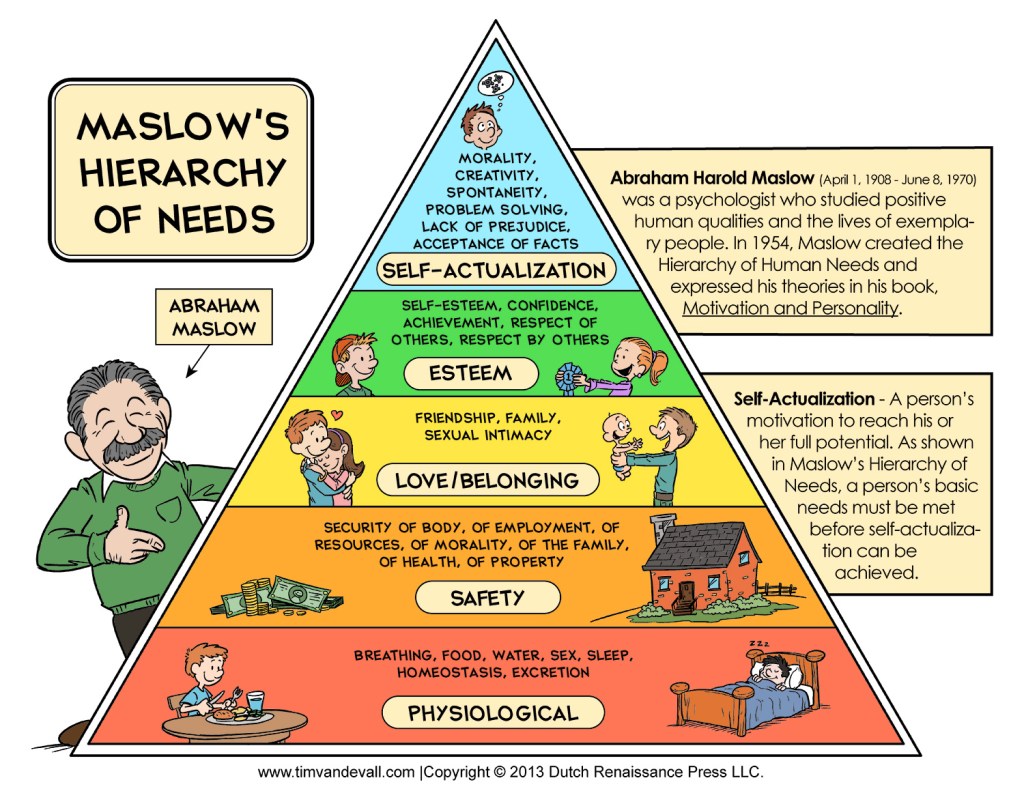
  1. Maslow’s Hierarchy of Needs: Maslow’s theory suggests that individuals have five basic needs: physiological, safety, belongingness, esteem, and self-actualization. By addressing these needs through their products, services, and overall customer experience, businesses can tap into customers’ intrinsic motivations and create stronger connections.
  2. Cognitive Dissonance: When customers face inconsistencies between their beliefs, attitudes, and actions, they experience cognitive dissonance. Reducing this dissonance through seamless customer experiences, effective communication, and easy-to-understand processes can lead to increased satisfaction and loyalty.
  3. Emotions and Decision-Making: Emotions play a crucial role in customers’ decision-making processes. Eliciting positive emotions through personalized experiences, empathetic customer service, and aesthetically pleasing designs can drive customers to make purchases, share positive feedback, and maintain long-term loyalty.

Pros and Cons of Leveraging Psychological Principles in CEM

Pros:

  • Enhanced customer understanding: Applying psychological principles helps businesses better understand their customers, leading to more targeted and relevant marketing efforts.
  • Stronger customer relationships: By addressing customers’ needs and motivations, businesses can foster deeper connections and improve customer retention.
  • Increased satisfaction and loyalty: Customers are more likely to be satisfied and loyal when their psychological needs are met, leading to higher lifetime value.

Cons:

  • Complexity: Integrating psychological principles into CEM can be complex, requiring a deeper understanding of human behavior and potentially more resources.
  • Potential for manipulation: Some businesses may use psychological insights to manipulate customers, potentially damaging trust and long-term relationships.

Efficient Deployment Strategies

  1. Customer segmentation: Segment customers based on their needs, preferences, and motivations. This allows businesses to tailor their experiences and messaging to each group, improving overall effectiveness.
  2. Employee training: Train employees to understand and apply psychological principles in their interactions with customers, fostering stronger relationships and better service.
  3. Data-driven decisions: Leverage customer data and analytics to identify patterns and trends, guiding CEM efforts and enhancing personalization.

Measuring Success with Key Performance Indicators

For small and medium-sized businesses, the following KPIs can help measure the success of CEM efforts based on psychological principles:

  1. Customer satisfaction (CSAT): CSAT measures the level of satisfaction customers have with a business. Higher satisfaction rates indicate that the psychological needs of customers are being met.
  2. Net Promoter Score (NPS): NPS gauges the likelihood of customers recommending a business to others. A high NPS suggests that customers are satisfied and motivated to share their positive experiences.
  3. Customer retention rate: This metric tracks the percentage of customers who continue to do business with a company over a given period. Increased retention rates can signify a deeper understanding of customers’ needs and motivations.

Conclusion

Understanding the psychological foundations of customer experience management can provide businesses with valuable insights into their customers’ needs and motivations. By leveraging these principles, small and medium-sized businesses can enhance their CEM efforts, leading to increased satisfaction.

A Case for Factual Positivity…

The hourly barrage of disappointing news, statistics that highlight the negative trends which can be culled from any sample data and the dire warnings of things to come can really take its toll on you mentally if you let it. However, there is also a problem with “only” hunting for and regurgitating the positive (trying to find that silver lining), ironically you may start to imagine / embellish / inflate stories you have heard that may not actually be factual. So, what am I trying to say here…Positivity is beneficial, when it is grounded in fact and comes with a reputable audit trail. This is a lot harder to produce than the alternative. Yes, there are always people that will gravitate to the negative, salacious and / or outrageous commentary. Why, because it’s exciting and can be used to attract an interactive and boisterous audience which equals more pageviews and more clicks. Positivity is typically not going to be as “sexy” as a negativity, especially when that negative statement is rooted in controversy. We’ve all heard of the term Hot Takes and the provocative nature they are derived from.

Understanding the above, leadership needs to know their audience (I discussed this in a previous post)…will the audience listen to facts, will it be confusing to the group, does it meet the expectations of the reader? The author may want to begin the dialog with controversy / negativity / rumor just to gain their audiences attention, pique their interest and then begin to address the individual topics one-by-one with a positive spin, containing the facts that will ultimately push the negative elements to the back of their audience’s mind. However, be aware in that audience there may also be…

The Troll

Unfortunately, there has been a whole new online personality that has developed over the last few years (Internet Troll) – Those that love to poke the bear for a reaction and ultimately receive notoriety that they would not have normally had in “normal” society. They would not dare do this in public, so they will hide behind avatars, burner accounts, handles and any other user id that gives them anonymity. Once exposed, they will quickly dispose of the ID and start a new one to continue their lust for attention. While often easy to shut them down via facts and figures, they are not limited in their pursuit of a crowd. They will often say the most outrageous comments, just to see / get the reaction. Getting out in front of them is key in your communication strategy to shed positivity, where positivity is warranted.

In summary, the case for factual positivity is absolutely warranted. It provides that proverbial “light at the end of the tunnel” which helps to keep the team / organization motivated, but also aides in knocking the troll nation down a peg by hindering the notoriety and fame they are desperately seeking.

Leadership During Uncertainty…

During times of uncertainty and the resulting anxiety it brings, most people are looking to leaders, or voices of reason for words to continue move forward with. Keeping conversations clear and concise is critical to communication. Trying to project alternative messaging, make a statement, taking a stance is not going to be helpful and should be avoided. Sure, leaders do not possess a crystal ball to give us what we really desire (answers to the complex questions) but they do have an engaged audience and the attention that others may not have. They are not the voices that need to publish to be heard, they are typically a voice that is subscribed too. Therefore, an element of positivity and total clarity is key to the communication.

For example, if someone was to ask…When is this all going to end, when do we get back to normal? (use a checklist)

  • Be Positive: Simple statements – We will get back to normal, this is not status quo
  • Be Factual: Over the last “x” days, or weeks we have seen the curve flattening in “x” countries – This has happened because of “x” actions
  • Be Clear: Don’t make your audience guess what you mean, or interpret it differently than stated
  • Provide Perspective: Prior to this situation, here is where we were with regards to the economy, opportunities and technological advancement
  • Be Open-Minded: Answer with – That’s a valid point and lets address this offline and get back to everyone as a whole on our finding
  • Provide Guidance: In “x” days, we will reassess where we are and make the next set of decisions – This will be based on the following criteria and here is where you can find that information
  • Assign Accountability / Ownership: Each item that was not answered, needs to have an individual assigned and estimate on delivery provided – The audience will know who to go to for resolution of “x” issue

Remember – Facts, ultimately speak louder than emotion in the end. Of course, people will tend to gravitate towards emotional, loud, salacious and wild commentary versus a dialog surrounded by facts and figures. Facts don’t get the pageviews and clicks that controversy will. But at the end of the day, people will remember who “lead” them in times of uncertainty and if or when these times happen again (and you know they will) hopefully they will call upon the voices of reason to provide guidance they desperately need.