
Introduction
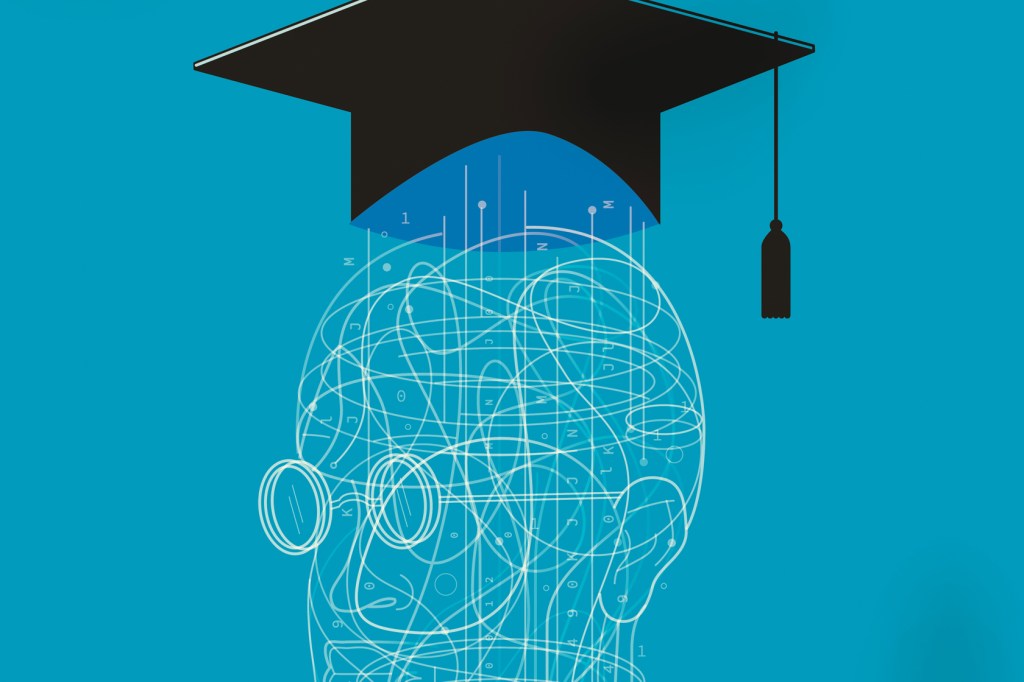
The integration of Artificial Intelligence (AI) into the educational landscape has been a transformative force, reshaping the way students learn, interact, and engage with their studies. As we approach the upcoming university year, it’s essential to explore how AI, particularly Generative AI, will influence the college experience. This post will delve into the advantages, the varying impacts on different majors, and the potential disadvantages that need to be managed.
Advantages of Generative AI for Students
1. Personalized Learning Experiences
Generative AI can tailor educational content to individual students’ needs, providing personalized exercises, feedback, and learning paths. This ensures that students at different proficiency levels can progress at their own pace.
AI and Personalized Learning Experience
1. Adaptive Learning Pathways
AI algorithms can analyze individual student performance, learning styles, and preferences to create adaptive learning pathways. These pathways are tailored to each student’s unique needs, allowing them to progress at their own pace and focus on areas where they need improvement.
Example: Carnegie Mellon University’s Open Learning Initiative
Carnegie Mellon University’s Open Learning Initiative leverages AI to provide personalized feedback and guidance. The system adapts to each student’s performance, offering customized exercises and tutorials to reinforce concepts where the student may be struggling.
2. Predictive Analytics for Early Intervention
AI can predict potential learning challenges by analyzing trends in a student’s performance, engagement, and behavior. Early intervention can then be initiated to provide support before minor issues become significant obstacles.
Example: Georgia State University’s Early Alert System
Georgia State University utilizes predictive analytics to identify students who may be at risk of falling behind. By analyzing data points such as attendance, grades, and engagement, the system triggers early interventions, connecting students with advisors or additional resources tailored to their specific needs.
3. Personalized Content Delivery
AI can curate and deliver content that matches a student’s current understanding, interests, and career goals. This ensures that the learning material is not only at the right difficulty level but also aligned with the student’s personal and professional aspirations.
Example: Arizona State University’s Adaptive Learning Platform
Arizona State University has partnered with ed-tech companies to develop an adaptive learning platform. This platform personalizes content delivery based on continuous assessment, providing students with materials that match their current proficiency level and learning style.
The integration of AI into personalized learning experiences is revolutionizing the way students engage with their education. By creating adaptive learning pathways, enabling early intervention through predictive analytics, and delivering personalized content, AI provides a more nuanced and responsive educational experience.
These examples from Carnegie Mellon University, Georgia State University, and Arizona State University illustrate the tangible benefits of AI in higher education. They represent a shift towards a more student-centered approach, where education is not a one-size-fits-all model but a dynamic and adaptive journey tailored to each individual’s needs and goals. The potential for AI to further enhance personalized learning is vast, and these implementations are just the beginning of a transformative trend in education.
2. Enhanced Research Capabilities
AI-powered tools can sift through vast amounts of data, aiding students in research by providing relevant information, summarizing complex papers, and even suggesting new areas of exploration.
AI and Enhanced Research Capabilities
1. Automated Literature Review and Data Mining
AI can sift through vast amounts of academic literature and data, identifying relevant papers, summarizing findings, and even uncovering new connections between disparate research areas. This automation significantly reduces the time and effort required for literature review and data analysis.
Example: Iris.ai’s Research Tool
Iris.ai offers a tool that uses AI to assist researchers in navigating scientific papers. By understanding the context of the research query, it can find relevant papers, extract key insights, and even build a visual map of how different papers are interconnected.
2. Predictive Modeling and Simulation
In fields that require complex modeling and simulations, AI can predict outcomes based on existing data and generate simulations to test various hypotheses. This enables researchers to explore new avenues and validate theories more efficiently.
Example: DeepMind’s AlphaFold for Protein Folding
DeepMind’s AlphaFold has revolutionized the field of biology by predicting protein folding structures. This AI-driven approach has significantly accelerated research in areas like disease understanding and drug development, providing accurate predictions that were previously time-consuming and resource-intensive.
3. Real-time Data Analysis and Visualization
AI can analyze real-time data streams, providing researchers with immediate insights and visualizations. This capability is particularly valuable in fields where timely analysis is critical, such as environmental monitoring or financial modeling.
Example: The University of Texas at Austin’s Environmental Monitoring
The University of Texas at Austin utilizes AI for real-time environmental monitoring. By analyzing data from various sensors, the AI system can detect changes in environmental conditions, such as water quality, and provide immediate insights to researchers.
The integration of AI into research processes is enhancing capabilities across various academic fields. By automating literature review, enabling predictive modeling, and providing real-time data analysis, AI is not only making research more efficient but also opening new avenues of exploration.
The examples of Iris.ai’s research tool, DeepMind’s AlphaFold, and the University of Texas at Austin’s environmental monitoring system illustrate the diverse applications of AI in research. These implementations are indicative of a broader trend where AI is becoming an essential tool for researchers, empowering them to conduct more complex, accurate, and innovative studies.
As universities and research institutions continue to embrace AI, the potential for further advancements in research capabilities is immense. The upcoming years are likely to witness even more innovative applications of AI, solidifying its role as a transformative force in academic research.
3. Collaborative Learning Environments
Generative AI can foster collaboration by facilitating group projects, connecting students with similar interests, and providing platforms for peer-to-peer learning.
AI and Collaborative Learning Environments
1. Intelligent Grouping and Team Formation
AI can analyze students’ skills, interests, and learning styles to create balanced and complementary teams for group projects. This ensures that teams are diverse and that members can learn from each other’s unique strengths.
Example: Carnegie Learning’s MATHia Platform
Carnegie Learning’s MATHia platform uses AI to group students based on their mathematical abilities and learning preferences. This intelligent grouping fosters collaboration and peer-to-peer learning, as students work together on problems that are tailored to their collective skill level.
2. Virtual Collaboration Spaces with AI Facilitation
AI-powered virtual collaboration spaces enable students to work together remotely, providing tools for real-time communication, document sharing, and project management. AI facilitation can guide the collaboration, suggesting resources, and ensuring that the team stays on track.
Example: Microsoft’s AI-driven Collaboration Tools
Microsoft offers AI-driven collaboration tools that integrate with platforms like Teams and OneDrive. These tools provide real-time translation, content suggestions, and project tracking, enabling seamless collaboration between students from diverse backgrounds and disciplines.
3. Peer Review and Feedback Automation
AI can facilitate peer review by automating the distribution of assignments, collecting feedback, and even providing initial analysis of the reviews. This streamlines the peer review process and allows students to learn from each other’s perspectives.
Example: Turnitin’s PeerMark
Turnitin’s PeerMark is a tool that leverages AI to facilitate peer review in academic writing. It manages the distribution of papers, collects reviews, and provides analytics on the feedback, allowing students to engage in constructive criticism and learn from each other’s insights.
The integration of AI into collaborative learning environments is enhancing the way students work together, both in-person and virtually. By intelligently forming teams, providing virtual collaboration spaces, and automating peer review, AI is fostering a more dynamic and responsive collaborative learning experience.
The examples from Carnegie Learning, Microsoft, and Turnitin illustrate the innovative ways in which AI is being applied to collaboration in education. These implementations are part of a broader trend where technology is not just a tool but a facilitator of meaningful interactions and shared learning experiences.
As universities continue to explore and adopt AI-driven collaboration tools, the potential for enriched learning through teamwork and peer engagement is vast. The upcoming academic years are likely to see further advancements in this area, solidifying AI’s role as a catalyst for collaboration and communal learning in higher education.
Impact on Different Majors
Majors with Greater Advantage:
- Computer Science and Engineering: Naturally, these fields will benefit immensely from AI, as students can engage with cutting-edge technology, develop AI models, and gain hands-on experience.
- Business and Economics: AI’s role in predictive analytics, customer experience management, and digital transformation offers students in these fields valuable insights into modern business processes.
- Health Sciences: AI-driven diagnostics and personalized medicine provide health science students with innovative tools to understand complex biological systems.
Majors with Limited Impact:
- Humanities and Social Sciences: While AI can assist in research, the interpretative and qualitative nature of these subjects may limit the full integration of AI into the curriculum.
Disadvantages and Challenges
1. Ethical Considerations
The use of AI in education raises ethical questions, such as data privacy and bias in algorithms. Universities must establish clear guidelines to ensure that AI is used responsibly.
2. Potential for Misuse
There’s a risk that students may misuse AI for tasks like automated essay writing, leading to academic dishonesty. Vigilance and clear policies are required to prevent such behavior.
3. Accessibility and Inequality
Not all students may have equal access to AI-powered tools, leading to disparities in educational opportunities. Universities must work to provide equal access to all students.
Conclusion
The integration of AI into the upcoming university year presents a multifaceted landscape. While the advantages are profound, particularly in majors like Computer Science, Business, and Health Sciences, the challenges cannot be overlooked. Universities must navigate the ethical landscape, manage potential misuse, and ensure accessibility to leverage AI’s full potential without negative repercussions.
By embracing a strategic and thoughtful approach, universities can harness the power of AI to enrich the educational experience, fostering a new era of innovation, collaboration, and personalized learning. The upcoming university year promises to be an exciting time of growth and transformation, with AI at the forefront of this educational evolution.
 De Lio Tech Trends