
Introduction
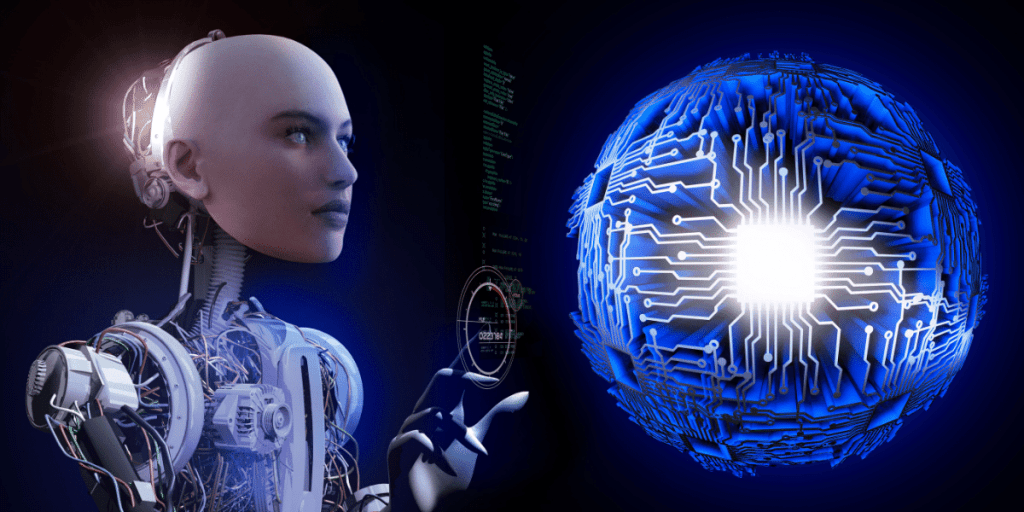
In the realm of science and technology, the convergence of theoretical physics, specifically string theory, with artificial intelligence (AI) is a groundbreaking development. This fusion promises to revolutionize how we perceive AI and its applications in our daily lives. By leveraging the complex, multi-dimensional insights of string theory, AI is poised to reach new heights of capability and integration. Today’s blog post explores the transformative impact of string theory on AI evolution, offering a glimpse into a future where AI’s assistance is seamlessly woven into the fabric of everyday life. Prepare to embark on an intellectual journey through this new era of technological enlightenment.
What is String Theory
String theory is a theoretical framework in physics that postulates that the fundamental constituents of the universe are not point-like particles, as traditionally conceived, but rather one-dimensional “strings.” These strings vibrate at different frequencies, and their vibrational modes correspond to various elementary particles. The theory suggests a multi-dimensional universe, extending beyond the familiar three dimensions of space and one of time. For those familiar with the concept, the benefits of string theory include its potential to unify all fundamental forces of nature, offering a comprehensive understanding of the universe’s workings. It also opens up new avenues for research in both cosmology and quantum physics. However, concerns revolve around its current lack of empirical evidence and testability, as well as its complex mathematical framework, which some critics argue could distance it from physical reality. This balance of groundbreaking potential and theoretical challenges makes string theory a continually fascinating and debated topic in modern physics.
String Theory Pros and Cons
String theory, has always been a significant theoretical leap in our understanding of the universe, and as a result it has also been a subject of controversy and skepticism within the scientific community for several reasons:
Negative Perceptions and Controversies
- Lack of Empirical Evidence: One of the most significant criticisms of string theory is its lack of direct empirical evidence. Unlike many other theories in physics, string theory has not yet been confirmed by experiments or observations, making it more speculative than empirically grounded.
- Testability Issues: The energies required to test the predictions of string theory are far beyond the capabilities of current technology. This raises concerns about its falsifiability – a key criterion for scientific theories – leading some to question whether it can be considered a scientific theory at all.
- Mathematical Complexity: String theory is mathematically complex and requires a high level of abstraction. Its heavy reliance on advanced mathematics has led to criticisms that it might be more of a mathematical exercise than a physical theory.
- Multiplicity of Solutions: String theory allows for a vast number of possible universes (often referred to as the “landscape” of string theory). This multitude of solutions makes it challenging to make specific predictions about our own universe, diminishing its explanatory power.
- Resource Allocation: Some critics argue that the resources and intellectual focus devoted to string theory might be better used on more empirically grounded areas of physics.
Benefits of String Theory
Despite these criticisms, string theory also offers several potential benefits:
- Unification of Forces: String theory is a candidate for the ‘Theory of Everything’ that physicists have sought, aiming to unify all fundamental forces of nature – gravitational, electromagnetic, strong nuclear, and weak nuclear – under one theoretical framework.
- Insights into Quantum Gravity: It provides a framework for understanding how gravity could be integrated into quantum mechanics, a longstanding challenge in physics.
- New Mathematical Tools: The development of string theory has led to advancements in mathematics, including new insights into geometry and topology, which have applications beyond theoretical physics.
- Conceptual Innovation: String theory pushes the boundaries of our understanding of the universe, challenging conventional notions of space, time, and matter. This can lead to novel hypotheses and conceptual breakthroughs.
- Interdisciplinary Influence: It has stimulated cross-disciplinary research, influencing areas like cosmology, particle physics, and even areas outside of physics like information theory.
While string theory remains controversial due to its speculative nature and the challenges in testing its predictions, it continues to be a rich source of theoretical innovation and interdisciplinary dialogue. Its potential to reshape our fundamental understanding of the universe offers an exciting, albeit uncertain, frontier in modern physics.
The Impact of String Theory on AI Evolution
Advanced Problem-Solving Abilities
String theory, a theoretical framework in which the point-like particles of particle physics are replaced by one-dimensional objects called strings, suggests a multi-dimensional universe far beyond our current understanding. When applied to AI, this theory opens doors to advanced problem-solving capabilities. AI systems, inspired by the multi-dimensional approach of string theory, could analyze problems from numerous perspectives simultaneously, leading to more nuanced and comprehensive solutions.
Example: In strategic management consulting, an AI enhanced by string theory principles could evaluate market trends, consumer behavior, and economic indicators across multiple dimensions, offering deeper insights for businesses.
Enhanced Predictive Analytics
The multi-dimensional nature of string theory could significantly enhance the predictive analytics of AI. By considering a broader range of variables and potential outcomes, AI systems could predict future trends and events with greater accuracy.
Example: In customer experience management, AI could predict consumer needs and preferences with higher precision, allowing companies to tailor their services proactively.
Quantum Computing Integration
String theory’s exploration of multiple dimensions aligns closely with the principles of quantum computing, which operates on the quantum state of subatomic particles. The integration of AI with quantum computing, guided by string theory, could lead to exponential increases in processing power and efficiency.
Example: AI-powered digital transformation initiatives could leverage quantum computing to analyze vast datasets in seconds, transforming business decision-making processes.
Fostering Greater Acceptance of AI Assistance
Personalized Interactions
AI, when combined with the principles of string theory, could offer highly personalized interactions. Understanding and predicting individual preferences across various dimensions can make AI assistants more intuitive and responsive to individual needs.
Example: In a home setting, AI could manage energy usage, entertainment preferences, and even dietary needs, adapting to subtle changes in behavior and preference.
Ethical and Responsible AI
The complex ethical considerations in AI development can be addressed more effectively through a multi-dimensional approach. By considering a wide range of potential consequences and cultural contexts, AI can be developed more responsibly.
Example: AI systems in public policy could consider the social, economic, and ethical implications of decisions, ensuring more balanced and fair outcomes.
Preparing Theorists for the New Technology
Interdisciplinary Education
Theorists and professionals must embrace an interdisciplinary approach, combining insights from physics, computer science, and other fields to stay ahead in this new era.
Continuous Learning and Adaptation
As AI evolves, continuous learning and adaptation are essential. Professionals must stay abreast of the latest developments in both string theory and AI to effectively harness their combined potential.
Conclusion
The intersection of string theory and AI marks the dawn of a new era in technology, promising advancements that were once the realm of science fiction. As we navigate this exciting frontier, the potential for AI to enrich and enhance our daily lives is immense. The key to harnessing this potential lies in our willingness to embrace change, interdisciplinary collaboration, and a commitment to ethical development. Stay tuned for our next post, where we delve deeper into the practical applications of this groundbreaking synergy in various industries, keeping you at the forefront of this technological renaissance.
 De Lio Tech Trends