Unveiling the Future of AI: Exploring Vision Transformer (ViT) Systems

Introduction

Artificial Intelligence (AI) has been revolutionizing various industries with its ability to process vast amounts of data and perform complex tasks. One of the most exciting recent developments in AI is the emergence of Vision Transformers (ViTs). ViTs represent a paradigm shift in computer vision by utilizing transformer models, which were initially designed for natural language processing, to process visual data. In this blog post, we will delve into the intricacies of Vision Transformers, the industries currently exploring this technology, and the reasons why ViTs are a technology to take seriously in 2023.

Understanding Vision Transformers (ViTs): Traditional computer vision systems rely on convolutional neural networks (CNNs) to analyze and understand visual data. However, Vision Transformers take a different approach. They leverage transformer architectures, originally introduced by Vaswani et al. in 2017, to process sequential data, such as sentences. By adapting transformers for visual input, ViTs enable end-to-end processing of images, eliminating the need for hand-engineered feature extractors.

ViTs break down an image into a sequence of non-overlapping patches, which are then flattened and fed into a transformer model. This allows the model to capture global context and relationships between different patches, enabling better understanding and representation of visual information. Self-attention mechanisms within the transformer architecture enable ViTs to effectively model long-range dependencies in images, resulting in enhanced performance on various computer vision tasks.

Industries Exploring Vision Transformers: The potential of Vision Transformers is being recognized and explored by several industries, including:

  1. Healthcare: ViTs have shown promise in medical imaging tasks, such as diagnosing diseases from X-rays, analyzing histopathology slides, and interpreting MRI scans. The ability of ViTs to capture fine-grained details and learn from vast amounts of medical image data holds great potential for improving diagnostics and accelerating medical research.
  2. Autonomous Vehicles: Self-driving cars heavily rely on computer vision to perceive and navigate the world around them. Vision Transformers can enhance the perception capabilities of autonomous vehicles, allowing them to better recognize and interpret objects, pedestrians, and traffic signs, leading to safer and more efficient transportation systems.
  3. Retail and E-commerce: ViTs can revolutionize visual search capabilities in online shopping. By understanding the visual features and context of products, ViTs enable more accurate and personalized recommendations, enhancing the overall shopping experience for customers.
  4. Robotics: Vision Transformers can aid robots in understanding and interacting with their environments. Whether it’s object recognition, scene understanding, or grasping and manipulation tasks, ViTs can enable robots to perceive and interpret visual information more effectively, leading to advancements in industrial automation and service robotics.
  5. Security and Surveillance: ViTs can play a crucial role in video surveillance systems by enabling more sophisticated analysis of visual data. Their ability to understand complex scenes, detect anomalies, and track objects can enhance security measures, both in public spaces and private sectors.

Why Take Vision Transformers Seriously in 2023? ViTs have gained substantial attention due to their remarkable performance on various computer vision benchmarks. They have achieved state-of-the-art results on image classification tasks, often surpassing traditional CNN models. This breakthrough performance, combined with their ability to capture global context and handle long-range dependencies, positions ViTs as a technology to be taken seriously in 2023.

Moreover, ViTs offer several advantages over CNN-based approaches:

  1. Scalability: Vision Transformers are highly scalable, allowing for efficient training and inference on large datasets. They are less dependent on handcrafted architectures, making them adaptable to different tasks and data domains.
  2. Flexibility: Unlike CNNs, which operate on fixed-sized inputs, ViTs can handle images of varying resolutions without the need for resizing or cropping. This flexibility makes ViTs suitable for scenarios where images may have different aspect ratios or resolutions.
  3. Global Context: By leveraging self-attention mechanisms, Vision Transformers capture global context and long-range dependencies in images. This holistic understanding helps in capturing fine-grained details and semantic relationships between different elements within an image.
  4. Transfer Learning: Pre-training ViTs on large-scale datasets, such as ImageNet, enables them to learn generic visual representations that can be fine-tuned for specific tasks. This transfer learning capability reduces the need for extensive task-specific data and accelerates the development of AI models for various applications.

However, it’s important to acknowledge the limitations and challenges associated with Vision Transformers:

  1. Computational Requirements: Training Vision Transformers can be computationally expensive due to the large number of parameters and the self-attention mechanism’s quadratic complexity. This can pose challenges for resource-constrained environments and limit real-time applications.
  2. Data Dependency: Vision Transformers heavily rely on large-scale labeled datasets for pre-training, which may not be available for all domains or tasks. Obtaining labeled data can be time-consuming, expensive, or even impractical in certain scenarios.
  3. Interpretability: Compared to CNNs, which provide visual explanations through feature maps, understanding the decision-making process of Vision Transformers can be challenging. The self-attention mechanism’s abstract nature makes it difficult to interpret why certain decisions are made based on visual inputs.

Key Takeaways as You Explore ViTs: As you embark on your exploration of Vision Transformers, here are a few key takeaways to keep in mind:

  1. ViTs represent a significant advancement in computer vision, leveraging transformer models to process visual data and achieve state-of-the-art results in various tasks.
  2. ViTs are being explored across industries such as healthcare, autonomous vehicles, retail, robotics, and security, with the potential to enhance performance, accuracy, and automation in these domains.
  3. Vision Transformers offer scalability, flexibility, and the ability to capture global context, making them a technology to be taken seriously in 2023.
  4. However, ViTs also come with challenges such as computational requirements, data dependency, and interpretability, which need to be addressed for widespread adoption and real-world deployment.
  5. Experimentation, research, and collaboration are crucial for further advancements in ViTs and unlocking their full potential in various applications.

Conclusion

Vision Transformers hold immense promise for the future of AI and computer vision. Their ability to process visual data using transformer models opens up new possibilities in understanding, interpreting, and interacting with visual information. By leveraging the strengths of ViTs and addressing their limitations, we can harness the power of this transformative technology to drive innovation and progress across industries in the years to come.

The Pros and Cons of Centralizing the AI Industry: A Detailed Examination

Introduction

In recent years, the topic of centralization has been gaining attention across various sectors and industries. Artificial Intelligence (AI), with its potential to redefine the future of technology and society, has not been spared this debate. The notion of consolidating or centralizing the AI industry raises many questions and sparks intense discussions. To understand this issue, we need to delve into the pros and cons of such an approach, and more importantly, consider how we could grow AI for the betterment of society and small-to-medium-sized businesses (SMBs).

The Upsides of Centralization

Standardization and Interoperability

One of the main benefits of centralization is the potential for standardization. A centralized AI industry could establish universal protocols and standards, which would enhance interoperability between different AI systems. This could lead to more seamless integration, improving the efficiency and effectiveness of AI applications in various fields, from healthcare to finance and beyond.

Coordinated Research and Development

Centralizing the AI industry could also result in more coordinated research and development (R&D). With a centralized approach, the AI community can pool resources, share knowledge, and collaborate more effectively on major projects. This could accelerate technological advancement and help us tackle the most challenging issues in AI, such as ensuring fairness, explainability, and privacy.

Regulatory Compliance and Ethical Considerations

From a regulatory and ethical perspective, a centralized AI industry could make it easier to enforce compliance and ethical standards. It could facilitate the establishment of robust frameworks for AI governance, ensuring that AI technologies are developed and used responsibly.

The Downsides of Centralization

Despite the potential benefits, centralizing the AI industry could also lead to a range of challenges and disadvantages.

Risk of Monopolization and Stifling Innovation

One of the major risks associated with centralization is the potential for monopolization. If a small number of entities gain control over the AI industry, they could exert undue influence over the market, stifling competition and potentially hampering innovation. The AI field is incredibly diverse and multifaceted, and its growth has been fueled by a broad range of perspectives and ideas. Centralization could threaten this diversity and limit the potential for breakthroughs.

Privacy Concerns and Data Security

Another concern relates to privacy and data security. Centralizing the AI industry could involve consolidating vast amounts of data in a few hands, which could increase the risk of data breaches and misuse. This could erode public trust in AI and lead to increased scrutiny and regulatory intervention.

Resistance to Change and Implementation Challenges

Finally, the process of centralizing the AI industry could face significant resistance and implementation challenges. Many stakeholders in the AI community value their autonomy and might be reluctant to cede control to a centralized authority. Moreover, coordinating such a vast and diverse field could prove to be a logistical nightmare.

The Ideal Approach: A Balanced Ecosystem

Considering the pros and cons, the ideal approach for growing AI might not be full centralization or complete decentralization, but rather a balanced ecosystem that combines the best of both worlds.

Such an ecosystem could feature centralized elements, such as universal standards for interoperability and robust regulatory frameworks, to ensure responsible AI development. At the same time, it could maintain a degree of decentralization, encouraging competition and innovation and preserving the diversity of the AI field.

This approach could also involve the creation of a multistakeholder governance model for AI, involving representatives from various sectors, including government, industry, academia, and civil society. This could ensure that decision-making in the AI industry is inclusive, transparent, and accountable.

Growing AI for the Betterment of Society and SMBs

To grow AI for the betterment of society and SMBs, we need to focus on a few key areas:

Accessibility and Affordability

AI should be accessible and affordable to all, including SMBs. This could involve developing cost-effective AI solutions tailored to the needs of SMBs, providing training and support to help SMBs leverage AI, and promoting policies that make AI technologies more accessible.

Education and Capacity Building

Investing in education and capacity building is crucial. This could involve expanding AI education at all levels, from K-12 to university and vocational training, and promoting lifelong learning in AI. This could help prepare the workforce for the AI-driven economy and ensure that society can reap the benefits of AI.

Ethical and Responsible AI

The development and use of AI should be guided by ethical principles and a commitment to social good. This could involve integrating ethics into AI education and research, establishing robust ethical guidelines for AI development, and promoting responsible AI practices in the industry.

Inclusive AI

AI should be inclusive and represent the diversity of our society. This could involve promoting diversity in the AI field, ensuring that AI systems are designed to be inclusive and fair, and addressing bias in AI.

Leveraging AI for Social Good

Finally, we should leverage AI for social good. This could involve using AI to tackle societal challenges, from climate change to healthcare and education, and promoting the use of AI for philanthropic and humanitarian purposes.

Conclusion

While centralizing the AI industry could offer several benefits, it also comes with significant risks and challenges. A balanced approach, combining elements of both centralization and decentralization, could be the key to growing AI in a way that benefits society and SMBs. This would involve fostering an inclusive, ethical, and diverse AI ecosystem, making AI accessible and affordable, investing in education and capacity building, and leveraging AI for social good. In this way, we can harness the potential of AI to drive technological innovation and social progress, while mitigating the risks and ensuring that the benefits of AI are shared by all.

Democratization of Low-Code, No-Code AI: A Path to Accessible and Sustainable Innovation

Introduction

As we stand at the dawn of a new era of technological revolution, the importance of Artificial Intelligence (AI) in shaping businesses and societies is becoming increasingly clear. AI, once a concept confined to science fiction, is now a reality that drives a broad spectrum of industries from finance to healthcare, logistics to entertainment. However, one of the key challenges that businesses face today is the technical barrier of entry to AI, which has traditionally required a deep understanding of complex algorithms and coding languages.

The democratization of AI, through low-code and no-code platforms, seeks to solve this problem. These platforms provide an accessible way for non-technical users to build and deploy AI models, effectively breaking down the barriers to AI adoption. This development is not only important in the rollout of AI, but also holds the potential to transform businesses and democratize innovation.

The Importance of Low-Code, No-Code AI

The democratization of AI is important for several reasons. Firstly, it allows for a much broader use and understanding of AI. Traditionally, AI has been the domain of highly skilled data scientists and software engineers, but low-code and no-code platforms allow a wider range of people to use and understand these technologies. This can lead to more diverse and innovative uses of AI, as people from different backgrounds and with different perspectives apply the technology to solve problems in their own fields.

Secondly, it helps to address the talent gap in AI. There’s a significant shortage of skilled AI professionals in the market, and this gap is only predicted to grow as the demand for AI solutions increases. By making AI more accessible through low-code and no-code platforms, businesses can leverage the skills of their existing workforce and reduce their reliance on highly specialized talent.

Finally, the democratization of AI can help to improve transparency and accountability. With more people having access to and understanding of AI, there’s greater potential for scrutiny of AI systems and the decisions they make. This can help to prevent bias and other issues that can arise when AI is used in decision-making.

The Value of Democratizing AI

The democratization of AI through low-code and no-code platforms offers a number of valuable benefits. Let’s take a high-level view of these benefits.

Speed and Efficiency

One of the most significant advantages is the speed and efficiency of development. Low-code and no-code platforms provide a visual interface for building AI models, drastically reducing the time and effort required to develop and deploy AI solutions. This allows businesses to quickly respond to changing market conditions and customer needs, driving innovation and competitive advantage.

Cost-Effectiveness

Secondly, these platforms can significantly reduce costs. They enable businesses to utilize their existing workforce to develop AI solutions, reducing the need for expensive external consultants or highly skilled internal teams.

Flexibility and Adaptability

Finally, low-code and no-code platforms provide a high degree of flexibility and adaptability. They allow businesses to easily modify and update their AI models as their needs change, without having to rewrite complex code. This makes it easier for businesses to keep up with rapidly evolving market trends and customer expectations.

Choosing Between Low-Code and No-Code

When deciding between low-code and no-code AI platforms, businesses need to consider several factors. The choice will largely depend on the specific needs and resources of the business, as well as the complexity of the AI solutions they wish to develop.

Low-code platforms provide a greater degree of customization and complexity, allowing for more sophisticated AI models. They are particularly suitable for businesses that have some in-house coding skills and need to build complex, bespoke AI solutions. However, they still require a degree of technical knowledge and can be more time-consuming to use than no-code platforms.

On the other hand, no-code platforms are designed to be used by non-technical users, making them more accessible for businesses that lack coding skills. They allow users to build AI models using a visual, drag-and-drop interface, making the development process quicker and easier. However, they may not offer the same degree of customization as low-code platforms, and may not be suitable for developing highly complex AI models.

Ultimately, the choice between low-code and no-code will depend on a balance between the desired complexity of the AI solution and the resources available. Businesses with a strong in-house technical team may prefer to use low-code platforms to develop complex, tailored AI solutions. Conversely, businesses with limited technical resources may find no-code platforms a more accessible and cost-effective option.

Your Value Proposition

“Harness the speed, efficiency, and cost-effectiveness of these platforms to rapidly respond to changing market conditions and customer needs. With low-code and no-code AI, you can leverage the skills of your existing workforce, reduce your reliance on external consultants, and drive your business forward with AI-powered solutions.

Whether your business needs complex, bespoke AI models with low-code platforms or prefers the simplicity and user-friendliness of no-code platforms, we have the tools to guide your AI journey. Experience the benefits of democratized AI and stay ahead in a rapidly evolving business landscape.”

This value proposition emphasizes the benefits of low-code and no-code AI platforms, including accessibility, speed, efficiency, cost-effectiveness, and adaptability. It also underscores the ability of these platforms to cater to a range of business needs, from complex AI models to simpler, user-friendly solutions.

Examples of Platforms Currently Available

Here are five examples of low-code and no-code platforms: (These are examples of the technology currently available and not an endorsement)

  1. Outsystems: This platform allows business users and professional developers to build, test, and deploy software applications using visual designers and toolsets. It supports integration with external enterprise systems, databases, or custom apps via pre-built open-source connectors, popular cloud services, and APIs.
  2. Mendix: Mendix Studio is an IDE that lets you design your Web and mobile apps using a drag/drop feature. It offers both no-code and low-code tooling in one fully integrated platform, with a web-based visual app-modeling studio tailored to business domain experts and an extensive and powerful desktop-based visual app-modeling studio for professional developers.
  3. Microsoft Power Platform: This cloud-based platform allows business users to build user interfaces, business workflows, and data models and deploy them in Microsoft’s Azure cloud. The four offerings of Microsoft Power Platform are Power BI, Power Apps, Power Automate, and Power Virtual Agents.
  4. Appian: A cloud-based Low-code platform, Appian revolves around business process management (BPM), robotic process automation (RPA), case management, content management, and intelligent automation. It supports both Appian cloud and public cloud deployments (AWS, Google Cloud, and Azure).
  5. Salesforce Lightening: Part of the Salesforce platform, Salesforce Lightening allows the creation of apps and websites through the use of components, templates, and design systems. It’s especially useful for businesses that already use Salesforce for CRM or other business functions, as it seamlessly integrates with other Salesforce products​.

Conclusion

The democratization of AI through low-code and no-code platforms represents a significant shift in how businesses approach AI. By making AI more accessible and understandable, these platforms have the potential to unlock a new wave of innovation and growth.

However, businesses need to carefully consider their specific needs and resources when deciding between low-code and no-code platforms. Both have their strengths and can offer significant benefits, but the best choice will depend on the unique circumstances of each business.

As we move forward, the democratization of AI will continue to play a crucial role in the rollout of AI technologies. By breaking down barriers and making AI accessible to all, we can drive innovation, growth, and societal progress in the era of AI.

Value Proposition”Embrace the transformative power of AI with the accessibility of low-code and no-code platforms. By democratizing AI, we can empower your business to create innovative solutions tailored to your specific needs, without the need for specialized AI talent or extensive coding knowledge.

Managing and Eliminating Hallucinations in AI Language Models

Introduction

Artificial Intelligence has leapt forward in leaps and bounds, with Language Models (LMs) like GPT-4 making a significant impact. But as we continue to make strides in natural language processing (NLP), we must also address an issue that has come to light: hallucinations in AI language models.

In AI terms, “hallucination” refers to the phenomenon where the model generates outputs that are not grounded in the input it received or the knowledge it has been trained on. This can lead to outputs that are incorrect, misleading, or nonsensical. How do we manage and eliminate these hallucinations? Let’s delve into the methods and strategies that can be employed to tackle this issue.

Training the LLM to Avoid Hallucinations

Hallucinations in LMs often originate from the training phase. Here’s what we can do to reduce their likelihood during this stage:

  1. Quality of Training Data: The quality of the training data plays a pivotal role in shaping the behavior of the AI. Training an AI model on a diverse and high-quality dataset can mitigate the risk of hallucinations. The training data should represent a broad spectrum of correct and coherent language use. This way, the model will have a better chance of producing accurate and relevant outputs.
  2. Augmented Training: One approach that can help reduce hallucinations is to augment the training data with explicit examples of what not to do. This could involve crafting examples where the model is given an input and an incorrect output (a potential hallucination), and training the model to understand that this is not a desirable result.
  3. Fine-Tuning: Fine-tuning the model on a more specific and narrower dataset after initial training can also help. This process can help the model learn the nuances of a particular domain or subject, reducing the likelihood of producing outputs that are ungrounded in its input.

Identifying Hallucinations in AI Outputs

Despite our best efforts, hallucinations may still occur. Here’s how we can identify them:

  1. Gold Standard Comparison: This involves comparing the output of the model to a “gold standard” output, which is known to be correct. By measuring the divergence from the gold standard, we can estimate the likelihood of a hallucination.
  2. Out-of-Distribution Detection: This is a technique for identifying when the model’s input falls outside of the distribution of data it was trained on. If the input is out-of-distribution, the model is more likely to hallucinate, as it’s operating in unfamiliar territory.
  3. Confidence Scores: Modern LMs often output a confidence score alongside their predictions. If the confidence score is low, it could be an indicator that the model is unsure and may be hallucinating.

Managing Hallucinations in AI Outputs

Once hallucinations have been identified, here’s how we can manage them:

  1. Post-Hoc Corrections: One approach is to apply post-hoc corrections to the model’s output. This could involve using a separate model or algorithm to identify and correct potential hallucinations.
  2. Interactive Refinement: In this approach, the model’s output is refined through an interactive process, where a human provides feedback on the model’s outputs, and the model iteratively improves its output based on this feedback.
  3. Model Ensembling: Another approach is to use multiple models and take a consensus approach to generating outputs. If one model hallucinates but the others do not, the hallucination can be identified and discarded.

AI hallucinations are an intriguing and complex challenge. As we continue to push the boundaries of what’s possible with AI, it’s critical that we also continue to improve our methods for managing and eliminating hallucinations.

Recent Advancements

In the ever-evolving field of AI, new strategies and methodologies are continuously being developed to address hallucinations. One such recent advancement is a strategy proposed by OpenAI called “process supervision”​1​. This approach involves training AI models to reward themselves for each correct step of reasoning they take when arriving at an answer, as opposed to only rewarding the correct final conclusion. This method could potentially lead to better explainable AI, as it encourages models to follow a more human-like chain of thought. The primary motivation behind this research is to address hallucinations to make models more capable of solving challenging reasoning problems​1​.

The company released an accompanying dataset of 800,000 human labels used to train the model mentioned in the research paper, allowing further exploration and testing of the process supervision approach​1​.

However, while these developments are promising, it’s important to note that experts have expressed some skepticism. One concern is whether the mitigation of misinformation and incorrect results seen in laboratory conditions will hold up when the AI is deployed in the wild, where the variety and complexity of inputs are much greater​1​.

Moreover, some experts warn that what works in one setting, model, and context may not work in another due to the overall instability in how large language models function​1​. For instance, there is no evidence yet that process supervision would work for specific types of hallucinations, such as models making up citations and references​1​.

Despite these challenges, the work towards reducing hallucinations in AI models is ongoing, and the application of new strategies in real-world AI systems is being seriously considered​1​. As these strategies are applied and refined, we can expect to see continued progress in managing and eliminating hallucinations in AI.

Conclusion

In conclusion, managing and eliminating hallucinations in AI requires a multi-faceted approach that spans the lifecycle of the AI model, from the initial training phase to post-deployment. By improving the quality and diversity of training data, refining the training process, and applying innovative techniques for detecting and managing hallucinations, we can continue to improve the accuracy and reliability of AI language models. However, it’s important to maintain a healthy level of skepticism and scrutiny, as each new advancement needs to be thoroughly tested in real-world scenarios. AI hallucinations are a fascinating and complex challenge that will continue to engage researchers and developers in the years to come. With continued efforts and advancements, we can look forward to AI tools that are even more accurate and trustworthy.

Leveraging AI in Customer Experience Management: A Strategic Approach for Small to Medium Sized Businesses

Introduction

In the rapidly evolving digital landscape, businesses of all sizes are seeking innovative ways to enhance their customer experience (CX). One of the most promising avenues for this is the use of Artificial Intelligence (AI). AI can provide a competitive edge, especially for small to medium-sized businesses (SMBs) that are looking to scale and improve their customer service. This blog post will delve into how SMBs can leverage AI in customer experience management, why it’s crucial for business growth, how to measure success, and an outline for developing a high-level strategy.

The Importance of AI in Customer Experience Management

AI is no longer a futuristic concept; it’s here, and it’s transforming the way businesses interact with their customers. AI can automate routine tasks, provide personalized experiences, and deliver insights from customer data that humans might miss.

For SMBs, AI can be a game-changer. It can help level the playing field, allowing these businesses to compete with larger corporations that have more resources. By integrating AI into their customer experience management, SMBs can provide a more personalized, efficient, and seamless service, leading to increased customer satisfaction and loyalty.

Measuring Success in AI Implementation

The success of AI implementation in customer experience management can be measured using several key performance indicators (KPIs). These may include:

  1. Customer Satisfaction Score (CSAT): This is a simple and effective metric to measure customer satisfaction with your service. A rise in CSAT scores after implementing AI can indicate success.
  2. Net Promoter Score (NPS): This measures customer loyalty and can be a good indicator of long-term success with AI implementation.
  3. First Contact Resolution (FCR): AI can help resolve customer queries faster and more efficiently. An increase in FCR can be a sign of successful AI implementation.
  4. Reduction in Operational Costs: AI can automate routine tasks, reducing operational costs. A significant reduction in these costs can indicate successful AI integration.
  5. Increase in Sales Conversion Rates: AI can provide personalized recommendations, leading to higher conversion rates. An increase in these rates can be a sign of successful AI implementation.

Developing a High-Level AI Strategy

Here’s a going-in outline for developing a high-level AI strategy for customer experience management:

  1. Define Your Goals: Start by defining what you want to achieve with AI. This could be improving customer satisfaction, reducing operational costs, or increasing sales conversion rates.
  2. Understand Your Customers: Use data to understand your customers’ needs and preferences. This will help you determine how best to use AI to improve their experience.
  3. Choose the Right AI Technology: There are various AI technologies available, such as chatbots, virtual assistants, and AI-powered analytics. Choose the one that best fits your business needs and goals.
  4. Implement the AI Technology: Implement the chosen AI technology in your customer experience management. This could involve integrating a chatbot into your website or using AI-powered analytics to gain insights from customer data.
  5. Measure Success: Use the KPIs mentioned above to measure the success of your AI implementation. This will help you determine whether your AI strategy is working and where improvements can be made.
  6. Iterate and Improve: Based on the results, make necessary adjustments to your AI strategy. This could involve tweaking the AI technology or changing the way it’s used.

Conclusion

In today’s digital age, AI is a powerful tool that SMBs can leverage to enhance their customer experience management. By implementing a strategic approach, businesses can use AI to provide a more personalized, efficient, and seamless service, leading to increased customer satisfaction and loyalty. Withthe right strategy and measurement of success, AI can significantly contribute to business growth and competitiveness.

Remember, the journey to AI integration is a process of continuous learning and adaptation. It’s about making incremental improvements that, over time, add up to a significant impact on your customer experience and your business as a whole.

As we move forward into an increasingly AI-driven world, those businesses that can effectively leverage AI in their customer experience management will be the ones that stand out from the crowd and achieve long-term success.

AI-Enhanced Digital Marketing: A Strategy for Lead Generation and Customer Acquisition

Introduction:

Every business, irrespective of size, shares a common objective – to attract more customers. Traditional marketing strategies have often fallen short in this domain, especially in today’s digital landscape where customer behaviors and preferences are increasingly complex. This is where artificial intelligence (AI) comes in. AI has been making waves across industries, and the marketing sector is no exception. In this article, we’ll explore how AI can enhance digital marketing strategies with a focus on lead generation and customer acquisition, and how small to medium-sized businesses (SMBs) can get immediate returns on investment (ROI) as well as long-term benefits.

The Rise of AI in Digital Marketing

AI, through machine learning (ML) and natural language processing (NLP), has been instrumental in automating and personalizing marketing efforts. It has the potential to transform customer acquisition and lead generation by providing data-driven insights, enhancing user engagement, and ultimately increasing conversions.

AI can process vast amounts of data in a fraction of the time it would take a human, providing businesses with valuable insights that can be used to create more effective marketing strategies. AI can analyze customer behavior, predict trends, and customize content to individual preferences, all of which can boost lead generation and customer acquisition.

Immediate ROI: Where Can SMBs Begin?

The immediate return on investment in AI-driven marketing strategies can be found in areas where automation and predictive analytics can be utilized to increase efficiency and effectiveness. Here are a few areas where SMBs can start:

1. AI Chatbots

Chatbots powered by AI can handle customer inquiries 24/7, reducing the need for human customer service representatives and saving the company time and money. More importantly, they can engage with potential customers at any point in the customer journey, collecting valuable data and guiding prospects towards conversion.

2. Predictive Analytics

AI can analyze past customer behavior to predict future actions. This can be invaluable for creating personalized marketing campaigns that target individual customer preferences. By accurately predicting which marketing actions will lead to conversions, businesses can focus their efforts where they’re most likely to see results.

3. Automated Email Marketing

AI can automate the process of segmenting audiences and personalizing email content. By sending the right message to the right person at the right time, businesses can increase open rates, click-through rates, and ultimately, conversions.

4. Programmatic Advertising

AI can optimize advertising spend by automating ad buying, placement, and optimization. By analyzing user behavior and preferences, AI can target ads more effectively, reducing wasted spend and increasing ROI.

Long-term Vision: Building a Sustainable AI-Driven Marketing Strategy

While AI can provide immediate returns, it’s important for businesses to view AI as a long-term investment. As AI continues to evolve, so will its capabilities, and businesses that invest in AI now will be better prepared to leverage these advances in the future.

1. Personalized Customer Experiences

In the long term, AI can help businesses create highly personalized customer experiences. By analyzing individual customer behaviors and preferences, AI can help businesses deliver personalized content, recommendations, and interactions that enhance the customer experience and increase loyalty and retention.

2. Data-Driven Decision Making

AI can transform the way businesses make decisions by providing data-driven insights. This can help businesses understand their customers better, identify new opportunities, and make more informed decisions about their marketing strategies.

3. Advanced Customer Segmentation

As businesses collect more and more data, AI can help them segment their customers more effectively. This can allow businesses to create highly targeted marketing campaigns that resonate with specific customer groups, increasing engagement and conversions.

Starting Your AI-Driven Marketing Journey

Taking the plunge into AI-driven marketing can seem daunting, but it doesn’t have to be. Here are some critical first steps to consider:

1. Identify Your Business Goals

Before you begin, it’s crucial to clearly define what you hope to achieve with AI. Are you looking to increase conversions, improve customer service, or perhaps enhance your email marketing strategy? Having clear goals will guide your AI implementation and help you measure its success.

2. Understand Your Data

AI thrives on data. The more high-quality data you have, the more effective your AI will be. Start by understanding what data you currently have, what data you might need, and how you can collect it.

3. Choose the Right Tools

There are many AI tools available, but not all of them will be right for your business. Research different options, consider your budget, and choose tools that align with your goals and capabilities.

4. Start Small and Scale

You don’t need to implement AI across all areas of your business right away. Start with one area, measure the results, and scale from there. This approach allows you to learn as you go and make adjustments as needed.

5. Collaborate with Experts

Implementing AI can be complex, and having the right expertise on your side can make all the difference. Consider working with a digital marketing agency that has experience with AI, or hire in-house experts who can guide your AI journey.

Conclusion

AI offers a world of possibilities for enhancing digital marketing strategies, particularly when it comes to lead generation and customer acquisition. While the immediate ROI can be found in areas like chatbots, predictive analytics, and automated email marketing, it’s the long-term potential of AI that is truly exciting.

By focusing on personalized customer experiences, data-driven decision making, and advanced customer segmentation, SMBs can build a sustainable AI-driven marketing strategy that delivers results now and in the future. But like any journey, the journey towards AI-driven marketing begins with a single step. By identifying your goals, understanding your data, choosing the right tools, starting small, and collaborating with experts, you can start this journey with confidence and set your business up for success in the increasingly digital world.

Transformers and Latent Diffusion Models: Fueling the AI Revolution

Introduction

Artificial intelligence (AI) has been advancing at a rapid pace over the past few years, making strides in everything from natural language processing to computer vision. Two of the most influential architectures driving these advancements are transformer:

A transformer diffusion model is a deep learning model that uses transformers to learn the latent structure of a dataset. Transformers are distinguished by their use of self-attention, which differentially weights the significance of each part of the input data.
In image generation tasks, the prior is often either a text, an image, or a semantic map. A transformer is used to embed the text or image into a latent vector. The released Stable Diffusion model uses ClipText (A GPT-based model), while the paper used BERT.
Diffusion models have achieved amazing results in image generation over the past year. Almost all of these models use a convolutional U-Net as a backbone.

and latent diffusion models:

A latent diffusion model (LDM) is a type of machine learning model that can generate detailed images from text descriptions. LDMs use an auto-encoder to map between image space and latent space. The diffusion model works on the latent space, which makes it easier to train. LDMs enable high-quality image synthesis while avoiding excessive compute demands by training a diffusion model in a compressed lower-dimensional latent space.
Stable Diffusion is a latent diffusion model.

As we delve deeper into the world of AI, it’s crucial to understand these models and the critical roles they play in this exciting AI wave.

Understanding Transformers and Latent Diffusion Models

Transformers

The transformer model, introduced in a paper titled “Attention is All You Need” by Vaswani et al., in 2017, revolutionized the field of natural language processing (NLP). The model uses a mechanism known as “attention” to weight the influence of different words when generating an output. This allows the model to consider the context of each word in a sentence, enabling it to generate more nuanced and accurate translations, summaries, and other language tasks.

A key advantage of transformers over previous models, such as recurrent neural networks (RNNs), is their ability to handle “long-range dependencies.” In natural language, the meaning of a word can depend on words much earlier in the sentence. For instance, in the sentence “The cat, which we found last week, is very friendly,” the subject “cat” is far from the verb “is.” Transformers can handle these types of sentences more effectively than RNNs.

Latent Diffusion Models

In contrast to transformer models, which have largely revolutionized NLP, latent diffusion models are an exciting development in the world of generative models. Introduced by Sohl-Dickstein et al., in 2015, they are designed to model the distribution of data, allowing them to generate new, original content.

Latent diffusion models work by simulating a random process in which an initial point (representing a data point) undergoes a series of small random changes, or “diffusions,” gradually transforming into a different point. By learning to reverse this process, the model can start from a simple random point and gradually “diffuse” it into a new, original data point that looks like it could have come from the training data.

These models have seen impressive results in areas like image and audio generation. They’ve been used to create everything from realistic human faces to original music.

The Role of Transformer and Latent Diffusion Models in the Current AI Wave

Transformer and latent diffusion models are fueling the current AI wave in several ways.

Expanding AI Capabilities

Transformers, primarily through models like OpenAI’s GPT-3, have dramatically expanded the capabilities of AI in understanding and generating natural language. They have enabled the development of more sophisticated chatbots, more accurate translation systems, and tools that can generate human-like text, such as articles and stories.

Meanwhile, latent diffusion models have shown impressive results in generating realistic images, music, and other types of content. For instance, DALL-E, a variant of GPT-3 trained to generate images from textual descriptions, leverages a similar concept.

Democratizing AI

These models have also played a significant role in democratizing access to AI technology. Pre-trained models are widely available and can be fine-tuned for specific tasks with smaller amounts of data, making them accessible to small and medium-sized businesses that may not have the resources to train large models from scratch.

Deploying Transformers and Latent Diffusion Models in Small to Medium Size Businesses

For small to medium-sized businesses, deploying AI models might seem like a daunting task. However, with the current resources and tools, it’s more accessible than ever.

Leveraging Pre-trained Models

One of the most effective ways for businesses to leverage these models is by using pre-trained models (examples below). These are models that have already been trained on large datasets and can be fine-tuned for specific tasks. Both transformer and latent diffusion models can be fine-tuned this way. For instance, a company might use a pre-trained transformer model for tasks like customer service chatbots, sentiment analysis, or document summarization.

Pre-trained models are AI models that have been trained on a large dataset and are made available for others to use, either directly or as a starting point for further training. They’re a crucial resource in machine learning, as they can save significant time and computational resources, and they can often achieve better performance than models trained from scratch, particularly for those who may not have access to large-scale data. Here are some examples of pre-trained models in AI:

BERT (Bidirectional Encoder Representations from Transformers): This is a transformer-based machine learning technique for natural language processing tasks. BERT is designed to understand the context of each side of a word (left and right sides). It’s used for tasks like question answering and language inference.

GPT-3 (Generative Pre-trained Transformer 3): This is a state-of-the-art autoregressive language model that uses deep learning to produce human-like text. It’s the latest version of the GPT series by OpenAI.

RoBERTa (A Robustly Optimized BERT Pre-training Approach): This model is a variant of BERT that uses different training strategies and larger batch sizes to achieve even better performance.

ResNet (Residual Networks): This is a type of convolutional neural network (CNN) that’s widely used in computer vision tasks. ResNet models use “skip connections” to avoid problems with training deep networks.

Inception (e.g., Inception-v3): This is another type of CNN used for image recognition. Inception networks use a complex, multi-path architecture to allow for more efficient learning.

MobileNet: This is a type of CNN designed to be efficient enough for use on mobile devices. It uses depthwise separable convolutions to reduce computational requirements.

T5 (Text-to-Text Transfer Transformer): This model by Google treats every NLP problem as a text-to-text problem, allowing it to handle tasks like translation, summarization, and question answering with a single model.

StyleGAN and StyleGAN2: These are generative adversarial networks (GANs) developed by NVIDIA that are capable of generating high-quality, photorealistic images.

VGG (Visual Geometry Group): This is a type of CNN known for its simplicity and effectiveness in image classification tasks.

YOLO (You Only Look Once): This model is used for object detection in images. It’s known for being able to detect objects in images with a single pass through the network, making it very fast compared to other object detection methods.

These pre-trained models are commonly used as a starting point for training a model on a specific task. They have been trained on large, general datasets and have learned to extract useful features from the input data, which can often be applied to a wide range of tasks.

Utilizing Cloud Services

Various cloud services offer AI capabilities that utilize transformer and latent diffusion models. These services provide an easy-to-use interface and handle much of the complexity behind the scenes, enabling businesses without extensive AI expertise to benefit from these models.

How These Models Compare to Large Language Models

Large language models like GPT-3 are a type of transformer model. They’re trained on vast amounts of text data and have the ability to generate human-like text that is contextually relevant and sophisticated. In essence, these models are a testament to the power and potential of transformers.

Latent diffusion models, on the other hand, work in a fundamentally different way. They are generative models designed to create new, original data that resembles the training data. While large language models are primarily used for tasks involving text, latent diffusion models are often used for generating other types of data, such as images or music.

The Future of Transformer and Latent Diffusion Models

Looking towards the future, it’s clear that transformer and latent diffusion models will continue to play a significant role in AI.

Near-Term Vision

In the near term, we can expect to see continued improvements in these models’ performance, as well as their deployment in a wider range of applications. For instance, transformer models are already being used to improve search engine algorithms, and latent diffusion models could be used to generate personalized content for users.

Long-Term Vision

In the longer term, the possibilities are even more exciting. Transformer models could enable truly conversational AI, capable of understanding and responding to human language with a level of nuance and sophistication that rivals human conversation. Latent diffusion models, meanwhile, could enable the creation of entirely new types of media, from AI-generated music to virtual reality environments that can be generated on the fly.

Moreover, as AI becomes more integrated into our lives and businesses, it’s crucial that these models are developed and used responsibly, with careful consideration of their ethical implications.

Conclusion

Transformer and latent diffusion models are fueling the current wave of AI innovation, enabling new capabilities and democratizing access to AI technology. As we look to the future, these models promise to drive even more exciting advancements, transforming the way we interact with technology and the world around us. It’s an exciting time to be involved in the field of AI, and the potential of these models is just beginning to be tapped.

Omnichannel vs. Multichannel Marketing: Understanding, Comparing, and Choosing for SMEs

Introduction

In a recent post we explored the omnichannel landscape and we received a comment on the post indicating that this strategy has been around for quite a while, but it also appeared that the subscriber may have been confusing multichannel with omnichannel. This made us think, maybe others are / were thinking the same and that providing some context around the subject would be of benefit to our readers. In this post, we cover the differences at a very high-level in hopes that you walk away with a clear understanding of this topic.

In the era of digital marketing, brands have a broad spectrum of channels to connect with their customers, and choosing the right strategy is crucial for success. The two primary models widely adopted today are multichannel and omnichannel marketing. They both encompass multiple channels but differ in their degree of integration, customer experience, and the way they drive the buyer’s journey.

Understanding Multichannel and Omnichannel Marketing

Multichannel Marketing

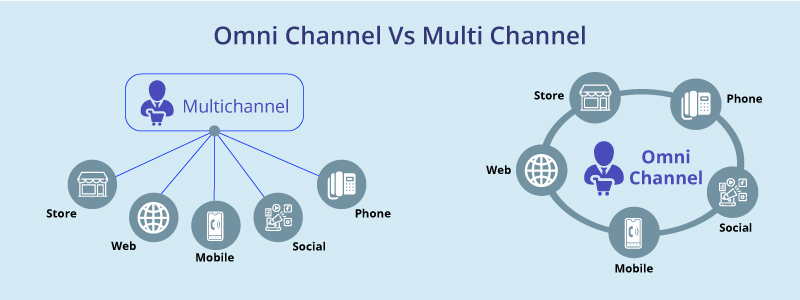
Multichannel marketing, as the name suggests, involves marketing across multiple channels, such as email, social media, physical stores, direct mail, mobile apps, websites, and more. The primary aim is to reach consumers wherever they are and increase brand visibility. Each channel operates individually, with separate strategies and goals.

For small to medium-sized businesses, this approach offers the chance to explore which platforms resonate most with their target audience. By analyzing channel-specific metrics, businesses can optimize individual channels based on performance.

Omnichannel Marketing

On the other hand, omnichannel marketing is a more integrated approach that provides a seamless and consistent experience across all channels. It focuses on delivering a unified and personalized experience, where all channels are interlinked and centered around the customer’s journey.

Implementing omnichannel marketing requires a robust data management system, advanced analytics, and sometimes AI technology to track and analyze customer behavior across channels. For small to medium-sized businesses, it may initially be a challenge due to resource limitations, but various affordable customer relationship management (CRM) tools and digital marketing platforms can help.

Pros and Cons of Each Approach

Multichannel Marketing

Pros:

  1. Reach: Businesses can communicate with their audience on various platforms, increasing brand exposure.
  2. Channel Optimization: Each channel’s individual performance can be tracked, and strategies can be adjusted accordingly.

Cons:

  1. Fragmented Experience: Because each channel operates in isolation, customers might experience inconsistent messaging and branding across platforms.
  2. Limited Data Integration: Gathering a holistic view of customer behavior can be challenging as data collection is fragmented across channels.

Omnichannel Marketing

Pros:

  1. Customer Experience: Provides a seamless and consistent experience across all touchpoints, improving customer satisfaction and loyalty.
  2. Holistic Data: It offers a complete view of the customer’s journey, enabling businesses to make data-driven decisions.

Cons:

  1. Complex Implementation: It requires strategic planning, technology, and resources to integrate and align all channels effectively.
  2. Management: Maintaining consistency across all channels can be demanding and time-consuming.

Deciding on the Correct Strategy

Choosing between a multichannel and omnichannel approach depends on several factors:

  1. Customer Expectations: Understand your customers’ expectations. If they value a seamless and integrated experience across all touchpoints, an omnichannel approach may be preferable.
  2. Resources and Capabilities: Consider your business’s technological capabilities and resources. Implementing an omnichannel strategy requires significant investment in technology and infrastructure.
  3. Business Goals: Align your decision with your business objectives. If your goal is to optimize individual channels, a multichannel approach might be appropriate. If you aim to build a cohesive customer journey, an omnichannel strategy would be beneficial.

While multichannel marketing provides extensive reach and the ability to optimize individual platforms, it may lead to a disjointed customer experience. On the other hand, an omnichannel strategy ensures a consistent, unified customer journey but demands a more sophisticated setup.

As a small to medium-sized business, it’s important to assess your customers’ needs, your available resources, and your overall business objectives before deciding which marketing strategy to adopt. It may be helpful to start with a multichannel approach, which allows you to identify the channels that work best for your business, before transitioning to an omnichannel strategy as your capabilities mature.

Transitioning from Multichannel to Omnichannel

For SMEs looking to transition to an omnichannel strategy, here are some steps to follow:

  1. Customer Journey Mapping: Start by mapping out your customer’s journey across all touchpoints and channels. This helps identify any gaps in the customer experience and areas that need improvement.
  2. Unified Data Management: Consolidate data from all channels into a single platform for easier analysis. This could be achieved with a robust CRM tool that can track customer interactions across all touchpoints.
  3. Channel Integration: Ensure all your channels are interconnected and can support seamless transitions. This might involve aligning your in-store and online shopping experiences, or ensuring that customer service can handle queries from multiple platforms.
  4. Consistent Messaging: Strive for consistency in your branding and messaging across all channels. This helps enhance brand recognition and ensures that customers receive the same quality of experience no matter how they interact with your business.
  5. Personalization: Leverage the unified data from your CRM to deliver personalized experiences. This could involve using past purchase history to make tailored product recommendations, or targeting customers with personalized marketing messages based on their browsing history.

The Future of Marketing

In the current competitive landscape, businesses should strive for a balanced approach, capitalizing on the strengths of both strategies. The future belongs to those who can create an environment where every channel serves a unique purpose in the customer journey, yet all channels together deliver a cohesive and engaging customer experience.

It is also important to keep in mind that the world of marketing is continually evolving, with emerging technologies such as AI, machine learning, and advanced analytics playing an increasingly significant role. As such, businesses should always be ready to adapt their strategies to stay ahead of the curve.

In conclusion, whether you choose a multichannel or omnichannel marketing strategy should be determined by your specific business needs and resources. Either approach can be successful when implemented effectively, but the ultimate goal should always be to provide the best possible experience for your customers.

Multi-Modal Learning: An Exploration of Fusion Strategies in AI Systems

Introduction:

Advancements in artificial intelligence (AI) have brought about a paradigm shift, particularly in the realm of machine learning. As these technologies evolve, there is an increasing emphasis on multi-modal learning. Multi-modal learning revolves around the idea of integrating information from different sources or ‘modalities’ to enhance the learning process. This can include visual data, audio data, text, and even haptic feedback, among others. In this post, we delve deep into the concept of fusion strategies, which is the heart of multi-modal learning, and how AI systems should combine these different modalities for effective learning outcomes.

What is Fusion?

To fully appreciate the power of multi-modal learning, we first need to understand what ‘fusion’ means in this context. Fusion, in the realm of AI and machine learning, refers to the process of integrating various data modalities to produce more nuanced and reliable results than would be possible using a single modality.

Imagine a scenario where an AI system is trained to transcribe a conversation. If the system has only audio data to rely upon, it may struggle with accents, ambient noise, or overlapping speech. However, if the AI can also access video data—lip movements, facial expressions—it can leverage this additional modality to improve transcription accuracy. This is an example of fusion in action.

Types of Fusion Strategies

Fusion strategies can be broadly classified into three categories: Early Fusion, Late Fusion, and Hybrid Fusion.

1. Early Fusion: Early fusion, also known as feature-level fusion, involves combining different modalities at the input level before they are processed by the model. The integrated data is then fed into the model for processing. This approach can capture the correlations between different modalities at the cost of being computationally expensive and requiring all modalities to be available at the time of input.

2. Late Fusion: Late fusion, also known as decision-level fusion, involves processing each modality separately through different models and combining the outputs at the end. This allows the model to make decisions based on the individual strengths of each modality. It is less computationally intensive than early fusion and can handle modalities being available at different times. However, it may not capture the correlations between modalities as effectively as early fusion.

3. Hybrid Fusion: As the name suggests, hybrid fusion is a blend of early and late fusion strategies. It aims to leverage the strengths of both approaches, capturing correlations between modalities while also being flexible and less demanding computationally. Hybrid fusion strategies usually involve performing early fusion on some modalities and late fusion on others, or applying early fusion and then adding additional modalities via late fusion.

How Should an AI System Combine Information from Different Modalities?

Choosing the right fusion strategy depends on the nature of the task, the modalities involved, and the specific requirements of the system.

1. Consider the Nature of the Task: Tasks that require an understanding of the correlation between modalities may benefit from early fusion. For example, in video captioning, the visual and audio components are closely related, and combining these modalities early in the process can enhance the model’s performance.

2. Evaluate the Modalities: The characteristics of the modalities also influence the choice of fusion strategy. For instance, when dealing with high-dimensional data like images and video, early fusion might be computationally prohibitive. In such cases, late fusion might be a more feasible approach.

3. Assess System Requirements: If real-time processing and flexibility with asynchronous modalities are crucial, late fusion or hybrid fusion might be the preferred choice.

There isn’t a one-size-fits-all solution when it comes to fusion strategies in multi-modal learning. The key lies in understanding the technicalities of the task at hand, the modalities in play, and the specific requirements of the system, and then selecting the fusion strategy that best aligns with these factors.

Recent Advances in Fusion Strategies

Despite the challenges, researchers are pushing the boundaries and continually developing innovative fusion strategies for multi-modal learning. Several promising directions in this field include:

1. Cross-modal Attention Mechanisms: Attention mechanisms have been a popular technique in machine learning, initially proving their worth in Natural Language Processing (NLP) tasks. They have now made their way into the realm of multi-modal learning, with cross-modal attention mechanisms proving particularly promising. These models can learn to “pay attention” to relevant features across different modalities, leading to more effective fusion and ultimately better performance.

2. Graph-based Fusion: Graph-based methods are another area of interest. Here, different modalities are represented as nodes in a graph, with the edges denoting interactions between these modalities. The graph structure allows for a rich representation of the relationships between modalities, and it can be a powerful tool for fusion.

3. Deep Fusion Techniques: With the advent of deep learning, more complex fusion techniques have become feasible. For instance, multi-layer fusion strategies can execute fusion at different levels of abstraction, enabling the model to capture both low-level and high-level interactions between modalities.

The Role of Context in Fusion Strategies


The decision of which fusion strategy to adopt is not solely determined by the nature of the task or the characteristics of the modalities. The context in which the AI system operates also plays a significant role. For instance, if an AI system is designed to operate in an environment where network latency is high or where computing resources are limited, a late fusion strategy could be more appropriate due to its lower computational requirements.

Similarly, if the system is deployed in a setting where certain modalities might be unavailable or unreliable—such as in a noisy environment where audio data might be compromised—a late or hybrid fusion strategy could be more suitable as they offer greater flexibility in dealing with missing or uncertain data.

The Importance of Evaluation Metrics


The choice of fusion strategy should also be informed by the evaluation metrics that are important for the task at hand. Different fusion strategies might optimize for different aspects of performance. For example, an early fusion strategy might lead to higher accuracy by capturing intricate correlations between modalities, while a late fusion strategy might offer faster processing times or better handling of missing or asynchronous data.

Hence, it’s important to clearly define the success metrics for your AI system—be it accuracy, speed, robustness, or some other criterion—and to choose a fusion strategy that aligns with these objectives.

The Future of Fusion Strategies


Given the rapid progress in AI and machine learning, it’s clear that the future holds exciting possibilities for fusion strategies in multi-modal learning.

With advancements in technologies like 5G and the Internet of Things (IoT), we can expect an explosion in the availability of diverse and rich data from multiple modalities. This will provide unprecedented opportunities for multi-modal learning, and the demand for effective and efficient fusion strategies will only grow.

In the future, we can anticipate more sophisticated fusion strategies that leverage the power of deep learning and other advanced techniques to capture complex correlations between modalities and deliver superior performance. For instance, we could see fusion strategies that dynamically adapt to the context, selecting different approaches for different tasks or environments. Or we could see strategies that incorporate elements of reinforcement learning, allowing the AI system to learn and improve its fusion strategy over time based on feedback.

At the same time, we must also be mindful of the challenges that lie ahead. As we deal with more and complex data from diverse modalities, issues like data privacy, algorithmic fairness, and interpretability will become increasingly important. As such, the development of fusion strategies will need to be guided not only by considerations of performance and efficiency but also by ethical and societal considerations.

Conclusion
Fusion strategies are at the heart of multi-modal learning, and they hold the key to unlocking the full potential of AI systems. By carefully considering the task, the modalities, the context, and the desired outcomes, we can select the most effective fusion strategy and build AI systems that are truly greater than the sum of their parts. As we look to the future, the possibilities for fusion strategies in multi-modal learning are exciting and virtually limitless. The journey has only just begun, and the destination promises to be nothing short of revolutionary.

Creating a Customer-Centric Culture: The Role of Marketing Automation and Closed Loop Marketing

Introduction:

In today’s rapidly evolving business landscape, customer-centricity has emerged as a vital factor for organizations aiming to improve customer experience and drive growth. Two strategies that have gained significant attention in recent times are marketing automation and closed loop marketing. These approaches offer businesses powerful tools and insights to foster a customer-centric culture. In this blog post, we will explore the recent revelations surrounding these strategies and discuss their pros and cons in creating a customer-centric culture.

Understanding Marketing Automation:

Marketing automation refers to the use of software platforms and technologies to automate marketing processes, streamline workflows, and nurture customer relationships. It allows businesses to automate repetitive tasks, such as email marketing, lead generation, customer segmentation, and social media management. By implementing marketing automation, organizations can create more targeted and personalized marketing campaigns, thereby improving customer engagement and satisfaction.

Pros of Marketing Automation:

  1. Enhanced Efficiency: Marketing automation reduces manual effort, enabling marketers to focus on strategic activities. By automating routine tasks, businesses can streamline their processes, save time, and increase productivity.
  2. Personalization at Scale: Through marketing automation, companies can collect and analyze customer data, such as browsing behavior, purchase history, and preferences. This data empowers marketers to deliver personalized content, recommendations, and offers, fostering stronger connections with customers.
  3. Improved Lead Management: Automation tools enable businesses to capture, track, and nurture leads more effectively. By automating lead scoring and nurturing processes, marketers can identify high-quality leads and deliver tailored content to guide them through the sales funnel, resulting in higher conversion rates.
  4. Enhanced Customer Experience: Marketing automation facilitates timely and relevant communication with customers. By delivering personalized messages based on customer behavior and preferences, businesses can create seamless and engaging experiences across various touchpoints, strengthening customer loyalty and satisfaction.

Cons of Marketing Automation:

  1. Initial Investment and Learning Curve: Implementing marketing automation requires financial investment in software, infrastructure, and training. Additionally, businesses may face a learning curve while integrating and optimizing these tools within their existing marketing strategies.
  2. Risk of Over-Automation: Overusing automation can lead to impersonal and generic marketing communications. It is crucial to strike a balance between automation and human touch to maintain authenticity and avoid alienating customers.

Understanding Closed Loop Marketing:

Closed loop marketing is a data-driven approach that involves aligning sales and marketing efforts to create a closed feedback loop. It aims to track and analyze customer interactions throughout the entire customer journey, from initial touch-points to post-purchase activities. By leveraging this data, businesses can optimize marketing strategies, enhance customer targeting, and tailor messaging to meet individual needs.

Pros of Closed Loop Marketing:

  1. Data-Driven Insights: Closed loop marketing enables organizations to gather valuable data about customer behavior, preferences, and buying patterns. This information helps marketers make data-driven decisions, identify trends, and uncover areas for improvement in their marketing campaigns.
  2. Alignment of Sales and Marketing: By aligning sales and marketing efforts, businesses can foster collaboration, streamline processes, and enhance communication. This alignment ensures that both departments work together to deliver consistent and targeted messaging throughout the customer journey.
  3. Improved ROI Measurement: Closed loop marketing provides visibility into the performance of marketing campaigns and their impact on revenue generation. It allows businesses to measure and attribute the success of marketing initiatives, facilitating better resource allocation and improving return on investment.
  4. Continuous Optimization: With closed loop marketing, organizations can continuously refine their marketing strategies based on real-time feedback and insights. By identifying what works and what doesn’t, marketers can optimize their efforts to deliver more relevant and effective messaging to customers.

Cons of Closed Loop Marketing:

  1. Data Integration Challenges: Implementing closed loop marketing requires seamless integration between marketing automation tools, customer relationship management (system) software, and sales platforms. This integration process can be complex and time-consuming, especially for organizations with disparate systems and data sources.
  2. Dependence on Data Accuracy: Closed loop marketing heavily relies on accurate and reliable data. Inaccurate or incomplete data can lead to flawed insights and misguided decision-making. Maintaining data integrity and quality is crucial for the success of closed loop marketing initiatives.
  3. Organizational Alignment: Implementing closed loop marketing requires cross-functional collaboration and alignment between sales and marketing teams. This alignment may pose challenges in organizations where silos exist or where there is resistance to change. Strong leadership and clear communication are essential to overcoming these challenges and fostering a customer-centric culture.

Conclusion:

Creating a customer-centric culture is imperative for businesses aiming to improve customer experience and drive growth. Marketing automation and closed loop marketing are two powerful strategies that can help organizations achieve this goal. Marketing automation enables businesses to automate repetitive tasks, personalize marketing efforts, and enhance customer engagement. Closed loop marketing, on the other hand, facilitates data-driven decision-making, aligns sales and marketing efforts, and enables continuous optimization of marketing strategies.

While both strategies offer numerous benefits, it is essential for organizations to carefully consider their unique needs, challenges, and resources before implementing them. Balancing automation with personalized human touch, ensuring data accuracy and integration, and fostering organizational alignment are crucial factors to consider for successful implementation.

By harnessing the power of marketing automation and closed loop marketing, businesses can create a customer-centric culture that not only improves customer satisfaction but also drives business growth and competitiveness in today’s dynamic marketplace.