Customer experience management (CEM) has never been more exciting than it is today! As the world of customer engagement rapidly evolves, companies are stepping up their game to meet the ever-changing demands of consumers. Today, we’re breaking down some of the most significant developments in CEM strategy that have taken the field by storm.
🚀 AI-powered Personalization: Meet Your New Best Friend!
Say goodbye to generic customer interactions! Today, a cutting-edge AI platform was unveiled that takes personalization to a whole new level. By harnessing the power of advanced algorithms and machine learning, this AI system can analyze vast amounts of customer data in real-time to deliver highly tailored recommendations and experiences. Customers are raving about the genuine connections they’re forming with brands thanks to this game-changing technology.
🌐 Omnichannel Mastery: Seamlessly Connecting the Dots
Today marked the launch of an innovative omnichannel platform that ensures a consistent and seamless customer experience across all touchpoints. This groundbreaking system unifies all communication channels, allowing businesses to engage with customers via their preferred method – be it email, social media, or chatbots. The result? Effortless interactions and sky-high customer satisfaction rates.
🎯 Hyper-targeted Marketing: Unlock the Full Potential of Data
Big data has revolutionized how we approach customer experience management, and today’s announcement of an advanced analytics tool takes it a step further. By leveraging predictive analytics, this new solution allows businesses to anticipate customer needs and tailor their marketing efforts accordingly. The era of mass marketing is over; welcome to the age of highly targeted, data-driven campaigns!
🤖 Empathetic Chatbots: Humanizing Automation
Chatbots have been a staple in customer service for years, but today’s revelation of a groundbreaking empathetic chatbot has forever changed the game. Powered by natural language processing and sentiment analysis, this chatbot can understand not just what customers are saying but also how they’re feeling. By empathizing with customers and addressing their emotional needs, businesses can build stronger connections and foster long-lasting loyalty.
These exciting developments in the field of customer experience management strategy are just the beginning. As technology continues to advance, there’s no doubt that we’ll continue to see even more innovative solutions that delight customers and keep them coming back for more. Stay tuned for the latest news in the ever-evolving world of CEM!
In a remarkable development that’s making waves across the customer experience management (CEM) world, today, several major companies announced the successful implementation of advanced AI-driven chatbots to revolutionize their customer support and engagement strategies.
So, what makes these AI chatbots so special, and why are they becoming an integral part of modern CEM? These intelligent virtual assistants are designed to understand natural language, learn from interactions, and provide instant, accurate responses to customer queries, all while offering personalized experiences. The result? Faster, more efficient support and dramatically improved customer satisfaction!
The benefits don’t stop there. By handling routine tasks and frequently asked questions, AI chatbots free up human agents to focus on more complex or emotionally sensitive issues, ensuring customers receive the right kind of support at the right time.
One striking example of AI chatbot success comes from a leading e-commerce platform that reported a 40% reduction in support ticket volume and a significant boost in customer satisfaction scores, all thanks to their new chatbot team members.
But it’s not just about customer support. AI chatbots are also transforming marketing and sales, helping businesses engage with prospects and customers in real-time, guiding them through the buyer’s journey with personalized recommendations and assistance.
As AI chatbot technology continues to evolve, the impact on CEM is likely to be profound. We can expect faster resolution times, more personalized experiences, and overall happier customers, all while reducing operational costs for businesses.
Join the conversation and share your thoughts on the future of AI chatbots in customer experience management. How do you see this technology reshaping the way businesses interact with their customers? Let’s explore the possibilities together! #AIChatbots #CEMTransformation
Today, the customer experience management landscape witnessed a seismic shift as Emotion AI, a cutting-edge technology, emerged as the new driving force behind exceptional customer experiences. In a move that has sent CX experts buzzing, several industry-leading brands announced their adoption of Emotion AI to revolutionize their customer interactions.
But what exactly is Emotion AI, and why is it creating such a stir? This groundbreaking technology leverages artificial intelligence to detect, interpret, and respond to human emotions through voice, facial expressions, and body language. By integrating Emotion AI into customer interactions, companies can now offer personalized, emotionally attuned experiences that foster loyalty and satisfaction like never before.
Imagine a world where customer service representatives can gauge your mood and adjust their responses accordingly, or where marketing campaigns can be tailored to evoke specific emotions, enhancing their impact. The possibilities are endless, and the potential benefits for both customers and businesses are immense.
This paradigm shift is already making waves across various industries. Retail giants are harnessing Emotion AI to provide empathetic in-store experiences, while airlines are exploring its potential to offer personalized in-flight entertainment based on passengers’ emotions.
The adoption of Emotion AI is not only an exciting development for customer experience management but also a testament to the power of innovation. By combining advanced AI capabilities with a deep understanding of human emotions, businesses can foster stronger connections with their customers, fueling growth and long-term success.
Join the conversation and share your thoughts on the potential of Emotion AI in revolutionizing customer experience management. How do you envision this technology shaping the future of customer interactions? Let’s explore the possibilities together! #EmotionAI #CXRevolution
In this two-part series, I will cover the importance of understanding what, how, why and when centralized versus decentralized technology will impact how you interact with your audience / customers. The focus of messaging will be from a publish versus subscribe perspective.
As the debate over data ownership, privacy, monitoring and yes, even the freedom of speech intensifies, the dynamics and architecture of our technical platforms will become even more critical. Individuals and companies that are deciding how to develop, launch and support their products and services will need to think about their long-term vision and what type of control they (ex. Developers, Publishers, Influencers, Retailers) will require to ensure the items will be available when and where needed.
Differentiators
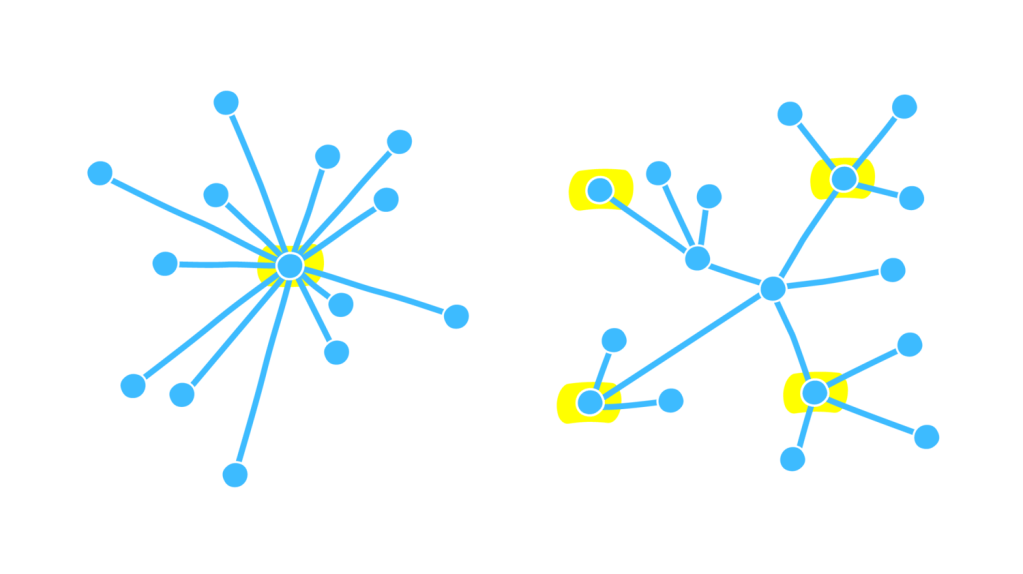
Centralized Technology: All users are connected to a central server that stores complete network data and user information.
Advantage: Standardization, Control, Administration and Monitoring – Usage Example: YouTube, Banking Systems
Disadvantage: Data Vulnerability (see Hackers), System Failure (Redundancy Required), Centralized (single point of attack)
In certain scenarios, the generic cloud computing model can be considered this type of technology, I’ll explain shortly. Typical Situation; Perhaps you have all of your technology (ex. applications, data, hardware) centrally located, at your home, or office. When you need to maintain, upgrade or retire the technology it is your responsibility to take care of it. You, in theory “own” the technology, infrastructure and any potential headaches / issues that may arrive with that responsibility. Yes, you may have a service agreement, or license that keeps you up to date and running, but the sole responsibility is in your hands.
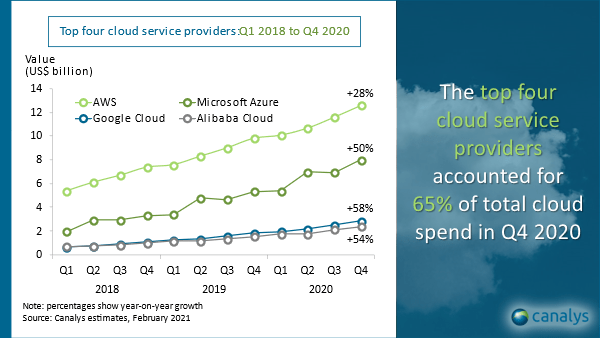
Then in the mid-2000’s came the advent of the commercially available cloud platform, as I briefly mentioned and referenced above. Now you have the option to put the technology that you in theory “own” and all of the inherent issues (ex. updates, backups, scalability) into the hands of someone else, but obviously for a fee / subscription. This became a great option for those that wanted to ensure they had the latest software, hardware, availability and protection, especially from lost information, provided to them via an SLA (Service Level Agreement). All the usual players have stepped-up to offer these services, primarily since they already had the hardware (in most cases), resources and infrastructure available to be leveraged. The names you should be familiar with, Amazon AWS, Google Cloud and Microsoft Azure own the largest market share of this technology as of early 2021.
This offering has become ideal to those that do not want to invest in quickly outdated hardware and software, plus if you are selling products and services any downtime, or lost data (vendors often have backup/restore options) can be critical to your business. When adopted, you now own the creativity, business model, growth and vision, plus your products and services are available “on-demand” to the public, while the technology infrastructure and administration of it (to some, the unfortunate part of doing business) is being administered and executed by a 3rd party.
However, now I want to remind you of what was mentioned in the opening paragraph, regarding the long-term vision for your products and services. Always keep in mind that you are at the mercy of the Terms and Conditions of the contract you signed with your service provider. It is not uncommon for these T&C’s to be updated, or modified numerous times per year. You may receive an email with a 45 page PDF file attached, that is full of legal jargon, and you just click the <AGREE> button and never think twice about it. While your business model, products and services being offered may have not changed, there might have been a wave of cultural, political and social changes that now put your ideas, products and services out-of-favor and no longer something that your service provider wants to “support” via their infrastructure. Overnight, that centralized offering that you adopted with open hands may now be unavailable to you, your organization and the audience / customers you count on. The vendor ultimately is in the right, because you are no longer adhering to the Terms and Conditions of doing business with them, which you early agreed to in that email that you gave little attention to. Now you may be in trouble and starting to scramble for any option, or alternative that will keep you and your business afloat. Being proactive, versus reactive is the key to surviving the just-in-time climate that we are forced to live with.
In a centralized model, always ask yourself the following in advance:
How much control do I “need / want” over what is being offered from me, or my organization to the public (ex. Are my products, services deemed edgy, controversial, opinionated, trendy, or focused towards a particular audience)
How much control do I “have” over what is being offered by me, or my organization (ex. Are channels, comments, endorsements, feedback and input allowed without moderation)
If my platform, or vendor suddenly became unavailable, how would I respond and reach my audience / customers – Always have a backup and/or disaster recovery plan and options ready in case the inevitable happens
Do I know my audience / customer and their expectations – Is your business meeting the needs of your audience, or is it being constrained by the terms and conditions of the service provider
Do I understand the value of data, privacy, reputation and protecting it – This is not just for you and your organization, but also your audience and customers
In my next Post, I will explore Decentralization and summarize the advantages / disadvantages of each model.
As a first time customer entering a B2B / B2C web site, or even a brick-and-mortar retailer there are typically some general expectations:
Will a customer have a friendly experience (product availability with descriptions and options, simple graphical user interface)
Are there sufficient options / configurations if required for the consumer
Will I be provided product reviews
Is there a straightforward transaction experience (no guessing on what is required to purchase, ship if necessary and return if provided)
lastly will the merchant be proactive on when the costumer can expect receipt of their product.
If you can meet / exceed these expectations while the costumer is interacting with your business, then there is a possibility that they will not need to be continually following-up on their order.
Missing Expectations
Far too often a retailer list their products and services, assumes the costumer will “understand” what is needed to procure the item(s) purchased and will be all too happy to accept the lack of follow-thru of said transaction. However, if this costumer has never done business with you before, you can also assume that there will be some anxiety (especially if the price is high) regarding the purchase and they will need to be comforted until their experience with your business has been successfully transacted. Simple status updates, especially if the item has been ordered can alleviate the anxiety. A simple follow-up after the transaction can create a better personalized experience with the customer and potentially retain loyalty for future purchases.
Sure, if I always purchase the same product from the retailer, perhaps a follow-up after each transaction is not necessary – But maybe an occasional touch-base to see if you are meeting their expectations can go a long way in their customer experience. The customer may even provide some helpful advice that other customers (or even lost customers) felt was not that important to you…since you failed ask.
By all means, don’t get lazy and send a generic satisfaction survey to your customers. This is only beneficial if you plan on responding back to their replies, asking what can be done better and what you should continue to do.
Customer Retention
If the customer believes they had to expend a great deal of effort to purchase, track and convince themselves they made the right purchase, you can ensure yourself that you may never see them as a repeat customer. It is much easier and a lot less expensive to foster an existing relationship with a customer than create a new one with a stranger.
Be proactive in addressing typical expectations, such as those mentioned above, but also be reactive (especially quickly) when a customer has an inquiry. It’s a lot easier for a customer to build anxiety, distrust and dissatisfaction when they believe you are not being responsive to their needs.
Remember a dissatisfied customer is more likely to share their negative experience with others, versus those that are satisfied. Addressing the issue before it becomes a public issue is a lot more beneficial to your existing and potential business.
It’s been a while since I had the opportunity to post an article and I now found myself compelled to get a posting published regarding some recent experiences. While I’ll never call out a business directly for poor customer service (aka, Customer Experience) I do hope that some day that these “businesses” realize the lost opportunities they had and that simple little activities could have made them a more profitable (potentially).
The Interaction
As you were told by your parents and most likely educators from a very young age, a persons first impression of you is the most important interaction you may ever have with the customer. Making me (the customer) feel as if I’m doing you (the merchant) a favor, is an immediate turn-off. The customer may have done some research to find you, in hopes that their needs will be met by the services you offer. They come to you with anxiety and trepidation (based on the unknown), you are unfamiliar to them…will they get their needs met with satisfaction? Will they need to follow-up to get status, or satisfaction after the transaction? Are you meeting their needs at a fair “price” and / or duration? At this point in the interaction, the merchant has a fairly simple role at this point…LISTEN to the customer. Analyze the interaction as it happens, is the customer knowledgable in the service being requested, do they appear to require additional attention than your typical customer, what are they specifically looking for…like price or speed in meeting their needs. Give your customer as much time as they need to mitigate their uncertainty. Remember, they came to you and not the reverse, the funds remain in their wallet until they choose to release them in your direction.
The Communication
At this point the merchant is, or has been listening to the customer, building the relationship, reducing anxiety and perhaps creating a bond that will continue beyond this first interaction. Perhaps they have remembered to introduce each other and received proper names, they begin to use proper names in their dialog. It is more possible that a person will have a sense of familiarity when using proper names than labels. However, the more difficult part of this exercise is to remember names and important takeaways that happened during this dialog…take NOTES. The next time that George walks into your shop and you remember that they are new to the neighborhood and are originally from a town in New York that you grew-up in, will create a bond more valuable than the five percent off you gave as a first time customer. Another benefit is that a relationship that is based on names and recognition also provides a barrier to negative feedback anonymously. It’s much easier for a stranger to provide negative input on social media about an interaction, when they believe they are anonymous. However, if the customer is on a first name basis with the merchant, typically forgiveness and having a conversation in order to rectify the issue will happen more readily.
Transaction and Follow-up
The transaction is simple, did the merchant accomplish the request which was asked for, without surprises and with explanation of what has been done. Did the merchant provide regular status updates if the process was lengthy (this means being proactive and not having to be asked by the customer). Were deadlines met if one was given, if there was a potential delay, was this provided early and with explanation on why and with a new deadline. During the transaction, the customer must never be left wondering what is happening – over communication is better than no communication, nine times out of ten.
One of the most important stages of the process is the follow-up with the customer and unfortunately this is often disregarded. A simple, call or note asking the customer if everything has met their expectations is often good enough. However, not doing this gives a perception to the customer that they are just a number and their business is not valuable, regardless of the financial investment. Avoid the blind survey, make it personable, understand what was done well and more importantly what could have been done better. This data is invaluable and will help the merchant understand what customers are expecting from their business.
The merchant should never get sloppy and bypass stages of a relationship with new or existing customers, just because they think it’s a burden. Even one missed stage in the process, or even a poorly executed one could send that customer to the competitor and they will be none-the-wiser as to why their business is struggling
Okay, a bit of clickbait on that title but I’ll try to describe a constant gripe that I have with my small business merchants that I deal with on a daily basis. As you may have noticed in my About section, I have over 25 years in the management consulting field, specifically around Customer Relationship Management (CRM and Master Data Management (MDM). I typically, assist large corporations in the deployment of programs that advance their customer experience objectives by helping them understand how to better interact via acquired data, programs and ultimately offerings that lead to greater customer retention and revenue. But enough about me…I want to provide some observation that is truly relevant during the current economic downturn.
Going Wide
On a daily basis we deal with merchants online and locally (brick-and-mortar) and while the interaction may be quick and painless, the lost opportunity for CRM by the merchant is critical. What did I mean about “Wide” in the title…simply this is the breadth of information the merchant is willing to capture about the customer. For example, I frequent my local hardware store – Do they know I live in the neighborhood, have they seen me before, am I a professional or just a DIY guy? By capturing some of these data points, perhaps they can begin to offer additional information like unannounced sales, workshops, or inform me of a network / community of similar shoppers. But Mike, how does a small business do this? I would suggest a feedback card, or request for simple contact information (don’t be intrusive, you want participation, a postal code and email may be enough at this point) and ideally what they may be interested in to personalize the communication. This would be the start to your CRM and MDM program at the foundational level. At a bare minimum, you now have a database of customers that you can reach out to virtually, that self volunteered to be a member of your community and will be “interested” in communication from you as long as relevant.
Going Deep
I mentioned above that I frequent a local hardware store and by frequent I mean at least once a week. Therefore, I have made the (personal) decision that this will be my go-to choice for hardware accessories and services, but I don’t believe my chosen merchant even knows this. Let’s say that I keep stopping in for painting, plumbing or lumber supplies. The next level of engagement by my merchant should be to go “Deep“…what project or specific activities are you working on, providing an additional level of detail about you? The merchant can now begin a level of personalization that is above and beyond their competitors. This could be accomplished by having a survey of no more than five questions that help to identify what interests their customer has. There is a phrase in CRM called “Know Your Customer” (KYC) and many are still struggling to perfect this, because it takes work, needs an objective and often is subject to resistance by the customer. If the merchant approaches the objective with I’m here to assist you versus, I’m here to sell you something…the customer will feel a bit more at ease and be more receptive to the effort. The benefits of KYC in small business are extremely positive, you can become their trusted advisor, partner and create a long-term relationship that survives turbulent times. Once this relationship has been built, expanding outside of the comfort zone can be profitable. For my hardware store example, if they analyzed their data, they would see that I typically do the same projects based on the season. Pushing information to me just prior to that season may make me more prone to visiting the store to procure my supplies for that season.
Engaged, thank you
I think the ultimate goal for many merchants would be the migration of on-demand transactions to a subscription service. I’m going to pick on my hardware store on last time. If they successfully accomplished the above levels of engagement, they may now pursue getting the customers to “sign-up” for subscription based components. This could be as simple as…Mike always buys furnace filters, of a particular size every four months, he also buys fertilizer every three months and we noticed a particular pattern in cleaning products. I hope you see where I’m going with this, if the merchant can put the customer on a subscription and ships, or tells the customer the product is ready for pick-up, they will now have a fully engaged customer for specific items and ensure repeat purchases.
I will cover each one of these areas in depth over time, but I believe you can see the value in CRM and MDM for all merchants and more importantly while these merchants struggle to keep their clientele during tough times.








 De Lio Tech Trends