
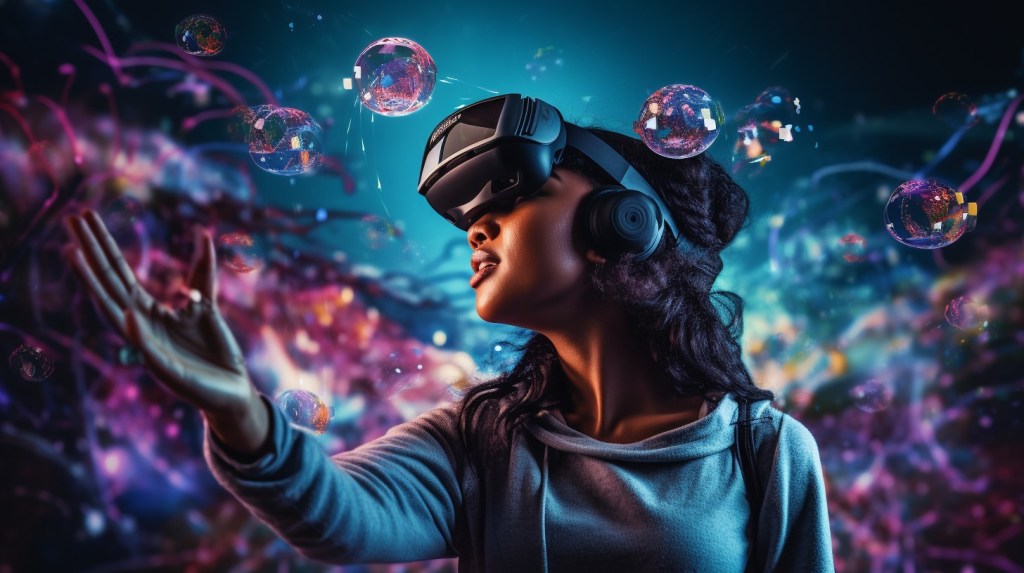
The Comprehensive Realm of Virtual Reality: Navigating Its Prospects and Challenges

Introduction: Unveiling the Virtual Reality (VR) Universe

Virtual Reality (VR), a term that once sounded like a fragment of science fiction, has evolved into a palpable and influential technology of the modern era. At its core, VR is an immersive digital experience that replicates an environment or simulates a presence. It integrates auditory, visual, and, in more advanced forms, haptic (touch) sensations to create a virtual world.

A Journey Through Time: The Evolution of VR

The concept of VR isn’t new; its roots can be traced back to the 1950s. Morton Heilig, often regarded as the father of virtual reality, developed the Sensorama in the 1960s, an early VR machine. However, it wasn’t until the 1980s that the term “virtual reality” was coined by Jaron Lanier, whose company, VPL Research, created some of the first VR gear—gloves and goggles.

The 1990s saw VR enter the gaming industry, albeit with limited success due to technical limitations. Fast forward to the 21st century, the advancements in computing power, graphics, and VR hardware have brought this technology to a point where it’s more accessible and realistic than ever before.

Benefits of Virtual Reality

Transformative Learning and Training Tool

VR’s ability to simulate real-world environments makes it a powerful tool for education and training. For instance, medical students can perform virtual surgeries, gaining experience without the risk. NASA uses VR to train astronauts for space missions, offering a safe yet realistic environment to learn and adapt.

Revolutionizing Entertainment and Gaming

The entertainment industry has been one of the biggest adopters of VR. From gaming to movies, VR has transformed how users engage with content, offering immersive experiences that traditional media cannot match.

Enhancing Design and Visualization

In fields like architecture and automotive design, VR allows professionals to visualize and interact with their creations in a three-dimensional space. This capability leads to more efficient design processes and a better understanding of how a project will look and feel once completed.

Expanding Accessibility

VR can offer life-changing experiences for people with disabilities. Virtual environments can be tailored to cater to various needs, providing experiences and interactions that might be challenging or impossible in the physical world.

Challenges and Disadvantages of Virtual Reality

Technical and Financial Barriers

Despite its advancements, VR technology remains expensive and often requires high-end computing resources. This factor limits its accessibility to a wider audience and impedes its integration into certain sectors.

Health Concerns

Extended use of VR can cause issues like eye strain, headaches, and motion sickness, known as VR-induced symptoms and effects (VRISE). There’s also a growing concern about the long-term impact of VR on physical and mental health, particularly in developing children.

Potential for Social Isolation

While VR offers incredible virtual interactions, there’s a risk of it leading to social isolation. Users might prefer the virtual world to real-life interactions, potentially impacting their social skills and mental health.

Data Privacy and Security

As with any digital technology, VR raises concerns regarding data privacy and security. The technology collects sensitive data about users, such as biometrics and behavioral patterns, posing risks if not managed appropriately.

VR in Today’s Marketplace: Applications and Examples

Healthcare: Virtual Therapies and Rehabilitation

VR has made significant inroads in healthcare, offering innovative solutions for therapy and rehabilitation. For example, VR-based therapies are being used to treat conditions like PTSD, anxiety disorders, and phobias.

Retail: Enhanced Shopping Experience

In retail, VR enables customers to try products virtually. For example, IKEA’s VR app allows customers to visualize furniture in their homes before making a purchase.

Real Estate: Virtual Property Tours

Real estate agencies are leveraging VR to offer virtual property tours, enabling potential buyers to explore properties remotely, saving time and resources.

Education: Interactive Learning Environments

In education, VR is being used to create interactive learning environments. It allows students to explore historical sites, dissect virtual frogs in biology classes, or even visit distant planets.

Tourism: Virtual Travel Experiences

The tourism industry is using VR to offer virtual travel experiences, allowing people to explore destinations from the comfort of their homes. This application has gained traction, especially during the travel restrictions imposed by the COVID-19 pandemic.

Conclusion: Seizing the Virtual Future

Virtual Reality stands at a pivotal point in its evolutionary timeline. Its applications, stretching from healthcare to entertainment, demonstrate its versatility and potential to reshape industries. However, the challenges it faces, from technical barriers to health concerns, remind us that this technology is still in a phase of growth and refinement.

As we navigate the ever-evolving landscape of VR, it’s crucial to stay informed and engaged with the latest developments. Whether you’re a technology enthusiast, a professional looking to integrate VR into your field, or a curious mind exploring the frontiers of digital innovation, the journey through the realm of virtual reality promises to be fascinating.

For more insights into the world of VR and to stay updated on the latest trends and applications, follow us. Our upcoming posts will delve deeper into specific VR technologies, explore case studies, and offer expert opinions. Join us in unraveling the virtual tapestry of tomorrow.

Keywords: Virtual Reality, VR Technology, Digital Innovation, VR Applications, Future of VR, VR in Education, VR in Healthcare, Virtual Experiences, VR Challenges, Immersive Technology.

The Dawn of AI Wearables: Paving the Way for Enhanced Human-AI Symbiosis

Introduction

In an age where digital transformation and artificial intelligence (AI) are not just buzzwords but realities reshaping our lives, the emergence of AI wearables stands as a pivotal moment in technological evolution. As strategic management consultants specializing in customer experience, artificial intelligence, and digital transformation, we’ve closely observed how AI wearables are not just gadgets; they’re gateways to a new era of human-AI collaboration. This post delves into the profound impacts of AI wearables on the future of AI and their role in fostering greater acceptance of AI assistance in our daily lives.

The Evolution of AI Through Wearables

A. The Integration of AI in Daily Life

AI wearables represent a significant leap from traditional devices. Unlike smartphones or laptops, these wearables blend seamlessly into our lives, offering personalized, context-aware experiences. For instance, smart glasses equipped with AI can provide real-time data overlay, enhancing professional tasks in fields like surgery or engineering with precision and efficiency.

B. Enhancing Human Capabilities

These devices go beyond convenience, offering the potential to augment human capabilities. Consider smart watches that can predict health issues by analyzing physiological data with AI algorithms. This isn’t just about getting notifications; it’s about proactive healthcare management, a step towards personalized medicine.

C. AI’s Learning and Adaptation

AI wearables stand out in their ability to learn and adapt to user behavior. By continuously gathering data, these devices can refine their algorithms to offer more tailored suggestions, from fitness routines to stress management strategies, thereby creating a more intuitive user experience.

Examples of AI Wearables Reshaping Our World

  1. Daily AI Interaction: Recently a start-up company in San Francisco, Humane developed an every-day-carry “pin” that allows its clients who wear it to interact with the environment and have an onboard concierge available as required and needed.
  2. Fitness and Health Monitoring: Devices like the AI-powered fitness tracker not only monitor physical activity but also provide insights into sleep patterns, stress levels, and overall well-being. Companies such as OuraRing and Whoop are early leaders in this space.
  3. Smart Glasses for Enhanced Reality: Imagine walking down a street and receiving real-time information about your surroundings, from restaurant reviews to historical facts, all through your glasses. Legacy companies such as Ray-Ban are now dipping their toes into the smart glasses market.
  4. AI in Professional Environments: Wearables in workplaces, like smart badges, can optimize workflow, enhance communication, and even ensure employee safety by monitoring environmental conditions.

Preparing for the AI Wearable Era

A. Understanding the Technology

To embrace this new era, it’s essential to understand the underlying technologies. Familiarizing oneself with AI concepts, data privacy issues, and the potential of these devices is crucial. Continually keeping yourself abreast in the latest AI trends will ensure that you are ahead of your competitors.

B. Ethical and Privacy Considerations

As AI wearables become more integrated into our lives, addressing ethical and privacy concerns is paramount. Users should be aware of how their data is being used and the measures taken to protect their privacy.

C. Adaptability to New Interfaces

Adapting to new user interfaces and interaction modes is vital. The transition from screen-based interaction to voice commands or gesture controls requires an openness to learning and adaptability. As we have learned in successful adoption of new technology and trends, customer experience is key and often this is driven by the user interface – Let’s dive a bit deeper into that topic.

Expanding on Adaptability to New Interfaces in the Era of AI Wearables

The emergence of AI wearables introduces a paradigm shift in how we interact with technology. Unlike traditional devices, which rely on screens and keyboards, AI wearables demand a new level of adaptability to novel user interfaces. This shift is not merely a technological change but a cultural and behavioral one, deeply influencing how we communicate, work, and even perceive our environment.

1. Transition from Screen-Based to Natural Interfaces

  • Voice Control: AI wearables often employ voice recognition, enabling hands-free operation. This necessitates users becoming comfortable with speaking commands and questions, a significant shift from typing.
  • Gesture Recognition: Some wearables use gesture control, requiring users to learn specific hand movements or body gestures to interact with the device. This can be both intuitive and challenging, as it involves memorizing a new ‘language’ of gestures.

2. Contextual Awareness and Predictive Interaction

  • Wearables equipped with AI have the capability to anticipate user needs based on context, such as location, time, or previous behavior. This means users must adapt to a device that often acts proactively, rather than reactively.
  • This predictive interaction can lead to more personalized experiences but also requires users to trust and understand the AI’s decision-making processes.

3. Augmented Reality (AR) Interfaces

  • AR wearables overlay digital information onto the real world, creating a blended reality. Interacting with this hybrid environment requires users to process and respond to both physical and digital stimuli simultaneously.
  • This demands a cognitive shift in how we perceive and interact with our surroundings, necessitating a heightened level of digital literacy.

4. Adapting to Continuous Learning Systems

  • AI wearables continuously learn and adapt to user preferences and behaviors. Users must, therefore, become accustomed to devices that evolve and change their functionality over time.
  • This constant evolution means that the way a device operates and interacts can change, necessitating ongoing learning and adaptation from the user.

5. Privacy and Control Adjustments

  • As AI wearables become more integrated into our personal lives, users must navigate the balance between convenience and privacy.
  • Understanding and managing privacy settings, and being aware of what data is shared and how it’s used, becomes a crucial part of interacting with these devices.

6. Embracing a Multi-Modal Interaction Landscape

  • The future of interfaces is not limited to one mode of interaction; instead, it will likely involve a combination of voice, gesture, touch, and even thought-based controls.
  • Users will need to be agile, learning to switch between different modes of interaction based on context, convenience, and necessity.

Adapting to new interfaces in the age of AI wearables is not just about learning how to use a new device; it’s about rethinking our relationship with technology. It involves developing new communication skills, understanding complex systems, and being open to continuous learning and adjustment. As these technologies advance, our adaptability will not only enhance our experience with AI wearables but will also prepare us for the next waves of digital transformation.

Conclusion

AI wearables are not just another technological trend; they’re harbingers of a future where AI and humans coexist more seamlessly. As we step into this new era, it’s crucial to stay informed, be adaptable, and understand the broader implications of these technologies. Stay tuned for our next post, where we’ll explore the transformative impact of AI in customer experience management, another fascinating facet of the digital revolution.


This blog post aims to resonate with professionals and enthusiasts who are keen on staying abreast of the latest trends in technology and business processes, particularly in the realms of AI and digital transformation.


In our upcoming discussions, we’ll delve deeper into how AI is revolutionizing customer experiences and driving digital transformation across various sectors. We’ll explore real-world examples, dissect the strategies behind successful AI implementations, and predict future trends that could redefine how businesses interact with their customers.

The future is AI-driven, and understanding these technologies is no longer optional but essential for staying competitive and relevant in an ever-evolving digital landscape. Whether you’re a business leader, a tech enthusiast, or someone curious about the future of technology, these insights will equip you with the knowledge and perspective needed to navigate the exciting era ahead.

Keep an eye out for our next piece, where we’ll break down complex AI concepts into digestible insights, helping you not only understand but also leverage these technologies to transform your business strategies and customer experiences. The journey into the future of AI and digital transformation is just beginning, and we’re here to guide you through every step.

Stay tuned and prepare to be enlightened, challenged, and inspired as we continue to explore the fascinating world of AI and its limitless possibilities in enhancing our lives and reshaping our world.