
Introduction:
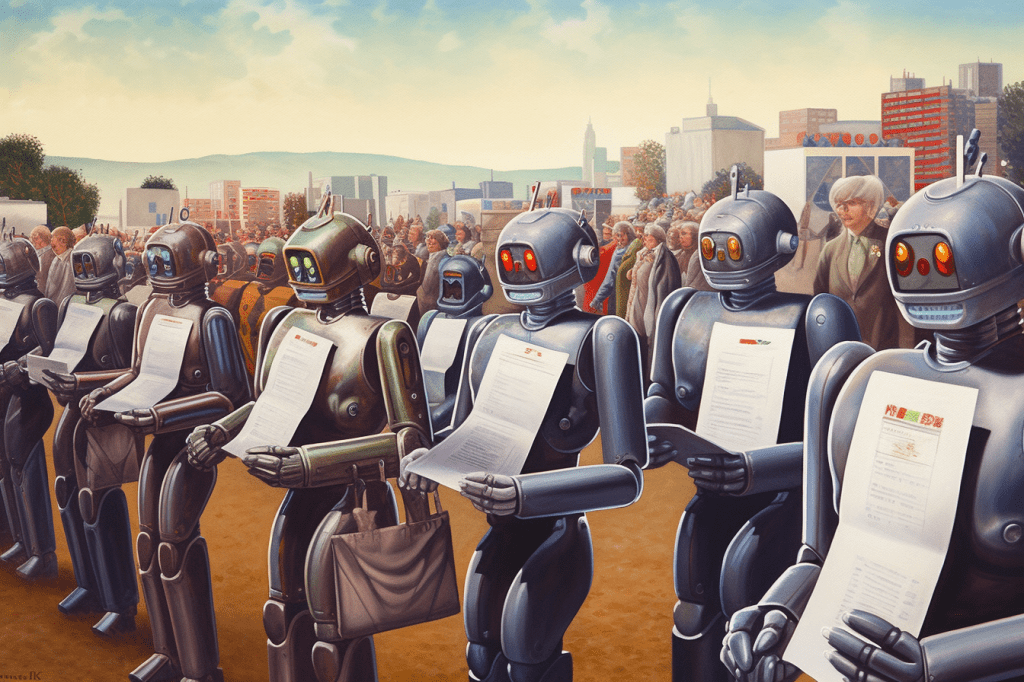
In today’s digital era, the convergence of artificial intelligence (AI) and business processes is creating unparalleled advancements in efficiency, decision-making, and automation. While the discourse around AI often centers on its potential impact on blue-collar jobs, the reality is that its transformative power may be more profound in the realm of white-collar professions. As we delve deeper into the nexus of AI and the corporate sphere, it’s imperative to understand why this technology may have a more pronounced effect on white-collar roles and how professionals can navigate this evolving landscape. This blog post aims to shed light on the profound implications of AI on the business world, focusing on its ramifications for white-collar jobs.
The AI-Driven White-Collar Revolution
- Complex Decision-Making Enhanced by AI
- Example: Consider the role of strategic management consultants like Mike. These professionals rely on vast amounts of data to make informed recommendations. With the aid of AI-driven data analytics, consultants can derive insights from a broader dataset, allowing for more accurate predictions and strategies. Instead of replacing the consultant, AI augments their capability to deliver superior value.
- Routine Tasks Automation
- Example: Finance and accounting roles often involve repetitive tasks such as invoice processing or data entry. AI, through machine learning algorithms, can automate these processes, eliminating the need for manual intervention and reducing human error.
- Customer Experience Personalization
- Example: With the rise of AI-driven Customer Experience Management platforms, customer service representatives and marketing professionals can offer highly personalized experiences. AI analyzes customer interactions, preferences, and behavior to craft unique strategies, effectively transforming the traditional approach to customer relationship management.
Diving Deeper – Unveiling the Deep Impact on Business Processes and Decision-Making
In an era where technological advancements are shaping the future of industries, the AI-driven white-collar revolution stands out as one of the most profound transformations. The integration of artificial intelligence into the daily operations of businesses, especially within white-collar professions, is not just streamlining tasks but is reshaping entire job roles, business models, and decision-making processes.
1. Augmented Decision-Making and Predictive Analysis
White-collar roles, especially in strategic management, finance, and consultancy, rely heavily on data-driven insights. With the advent of AI, these roles are witnessing a shift from reactive decision-making to a more proactive and predictive approach.
- Example: Financial analysts no longer just review historical data but, with the help of AI-driven tools, can now predict market movements, investment risks, and identify potential opportunities with a higher degree of accuracy.
2. Document Automation and Natural Language Processing (NLP)
NLP, a subset of AI, is enabling machines to read, decipher, and make sense of human language. This has major implications for professions that deal with vast amounts of textual data.
- Example: Legal professionals can utilize AI-driven tools to review contracts or legal documents, identifying key clauses, potential risks, or discrepancies. This not only reduces hours of manual work but also enhances accuracy.
3. Enhanced Customer Experience through AI Integration
The merging of AI with Customer Experience Management tools offers businesses the ability to understand their consumers like never before.
- Example: A customer relations manager can utilize AI to analyze customer behavior, predict buying patterns, and tailor marketing strategies in real-time. This level of personalization was unheard of a decade ago.
4. Operational Efficiency and Process Optimization
AI doesn’t just impact client-facing roles but is deeply embedded in internal business processes. From HR to supply chain management, AI-driven analytics are optimizing operations.
- Example: Human resources can use AI to sift through thousands of resumes, identify potential candidates based on specific criteria, and even predict which candidates are more likely to stay long-term, optimizing the recruitment process.
5. Risk Management and Fraud Detection
In sectors like banking and finance, AI tools are becoming indispensable. Their ability to analyze vast datasets in real-time means they can identify anomalies or potential fraud much quicker than human analysts.
- Example: Credit card companies now use AI algorithms to monitor transactions and immediately flag suspicious activities, protecting both the institution and the cardholder.
Navigating the Future: Embracing Change
The AI-driven revolution is not a distant future but a present reality. For white-collar professionals, understanding this transformation is the key. It’s essential to:
- Stay Updated: With technology evolving at a rapid pace, staying updated with the latest trends and tools is crucial.
- Skill Diversification: While AI will handle repetitive tasks, the human touch, creativity, and strategic thinking remain irreplaceable. Professionals should focus on diversifying their skill set, emphasizing areas AI cannot replicate.
- Collaboration with Technologists: Building a bridge between technology and business processes will be essential. Collaborating with AI experts and data scientists can provide a better understanding and application of AI in specific roles.
The AI-driven white-collar revolution is redefining traditional job roles and business operations. While this poses challenges, it also offers numerous opportunities for growth, innovation, and efficiency. By understanding, adapting, and integrating AI into their workflows, white-collar professionals can ensure they remain not just relevant but indispensable in this new era.
The Blue-Collar Context
While there’s no denying that AI has the potential to automate several blue-collar tasks, such as manufacturing or warehouse management, the complexity and variability of these tasks make it harder to achieve full automation. Physical roles often demand a degree of adaptability and tactile feedback that AI and robotics are still evolving to emulate.
Preparing for the AI-Driven Era
For white-collar professionals, it’s not about resisting the AI wave but rather embracing and adapting to it. Here are some steps to consider:
- Continuous Learning and Skill Upgradation: Invest in courses that provide insights into AI and its applications in your field. This doesn’t necessarily mean becoming an AI expert but understanding its implications and potential in your domain.
- Adopt a Hybrid Approach: The future lies in the synergy between human intuition and AI’s data-driven insights. Instead of viewing AI as a threat, see it as a tool that enhances your capabilities.
- Networking and Collaboration: Engage with AI experts, attend tech conferences, and collaborate on projects that offer a blend of technology and business processes. This will not only widen your perspective but also open doors to new opportunities.
The Blue-Collar Impact: Navigating the AI Landscape in Traditional Industries
The rapid evolution of artificial intelligence (AI) and automation technologies has ignited discussions around their implications for blue-collar jobs. While much of the spotlight is on white-collar professions, the potential transformations in blue-collar industries deserve a deeper analysis. Here, we delve into how AI and automation are impacting blue-collar workspaces and the nuances that differentiate this impact from their white-collar counterparts.
1. Automation in Manufacturing and Production Lines
Manufacturing is often cited as a prime example when discussing AI’s implications for blue-collar jobs. Advanced robotics and automation systems are transforming assembly lines and production processes.
- Example: Car manufacturing plants now use AI-driven robots for tasks like welding, which were previously done manually. While this boosts efficiency, it also means fewer human operators are required for these specific tasks.
2. Intelligent Systems in Logistics and Warehousing
The logistics sector, particularly warehousing, is undergoing a shift with the introduction of AI-driven systems.
- Example: Amazon’s fulfillment centers employ robots to transport goods around their vast warehouses. These robots, driven by AI algorithms, ensure optimal paths and efficient handling of products, reducing the need for human intervention in certain processes.
3. AI in Agriculture: Precision Farming
Modern farming techniques are now integrating AI to improve yield, reduce wastage, and optimize resources.
- Example: AI-driven drones are used to monitor large farmlands, capturing data on crop health, soil quality, and pest activity. This allows farmers to make precise interventions, applying fertilizers or pesticides only where needed.
4. The Human-Machine Collaboration Paradigm
One of the key aspects of the blue-collar AI context is the collaboration between humans and machines. Unlike many white-collar roles where AI can operate somewhat autonomously, many blue-collar tasks require a more hands-on, collaborative approach.
- Example: In construction, while an AI-driven robot might assist in laying bricks or transporting materials, human supervision and intervention are crucial for quality control and nuanced tasks that require human judgment.
5. Limitations of AI in Blue-Collar Roles
Blue-collar tasks often require a degree of tactile feedback, adaptability to unstructured environments, and complex motor functions. While AI and robotics are advancing, replicating the versatility and adaptability of human workers in certain roles remains a challenge.
- Example: A plumber, while fixing a leak, relies on tactile feedback to ensure the tightness of a joint. An AI-driven robot would find it challenging to replicate this intricate balance of force and feedback.
The Path Forward for Blue-Collar Workers
While there’s potential for job displacement, there’s also an opportunity for blue-collar workers to upscale and integrate with these new systems.
- Skill Augmentation: Training programs that familiarize workers with AI systems and basic tech can help in smooth integration.
- Shift in Job Roles: As AI takes over certain tasks, the nature of blue-collar jobs might shift. For instance, a factory worker might transition into a role where they oversee and manage multiple AI-driven systems.
- Safety and Efficiency: AI can also assist in creating safer work environments by predicting potential hazards or optimizing workflows.
The blue-collar context in the AI era is a blend of challenges and opportunities. While automation might alter the landscape of traditional industries, it doesn’t spell the end for blue-collar roles. By understanding the changes, adapting to new technologies, and viewing AI as a collaborative tool rather than a replacement, blue-collar industries can thrive in this new technological age.
Conclusion:
The era of AI-driven transformation is upon us, and its impact on white-collar roles might be more profound than traditionally anticipated. However, by understanding the nuances of this change and preparing adequately, professionals can position themselves at the forefront of this revolution, harnessing AI’s potential to drive growth, efficiency, and innovation.
In the ever-evolving landscape of artificial intelligence, both white-collar and blue-collar domains are experiencing transformative shifts. As we’ve navigated through the depths of these changes, it’s clear that the future is not just about automation but collaboration, adaptation, and growth. Stay with us as we continue to dissect the symbiotic relationship between AI and the workforce, revealing insights that can redefine how businesses and individuals approach the dawn of this new technological era. Your journey into the heart of the AI revolution is just beginning—stay tuned for more enlightening discussions.

 De Lio Tech Trends