
Developing and Incorporating Customer Journey Personas with AI: Unlocking New Dimensions in CX for Small to Medium-sized Businesses

Introduction:

For a small or medium-sized business (SMB), a deep understanding of your customers can be the key differentiator in an increasingly competitive landscape. That understanding, however, needs to go beyond mere demographics; it should dive into customers’ behaviors, needs, motivations, and even their emotional journeys. One powerful tool for capturing this multifaceted customer profile is the development of customer journey personas, a representation of your customer archetypes. Now, with the emergence of artificial intelligence (AI) technology, businesses can capture, analyze, and utilize customer data at a scale and depth never possible before.

Creating and Leveraging AI-Enhanced Customer Journey Personas:

Customer journey personas are essentially archetypes of your customers, built upon comprehensive behavioral and psychological data. They reflect the various stages a customer may pass through when interacting with your business, from initial awareness to post-purchase experiences. These stages can be analyzed, categorized, and mapped to provide a nuanced understanding of your customers.

The introduction of AI into this process can facilitate the collection and analysis of large-scale, complex data and transform it into actionable insights. These insights can lead to the creation of dynamic and detailed customer journey personas that are consistently updated as new data comes in.

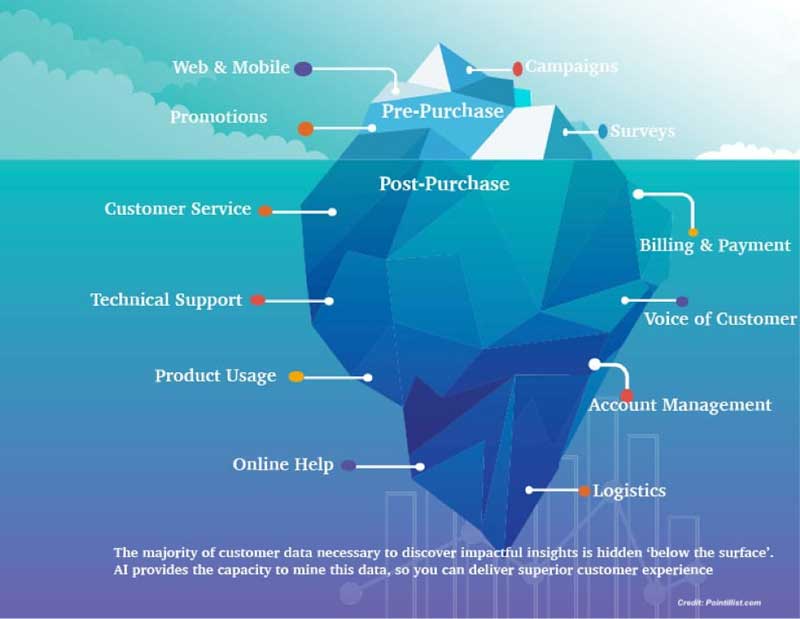
To build these personas, AI tools first collect data from various sources such as website browsing habits, social media interactions, purchase history, customer feedback, and more. Next, advanced machine learning algorithms analyze this data to identify patterns and trends, uncovering different customer segments and their unique journeys. The final step is the creation of detailed personas, which can provide a deep understanding of customers’ needs, preferences, and pain points at each stage of their journey.

Examples of AI-Enhanced Customer Journey Personas:

  1. The Discount Seeker: This persona is always looking for the best deals and discounts. They spend a lot of time comparing prices, and their purchase decision is primarily driven by cost-saving opportunities. An AI system can identify this persona through patterns such as frequent visits to the sales page, usage of discount codes, or a pattern of buying only discounted items.
  2. The Brand Loyalist: This customer is loyal to your brand and regularly purchases your products or services. They rarely compare prices and are less sensitive to cost changes. They are identifiable by patterns such as frequent purchases, positive reviews, and high engagement with the brand’s communication.
  3. The Conscious Consumer: This persona prioritizes ethical sourcing, sustainability, or other value-driven factors over cost when making a purchase. They can be identified by their browsing patterns (like visiting the ‘About Us’ or ‘Our Mission’ pages), engagement with sustainability-related content, or feedback comments reflecting these values.
  4. The Impulse Buyer: This persona tends to make spontaneous purchases and is highly influenced by visually appealing content or persuasive sales copy. They may be identified by patterns of quick purchases following the release of new products or during sales events.
  5. The Researcher: This customer spends a considerable amount of time researching before making a purchase. They read reviews, blogs, watch product videos, etc. They can be identified by their prolonged pre-purchase browsing and engagement with detailed product information.

Identifying the Most Valuable Personas:

Identifying the most valuable customer personas depends largely on your business objectives. Some businesses might find the Brand Loyalists to be the most valuable due to their repeat business and potential for referrals. Others might prefer the Conscious Consumers for their alignment with the company’s ethical values, leading to a strong brand connection and potential advocacy.

To determine the most valuable personas, businesses need to analyze each persona’s lifetime value (LTV), acquisition cost, retention rate, referral potential, and alignment with business objectives. AI can assist in this process by providing real-time data, predictive analytics, and trend forecasting.

Generating Positive ROI:

Once the personas are established and the most valuable ones identified, businesses can then tailor their customer experience (CX) strategies to cater to these personas. This personalization can result in improved customer satisfaction, increased loyalty, and ultimately, a positive return on investment (ROI).

AI plays a crucial role in implementing these strategies. For example, AI-powered chatbots can deliver personalized customer service round the clock. Recommendation engines can suggest products based on a customer’s browsing and purchase history. Predictive analytics can foresee customer needs and inform timely engagement strategies.

By improving the CX, businesses can increase customer retention, lower customer acquisition costs, and enhance the overall customer lifetime value. In essence, a positive ROI is achieved by using AI to understand customer personas better, personalizing the CX accordingly, and thus driving increased revenue and decreased costs.

Conclusion:

AI-enhanced customer journey personas can provide SMBs with invaluable insights into their customers. These dynamic, data-driven personas can facilitate tailored CX strategies that align with customer needs and preferences. As businesses increasingly strive to personalize their interactions, the application of AI in understanding and serving customers becomes not just an innovative strategy, but a core business necessity. Harnessing the power of AI can lead to improved customer relationships, increased brand loyalty, and a significant boost in ROI.

Crafting a Customer-Centric Strategy in the AI Age: The Essentials for SMEs

Introduction:

The arrival of the digital age and the revolutionary capabilities of Artificial Intelligence (AI) have redefined the playbook for small to medium-sized businesses (SMEs). Today, I will discuss how SMEs can leverage the latest advances in AI and digital marketing to develop a customer-centric framework.

Understanding Customer Centricity:

Definition: Customer centricity refers to the approach where a company’s strategies and operations are designed to provide a positive customer experience. It is about placing customers at the core of your business decisions and understanding their needs, preferences, and values. This differs from a customer-centric culture, which involves ingraining a mindset throughout the organization where every employee prioritizes customer satisfaction.

Customer centricity in the context of Small to Medium-sized Enterprises (SMEs) refers to the strategic approach where a company’s decision-making is primarily driven by customer needs, expectations, and behaviors. This approach emphasizes understanding your customers intimately and placing them at the core of all business operations, marketing strategies, product development, and service offerings. SMEs being smaller, often have the advantage of being able to build stronger, more personalized relationships with their customers, making this an ideal strategy.

For SMEs looking to adopt a customer-centric strategy, here are key areas to focus on immediately:

  1. Understand Your Customer: Deploy tools and strategies to understand who your customers are, what they want, and what problems they face that your product or service can solve. This might include online surveys, customer interviews, or exploring market research data.
  2. Improve Customer Service: Invest in enhancing the quality of your customer service. Whether it’s through personal interactions, chatbots, or other AI-driven services, ensure that customers feel valued and heard.
  3. Personalize Your Offering: People appreciate personalization. Use customer data to personalize communications and offerings. This could mean sending targeted marketing emails or offering products tailored to individual customer’s needs.
  4. Feedback Mechanism: Establish a robust feedback mechanism. Use customer feedback not just to rectify problems, but also as a source of ideas for improvement and innovation.
  5. Train Your Team: A customer-centric company is not just about strategies and tools; it’s also about people. Train your team to understand and value the importance of putting the customer first.

The shift to a customer-centric approach is not immediate; it’s a gradual process that requires a consistent focus on understanding and delivering to customer needs. But by starting with these immediate steps, SMEs can initiate their journey towards customer centricity and reap the long-term benefits of increased customer loyalty and growth.

Searching for Immediate ROI and Long-term Vision:

Immediate ROI:

  1. Chatbots and Customer Service: Implementing AI-driven chatbots can significantly improve customer service. These chatbots can handle queries and resolve issues efficiently, leading to decreased costs and improved customer satisfaction.
  2. Targeted Marketing: Use AI algorithms to analyze customer data and create highly targeted marketing campaigns. This can substantially increase conversion rates, bringing immediate ROI.
  3. Efficiency in Operations: Implementing AI in customer service operations like chatbots or automated email responses can significantly reduce time spent on addressing repetitive customer queries. This not only improves customer response time, but also allows your human team to focus on more complex tasks.
  4. Reduced Costs: AI can automate various tasks across your business operations, leading to a reduction in operating expenses. For instance, AI can automate aspects of inventory management, order processing, or even basic data analysis tasks.
  5. Upselling and Cross-selling: By analyzing customer behavior, preferences, and purchase history, AI can identify opportunities for upselling and cross-selling. This can provide an immediate boost to your revenue.

Long-term Vision:

  1. Predictive Analytics: It involves using AI to predict consumer behavior. Although it’s an investment upfront, over time, it can tremendously optimize inventory, sales, and marketing strategies.
  2. Personalization: Creating hyper-personalized experiences for customers is a long-term strategy. It involves investing in data analytics, but it can lead to increased customer loyalty and lifetime value.
  3. Customer Retention: By providing a personalized and seamless customer experience, you can significantly improve customer retention. While the financial benefits may not be immediate, the lifetime value of a loyal customer is an invaluable asset.
  4. Business Innovation: In the long run, AI can help drive business innovation. AI’s predictive analytics capabilities can identify emerging market trends, enabling you to develop new products or services that meet future customer needs.
  5. Competitive Advantage: An SME that successfully integrates AI and implements a customer-centric strategy can establish a strong competitive advantage. As you continue to innovate based on your customer insights and deliver superior customer experiences, your reputation in the marketplace can strengthen, leading to increased market share and business growth over time.

Pros and Cons:

Pros:

  • Enhanced Customer Satisfaction: Personalized marketing and superior customer service can improve customer satisfaction levels.
  • Data-driven Decisions: AI enables companies to make more informed and data-driven decisions.
  • Scalability: AI applications, such as chatbots or machine learning algorithms, can manage a large volume of data or customer interactions simultaneously, offering a level of scalability that human teams cannot match.
  • Accuracy and Consistency: AI eliminates human error in tasks such as data analysis or processing customer orders, ensuring a high level of accuracy and consistency in your operations.
  • Improved Decision Making: A customer-centric approach, supported by AI’s data analysis capabilities, can provide actionable insights about your customers. This can inform your business decisions, leading to improved products, services, and customer experiences.
  • Brand Loyalty: Companies that prioritize customer needs tend to have more loyal customers. This loyalty often translates into repeat purchases, positive word-of-mouth, and a stronger brand reputation.

Cons:

  • Implementation Costs: Initial investment in AI technologies can be high.
  • Technical Complexity: Implementing AI requires technical know-how and can be complex, especially for SMEs that may not have access to abundant IT resources.
  • Cost of Implementation: AI technology can be expensive to set up. There are costs associated with software, hardware, data storage, as well as hiring or training staff to manage and maintain these systems.
  • Resistance to Change: Adopting a customer-centric approach and implementing AI can require significant organizational change. This can sometimes lead to resistance from employees, particularly if it affects their roles or workflows.
  • Data Security and Privacy: With the increased use of AI and data analytics, companies must manage the security and privacy of customer data. Failure to do so can result in legal penalties and damage to the brand’s reputation.

Measuring and Identifying Areas for Improvement:

  1. Customer Feedback and Surveys: Regularly engaging with customers through feedback forms and surveys is crucial to understanding their needs.
  2. Net Promoter Score (NPS): It’s a key metric to measure customer satisfaction and loyalty.
  3. AI-driven Analytics: Use AI tools to analyze customer data to gain insights into behavior and preferences.
  4. Customer Journey Mapping: This is a visual representation of every experience your customers have with you. It helps to identify what your customers are doing, thinking, and feeling at each stage, thereby revealing opportunities for improvement.
  5. Customer Satisfaction (CSAT) Score: This metric helps gauge the immediate satisfaction of customers with a specific interaction or transaction. Regularly conducting CSAT surveys will offer insights into the areas that need immediate attention.
  6. Net Promoter Score (NPS): NPS measures customer loyalty by asking customers to rate their likelihood of recommending your business to others. Tracking NPS over time can indicate the success of your customer-centric strategy and show you where improvements are needed.
  7. Customer Effort Score (CES): CES asks customers to rate the ease of their experience with your company. A high CES often leads to increased customer loyalty.
  8. Customer Churn Rate: Keeping an eye on the rate at which you lose customers can indicate issues with your products, services, or customer service. A rise in churn rate may signal a need for strategic adjustments.
  9. Customer Lifetime Value (CLTV): This metric helps understand a customer’s value over their entire relationship with your business. A low CLTV could suggest issues with customer retention that need to be addressed.
  10. AI Analytics: AI can analyze customer data to uncover patterns and trends that might not be visible to the human eye. For instance, AI could help identify specific features or services that customers are not using or are dissatisfied with, indicating areas for improvement.

Once these metrics and insights are in place, it’s important to act on the findings. This may involve making changes to your product or service, improving your customer service, or personalizing your marketing efforts. By continually measuring, analyzing, and improving, an SME can ensure that its customer-centric strategy evolves in line with customer needs and expectations.

Acting on Findings:

  1. Continual Learning and Adaptation: Adopt a culture of learning and be willing to pivot based on customer feedback and data analytics.
  2. Build a Feedback Loop: Ensure there’s a system in place to feed the insights derived from the measurements back to relevant departments. The key is not just to gather feedback but also to act on it in a systematic manner.
  3. Innovate Based on Insights: Use insights to inspire innovation in your offerings. This could mean designing new products or services, rethinking your business model, or exploring new markets or customer segments.
  4. Improve Internal Processes: Customer feedback can reveal inefficiencies or bottlenecks in your internal processes. For instance, if customers report long wait times for delivery, you may need to look at your supply chain or distribution process.
  5. Personalize the Customer Experience: Insights from AI analytics can allow you to tailor the customer experience at an individual level. This might involve customizing the user interface of your app based on a customer’s preferences or personalizing the content displayed to each website visitor.
  6. Enhance Employee Training: If feedback points towards employees’ lack of knowledge or poor communication, consider enhancing training programs to ensure staff members are well-equipped to meet customer needs.
  7. Invest in Technology: Sometimes acting on insights might mean investing in new technologies. For example, if customers desire more self-service options, consider implementing AI-powered solutions like chatbots or automated help centers.
  8. Strengthen Relationships: Use customer insights to build stronger relationships with your customers. This could involve personalized communication, customer appreciation events, loyalty programs, or simply showing empathy in your interactions.
  9. Policies and Regulations: If customer feedback highlights concerns about data privacy or ethical issues, you may need to revise company policies or increase focus on regulatory compliance.

Acting on these findings is a dynamic process and requires regular reassessment. The key is to stay flexible, test changes, and measure results continuously, thereby creating an evolving strategy that genuinely places the customer at the center of your business.

Realistic Expectations Over a Five-Year Timeline:

Year 1-2:

  • Investment in AI technology.
  • Initial implementation of chatbots and targeted marketing.
  • Gather and analyze customer data.

Year 3:

  • Start seeing ROI from immediate implementations.
  • Implement predictive analytics and invest in personalization.

Year 4-5:

  • Full integration of AI into customer-centric strategy.
  • Established customer-centric culture within the organization.
  • Increased customer satisfaction, loyalty, and revenues.

Conclusion:

For SMEs, the integration of AI in developing a customer-centric framework can be transformative. While initial investments might be considerable, the long-term benefits in terms of customer satisfaction and revenue generation are substantial. By measuring customer centricity, acting on feedback, and committing to continual adaptation, SMEs can build lasting relationships with their customers in the AI age.