
Introduction:
For a small or medium-sized business (SMB), a deep understanding of your customers can be the key differentiator in an increasingly competitive landscape. That understanding, however, needs to go beyond mere demographics; it should dive into customers’ behaviors, needs, motivations, and even their emotional journeys. One powerful tool for capturing this multifaceted customer profile is the development of customer journey personas, a representation of your customer archetypes. Now, with the emergence of artificial intelligence (AI) technology, businesses can capture, analyze, and utilize customer data at a scale and depth never possible before.
Creating and Leveraging AI-Enhanced Customer Journey Personas:
Customer journey personas are essentially archetypes of your customers, built upon comprehensive behavioral and psychological data. They reflect the various stages a customer may pass through when interacting with your business, from initial awareness to post-purchase experiences. These stages can be analyzed, categorized, and mapped to provide a nuanced understanding of your customers.
The introduction of AI into this process can facilitate the collection and analysis of large-scale, complex data and transform it into actionable insights. These insights can lead to the creation of dynamic and detailed customer journey personas that are consistently updated as new data comes in.
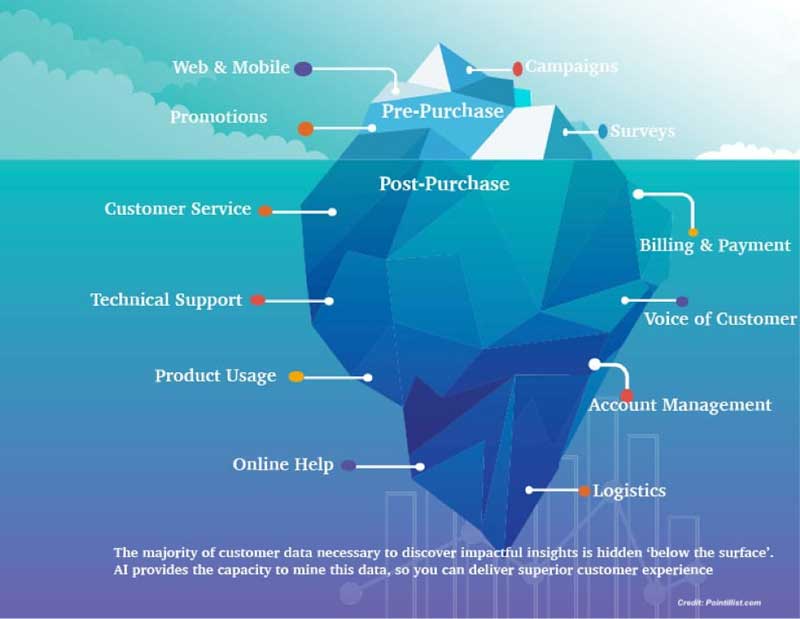
To build these personas, AI tools first collect data from various sources such as website browsing habits, social media interactions, purchase history, customer feedback, and more. Next, advanced machine learning algorithms analyze this data to identify patterns and trends, uncovering different customer segments and their unique journeys. The final step is the creation of detailed personas, which can provide a deep understanding of customers’ needs, preferences, and pain points at each stage of their journey.
Examples of AI-Enhanced Customer Journey Personas:
- The Discount Seeker: This persona is always looking for the best deals and discounts. They spend a lot of time comparing prices, and their purchase decision is primarily driven by cost-saving opportunities. An AI system can identify this persona through patterns such as frequent visits to the sales page, usage of discount codes, or a pattern of buying only discounted items.
- The Brand Loyalist: This customer is loyal to your brand and regularly purchases your products or services. They rarely compare prices and are less sensitive to cost changes. They are identifiable by patterns such as frequent purchases, positive reviews, and high engagement with the brand’s communication.
- The Conscious Consumer: This persona prioritizes ethical sourcing, sustainability, or other value-driven factors over cost when making a purchase. They can be identified by their browsing patterns (like visiting the ‘About Us’ or ‘Our Mission’ pages), engagement with sustainability-related content, or feedback comments reflecting these values.
- The Impulse Buyer: This persona tends to make spontaneous purchases and is highly influenced by visually appealing content or persuasive sales copy. They may be identified by patterns of quick purchases following the release of new products or during sales events.
- The Researcher: This customer spends a considerable amount of time researching before making a purchase. They read reviews, blogs, watch product videos, etc. They can be identified by their prolonged pre-purchase browsing and engagement with detailed product information.
Identifying the Most Valuable Personas:
Identifying the most valuable customer personas depends largely on your business objectives. Some businesses might find the Brand Loyalists to be the most valuable due to their repeat business and potential for referrals. Others might prefer the Conscious Consumers for their alignment with the company’s ethical values, leading to a strong brand connection and potential advocacy.
To determine the most valuable personas, businesses need to analyze each persona’s lifetime value (LTV), acquisition cost, retention rate, referral potential, and alignment with business objectives. AI can assist in this process by providing real-time data, predictive analytics, and trend forecasting.
Generating Positive ROI:
Once the personas are established and the most valuable ones identified, businesses can then tailor their customer experience (CX) strategies to cater to these personas. This personalization can result in improved customer satisfaction, increased loyalty, and ultimately, a positive return on investment (ROI).
AI plays a crucial role in implementing these strategies. For example, AI-powered chatbots can deliver personalized customer service round the clock. Recommendation engines can suggest products based on a customer’s browsing and purchase history. Predictive analytics can foresee customer needs and inform timely engagement strategies.
By improving the CX, businesses can increase customer retention, lower customer acquisition costs, and enhance the overall customer lifetime value. In essence, a positive ROI is achieved by using AI to understand customer personas better, personalizing the CX accordingly, and thus driving increased revenue and decreased costs.
Conclusion:
AI-enhanced customer journey personas can provide SMBs with invaluable insights into their customers. These dynamic, data-driven personas can facilitate tailored CX strategies that align with customer needs and preferences. As businesses increasingly strive to personalize their interactions, the application of AI in understanding and serving customers becomes not just an innovative strategy, but a core business necessity. Harnessing the power of AI can lead to improved customer relationships, increased brand loyalty, and a significant boost in ROI.

 De Lio Tech Trends